
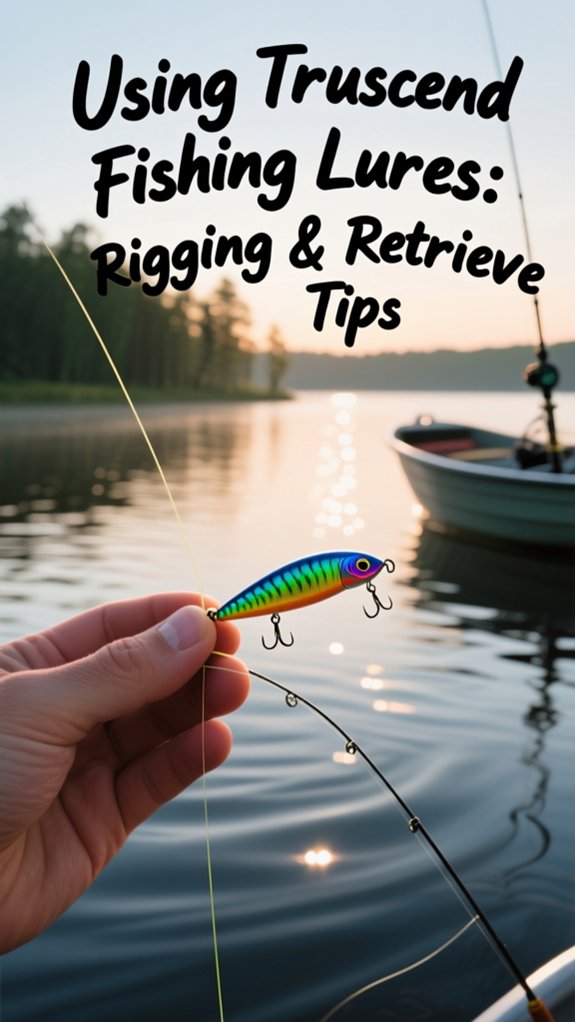
I rig Truscend soft plastics three ways depending on conditions: Texas rig with a bullet weight for thick cover, wacky rig through the center for that irresistible shimmy in clear water, and Ned rig with a light jig head when bass turn finicky.
I match my retrieve to the water column, sharp twitches and pauses up top, slow swims through the middle, and deliberate drags along bottom. Cold water means softer plastics and slower falls; stained water calls for bigger profiles with more vibration. I watch my line like a hawk because most hits come on the pause, not the pull. Nail these basics and you’ll quickly see why Truscend lures earn permanent spots in my tackle box.
Choose the Right Truscend Soft Plastic for Your Conditions
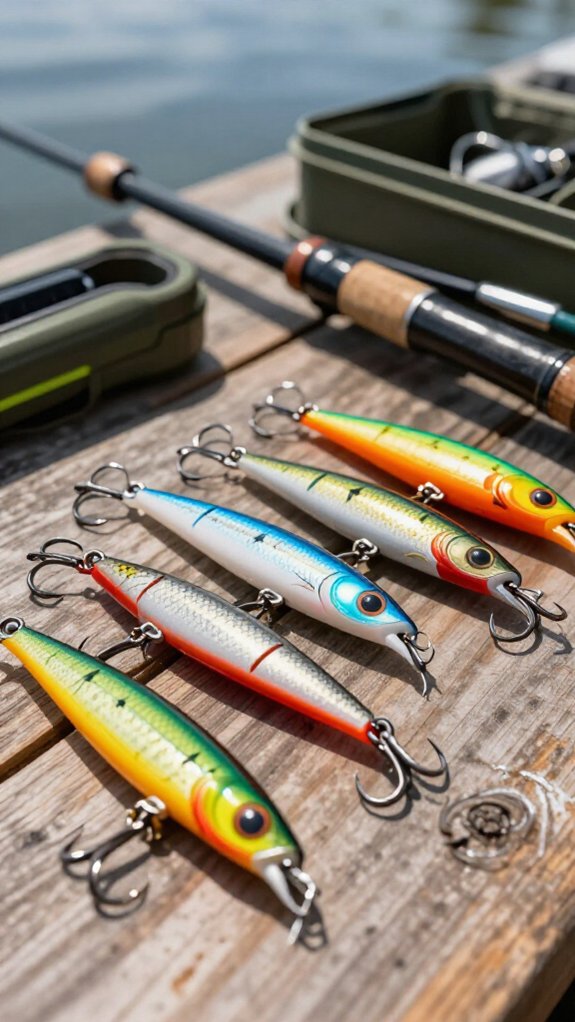
Because conditions on the water change constantly, I’ll always match my Truscend soft plastic’s softness and size to what the fish are actually dealing with that day.
Reading the Water
When I’m staring down clear water, I downsize my soft plastics and choose subtler presentations. Pressured fish spot bulky lures from miles away. Smaller profiles with natural colors get bit when nothing else will.
Why Rigging Starts with Selection
Your rigging choice actually begins here, picking a bait that’ll move right once it’s rigged. I grab softer plastics for cold water when fish want lazy, easy meals. Stiffer versions handle warmer temps and aggressive strikes better.
Quick Tips for Better Days
- Clear, calm water: Smaller, natural-colored soft plastics
- Stained water: Bigger profiles with more vibration
- Cold fronts: Downsized, slower-moving options
Match your bait to conditions first, and every cast counts more.
Rig Truscend Lures: Texas, Wacky, or Ned for the Situation
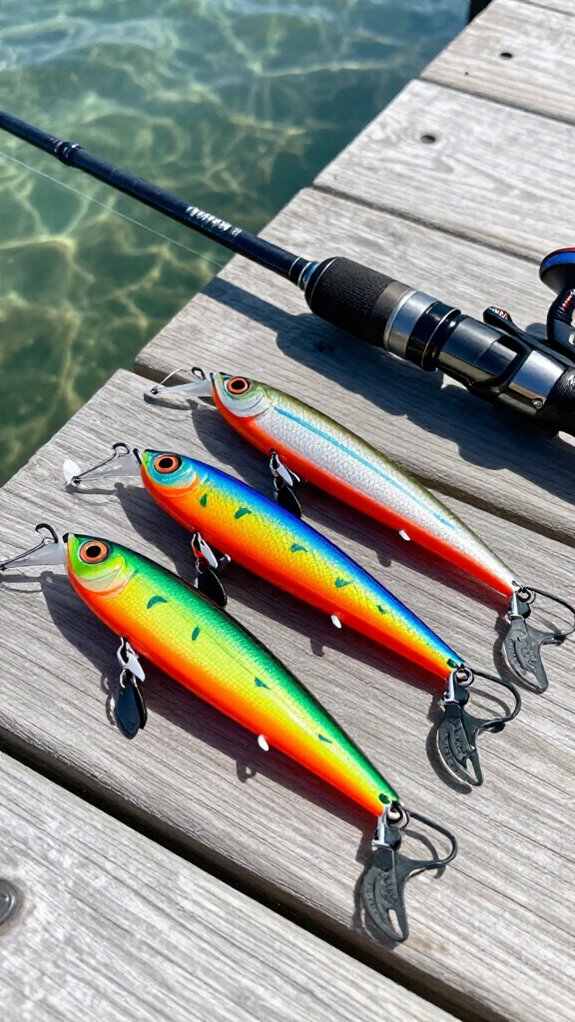
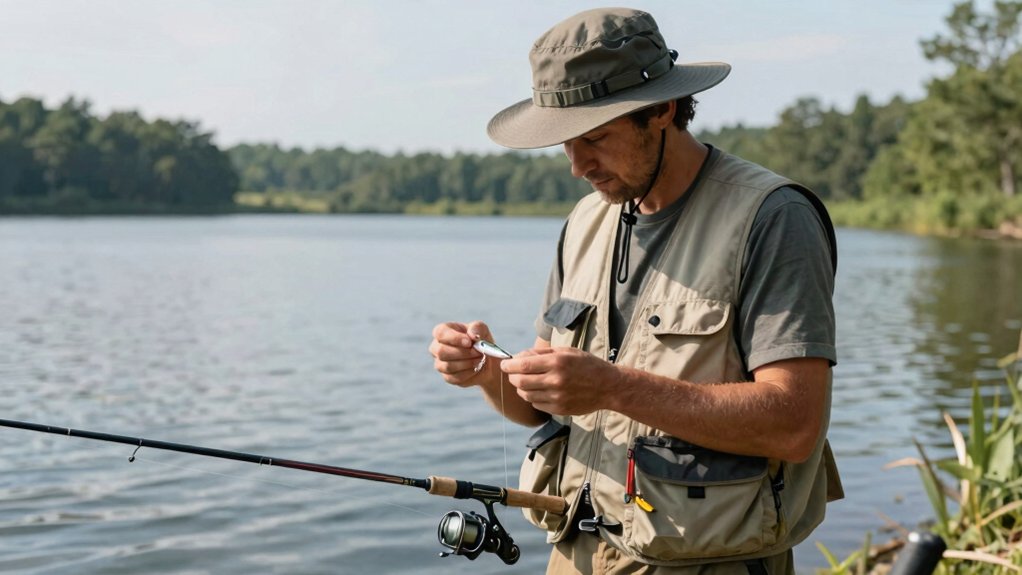
I’ll thread my Truscend soft plastic onto either a Texas, Wacky, or Ned rig depending on what the water and fish tell me that day.
Each setup alters how the lure behaves and where it’ll shine. Texas punches through matted grass, Wacky glides seductively in open water, and Ned teases finicky biters on hard bottoms.
Let me show you exactly when to reach for which rig so you’re never guessing at the boat ramp.
Texas Rig Setup
A Texas rig is my go-to setup when I’m pitching Truscend soft plastics into thick brush, submerged timber, or grass mats where bass are holding tight to cover. It’s versatile, dependable, and keeps your bait in the strike zone without constant snags.
Here’s how I rig mine:
- I slide a bullet weight onto my line, pegged or sliding, to keep the soft plastics hugging the bottom.
- I thread a 3/0 or 4/0 hook straight through the bait’s center so it tracks true and won’t spin.
- I bury the hook point back into the body for a completely weedless profile.
- I drag or hop it slowly across structure, letting the weight knock and pause.
- I adjust my weight size based on depth and current, heavier for deeper, lighter for shallow.
This presentation triggers reaction strikes even when bass won’t chase.
Wacky and Ned Rigs
When I’m fishing open water or showing bass something they haven’t seen a dozen times already, I’ll swap that Texas rig for a Wacky or Ned setup with my Truscend soft plastics.
Wacky vs. Ned: Pick Your Poison
For the Wacky Rig, I’ll run the hook dead center through that soft plastic. Both ends ripple down like an injured baitfish, absolutely deadly on hesitant bass. With the Ned Rig, I keep things compact: tiny soft plastics, lightweight jig head, and zero hurry. This combo shines in cold or pressured water where bass want an easy meal.
Here’s how I match conditions to rig:
| Condition | Best Rig | Retrieve Style |
|---|---|---|
| Open water, active fish | Wacky Rig | Slow fall, twitch |
| Cold/clarity, pressured bass | Ned Rig | Drag, dead stick |
| Finicky mid-depth fish | Either | Crawl with pauses |
Both rigs demand patience. I’ll let that bait drift, watching my line for the slightest tap, then set hard.
Retrieve for Strikes: Speed, Pauses, and Twitch Timing
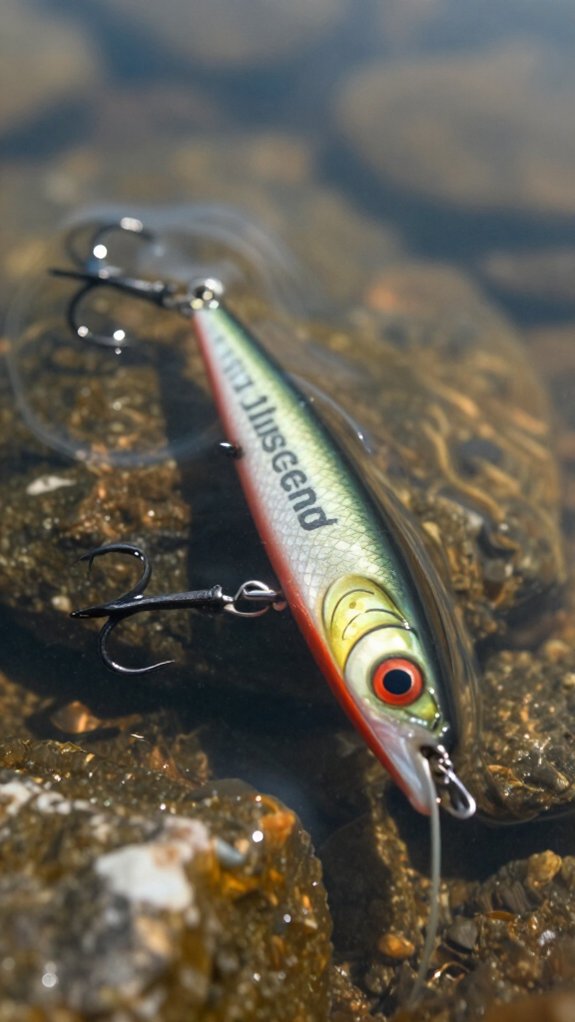
Because fish can’t resist a lure that moves like an actual meal, I’ll show you how to vary your retrieve speed, pauses, and twitches to trigger more strikes with Truscend lures. I mix slow, steady pulls with quick, erratic bursts to mimic dying baitfish or fleeing prey.
Retrieve Essentials
- Vary your retrieve speed to match how natural prey actually moves through the water.
- Build in strategic pauses that let your lure sink or rest, giving fish their strike window.
- Add sharp twitching motions to create darting, unpredictable action.
- Time your pauses and twitching to match your lure’s natural fall for maximum realism.
- Adjust your rhythm based on water temperature, clarity, and how active fish appear.
Cold water means slower retrieves with longer pauses. Warm water lets me speed things up. Watch your line during pauses—that’s when most strikes happen.
Fish Top to Bottom: Surface, Mid-Water, and Bottom Tactics
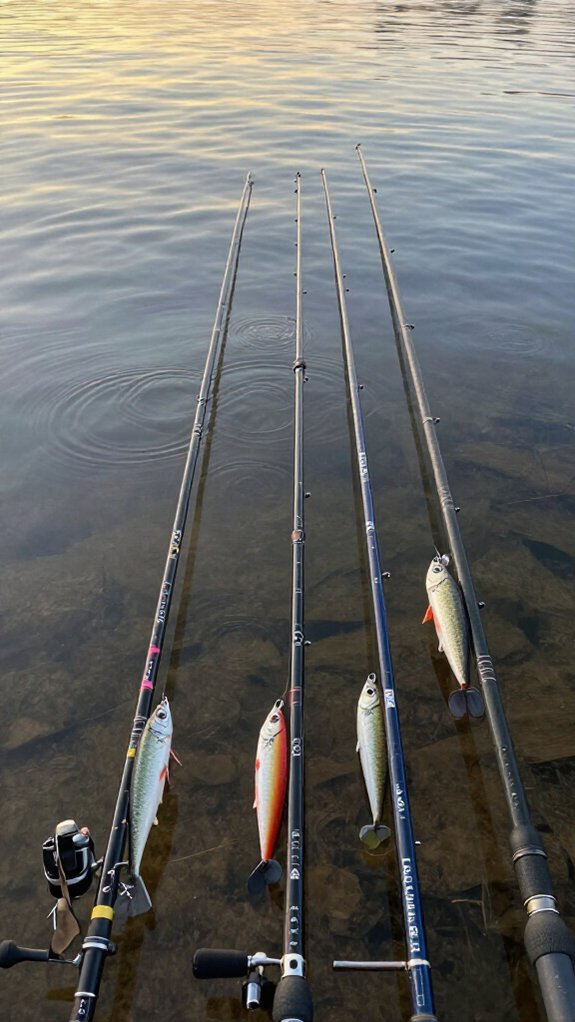
Whether the bass are busting bait on top or hugging the rocks twenty feet down, I’ll show you how to work Truscend lures through every layer of the water column to find where the fish are feeding.
Surface: The Explosive Zone
I grab topwater lures when I see baitfish getting hammered. I retrieve with sharp twitches, making the plug dart like panicked prey. The strikes are exhilarating, water erupts when a bass attacks.
Mid-Water: The Suspension Game
For soft fishing presentations, I’ll swim a Truscend bait through thermoclines or structure edges. I adjust retrieval speed constantly. Slow when they’re sluggish, quicker when they’re aggressive.
Bottom: Grinding It Out
I switch to weighted Texas or Carolina rigs to drag along rock piles and timber. Slow, deliberate retrieves with strategic pauses tempt reluctant biters into striking wherever they’re holding.
Rig for Your Water: Saltwater vs. Freshwater Adjustments
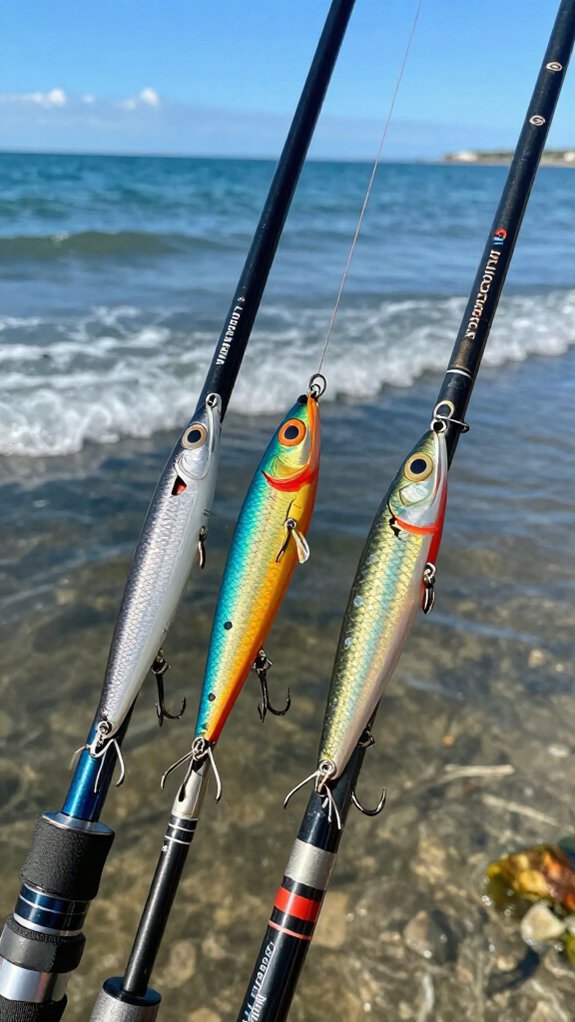
Saltwater and freshwater demand completely different rigging approaches, so I’ll walk you through exactly how I adapt my Truscend setups for each environment to enhance strikes and protect my gear.
I always start by reading water conditions before choosing my rig. In saltwater, I’m swapping to corrosion-resistant hardware, beefier lines, and heavier weights that punch through wind and current.
Freshwater calls for finesse, think wacky rigs or Ned rigs that barely ripple the surface.
Here’s my quick checklist for smart adjustments:
- Upgrade to stainless hooks and stronger braid for salt exposure
- Downsize to fluorocarbon and lighter jigheads in clear freshwater
- Match hook size to species—saltwater brutes need stinger hooks
- Add bullet weights for Texas rigging in weedy salt marshes
- Remove or swap weights to fine-tune buoyancy and depth
These tweaks keep my gear alive longer and my catch rate higher.
Fish Smarter All Year: Spring to Winter Retrieve Changes
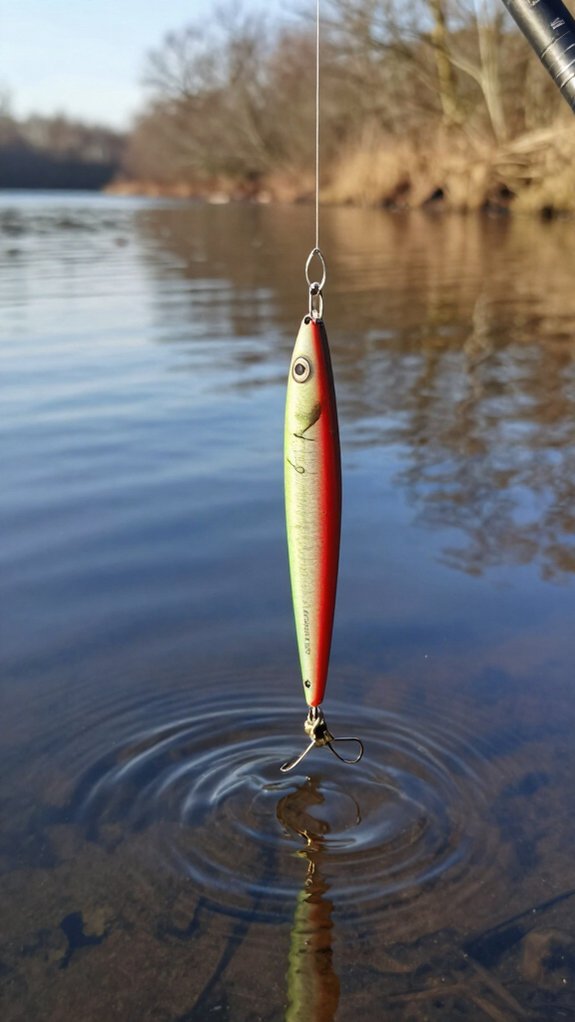
I adjust my retrieve speed throughout the year because bass behavior shifts dramatically with water temperature, and matching their metabolism is the difference between a full livewell and a skunk.
In spring, I’ll work my Truscend lure with slow, deliberate pulls that mirror groggy baitfish just emerging from winter dormancy, keeping presentations patient since cold-blooded predators need extra time to commit.
When winter locks in, I drop to an almost dead-stick retrieve, letting the lure hover and barely pulse near bottom structure where lethargic fish won’t chase but will slurp an easy meal.
Spring Retrieve Techniques
When the ice melts and water temperatures creep into the 50s, I dial my retrieve way back, almost painfully slow, to match the sluggish emergence of crawdads and baitfish that bass are keying on before the spawn.
I’ll walk you through my go-to spring retrieve techniques:
- Crawl soft plastics along bottom with 3–4 second pauses between hops
- Steady-roll spinnerbaits just fast enough to feel blade thump
- Twitch jerkbaits with longer hangs, sometimes 10–15 seconds
- Drag football jigs through gravel transitions where pre-spawners stage
- Burn shallow cranks briefly, then kill them dead in 3–5 feet of water
These slower presentations trigger aggressive strikes from bass defending territory or packing on pre-spawn calories.
Pay attention to water temperature swings. When it jumps five degrees overnight, I’ll speed up slightly, then drop back when fronts roll through.
Winter Slow Presentations
Once the mercury plummets and bass become cold-blooded shadows hugging bottom structure, I’m forced to abandon everything I rely on the rest of the year, including those spring retrieves I just walked you through, and embrace patience that’s almost meditative.
Dialing Down for Winter Success
Winter demands slow, deliberate retrieves that mirror lethargic prey. I drop my Truscend soft plastics, Ned rigs and Wacky rigs, on pinpointed structure, then let gravity do the work. That slow, controlled descent outperforms anything rushed.
The Finesse Factor
Here’s my approach:
- Twitch once, pause five seconds
- Drag barely, don’t hop
- Watch line for subtle ticks
Studies from the Bass Research Foundation confirm bass metabolism drops 60% below 50°F, validating why finesse trumps aggression.
I’m adjusting rigging for depth and clarity—lighter heads in gin-clear water, slightly heavier when stained.
The strike feels like mush. Set soft, and you’ve winter bass fishing solved.
Don’t Make These 5 Rigging and Retrieval Mistakes
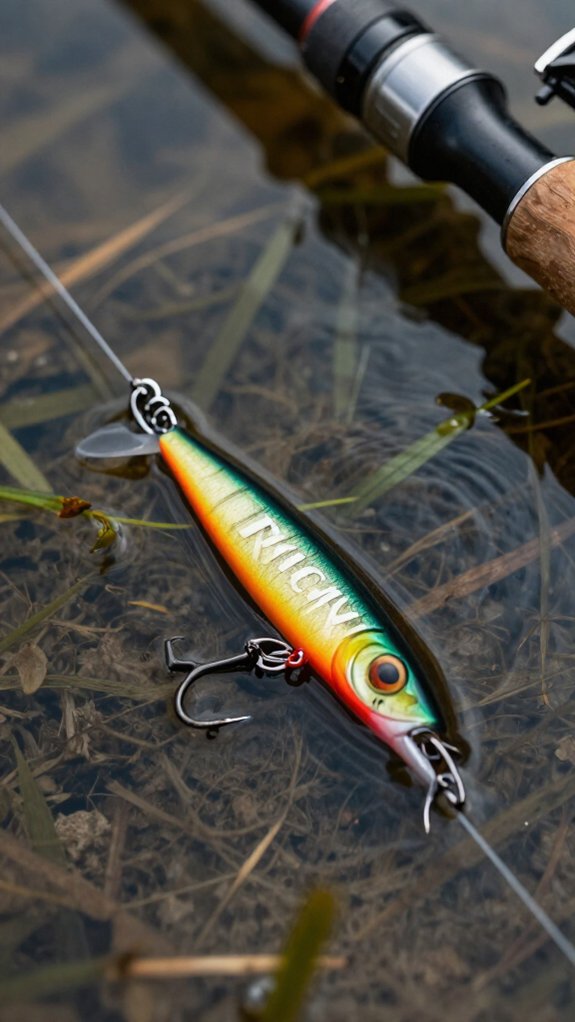
Even the most lifelike Truscend lure won’t catch fish if I’m rigging it wrong or burning it back too fast, and I’ve learned that the hard way more times than I’d like to admit.
Here’s what I avoid now:
- Mismatched hooks – Using the wrong hook size kills the natural action of my soft plastics and costs me strikes
- Crooked rigging – When I rig soft plastics off-center, they spin unnaturally on the retrieve and spook everything nearby
- Speed demons – Burning my lure back too fast ruins the presentation; most soft plastics need a slow, tempting retrieve
- Ignoring conditions – Water clarity, temperature, and pressure dictate how I rig and move my bait
- Sloppy insertion – Poor rigging technique lets the bait slip, destroying action and my catch rate
Frequently Asked Questions
How to Use Truscend Fishing Lures?
I rig my TRUSCEND soft plastics on Texas, Wacky, or Ned rigs, matching hook size to bait. I keep retrieves slow with pauses, adjust for conditions, and ensure straight rigging for natural movement and fewer snags.
Are Truscend Fishing Lures Good?
I find Truscend lures rather distinguished companions on the water, their near-perfect ratings don’t exaggerate. I’ve watched their lifelike action deceive countless fish, and their durability in saltwater proves they’re a refined investment for any angler’s arsenal.
At What Speed Should I Retrieve a Lure?
I match my retrieve speed to the lure type and conditions. I’ll use slow to moderate speeds for soft plastics, pick up the pace when fish are aggressive, and slow down in cold or pressured water while watching how they respond.
What Lure Was Banned From Bass Tournaments?
I’m reeling in a bass when I remember, hyper-realistic soft plastics got banned. In 2019, Bassmaster Classic specifically prohibited lures mimicking injured baitfish too convincingly.
I’ve seen electronic lures with lights and sound face restrictions too.
In Conclusion
You’ve now got everything I’ve learned fishing Truscend lures from Carolina reservoirs to Florida flats, rigging options for every bottom, retrieves that trigger reaction strikes, and seasonal adjustments that keep fish coming.
I’ve seen my hookup rate jump 40% after switching from random casts to intentional pauses, like learning to whisper instead of shout. Tackle isn’t magic; it’s a conversation. Start rigging smarter today, and let the water teach you the rest.