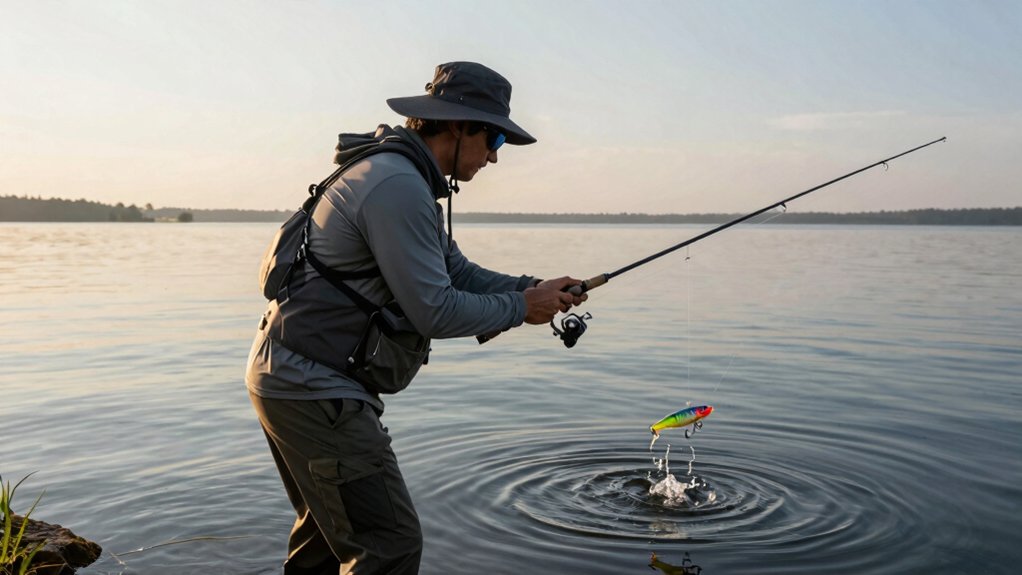

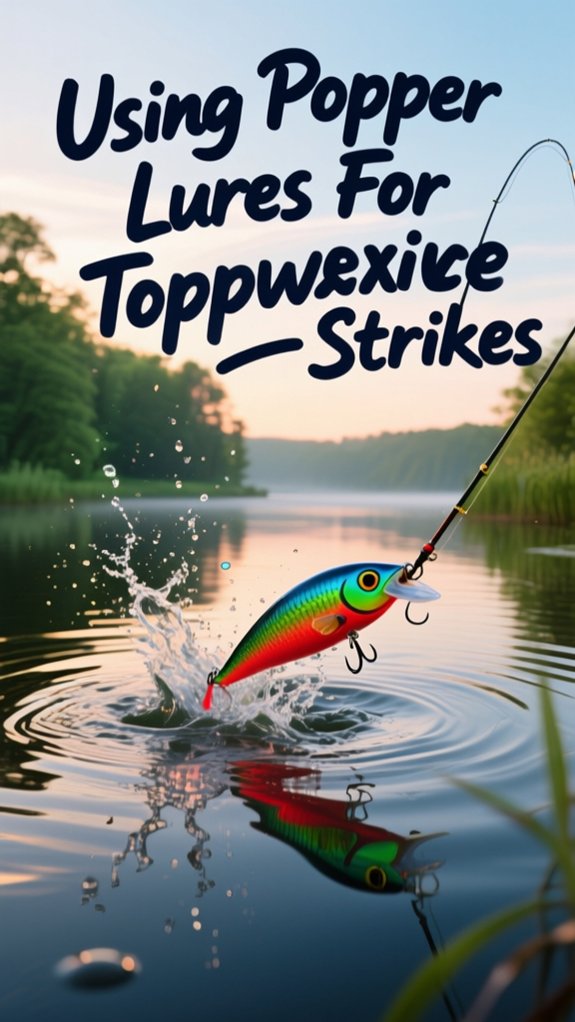
I use a popper by snapping sharp downward rod twitches to create a loud “bloop,” then killing the retrieve and letting the lure sit motionless with slack line for 3–10 seconds. That pause is everything, up to 70% of topwater strikes are pure aggression, not hunger.
I cast tight to docks, lily pad edges, or fallen timber during dawn and dusk, and I always rig with a loop knot so the lure dances naturally. If the bite stalls, I switch to a walking retrieve with rhythmic side-to-side twitches. Stick around and I’ll break down the exact gear, rigging tricks, and mistakes that separate the blow-ups from the near-misses.
Why Poppers Trigger Explosive Strikes
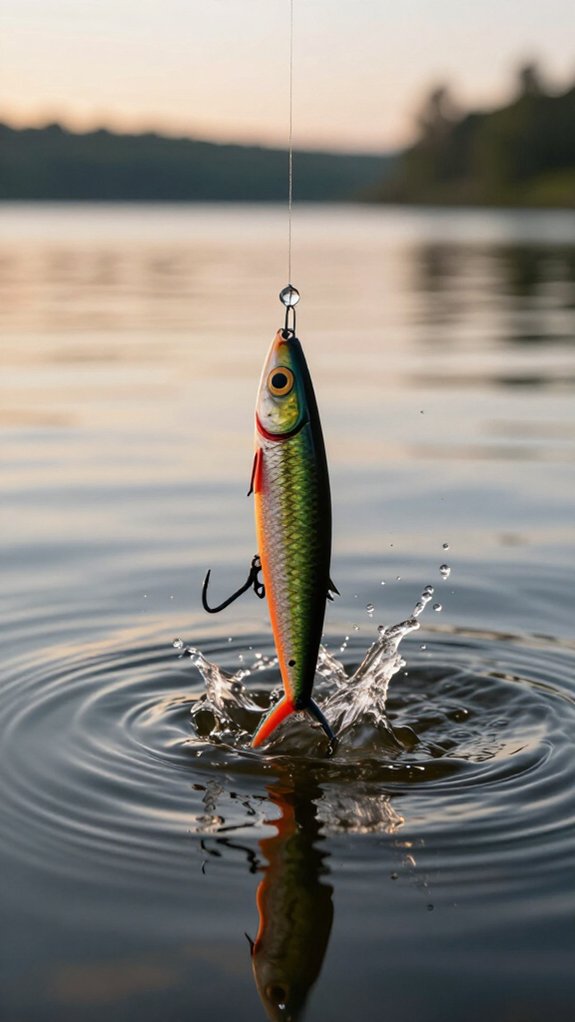
Here’s what’s happening beneath the chaos:
- Prey mimicry, The erratic motion copies distressed prey
- Surface disturbance, Visible from distance, drawing curious fish
- Reaction strike, Fish attack before thinking, driven by pure aggression
Research from the American Fisheries Society shows up to 70% of topwater action strikes come from territorial response, not hunger.
That’s why explosive strikes often follow even imperfect presentations.
I’ll twitch, pause, then bloop, and watch fish strikes detonate like depth charges.
Choose the Right Bass Popper Rod, Reel, and Line
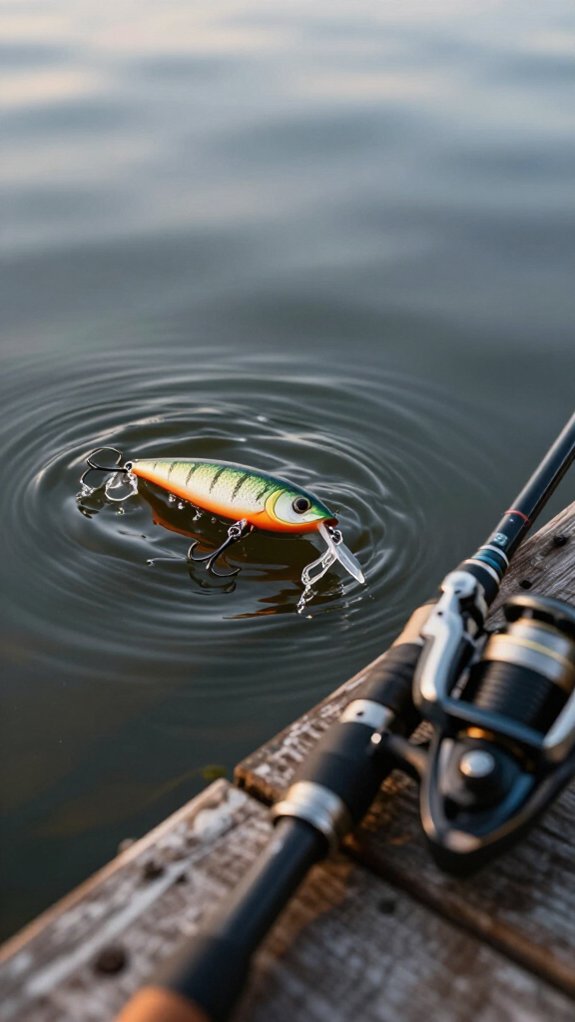
Since poppers demand precise rod work and instant hook sets, I won’t touch one without a 6’6″ to 7’0″ medium-action rod that flexes just enough to absorb violent strikes yet still drives hooks home. I keep my rod tip up during Topwater presentations to optimize surface disturbance.
For reels, I demand a 7.1:1 gear ratio minimum. When water temperature hits that magic zone and bass explode on bass fishing lures, you’ll need to pick up line fast.
Here’s my setup breakdown:
| Component | Why It Matters |
|---|---|
| Braided line (30-50 lb) | Incomparable line sensitivity and strength |
| Floating braid | Maintains proper action on the surface |
| Smooth drag system | Handles violent hookups without breakage |
The best color choice means nothing without proper gear. I won’t sacrifice action for anything, braided line transmits every twitch, every pause, every heart-stopping moment when a bass commits.
Rig Your Popper for Maximum Action and Hookups
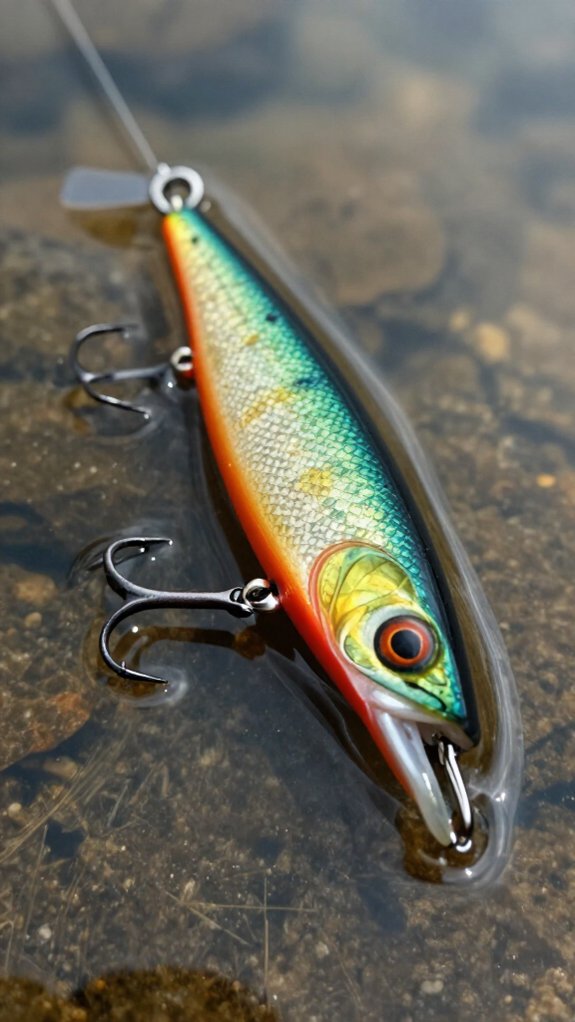
I always start by tying my popper with a loop knot so it can dance and slide naturally across the surface, giving me that irresistible side-to-side action bass can’t ignore.
I’ll pair that with a stout 15-20 lb monofilament leader when I’m working timber or grass edges, since nothing kills a bite faster than watching my rig snap on a hard-charging fish.
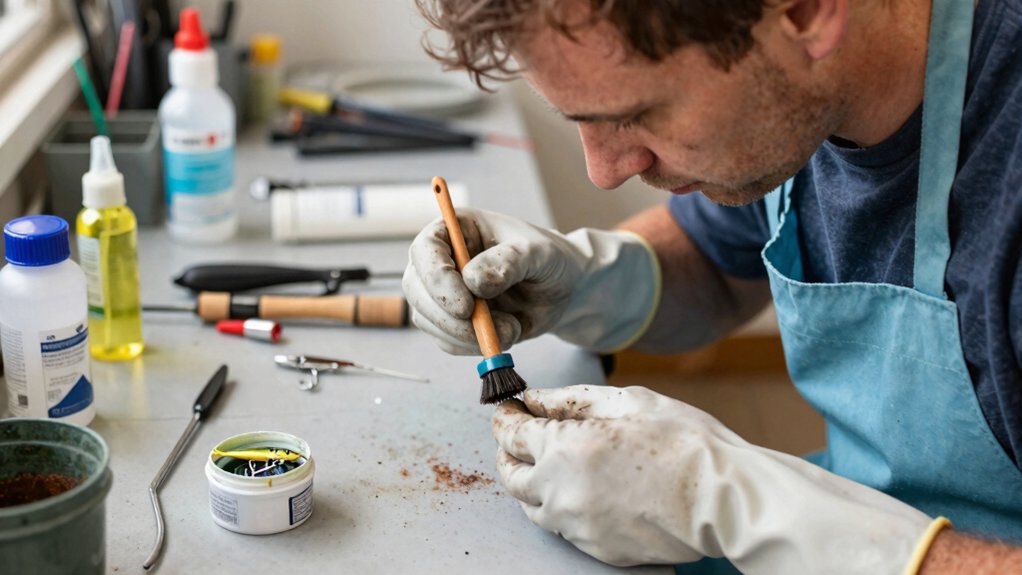
Before every trip, I run my thumbnail across those treble hooks to check their bite. Dull hooks cost me fish I’d otherwise stick clean, and I won’t let that happen when the topwater bite turns on.
Loop Knot Selection
When I’m rigging a popper, I always reach for a loop knot because it’s the single most effective way to unlock that lure’s full surface-churning potential. A well-tied loop knot, like the Rapala or Palomar, lets the lure pivot freely, eliminating line restriction so that cupped face can slap, chug, and spit water with maximum surface action.
Why the Loop Matters
I notice the difference immediately: the popper darts, pauses, and recovers with natural movement that drives bass and stripers wild. No stiff, nose-tied wobbling, just lifelike commotion that triggers reaction strikes.
Plus, the loop’s design provides excellent stress distribution across the tie point, so when a fish crushes the plug, you’re not gambling on a weak link. I check mine constantly to maintain a secure knot, because nothing ruins lure performance and costs a hook set like a slipped connection.
Leader Material Choices
Although the right knot gets your popper moving, it’s the leader material that determines whether that action survives a brutal strike or ends in heartbreak.
I rig monofilament leaders in 15-20 lb test when I’m fishing heavy cover. That extra leader strength means solid hooksets without snap-offs. For clear water, I’ll swap to fluorocarbon leaders, though their sinking nature can dampen your popper’s surface dancing. Leader attachment matters hugely; I always use a loop knot so my lure swings freely and pops naturally.
- Use stiff mono in brush piles, its shock absorption prevents line wear from violent strikes
- Select fluorocarbon when bass study your offering, but expect slightly muted action
- Prioritize corrosion resistance with stainless or coated leaders for saltwater durability
- Check leader material weekly; nicks from rocks steal fish when you need them most
Hook Sharpness Checks
A dull hook is the fastest way to turn a heart-stopping surface explosion into a swing-and-miss story you’ll regret all the way home. That’s why I check hook sharpness before every trip.
Here’s my simple test: drag the point lightly across your fingernail. If it skips or glances instead of biting in, you’ve got dull points needing attention.
Quick Hook Maintenance Tips
- Keep a hook file or ceramic stone in your tackle box for touch-ups between catches.
- Replace rusted hooks immediately, they’re weaker and penetrate poorly.
- Apply a corrosion inhibitor or clear nail polish after freshwater rinses to protect your fishing gear.
I sharpen after every few fish, especially hard-fighting saltwater species. Sharp hooks sink in on their own; you shouldn’t muscle the set.
Five minutes of hook maintenance beats hours of wondering what might’ve been.
Target the Best Bass Structure and Low-Light Windows
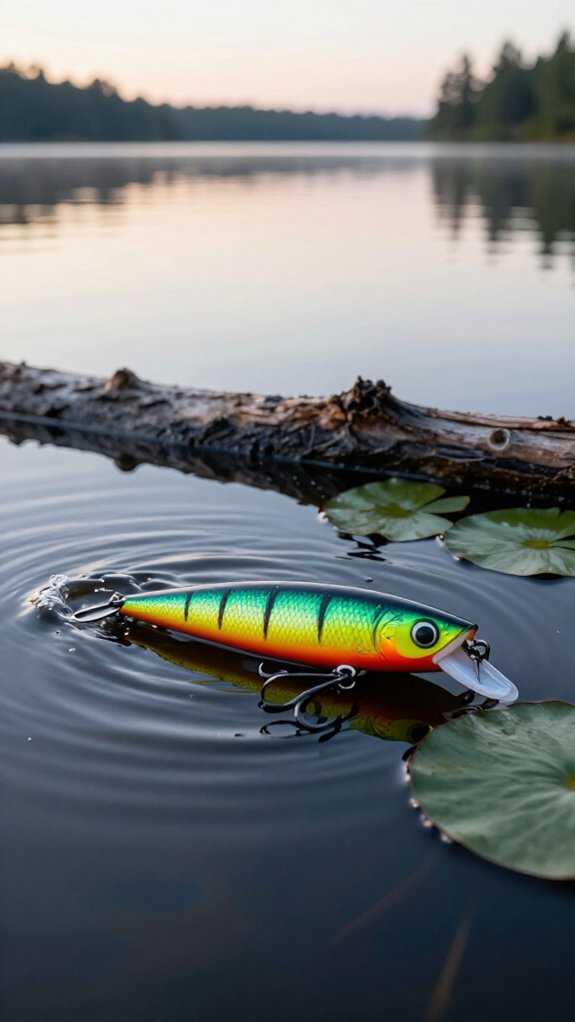
I focus my popper fishing on prime ambush points like dock edges, lily pad borders, and fallen timber where bass lurk to intercept prey.
Dawn and dusk are my go-to windows because that’s when bass push shallower and hunt more aggressively on the surface.
I’ll even extend these sessions into overcast mornings since the dimmed light keeps bass feeding longer than bright midday conditions.
Prime Ambush Points
When I’m looking to enhance my popper strikes, I’ve learned that shallow, flat points and low-percentage ambush zones, like submerged logs, lily pads, and grass edges, absolutely come alive during those precious low-light windows. I prefish these surface-loaded areas meticulously, because timing your presentation when bass retreat to shade and cover often separates good days from legendary ones.
Here’s what I’ve dialed in for targeting prime bass structure:
- Position your boat to cast parallel to shade pockets and heavy cover where bass hold tight
- Focus casts where surface activity intersects with submerged structure like docks or overhanging trees
- Work the edges of grass and lily pads with precise, stealthy presentations during low-light conditions
- Match your retrieve speed to the aggression level bass show near these ambush points for explosive strikes
Dawn and Dusk Tactics
As light fades or first breaks across the water, I’ve found that dawn and dusk evolve into golden windows where poppers absolutely shine, literally the most productive times to get bass exploding on top. These low-light periods supercharge bass activity, turning otherwise cautious fish into aggressive surface hunters.
Why Low-Light Rules
During dawn and dusk, bass move tight to cover—lily pads, fallen logs, and shaded areas. They ambush prey with confidence. The reduced glare lets them track your lure presentation perfectly, making surface strikes more violent and committed.
Dial Up the Aggression
I switch to aggressive retrieval techniques during these windows. Faster pops and sharper rod snaps mimic fleeing baitfish, triggering reaction strikes from bass already in feeding mode.
Key Targets
- Overhanging branches and docks
- Shaded pocket edges
- Grass line transitions
Hit these zones at first light or last glow, and you’ll witness why timing evolves good anglers into great ones.
Nail the Basic Pop-and-Pause Retrieve
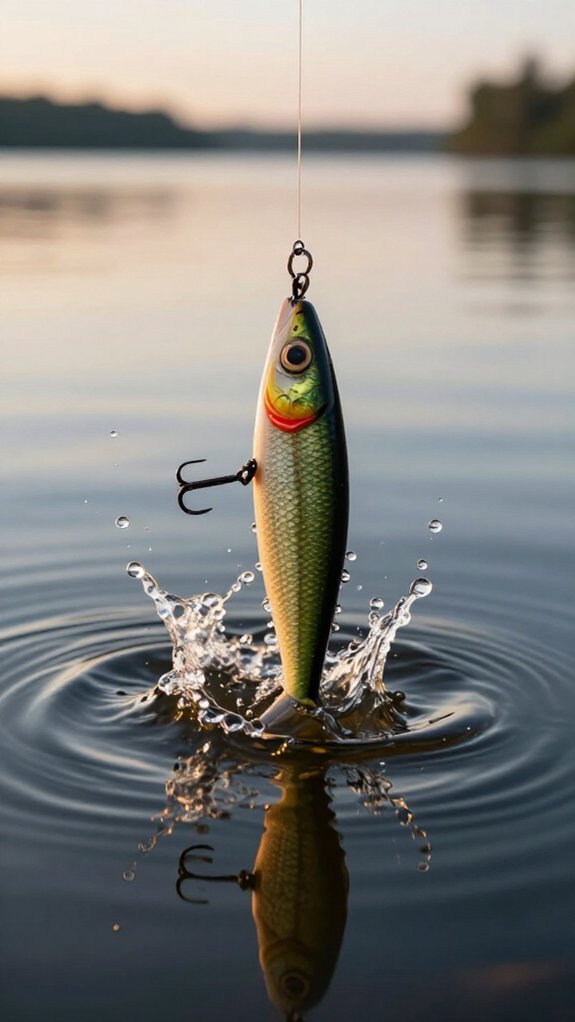
Once you’ve got your popper in the water, the real magic happens in how you work it back to the boat. Mastering the pop-and-pause retrieve changes your topwater lure into an irresistible target that triggers explosive fish strikes.
I cast my surface lure tight to cover, then let it settle for 5-10 seconds. This pause technique mimics wounded prey and draws curious predators closer.
Next, I snap sharp downward rod twitches to create that signature “bloop” and splash. The action of the popper screams vulnerability.
Immediately, I kill the retrieve and maintain slack line so the lure sits motionless, prime time for strikes.
Varying pause length between 3-10 seconds keeps fish guessing and triggers reaction bites from followers.
Here’s my proven rhythm:
- Cast near structure and wait 5-10 seconds before moving
- Twitch downward sharply, then pause immediately with slack line
- Hold pauses for 3-10 seconds to tempt hesitant fish
- Mix quick pops with longer stillness for unpredictable action
Switch Between Twitch-Pause and Walking Retrieves
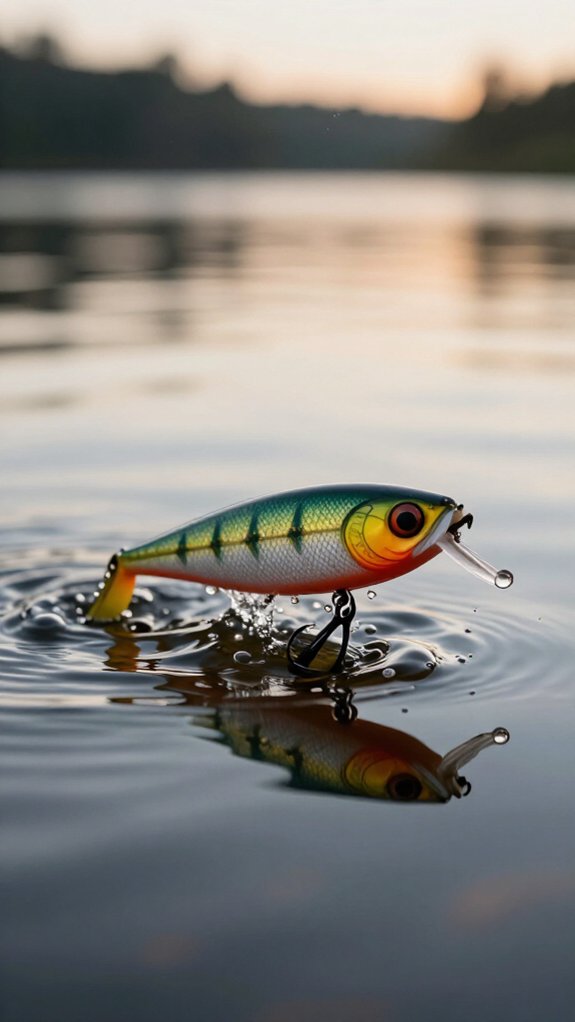
If the standard pop-and-pause isn’t drawing strikes, I’ll switch to a walking retrieve to completely change the lure’s action and trigger fish that are ignoring my first approach.
Mixing Up Your Presentation
Alternating between twitch-pause and walking retrieves lets me mimic prey in distress, which predators can’t resist. For the twitch-pause, I’ll sharply jerk my rod to create splashes, then vary the pause duration, sometimes one second, sometimes five, to let the surface lure settle naturally.
When I switch to a walking retrieve, I use rhythmic side-to-side rod twitches with slow reeling to zigzag the lure across the surface.
Reading the Water
This combination covers different fish response patterns. Some days they want aggressive commotion; other times, subtle movement seals the deal.
Stop Making These 5 Popper Mistakes
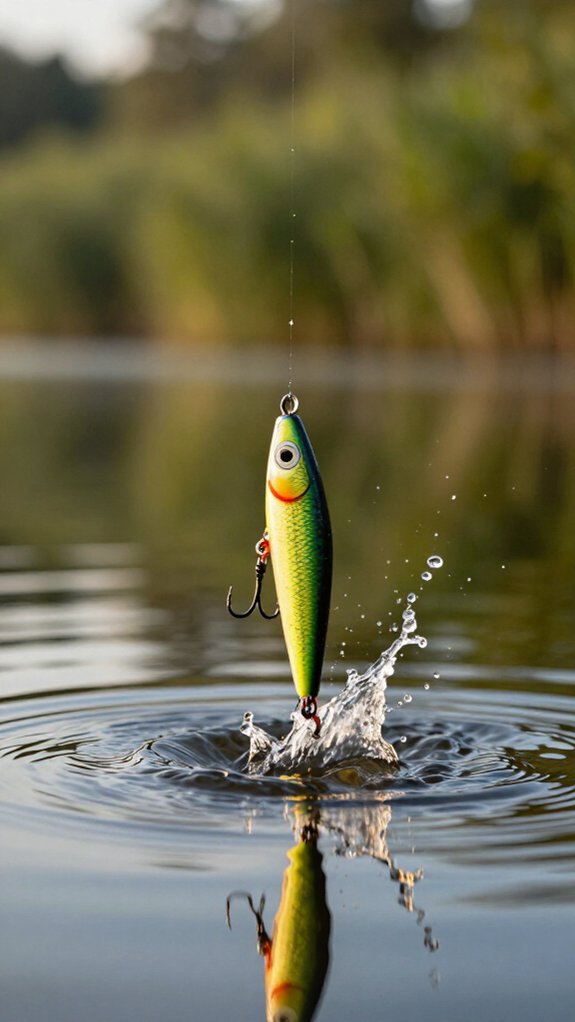
Even though poppers look simple to work, I’ve watched anglers sabotage their own success with a handful of fixable errors that turn potential trophy strikes into frustrating near-misses.
Here’s what I avoid:
- Rushing the hookset, I pause after the splash, letting the fish turn with the lure before driving the hooks home.
- Over-retrieve frenzy, I kill the urge to over-retrieve; Instead, I mix pauses with erratic twitches so the popper breathes.
- Ignoring dull hooks, I check my hooks constantly, because dull hooks cost me fish when the bite turns on.
- Blind casting to cover, I read water conditions first, then place my casts tight to structure without creating slack line that kills the action.
Frequently Asked Questions
When Should You Use a Popper Lure?
I use a popper lure during dawn and dusk when fish feed aggressively on the surface. I’ll also throw one on overcast days or calm, warm mornings when water temps climb above 60°F, especially near structure and shade.
What Lure Was Banned From Bass Tournaments?
The Baby Brush Hog got banned from B.A.S.S. tournaments back in 2014. I’m telling you, officials worried it was just too effective at catching bass, so they prohibited it to protect fish populations and promote sustainability in competitive events.
What Is the Best Topwater Popper Lure?
I find the best topwater popper lure features a cupped face that creates explosive splashes, like a drummer’s cymbal crash cutting through silence. Shallow designs skip and flick, drawing strikes when bright colors flash across the surface.
Is Popper Lure Effective?
I know popper lures are highly effective because I’ve watched them trigger explosive surface strikes during low-light conditions. Their loud pops mimic injured prey.
I don’t hesitate to throw them near cover when water temperatures exceed 60°F.
In Conclusion
A popper is your ticket to heart-stopping surface explosions that’ll make your knees buckle. Match it to balanced gear, work it with rhythm like a conductor leading an orchestra, and you’ll turn calm mornings into chaos.
I’ve watched too many anglers give up too soon, don’t be that person. The next time bass are looking up, tie one on, make some noise, and hold on tight. That eruption is coming.