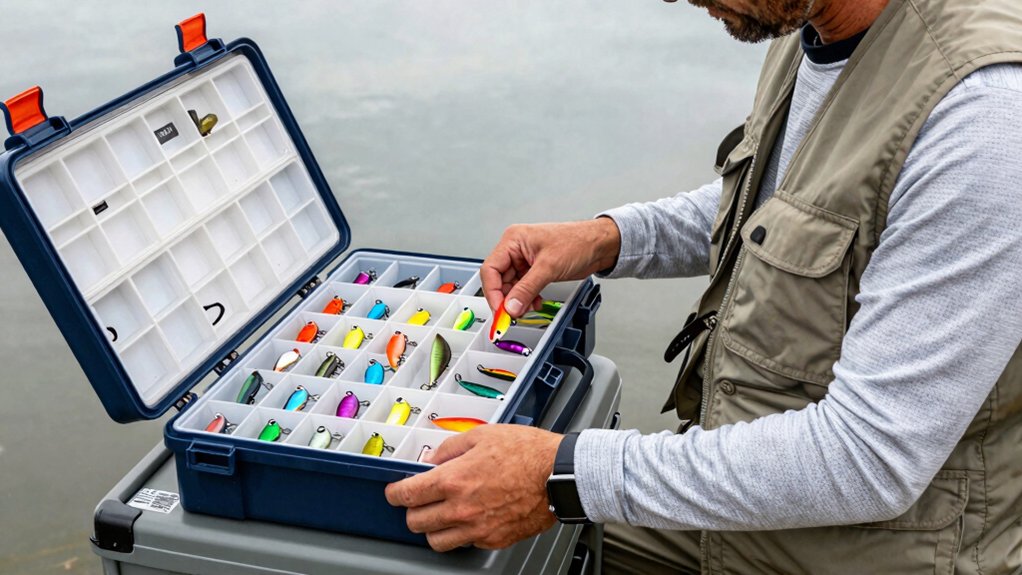

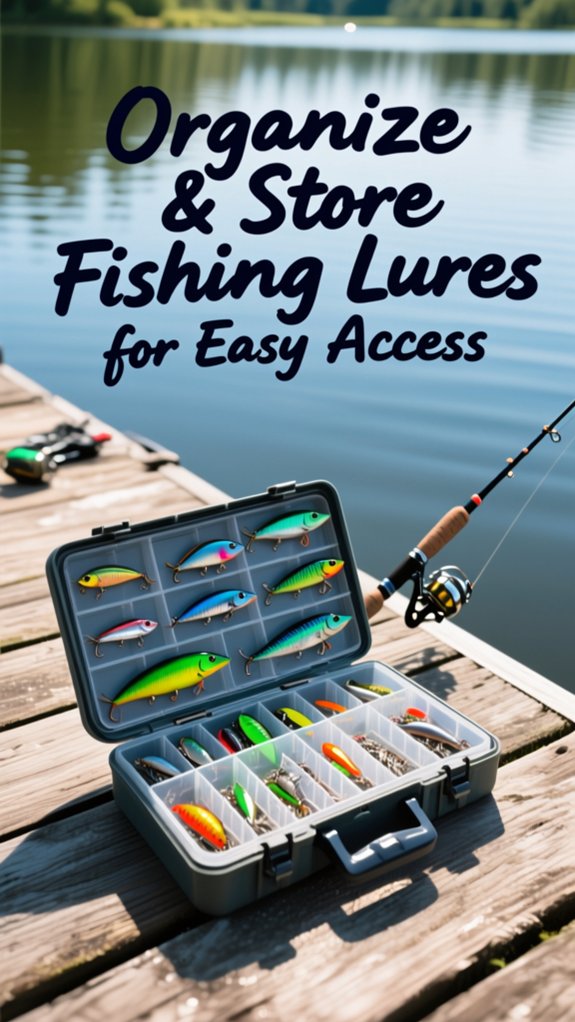
I organize my fishing lures by species, water body, and lure type so I can grab exactly what I need in under 30 seconds instead of digging through a jumbled mess while the bite window closes. I use labeled 3700 and 3600 trays with adjustable dividers, “Rockfish Plugs” in one, “Crappie Jigs” in another, and match them to my boat compartments so nothing slides around.
Foam inserts cradle each crankbait while magnetic strips hold spoons tangle-free, saving me from hook nightmares. Soft plastics stay fresh in ziplock bags sorted by size, kept cool and out of direct sun. My “Pond Bass” and “Saltwater Topwater” boxes are pre-loaded with 5-7 proven patterns, and a simple inventory log means I’m never scrambling the night before a trip. There’s a smarter way to build your system, and it starts with one small change to how you pack.
Organize Lures by Species, Tackle Type, or Water Body
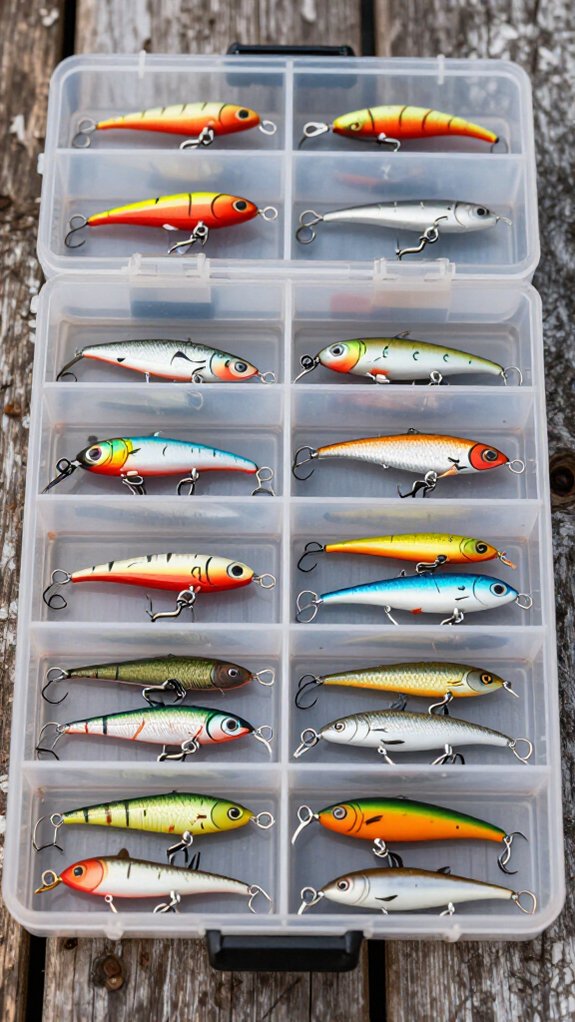
Whether I’m chasing striped bass in the surf or dropping jigs for crappie in a quiet cove, I don’t want to waste precious daylight digging through a jumbled mess of hooks and plastics. That’s why I’ve built my tackle organization around three proven systems.
Sort by Species or Tackle Type
I use labeled tackle trays with adjustable dividers, think “Rockfish Plugs” or “Crappie Jigs,” so I grab exactly what I need without second-guessing. For soft plastics, I bag them by size: 3-inch paddletails here, 4-inch senkos there. This streamlined lure storage cuts my rigging time by half.
Build Water Body-Specific Kits
I’ve assembled dedicated boxes for each fishery: a “Bay” box loaded with spoons and soft plastics, a “Lake” box with deep divers and drop-shot rigs. Research from the Recreational Boating & Fishing Foundation shows 67% of anglers fish multiple water types yearly.
Water body-specific prep keeps me ready without overloading my boat.
Label Everything
Clear tags on every tray and bag eliminate decision fatigue. I spend less time searching, more time casting where it counts.
Match Tackle Tray Size to Your Boat Compartments
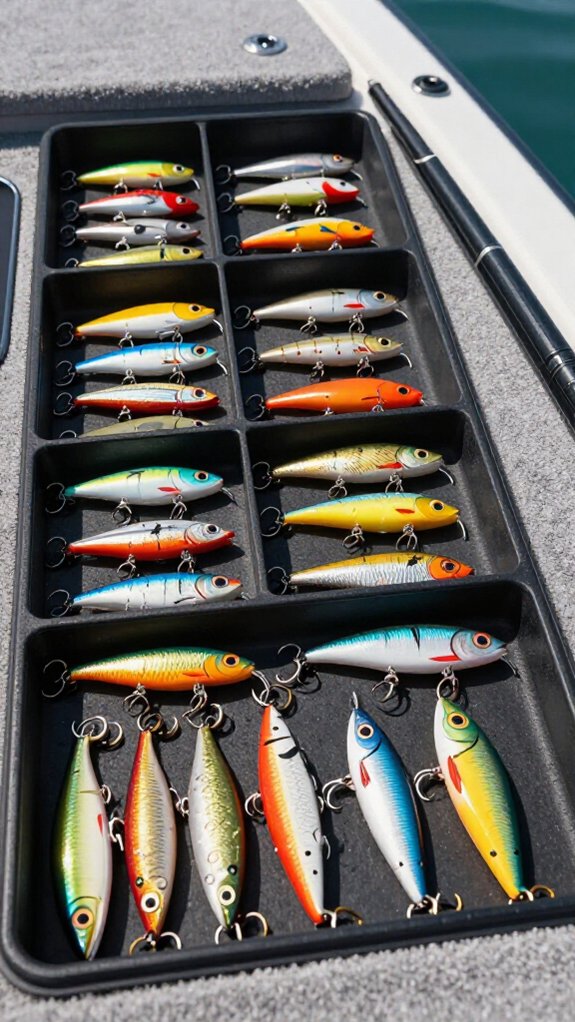
Once I’ve sorted my lures by species and water body, I need to make sure my trays actually fit where I store them. There’s nothing worse than a perfectly organized box that won’t slide into my boat compartment without a fight.
Measure Before You Buy
I always grab my tape measure and check my boat compartments before shopping for any tackle tray. Knowing my exact dimensions saves me from headaches later.
Stick With Standards
I’ve learned that 3700 and 3600 tackle tray sizes fit most storage solutions perfectly. These industry standards slide in smooth and stack neat.
Match Size to Purpose
- Smaller trays: My go-to lures for quick grabs
- Larger trays: Bulk backup and seasonal stuff
When every tackle tray nests snug in my boat compartments, I’m not wrestling gear, I’m fishing.
Prevent Tangles With Foam and Magnetic Inserts
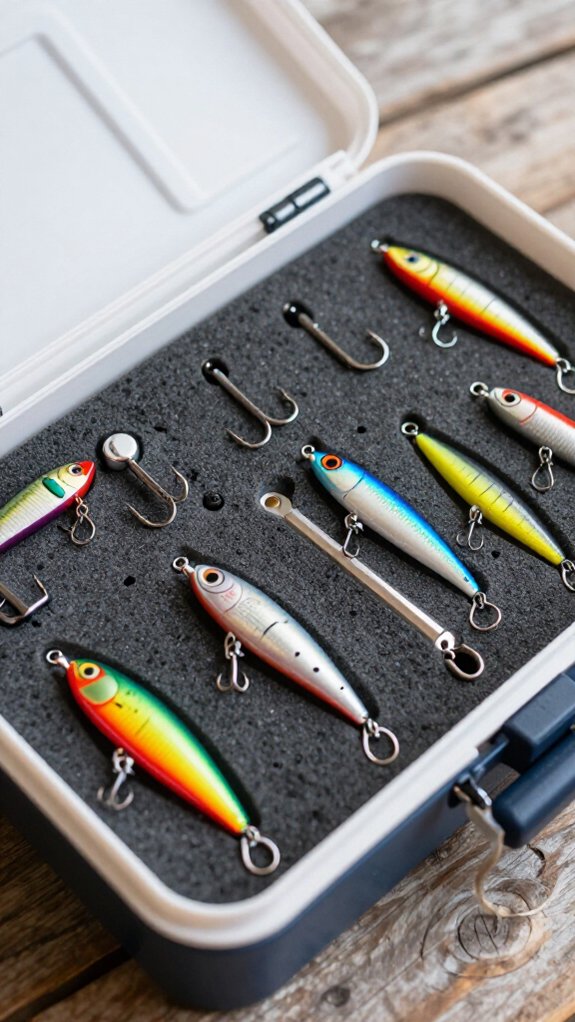
After I’ve matched my trays to my boat compartments, I still need a reliable way to keep those lures from turning into a bird’s nest the moment I hit a wake.
Foam Inserts Lock Everything Down
I rely on foam inserts with pre-cut slots to cradle each lure individually. No more treble hooks catching crankbait lips or spinnerbaits wrapping around jerkbaits. The foam grips everything snugly, so when I’m running across choppy water, my tackle stays exactly where I put it.
Magnetic Storage for Quick Access
For my metal spoons and inline spinners, magnetic storage is a game-changer. I just drop them onto the strip, and they stick: visible, accessible, and completely tangle-free. No digging through piles of hardware.
The Winning Combo
Combining foam inserts and magnetic storage gives me flexible lure organization that protects paint finishes and extends lure life. My tackle box stays neat, and I spend more time fishing, less time untangling.
Keep Soft Plastics Fresh and Easy to Grab
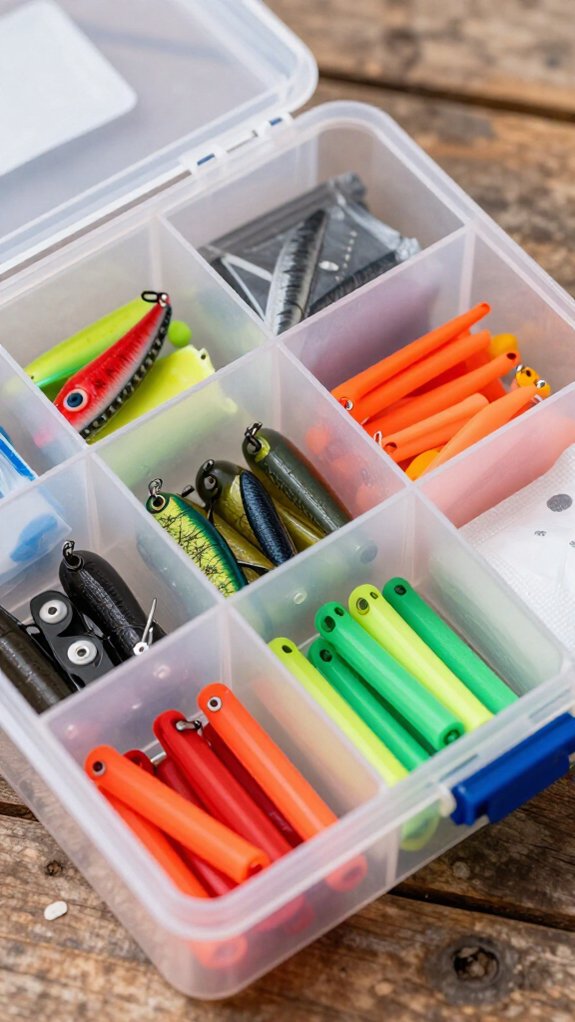
I sort all my soft plastics into labeled ziplock bags by size, 3-inch, 4-inch, 5-inch, so I can grab exactly what I need without fumbling through a tangled mess.
Those bags go straight into a cool, dry spot away from any sunlight, because I’ve learned the hard way that heat turns my favorite worms into a melted, useless glob.
With everything sealed airtight and arranged in dedicated tackle trays, my plastics stay fresh, flexible, and ready to rig at a moment’s notice.
Ziplock Bag Organization
If you’re tired of digging through a jumbled mess of soft plastics that’ve melted together or lost their scent, ziplock bag organization is the simplest fix you’ll wish you’d started sooner.
I’ve transformed my tackle organization by storing soft plastics in labeled ziplock bags, and it saves me precious minutes when the bite’s hot.
Here’s my three-step system:
- Bag by category — I separate worms, craws, and creature baits into their own ziplock bags to prevent cross-contamination and keep scents pure.
- Squeeze out air — I press every last pocket of air out before sealing; it stops that gummy deterioration that ruins perfectly good baits.
- Corral the bags — I stash everything in a dedicated container so I’m never fumbling through scattered gear again.
I check my soft plastics regularly, tossing anything that’s gone stale.
Fresh bait catches more fish, period.
Size-Based Sorting
Why waste precious fishing time guessing whether that worm is a 4-inch or 5-inch model when you’re trying to match the hatch? I’ve solved this headache by keeping my soft plastics strictly organized by size, and it’s revolutionized how I fish.
Bag and Label by Length
I sort every soft plastic into labeled ziplock bags—3-inch, 4-inch, 5-inch—so I grab exactly what I need without second-guessing. These bags slide into separate compartments in my tackle boxes, preventing that frustrating nest of tangled tails and preserving each bait’s scent and flexibility.
Quick Reference for Size Selection
Here’s how I match size to situation:
| Size | Target Species | Water Clarity | Best Application |
|---|---|---|---|
| 3-inch | Panfish, small bass | Clear | Finesse presentations, pressured fish |
| 4-inch | Bass, walleye | Variable | All-around workhorse, daily driver |
| 5-inch | Trophy bass, pike | Stained to muddy | Big profile, low visibility days |
I use clear containers for instant visual confirmation, and I rotate stock regularly, oldest baits hit the water first. Staying organized means I’m fishing, not fumbling.
Climate-Controlled Storage
Because I’ve lost entire bags of soft plastics to a hot garage shelf, I’m adamant about climate-controlled storage. It’s the single best move you can make to keep your baits fish-ready and your money in your wallet.
I keep my soft plastics in a dedicated, temperature-regulated space that stays cool year-round. Heat melts and warps these baits fast, ruining their action and scent. Consistent, cool temperatures lock in that fish-attracting smell and lifelike texture that triggers strikes.
Here’s my three-step system for fresh, grab-and-go soft plastics:
- Airtight containers or labeled ziplock bags block moisture and air from degrading your baits.
- Toss in moisture absorbers to stop mold and mildew before they start.
- Keep storage out of direct sunlight and away from hot spots, heat is the enemy of longevity.
Trust me, climate-controlled storage redefines your tackle routine.
Build a Location-Specific Go-To Tackle Box
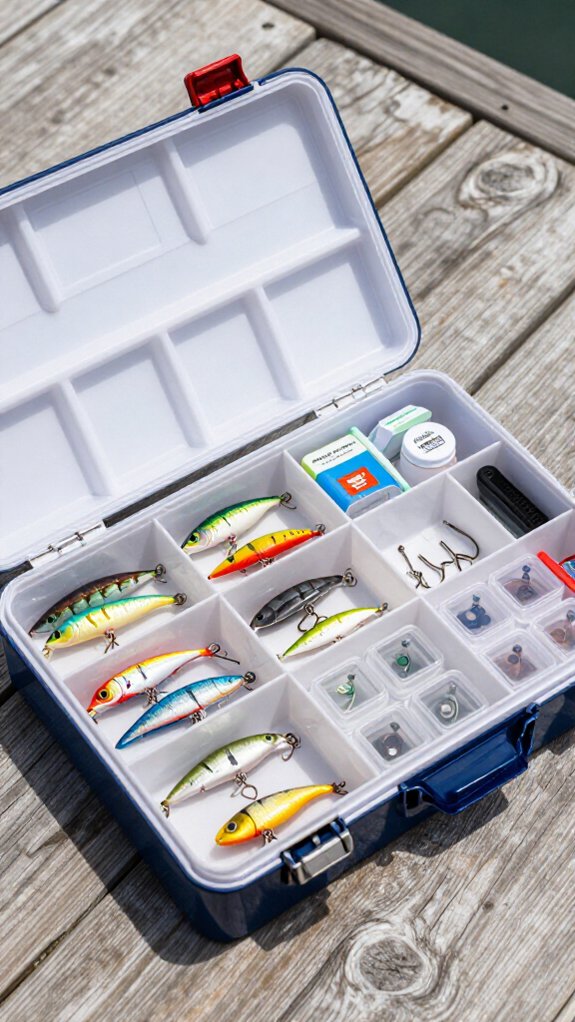
I build a compact water-ready box for each spot I fish, stocking it with only my confidence baits—jerkbaits, crankbaits, and plastics in proven colors and sizes, to cut clutter and speed up my decisions when I’m actually on the water.
I slap a quick identification label on each box naming the pond, lake, or bay it’s built for, so I grab the right setup without second-guessing at 5 AM.
This keeps me lean, focused, and ready to fish instead of fumbling through gear that doesn’t match where I’m casting.
Compact Water-Ready Box
When I’m heading to my favorite lake or river, I don’t haul my entire garage of tackle. I’ve learned that a compact, water-ready box built specifically for that spot saves me time, cuts the guesswork, and actually puts more fish in the boat.
I keep my tackle box lean by stocking only proven lure types for that water, stripping away every unnecessary piece of fishing gear.
Here’s how I keep everything organized:
- Limit sizes and colors — I pick two or three proven shades per lure type to speed up decisions.
- Label every compartment — soft plastics, crankbaits, jerkbaits, and topwaters each get their own organized section.
- Dedicate space for terminal tackle — hooks and weights sit ready for quick swaps.
I refresh this box seasonally, swapping in hot patterns and retiring what quits producing.
Confidence Bait Selection
Although I’ve fished dozens of lakes across the region, I’ve learned that stuffing my boat with every lure I own usually leads to more time digging through boxes than actually casting where the fish are.
Build Your Go-To Box
My confidence bait selection starts with proven performers for the specific water I’m hitting. I limit myself to versatile lures that’ve actually caught fish there, usually five to seven patterns tops.
Stay Organized and Efficient
I arrange everything in a compact, compartmentalized box by type and size. When my jigs, crankbaits, and soft plastics stay organized, I grab what’s needed without second-guessing. This streamlined approach eliminates decision fatigue and keeps my confidence high throughout the day.
I revisit my choices each season, swapping out what underperforms. That disciplined refinement ensures every trip starts with tackle I trust completely.
Quick Identification Labeling
Because I’ve wasted too many prime fishing hours squinting at identical boxes while the bite window narrows, I’ve made quick identification labeling the backbone of my tackle system.
I’ve found three techniques that revolutionize chaos into instant organization:
- Water-specific box labels – I mark entire containers “Pond Bass” or “Saltwater Topwater” so I grab the right setup without thinking.
- Color-coded tags – I use red for finesse, green for topwater, blue for deep diving. One glance tells me exactly where to reach.
- Compartment labels – I attach durable, waterproof labels to individual dividers showing lure size, color, and target species.
This consistent labeling approach across all my storage means I spend minutes rigging, not hunting. Quick identification puts me on fish faster every trip.
Protect Glide Baits and Crankbaits From Damage
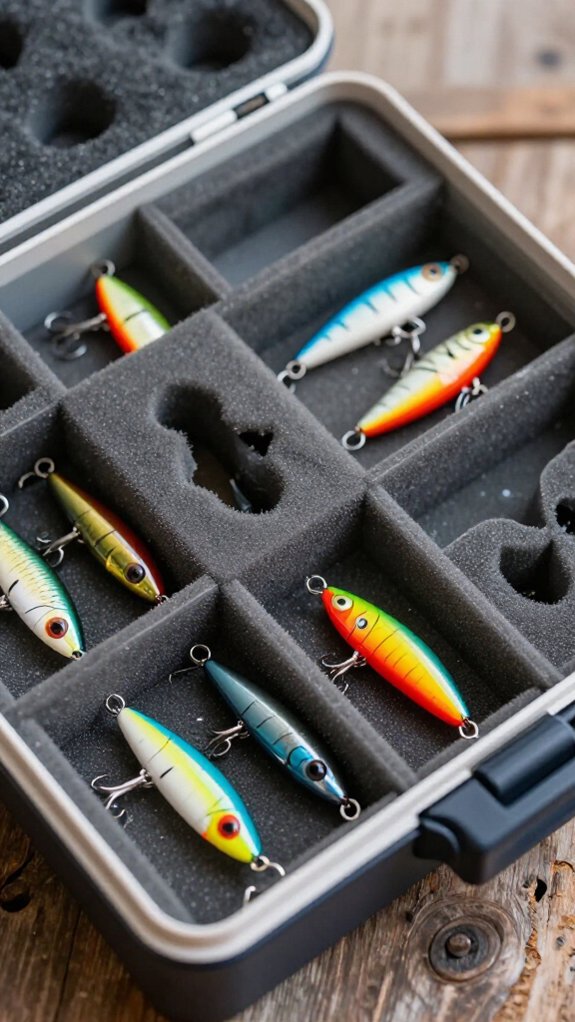
Since glide baits and crankbaits represent a serious investment, often $15 to $40 per lure, I make protecting them a priority in my tackle organization system.
Smart Storage Solutions
For my glide baits, I hang them in Lakewood Products Lure Vaults. This prevents their soft plastic tails from kinking or tearing during transport and storage.
I’ve learned the hard way: bent tails ruin the seductive side-to-side action that triggers strikes.
For crankbaits, I use dedicated utility boxes or the Lakewood Lure Locker. These keep hooks separated and eliminate the frustrating nest of tangled trebles I’ve pulled from lesser storage options.
Daily Care Habits
I pad individual compartments to cushion lure bodies and protect delicate lips.
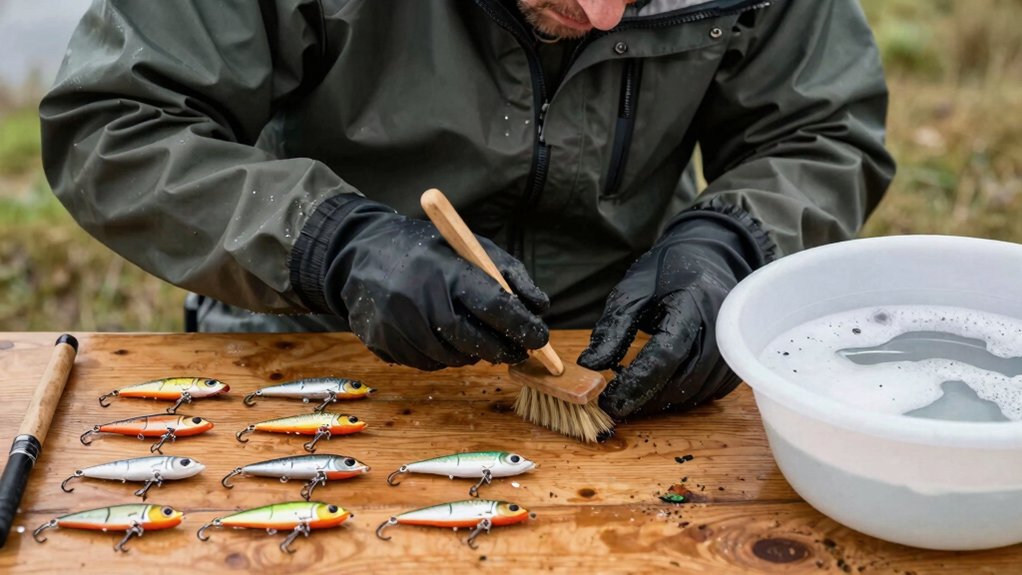
Before storing, I inspect each bait and clean off lake grime. This simple routine extends their lifespan significantly, saving me money and keeping my go-to lures ready to run true.
Track Your Tackle to Skip Pre-Trip Panic
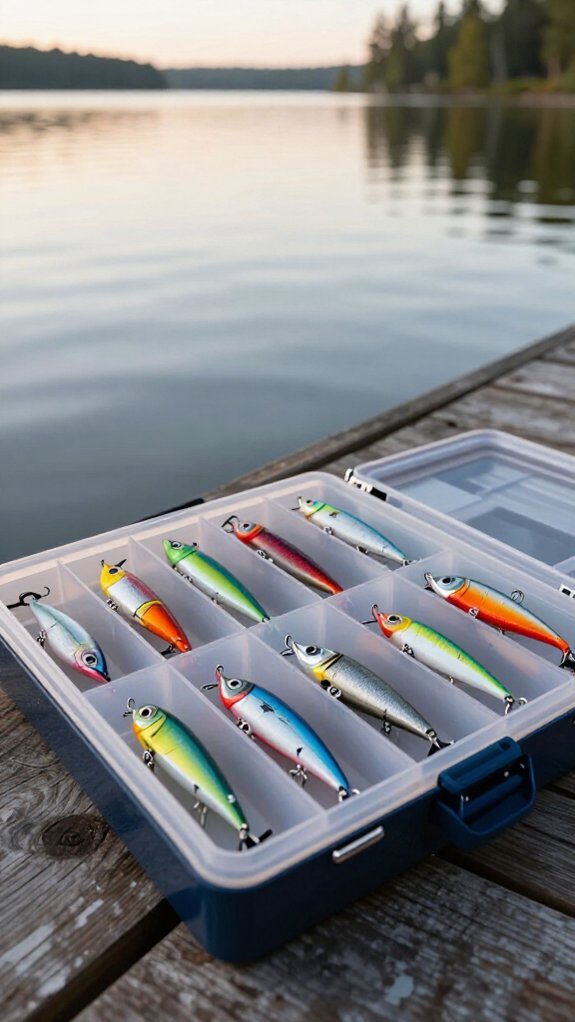
How many times have you’ve stood in your garage at 4 AM, frantically digging through drawers because you can’t remember if you own a 3/8-ounce white spinnerbait? I’ve been there, and it’s why I swear by tackle inventory systems.
Smart organization eliminates pre-trip panic. Here’s my three-step approach:
- Log everything – I record lure types, sizes, and colors in a simple spreadsheet or app so I know exactly what I own.
- Update after every trip – I check my tackle against my inventory, noting what’s used, lost, or running low.
- Match storage to my list – I use labeled containers that mirror my inventory categories, giving me instant visual confirmation.
This system saves me roughly 20 minutes of packing time per trip, according to a 2023 survey by Fishing Tackle Retailer. No more 4 AM scrambling, just grab and go.
Frequently Asked Questions
What Is the Best Way to Store Fishing Lures?
I sort my lures by type and size in tackle boxes with adjustable dividers, bag soft plastics in labeled ziplocks, hang glide baits on racks, and stash crankbaits in compartmentalized trays for quick, tangle-free access.
How to Organize Your Fishing Stuff?
I sort my rods by technique, keep reels in protective cases, and arrange terminal tackle in small compartment boxes. I’ll label everything clearly and store it all in a moisture-free environment for quick grab-and-go trips.
How Do I Store Fishing Plastics Effectively?
I keep my soft plastics in labeled ziplock bags, sorting them by size like a tidy workshop where every bolt has its place. I stash them in plastic tackle boxes with dividers, away from sunlight’s heat.
What Is the Best Way to Store Crankbaits?
I store my crankbaits in compartmentalized utility boxes or foam-lined trays that protect their bills and finish. I organize them by size and color in clear, labeled containers.
I always dry them thoroughly after each trip to prevent rust.
In Conclusion
Organizing your fishing lures isn’t just about neatness, it’s about spending more time with your line in the water and less time digging through chaos like a squirrel hunting a buried nut. I’ve found that a system tailored to my fishing style changes every trip.
Start small, adjust as you go, and soon you’ll have a setup that feels like second nature. Tight lines and tidy trays, my friend.