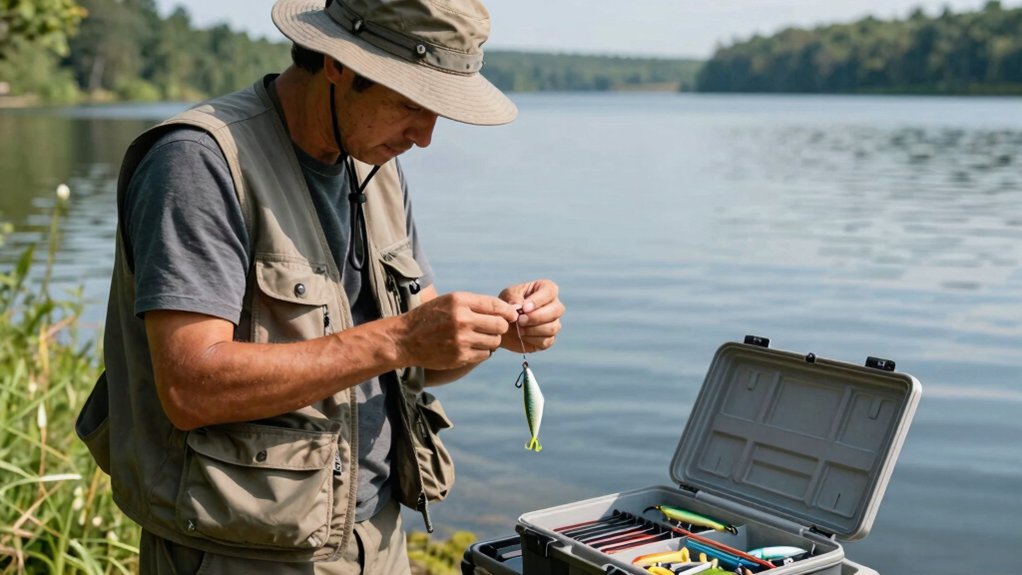

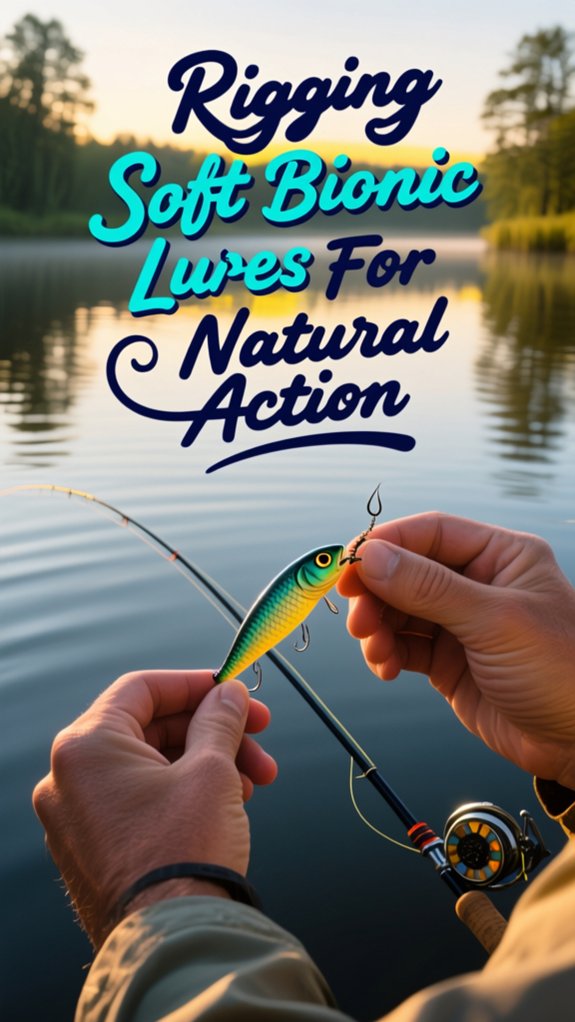
I rig soft bionic fishing lures by matching hook size to my plastic’s dimensions, 3/0 to 5/0 for medium baits, downsizing for finesse presentations. I thread nose-first through the bait, sliding it forward until straight, then bury the hook point completely for a weedless, snag-resistant setup that glides through grass and timber.
I add a tail slit halfway up the centerline to create that erratic, wounded-baitfish flutter that triggers reaction bites from bass and pike. Heavier weights work better in deep water or current, while I go lighter in shallow, calm conditions.
Varying my retrieve speed—sometimes burning it, other times twitching and pausing—keeps the paddle tail whipping unpredictably. There’s a simple modification I make to the hook placement that takes this presentation from good to absolutely deadly.
Pick the Right Hook Size for Your Soft Plastic
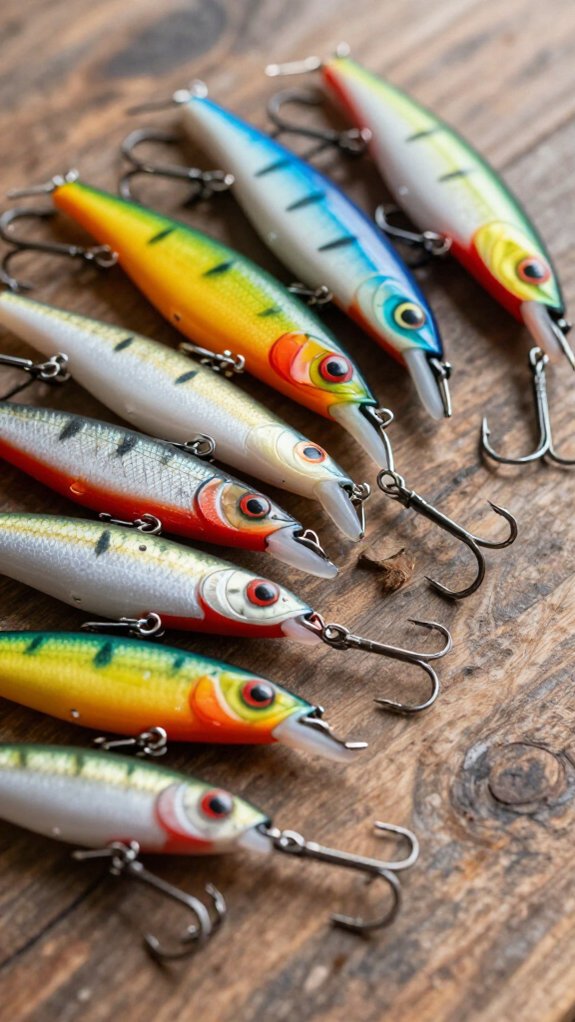
Although hook size might seem like a minor detail, I’ve learned it’s one of the biggest factors that determines whether a soft plastic lure dances naturally or flops lifelessly in the water.
Match Your Hook to Your Bait
I always start by matching hook size to my soft plastic’s diameter and length. For medium-sized soft plastics, I’ll grab a 3/0 to 5/0 hook. When I’m throwing a finesse presentation with smaller soft plastics, I downsize to 1/0 or 2/0. This keeps the lure action subtle and convincing.
Consider Gauge and Conditions
Hook gauge matters too. Thinner gauges enhance lure movement but sacrifice durability. I also factor in water conditions and species targeted: larger hooks (6/0, 8/0) handle bulky baits and big fish, though they can dampen that lifelike wiggle I’m after.
Texas or Carolina: Pick the Right Rig for Your Water
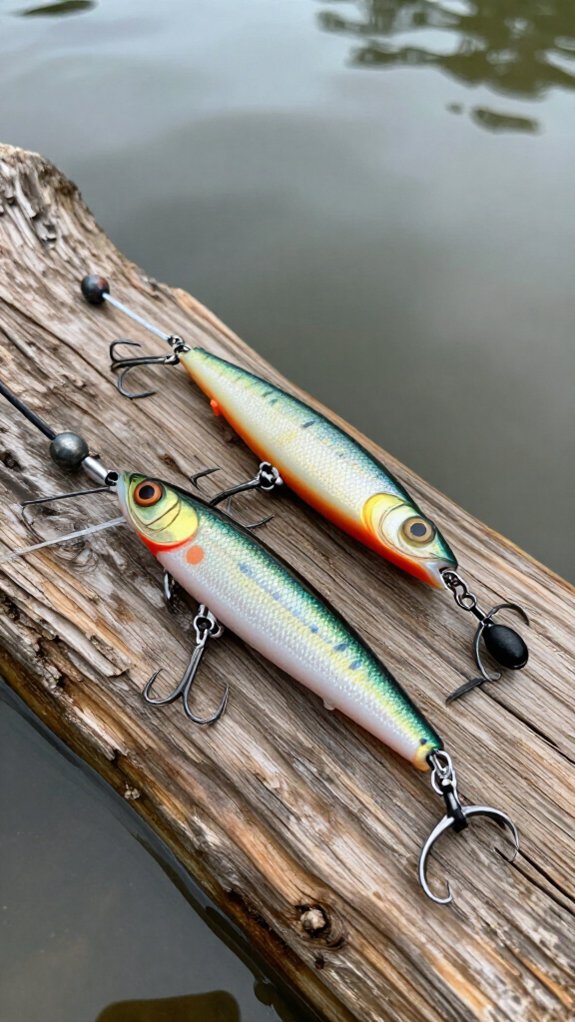
Where you fish matters just as much as what you throw, and choosing between a Texas or Carolina rig can make the difference between a skunked day and a full livewell. I rely on the Texas rig when I’m punching through thick grass or woody cover, its weedless design lets me drag soft plastic baits anywhere without snagging.
When I’m scanning vast flats or probing deep water, I switch to the Carolina rig for that irresistible natural fall that keeps fish guessing.
Here’s how I decide which fishing technique fits my day:
| Situation | Texas Rig | Carolina Rig |
|---|---|---|
| Environment | Heavy cover, structure | Open water, expansive bottoms |
| Presentation | Active, twitching | Subtle, slow sink |
| Target Zone | Shallow | Deep water |
Match your presentation to the conditions, and watch your hookup rate climb.
Thread Your Lure Nose-First for Natural Swimming Action
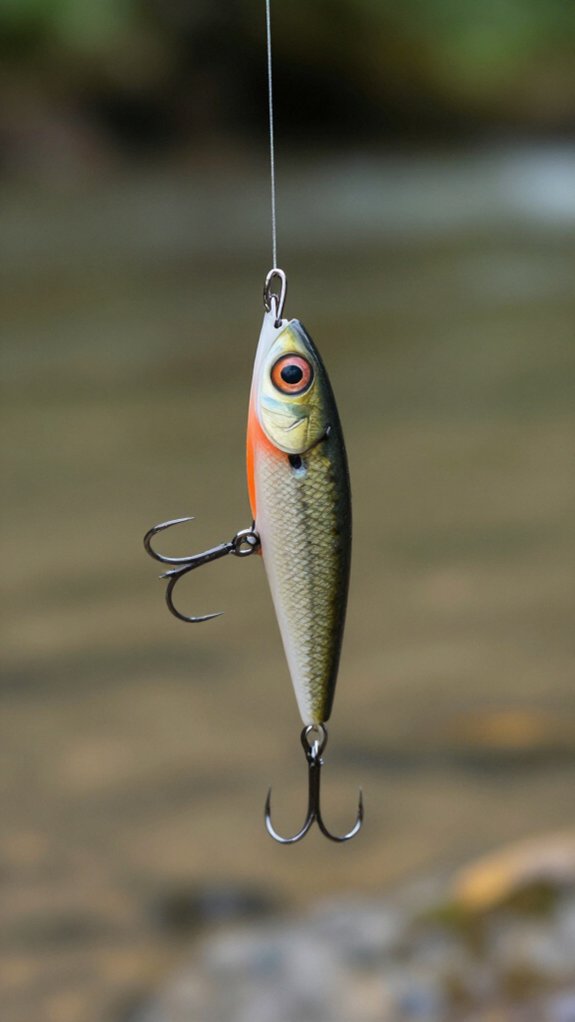
Once you’ve picked your rig, threading your lure nose-first is what separates a bait that swims from one that spins in circles like a confused top. I start by pushing the hook point through the soft bait just below the head, then thread it forward so it exits near the front. This keeps the plastic bait straight and centered for that seductive wobble on retrieve.
Here’s how I dial in perfect swimming action:
- Keep the body straight, crooked lure rigging kills natural movement
- Embed the hook point slightly into the flexible lure to prevent tearing while maintaining responsiveness
- Check your paddle tail stays unimpeded for convincing fish mimicry
I always use a thin gauge hook for minimal resistance. When that wounded baitfish action kicks in mid-retrieve, you’ll feel why proper hook placement matters.
Bury the Hook Point for Weedless, Snag-Free Presentation
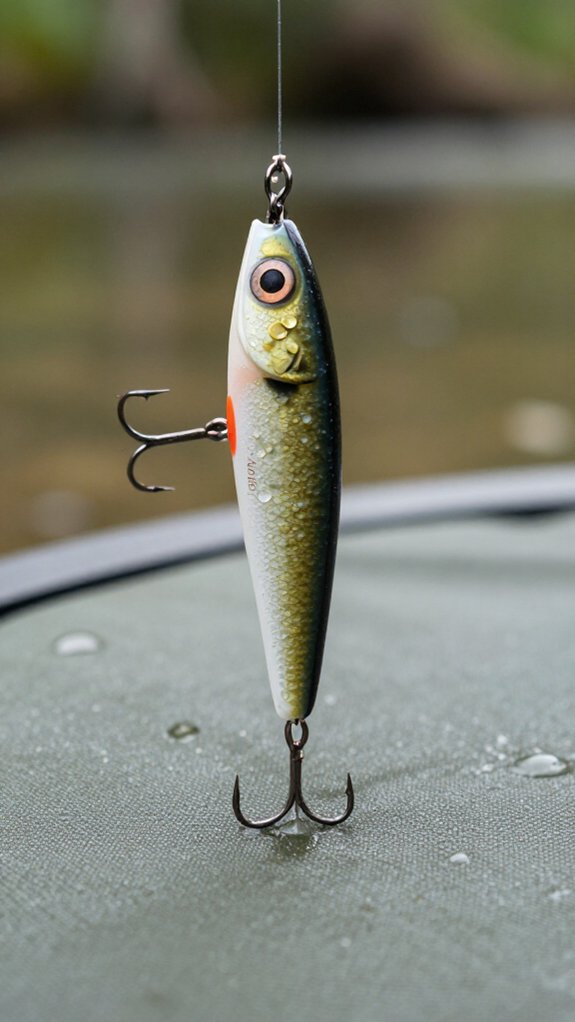
To keep your soft bionic lure dancing through thick grass and timber without hanging up, you’ll want to master the hook burying technique that makes a Texas rig truly weedless.
I’ll walk you through how to thread the hook point completely inside the plastic so it glides past snags while staying poised to drive home on the bite.
Once you see how this simple adjustment reshapes your presentation, you’ll understand why it’s the go-to setup for probing heavy cover where big fish hide.
Texas Rig Essentials
If I’m fishing heavy cover and want my lure to slide through grass, brush, and rocks without constantly hanging up, I Texas rig every time.
This weedless setup reconfigures any soft plastic lure into a snag resistant tool that reaches fish hiding where others can’t cast.
My Texas Rig Checklist
- Start with the right hook. I always reach for an offset worm hook from my fishing tackle box, it angles perfectly for clean rigging.
- Thread and rotate. I push the hook through the bait’s nose, slide it to the hook shank bend, then rotate and bury the point back into the plastic.
- Align and test. I check that the body sits straight and the point hides completely, ensuring natural action and maximum casting distance through thick cover.
Hook Burying Technique
After you’ve threaded the hook through your soft plastic and rotated it into position, the real magic happens when you bury that point so it glides past gnarly cover instead of catching every stray twig.
The Burying Process
I start by slightly inserting the hook tip into the front of my soft plastic lure, then I slide it along the body until the barb sits just beneath the surface. This hook point placement leaves the barb exposed for solid hooksets while maintaining full lure concealment.
Why Hook Burying Works
For effective weedless rigging, I always reach for a wide gap hook, it creates enough space for secure rigging without distorting the bait’s profile. I adjust burial depth based on lure shape and cover density; thicker vegetation means deeper burial.
Proper technique preserves natural action, prevents tearing, and delivers serious snag reduction without killing your bait presentation.
Weedless Presentation Benefits
Once I’ve buried that hook point just beneath the surface, I’m suddenly fishing where I couldn’t cast before, thick grass, timber, and brush piles that once shredded my tackle.
This weedless rigging changes how I fish heavy cover. By tucking the hook point into that soft plastic, I’ve created a snag-resistant package that slides past underwater debris without hanging up. The lure action stays pure—no mechanical interference from weeds or branches stealing the show.
My bait presentation gains three critical advantages:
- Natural movement isn’t restricted by snags, so the lure swims like live prey
- Deep cover becomes accessible without constant re-rigging frustration
- Hooksets remain sharp despite the protected point
That realistic lure action in places predators actually hide? That’s where trophy fish live.
Match Weight to Depth and Current Conditions
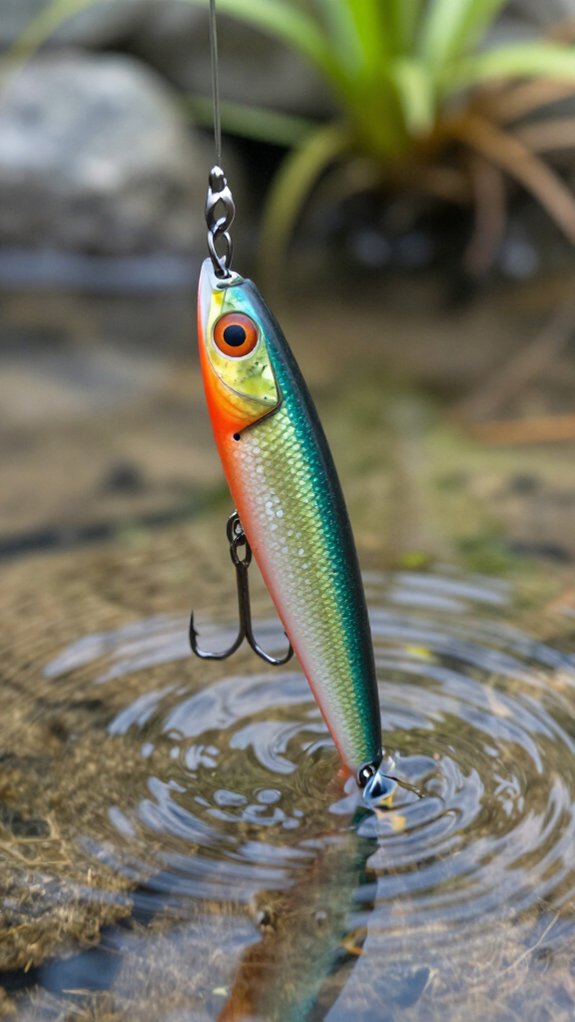
Getting your lure to the right depth isn’t guesswork, it’s about reading the water and matching your weight to what you’re seeing.
Why Weight Matters
When I’m rigging for depth and current conditions, I start by feeling the water. Strong current or deeper water demands a heavier sinker, often 3/8 oz or more, to keep my lure hugging the bottom where predators lurk.
In calmer, shallower spots, I drop to 1/4 oz or less, letting that natural action shine through with a slow, wounded-prey sink rate.
Rigging for Freedom
I always favor a sliding rig setup. It lets the lure move independently through varying depths and current flows, preventing that dead, dragging look.
Stay Adaptable
Water conditions change fast. I’m constantly adjusting weight to maintain proper lure movement, ensuring my bionic bait stays where fish expect it.
Add a Tail Slit for Stronger Kick and Wounded Bait Action
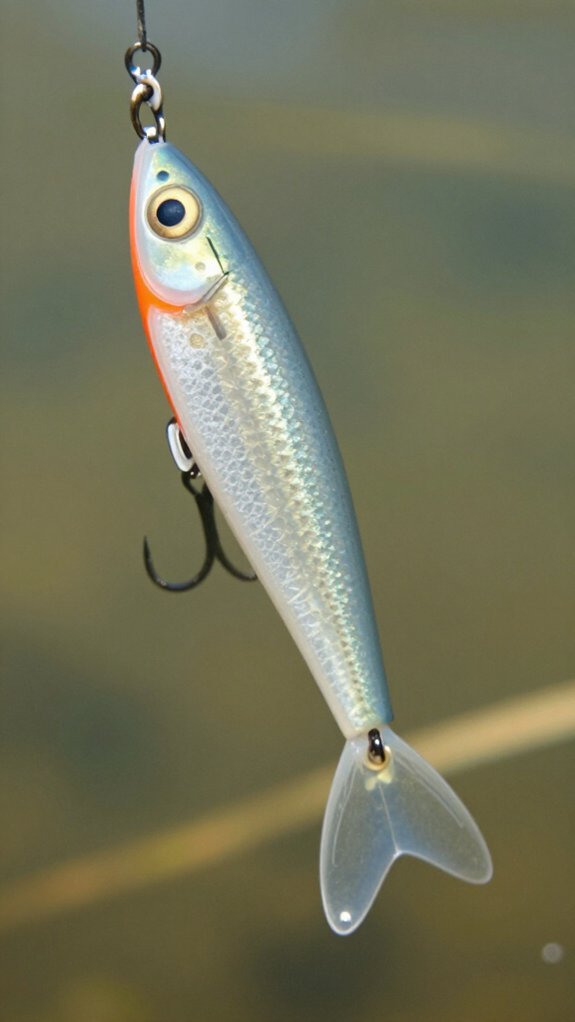
I cut a thin slit right through the center of my paddle tail’s plastic when I want that extra thump and erratic darting motion that drives bass wild.
Water jets through the gap on every twitch, letting the tail kick harder with less drag while the fluttering sides mimic a crippled shad trying to escape.
It’s a dead-simple mod that converts a standard swimbait into a wounded-bait magnet, predators simply can’t resist flushing down what looks like easy prey.
Tail Slit Benefits
Although a soft bait’s tail might look fine straight out of the package, I’ve found that adding a simple slit alters its action completely, turning a decent swimming motion into a hard-thumping kick that predators can’t ignore. When rigging soft plastic lures, this small modification pays big dividends.
Here’s what a proper tail slit delivers:
- Amplified Movement: Water flow through the cut creates exaggerated flutter with each rod twitch, doubling your lure’s disturbance signature underwater.
- Superior Flexibility: The slit improves the tail’s whip-like motion, letting it snap rearward independently during pauses in your retrieve.
- Enhanced Attractiveness: That distressed, erratic quivering triggers reaction bites from bass and pike that would ignore straighter-tail presentations.
Just slice vertically about halfway up the tail’s centerline.
I’ve watched my hook-up ratios climb significantly with this quick adjustment.
Wounded Fish Appeal
Since predators instinctively target vulnerable prey, that simple tail slit instantly converts your lure into a struggling, wounded baitfish that’s impossible for bass and walleye to pass up.
Why the Tail Slit Works
I’ve found that adding a tail slit to my soft plastic alters ordinary lure action into something extraordinary. The cut allows the paddle tail to split, creating exaggerated fluttering that screams “easy meal” to predatory fish.
Water flows through the opening, generating unpredictable, erratic movement that perfectly mimics a dying shad.
The Predator Response
This wounded bait presentation triggers instinctive strikes. When I rig my soft bait rig with a slit tail, I watch my lure produce natural motion with every twitch, darting, kicking, and pausing exactly like injured forage.
The improved fish appeal means more aggressive bites and fewer follow-ups.
Adjust Retrieve Speed to Maximize Your Rig’s Movement
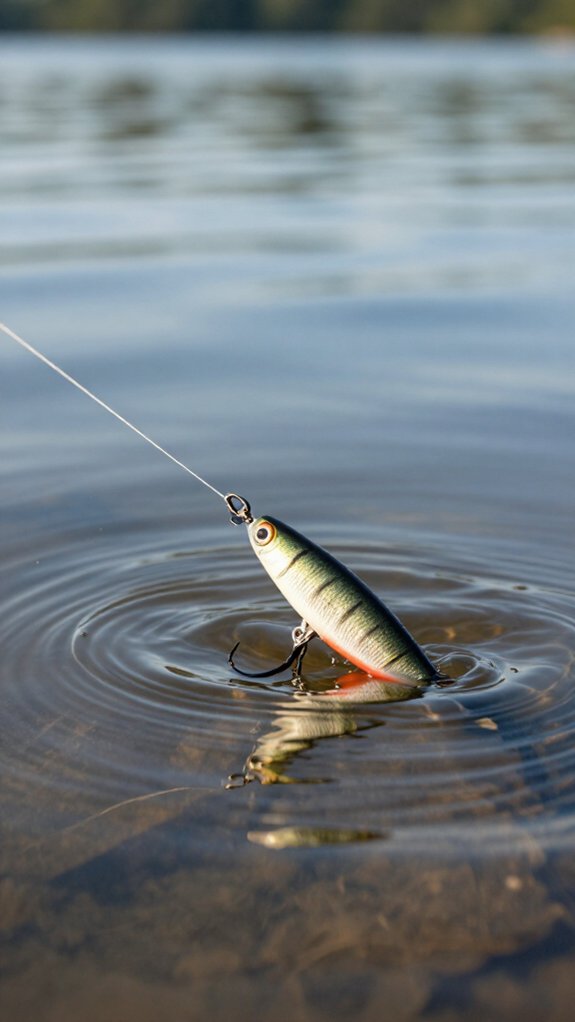
If you want your soft bionic lure to move like actual prey instead of lifeless plastic, dialing in the right retrieve speed is where the magic happens.
Here’s how I fine-tune this angling strategy:
- Speed up for wounded action — Increasing retrieve speed amplifies the twitching and wounded fish action of my soft plastic, making the lure irresistible to predators.
- Feel the tail kick — A faster retrieve causes the paddle tail to whip more vigorously, intensifying natural action and drawing attention from distance.
- Maintain line tension — When I’m moving fast, I keep my line taut to control lure movement and prevent tangles that kill fish strikes.
I vary my pace constantly, blending retrieve speed with jigging and twitching techniques until I find what triggers bites. That dialed-in rhythm? That’s when your fishing lure starts earning its keep.
Frequently Asked Questions
What Lure Was Banned From Bass Tournaments?
I know soft plastics with scent or chemical additives got banned from bass tournaments. In 2014, Bassmaster Classic specifically prohibited certain soft plastics containing particular chemicals.
I’ve seen tournaments restrict lures that mimic live prey too closely or contain embedded flavors, since officials consider them unfair advantages.
Why Do I Catch Nothing on Soft Plastic Lures?
I rig too stiffly, I rig too loosely, I move too fast, I pick wrong colors, each mistake kills the action. I Don’t mimic wounded prey, so fish ignore my lure completely.
What Smell Do Fish Hate?
I avoid ammonia, chlorine, garlic, and hot pepper scents since fish hate those. I also skip synthetic predator smells and pollution odors.
I match my bait scent to what my target species actually prefers.
Do You Use Swivels With Soft Plastics?
I don’t always use swivels with soft plastics, but I’ll add one when I’m throwing paddle tails on spinning gear to stop line twist.
For Texas-rigged baits, I skip them since they’d kill the action.
In Conclusion
Rigging soft bionic lures isn’t rocket science, it’s more like tuning a guitar until the melody hooks ’em. Match your hook to your plastic, bury that point like a secret, and let current and retrieve speed conduct the symphony.
With these tricks in your tackle box, you’ll turn sluggish days into feeding frenzies. Now get out there and make some waves.