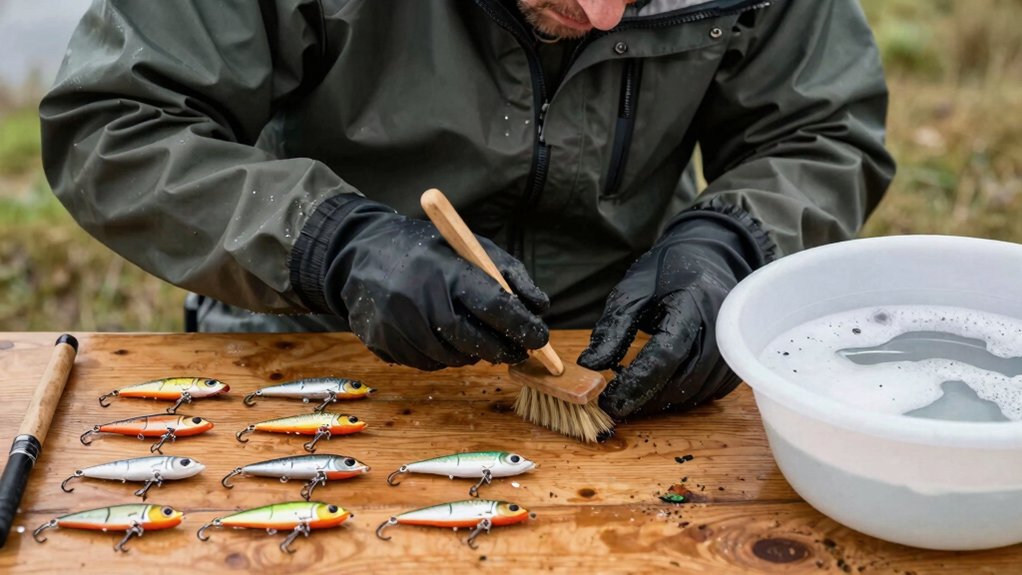
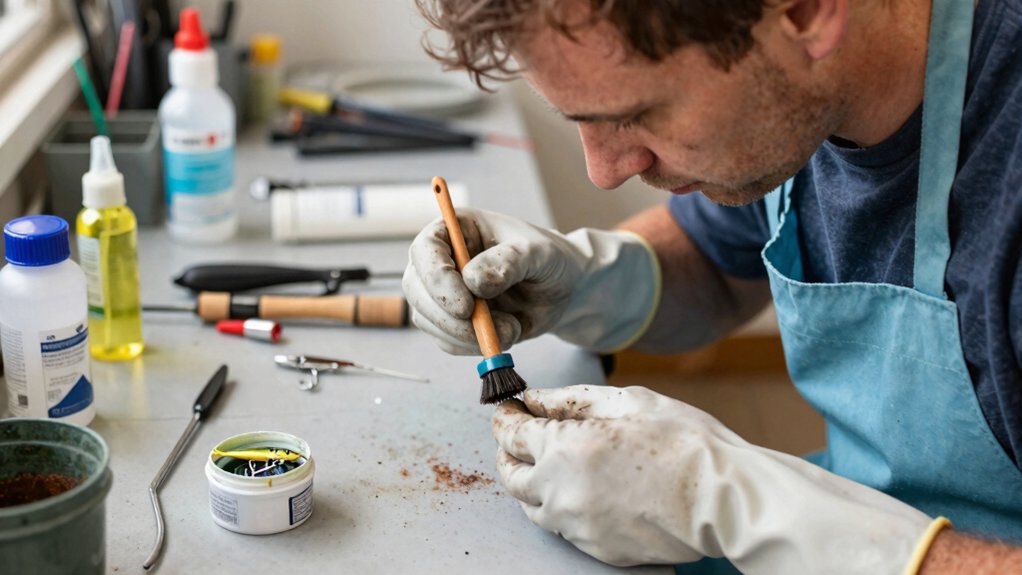

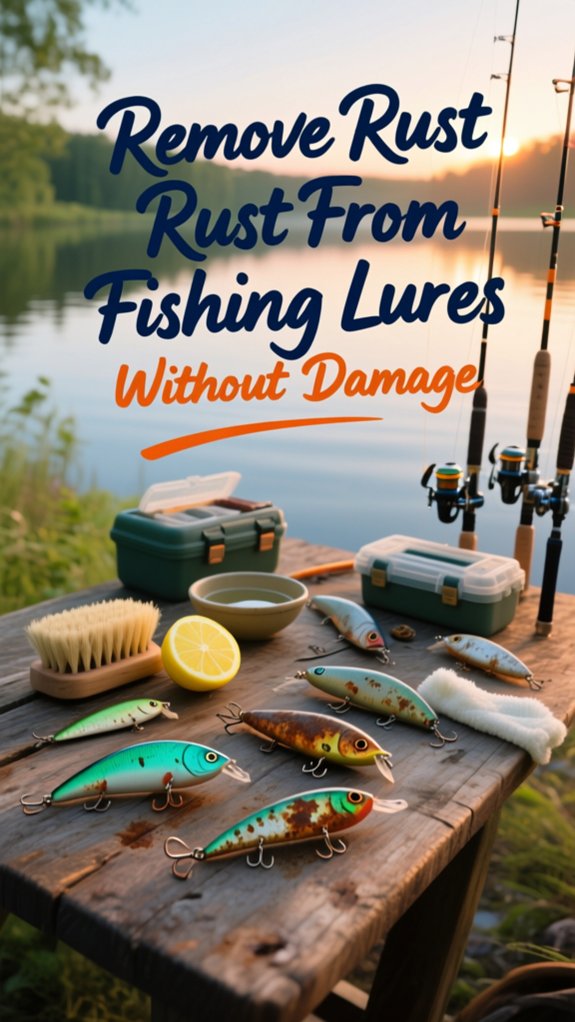
I start by disassembling the lure with pliers, then match my cleaning method to the damage. Surface rust on hooks lifts off with a baking soda paste—just mix two parts soda to one part water, brush it on, wait fifteen minutes, and scrub gently.
For deeper corrosion, I soak hooks in white vinegar for two to four hours, watching the fizz work. Painted bodies get only soft sponges and diluted dish soap; I test hidden spots first and never touch paint with steel wool. Rinsing thoroughly and drying completely after every treatment stops new rust from forming.
Store your tackle with silica gel packets, and you’ll keep rust away for seasons to come, there’s more to know about keeping every lure in your box fishable.
How to Spot Rust on Fishing Lures Early
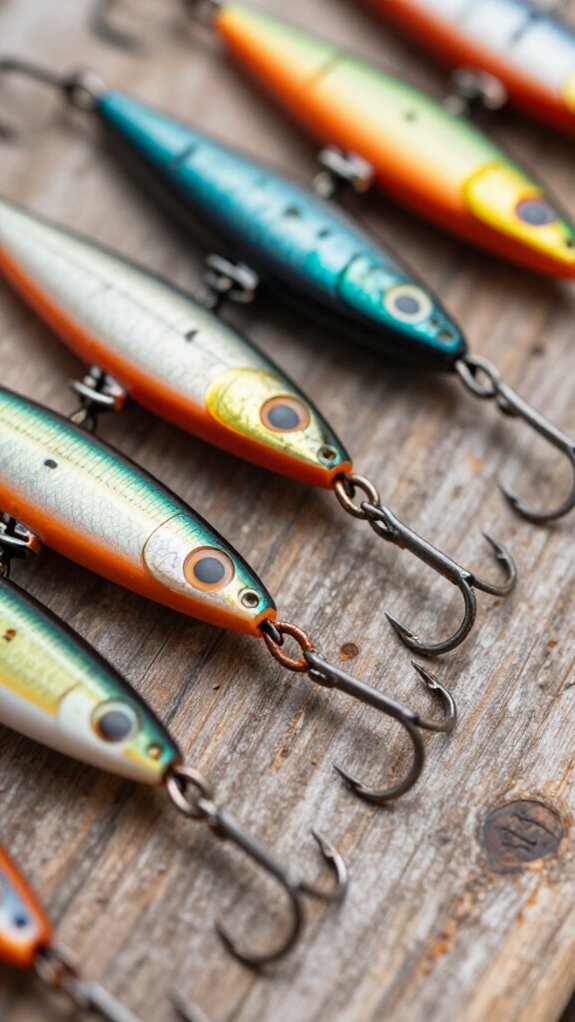
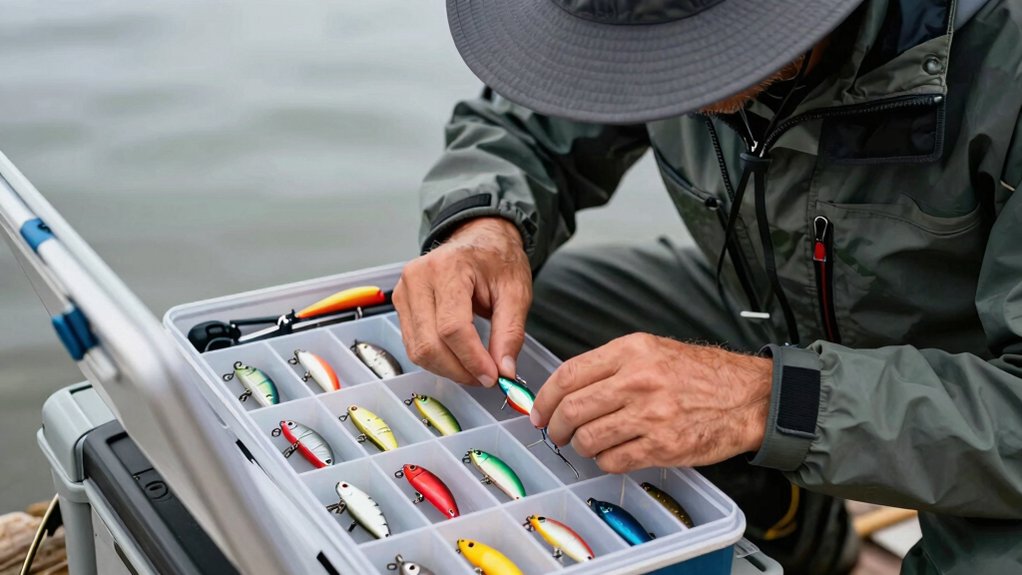
If you want to keep your lures fishing like new, you’ve got to catch rust before it catches you. I inspect my fishing lures after every trip, and I recommend you do the same.
What to Look For
Early detection starts with knowing the signs. I scan for small, dull, orange or reddish spots on metal surfaces—hooks, eyelets, and split rings. These spots often feel powdery or flaky when I run my finger across them.
Surface rust can develop within days if moisture lingers, so timing matters.
The Wipe Test
Here’s my quick trick: I grab a clean cloth and gently rub suspicious areas. If the discoloration wipes away easily, I’ve caught early-stage corrosion.
That’s when treatment works best, before rust eats deeper and ruins the lure’s action and strength.
Disassemble Your Rusted Lure Safely
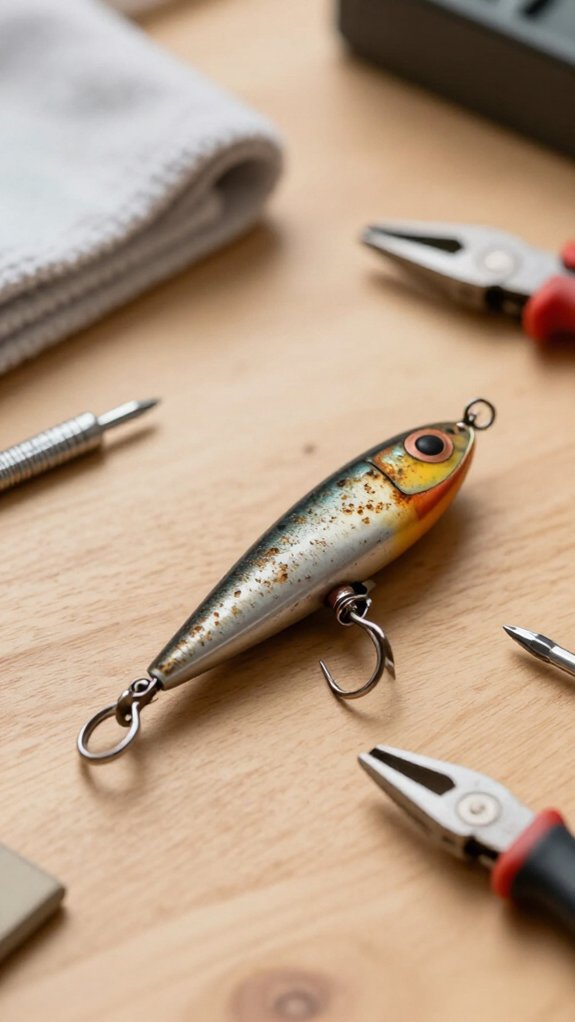
I always start by snipping off rusty hooks and split rings with side cutters, keeping my fingers clear and my parts tray within arm’s reach. Once the hardware’s off, I’ll lay every component out and give each one a hard look, checking for pitting, flaking, or that telltale orange dust that signals deeper trouble.
This two-step approach keeps the lure’s body pristine while showing me exactly what I’m working with before any cleaning begins.
Hook Removal Technique
Before you start scrubbing away at that crusty crankbait, you’ll need to strip it down to its bare bones, hooks, rings, and all. Disassembling your lure properly sets you up for successful rust removal without wrecking anything.
Gather Your Tools and Gear
I always grab side cutters or quality pliers and suit up with gloves and eye protection first. Those hooks are sharp, and one slip means a trip to urgent care instead of the river.
Remove Hooks and Split Rings
I work carefully to detach hooks first, then gently loosen split rings without twisting them out of shape. This prevents rust from spreading and lets me reach every rusted crevice inside eyelets and joints.
Taking time here means easier reassembly and a lure that looks and performs like new.
Component Inspection Steps
With hooks and split rings set aside, you’ll want to give every component a careful once-over to spot trouble before it becomes irreversible. I lay everything out on a clean towel—hooks, rings, body, and hardware—so nothing rolls away or gets mixed up during this critical inspection phase.
During disassembly, I check each piece for rust damage that threatens component integrity. Light surface rust cleans up fine, but deep pitting means replacement. Here’s what I watch for:
| Component | What to Inspect |
|---|---|
| Hooks | Deep pitting, bent points, weakened wire |
| Split Rings | Gap widening, corrosion at stress points |
| Lure Body | Cracks near tie points, finish damage |
I handle sharp edges carefully, those treble hooks bite even when rusty. If inspection reveals compromised metal, I swap it out rather than risk losing a trophy fish to gear failure.
Choose Your Rust Removal Method
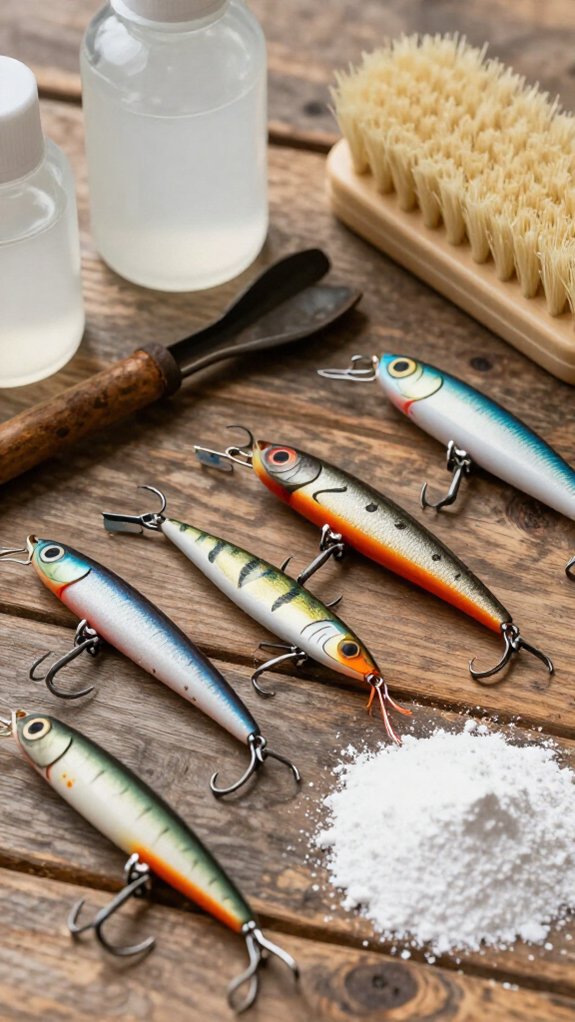
I recommend starting with gentle chemical soaks like vinegar or baking soda, which lift rust without attacking your lure’s paint job.
If you’re dealing with stubborn spots, mechanical scrubbing with a soft toothbrush or brass wool lets you control exactly where you’re working.
For seriously rusted vintage lures, the electrolysis restoration method removes corrosion at the molecular level while keeping that original finish intact.
Gentle Chemical Soaks
When I’m staring down a box of rusty lures that’ve seen better days, I reach for gentle chemical soaks first, it’s the safest way to bring them back without chewing up paint or finishes.
Vinegar Soaks
I fill a container with white vinegar and drop in my rusty lures for 2-4 hours. The vinegar dissolves surface rust without harsh chemicals threatening the paint.
After soaking, I neutralize the acid with a water and baking soda rinse. This stops any lingering chemical contact that could harm the finish.
Baking Soda Paste
For spot treatment, I mix baking soda with water into a paste and work it gently with a soft toothbrush. It lifts rust while preserving delicate coatings.
Sea Foam Method
For stubborn corrosion, I submerge lures in Sea Foam fuel additive for 5-7 days. It loosens rust deep in crevices, minimizing any need for scrubbing that could scratch surfaces.
Mechanical Scrubbing Techniques
Although chemical soaks handle most rust situations, sometimes you’ll need to get hands-on with mechanical scrubbing to finish the job, especially when you’re dealing with raised, flaky corrosion that won’t dissolve on its own.
Choose Your Tools Wisely
I always reach for a soft-bristled toothbrush or plastic brush first. Metal tools spell disaster for delicate paint and vintage finishes.
For stubborn spots, I’ll make a thick baking soda paste, let it sit for 15 minutes, then start scrubbing.
The Right Technique
Work in gentle circular motions—never straight back-and-forth strokes. This prevents those ugly scratch marks that ruin a lure’s action in the water.
I’m talking light, consistent pressure here.
Finish Strong
Rinse thoroughly under cool water and dry immediately with a soft cloth. Any lingering moisture invites fresh rust overnight, undoing your careful work entirely.
Electrolysis Restoration Method
If you’re dealing with deep, stubborn rust that mechanical scrubbing can’t touch, electrolysis is the method I turn to when I need to save a vintage lure without sacrificing its original paint or finish.
Setting Up Your Electrolysis Tank
For rust removal on fishing lures and rusted hooks, I grab a plastic container, fill it with water mixed with washing soda, and connect a 12V battery charger.
I attach the positive lead to the rusted item and clip the negative lead to a steel or graphite sacrificial anode.
How It Works
As electricity flows, rust converts to soluble iron oxide that simply washes away.
The process typically runs 4–8 hours for deep pitting.
Finishing Up
After electrolysis, I rinse lures thoroughly, dry them immediately, and re-lubricate to prevent future rust.
Clean Surface Rust Off Hooks With Baking Soda
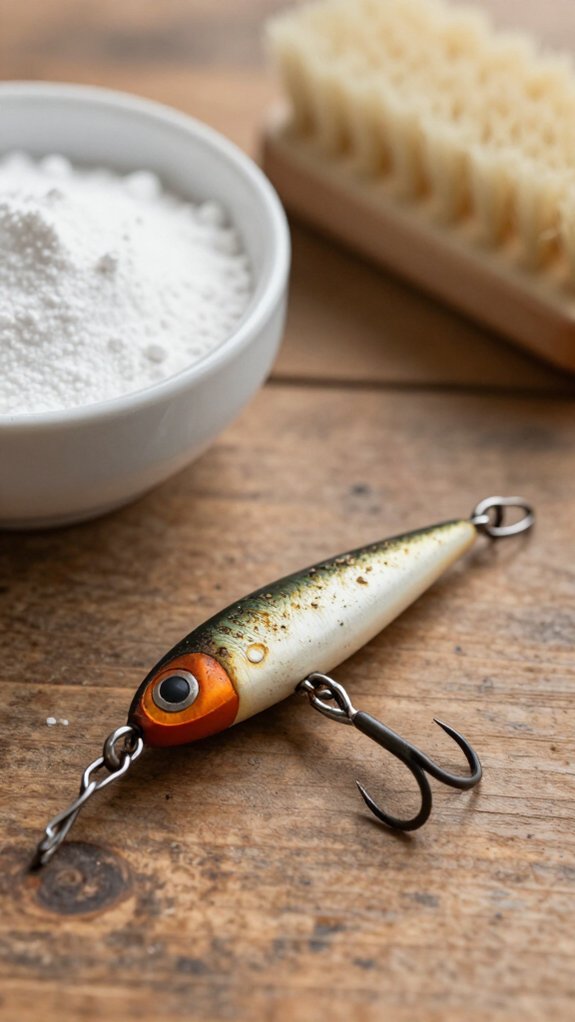
Surface rust on hooks doesn’t mean your favorite lure’s headed for the trash. I’ll show you how baking soda brings them back to life without scratching the finish or weakening the metal.
For gentle rust removal, I mix two parts baking soda with one part water until I’ve got a thick paste that’ll cling to those hooks.
Here’s my quick method that works every time:
- Apply the paste to rusted areas using an old toothbrush or nylon brush
- Let it sit 15-20 minutes to loosen that oxidation
- Scrub gently with your brush or fine steel wool, then rinse and dry completely
I’ve saved countless trebles this way. The mild alkaline action lifts surface corrosion without etching the metal.
Just remember—Thorough drying prevents fresh rust from taking hold overnight.
Dissolve Deep Hook Rust With Vinegar
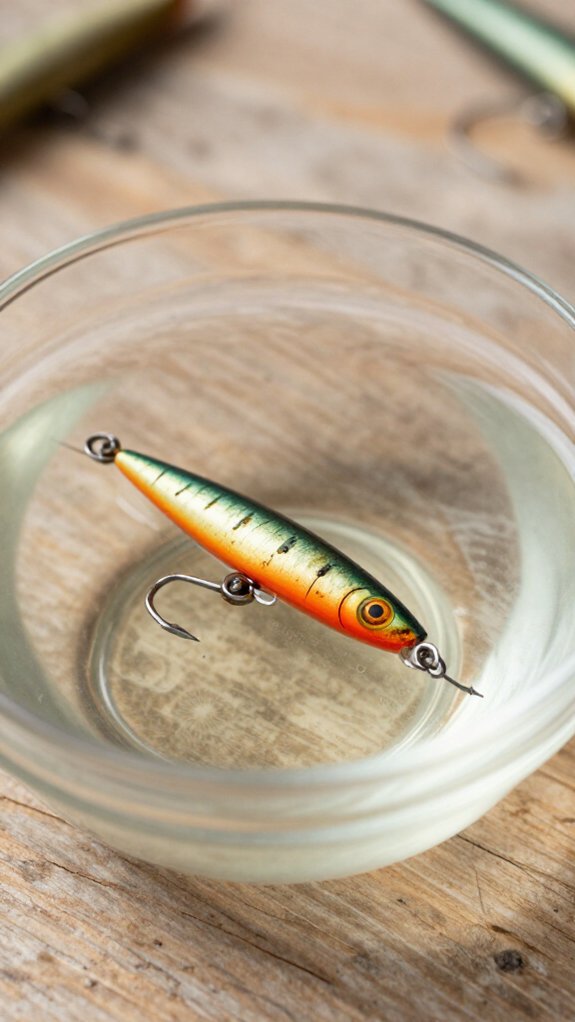
When surface scrubbing won’t cut it anymore, I’ll reach for white distilled vinegar to dissolve deep rust that’s eaten into my hooks. I submerge them completely and let the acetic acid work its magic for 2-4 hours. You’ll see bubbles and fizzing, that’s the vinegar actively breaking down corrosion.
| Step | Action | Purpose |
|---|---|---|
| Soaking | Submerge hooks 2-4 hours | Dissolves deep rust through acid action |
| Scrubbing | Gently brush with toothbrush | Removes loosened particles |
| Neutralizing | Dip in baking soda solution | Stops acidity from damaging metal |
After soaking, I scrub gently, rinse thoroughly, then neutralize any remaining acidity with baking soda to prevent further corrosion. I dry completely and touch up the points with a hook file.
This vinegar method saves hooks I’d otherwise toss, keeping my tackle box stocked and my wallet happier.
Scour Lure Bodies Without Damaging Paint
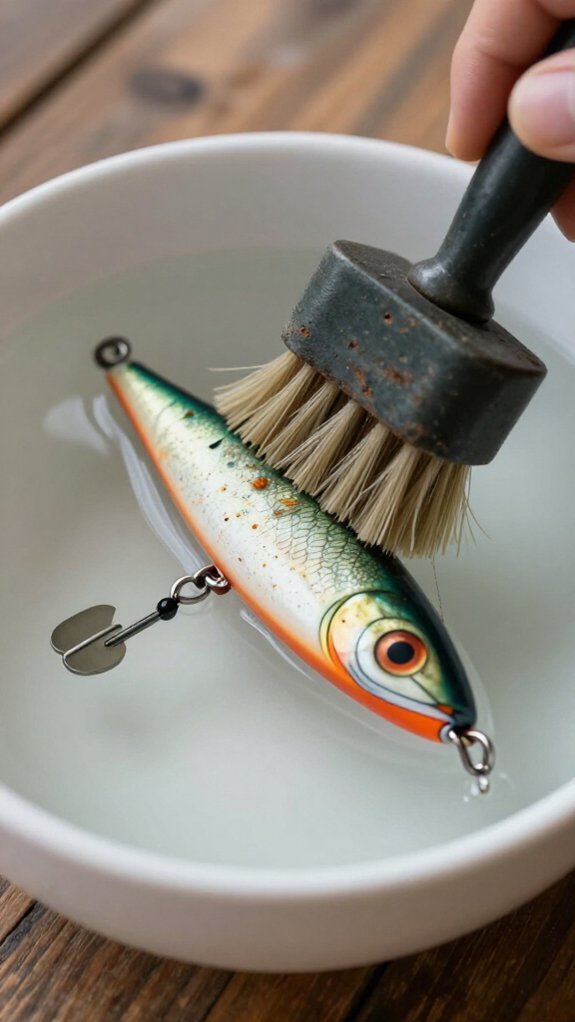
Although I’ve rescued plenty of hooks with vinegar, I know the real heartbreak is watching a beautiful crankbait or jerkbait lose its finish to overzealous cleaning. When tackling rust on lure bodies, I protect that factory paint job like it’s treasure.
Here’s my gentle approach:
- Work a soft-bristled toothbrush or non-abrasive sponge with diluted dish soap across the surface, no direct scrubbing on painted areas.
- Test each cleaning method on a hidden spot first to confirm the paint stays glossy.
- For stubborn rust, I’ll lightly touch 0000-grade steel wool to unpainted metal only, never the finish.
Afterward, I rinse thoroughly with clean water. Residue lingering too long actually degrades paint over time, so don’t skip this step.
Prevent Rust on Tackle During Storage
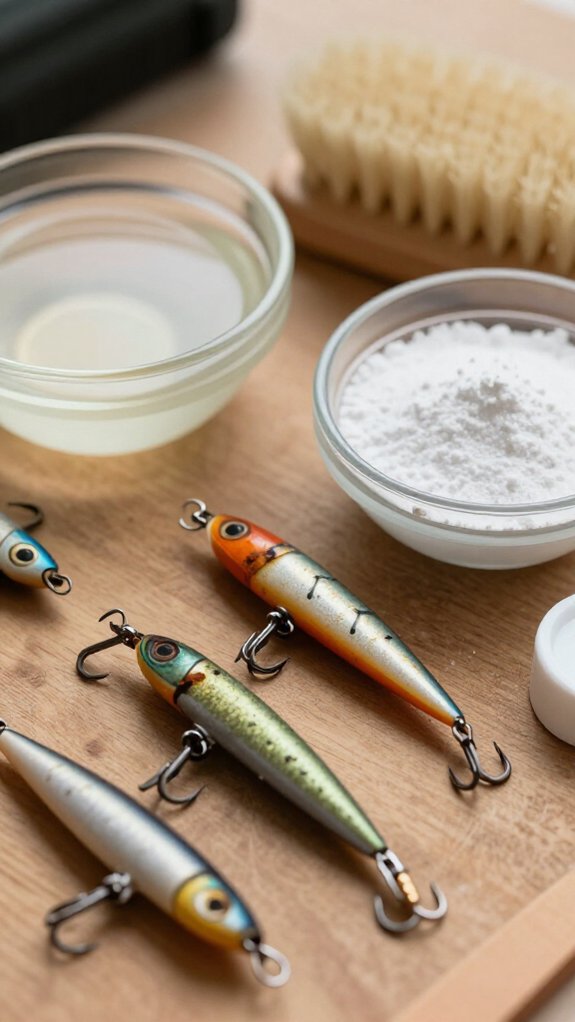
Once I’ve spent an afternoon rescuing lures from rust, I’m not about to let them fall victim to it again in my tackle box. I’ve learned that smart storage habits prevent costly damage and keep my tackle ready for action.
Dry Before You Store
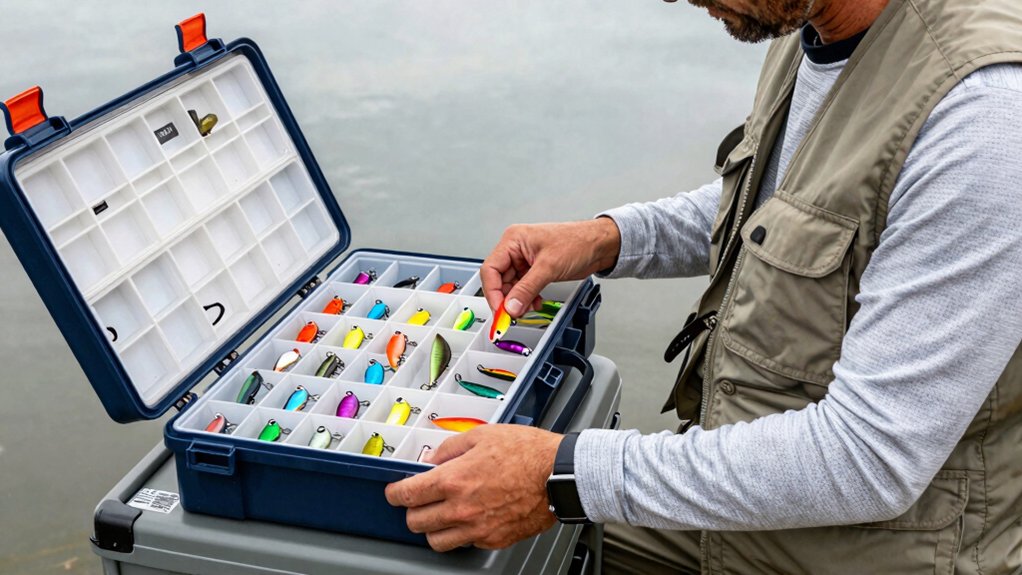
I always thoroughly dry every hook and metal component before my lures hit the tackle box. Wet gear going into closed storage is asking for trouble, moisture breeds rust fast.
Control the Climate
I toss silica gel packets or VCI strips into my compartments to absorb lingering humidity. I also skip sealing my tackle box immediately after fishing, letting air circulate so everything breathes.
Boost Airflow
For my larger storage, I drill small ventilation holes or use open shelving. Good airflow reduces trapped moisture and keeps my investment rust-free season after season.
Frequently Asked Questions
Will WD-40 Remove Rust From Fishing Hooks?
WD-40 displaces moisture and loosens rust on my hooks, making surface corrosion easy to scrub away. It won’t fix deep pitting, but I’ll use it with a brush, rinse thoroughly, and dry to protect my gear.
What Dissolves Rust Without Scrubbing?
I watched vinegar eat through barnacle crust like acid through fog, and I’ve soaked rusty hooks in that same clear liquid for hours, no scrubbing needed, just patient chemistry dissolving orange decay into rust-free metal.
Can You Spray WD-40 on Fishing Lures?
I spray WD-40 directly on my rusty lures, let it sit briefly, then gently scrub with a soft brush to lift corrosion without harming the finish.
I always rinse and dry thoroughly afterward to prevent attracting dirt.
Does Dawn Dish Soap Remove Rust?
I’d love to say Dawn works miracles, but that’s a gentle fib, it won’t dissolve rust.
I use it only after vinegar or baking soda’s done the heavy lifting, since Dawn’s talent lies in cleaning grime, not corrosion.
In Conclusion
Rust-free lures catch more fish, period. I’ve walked you through spotting trouble early, taking lures apart without breaking anything, and choosing the right cleaner for every job.
Think of your tackle box as a toolbox: neglect it, and everything seizes up; maintain it, and every piece works like clockwork. Store gear dry, check hooks monthly, and you’ll spend less time fixing and more time catching. Your future self—and your stringer—will thank you.