
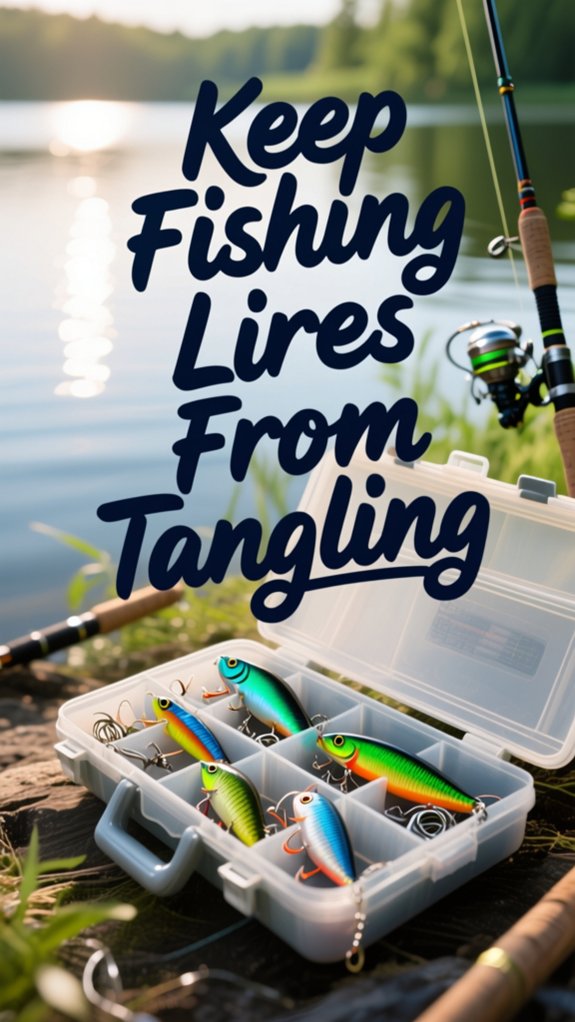
I keep my fishing lures from tangling by securing every treble hook point, giving each lure its own snug compartment, and never storing anything wet. I fold hooks flat and wrap them with small rubber bands to lock points down, or I snap on plastic hook bonnets for longer-lasting protection.
I use modular tackle boxes with adjustable dividers so nothing shifts during bumpy boat rides, and I dry every lure completely before boxing it up to prevent rust and line rot. A little prep now saves me frustrating untangling later, and there’s even more to keeping your tackle system truly road-ready.
Why Treble Hooks Become a Knotted Mess
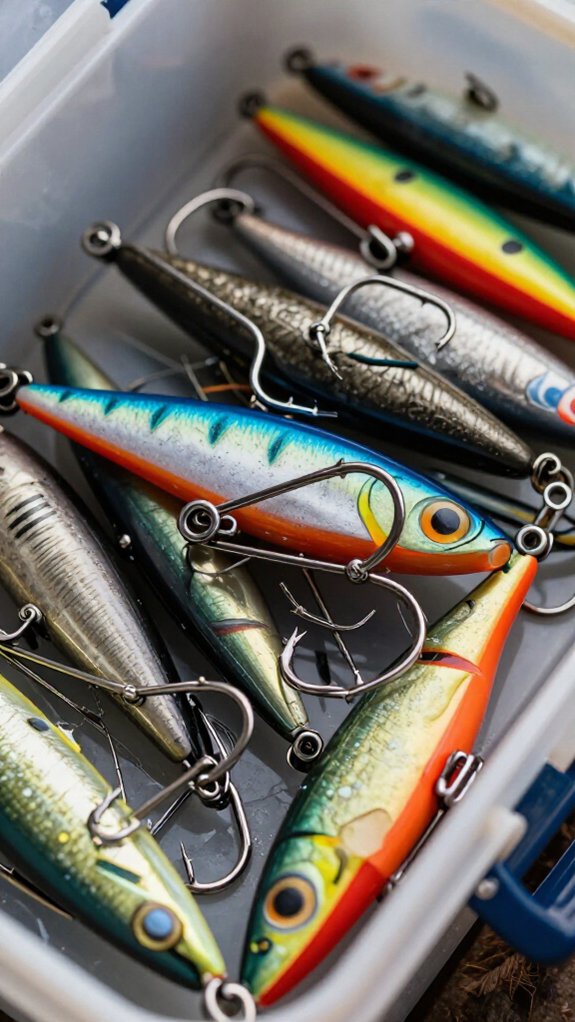
Because I’ve spent too many mornings untangling a bird’s nest of hooks instead of casting, I’ll start with the root of the problem: treble hooks are basically designed to snag things, and your tackle box is no exception.
I’ve learned the hard way that treble hooks create a tangled mess because their three radiating points catch everything they touch.
When I toss lures into storage without securing them, those sharp points immediately find neighboring hooks.
Every bump during transport makes it worse, the hooks twist and interlock into knots that waste precious fishing time.
The physics are simple: three protruding points per hook multiply your snagging potential exponentially.
In confined storage spaces, movement guarantees contact.
Without separation methods, you’ll spend mornings picking apart metal puzzles instead of catching fish.
Rubber-Band Your Hooks: The Fastest, Cheapest Fix
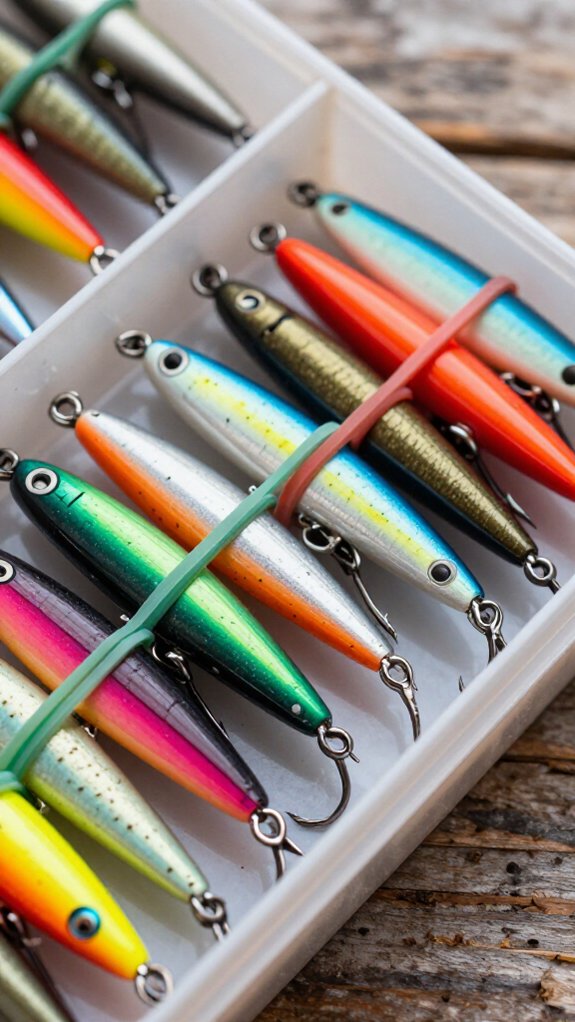
I rely on simple craft rubber bands to instantly tame unruly treble hooks by looping them tight so the points pin flat against the lure body. With a quick wrap around two or three hooks, I’ve found they stay locked in place even when I’m bouncing down rough backroads to my favorite fishing spot.
Swapping them out every season takes seconds and keeps me from discovering a melted, sticky mess after a summer heatwave.
Why Rubber Bands Work
If you want the fastest, cheapest way to stop treble hooks from turning your tackle box into a bird’s nest, grab a handful of small craft rubber bands. I use small craft rubber bands, about the diameter of my finger, to wrap around the hooks on my lures. They grip tight and keep every treble from flopping around.
Why They Outperform Other Quick Fixes
Rubber bands create a low-profile wrap that sits flush against the lure body. There’s no bulky clip or stiff wire adding noise or catching on dividers. I can open my tackle box, grab what I need, and close it without a single hook snagging another lure or scratching soft plastics.
The Practical Payoff
They’re dirt-cheap, found at any craft store, and I replace them in seconds when they snap. That accessibility means I’m never improvising with inferior fixes on the water.
Quick Wrapping Technique
Once you’ve got your rubber bands ready, the actual wrapping takes less time than tying a simple knot. I grab small craft rubber bands, about the diameter of my finger, and get to work.
The Basic Wrap
I fold each treble hook flat against the lure body, then loop the rubber band around multiple times. The tension holds everything snug. No fancy knots, no extra gear.
Handling Multiple Hooks
For crankbaits with two or three trebles, I’ll fold two hooks back-to-back, then loop the band onto the third. This rubber band trick keeps every point locked down tight.
Storage Made Simple
I wrap the bands tight enough that nothing shifts, then drop the lures straight into my tackle boxes. No more digging through nests of metal. This method stops hooks from snagging each other and saves me serious frustration on the water.
Long-Term Band Care
Rubber bands don’t last forever, so you’ll want to check them before every trip. I learned this the hard way when I opened my tackle box to find a bird’s nest of treble hooks and ruined crankbaits.
What I watch for:
- Brittle or cracked rubber bands that snap when stretched
- Bands that have stretched out and no longer grip hook points firmly
- Discoloration or sticky residue on lure finishes
- Hook points poking through worn bands, threatening other lures in storage
- Missing bands that likely broke off unnoticed
I keep a bag of small craft rubber bands right in my tackle box for quick swaps. Replacing them takes seconds, and it saves me from bloody fingers and tangled messes.
Proper storage with fresh bands means I’m fishing faster, not fighting my gear.
Make Those Rubber Bands Last in Heat and Wear
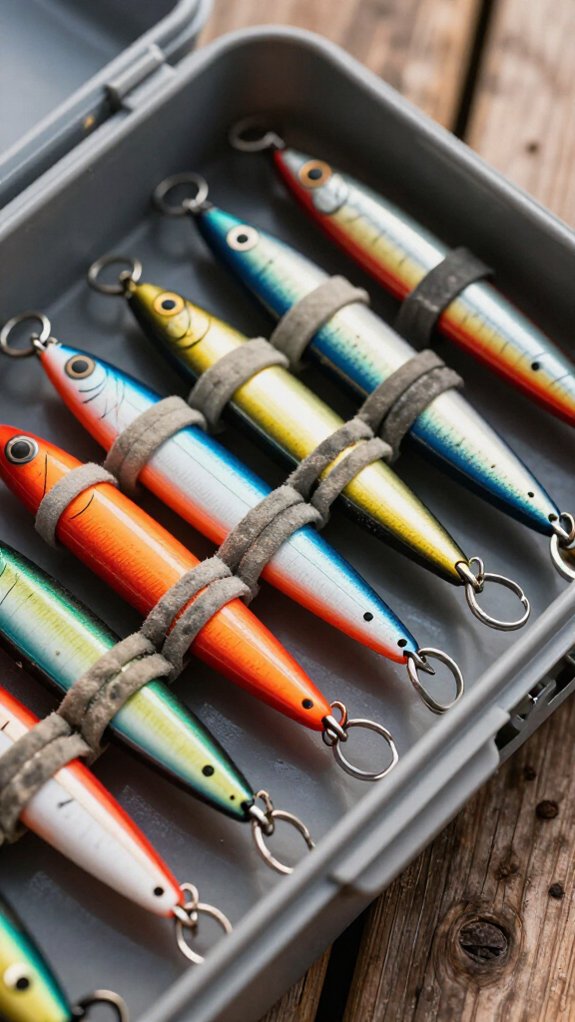
Although rubber bands are my go-to for keeping treble hooks from wreaking havoc in my tackle box, I’ve learned the hard way that a band left baking on the boat deck turns into a brittle mess faster than you’d think. Extreme heat accelerates deterioration, causing cracks that’ll let hooks slip free right when you’re reaching for your lure.
| Threat | Prevention | Replacement Signal |
|---|---|---|
| Direct sunlight | Store in cool, dry compartment | Visible cracks appear |
| Boat deck baking | Remove from tackle before exposure | Loss of elasticity |
| Repeated stretching | Choose thicker bands for better wear | Brittle texture develops |
| Humidity damage | Use sealed containers | Band snaps easily |
I swap my rubber bands every few months, especially after summer trips. Thicker bands resist heat stress longer, but nothing lasts forever in fishing conditions. Check yours before each outing.
Upgrade to Hook Bonnets for Permanent Protection
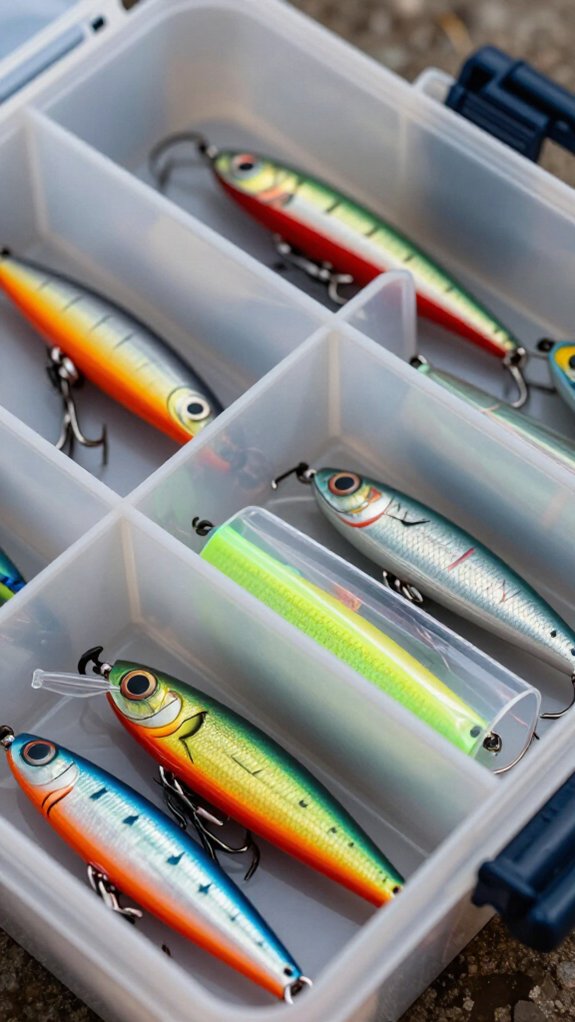
I’ve switched to hook bonnets whenever I want protection that won’t turn brittle or snap at the worst moment. These plastic caps snap securely over treble hooks, creating a reliable protective barrier against tangles and snags.
Here’s why hook bonnets earn a permanent spot in my tackle box:
- They prevent hooks from grabbing other lures during bumpy rides to my favorite spots
- They shield hook points from paint chips and dulling caused by gear contact
- They reduce poked fingers when I’m digging through crowded compartments
- They come in sizes that fit everything from tiny cranks to oversized swimbaits
- They keep my tackle box organized with minimal fuss
I check mine regularly and replace worn ones. This simple habit extends hook sharpness and keeps every trip frustration-free.
Choose Tackle Boxes That Adapt to Your Gear
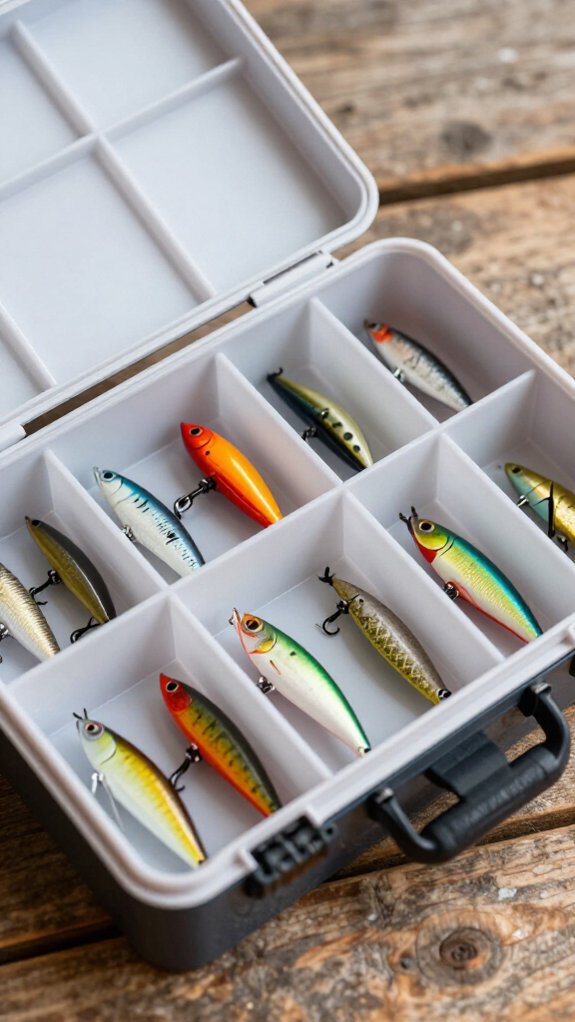
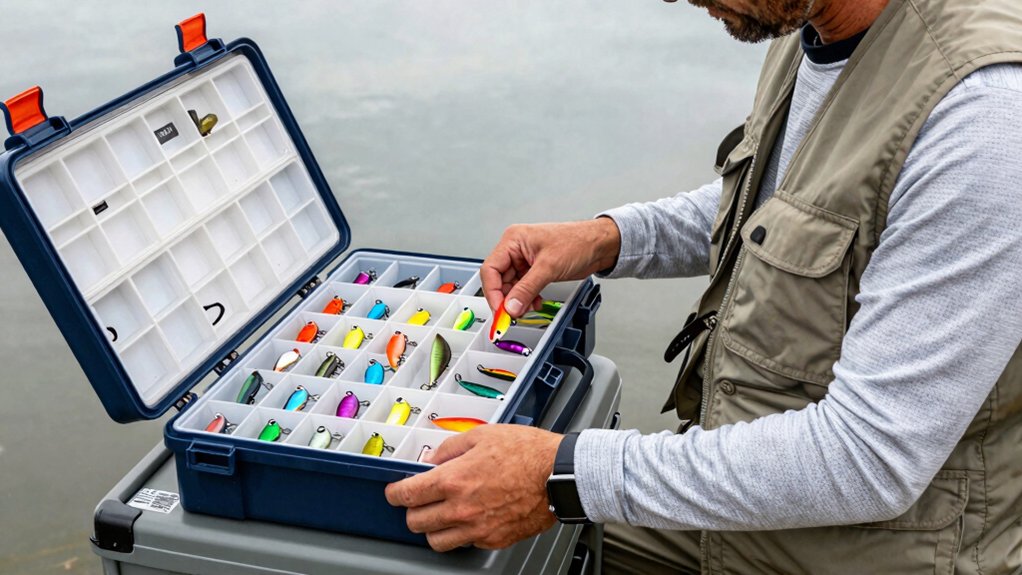
I’ve found that modular divider systems are a game-changer for keeping my lures organized and tangle-free, since I can rearrange the compartments to fit anything from tiny jigs to bulky crankbaits without wasted space.
Adjustable compartment sizing lets me create snug spots for each lure type, so hooks aren’t bouncing around and catching on neighboring gear during a bumpy boat ride.
When my tackle box actually adapts to what I’m carrying, I spend less time untangling and more time casting where the fish are biting.
Modular Divider Systems
If you’re tired of untangling a bird’s nest of crankbaits every time you open your tackle box, modular divider systems are the fix you’ve been looking for. I swear by these adaptable setups because they let me customize compartments to fit any lure I’m running that day.
Here’s why modular organization works:
- I Can size compartments perfectly for tiny jigs or bulky swimbaits
- Treble hooks stay separated, so nothing hooks what it shouldn’t
- I Reconfigure my box in minutes for different fishing trips
- Nothing shifts during bumpy boat rides to my favorite spots
- I Add or remove sections as my collection grows
With solid modular divider systems, my gear stays protected and I’m fishing faster, not fighting knots.
Adjustable Compartment Sizing
When I’m stuffing a 6-inch glide bait next to a pocket full of micro cranks, I need a tackle box that bends to my will, not the other way around.
Why Adjustable Compartments Matter
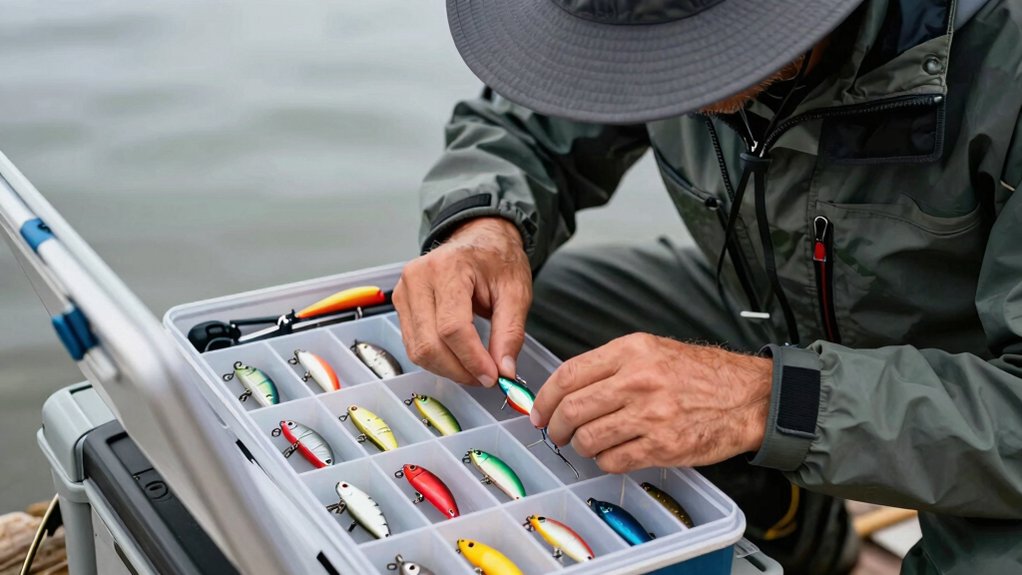
Adjustable compartments transform generic lure storage into a custom-fit system. I slide dividers to cradle bulky swimbaits or create narrow slots for inline spinners, and nothing rattles loose.
The Tangle-Prevention Payoff****
Here’s what I’ve learned: fixed grids force overcrowding, but an adaptable tackle box lets me allocate space precisely. I separate treble-hooked hard baits from soft plastics, eliminating hook interlock.
Odd-shaped lures—wake baits, jointed pikes—finally sit secure without shifting during bumpy truck rides.
Research from fishing trade publications shows proper compartment sizing reduces tackle damage by up to 40%. Less clutter, fewer tangles, longer lure life. That’s smart angling.
Organize Small Gear With Foam or Magnetic Inserts
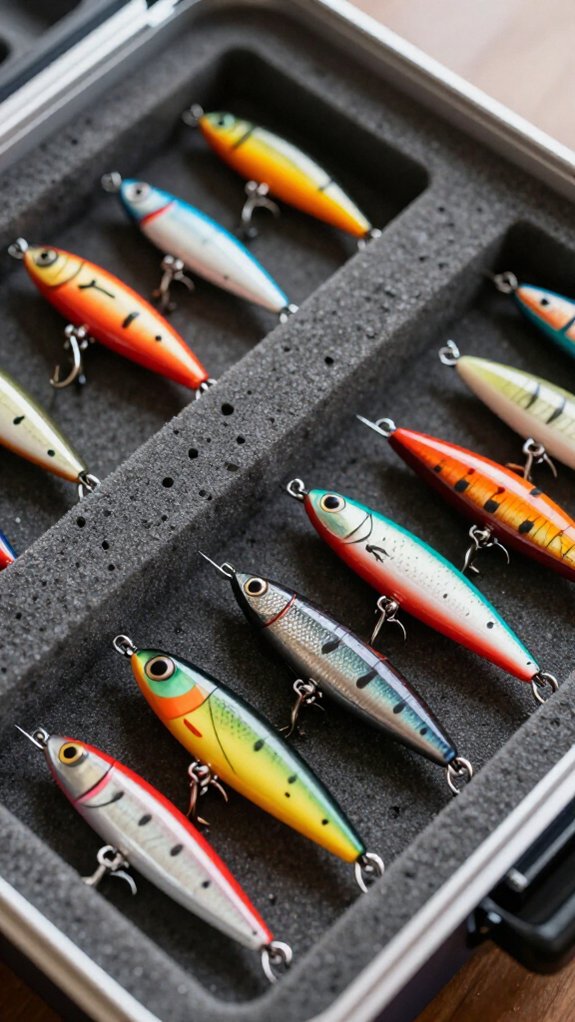
Because tangled hooks and scattered lures can turn a promising morning on the water into a frustrating treasure hunt, I’ve found that foam and magnetic inserts are game-changers for keeping small gear locked down and ready to fish.
I customize foam inserts with precise cutouts for each lure and hook, stopping them from dancing around during bumpy truck rides. Magnetic inserts grab my metal jigs, split shots, and treble hooks instantly, no more fumbling with tiny pieces when the bite’s hot.
Here’s how I organize small gear with these systems:
- Slice foam inserts to cradle each lure’s unique shape
- Stick magnetic inserts to box lids for grab-and-go access
- Swap magnetic layouts when seasons change
- Rely on closed-cell foam to fight moisture and rust
- Trust both systems to slash clutter and speed up rigging
Dry Lures Completely Before Boxing Them Up
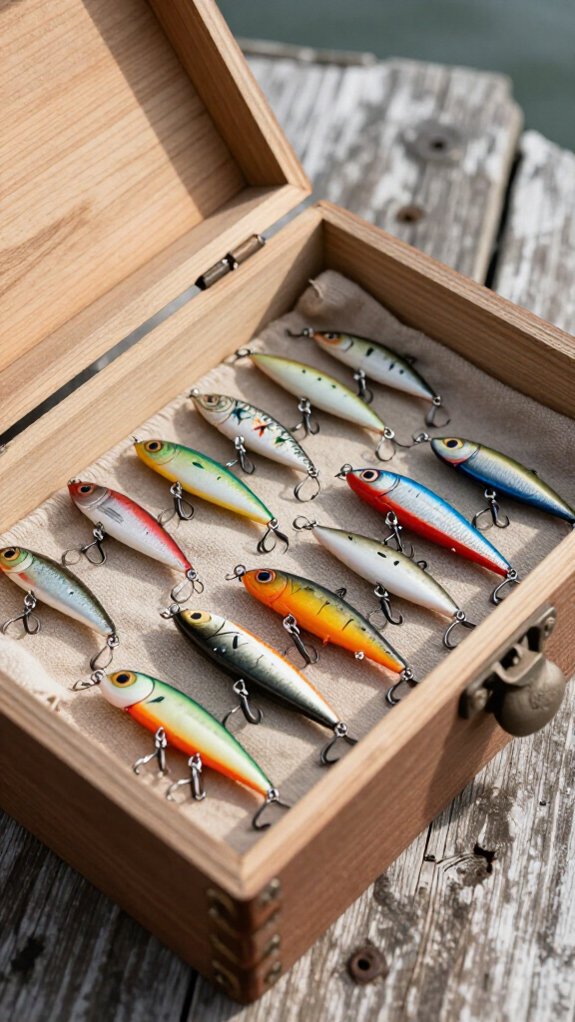
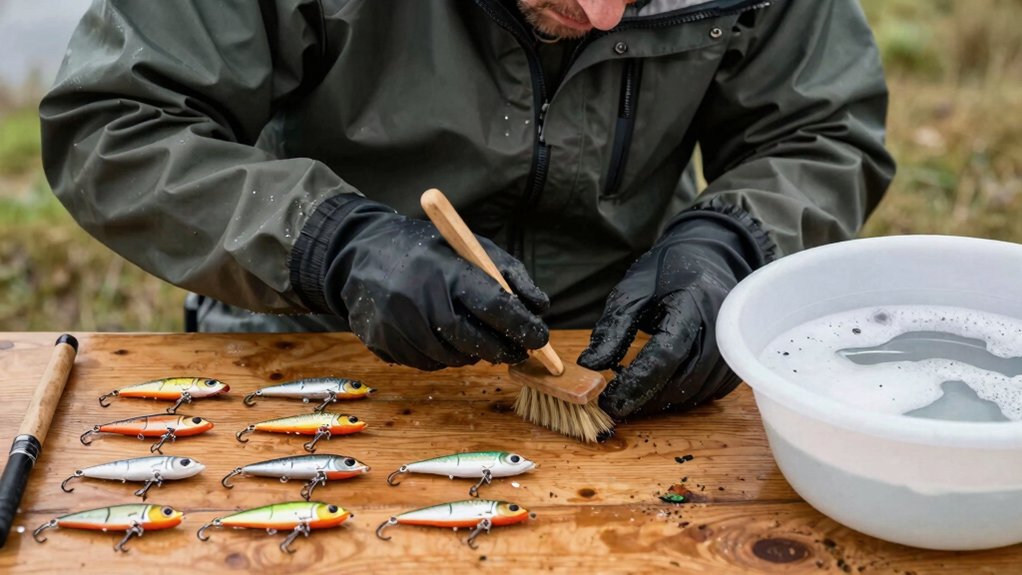
Wet lures are tackle box wrecking balls, ruining hooks, rusting metal, and turning soft plastics into gooey messes before your next trip even starts. I always dry lures thoroughly before storage, it saves me money and headaches.
After rinsing salt away, I towel-dry every crankbait, spoon, and soft plastic, then air-dry them in a ventilated spot. When I’m rushing, I grab a hair dryer on low heat to blast residual moisture from hooks and joints.
I check that bodies, rings, and split rings hold zero water before boxing anything up. Even a damp lure breeds rust in enclosed storage.
If rain hits mid-trip, I re-dry lures immediately upon returning home. Humidity and sunlight degrade stored gear fast, so I keep my tackle in a cool, dry place away from windows.
This simple drying habit keeps my lures fishable for seasons, not just trips.
Build a Tangle-Free Tackle System That Travels
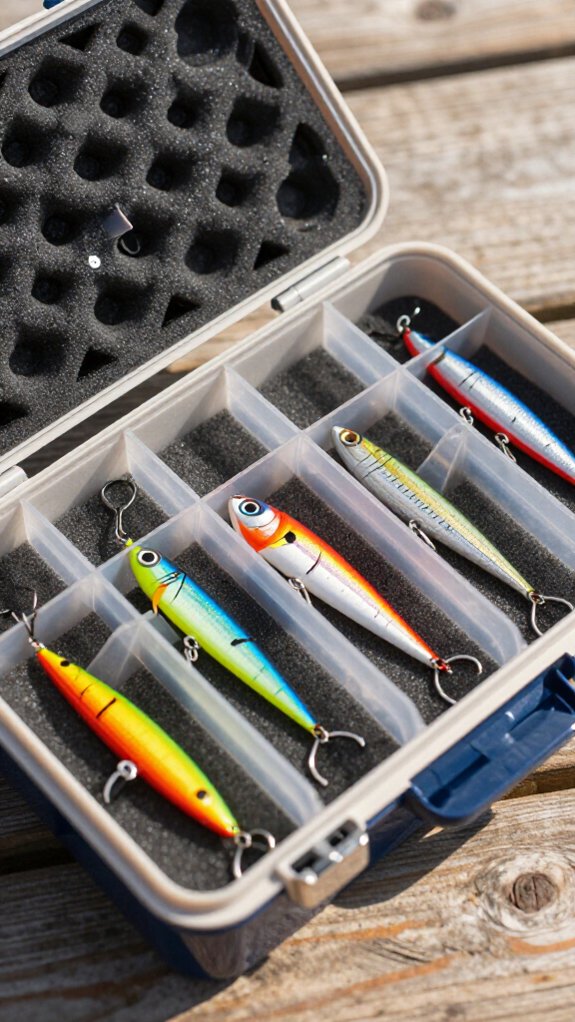
Even the driest lure turns into a knotted nightmare if it’s bouncing around loose in a hard-plastic box, so I’ve learned that how I pack matters just as much as how I prep.
Here’s my organized storage system that keeps every piece of tackle travel-ready:
- I grab modular tackle boxes with adjustable compartments to separate lure types and sizes
- I secure treble hooks with rubber bands or hook bonnets before they go anywhere near other gear
- I Stash individual lures in small containers or foam inserts that lock them in place
- I wrap lines and hooks with elastic bands or lure wraps to keep everything compact
- I Group similar lures together, double-checking every hook’s secure before I hit the road
With this setup, my tackle arrives ready to fish, no untangling, no lost time, just clean casts from the start.
Frequently Asked Questions
What Smell Do Fish Hate?
I know fish hate strong chemical smells like ammonia and chlorine. I avoid getting these on my lures since they’ll repel fish instantly.
I mask my human scent too, because I’ve learned fish detect that easily.
What Are the Best Lures to Have in My Tackle Box?
I pack crankbaits, soft plastics, jigs, and spinnerbaits. Last summer, switching between a deep-diving crankbait and a Texas-rigged worm on the same lake helped me catch both suspended bass and bottom-feeders when conditions changed.
Why Does My Line Keep Getting Tangled?
I find my line keeps tangling because loose lures shift during transport, and treble hooks snag everything nearby. When I’ve crowded my tackle box without proper separation, those sharp hooks catch line loops and create knots instantly.
Do You Use Swivels With Lures?
I use swivels with my lures because they stop line twists and keep my tackle box organized. They let lures spin freely, so hooks don’t snag each other.
It’s made my fishing trips much smoother.
In Conclusion
A tangle-free tackle box saves you time on the water and protects your gear investment. Last spring, I watched my buddy Mike lose a prime morning bite because he spent twenty minutes untangling a bird’s nest of crankbaits, while bass were schooling fifty yards away.
Don’t be Mike. Pick one fix from this guide tonight, apply it before your next trip, and you’ll fish more and fuss less. Your future self will thank you.