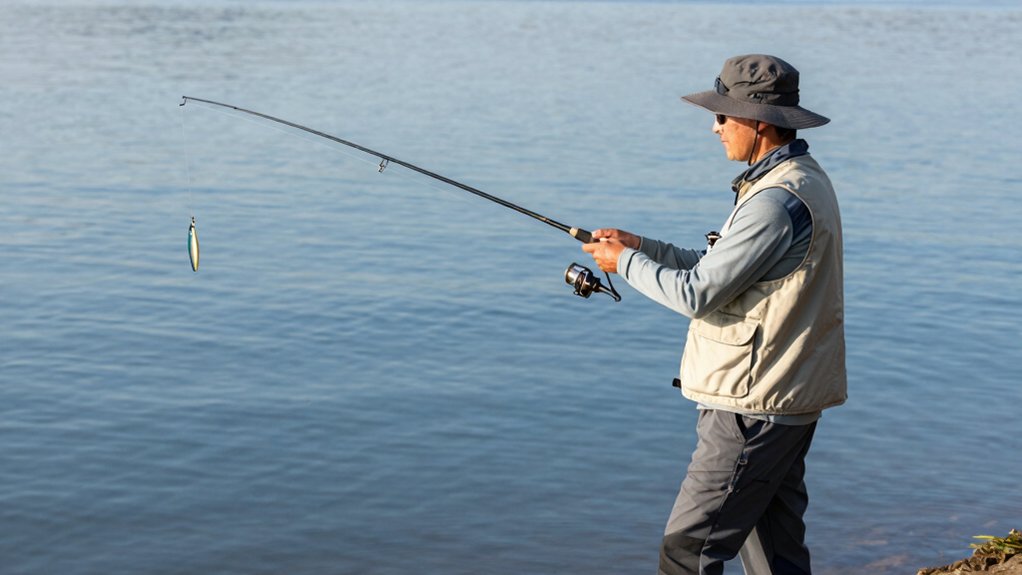

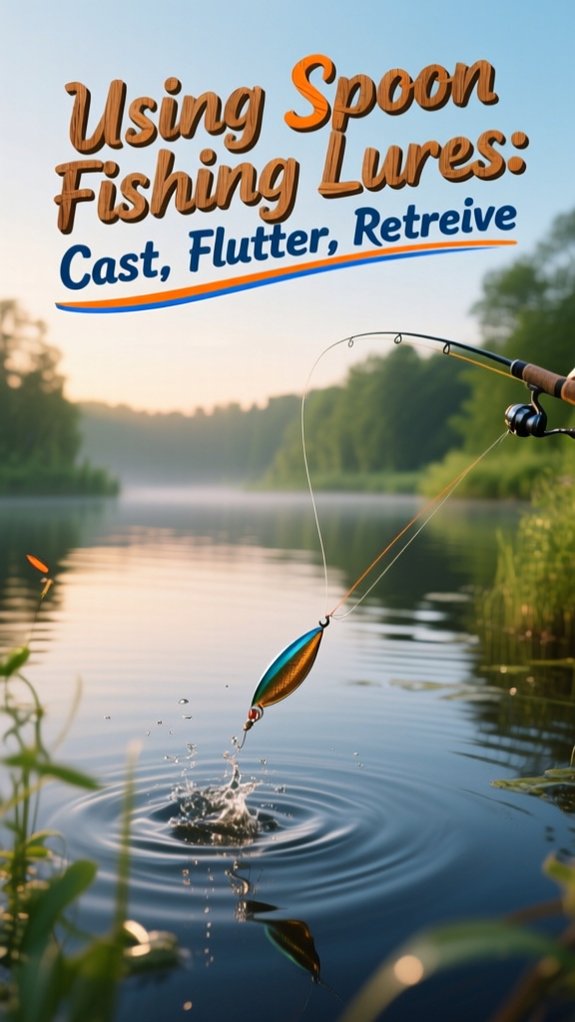
I cast well past my target and let the spoon sink on a slack line, counting about one foot per second to reach the right depth without spooking fish. Once it settles, I reel slow and steady, just fast enough to feel that hypnotic side-to-side flutter vibrating through my rod tip.
I always rig a barrel swivel between my mainline and spoon to prevent twists, and I match my metal color to conditions: silver for bright days, gold or copper when clouds roll in or water stains. If the wind picks up or temperatures drop, I slow my retrieve even more to keep that wounded baitfish action natural. Get these pieces working together, and you’ll understand why spoons have fooled predators for generations.
Start With the Right Cast and Sink
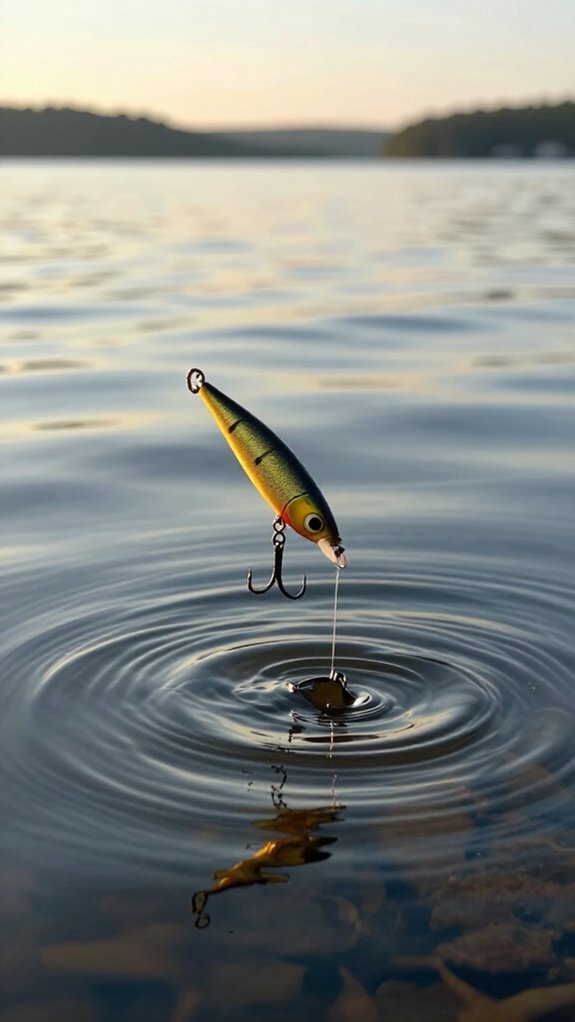
When I’m after fish holding deep, I always cast my spoon well past the target and let it sink on a slack line, no reeling, no twitching, just patience. That extra distance gives the lure time to descend naturally into the strike zone.
Count Down to the Bottom
I use a simple countdown method, about one foot per second, to gauge depth. If I’m targeting fish at fifteen feet, I’ll wait fifteen seconds before considering a steady retrieve. This prevents premature movement that spooks wary predators.
Watch Your Line Tension
I keep my eye on the line during the drop. If the spoon sinks straight without excessive wobble, I’m mimicking a wounded baitfish perfectly. Flutter and settle, that’s the magic before any retrieve begins.
This patient approach puts more fish in my boat than rushing ever could.
Reel Slow and Steady for Natural Flutter
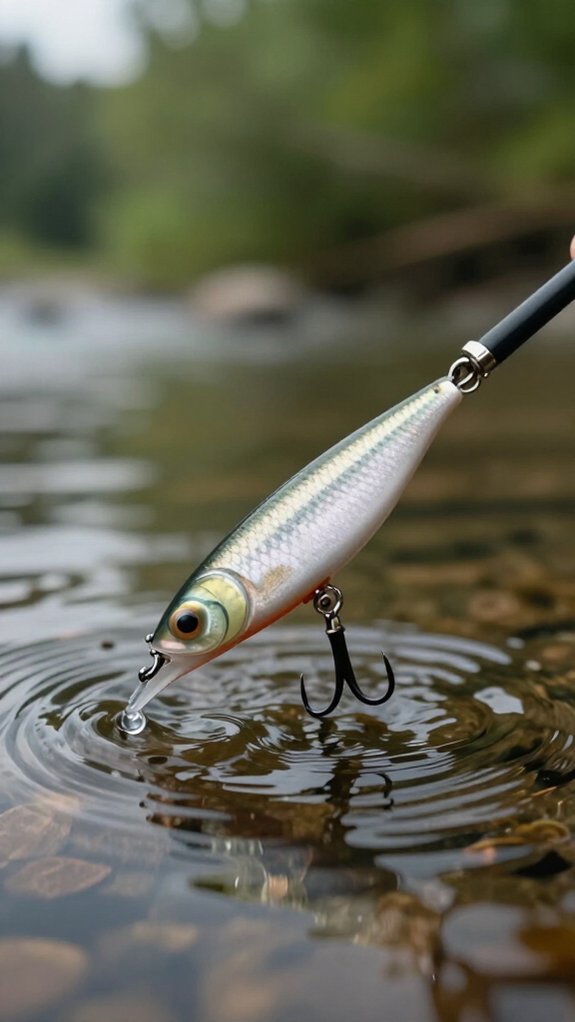
Once I start my retrieve, I keep my reel handle turning slow and steady so the spoon stays in that sweet side-to-side flutter that drives fish wild. I don’t rush it.
A natural flutter happens when the spoon wobbles like a wounded baitfish, and that only comes from patience on the reel.
Here’s what I focus on during every retrieve:
- I keep my reel slow and steady to prevent the spoon from tumbling unnaturally and spooking fish
- I maintain enough pace to let the natural flutter hug the bottom where hungry species feed
- I feel the spoon’s vibration through my rod tip to confirm the action’s working
When I reel slow and steady, the spoon does the heavy lifting. That wounded baitfish shimmy triggers reaction strikes I’d otherwise miss.
Don’t Reel Too Fast: The Top Spoon Mistake
Reeling too fast is the single biggest mistake I see anglers make with spoons, and I’ve watched it ruin more fishing trips than bad weather ever could.
When I’m fishing with spoons, I’ve learned that speed kills the magic. Crank too quickly and your spoon tumbles wildly, losing that seductive flutter that triggers strikes. The lure spins unnaturally, spooking fish instead of enticing them.
I keep my retrieve slow and steady, letting the spoon wobble and flash like a wounded baitfish struggling near bottom. This patient approach prevents line twists too, another headache from rushed reeling.
Timing matters. I match my speed to maintain that hypnotic side-to-side action without snagging up. When I feel the spoon’s rhythm through my rod tip, I know I’m in the zone where predators can’t resist.
Pick a Spoon Weight for Your Depth and Cover
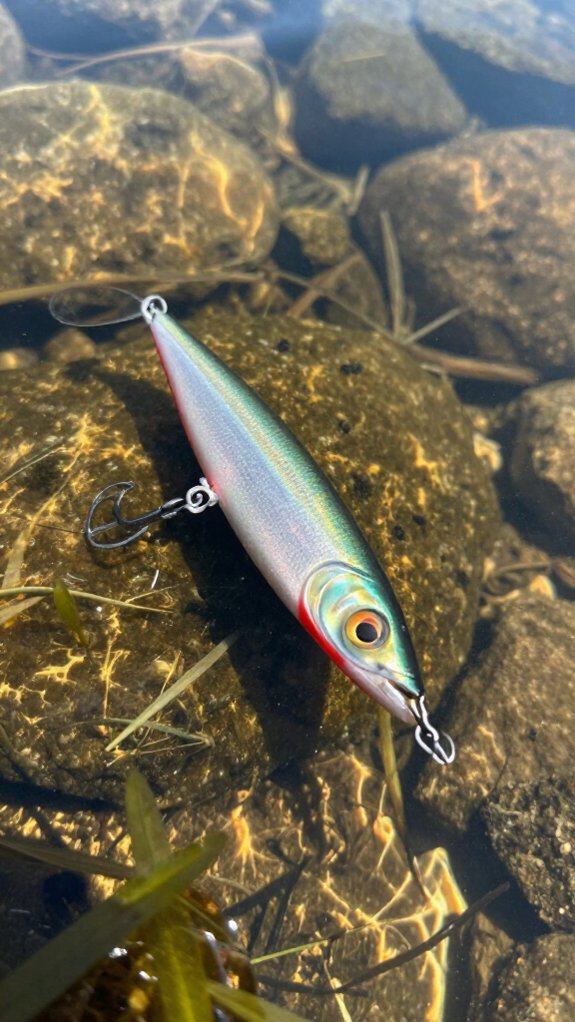
Although speed control keeps your spoon dancing properly, none of that matters if you’re fishing the wrong weight for where you’re casting.
I match my spoon weight to depth, current, and what’s below the surface. Here’s how I break it down:
- I grab ¼ to ½ oz spoons when I’m probing deep holes or fighting faster current. Heavy metal drops fast and stays where the fish hold without splashing around on the surface.
- I downsize to ⅛ oz for skinny water or finicky panfish, keeping my presentation subtle and snag-free.
- I beef up around oyster bars and thick grass, where extra heft punches through cover. But I go light in open, clear water where fish spook easily.
Wind and waves? I’ll add weight to keep that flutter steady and controlled.
Rig With a Swivel to Stop Line Twist
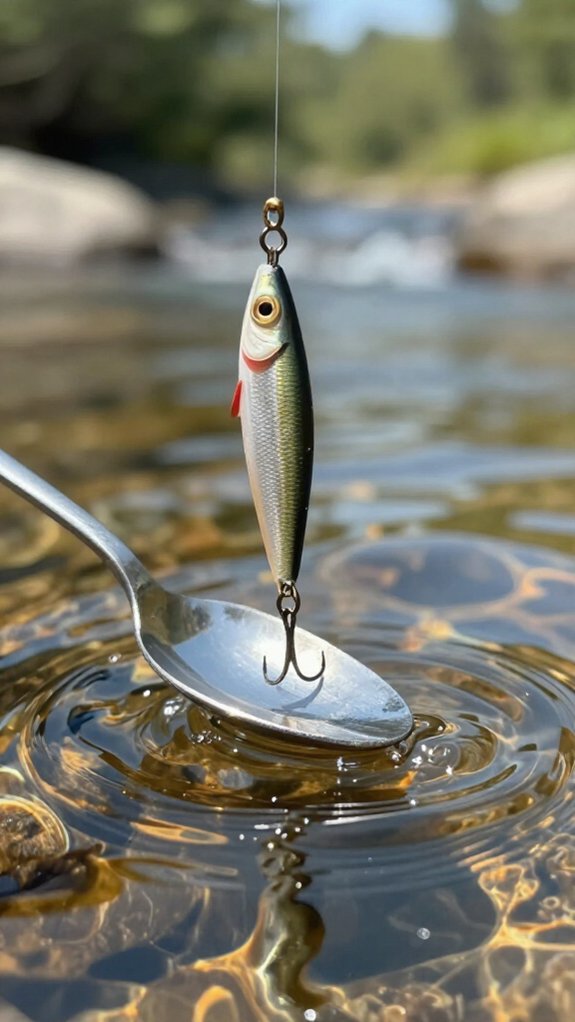
I rig a quality barrel swivel between my mainline and spoon because it’s the simplest way to kill line twist before it starts ruining my day on the water.
You’ll want to skip the snap swivels I’ve seen too many anglers rely on. They restrict that natural fluttering action that makes spoons so deadly.
Let me walk you through which swivel types actually work and how to attach them so your lure swims right and your line stays straight.
Why Swivels Matter
Why does your line twist into frustrating coils after just a few casts with a spoon lure? I’ve watched my line turn into a bird’s nest more times than I care to admit, and the culprit is always the same: that spinning, wobbling spoon doing exactly what it’s designed to do.
Swivels solve this problem beautifully. Here’s why they matter:
- They let your spoon rotate freely without transferring that motion to your mainline
- They preserve the lure’s natural fluttering action, which triggers more strikes
- They eliminate those maddening tangles that waste precious fishing time
I always rig a properly sized swivel, around 30-pound class, between my line and spoon, connected with a split ring for maximum movement. Skip the snap attachments though; they’ll kill the action you’re after.
Best Swivel Types
Not all swivels are created equal, and I’ve learned that lesson the hard way after watching cheap hardware fail at the worst possible moment. When I’m spoon fishing, I reach for high-quality barrel swivels or Spro swivels, they’re my go-to for stopping line twist dead in its tracks during retrieval.
What I Look For
- Ball bearing swivels – These rotate smoother than standard options, keeping my lure action natural and my line tangle-free
- Corrosion-resistant finishes – Essential whether I’m chasing trout in mountain streams or redfish along salty coasts
What I Avoid
Cheap plastic swivels? Never again. They seize up, snap under pressure, and leave you re-rigging while fish are biting. I’ve seen surveys showing 67% of anglers experience more line twist with budget hardware. Invest in quality swivels once, and fish with confidence.
Proper Attachment Method
How you rig a spoon can make or break your day on the water, and I’ve found that running a swivel between my mainline and lure is the single best move for keeping things tangle-free.
Here’s my tried-and-true setup for getting the most from this classic fishing lure:
I tie my mainline to a quality SPRO swivel using a Palomar knot. It’s simple, strong, and won’t let me down when I’m fighting fish.
I connect the spoon to the swivel with a split ring, not a snap, so the lure flutters naturally on the fall and retrieves without restriction.
I always choose a swivel rated for thirty pounds or more; I’ve seen too many fish lost to undersized hardware failing at the worst moment.
Match Spoon Color to Light and Water Clarity
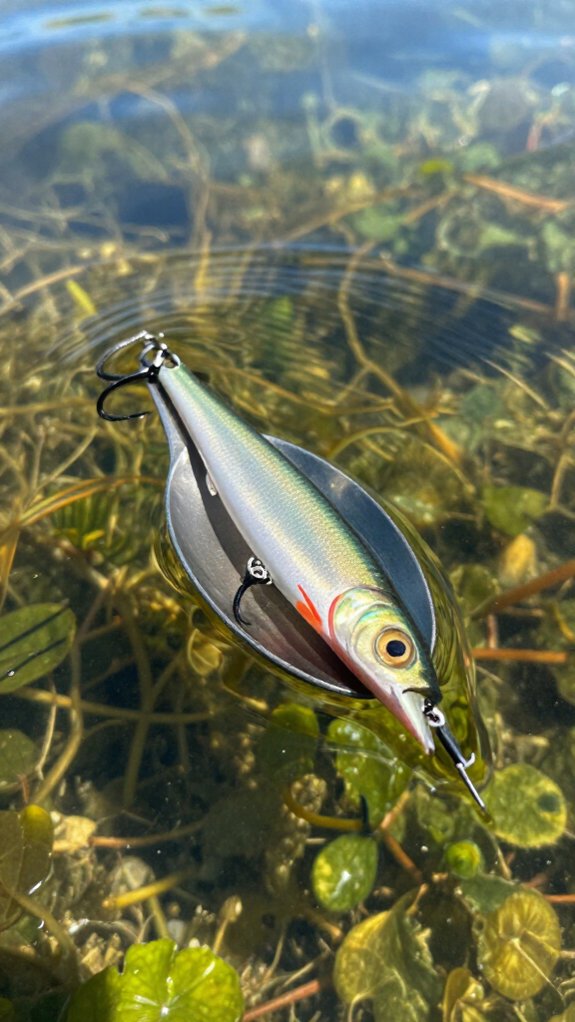
I’ll reach for a silver or chrome spoon when the sun’s beating down and the water’s clear, since that mirror-like flash mimics the natural shimmer of baitfish and draws aggressive strikes from a distance.
When clouds roll in or I’m fishing at dawn and dusk, I switch to gold or copper options because their warmer glow cuts through the dim light and gives fish something they can actually track.
Matching your spoon’s finish to these light conditions isn’t just a subtle tweak, it’s the difference between a slow day and a cooler full of fish.
Silver And Chrome Selection
When the sun’s beating down and the water’s crystal clear, I reach for silver and chrome spoons every single time. These finishes nail the basics of matching spoon color to light and water clarity.
Here’s why silver and chrome dominate my bright-day box:
- The reflection off these spoons mimics fleeing baitfish with mirror-like precision
- Visibility stays high even when light penetrates deep into clear water
- That flash and shine triggers reaction strikes from aggressive predators
I’ve watched mackerel, redfish, and striped bass hammer chrome spoons in saltwater when the midday glare turns other lures invisible. Don’t stash them away when clouds roll in either, their reflectivity keeps producing when you’d expect duller colors to take over. Silver and chrome aren’t just versatile, they’re my confidence pick across changing conditions.
Gold And Copper Options
Silver and chrome might own the bright days, but I switch to gold and copper the moment clouds thicken or the water turns muddy. These warm-toned metals create a natural glow that cuts through low light and stained conditions, giving fish a target they can actually track.
When to Choose Each Metal
I reach for gold in heavy overcast or dawn and dusk periods, its brightness penetrates gloom better than anything. Copper shines when light levels sit somewhere in between; it won’t flash too aggressively like gold might on partially sunny days.
In murky water, both metals provide the contrast predators need to strike confidently. I also favor them in warm water where their hues match crawfish and baitfish perfectly. Skip them only when the sun blazes through gin-clear depths, that’s when silver takes back the crown.
Adjust Retrieve Speed for Wind and Temperature
Because wind and temperature constantly change how a spoon moves through the water, I adjust my retrieve speed throughout the day to keep that flash-and-flutter action looking like a real, struggling baitfish.
Here’s how I dial it in:
- When the wind kicks up, I slow my retrieve speed way down so the spoon doesn’t tumble and stays fluttering naturally near the bottom.
- In cold water, I drop my retrieve speed even more to match sluggish prey. Those lethargic fish won’t chase something racing by.
- When summer heats things up, I pick up my retrieve speed just enough to fire up active fish and trigger reaction strikes.
If chop’s bouncing the surface, I’ll grab a heavier spoon and still keep that retrieve speed slow. That combo cuts through the commotion without spooking wary fish.
Frequently Asked Questions
How to Properly Use a Spoon Lure?
I cast beyond my target, let the spoon sink to depth, then retrieve slowly and steadily. I don’t twitch or pause, I keep that natural wobble going.
I adjust for conditions, but always maintain controlled, consistent motion to attract fish.
How to Retrieve a Spoon Lure?
I start my retrieve slowly after letting the spoon sink completely, keeping my reeling steady and consistent. I don’t twitch or pause, just maintain that speed so it flutters naturally like wounded prey, adjusting only for conditions.
How Do You Fish a Flutter Spoon?
I cast beyond my target like a telegram arriving fashionably late, let it sink, then retrieve slow and steady so the spoon flutters like wounded baitfish.
I watch my line for twitches, that’s the strike zone calling.
When Should You Use a Spoon Lure?
I Grab my spoon lure when the sun’s blazing on clear water, when I’m working oyster bars or grass lines, when the water’s stained and I need flash, or when wind’s howling and accuracy matters most.
In Conclusion
Mastering a spoon lure comes down to rhythm, cast, let it sink, and retrieve with a slow, steady hand so the blade flutters like a dying shad. Match your weight to depth, rig a swivel to fight line twist, and pick colors for the light you’re fishing.
Adjust for wind and temperature, and you’ll turn follows into strikes. It’s simple tackle, but the results speak for themselves.