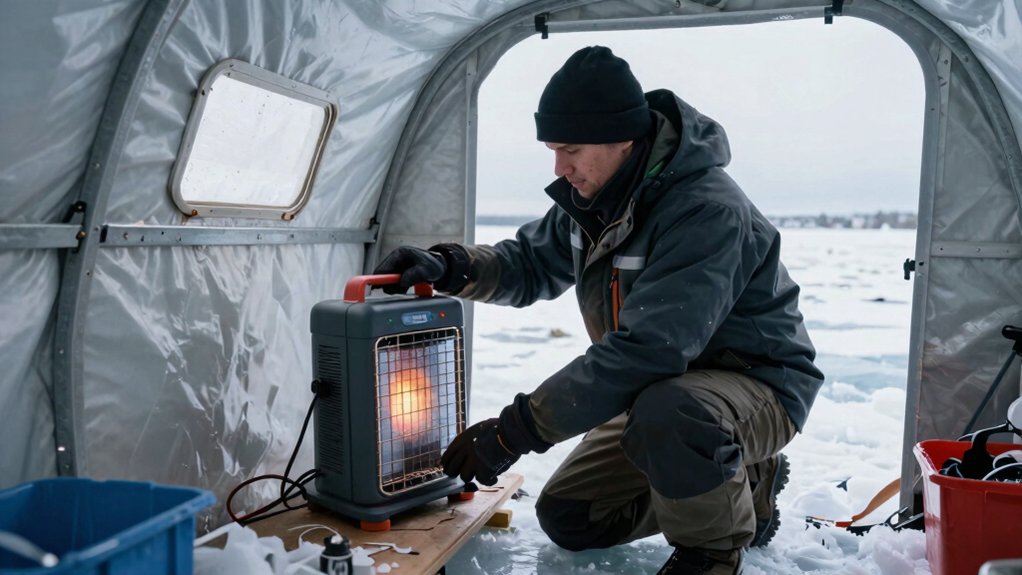

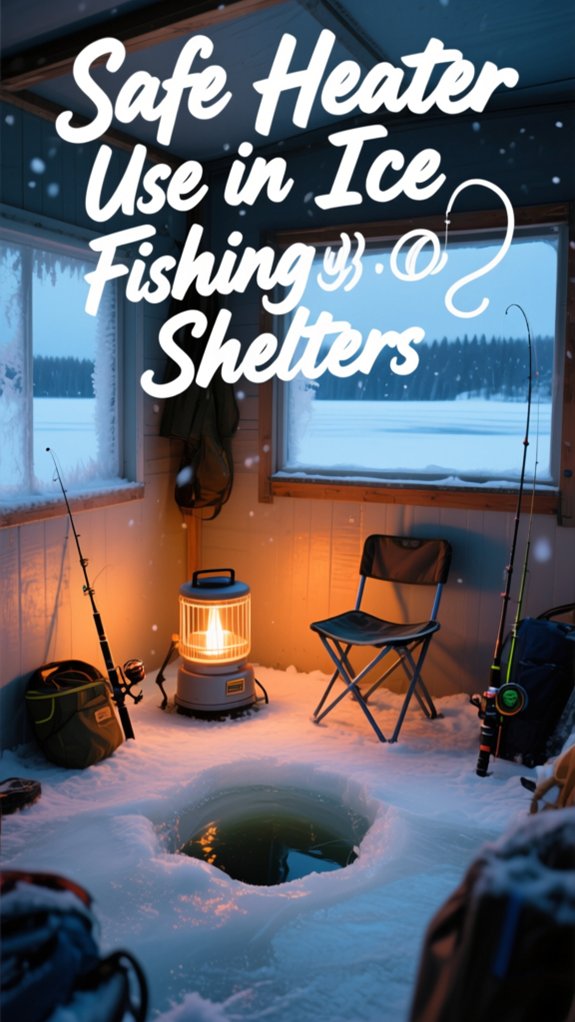
I match my heater’s BTU output to my shelter size, about 3,800 BTU for 95 square feet, and always crack a window or vent 1–2 inches to stop carbon monoxide from building up. I position the heater 18 inches from walls on a stable surface near that vent.
I Keep a battery-operated CO detector running near where I sleep, since 400 Americans die yearly from preventable CO poisoning. Proper sizing, ventilation, placement, and detection keep me warm and safe on the ice, and there’s more to know about protecting your gear and yourself for seasons to come.
Will a Heater Melt Through Your Ice Fishing Shelter? (The Science Says No)
Although I’ve heard plenty of anglers worry about heaters melting through the ice, I can put your mind at ease right away: a properly used heater won’t compromise your shelter’s frozen foundation.
The Math Doesn’t Lie
Melting just one inch of ice across a 5×5 foot area demands roughly 18.9 million joules, far more than your typical heater produces in hours. Meanwhile, warming your ice fishing shelter’s air from -5°C to 5°C consumes merely 45,945 joules in five minutes. That’s nowhere near enough energy for meaningful melting beneath your feet.
Where the Heat Actually Goes
Most warmth from your heater rises to heat air, not attack ice directly. Plus, cold air constantly seeps through gaps, forcing continuous reheating. Scientific consensus confirms: during normal operation, melting through simply isn’t happening.
Choose the Right Heater Size for Your Ice Fishing Shelter
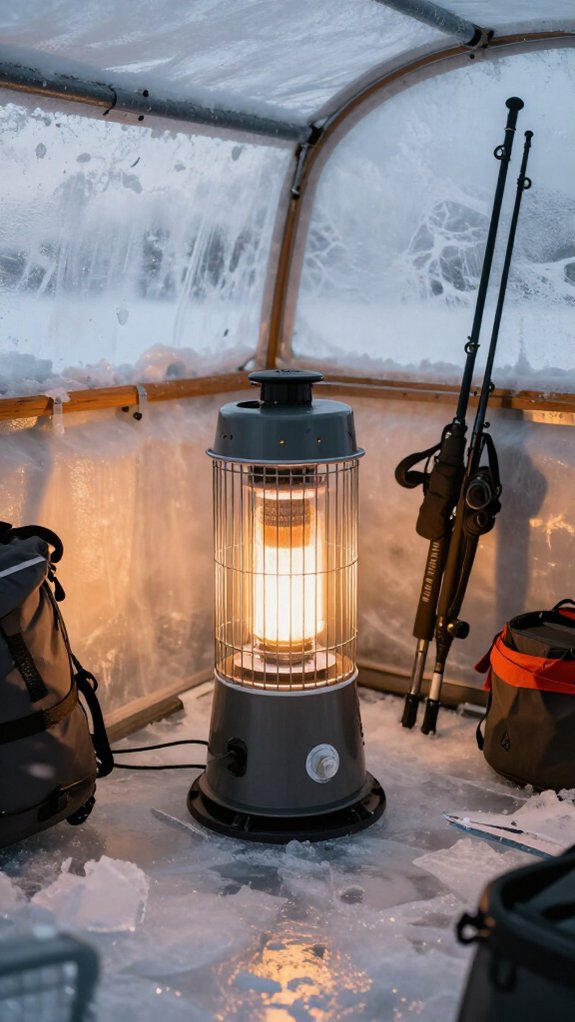
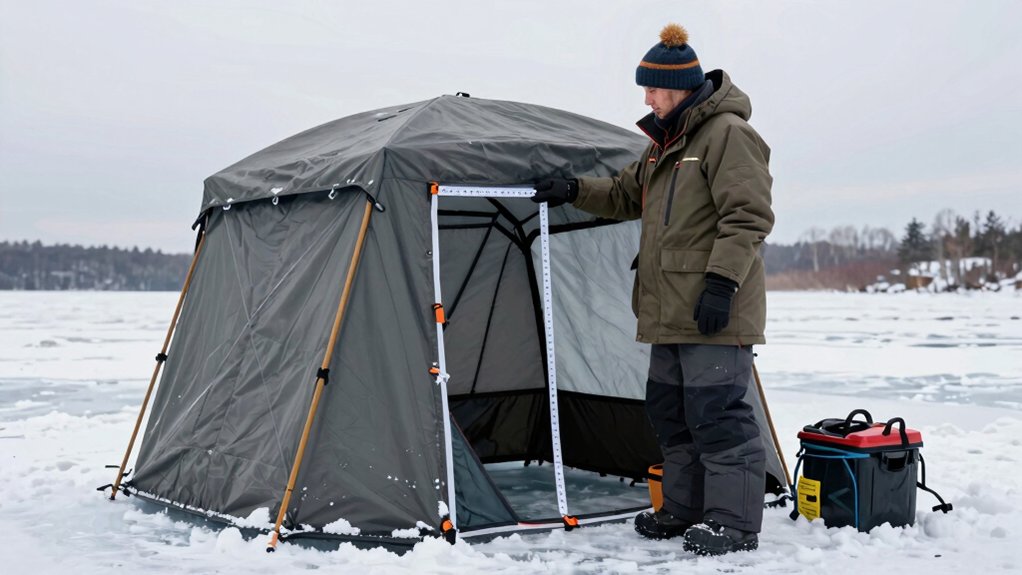
Before you haul your gear onto the ice, you’ll want to make sure I’m not shivering through the day because I picked the wrong heater for my shelter size, it’s a mistake that’ll either leave you freezing or sweating through condensation problems.
I always match my Propane heater’s BTU output to my shelter’s square footage. A 3,800 BTU unit handles about 95 square feet nicely. For a typical 4-6 person ice shelter, I look for 4,000-9,000 BTU/hr depending on insulation quality. Insulated Ice fishing shelters need way less power.
| Shelter Size | Recommended BTU | Key Consideration |
|---|---|---|
| 1-2 person (50-75 sq ft) | 3,000-4,000 BTU | Prioritize portability |
| 4-6 person (100-150 sq ft) | 4,000-9,000 BTU | Check insulation rating |
| 6-8 person (150+ sq ft) | 9,000-18,000 BTU | Account for wind exposure |
I follow manufacturer guidelines for matching heater capacity to volume, factoring wind and occupancy. I avoid oversizing, too much heat creates condensation and melting issues, while undersized units leave me miserable. The right Heater for your Ice adventure keeps you comfortable without the sweat.
Crack a Window: How Much Ventilation Prevents CO Poisoning
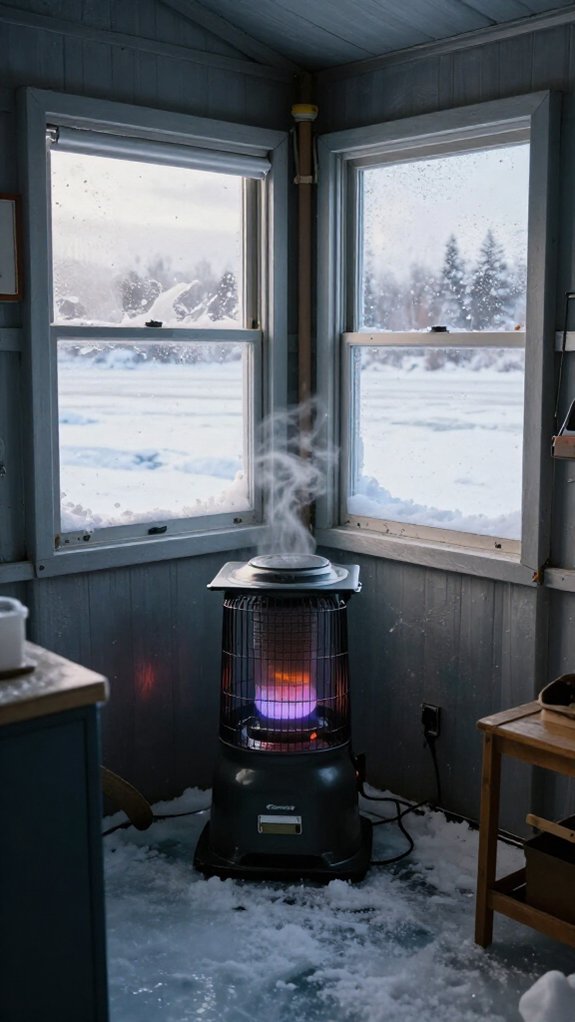
Once you’re warm and cozy with the right heater humming away, I’ve learned the hard way that comfort can turn dangerous fast without fresh air moving through my shelter.
How Much Air You Actually Need
I always crack a window or vent by at least 1–2 inches. This small gap lets fresh air circulate and dilutes any carbon monoxide before it builds to dangerous levels. Even that tiny opening makes a huge difference.
CO is odorless and invisible, so you won’t see it coming.
Stay Vigilant, Stay Safe
I ventilate periodically during long sessions and overnight. Fresh air isn’t optional; it’s life-saving.
Pair this habit with a carbon monoxide detector for real-time backup. That combination keeps me fishing another day.
Position Your Heater and Install CO Detectors
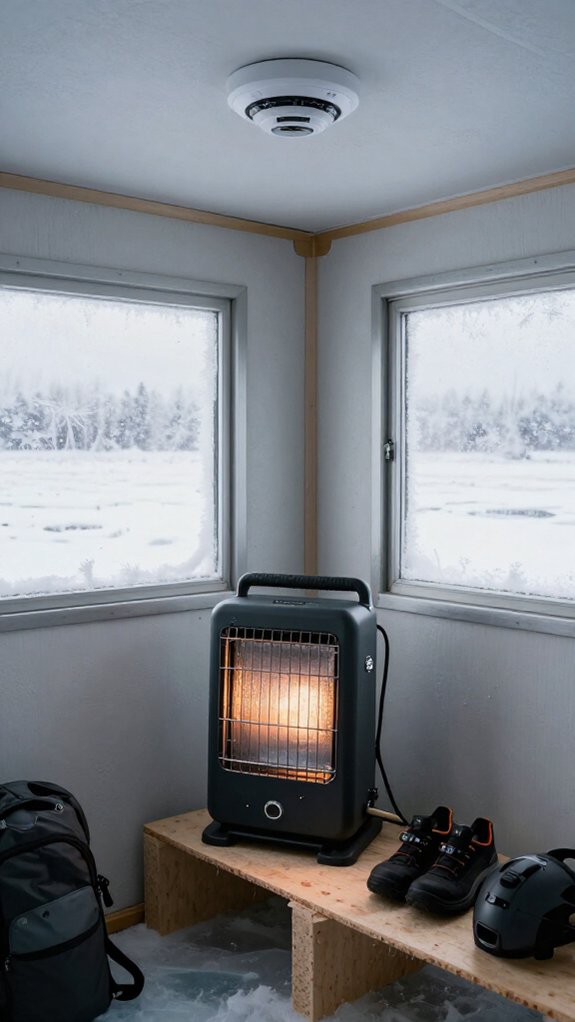
Even with a window cracked, I’ve learned that where I put my heater and whether I’ve got a working CO detector can make the difference between a great trip and a tragic one.
I always place my heater on a stable, non-flammable surface, keeping it at least 18 inches from walls, gear, and insulation. I position it near a vent or open window so ventilation can carry fumes outside.
I install battery-operated CO detectors near sleeping areas and test them before heading out. These devices catch what I can’t see or smell.
| Placement | Clearance | Purpose |
|---|---|---|
| Heater base | Stable, non-flammable | Prevents tipping |
| From combustibles | 18+ inches | Fire safety |
| Near ventilation | Adjacent to vent/window | CO escape |
| CO detectors | Near sleeping areas | Early warning |
Winterize Your Heater for Season After Season
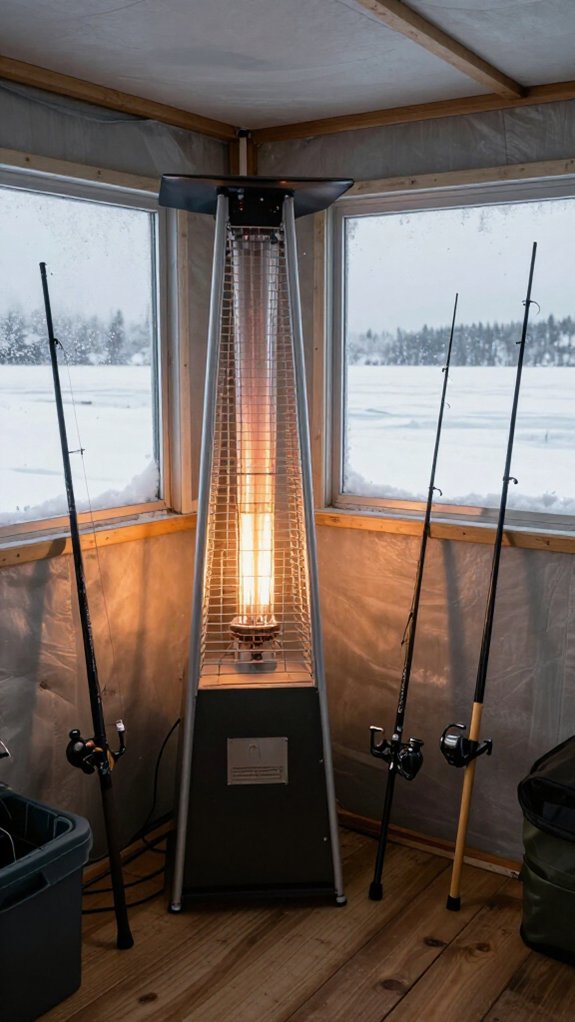
Although I count on my heater to keep me warm through the coldest bites, I’ve learned that how I treat it during the off-season determines whether it’ll fire up reliably next winter or leave me shivering on the ice.
Clean and Inspect Before Storage
I always start by inspecting and cleaning filters, vents, and burners on my Portable Propane Heaters. A quick wipe-down removes soot and debris that’ll clog performance next season.
Handle Fuel Properly
I drain tanks completely and store them upright in a cool, dry spot. This prevents corrosion and keeps fuel fresh, nothing worse than degraded propane when I’m rushing to my ice house at dawn.
Protect Your Investment
I cover my heater and stash it somewhere dry. Annual maintenance, including checking CO detectors and oxygen sensors, extends lifespan. Following manufacturer guidelines means I’m never left cold when the bite turns hot.
Frequently Asked Questions
Are Ice Fishing Huts Heated?
I heat my ice fishing hut to stay warm during long days on the ice. Most anglers use propane, diesel, or electric heaters. But I’m always careful to ventilate properly and monitor for carbon monoxide buildup.
How to Maintain an Ice Fishing Shelter?
I treat my shelter like a heartbeat on ice, fragile, vital. I inspect seams and vents, clear snow buildup, raise insulation, and chase moisture away before mold takes root.
What Is the Safest Heater to Use Inside a Tent?
I choose vented propane or direct vent gas heaters since they exhaust gases outside, or electric heaters with tip-over switches and low oxygen shutoff. I always pair them with carbon monoxide detectors for maximum safety.
Are Insulated Ice Fishing Tents Worth It?
Insulated ice fishing tents absolutely pay off. I’m burning less fuel, banishing bothersome frost buildup, and basking in steady warmth through brutal conditions.
The upfront cost stings, but my wallet wins long-term.
In Conclusion
You won’t melt your shelter or poison yourself if you follow these steps, I’ve kept my portable buddy heater running through forty-below mornings without a single issue.
The CDC reports that over 400 Americans die annually from accidental CO poisoning, but proper ventilation and a $20 detector drop your risk to nearly zero. Stay warm, stay smart, and keep those lines tight. Tight lines, friends.