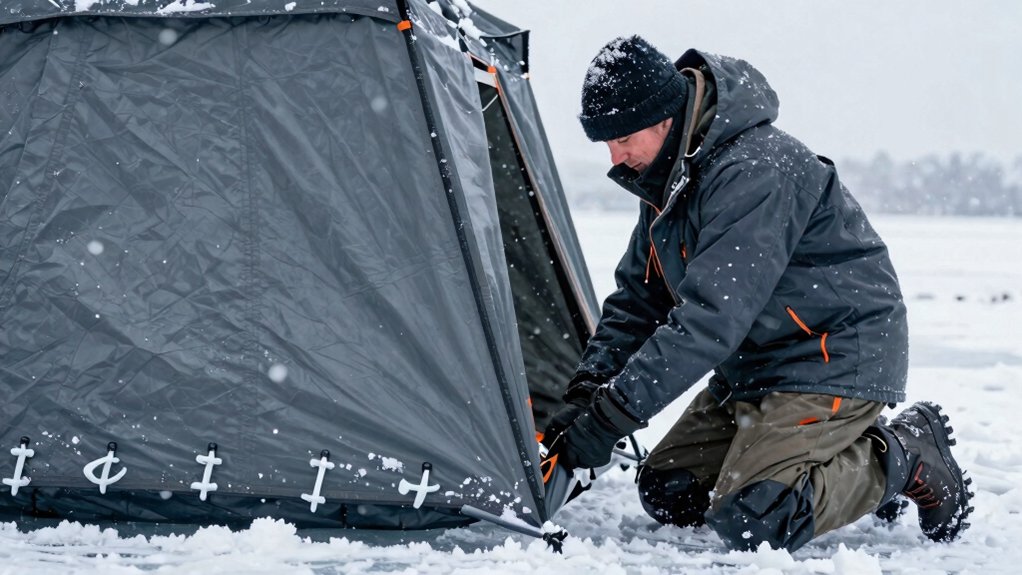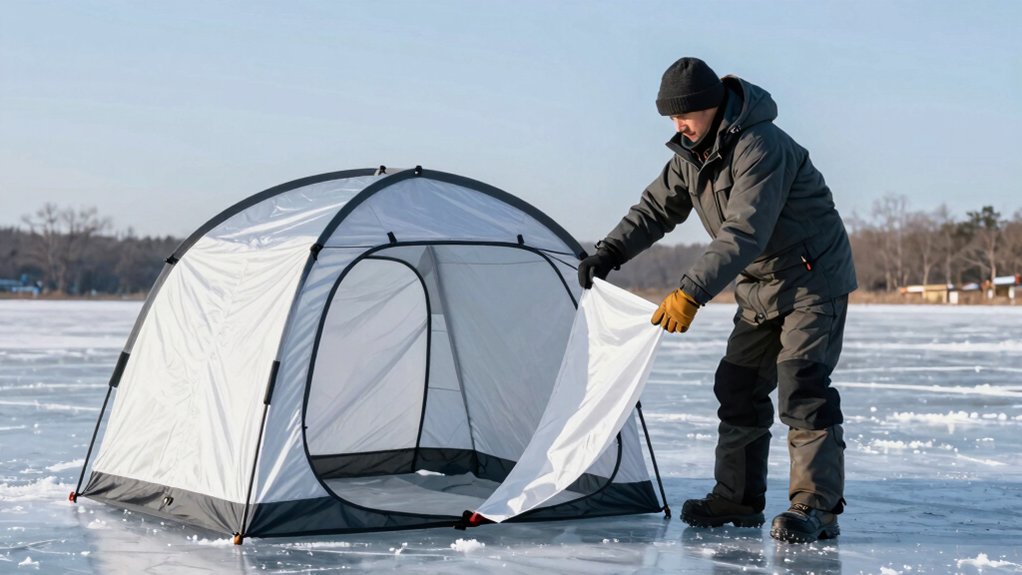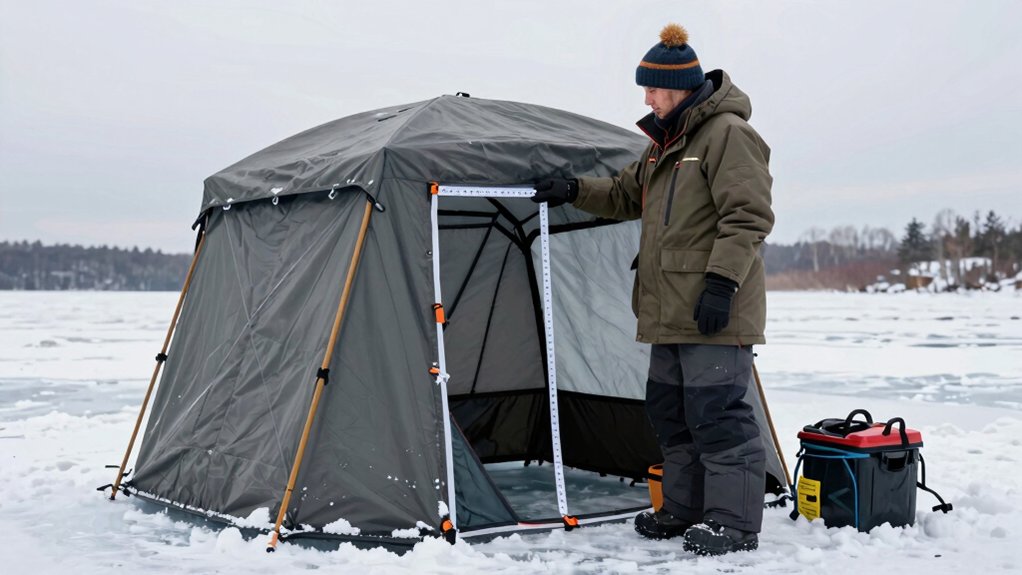
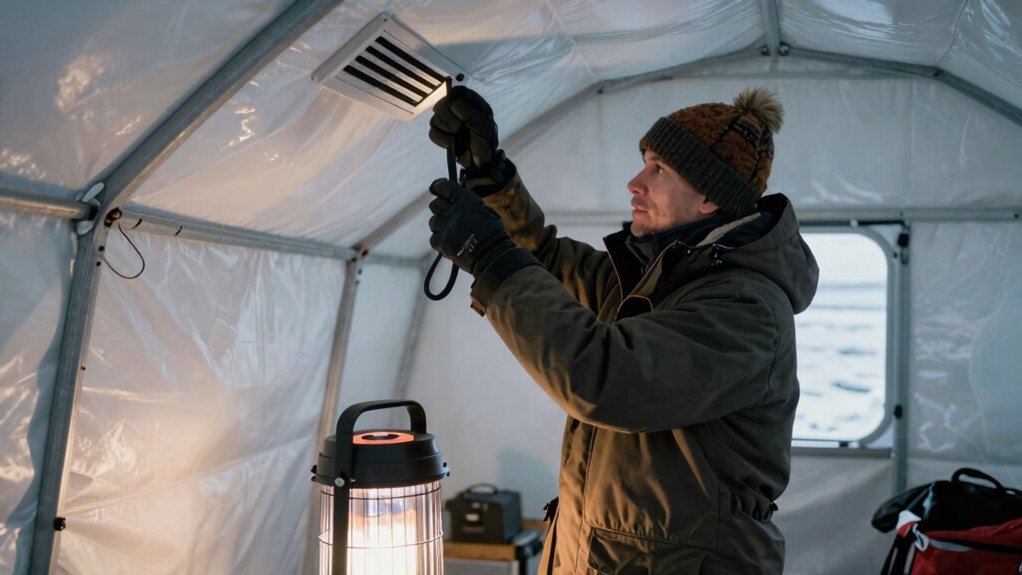

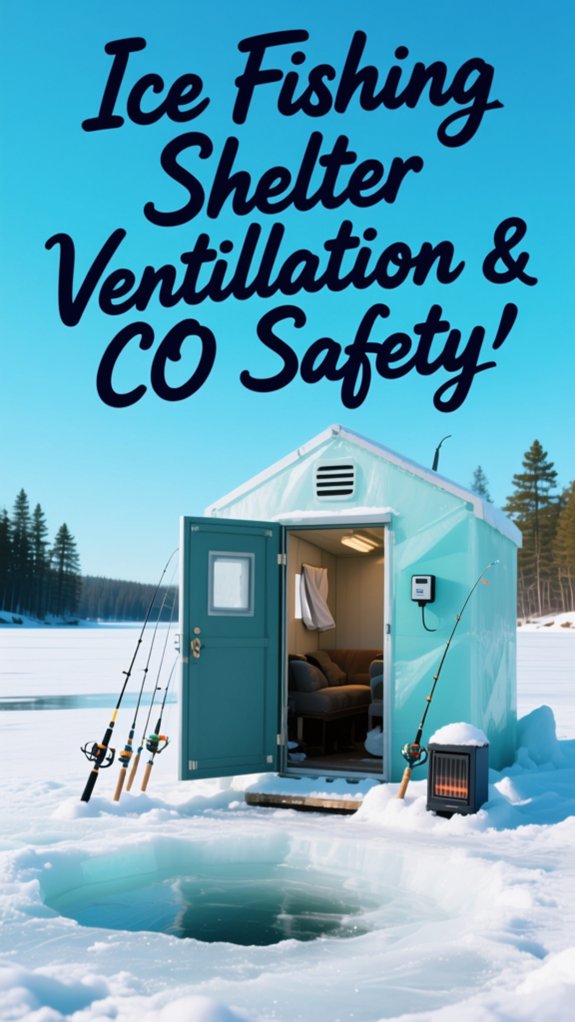
I never run a propane heater in my ice shelter without two vents creating a thermal chimney, low intake within a foot of the floor, high exhaust near the ceiling, to flush CO out naturally. I size vents to my shelter: 4-inch low and 6-inch high for small shacks, scaling up 25-30% for bigger spaces or heaters over 20,000 BTU.
Multiple CO detectors at breathing height (3-4 feet) catch what my nose can’t, since carbon monoxide is odorless and deadly. When snow’s flying, I check vents every 45-60 minutes because drifts block airflow fast. I always air out the shelter 30 minutes after heating before I sleep. Heaters off, vents open, detectors humming, that’s how I wake up to fish another day.
There’s more to keeping warm safely than most anglers realize.
The Two-Vent Rule: Stop Carbon Monoxide Buildup
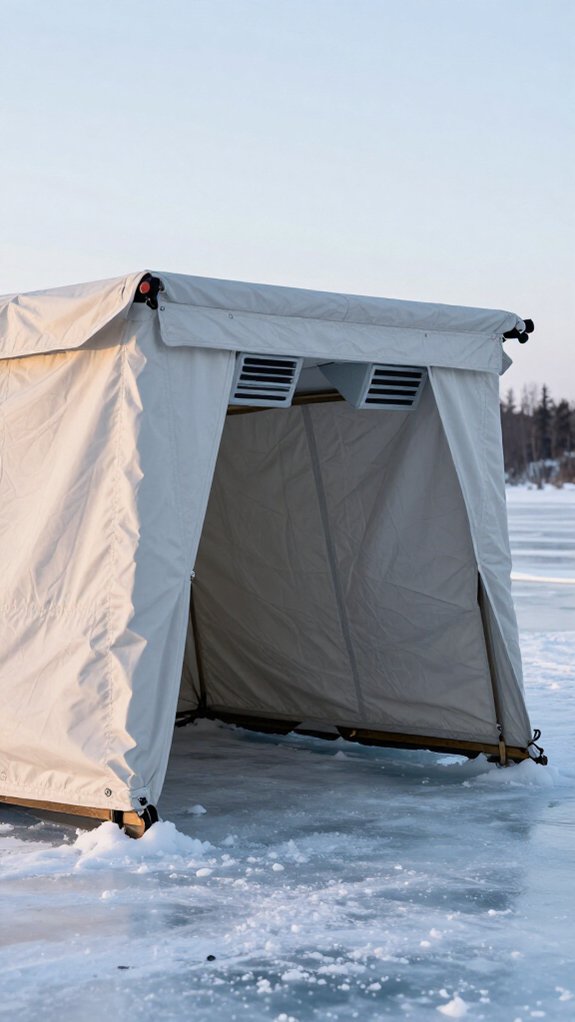
Because carbon monoxide can turn a peaceful day on the ice into a life-threatening emergency, I’m starting with the single most important rule every ice angler needs to know: the Two-Vent Rule.
How the Two-Vent Rule Works
I install one low intake vent within 12 inches of the ground and one high exhaust vent near my ice shelter’s ceiling. This creates a thermal chimney effect, no fans needed.
Fresh air pushes in below while warm, contaminated air escapes above, stopping dangerous carbon monoxide buildup before it starts.
Keeping Vents Clear
Snow and frost kill ventilation fast. I check my vents hourly, especially during heavy snowfall.
Louvered covers help shed accumulation, but they’re not foolproof. For solid CO safety, I make vent maintenance as routine as checking my line.
Calculate Vent Size for Your Shelter and Heater
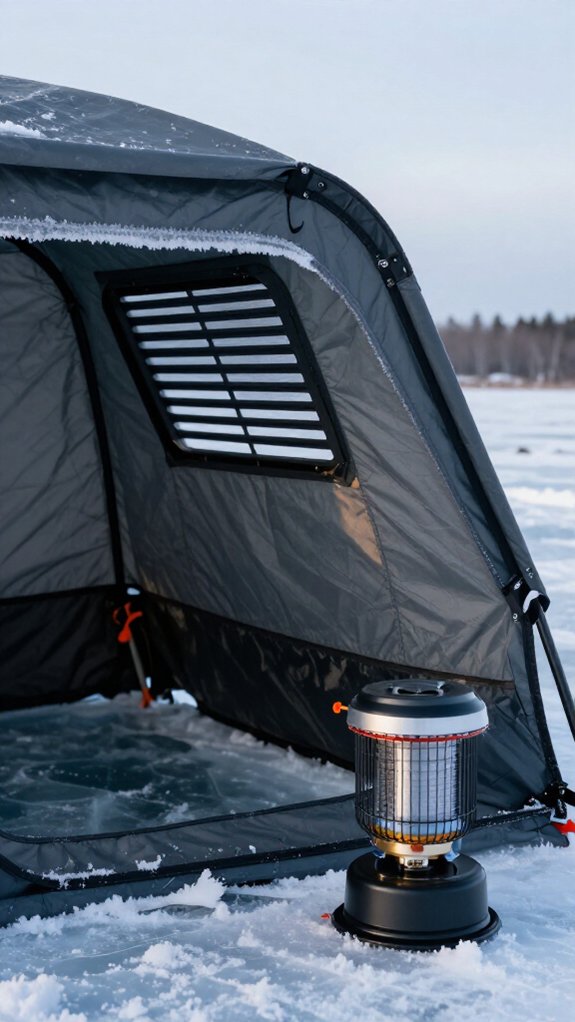
Once I’ve got my vents positioned right, I need to size them properly or that thermal chimney won’t draw worth a darn. Vent sizing depends on your shelter’s square footage.
For my compact shack under 50 sq ft, I run a 4-inch low vent and 6-inch high vent.
Bump up to 50-100 sq ft? I go 6-inch low, 8-inch high.
My buddy’s 100-150 sq ft hub needs two 6-inch lows and two 8-inch highs.
Anything bigger demands 8-inch low and 10-inch high vents.
Running a high-output propane heater over 20,000 BTU? I increase my openings 25-30% to keep that air moving.
Even with proper shelter ventilation, I never fish without my CO detector.
Proper vent sizing isn’t just comfort, it’s CO safety that keeps me pulling perch instead of pulling emergency stops.
Heater Safety: Why Propane Requires Extra Caution
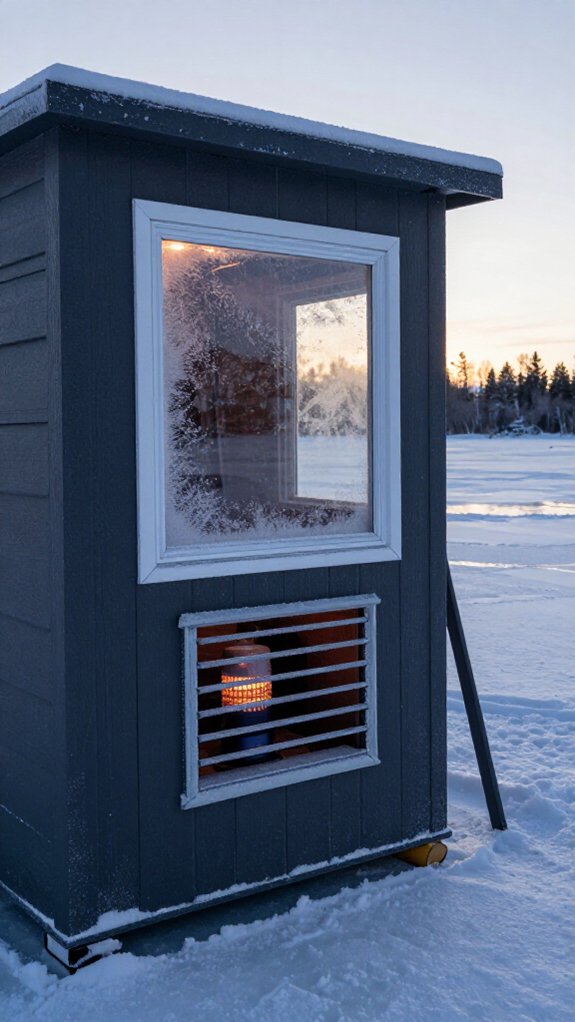
Propane heaters keep my shack toasty when the mercury plummets, but I’ve learned to treat them with serious respect. These units crank out warmth fast, yet they also pump out carbon monoxide that can turn deadly in tight quarters.
Why Propane Demands Extra Vigilance
Older propane heaters lacking oxygen depletion sensors pose real dangers. They’ll keep burning even as CO levels climb. I’ve seen small cylinders create toxic conditions when vents freeze shut or get blocked by gear.
Essential Safety Measures
- Crack high and low vents before lighting up, proper ventilation saves lives
- Never trust your nose; CO is odorless and colorless
- Pair every trip with reliable carbon monoxide detectors for continuous monitoring
Even brief lapses in attention can spell trouble. I check my equipment twice and keep backup detectors handy.
Where to Mount CO Detectors in Your Ice Shelter
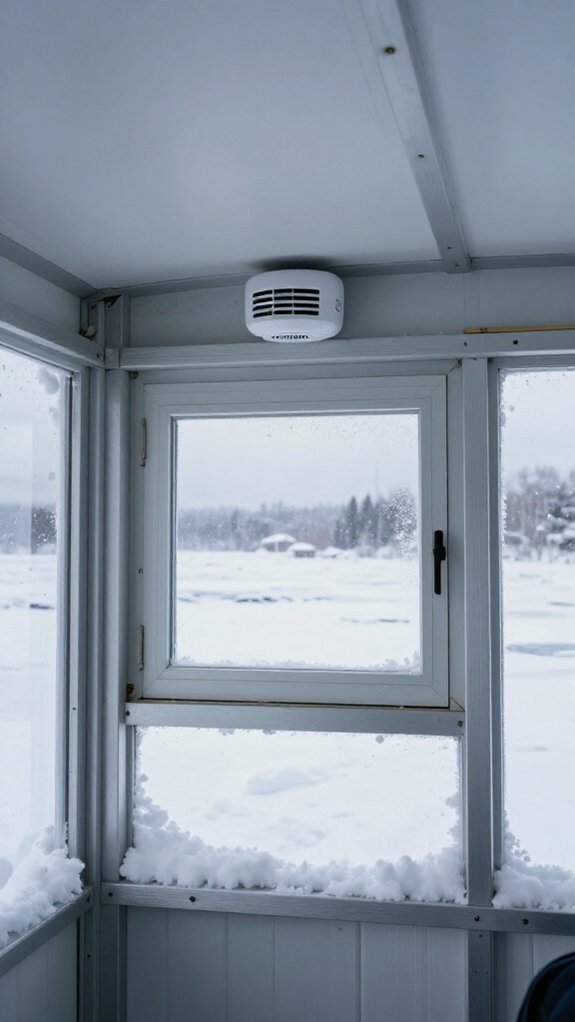
Since carbon monoxide mixes evenly with air, I mount my detectors at seated breathing height, about 36 to 48 inches off the floor, right where I’m actually inhaling while jigging or waiting for a flag to pop.
Smart Placement for Your Ice Shelter
I keep my CO detectors at least 5 feet from heater exhausts, learned that lesson after a false alarm sent me scrambling in -10° weather. I also avoid door openings where drafts skew readings, and I never mount near vents or air intakes that delay alarm activation.
For carbon monoxide safety, I secure detectors to sturdy poles or walls near my shelter’s center, easy to spot when the beeping starts. Proper placement matters as much as ventilation itself; you can’t fix what you can’t detect.
Check Vents Hourly: Prevent Deadly Snow Blockage
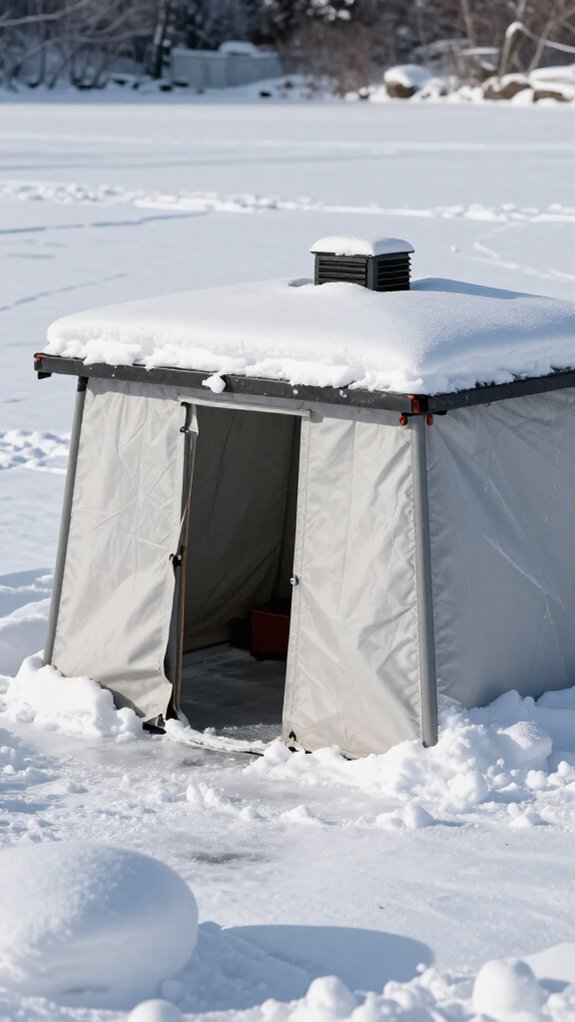
Even when I’m bundled up and focused on my tip-ups, I make it a point to glance at my vents every hour because a single snowdrift can turn my shelter from a cozy refuge into a silent hazard.
Why Hourly Checks Matter
Snow accumulation happens fast when the wind picks up across the ice. I’ve seen vents near the ground and ceiling disappear under fresh powder in under an hour. That vent blockage traps exhaust from my heater, and CO buildup becomes a real threat in any enclosed ice fishing shelter.
Smart Prevention Tips
- I do a quick vent inspection every 45-60 minutes during active snowfall
- Louvered vent covers help shed snow automatically
- I mount vents 6-8 inches above typical snow levels to reduce drifting problems
Staying on top of this simple habit keeps my shelter breathable and my focus on the fish, not my safety.
Recognize CO Poisoning Symptoms by Severity
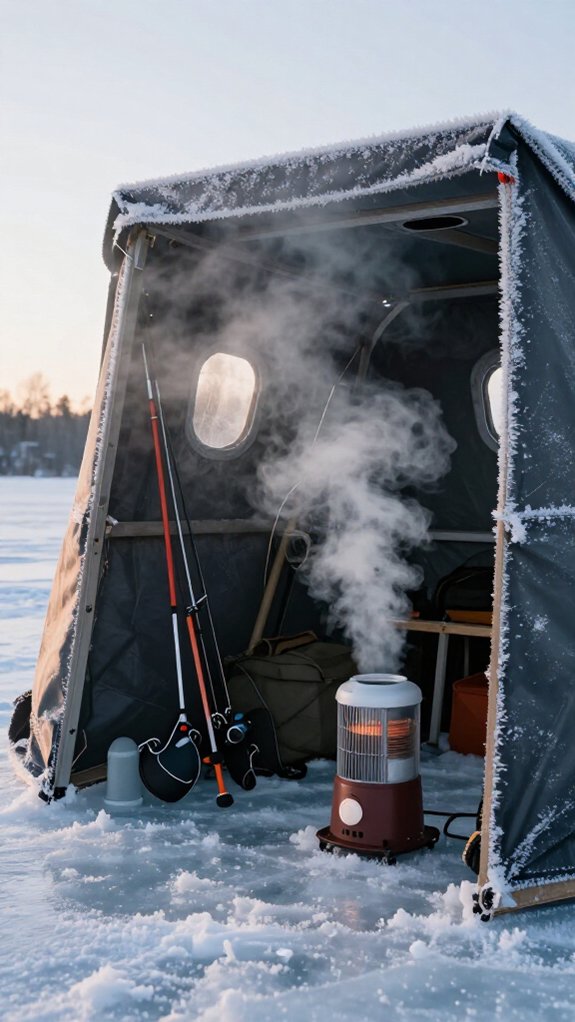
While I’m running my heater inside my shelter, I know that catching CO poisoning early can mean the difference between a good day on the ice and a trip to the emergency room, so I’ve trained myself to spot the warning signs before they escalate.
Poor ventilation lets CO build up silently, and symptoms progress fast. Here’s how severity levels break down:
- Mild exposure brings headache, dizziness, fatigue, nausea, and shortness of breath—easy to mistake for a cold when you’re bundled up in the cold.
- Moderate carbon monoxide poisoning causes confusion, blurred vision, chest pain, and rapid heartbeat, signaling your body can’t clear the toxin.
- Severe cases trigger vomiting, seizures, unconsciousness, and death without immediate action.
I watch for worsening symptoms and longer exposure times, since higher CO concentrations accelerate severity. Recognizing this progression keeps me ready to evacuate instantly.
Your Detector Is Sounding: Now What?
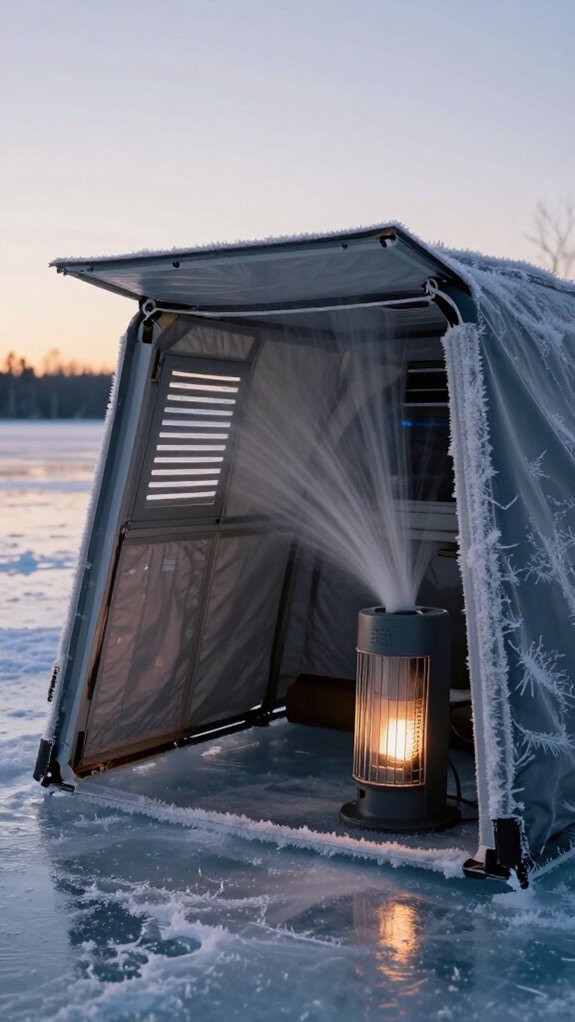
When your CO detector starts screaming, I’m getting everyone out immediately, no exceptions, no grabbing gear, and heading at least 50 feet upwind before I even think about what’s happening inside.
Once we’re safe and I’ve checked that every angler is accounted for, I’m watching for headaches, dizziness, or nausea and calling for help if anyone shows signs.
Only after the shelter’s been wide open for a solid half-hour will I consider stepping back in, and even then, I’m keeping one eye on my crew for delayed symptoms.
Immediate Evacuation Steps
The moment that carbon monoxide detector starts screaming, I’m out the door, no hesitation, no “let me just check the heater real quick.” I grab whoever’s with me and we move at least 50 feet upwind, where the air’s clean and I can finally take a full breath without that tight, anxious feeling in my chest.
Here’s my immediate evacuation checklist:
- Get everyone out. I count heads fast—nobody gets left behind in a shelter ventilation emergency.
- Watch for trouble. Headache, dizziness, confusion? Those CO poisoning symptoms mean I’m dialing 911 immediately.
- Stay put. No re-entry until proper emergency procedures clear the space.
Once we’re safe, I keep monitoring. Carbon monoxide doesn’t mess around, and I’d rather catch symptoms early than wish I had.
Safe Re-Entry Protocol
Once that detector finally quiets down and I’ve got clean air back in my lungs, I’m already thinking about what comes next, but I’m not rushing back inside just because I’m cold and eager to get back to my tip-ups.
Safe re-entry means patience. I open every vent, door, and window on my ice fishing shelter and let the wind do its work for at least 30 minutes. That carbon monoxide needs somewhere to go, and I’m not gambling with my life.
| Step | Action | Check |
|---|---|---|
| 1 | Open all ventilation points | Doors, vents, windows wide |
| 2 | Wait 30+ minutes | Don’t rush—CO lingers |
| 3 | Verify CO detector silence | Below 30 ppm required |
| 4 | Confirm heater function | Before restart |
Only when my CO detector stays quiet and I’ve got confirmed airflow do I step back inside. That’s how I keep my shelter safe and my fishing days uneventful, in the best way possible.
Overnight Ice Camping: Extra Precautions That Save Lives
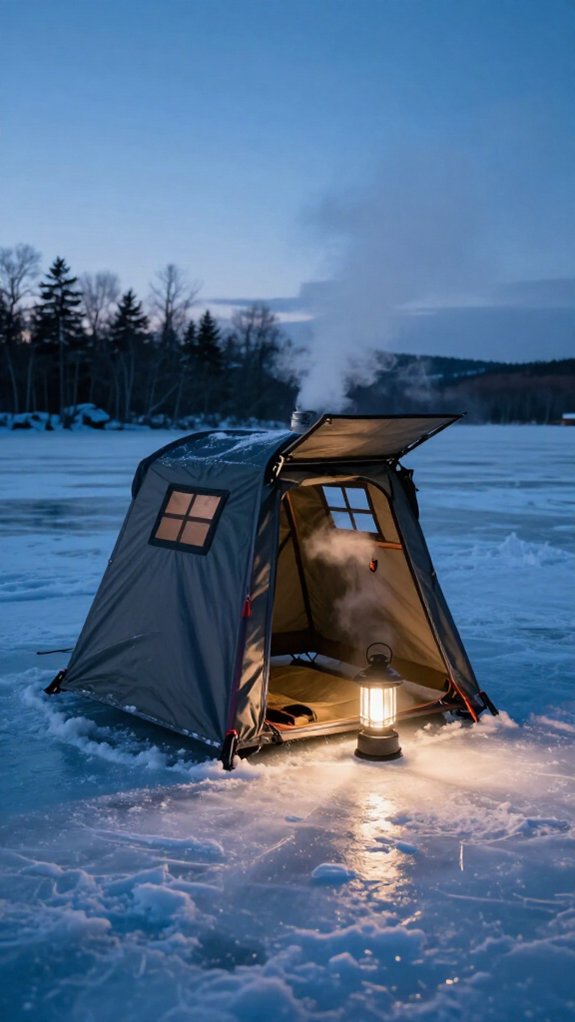
Because I’m staying out on the ice until sunrise, I’ve learned that overnight ice camping demands a whole different level of respect for carbon monoxide than a quick afternoon drill session. I never sleep with active propane heaters running, that’s non-negotiable shelter safety. When I do run them while awake, I crank ventilation wide open, even if it means bundling up.
My overnight survival hinges on three essentials:
- Multiple cold-rated CO detectors positioned at breathing height, checked during sleep shifts
- Float suits and rotating watch partners who spot symptoms before I succumb
- Thirty-minute re-entry protocols with all vents and doors open after any heating session
Ice fishing through the night rewards the prepared. I don’t gamble with carbon monoxide, I’ve got too many sunrises left to chase.
Frequently Asked Questions
What Are the Safety Precautions for Using Ice Fishing Shelters?
I install dual vents for airflow, place a CO detector at breathing height, keep propane outside, and use only approved heaters to stay safe. I clear snow from vents and never sleep with heaters running.
How Long Do You Have to Be Exposed to Carbon Monoxide to Get Sick?
I can get sick from carbon monoxide in just 20 minutes at 50 ppm. Imagine I’m ice fishing, running a heater in my shelter. By the time I notice my headache, I’m already poisoned. Higher levels kill faster.
Where Should You Not Put a Carbon Monoxide Detector?
I shouldn’t place CO detectors near vents, heaters, cookers, metal surfaces, doorways, or windows, and I’ll avoid mounting them too high or low, I’ll keep them at breathing zone height, about 36-48 inches up.
What Are the Top 3 Sources of Carbon Monoxide?
I’ve identified propane heaters, portable generators, and cookstoves as my top three carbon monoxide sources, they’re burning fuel incompletely and pumping that deadly gas into my space.
I’d better ensure proper ventilation when I’m using any of them.
In Conclusion
I’ve learned that staying alive on the ice beats any trophy catch. As the old adage goes, “an ounce of prevention is worth a pound of cure,” and nowhere does this ring truer than with CO safety.
Check your vents, trust your detector, and never gamble with a silent killer. The fish will wait; your family’s peace of mind won’t. Tight lines and safe shelters, friends.