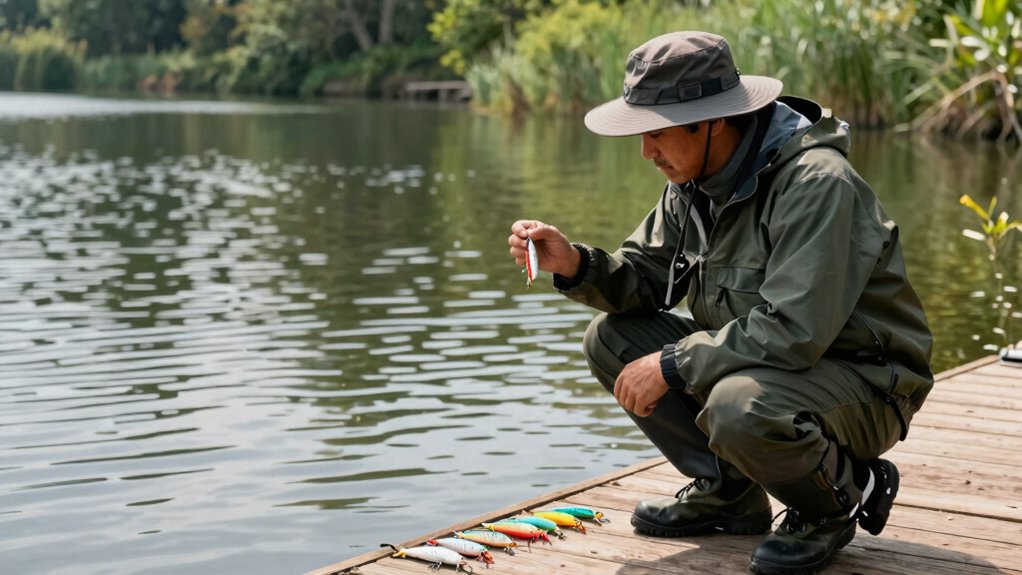
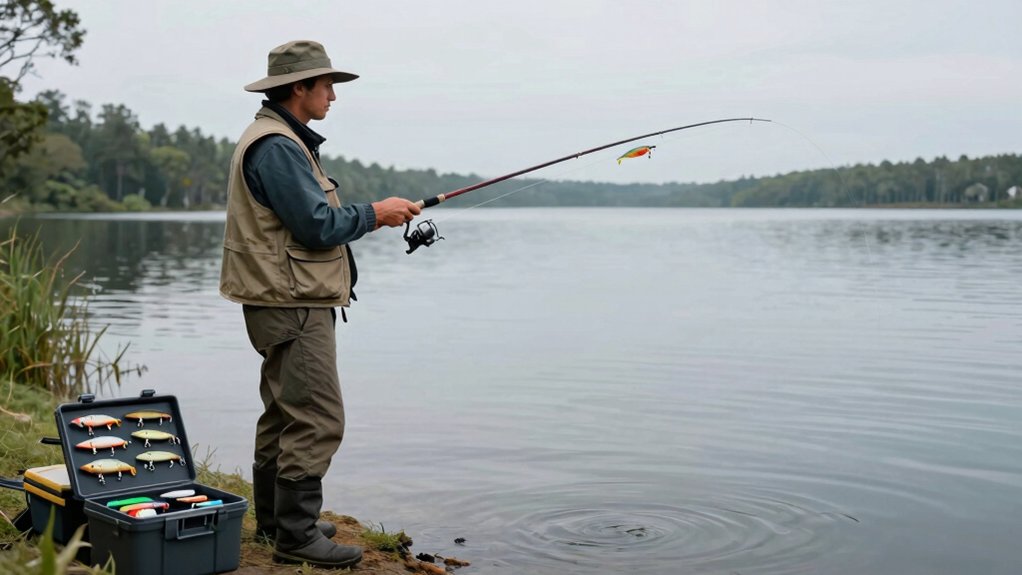

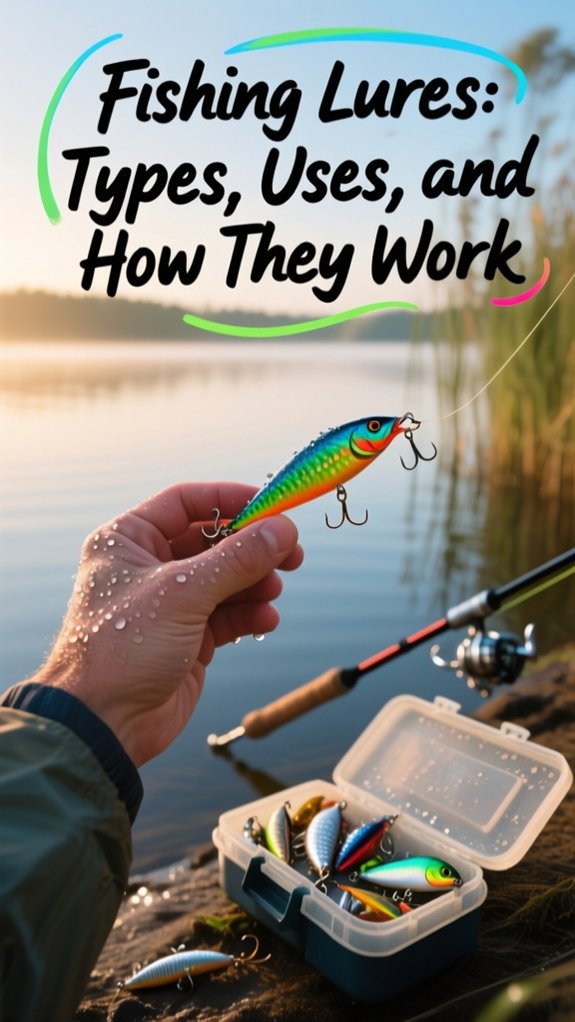
Fishing lures are artificial baits designed to trick fish into striking through vibration, flash, and lifelike movement. I use crankbaits to mimic wounded baitfish, jigs for bottom-hugging predators, and topwaters for explosive surface strikes at dawn.
Unlike live bait, lures let me control exactly how my presentation behaves, adjusting speed, depth, and action to match what fish want that day. They’re reusable, mess-free, and deadly effective once you understand how each type triggers predatory instincts through a fish’s lateral line and vision. The right lure in the right conditions consistently outperforms guesswork.
Stick around and I’ll show you exactly how to match lures to your target species and water conditions for more hookups.
Match Your Lure to Your Target Species
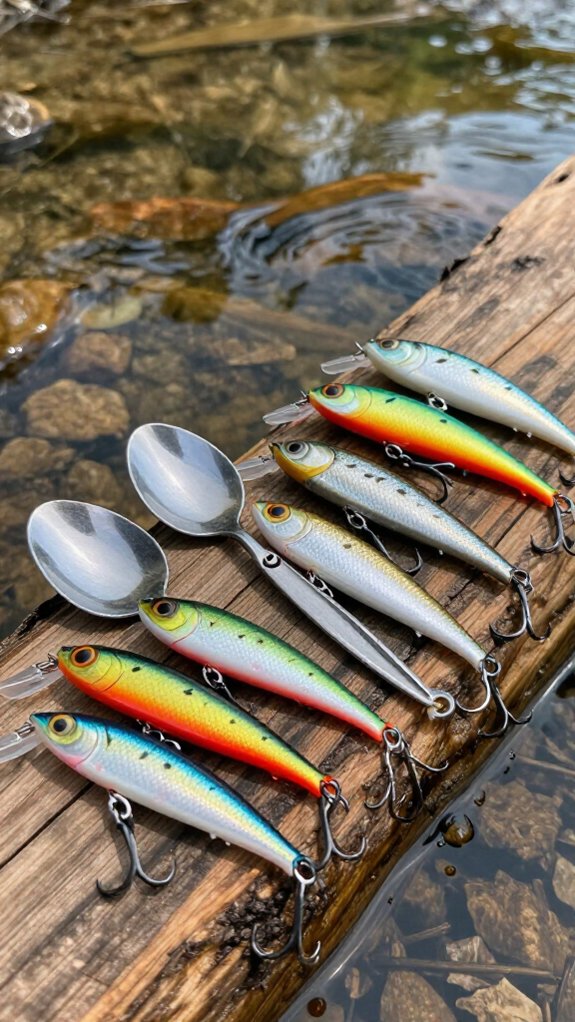
When I’m standing at the water’s edge, the first thing I ask myself isn’t “What do I want to throw?” It’s “What are the fish actually eating?” Matching your lure to your target species isn’t just good practice; it’s the difference between a slow day and a cooler full of fish.
I’ve learned that each fish species has distinct feeding habits shaped by their habitat. Bass crush crankbaits because these lure design options nail prey mimicry of small fish. Pike and musky demand larger, flashier presentations, swimbaits and spinnerbaits that match bigger natural prey. For trout and panfish, I downsize to tiny jigs, soft plastics, or flies imitating insects.
Getting the size of lure right matters as much as lure color adjusted for water conditions. Murky water? Bright, high-contrast patterns. Clear water? Natural, subtle tones. Study your target species’ preferences, and you’ll convert guesswork into consistent strikes.
Pick the Right Lure Type for Your Conditions
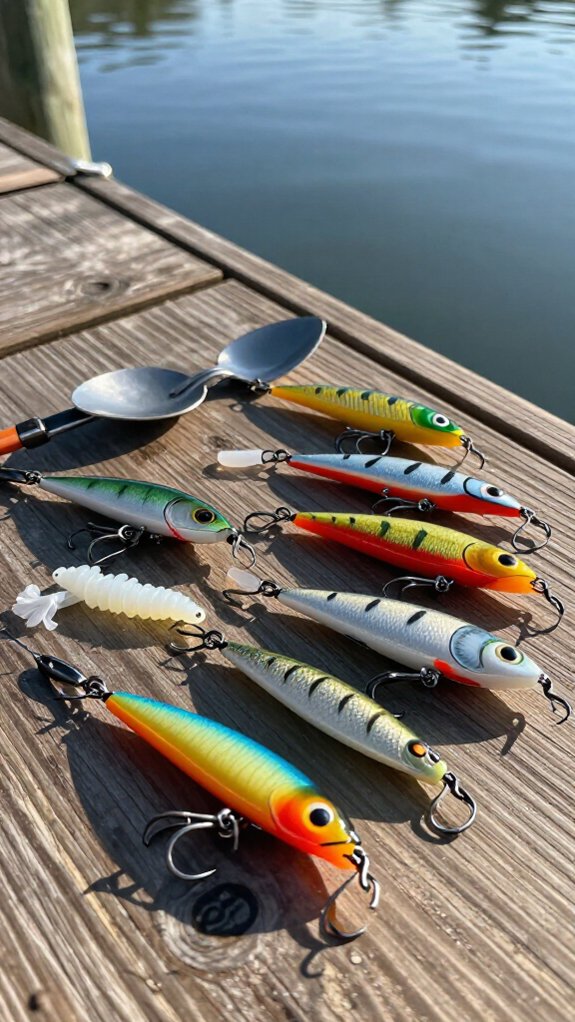
Once I’ve matched my lure to the species I’m after, I immediately start reading the water itself, because conditions change everything about what’ll actually work that day.
Water Clarity Dictates Color Choice
I choose lure types based on water conditions. In water clarity that’s crystal clear, I reach for natural-colored lures that mimic actual prey. When fishing conditions turn murky, bright lures with flash and vibration become essential so fish can locate them.
| Water Clarity | Best Lure Approach |
|---|---|
| Clear water | Natural hues, subtle action |
| Stained water | Moderate flash, medium contrast |
| Murky water | Bright lures, heavy vibration |
Temperature & Timing Matter
I factor in water temperature, cold water means slower retrieves; warm water lets me speed up. Lure design also shifts with time of day: I throw topwater lures at dawn and dusk when target fish hunt near the surface. Matching retrieve technique to these variables consistently puts more fish in my boat.
Master Core Lure-Fishing Techniques
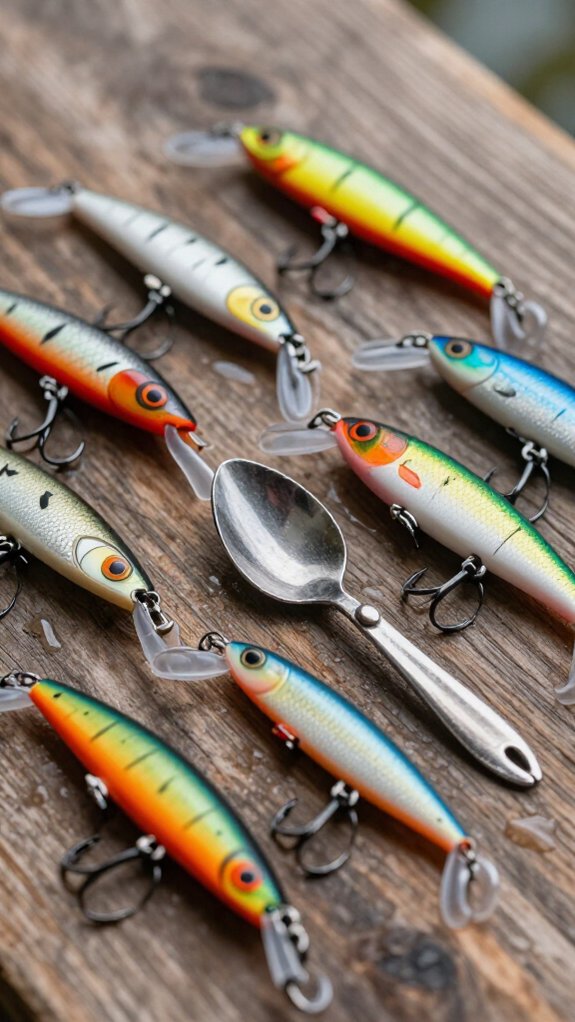
Because a lure sitting still won’t catch anything, I’ve spent years refining the core techniques that make artificial baits come alive underwater.
Core Retrieval Methods
I rely on three proven retrieval techniques to trigger strikes. Trolling covers water efficiently with steady lure movement, while jigging creates vertical action that mimics wounded prey. I vary speeds constantly—twitching, pausing, or steady reeling—based on fish behavior and what the day demands.
Fine-Tuning Your Presentation
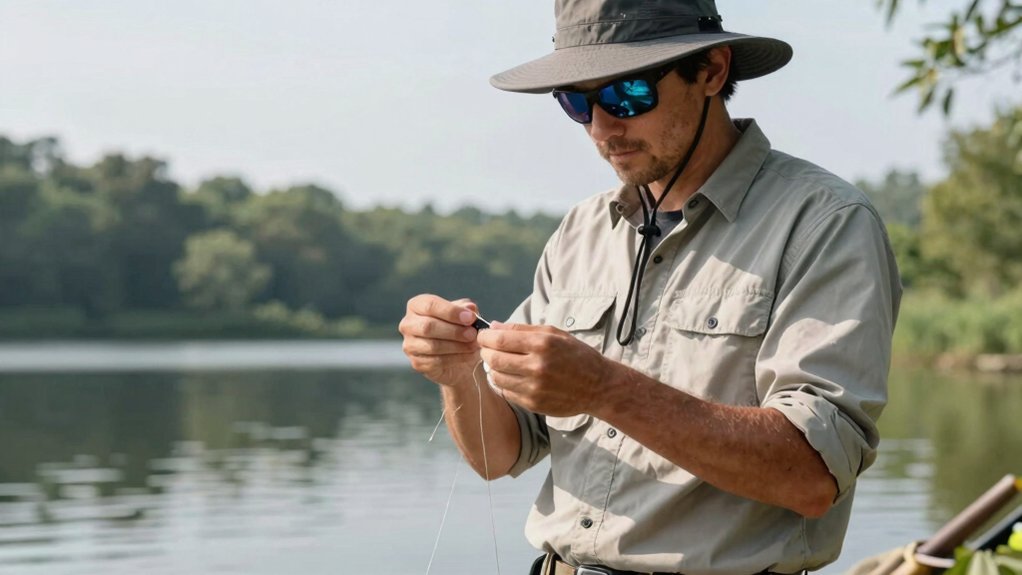
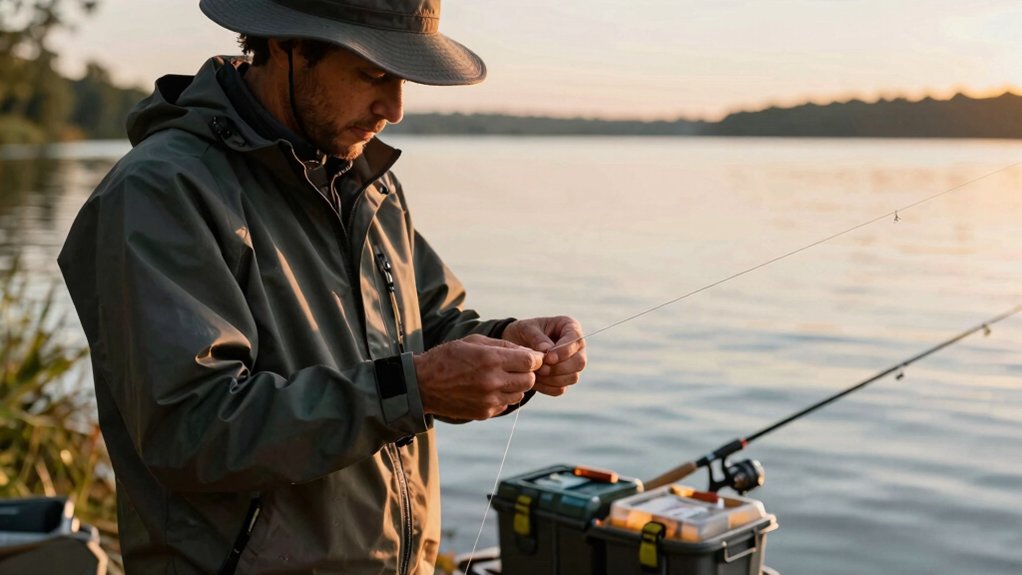
Smart lure rigging modifies performance. I add split rings and snap swivels to boost lure action and stop frustrating line twist.
Matching lure presentation to water conditions matters too—bright colors for murky depths, natural hues when visibility’s clear.
Precision Matters
I’ve learned that casting accuracy beats distance. Placing lures tight to cover where predators ambush prey converts opportunities into hooksets.
Understand What Makes Fish Bite
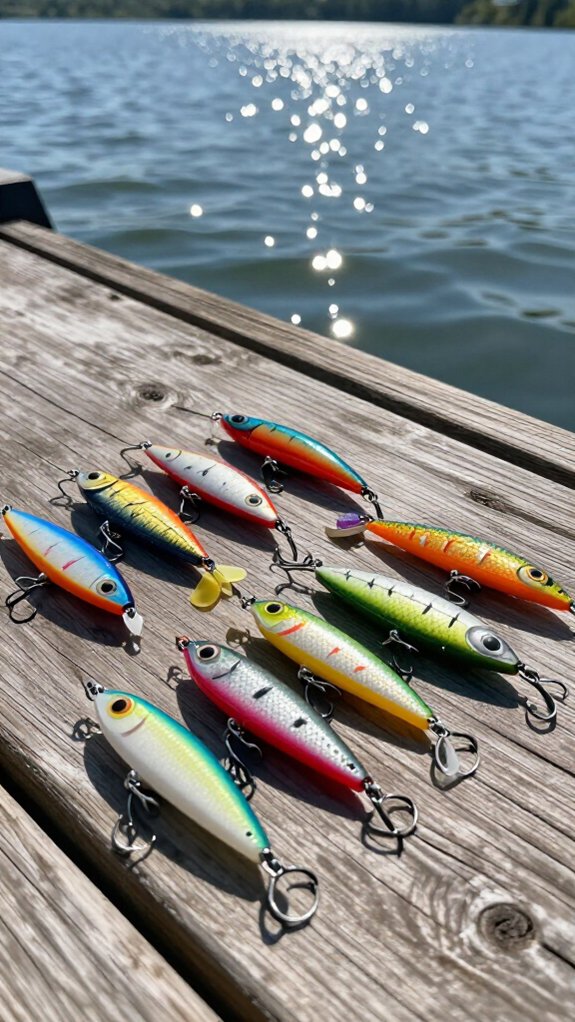
Mastering presentation techniques only pays off when you understand what’s happening inside a fish’s brain at the moment of attack.
The Predator’s Perspective
I think about this every time I tie on a lure. Fish don’t randomly bite, they’re responding to specific triggers. When I work a bait through the water, I’m targeting their senses: the vibration that travels through their lateral line, the flash of movement that catches their eye, and the appearance that screams “food.”
Triggering the Strike
Predatory fish rely on visual cues and feel to hunt. My lure succeeds when it mimics natural prey in size, color, and behavior. Darting, flashing, or thumping, each action exploits their instincts.
I match my presentation to what they’re already hunting. That’s when instinct overrides caution, and they commit.
Compare Lures vs. Live Bait
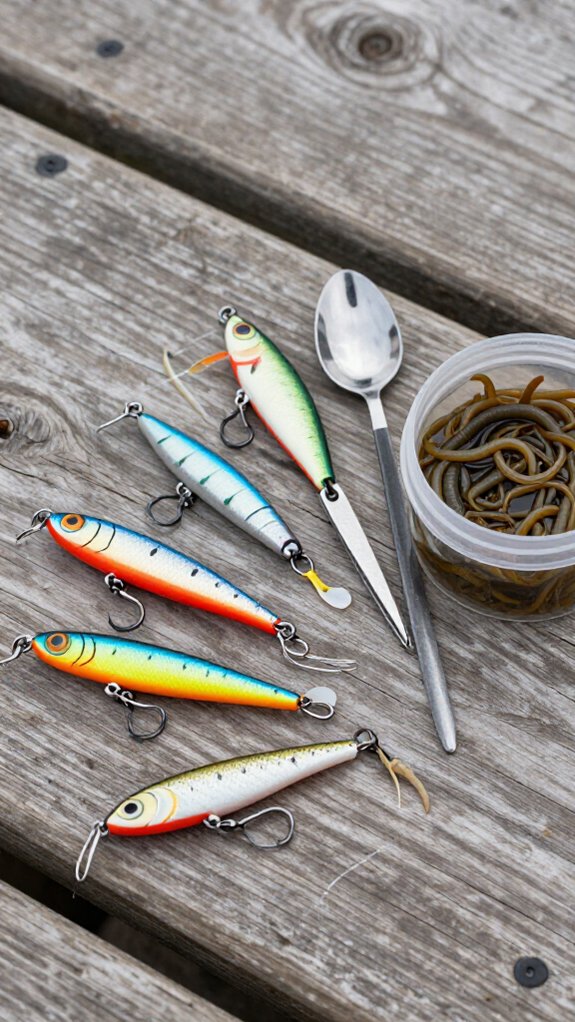
Although I’ve caught fish on both, choosing between lures and live bait comes down to what you’re after on the water that day.
I find natural bait hard to beat for pure fish attraction, it smells, moves, and tastes real, giving beginners better effectiveness across diverse fish species. But artificial bait wins on versatility and control. I can cast lures farther, work specific depths, and trigger aggressive reaction strikes through vibration and flash.
Here’s how they stack up:
| Factor | Lures | Live Bait |
|---|---|---|
| Fish Attraction | Provokes predatory instincts actively | Natural scent and movement |
| Presentation | Precise, repeatable control | Unpredictable, lifelike drift |
| Versatility | Target specific species/conditions | Broad appeal, less specialized |
| Convenience | Reusable, mess-free | Requires storage, perishable |
| Best For | Active fishing, covering water | Beginners, tough-bite days |
I pack both. When fish species turn selective, matching presentation to their mood matters more than loyalty to either method.
Frequently Asked Questions
What Are Fishing Lures Used For?
I use fishing lures to mimic prey and trigger strikes from predatory fish. They’re reusable, mess-free alternatives to live bait. They let me target specific species across different depths and water conditions effectively.
What Are the Best Lures for Beginners?
I recommend starting with plastic worms, small crankbaits, and spinnerbaits since they’re simple to use and don’t require advanced techniques. Bright soft plastics and versatile jigs help me adapt quickly.
Topwater poppers give immediate visual feedback that keeps me engaged.
Can You Fish With Just Lures?
I fish exclusively with lures and catch plenty. They’re reusable, mess-free, and work great when I match the right type and color to conditions.
Success comes from mastering retrieval techniques and comprehension of what triggers strikes.
Is It Better to Use Lures or Bait?
I don’t think there’s a clear winner, it depends on your situation. I’ll grab lures when I’m chasing specific species or practicing catch-and-release, but I’ll switch to bait when I’m teaching beginners or the water’s murky and fish need extra convincing.
In Conclusion
When I’m choosing lures today, I’m channeling the same intuition my grandfather trusted decades ago, listening to the water and matching my offering to what’s actually happening beneath the surface. Start simple, build your box thoughtfully, and you’ll spend less time wondering what works and more time feeling that electric tug on your line.