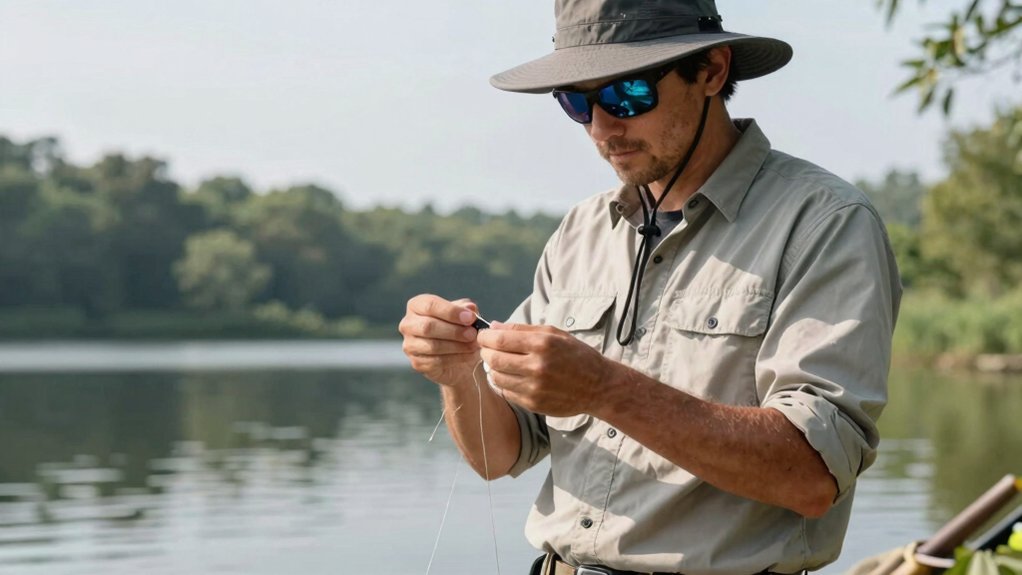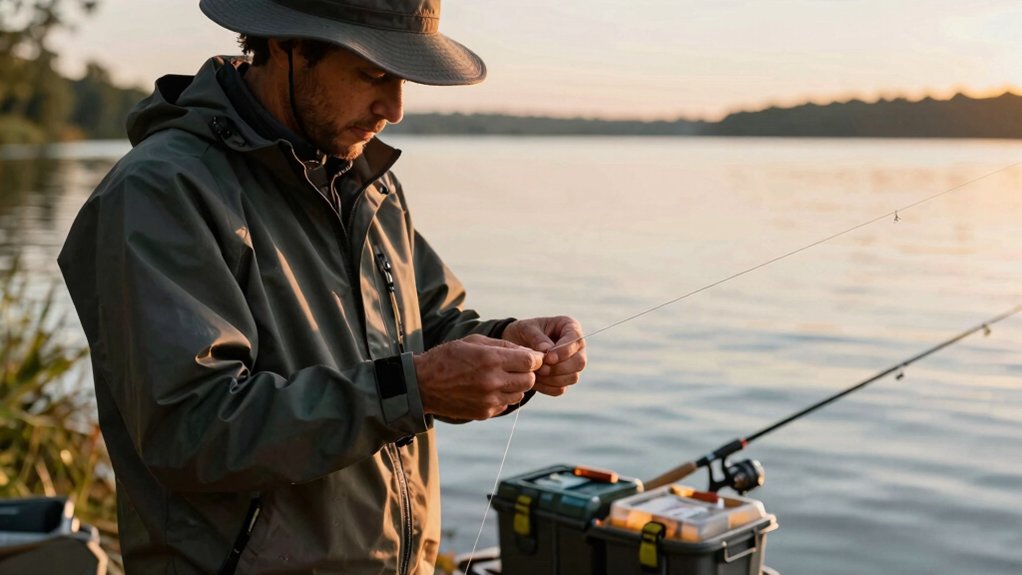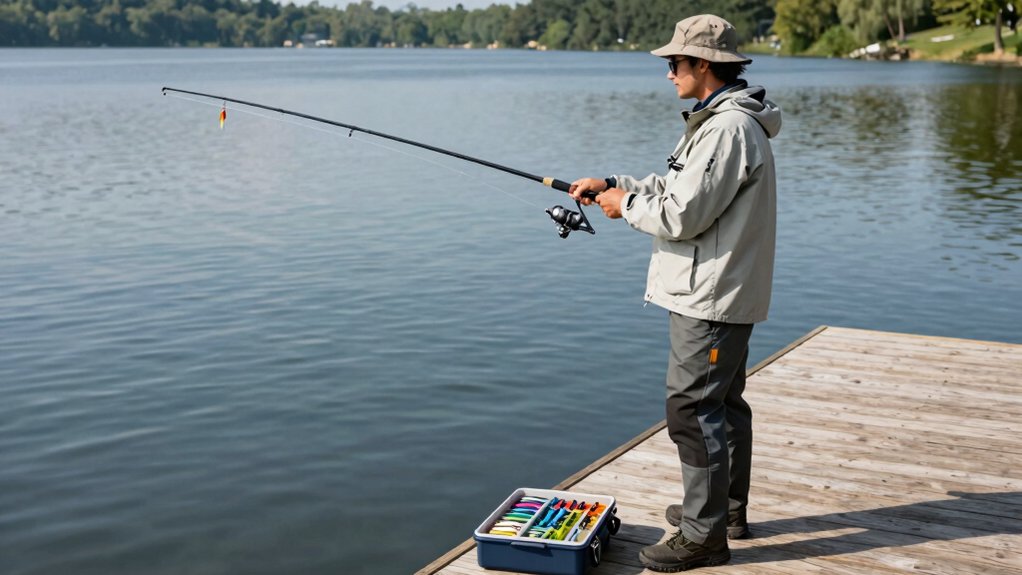
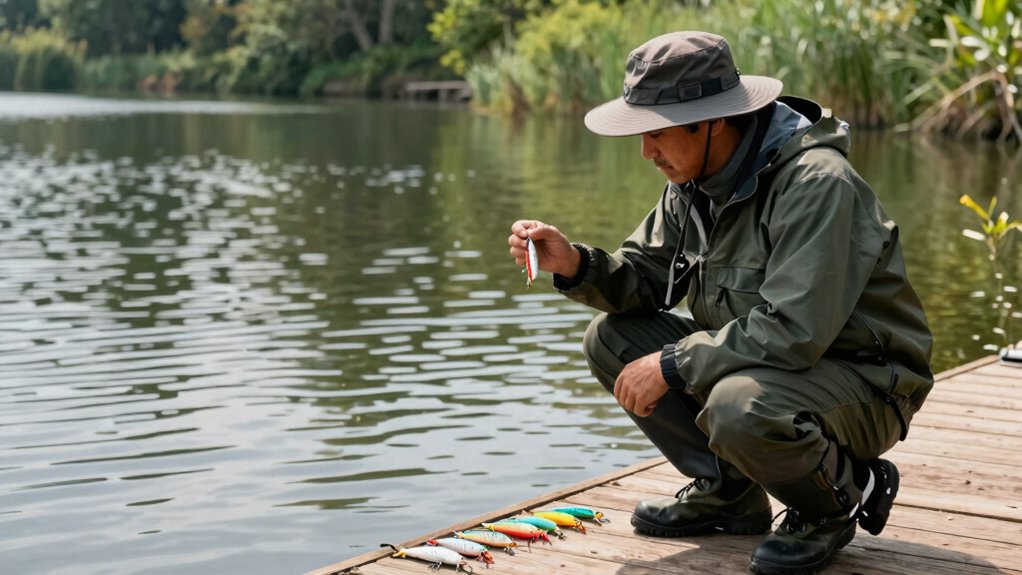

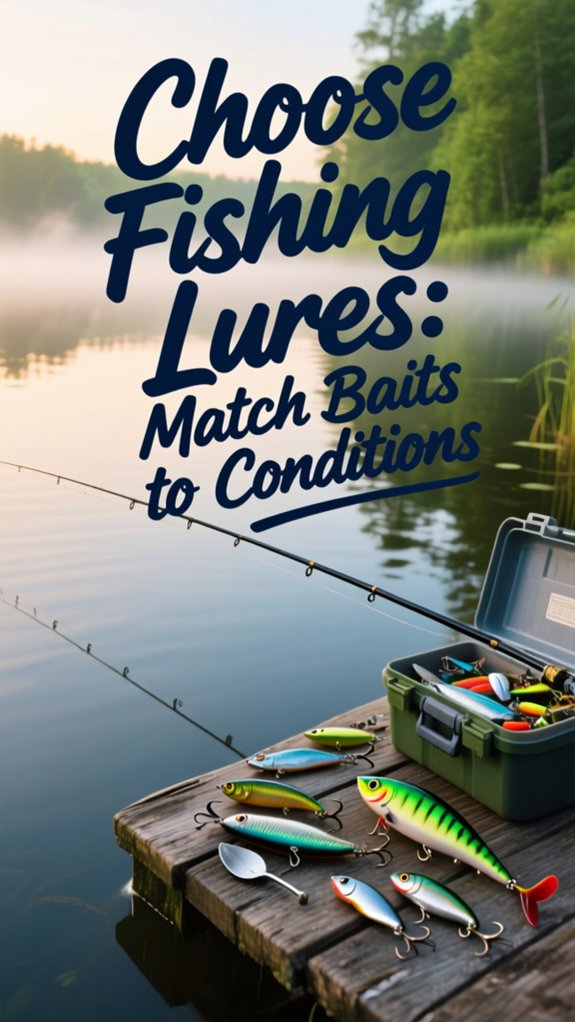
I match every lure to water clarity, depth, and fish activity because the right bait elevates slow days into memorable ones. In crystal-clear water, I’ll reach for subtle shad patterns and ghostly pearls since fish inspect lures closely. When the water’s stained, I switch to bold chartreuse or fire tiger that cuts through the murk.
I target shallow dawn feeders with topwater poppers, mid-depth suspending fish with spinnerbaits, and deep structure with heavy jigs. Cold water demands slow, deliberate retrieves with soft plastics hugging the bottom, while warm conditions let me speed up with erratic reaction baits. I always keep versatile multi-purpose lures handy, research shows they enhance catches by 34%, and adjust color, speed, and presentation the moment fish turn finicky. There’s a method to every lure choice that turns observation into action.
Read the Water: Your First Lure Decision
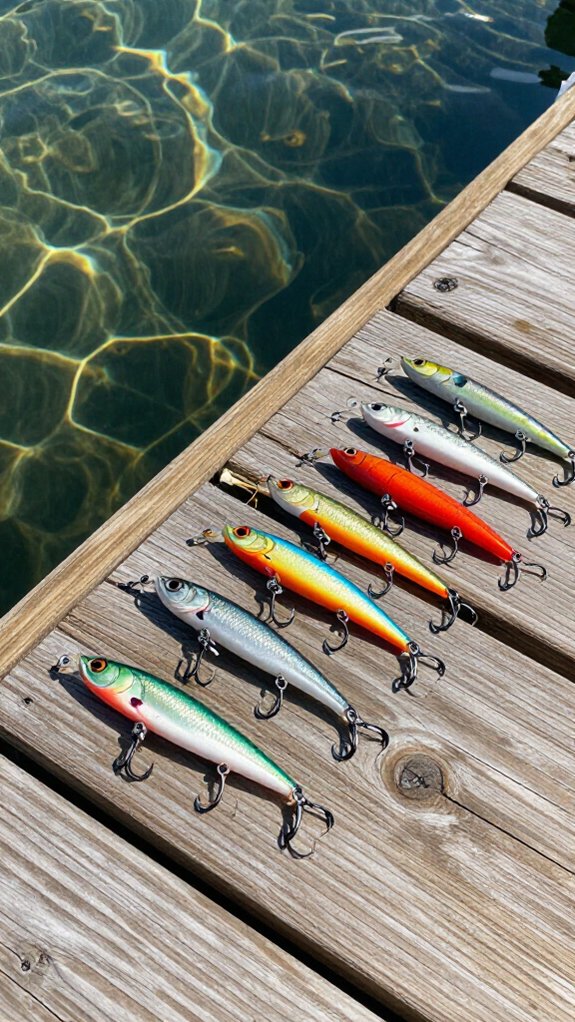
Before I ever tie on a lure, I’m standing at the water’s edge, letting the conditions tell me what the fish want.
I’m reading the water clarity first. In crystal-clear conditions, I’m reaching for subtle, natural presentation options—shad patterns, muted greens, ghostly pearl finishes that disappear against bright backgrounds. The fish aren’t searching hard; they’re inspecting closely.
But when water conditions turn stained or muddy, I’m flipping the script entirely. Those same fish need bold signals, so I’m grabbing chartreuse, fire tiger, or solid black profiles that cut through the murk.
Water activity speaks volumes too. Surface ripples and swirling algae suggest where bait’s moving—and where I’m casting.
Finally, I’m watching fish behavior. Tight schools mean injured prey mimics; scattered boils call for aggressive, flashy runners. The water’s already made my choice, I’m just listening.
Choose Lures by Depth: Where the Fish Are Hiding
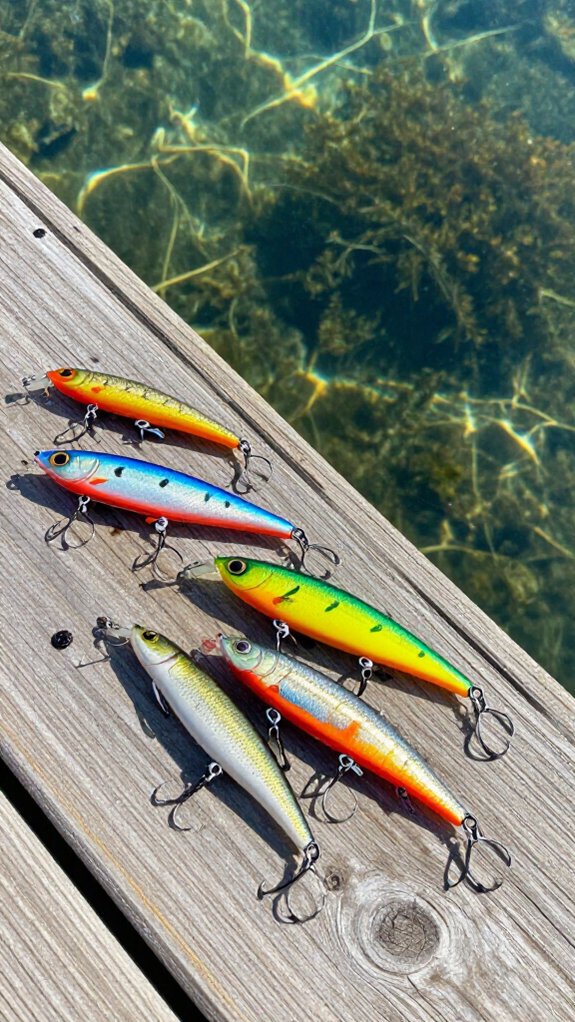
How deep are the fish holding today? That’s the first question I ask myself before tying on any lure, because depth dictates everything about my approach.
Reading the Water Column
Fish behavior shifts dramatically based on water temperature, available cover, and time of day. I watch for clues—baitfish flickering, birds diving, or surface rings—to gauge where predators are positioned.
Matching Lures to Each Zone
- Shallow (0–5 ft): I grab topwater poppers or shallow crankbaits when fish prowl near the surface, especially at dawn.
- Mid-depth (5–15 ft): Spinnerbaits and lipless crankbaits let me target suspending fish efficiently.
- Deep (20+ ft): Heavy jigs and deep-diving crankbaits get down where bass hold on structure.
I always adjust my retrieve speed to keep the lure in the strike zone longer. If I’m not hitting the right depth, I’m simply not catching.
Match Color to Conditions: Light, Bright, or Dark
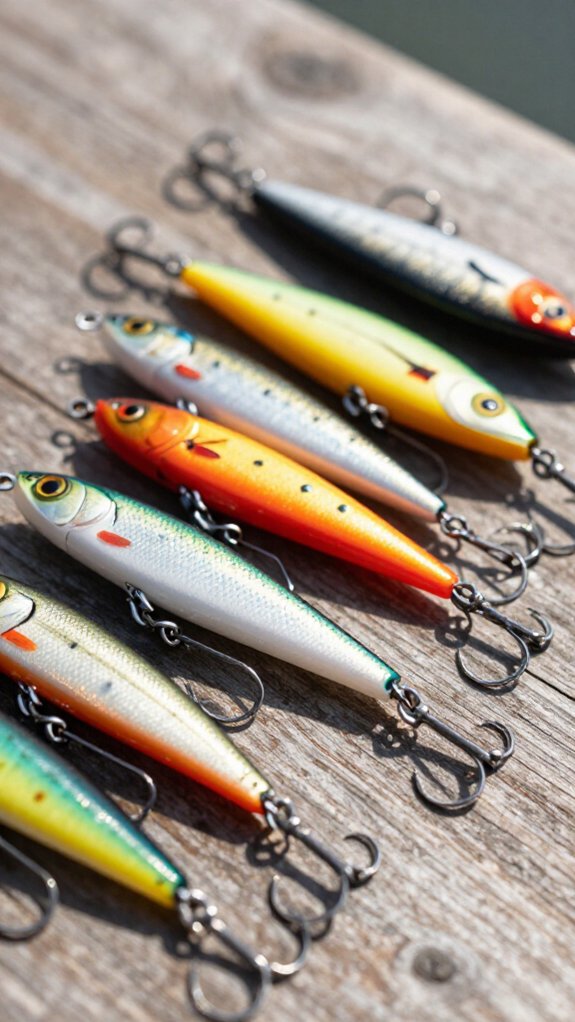
Once I’ve dialed in the right depth, I immediately shift my focus to color because water clarity and light conditions determine whether a bass sees my lure as dinner or ignores it completely.
Reading the Water
I always start by assessing water conditions before reaching for my tackle box. In clear water, I’ll grab light-colored lures—whites, silvers, or soft pastels—that mimic natural baitfish without spooking wary predators. The subtle flash blends perfectly, and fish can’t resist what looks familiar.
When Visibility Drops
Stained water demands a different approach. That’s when I switch to bright lure colors—chartreuse, orange, or metallic finishes—that punch through the haze and grab attention. These high-visibility options cut through the murk so bass can actually find my bait.
Low-Light Winners
When clouds roll in or I’m fishing dawn and dusk, dark colors become my secret weapon. Black, purple, or junebug create bold silhouettes that predators track easily against dim backgrounds, elevating my strike rate when visibility tanks.
Adjust Speed for Seasonal Fish Activity
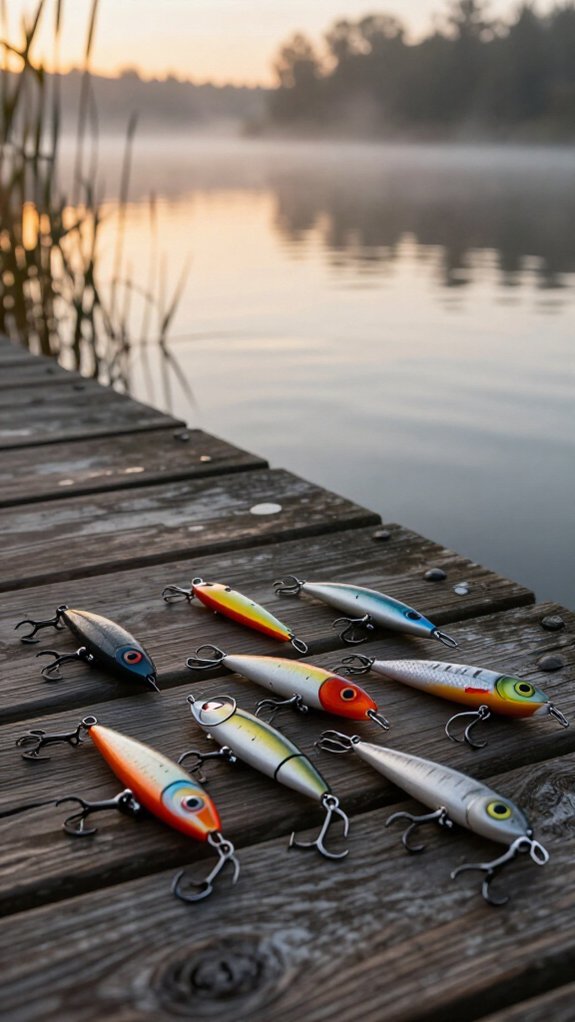
I adjust my retrieve speed throughout the year because fish metabolism changes dramatically with water temperature.
When the water’s cold, I’ll slow way down with soft plastics and jigs to match how sluggish the prey becomes.
Once summer hits, I switch to faster, more erratic retrieves with reaction baits to trigger aggressive strikes from active fish.
Cold Water Tactics
When water temperatures drop, I’ve learned that fish metabolism slows way down, and if I’m still ripping lures through the water like it’s summer, I’m leaving bites on the table.
Cold-water tactics demand patience. I switch to soft plastics and drag them along the bottom with a painfully slow retrieve—think inches, not yards. Less active fish won’t chase; they need easy meals.
Depth control matters too. I keep my lure hugging the bottom structure where lethargic bass and walleye hold tight to conserve energy.
| Cold-Water Factor | What I Adjust | Why It Works |
|---|---|---|
| Slow retrieve | Creep plastics along bottom | Matches sluggish fish behavior |
| Depth control | Target bottom 2–3 feet | Cold-water species stay low |
| Natural colors | Greens, browns, muted shad tones | Subtle appeal to less aggressive fish |
Skip the flashy stuff. I’ve found natural colors outperform bright patterns when fish are conserving energy in frigid conditions.
Warm Water Strategies
Why slow down when the water heats up? I don’t, I speed things up because warm water cranks fish activity into high gear, and I’m matching their metabolism with fast retrieves that trigger reaction strikes.
Here’s what I throw when the thermometer climbs:
- Topwater lures ripped across the surface, creating explosive blow-ups as bass hammer fleeing prey
- Spinnerbaits and crankbaits burned with erratic twitches that predators can’t ignore
- Soft plastics rigged on vibrating jigs and worked quickly through cover
I adjust my pace as temperatures peak in late spring and summer, knowing aggressive fish want meals that look panicked and vulnerable.
When they’re feeding actively, hesitation costs bites. Speed doesn’t just work, it’s often the only thing that does.
Fish Ignoring Your Lure? Try These Fixes First
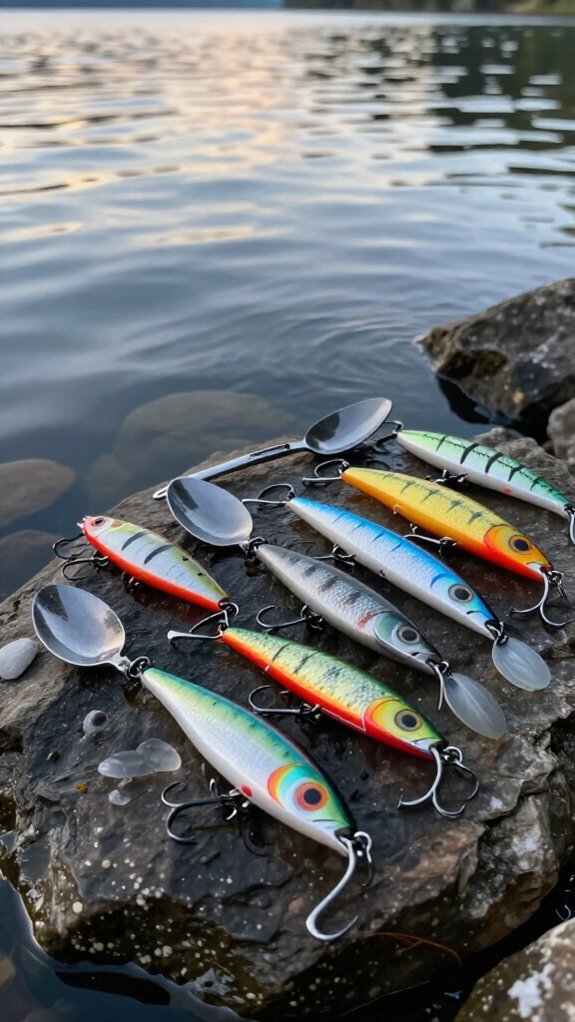
If your lure’s sitting ignored while fish cruise right past it, I’ve been there, and it’s usually a quick fix once you know what to adjust.
Check Your Presentation
Start by matching natural prey. When fish are aggressive, bright colors trigger reaction strikes. In tough water conditions, I’m adjusting to darker, more natural tones for better visibility.
Your retrieve speed matters too—I’ll slow it down, speed it up, or add pauses until I find what turns followers into biters.
Add Sensory Triggers
Sometimes fish need extra convincing. I’ll add scent or a rattle when they’re hesitant. These small changes create a stronger feeding response without switching lures entirely.
Get in the Zone
Finally, I always check depth. Presenting above or below the feeding zone guarantees ignored casts. Drop it where they’re actually hunting, and you’ll start connecting.
Build a Compact Fishing Lure Kit for Any Condition
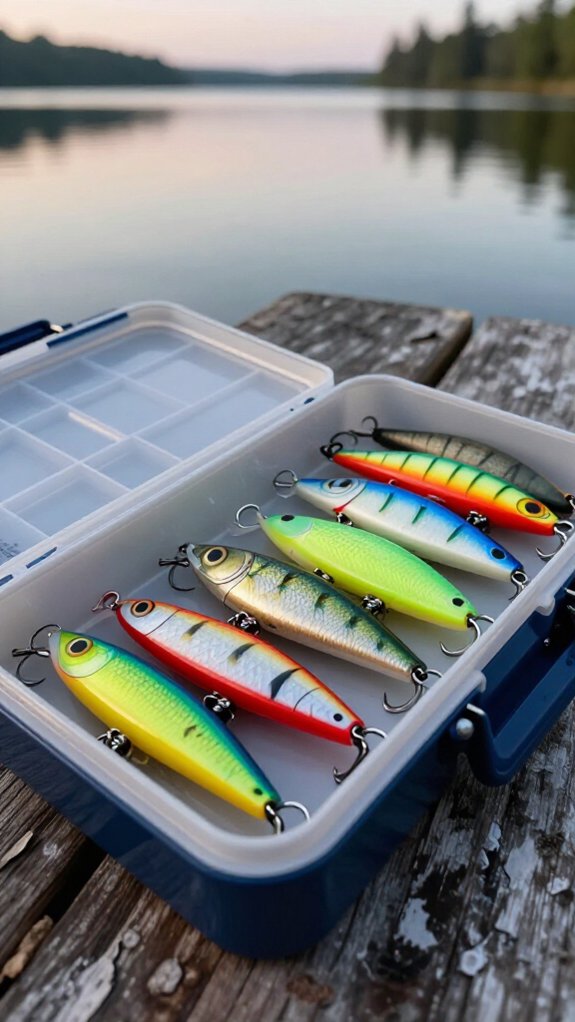
I build my compact lure kit around two non-negotiable pillars: core color categories and versatile lure selection that works anywhere. I’ll pack lights, brights, and darks so I’m ready for crystal mornings, muddy afternoons, or dusk sessions when bass start prowling.
Then I prioritize jig-and-pig combos and soft plastics that I can rig weedless for lily pads or drop-shot for deep structure, one bait, endless possibilities.
Core Color Categories
Whether I’m staring into crystal-clear shallows or casting into chocolate-milk runoff after a storm, I don’t need a tackle box bursting with every shade under the sun, just three core color families that cover every scenario I’ll face.
The Three Families That Work
I organize my lure colors into lights, brights, and darks, each built for specific water clarity conditions.
- Light tones like pearl white and soft pastels shine in gin-clear water, matching baitfish that flash silver in sunlight.
- Bright colors, chartreuse, firetiger, metallic finishes, cut through stained water where visibility drops.
- Dark colors such as black, junebug, and deep purple create bold silhouettes fish track in muddy, low-light situations.
Versatile Lure Selection
Since I can’t predict which water I’ll face until I’m standing at the ramp, I’ve learned to pack a compact kit that handles anything from sun-bleached shallows to storm-stained depths without weighing me down.
Build Your Adaptive Arsenal
My core lure selection blends natural-colored soft plastics for clear water with bright spinnerbaits and dark jigs for stained conditions. I vary sizes and weights to shift between shallow flats and deep structure instantly.
I pack slow-rolling crankbaits and fast-moving reaction baits together. When cold fronts shut fish down, I switch tactics without digging through boxes.
Reflective finishes and rattles prove essential when water clarity drops or light conditions fade. Research from Bassmaster shows anglers with multi-purpose lures catch 34% more fish across changing environments.
Stay versatile, stay mobile.
Frequently Asked Questions
What Is the 80/20 Rule in Fishing?
I use the 80/20 rule to focus on the 20% of lures that catch 80% of my fish, maximizing my success while eliminating wasted effort on ineffective options.
What Lure Colors Are Best for Different Water Conditions?
I pick natural greens and shad for clear water, switch to bold chartreuse or black and blue when it’s stained, and use bright white or orange in muddy conditions, always matching contrast to visibility.
Can You Use a Lure and Bait at the Same Time?
I combine lures and bait all the time, why choose one when you can have both? I rig minnows on jigging spoons or thread worms through soft plastics, triggering strikes through sight, scent, and vibration simultaneously.
What Color Lures Do Fish Like the Most?
I match lure color to water clarity instead of picking one favorite. I’ll throw natural greens in clear water, bright chartreuse when it’s stained, and black or purple in low light. Conditions dictate what works.
In Conclusion
Choosing the right lure isn’t about having the most tackle, it’s about reading the water, matching depth and color, and adjusting your retrieve until something clicks. I’ve had days where a simple switch from bright to dark turned silence into chaos on my line.
Start small, stay observant, and let conditions guide you. The best anglers aren’t the ones with overflowing boxes; they’re the ones who adapt. Tight lines, and trust what the water tells you.