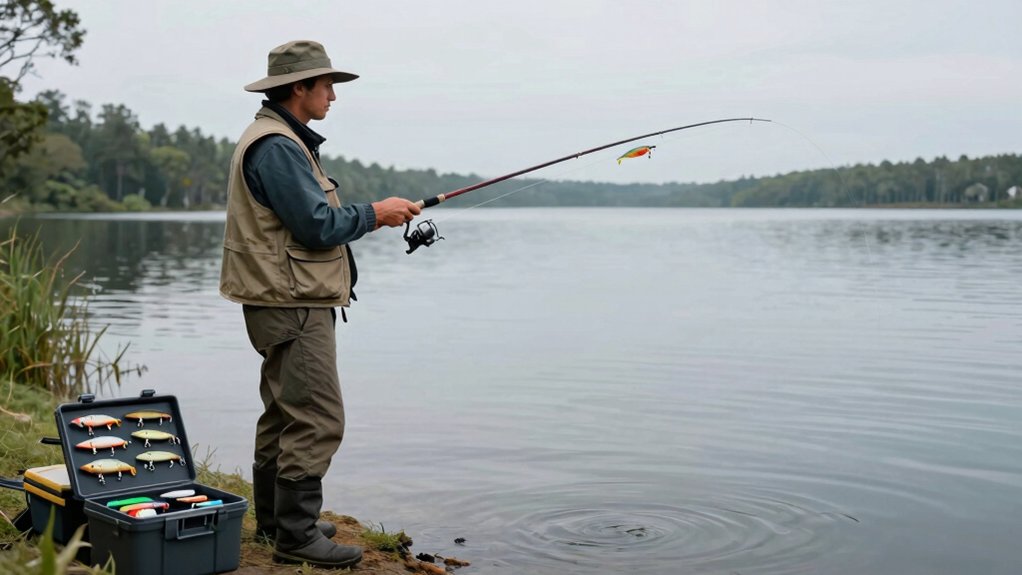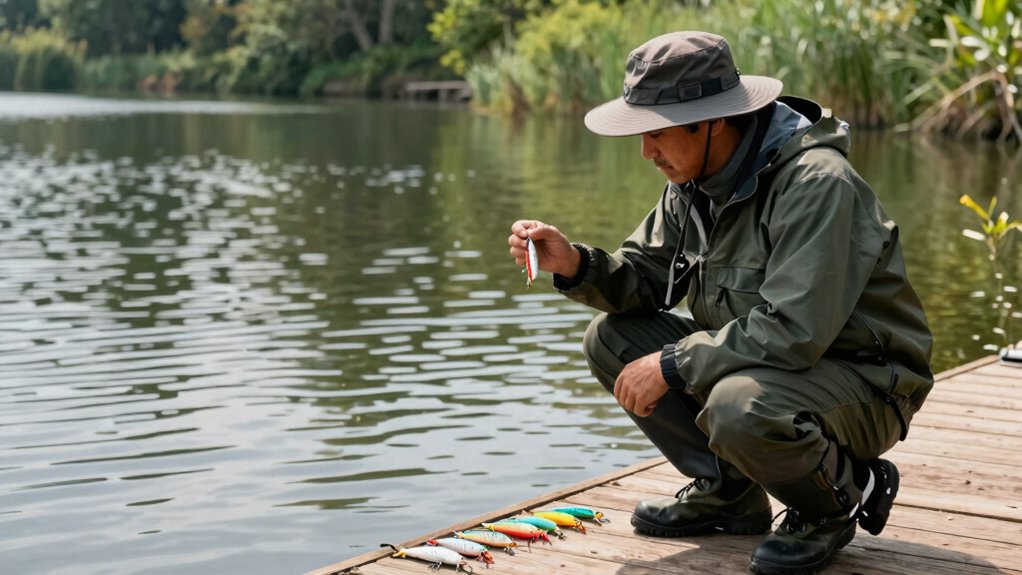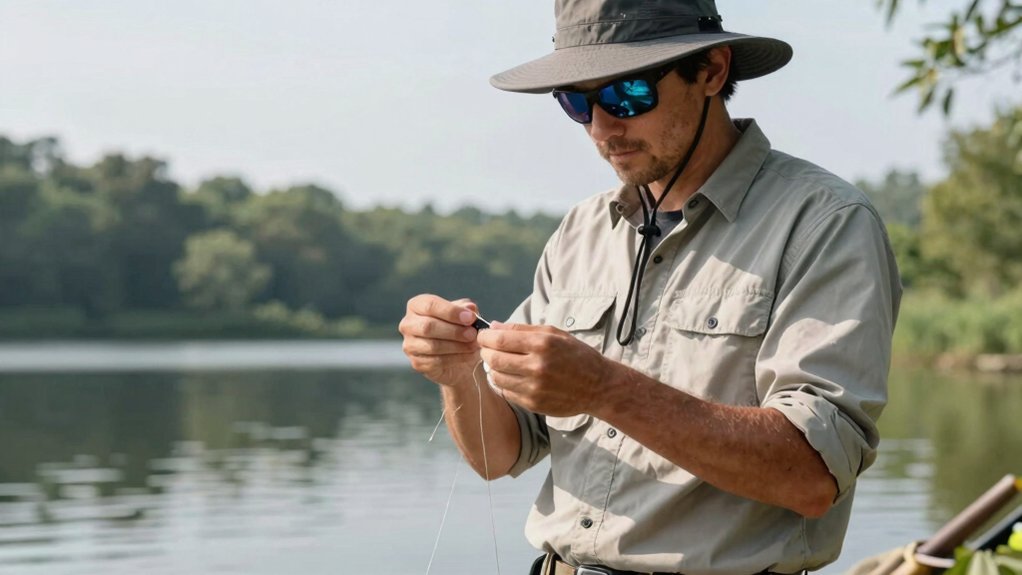
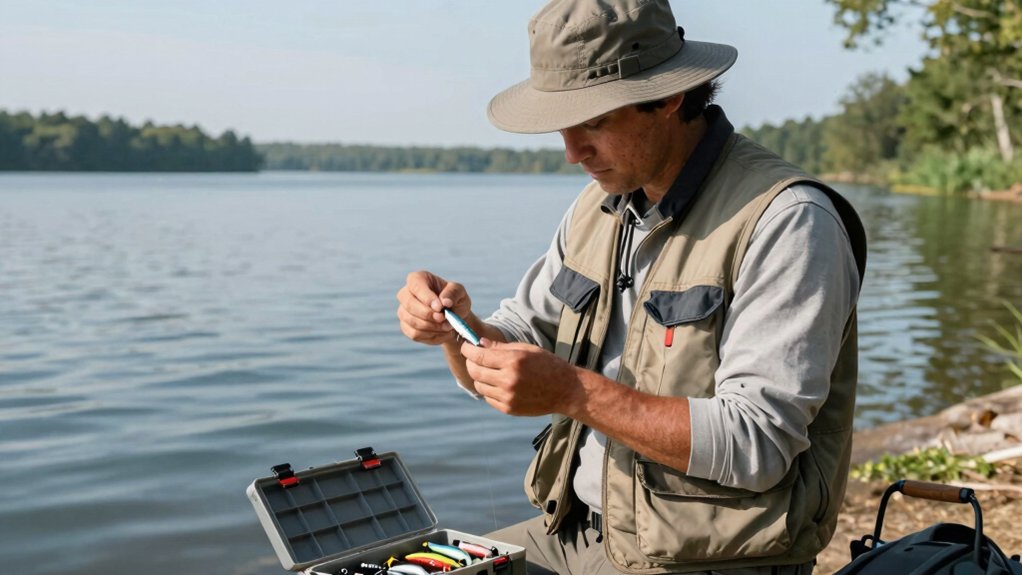

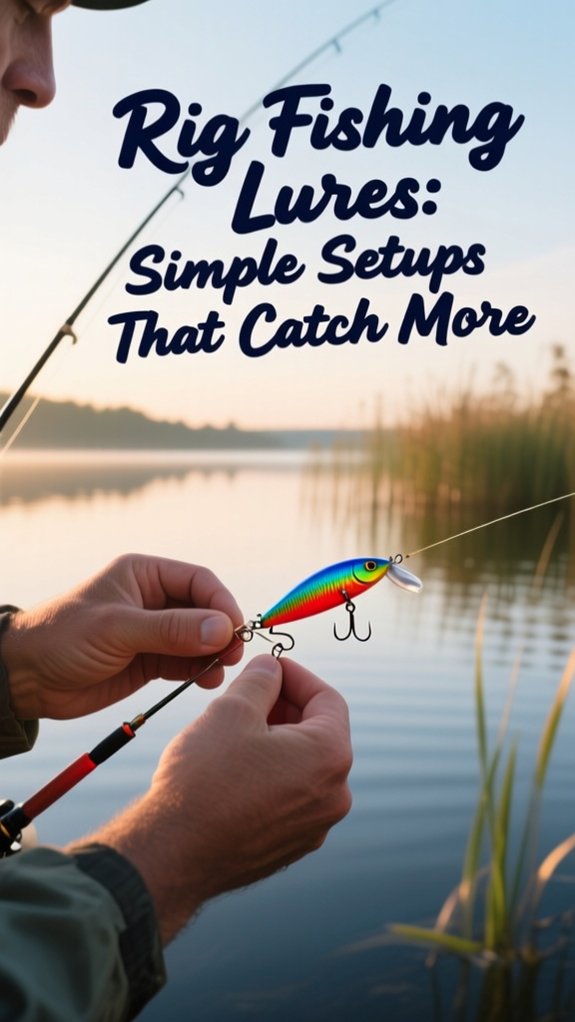
I rig my lures by threading a bullet weight pointy-end first, 12-18 inches above the hook, then piercing straight through the bait’s center to stop that annoying spin that turns fish away. I match hook size to my worm—2/0 or 3/0 for standard plastics, 1/0 for finesse—to keep the action lifelike, and I go weedless in thick cover or nose-hook in open water.
After every fish, I retie and check alignment in shallow water; thirty seconds saves me from wasted casts and missed strikes. There’s a reason pros obsess over these small details, and I’ll show you exactly how each choice puts more bass in your boat.
Thread the Hook and Weight for a Basic Texas Rig
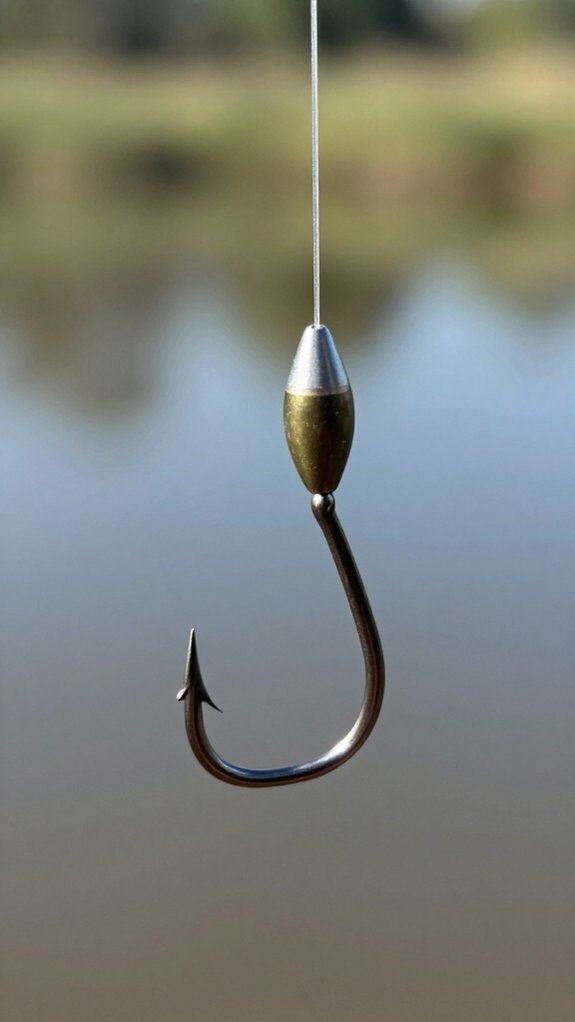
When I’m looking for a rig that’ll get my bait through thick cover without hanging up every cast, I reach for the Texas rig. It’s the bread and butter of bass fishing for good reason.
Setting Up Your Rig
I start by threading my bullet weight onto the line, pointy end first, about 12-18 inches above where I’ll tie my hook. That free-sliding weight lets the soft plastic bait move naturally and boosts my casting distance.
Rigging the Bait
Next, I thread the hook straight through the bait’s head, push it through the center, and bring the point out just past the nose. I keep everything straight so it swims true.
For thick grass, I embed that hook point back into the plastic. Now I’ve got a weedless setup that slips through snags.
Among all rigs, this one’s my go-to for reliable action.
Size Your Hook to Your Worm for Natural Swimming Action
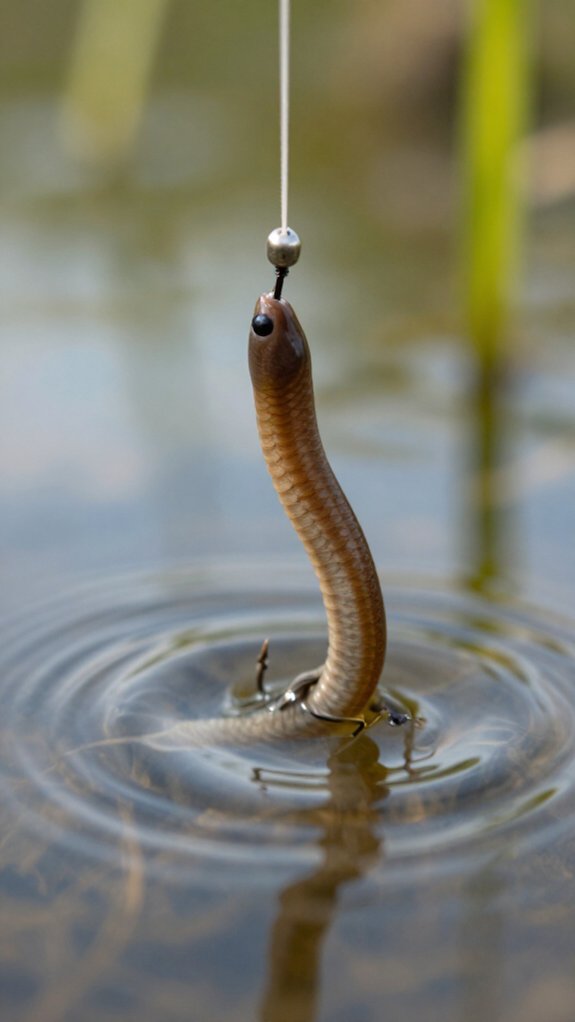
I match my hook size directly to my worm’s dimensions because an oversized hook kills the natural quiver and glide that triggers bass strikes.
For standard soft plastics, I’ll grab a 2/0 or 3/0, while finesse worms demand smaller 1/0 hooks to maintain that lifelike swimming motion.
Getting this pairing right means the worm moves freely through the water column instead of stiffly dragging behind an ill-fitted hook.
Hook Size Matching
Why does your worm sometimes look lifeless in the water while your buddy’s keeps getting hammered? I’ve learned that hook size makes all the difference in how my soft plastics perform.
The Right Match Changes Everything
When I rig my bait with a hook that’s too large, it overpowers the worm and kills that enticing wiggle bass can’t resist. The wrong hook size also drags the bait down unnaturally, making fish suspicious.
I always match my hook point to my worm’s thickness: thinner worms need thinner hooks. This preserves the lure’s profile and lets it dance through the water column like the real thing.
My rigs look more appealing, and I get better hooksets on pressured fish.
Plus, proper sizing prevents tearing, so my soft plastics last longer between strikes.
Natural Action Preservation
Because I’m after that lifelike swimming motion that triggers aggressive strikes, I size my hook to match my worm’s thickness every single time. When my hook size pairs perfectly with my artificial bait, the worm flexes and pulses exactly like real prey.
I’ve watched too many anglers kill their fish catch with bulky rigs that choke the action. An oversized hook turns your worm into a stiff stick, the natural swimming action dies instantly. But scale down, and that same worm undulates seductively with every twitch.
Here’s what I’ve learned on the water:
| What You Feel | What the Fish Feels |
|---|---|
| Frustration from missed bites | Suspicion toward stiff, dead prey |
| Hope when your line twitches | Instinctive aggression toward living food |
| Confidence in your setup | Certainty this meal is real |
| Joy of a tight line | Urgency to strike before escape |
| Pride in a landed trophy | Satisfaction of a perfect hunt |
Match your hook size to your worm, and you’ll metamorphose ordinary rigs into irresistible presentations.
Pierce the Bait Straight to Stop Unnatural Spinning
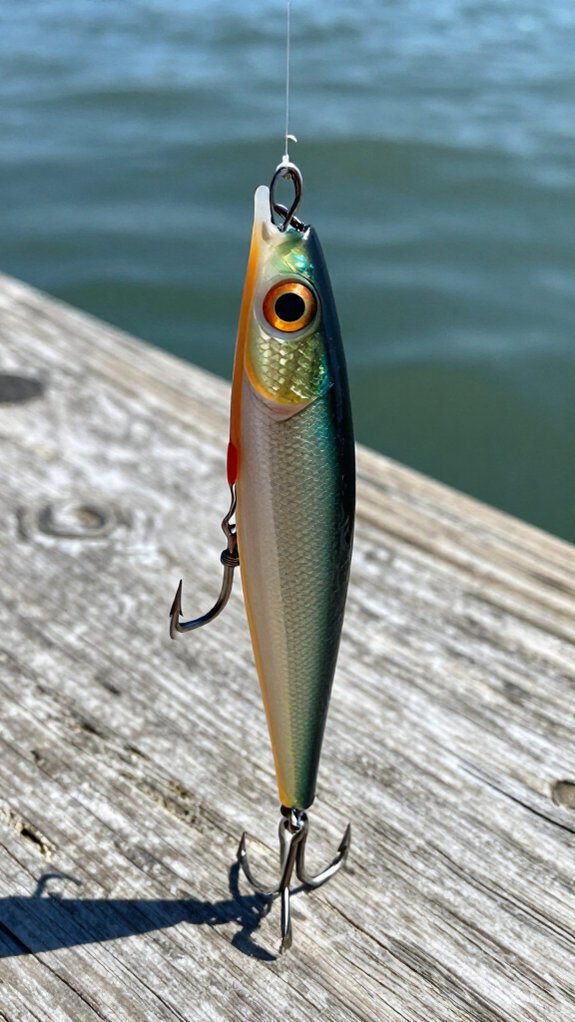
When I’m rigging soft plastics, nothing frustrates me more than watching my lure spin like a corkscrew instead of mimicking a fleeing baitfish. It’s usually a dead giveaway that I’ve pierced the bait crooked.
To stop that unnatural spinning, I make sure I pierce straight through the center every single time.
Proper alignment matters more than most anglers realize. When I insert my hook dead-center and keep the exit clean, the lure glides naturally without twisting on the fall or retrieve.
Crooked piercing throws everything off—bait deformation, line twist, and missed strikes.
I check my work by letting the bait swim in shallow water before casting. If it tracks true without rolling or spiraling, I’ve got it right.
Nose-Hook or Weedless-Rig Based on Cover Density
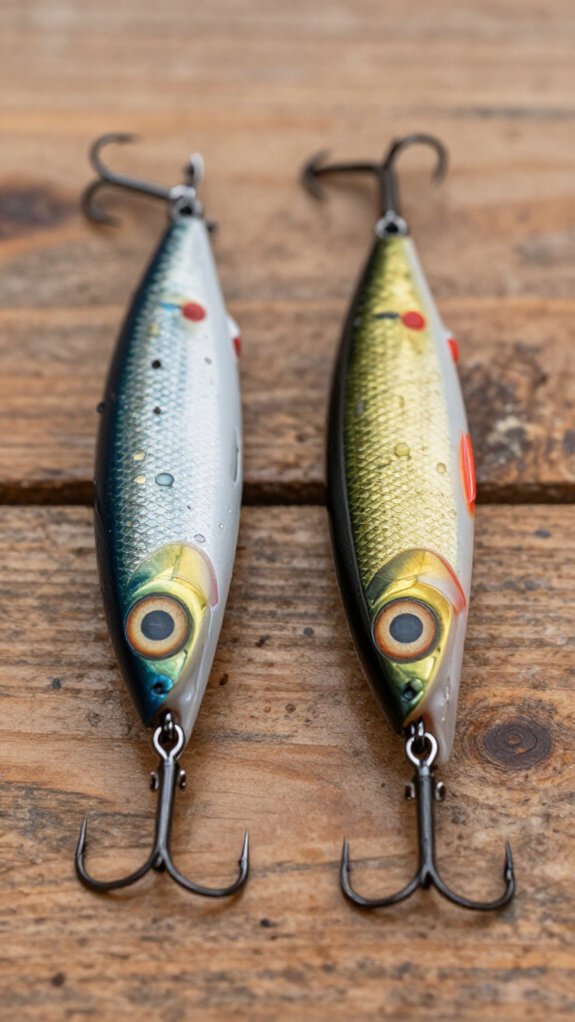
I choose between nose-hooking and weedless rigs based on how thick the cover is, because the wrong setup turns every cast into a snag-fest or a missed strike.
Matching Rigging to Your Environment
Your cover density dictates everything. In open water or sparse grass, I’ll run a nose-hook setup through the soft plastic lure’s head. It delivers that wounded, fluttering action bass can’t resist.
But when I’m punching into matted vegetation or timber, that’s when weedless rigs save my sanity.
Proper rigging means burying the hook point just enough to glide through cover, then setting hard when you feel the thump.
| Cover Type | Best Rig | Snagging Risk |
|---|---|---|
| Open water | Nose-hook | Low |
| Sparse grass | Nose-hook | Moderate |
| Thick vegetation | Weedless rigs | Minimal |
| Matted pads/timber | Weedless rigs | Minimal |
Match your rigging to reality, and you’ll spend more time catching and less time re-tying.
Add a Trailer Hook When Bass Swipe Short
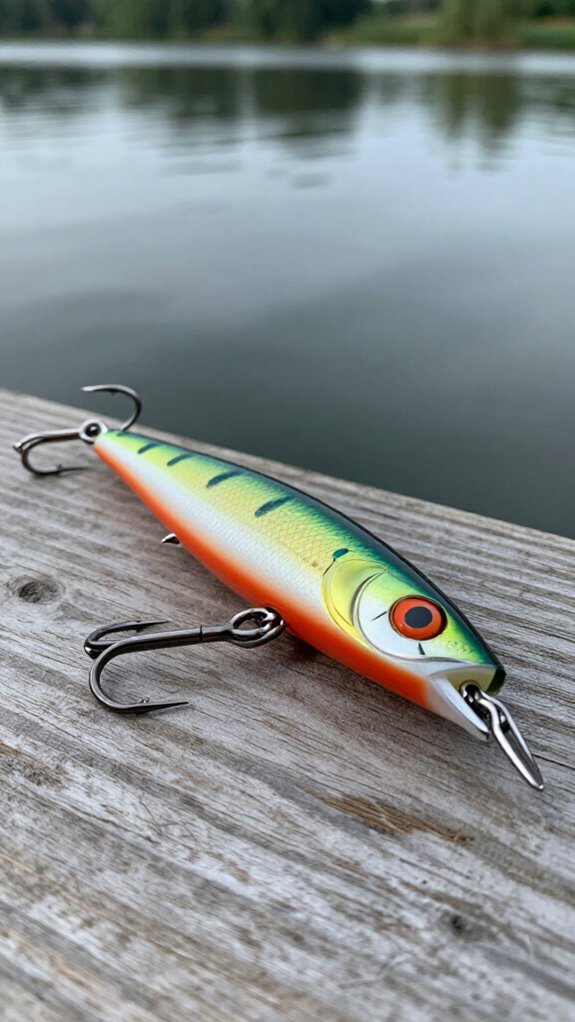
Short strikes are the most frustrating way to lose a fish. There’s a thump, you swing, and nothing but water. That’s when I add a trailer hook to catch those finicky bass.
Here’s what happens during short strikes:
- A bass lunges at your lure’s head but misses the main hook
- The fish feels steel as the trailer hook catches its jaw
- You set the hook on solid weight instead of empty water
- You land a fish you’d otherwise never have touched
I attach mine with a split ring or quick-change clip behind the main hook. Hook placement matters—Keep it close enough to connect, far enough to avoid fouling. These rigs work well on spinnerbaits, buzzbaits, and frogs where bass swipe short.
A small treble or single trailer hook boosts hookup ratios without killing action.
Correct Alignment and Retie Knots That Slip or Spin
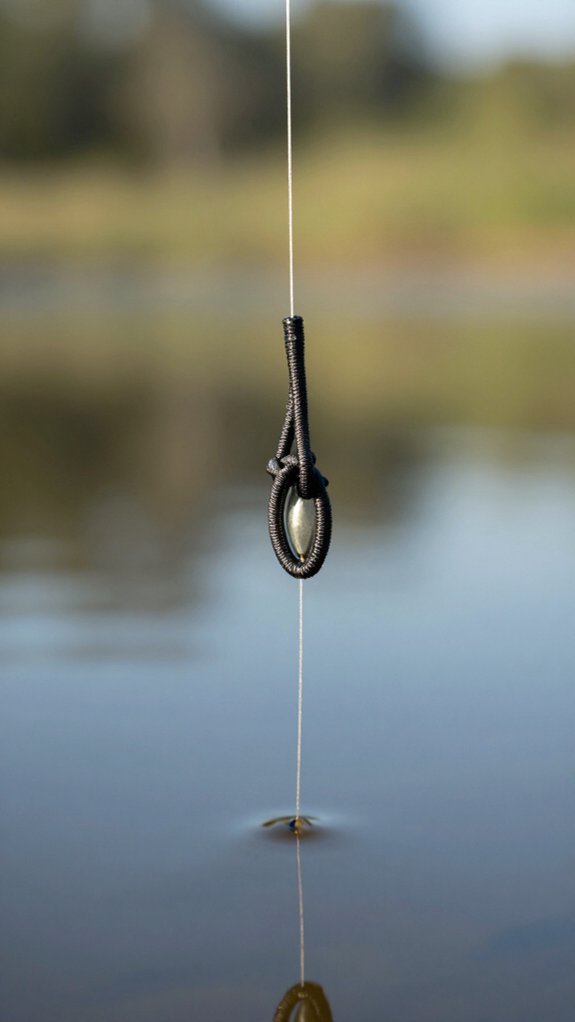
I always start by checking my knot security and lure alignment before every cast, since a slipping knot or crooked bait will ruin your presentation before the lure even hits the water.
When I notice my soft plastic spinning or my line sliding at the connection point, I’ll wet the line and retie with a non-slip loop knot, making sure the hook sits perfectly centered through the bait’s body.
Taking thirty seconds to double-check these details saves me from wasting casts and keeps the lure swimming naturally through the strike zone.
Knot Security Check
Before I make my first cast, I always give my knot a hard tug and a quick spin-check, because nothing stings worse than watching a lure sail off into the trees or, worse, feeling that telltale “pop” when a fish hits.
I tighten every knot with steady pressure, wetting the line first so it cinches smooth without heat damage. Here’s my mental checklist:
- The pinch – I feel the knot between thumb and finger, hunting for any bump or gap that screams “weak point.”
- The pull – I lean back, testing with real tension, mimicking a sudden strike.
- The spin – I twirl the lure, watching for wobble that hints at a slip.
- The retie rule – If anything feels off, I cut and start fresh. No exceptions.
A secure knot takes thirty seconds.
Losing a trophy takes years to forget.
Lure Alignment Fix
Because a lure that’s even slightly off-center can turn a perfect retrieve into a spinning mess that sends fish scattering, I make alignment checks part of my routine every time I tie on.
Proper lure alignment starts with how you tie your hook. I use a Palomar or improved clinch knot to lock everything tight. Loose knots let lures drift and spin.
Check Before You Cast
After re-tying, I hold my fishing gear up and watch. Does the soft plastic hang straight? If it lists left or right, I strip it down and start over. Crooked baits wobble unnaturally, and trout notice.
When To Re-Tie
- After landing a fish
- When you feel unexpected vibration
- If line twist builds mid-retrieve
A thirty-second inspection saves wasted casts. Straight lures swim true; crooked ones starve you.
Frequently Asked Questions
What Is the 80/20 Rule in Fishing?
I focus on the rigs and techniques that actually deliver results. The 80/20 rule means 80% of my catches come from just 20% of my setups, so I’ve learned to identify and prioritize what works.
What Is the Best Way to Rig a Lure for Fishing?
I match my rig to conditions and species, using Texas or Carolina setups with properly sized hooks. I secure everything with strong knots, keep it simple, and adjust weight and leaders to control depth and action.
Why Am I Not Catching Anything With Lures?
You’re likely not catching fish because I’m using the wrong lure size, presenting it unnaturally, or ignoring water conditions. I’ll check my hook sharpness, match my retrieval speed to prey behavior, and adjust my depth until I find active fish.
What Is the Best Setup to Catch Fish?
I Reckon the best setup depends on conditions, but I always start with a Texas or Carolina rig. I match my hook and weight carefully, then adjust depth and speed until I’m mimicking natural prey perfectly.
In Conclusion
I’ve walked you through rigging lures like a craftsman threading a needle, each step building confidence for that explosive strike. With these setups in your tacklebox, you’re not just hoping for bites; you’re engineering them.
Now tie one on, feel the weight settle, and send your lure dancing into the dark water where trophies wait.