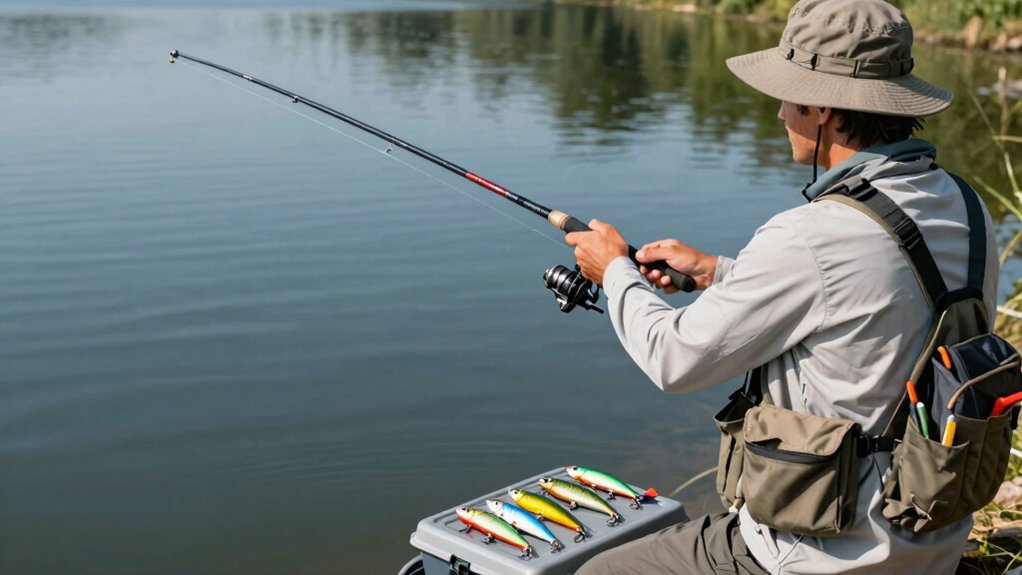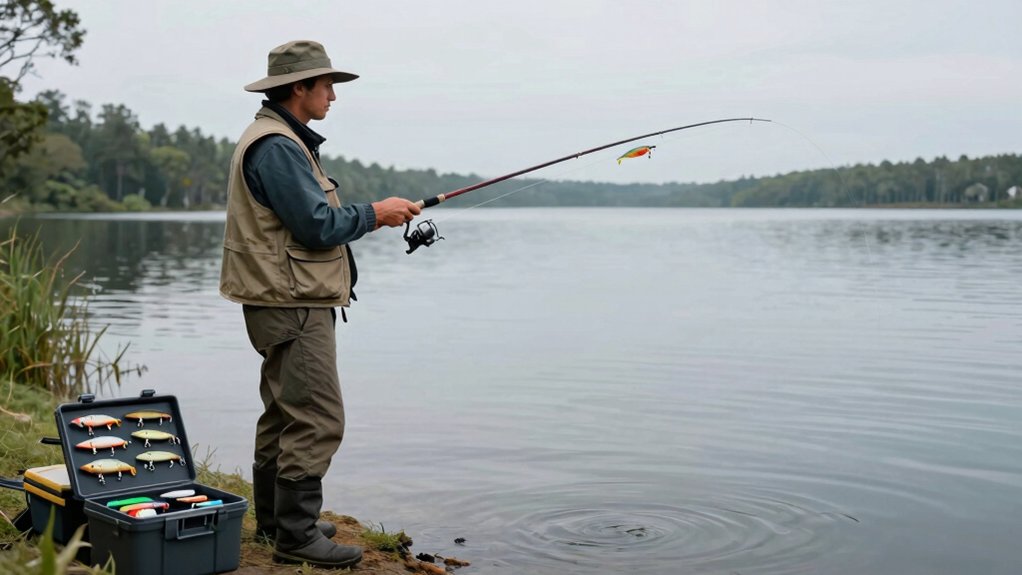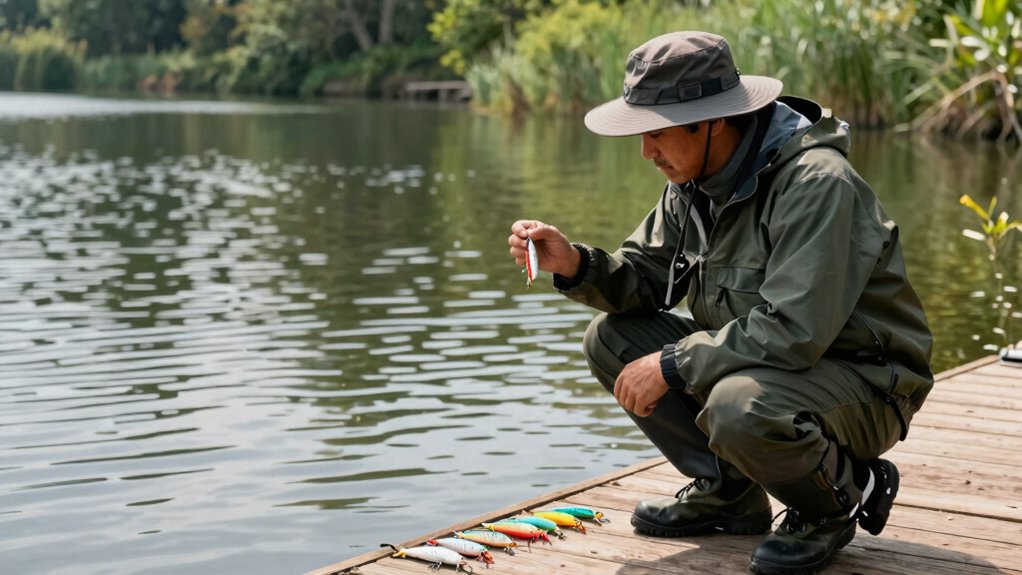
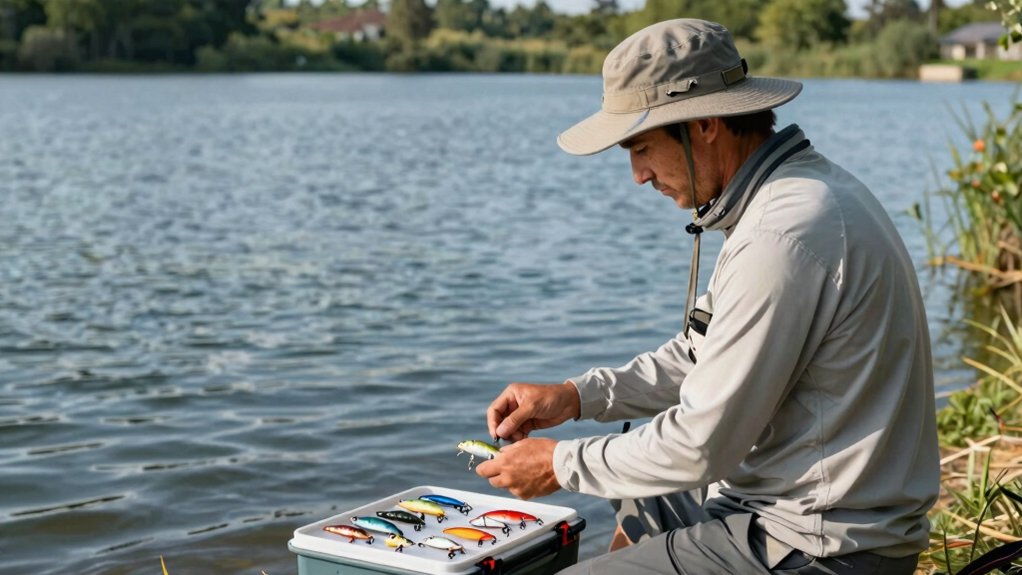

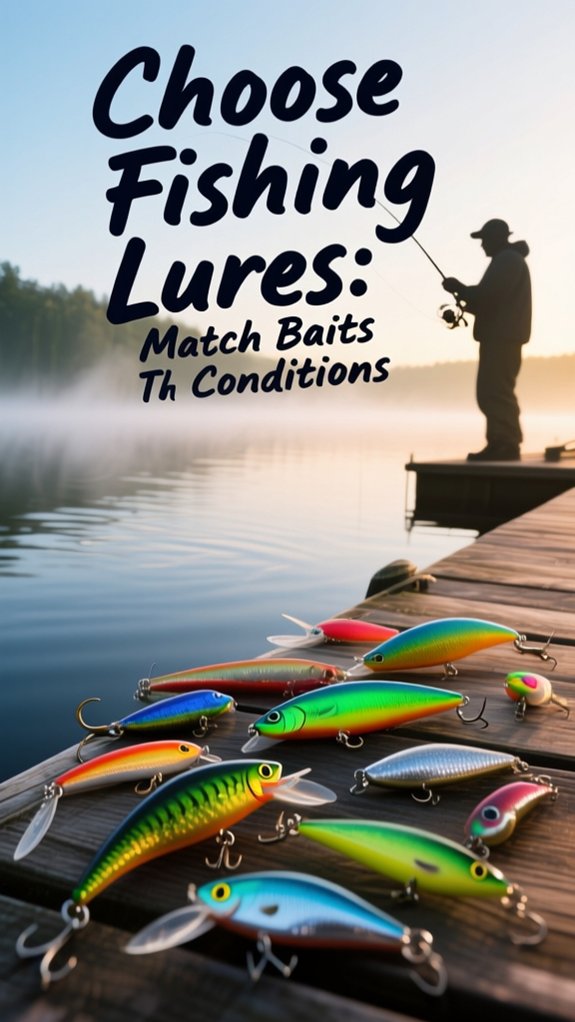
I choose fishing lures by matching color, depth, and action to the exact conditions I’m facing, because the right bait at the wrong time catches nothing. Water clarity dictates my color family—subtle naturals for gin-clear water, bold chartreuses and blacks for stained conditions, and fluorescent flash for muddy holes.
I pair that with a lure that runs where the fish are actually holding, from surface poppers to deep-diving crankbaits, then adjust my retrieve speed to match their seasonal metabolism. When my go-to patterns stop producing, I don’t stubbornly keep throwing them, I downsize, mute the finish, or rotate through options until I find what triggers strikes again. Mastering these five decisions, color, family, depth, speed, and troubleshooting, transforms random casting into consistent catching across any water you fish.
Match Your Lure Color to Water Clarity
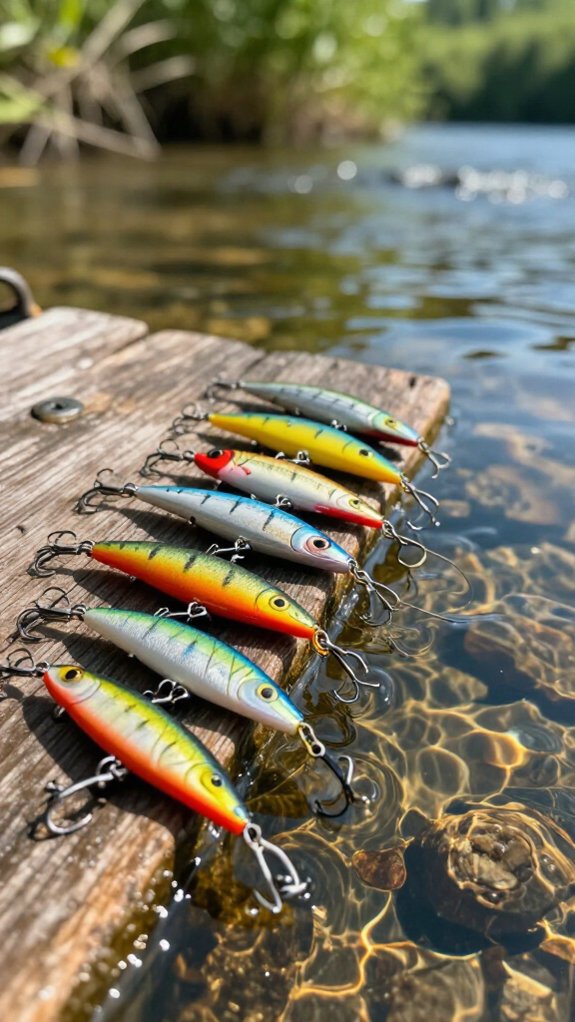
Because water clarity dictates how fish see your lure, I’ve learned that color selection isn’t just preference, it’s biology.
Reading the Water
I always start by assessing water conditions before tying anything on. In clear water, I’ll reach for subtle lure colors—silver, white, or green pumpkin—that create a natural presentation. These mimic baitfish perfectly when visibility runs deep.
When Visibility Drops
Stained water changes everything. I’ve watched chartreuse, black, and purple outperform natural tones because bass simply detect them better. The bolder, the better.
Going Deeper
In muddy conditions, I switch to fluorescent colors that create high contrast. Deep water? I pick luminous or translucent lures that catch whatever light filters down.
Matching lure colors to water clarity isn’t complicated, it’s the difference between a quiet day and a full livewell.
How the Three Color Families Work
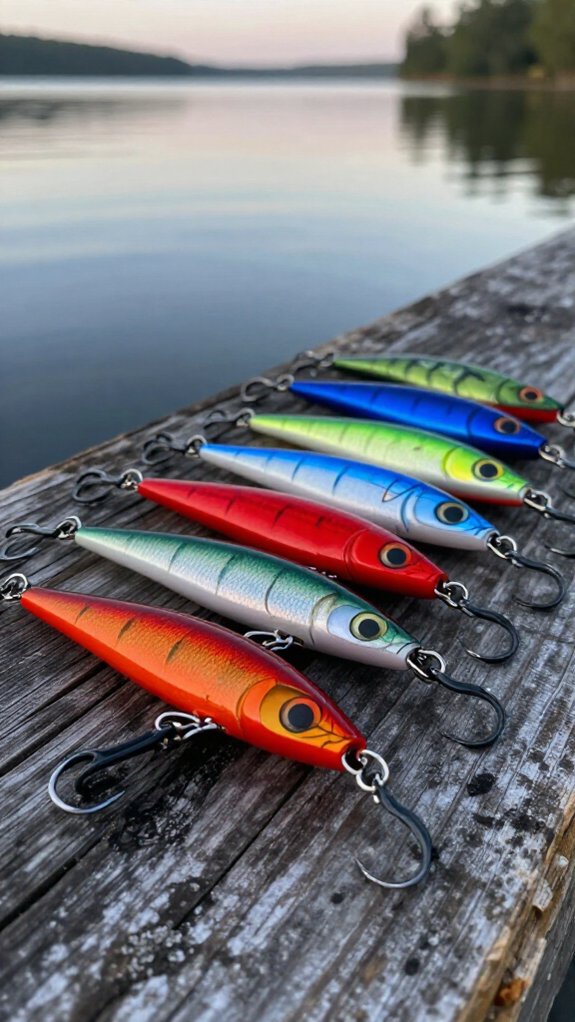
I break lure colors into three families, lights, brights, and darks, each engineered for specific water conditions and visibility challenges.
Light colors like white and pearl mimic natural baitfish in clear water. They blend seamlessly, fooling wary fish with subtle, realistic presentation.
Bright colors, chartreuse, orange, metallics, punch through stained water where visibility drops. Their reflective flash and high contrast cut through murk, drawing reaction strikes from distance.
Dark colors such as black and purple create bold silhouettes when light fades. I reach for these at dawn, dusk, or night when fish hunt by profile rather than detail.
Match your color family to conditions, and you’ll stack the odds in your favor every cast.
Pick the Right Lure Type for Your Target Depth
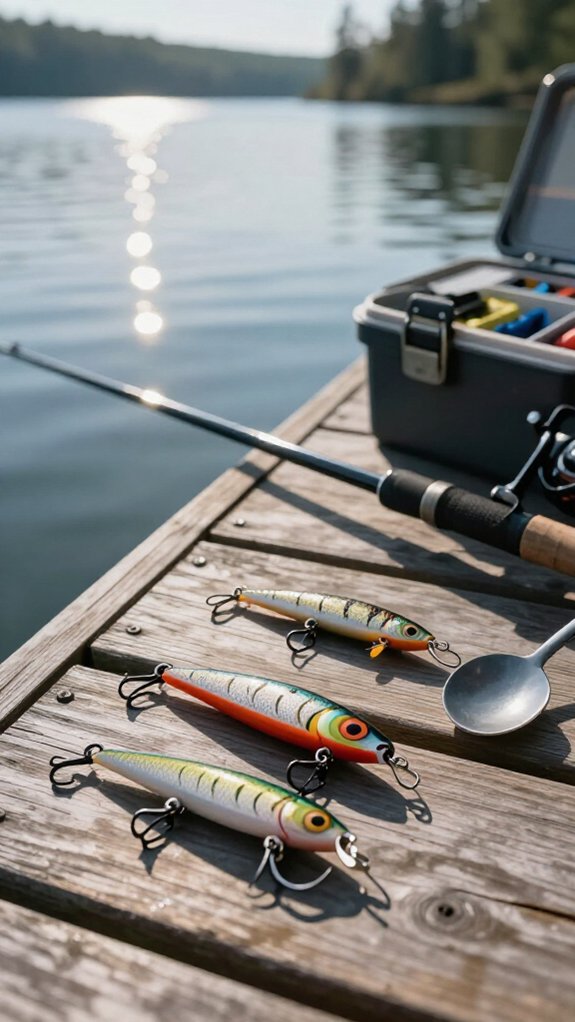
I’ll match my lure to the depth where fish are holding, starting with surface poppers and small spinners for that top 3 feet of water when bass are chasing baitfish.
When I’m targeting that productive mid-water zone between 4 and 8 feet, I’ll switch to medium-diving crankbaits and lipless lures that suspend right where structure meets open water.
For those deeper haunts past 8 feet, think summer thermoclines or wintering holes, I’ll tie on a heavy jig or deep-diving crankbait that gets down fast and stays in the strike zone.
Surface & Shallow Lures
When I’m targeting fish in the top few feet of water, I reach for surface and shallow lures that match exactly where the feeding’s happening, because nothing’s worse than running a deep diver through a school of busting bass.
I’ll grab surface lures when fish are busting bait at sunrise or sunset, when that topwater bite turns explosive.
For working shorelines and submerged vegetation, I switch to shallow water weapons that stay in the strike zone without snagging.
Here’s how I match my approach:
- Poppers and topwater frogs for active surface feeding in calm conditions
- Small crankbaits for covering water 1-3 feet deep
- Soft plastics for presentations near structure
- Slow, twitching retrieve techniques to mimic wounded prey, or steady retrieves when fish want chasing baits
Always read your water conditions before tying on, matching depth to feeding activity puts more fish in my boat.
Mid-Water Crankbaits
Because fish often suspend between the surface and bottom where baitfish travel, mid-water crankbaits let me intercept them right in that feeding lane.
I select these lures when targeting depths of 5 to 15 feet. The lip or bill determines diving depth, longer bills reach deeper, while shorter ones stay shallower. Angled bills dive deeper than flat ones, giving me precise depth control.
I match mid-water crankbaits to moderate water clarity where active fish hunt suspended prey. In murky water, fish hug bottom; in crystal clear, they go deep or shallow. That middle zone is prime territory.
Retrieve speed matters too. I keep a steady, moderate pace. Too fast pulls the lure up; too slow lets it sink. This balance keeps my bait in the strike zone where hungry fish wait.
Deep Diving Jigs
Deep diving jigs are my go-to weapon when fish have pushed down past the crankbait zone. I’m hunting anywhere from 10 to 30 feet or more.
I adjust the weight based on current and water depth to maintain the right lure action down where the big ones hide. Heavier heads and longer leads get these baits deep fast.
Here’s what I focus on when rigging up:
- Pair them with larger soft plastics in natural colors to mimic bottom-dwelling baitfish or crawfish
- Work them with sharp upward jerks and fast retrieves to trigger reaction strikes
- Choose reinforced eyelets that won’t fail under deep-water stress
- Match jig weight to fishing conditions so the bait stays exactly where I want it
Adjust Lure Speed for Seasonal Fish Behavior
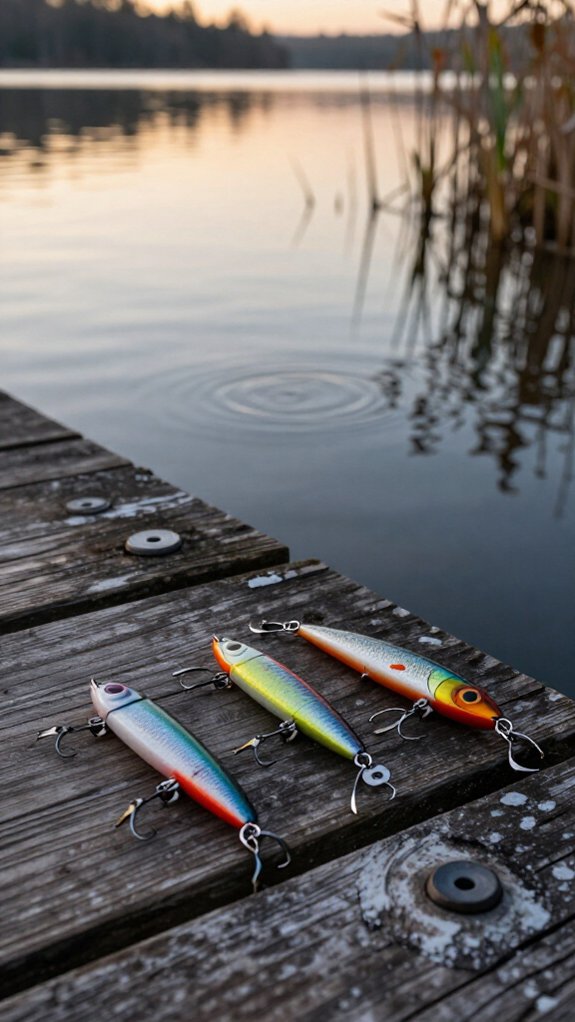
Since fish metabolism shifts dramatically with water temperature, I always match my lure speed to the seasonal fish behavior if I want consistent bites.
Cold Water Tactics
When winter drops the water temperature, I slow my retrieve way down. Fish get sluggish, so I mimic easy prey with deliberate, creeping presentations.
I’ve learned that patience pays, burning a lure through icy water spooks more fish than it catches.
Warm Water Aggression
Come spring and summer, I flip the script. Faster lure speeds trigger reaction bites from active predators chasing fleeing baitfish.
I mix quick jerks with sudden pauses, letting the lure dart and stop like wounded prey.
Reading the Conditions
Adjusting my approach to fishing conditions keeps me connecting when others struggle.
It’s simple: cold equals slow, warm equals go.
Troubleshoot: When Your Best Colors Stop Working
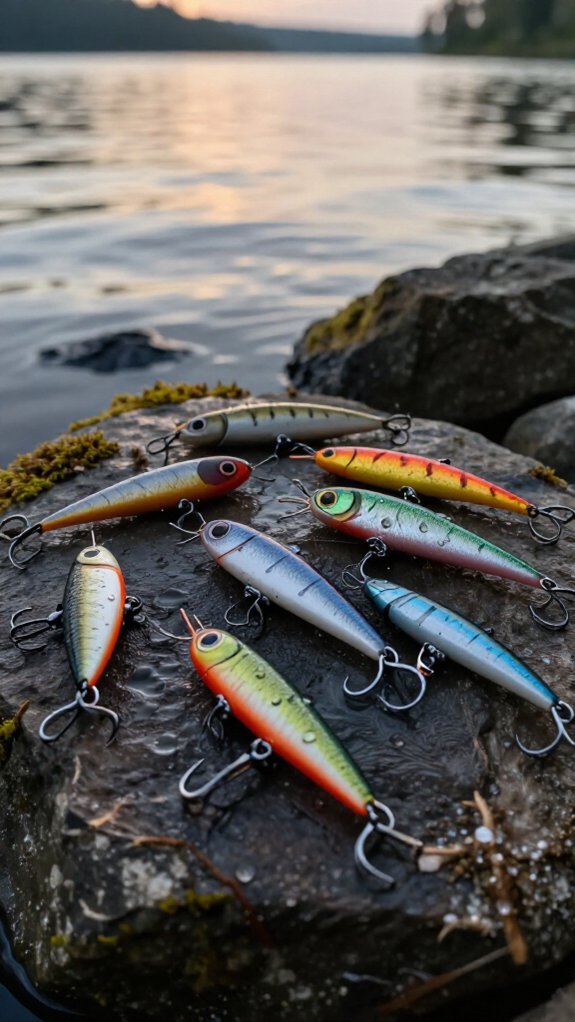
When the fish that hammered my go-to chartreuse crankbait yesterday suddenly turn their noses up today, I know I’m dealing with color fatigue, a frustrating reality that sneaks up on every angler who relies too heavily on one reliable pattern.
I watch fish behavior shift as environmental changes roll through my favorite spots. Here’s how I adapt my color selection when confidence patterns fail:
- I downsize or mute my lure colors when water clarity drops, swapping loud chartreuse for subtle pumpkinseed or smoke.
- I track water conditions hourly—What worked at dawn often bombs by noon as light penetration changes.
- I rotate through my box every hour, never letting fish pattern my presentations.
- I kill the flash on bright days, switching to matte finishes that don’t spook wary bass.
Staying flexible beats stubborn every time.
Pack These 12 Lures for Any Condition
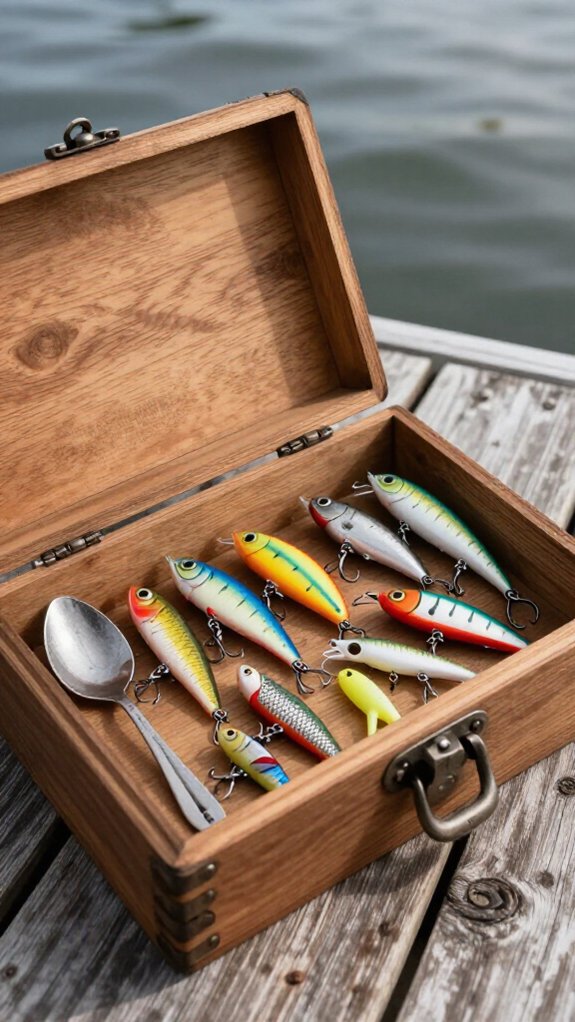
Why gamble with empty tackle boxes when twelve well-chosen lures handle virtually every scenario I’ll face on the water?
I’ll pack spinners, jigs, crankbaits, and soft plastics to match shifting water conditions and fish moods. My selection balances natural-colored options for crystal-clear days with bright or dark patterns when stains or mud cloud the view.
I’ll add reflective metallic finishes for low-light mornings and deep-water drops where visibility fades.
Varying retrieve styles seal the deal, slow crawls, steady cranks, and erratic twitches let me dial in what triggers bites. These twelve lures cover shallow flats, deep structure, and everything between.
With this compact arsenal, I’m ready to adapt without hauling everything I own.
Frequently Asked Questions
What Is the 80/20 Rule in Fishing?
I focus on the 20% of lures that deliver 80% of my catches, testing constantly to find what works. This keeps my tackle box lean and my time on the water productive.
What Lure Colors Are Best for Different Water Conditions?
I match lure colors to water clarity: natural greens and silvers work in clear water, bold chartreuse and junebug stand out in stained conditions, and high-contrast blacks or bright oranges cut through muddy water.
Can You Use a Lure and Bait at the Same Time?
I rig live bait on my lures all the time, and it’s incredibly effective. I’ll thread a minnow onto a soft plastic or attach worms nearby, combining visual flash with scent.
This dual approach triggers more strikes, especially in murky water where fish rely on multiple senses.
What Color Lures Do Fish Like the Most?
I hate to disappoint you, but fish don’t have a favorite color, I’m just matching my lures to conditions. I use natural hues in clear water, bright neons in murky depths, and dark silhouettes when night falls.
In Conclusion
Think of lure selection like Sun Tzu’s battle strategy, I adapt my tactics to the terrain, not the other way around. I’ve shown you how water clarity dictates color families, how depth determines lure type, and how seasonal shifts demand speed adjustments.
When old favorites fail, I pivot without sentiment. Pack those twelve confidence baits, but remember: The angler who reads the water wins the day. Now get out there and outsmart them.