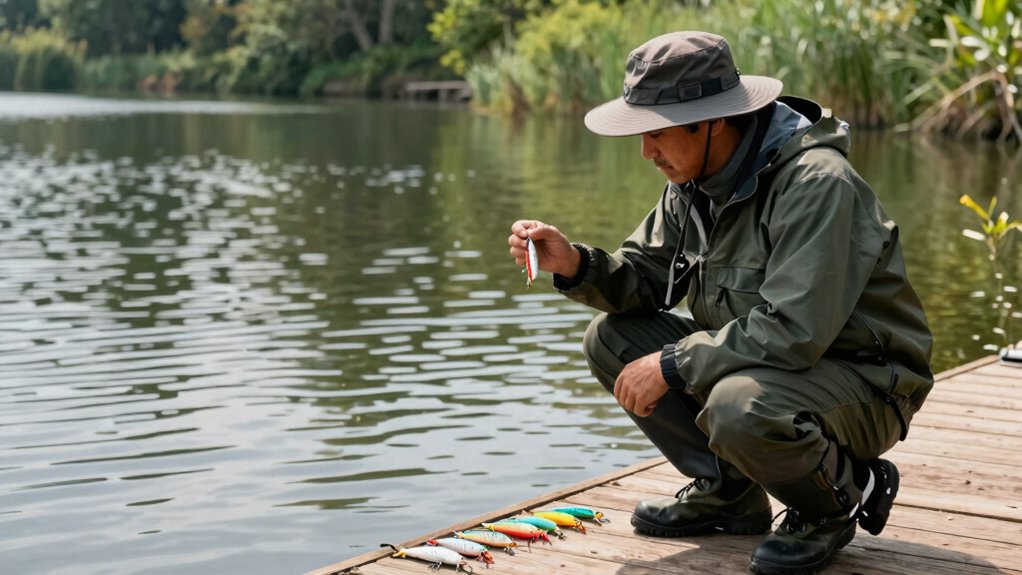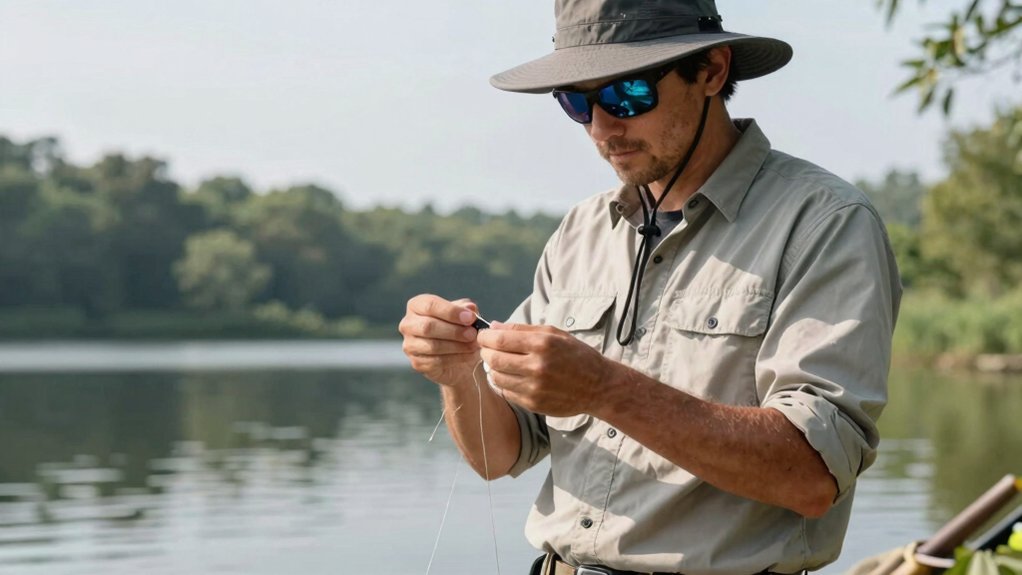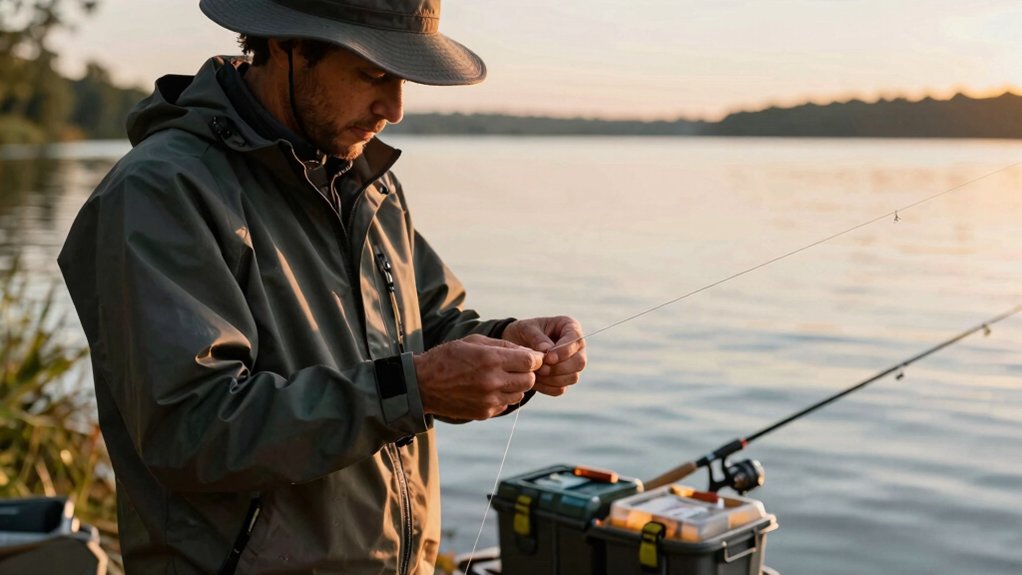
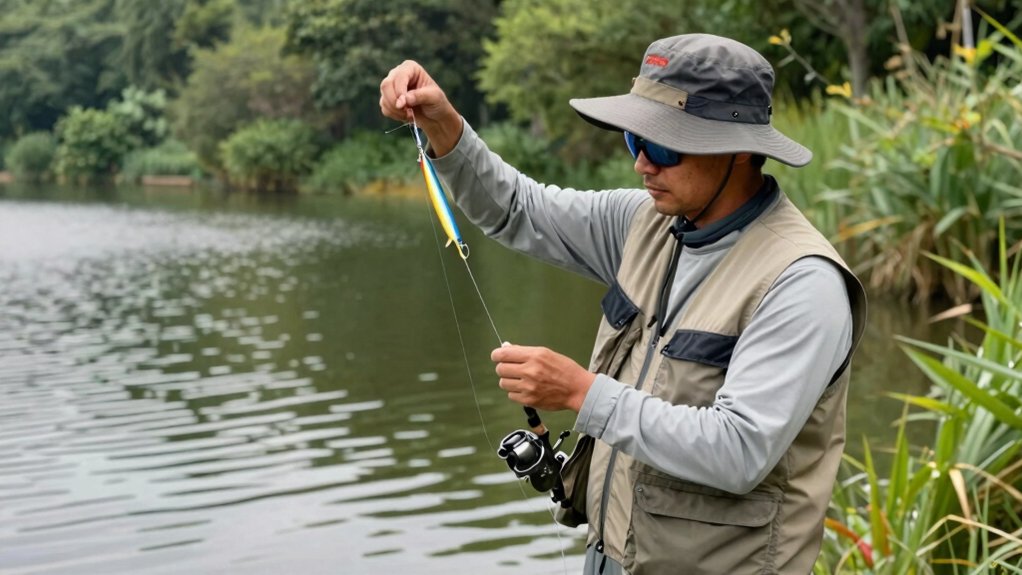

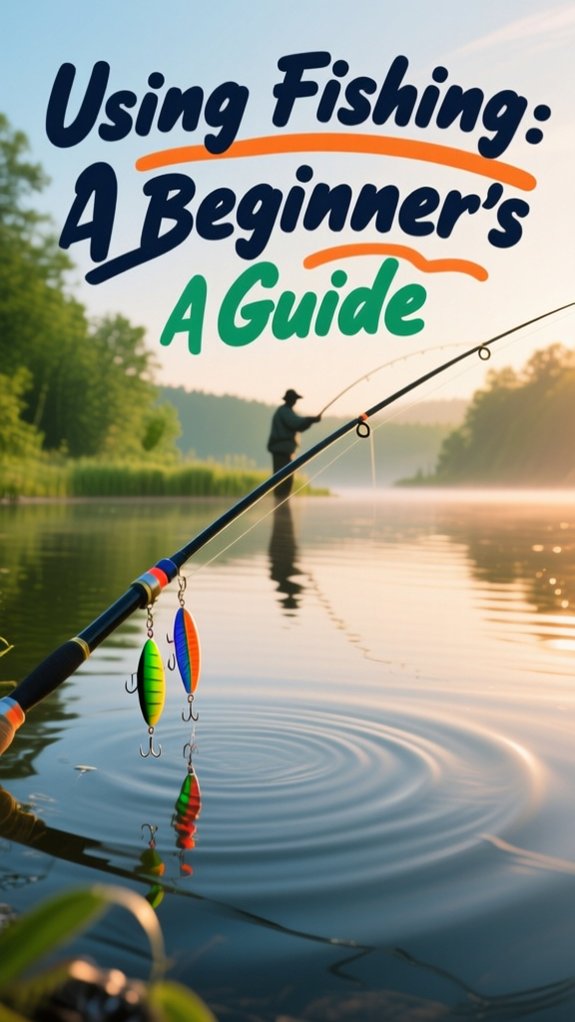
I match my lure to water conditions first, natural colors in clear water, bright hues in murky depths, and shallow divers for skinny water, deep divers for structure. I vary my retrieve with pauses and twitches to mimic wounded baitfish, and I switch lures after ten fishless casts because stubbornness kills bites.
Sharp hooks and smooth presentations convert strikes into catches, and I always watch how fish respond to dial in what works that day. There’s more to uncover about turning casual casting into consistent success.
Choose the Right Fishing Lure for Any Condition
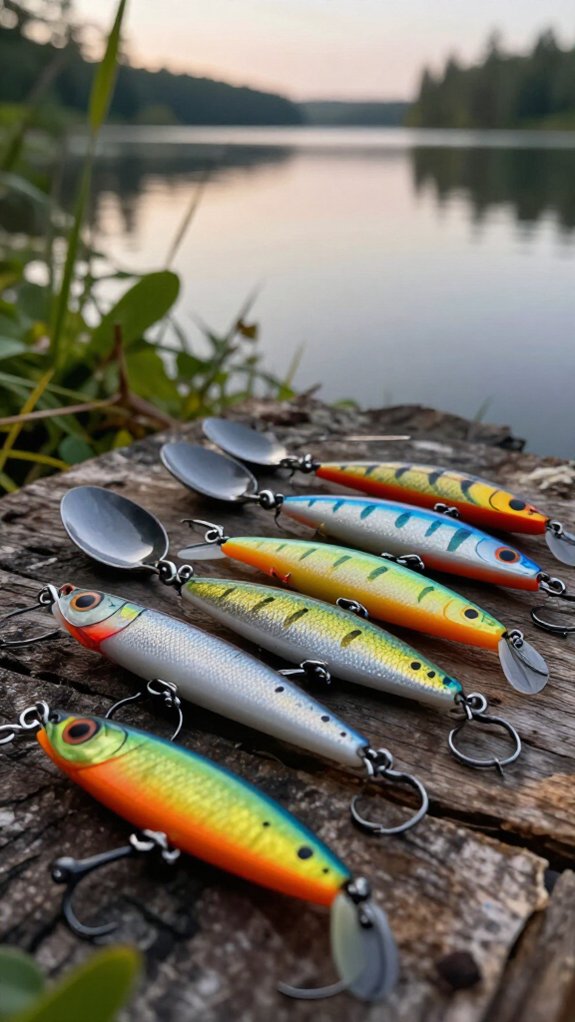
When I’m standing at the water’s edge, the first thing I do before tying on any lure is “read” what the water’s telling me, because matching my lure to the actual conditions is what separates a skunked day from a cooler full of fish.
Fishing lure selection starts with water clarity. In gin-clear conditions, I reach for natural colors—your greens, browns, and silvers that mimic real baitfish. When the water’s stained or muddy, I switch to bright lures in chartreuse or orange so fish can actually find them.
Lure type depends on depth. I throw shallow-diving crankbaits or topwaters in shallow water, then grab deep-diving crankbaits or spoons when I’m probing deep water structures.
Don’t ignore water temperature either. Cold water means slowing my retrieval speed and downsizing to subtle presentations. Warmer water? I speed up and brighten up. The fish will tell you what they want, you just have to listen.
Cast and Retrieve Fishing Lures Like a Pro
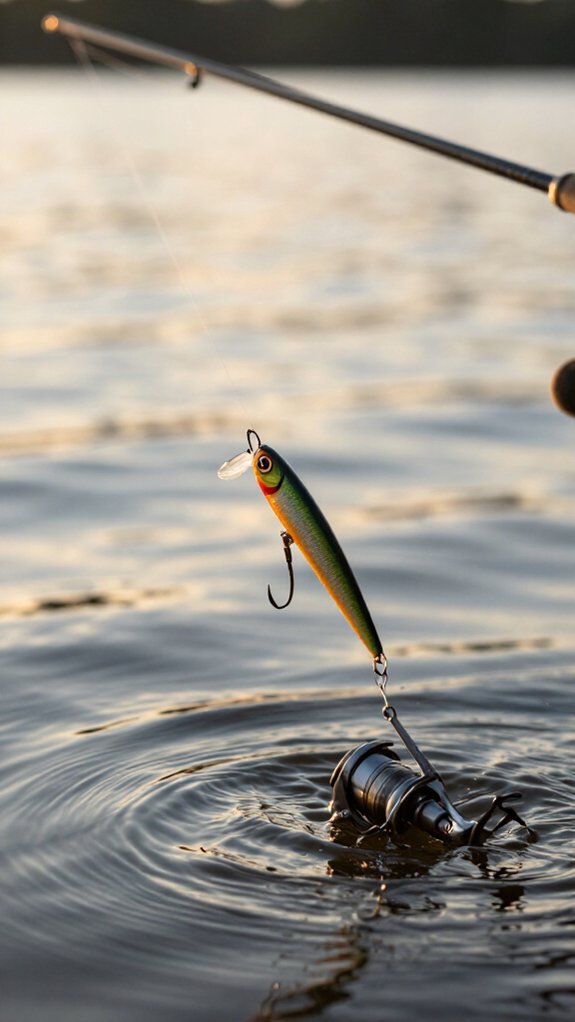
Once I’ve matched the right lure to the conditions, the real magic happens in how I work it back to the boat, because even the perfect lure won’t catch fish if I’m retrieving it like a robot.
Master Your Reeling Techniques
I keep my lure action lifelike by varying my approach. For crankbaits and spinnerbaits, I use smooth, steady reeling techniques that maintain consistent wobble and flash. But I don’t stop there. I mix in pauses, jerks, and twitches to mimic injured baitfish, creating irresistible strike triggers.
Dial In Your Retrieve Speed
Fish respond differently day to day, so I experiment with retrieve speed. Sometimes they want it slow and subtle; other days, burning it back triggers aggressive reaction bites. I’ll alternate speeds until I find what works.
Work the Structure
I always consider water depth and structure navigation. I cast beyond my target, then adjust my retrieve to bump rocks, skim grass, or tick timber. This imitates natural prey movement holding tight to cover.
Why Fish Ignore Your Lure (And How to Fix It)
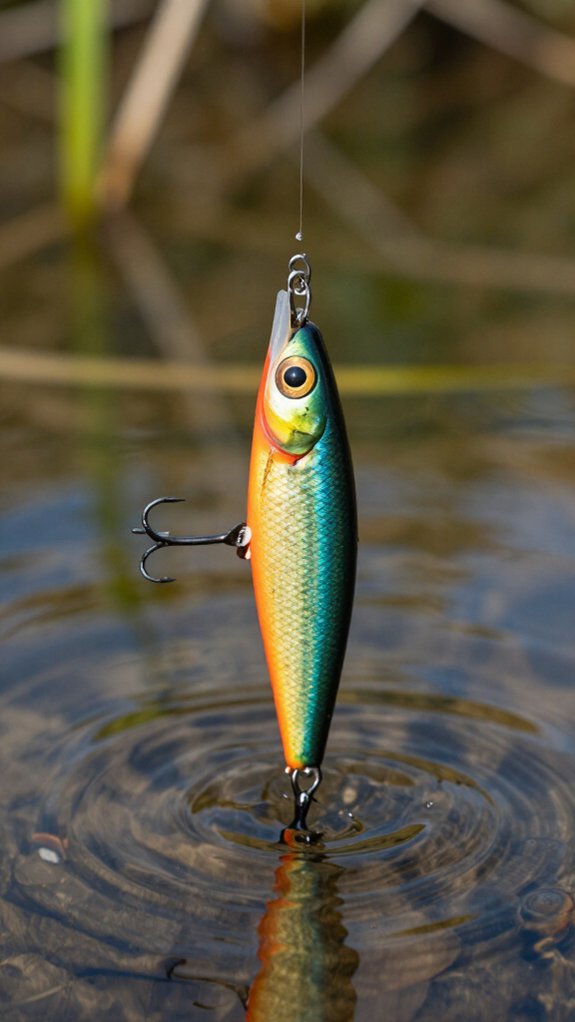
Even the most dialed-in retrieve won’t save you if fish are flat-out ignoring what’s on the end of your line.
Match What They’re Eating
When fish turn up their noses, I immediately check my lure size and color against what’s swimming nearby. Poor natural prey mimicry kills your fish strike response before it starts.
In clear water, I’ll downsize and go natural; in low water clarity, I reach for brighter, noisier options.
Fix Your Presentation
Clunky lure movement or erratic lure presentation screams “fake.” I smooth out my retrieval technique until my bait glides like the real thing.
Heavy fish aggression demands speed; sluggish fish feeding behavior needs patience.
Read Conditions Fast
Wrong water conditions mean wasted casts. I adjust lure movement and dial back fish aggression triggers when temperatures drop or fronts roll through.
Read the Water: When to Change Your Approach
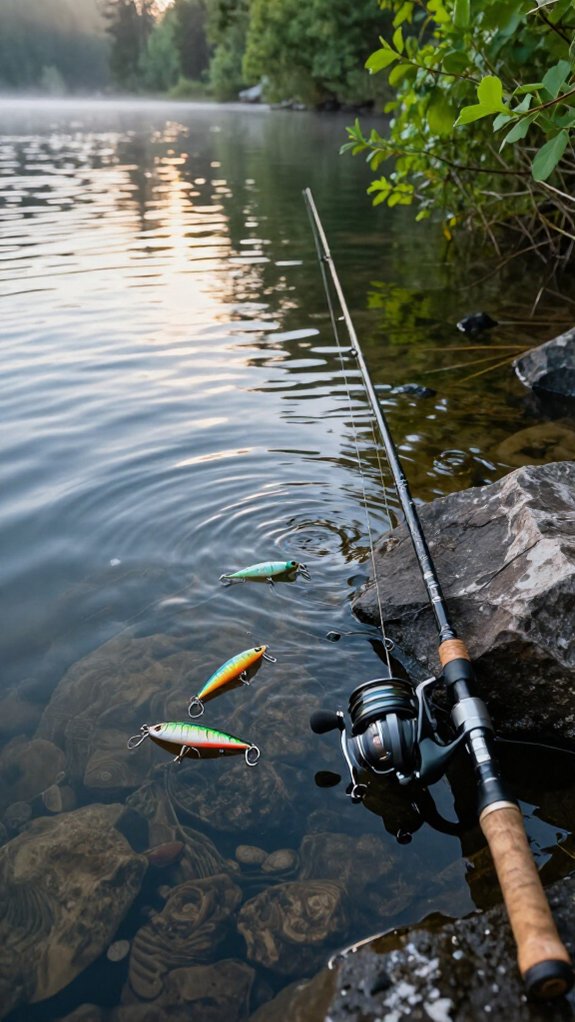
Because the water itself tells you exactly what to throw next, I never rig up without first reading what’s happening below the surface.
Decoding the Clues
I scan water clarity first—gin-clear conditions demand natural lure colors, while stained water screams for bright, high-contrast patterns that fish can’t miss.
Then I check fish activity: Sluggish fish behavior means I slow my retrieve speed and downsize my lure presentation.
Timing and Conditions
Weather conditions and time of day reshape everything. Overcast skies? I reach for louder, more visible options.
Bright sun? Natural hues win.
Early mornings find me working the surface; midday heat pushes me deeper, matching water depth where fish shelter.
Water temperature dictates their metabolism too.
The Switch Rule
If nothing hits after ten casts, I change. Immediately.
Adapting isn’t failure, it’s how I stay on biting fish.
Fix These 5 Beginner Fishing Lure Mistakes
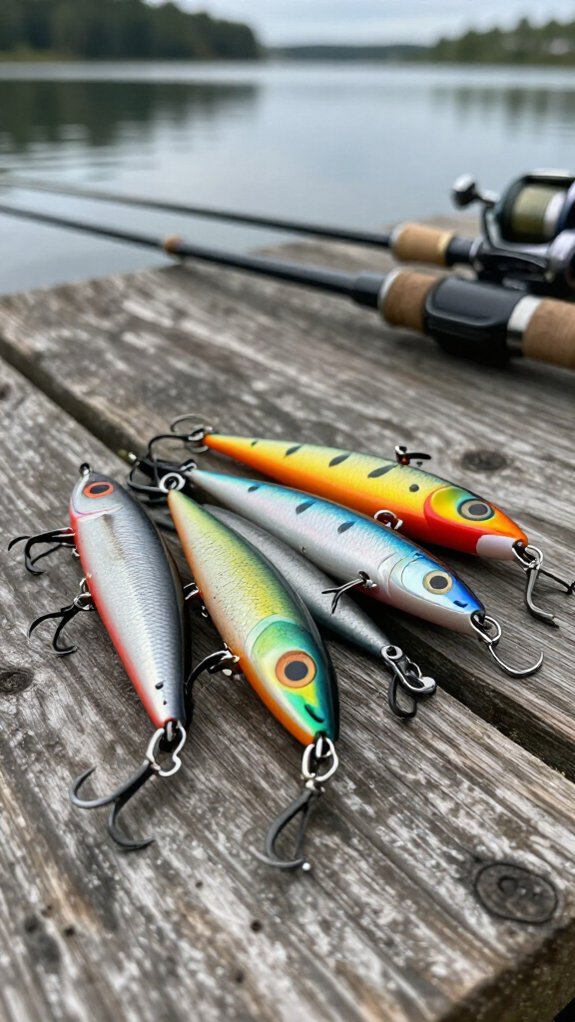
I’ve watched countless anglers stand frustrated on the bank, wondering why the fish aren’t biting, only to spot five fixable mistakes holding them back every time.
Mismatching Lure Size and Color
I’ll start with lure size—too big intimidates, too small gets ignored. Match it to your target’s prey. Then there’s lure color: In clear water, I go natural; in murky conditions, bright or dark silhouettes stand out against poor water clarity.
Speed and Action Problems
My retrieve speed kills bites when it’s robotic. I vary it until fish strikes tell me what’s working. I also switch up lure action—pops, pauses, twitches—to match fish behavior that day.
Technique and Gear Failures
I experiment with every fishing technique rather than repeating failures. Finally, I check my fishing gear constantly—sharp hooks and solid hook setting convert bites into catches.
Frequently Asked Questions
How to Use Lures in Fishing for Beginners?
I cast a silver spoon near lily pads, jerking twice before pausing, mimicking an injured minnow. You’ll match lure color to water clarity, vary retrieval speed, and adjust technique until fish strike. Keep experimenting.
What Is the Best Technique for Lure Fishing for Beginners?
I start with slow, steady retrieves to mimic natural prey, then add pauses and jerks to trigger strikes. I’ll vary my speed until I find what’s working. Keeping my lure near cover where fish hide.
What Is the 80/20 Rule in Fishing?
I cast my line where the fish are biting, and the 80/20 rule tells me 80% of my catches come from just 20% of my lures. I focus on what’s working, ditch what’s dead in the water, and watch my success skyrocket.
How to Fish Beginners Guide?
I Start with simple spinnerbaits or soft plastics, keep my retrieves steady and natural, and I adjust based on what the fish tell me. I’m patient, I practice different techniques, and I watch the water conditions closely.
In Conclusion
You’ve now got everything you need to turn fishing lures into fish-catching machines. Pick the right lure for the conditions, cast with confidence, read the water like it’s telling you secrets, and fix those rookie mistakes before they cost you the big one.
The more you match your approach to what the fish want, the more strikes you’ll feel ripping through your line. Now get out there, your next trophy’s waiting.