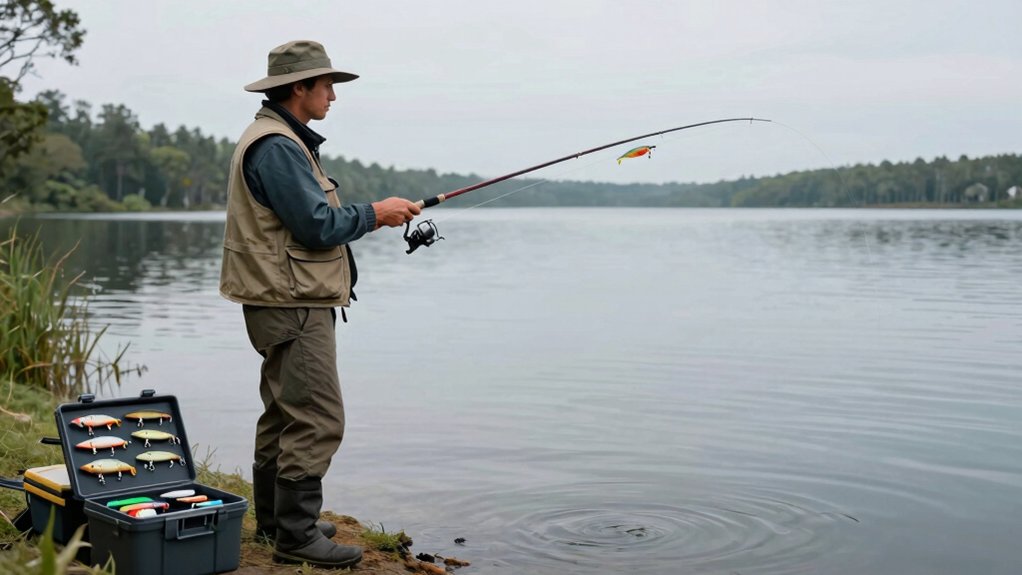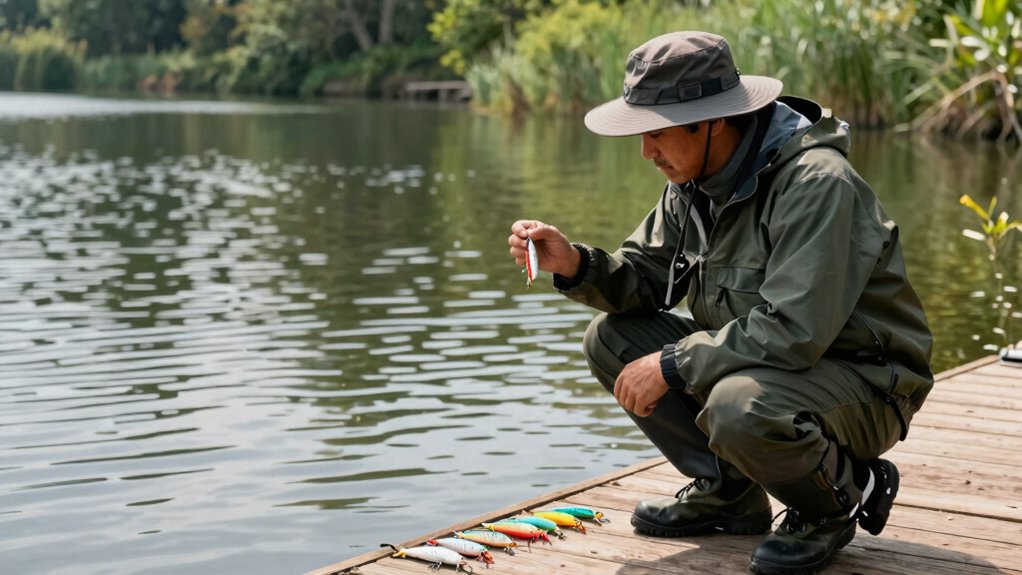
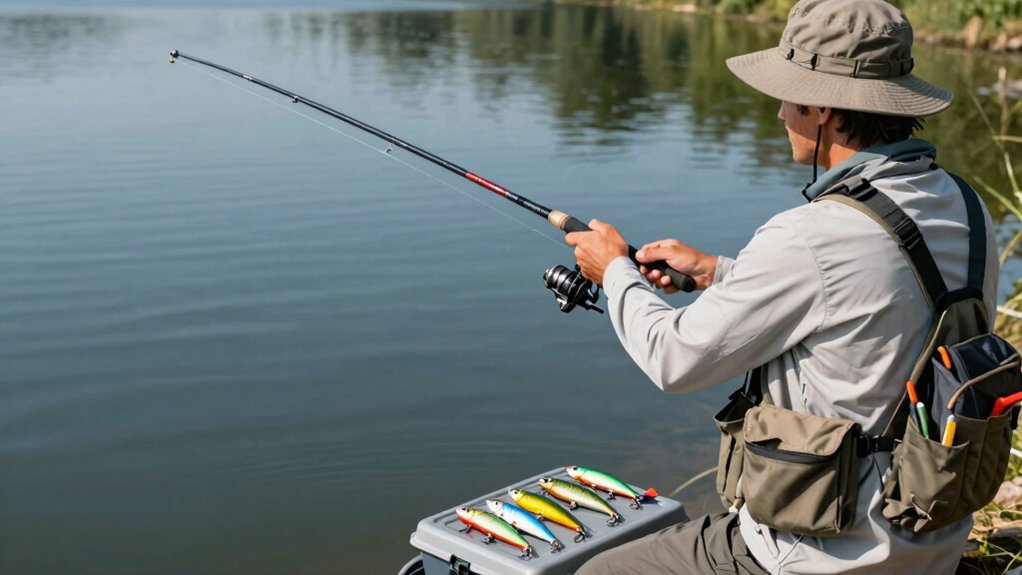

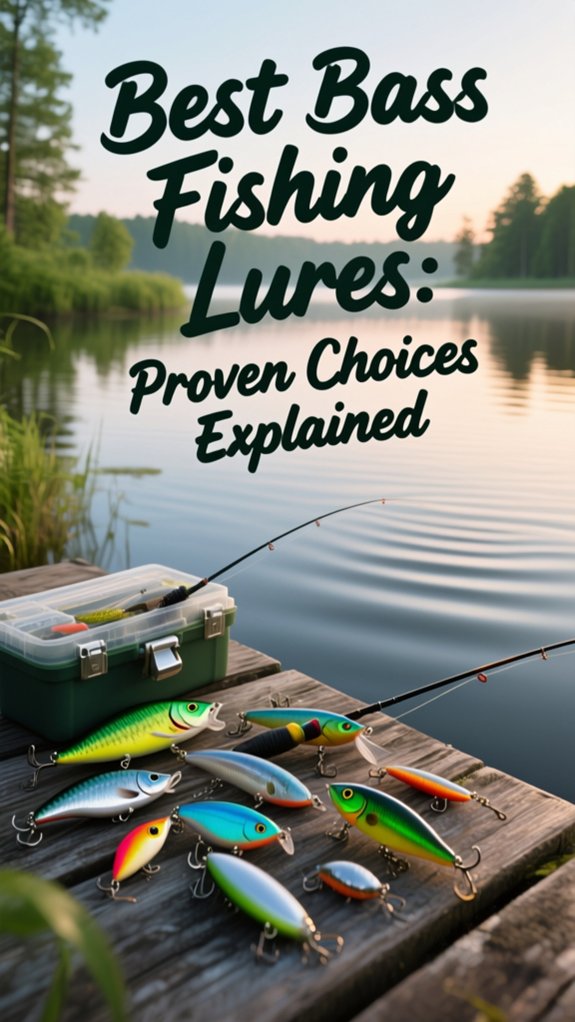
I keep six proven lure categories rigged at all times to match whatever bass behavior throws at me. Crankbaits cover water fast and bounce off rocks to trigger reaction bites, while spinnerbaits shine when wind muddies the surface with flash and vibration.
Soft plastics like Senkos and drop shot worms finesse finicky bass in clear water, and topwaters explode at dawn and dusk when bass chase bait on the surface. Jerkbaits and swimbaits suspend perfectly for cold-water bass hanging mid-column, and heavy jigs punch through mats where other lures tangle. Each category fills a specific gap, master when to switch, and you’ll turn more follows into hooksets.
The 6 Essential Bass Lure Categories Every Angler Needs
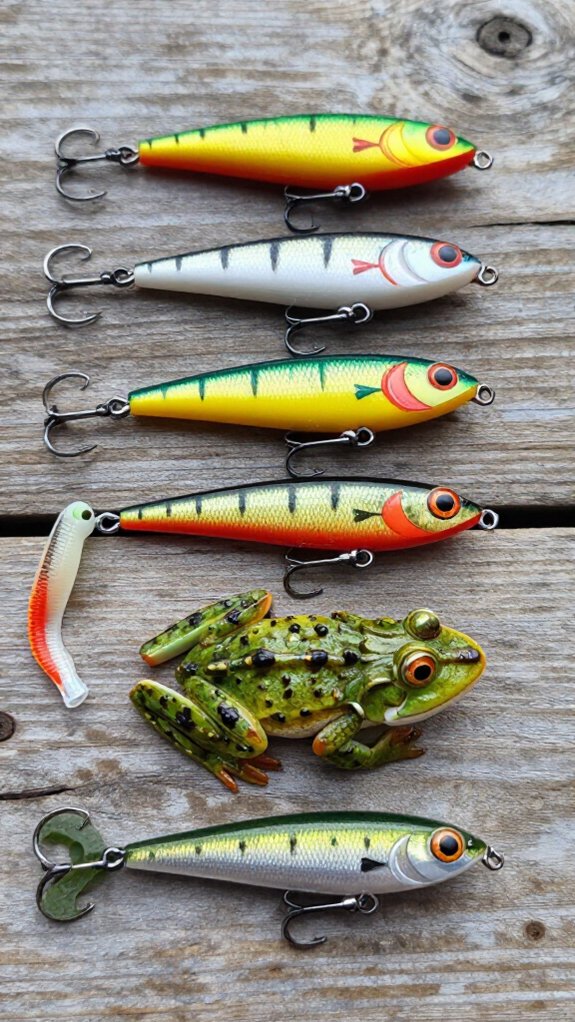
Whether I’m casting into a glass-calm pond at dawn or punching through thick mats on a windy afternoon, I’ve learned that six lure categories consistently put bass in the boat. These essential bass lures—crankbaits, spinnerbaits, jigs, soft plastics, topwater lures, and swimbaits—each shine in specific fishing scenarios.
Building Your Arsenal
I don’t leave the ramp without soft plastics in my box. Worms and creature baits let me downsize and finesse pressured bass when nothing else works. They’re incredibly adaptable across depths and conditions.
Matching Lures to Conditions
Spinnerbaits excel on windy, cloudy days when bass chase aggressively. Jigs dominate year-round around heavy cover—timber, docks, grass—where big fish hide. Swimbaits and topwater round out my selections for different feeding moods and water temperatures.
With these six categories rigged, I’m ready for whatever the day throws at me.
Crankbaits: Bass Lures That Cover Water and Trigger Strikes
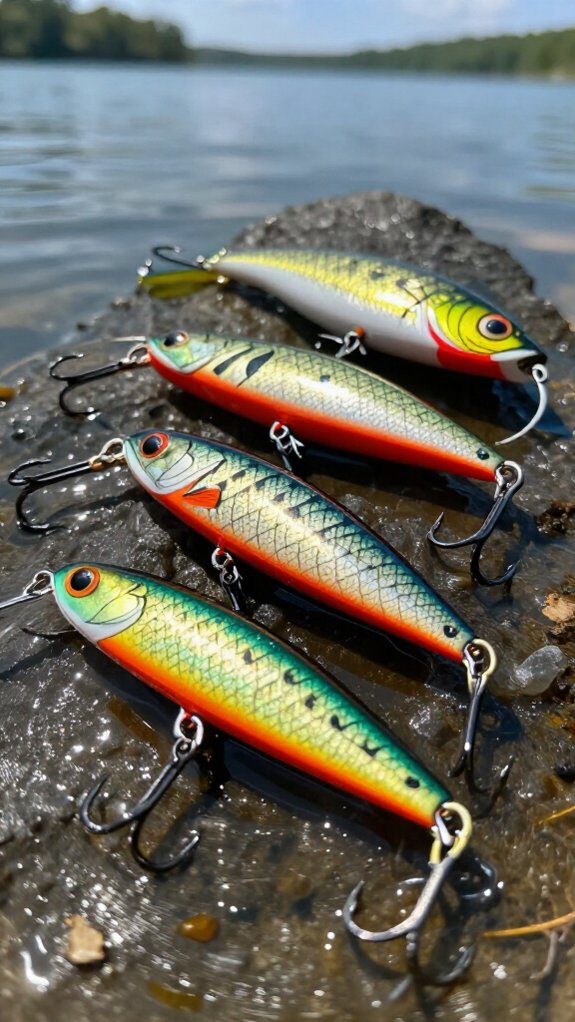
How do I find bass fast when they’re spread out and the clock’s ticking? I reach for crankbaits, my go-to bass lures when I need to cover water efficiently.
Why Crankbaits Dominate Search Fishing
These lures let me probe rocks, timber, and brush piles quickly. Modern crankbaits use plastic lips to control diving depth; longer lips get me deeper where summer bass hold. I’ll bounce them off structure to trigger strikes. That sudden deflection drives reaction bites when bass won’t chase.
Sound and Depth Options
In stained water, I want rattles. The Strike King 5XD’s internal acoustics help bass zero in when visibility drops. For shallow work, I tie on a Cotton Cordell Big-O and grind through 3-6 feet of water near docks and grass edges.
Crankbaits keep me versatile and efficient.
Spinnerbaits: When Wind and Cover Call for Flash and Vibration
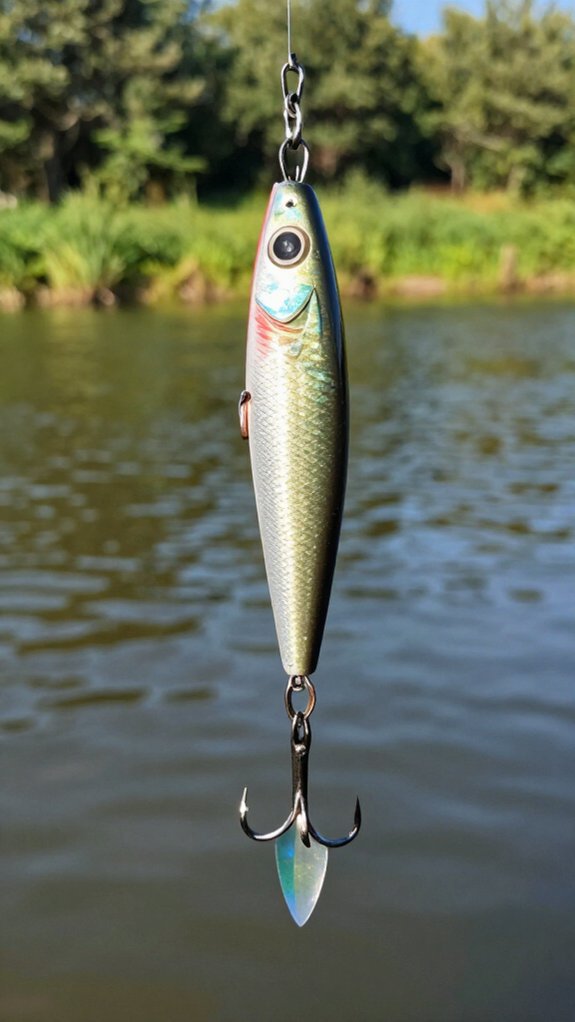
Spinnerbaits solve the exact problem bass anglers face when wind whips across the water and debris clutters your favorite fishing spots. Their spinning blades flash like distressed baitfish while thumping vibrations travel through murky water.
These vibrations call bass out from brush piles and timber where other lures simply disappear.
Let me break down how blade shapes and weight selection turn this simple design into your most reliable tool when conditions get tough.
Design and Mechanics
When the wind starts chopping the surface or I’m working through timber, grass, and docks, I reach for a spinnerbait because nothing else combines flash and vibration quite like it.
The magic lies in the blade. Willow blades slice through water with minimal resistance, sending tight vibrations perfect for clear conditions. Colorado blades thump harder, displacing more water, my go-to when water clarity drops. Indiana blades split the difference, giving me versatility.
Lure design directly impacts how bass detect my presentation. In stained water, I upsize to larger, more reflective blades. The amplified vibration travels through the water column, triggering strikes via the lateral line when visibility fails. That flash-and-thump combination turns reaction bites into hooksets, even when bass can’t see what’s coming.
Ideal Conditions
Because bass rely heavily on their lateral line to detect prey when visibility drops, I’ve learned that wind-chopped water and dense cover create the perfect storm for spinnerbait success.
Why Wind and Cover Work Together
In shallow water, I reach for spinnerbaits when the surface turns to chop. That disturbance breaks up light penetration and gets bass hunting by feel, not sight. The blade flash and thump become their dinner bell.
Picking the Right Setup
I swap to Colorado blades in heavy wind. They push more water and vibrate harder, drawing bass from farther away. Around timber, reeds, or stumps, spinnerbaits shine because their streamlined frame snakes through cover without snagging.
Triggering the Bite
These conditions practically force reaction strikes. Bass can’t inspect the lure; they just react. Fast retrieves near edges of cover usually seal the deal before they know what hit ’em.
Soft Plastics: Finesse Bass Lures for Tough Bites
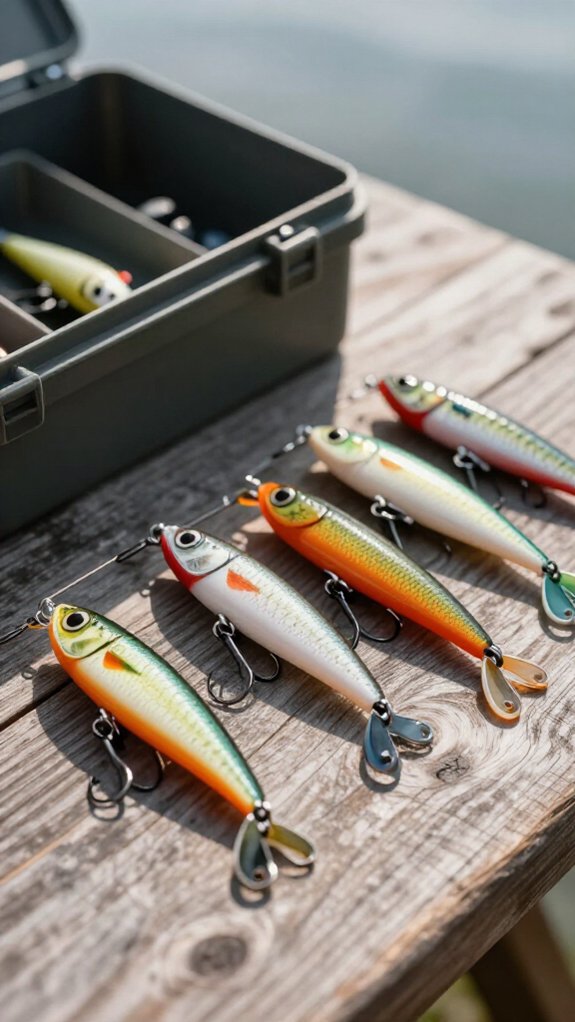
Soft plastics in the finesse category are my go-to whenever bass have seen too many lures or the bite turns tough.
Why Finesse Soft Plastics Work
I’ll reach for soft plastics when bass turn skittish because their subtle action mimics vulnerable prey without spooking wary fish. Finesse fishing demands patience, but the payoff’s worth it.
My Top Picks
- Drop shot worms: The Lake Fork Lure Pro hovers horizontally, looking like injured baitfish. I’ll rig it on light line and let it dance above bottom structure.
- Yamamoto Senko: This stick bait’s versatility amazes me. I’ll fish it weightless, wacky-rigged, or Texas-style. It simply catches fish when nothing else will.
Pair these with light tackle and small hooks for clear water or pressured bass. Slow down, stay subtle, and watch your line.
Topwater Bass Lures: Dawn, Dusk, and Explosive Surface Strikes
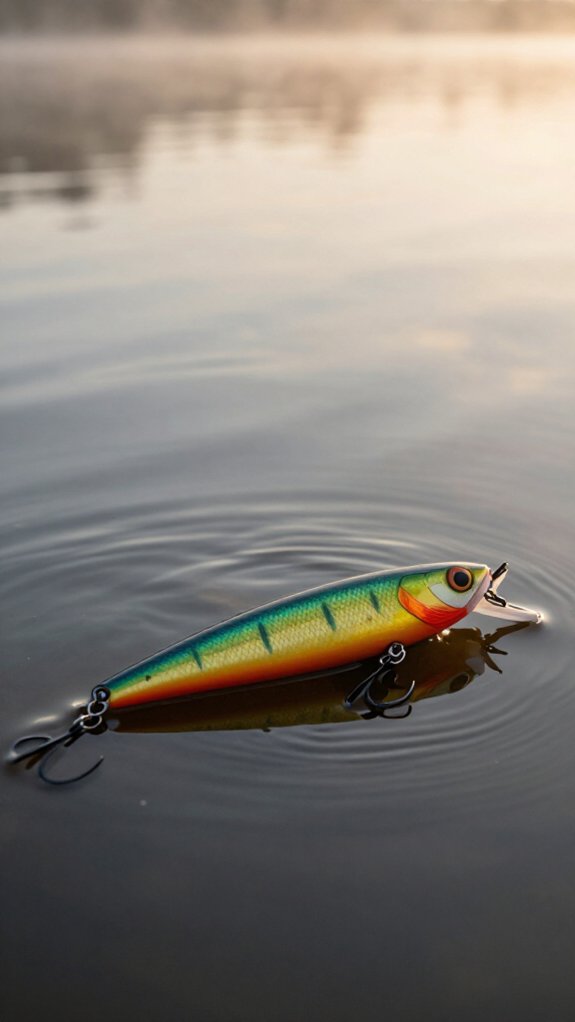
I love throwing topwater lures when the sun’s barely peeking over the horizon or slipping below it, since that’s when bass push baitfish to the surface and hunt with reckless abandon.
The walk-the-dog technique is my go-to move in these low-light windows. I twitch my rod tip with a steady rhythm, making a lure like the Heddon Zara Spook dart side-to-side like a wounded shad that’s easy pickings.
You’ll know you’ve nailed the retrieve when you see that V-shaped wake behind your lure, followed by an explosion of water that’ll make your heart skip a beat.
Best Topwater Conditions
When exactly should you break out the topwater box? I reach for mine during early morning and dusk, when bass prowl the shallows with murderous intent. These low-light windows trigger instinctive surface feeding you won’t see at noon.
Why Calm Water Changes Everything
Glassy conditions aren’t just pleasant, they’re tactical advantages. On calm water, every plop, gurgle, and wake from a River2Sea Whopper Plopper travels farther, pulling bass from deeper cover.
I’ve watched explosive surface strikes erupt from nowhere when there’s zero wind to muffle the commotion.
Topwater lures demand these specific conditions. Without chop breaking the surface, bass pinpoint your bait visually and acoustically.
Skip the topwater when whitecaps appear; you’re wasting the noise and splash that make these lures devastating. Match the moment, and you’ll witness heart-stopping blowups.
Walk-The-Dog Technique
Why does the walk-the-dog technique prevail so many tournament weigh-ins during those golden hours? It’s simple: this method delivers explosive strikes when bass hunt aggressively at dawn and dusk.
I twitch my rod tip with short, sharp snaps, letting the line slack between pulls. This creates that irresistible side-to-side swimming motion that mimics injured baitfish fleeing for their lives. Classic topwater baits like the Heddon Zara Spook were built precisely for this action.
The rhythm matters most. I keep my twitches quick and consistent, adjusting speed based on what the fish want that morning. When bass explode through the surface to crush your lure, you’ll understand why I never hit the water without a walk-the-dog setup rigged and ready.
Jigs and Creature Baits: Punching Mats and Heavy Cover
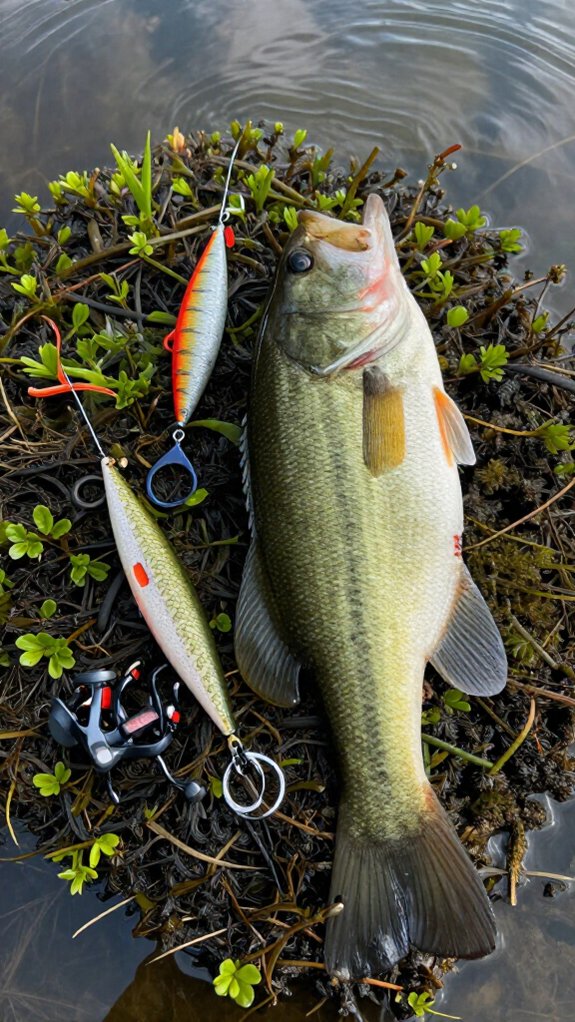
If you want to reach bass hiding where most lures can’t go, I’m about to show you why heavy jigs and creature baits are your ticket into the thick stuff.
Punching Through the Impenetrable
Punching isn’t just a technique, it’s a declaration of war against matted grass and submerged timber. I rely on heavy jigs like the Missile Jig Mini Flip in black-and-blue to tear through vegetation that would wreck lesser lures.
Pair it with a Lake Fork Lure Pro Hog, and you’ve got snapping claws and garlic scent working together to trigger reaction bites from bass buried in heavy cover.
Gear Up to Pull ‘Em Out
I Won’t Touch This Technique Without Braided Line and a Stout Rod. When a bass inhales your jig in six feet of matted grass, you’ve got one shot to drag it out before it wraps you around every stump in the lake.
Jerkbaits and Swimbaits: Cold Water Bass Lures for Suspended Fish
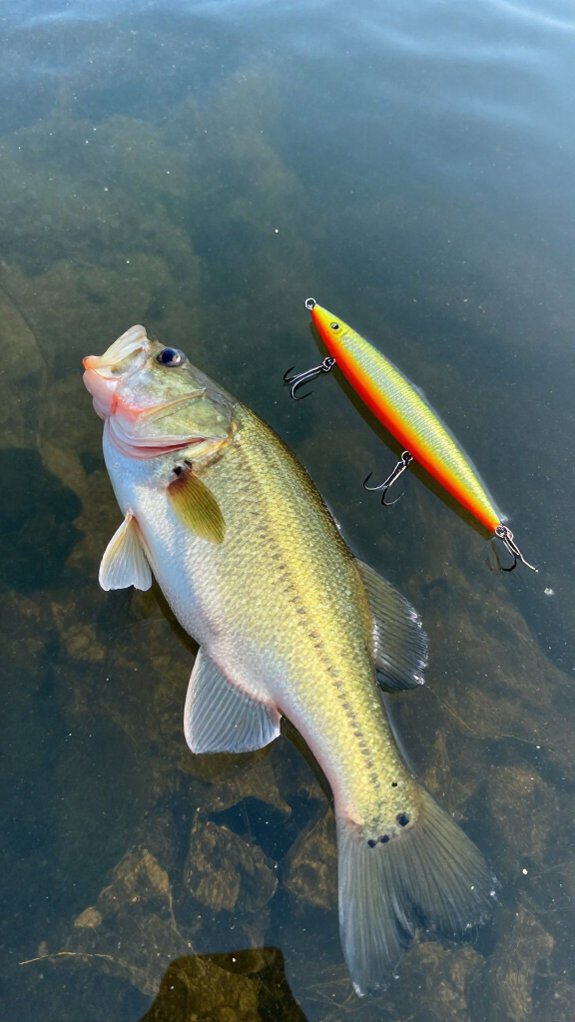
Here is how I put these proven lures to work:
- I snap a Yo-Zuri Pro Series SF 110mm jerkbait with sharp rod action and long pauses to mimic dying baitfish.
- I slowly retrieve a Storm Surge Minnow swimbait for realistic, lazy prey movement.
- I pair Forward Facing Sonar with Jenko The Don to spot and precisely target suspended fish.
- I focus on mid-column depths above structure where winter bass hold.
Both jerkbaits and swimbaits excel in open water when subtle presentations trigger lethargic strikes.
Season-by-Season: Matching Bass Lures to Monthly Conditions
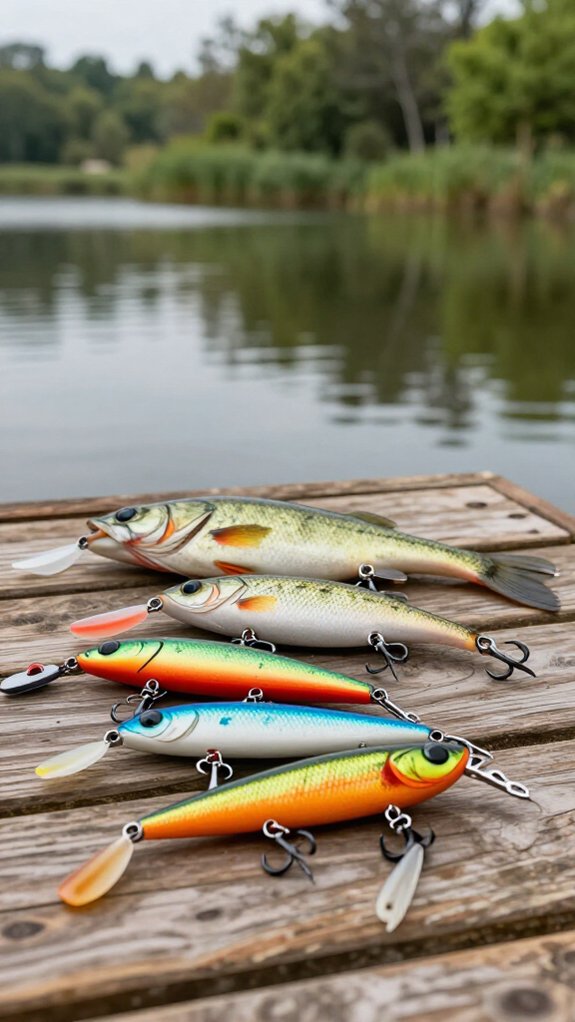
I match my lures to the calendar because bass behavior shifts dramatically from spring through fall.
You’ll want to adjust your approach for the spring spawn, summer deep patterns, and fall feeding frenzy to stay on fish year-round.
Let me walk you through how I switch up my tactics for each seasonal window.
Spring Spawn Strategies
Since bass follow predictable spawning rhythms each spring, matching your lure selection to these monthly phases makes the difference between scattered bites and consistent catches. I’ll break down exactly what works as water temperatures climb and bass move shallow.
- Pre-spawn bass: I throw shallow-running crankbaits like the Cotton Cordell Big-O or Rapala Shad Rap to locate fish staging near spawning flats.
- Bed fishing: When bass lock onto beds in shallow water, I’ll switch to slow presentations with wacky-rigged soft plastics or drop shot worms.
- Creature baits: These excel for tempting guarding males that won’t commit to faster offerings.
- Post-spawn recovery: I work mid-depth crankbaits and spinnerbaits to intercept bass feeding aggressively after the spawn.
Summer Deep Patterns
When summer heat pushes bass off the banks and into the depths, you’ll need to completely rethink your lure strategy to stay on the bite.
Go Deep or Go Home
I reach for deep crankbaits like the Strike King 5XD, which dives 12-15 feet to hit offshore drop-offs and submerged points where bass retreat from blazing surface temperatures. These lures get down where the fish live.
Speed and Reaction
To cover a lot of water efficiently, I’ll burn a lipless crankbait through deep-water zones. The tight vibration triggers vicious reaction strikes from lethargic summer bass that won’t chase slow presentations.
Color and Retrieve
Stick with shad, white, or crawfish patterns to match offshore forage.
As temperatures peak, slow your retrieve and grind that crankbait through deeper cover. Patience beats speed when bass hug the bottom during midday heat.
Fall Feeding Frenzy
Where do bass go when autumn’s chill starts stripping leaves from the shoreline trees? They push into shallow water and feed aggressively before winter locks in, giving us anglers our last great shot at explosive action.
My Fall Favorites
- Burn reaction lures, lipless crankbaits and spinnerbaits trigger vicious strikes when bass school up chasing baitfish.
- Match the hatch, shad, white, or chartreuse patterns mimic the real thing perfectly.
- Slow down with soft plastics. When temperatures drop, I’ll switch to Yamamoto Senkos and creature baits for sluggish fish.
- Hit the wind, vibrating jigs around structure on blustery days produce crushing bites.
I tweak retrieve speed and add red accents to my trailers. These subtle changes turn lookers into biters when fall bass get choosy.
When to Reach for Finesse Rigs on Pressured Lakes
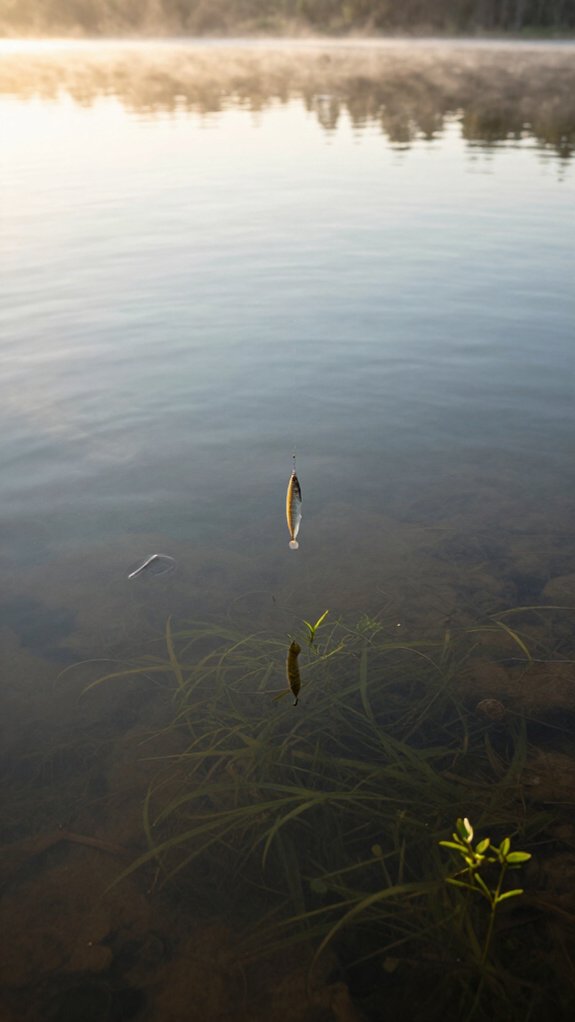
Although aggressive lures often overpower tackle boxes, I’ve learned that pressured bass demand a different approach entirely.
Why Finesse Works When Nothing Else Will
On pressured lakes, bass see the same crankbaits and spinnerbaits daily. That’s when I reach for finesse rigs, drop shot worms, wacky rigs, and small soft plastics that deliver subtle presentations these wary fish can’t resist.
I’ve watched my catch rate soar after cold fronts or during heavy summer traffic by simply slowing down. Instead of burning baits across the surface, I drag tiny worms with minimal movement.
Clear water demands this stealthy approach.
The magic happens when bass are neutral or negative. While aggressive lures send them scattering, finesse tactics tempt even lockjawed fish into biting with patience and precision.
Building Your First Bass Tackle Box on a Budget
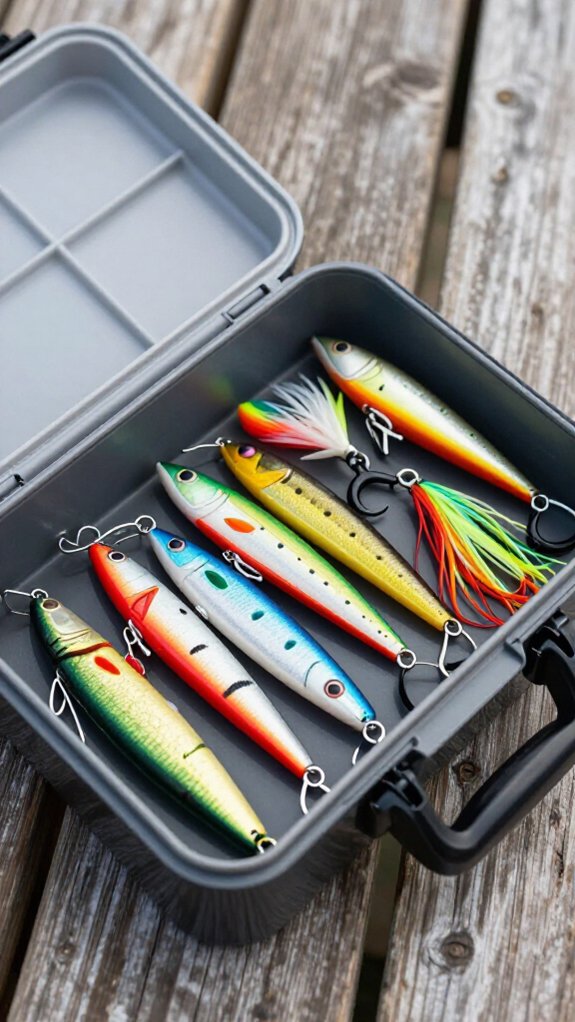
Starting out doesn’t mean draining your wallet on gear you’ll barely use, so I’ll show you how I built my first bass tackle box for under fifty bucks without sacrificing results.
I focused on versatile bass lures that work everywhere. Here’s my beginner-friendly setup:
- Soft plastics – Grab a bag of worms in green pumpkin; they’re cheap and catch fish anywhere.
- Two crankbaits – One shallow, one medium diver covers most depths.
- One spinnerbait – White works in stained water, shad patterns for clear conditions.
- Essential rigging – Texas and wacky hooks, plus bullet weights for those soft plastics.
I chose Berkley and Strike King for reliability without the premium price.
Three colors handle any light condition you’ll face. Keep extra hooks and line in your tackle box so you’re never stuck when the bite turns on.
Frequently Asked Questions
How Do I Choose the Right Fishing Lure for Bass?
I match lures to water depth, season, and what bass are eating, lipless crankbaits for shallows, deep divers for structure, slow plastics in cold, reaction baits in heat. I size and color them to local forage, then rig and retrieve based on activity level.
What Does the 80/20 Rule Mean in Bass Fishing?
I focus on the 20% of lures that deliver 80% of my bass catches. By identifying and sticking with these proven performers, I’m maximizing my efficiency and spending less time guessing what’ll work.
What Is the Most Effective Lure for Bass?
I can’t name just one lure as most effective since conditions dictate success, but I’ll tell you the Whopper Plopper rules topwater, Senkos work everywhere, and deep crankbaits reach hidden bass when nothing else will.
What Two Colors Do Bass See Best?
I know bass see blue and green best since those wavelengths penetrate water effectively and match their visual strengths.
I’ve noticed these colors work at various depths, and I’ll pick lures in these shades when I’m targeting clear water situations.
In Conclusion
You’ve now got a solid game plan for picking bass lures that actually work. Start with these six categories, match them to the season, and you’ll catch more fish without emptying your wallet.
Think of your tackle box like a toolbox, each lure has its job, and knowing when to use it makes all the difference. Now Get out there and make some casts.