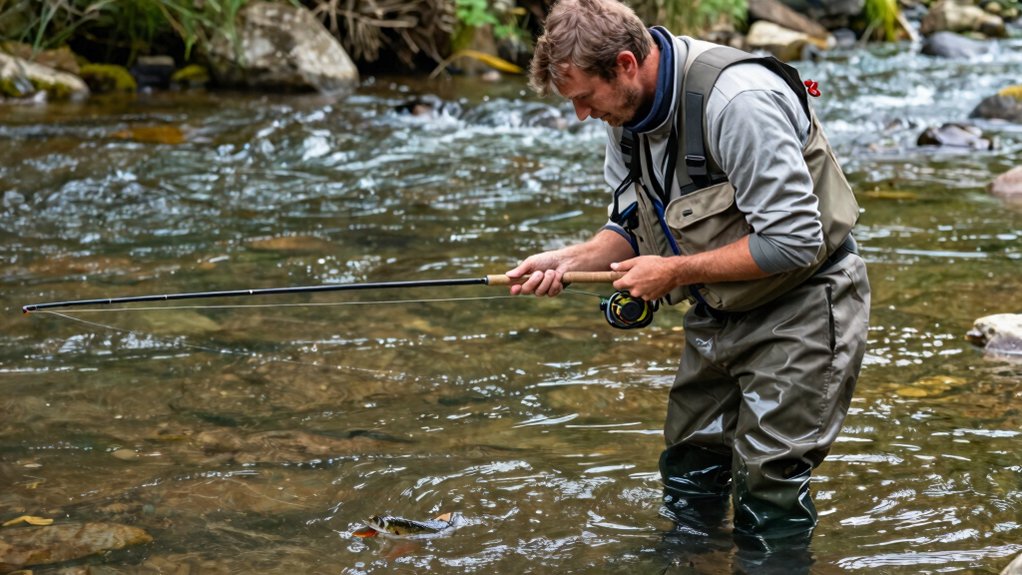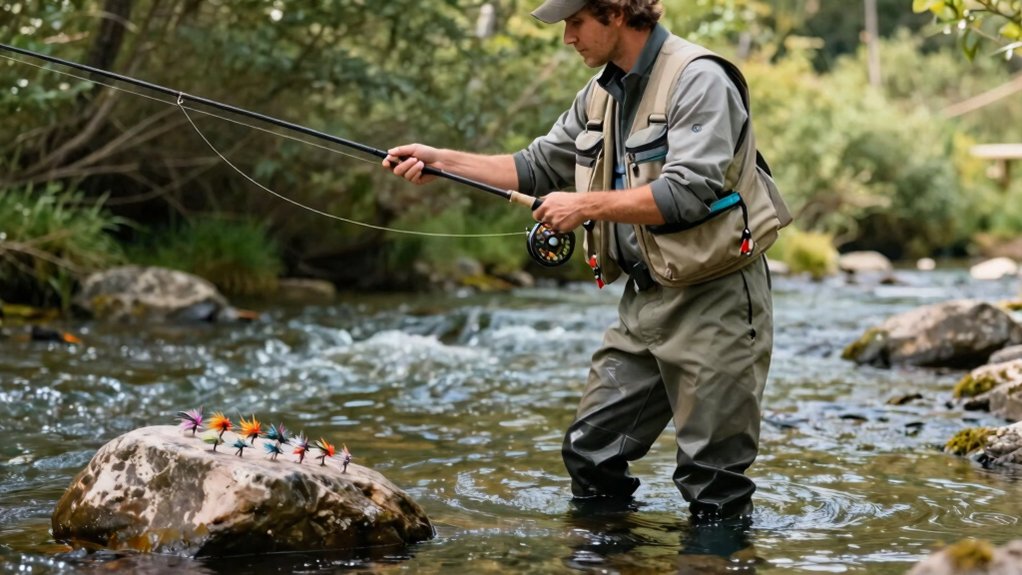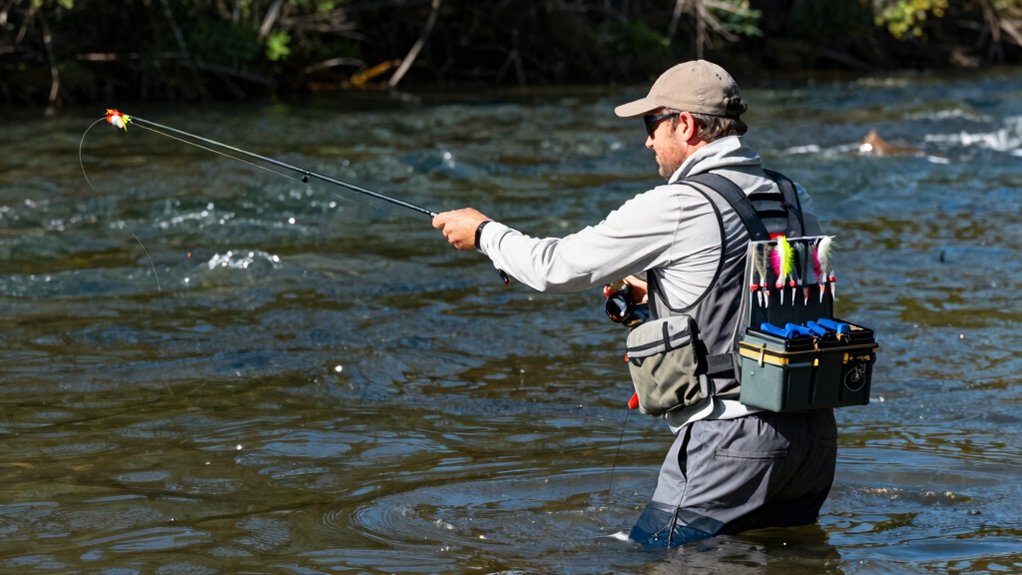
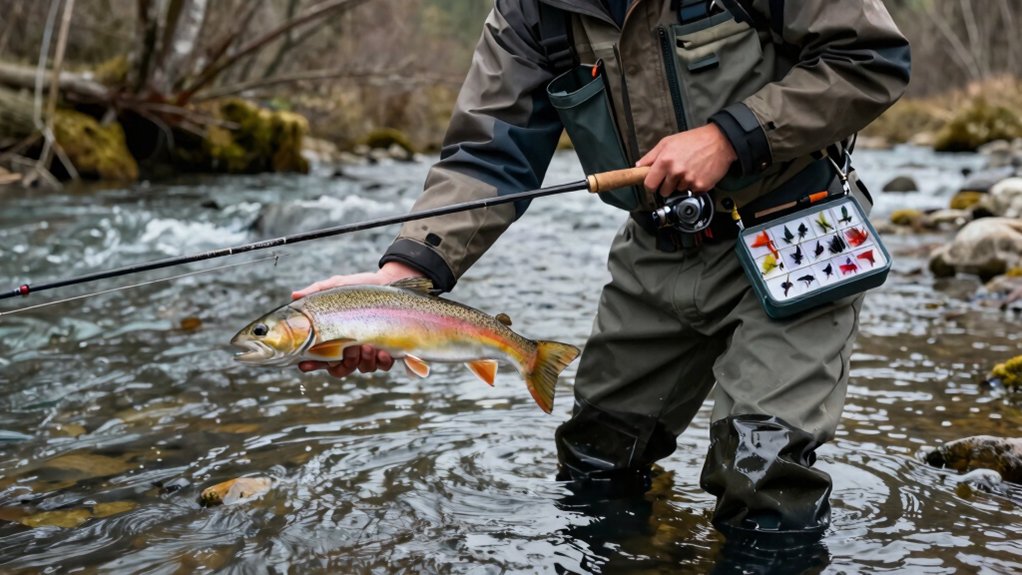

I rely on nymphs, egg patterns, and streamers to consistently hook steelhead, matching each fly to water conditions, fish behavior, and seasonal shifts rather than hoping a single pattern works everywhere.
For nymphs, I dead-drift Prince Nymphs and Pheasant Tails in sizes 12-16 with long leaders when steelhead hold in deep runs. Egg patterns like Glo Bugs and Crystal Meth become essential when fish key on spawning prey. I’ll switch to fluorescent pink in stained water and natural shades when flows clear.
Streamers trigger reaction strikes through the lateral line system, so I swing Woolly Buggers with marabou and rubber legs at a 45° angle, varying my retrieve until I find what provokes bites. Water clarity dictates my approach: larger, flashier patterns cut through murk while smaller, natural flies fool pressured fish in low, clear summer flows.
What many anglers miss is how subtle blue or purple accents can turn territorial aggression into committed strikes during low-light periods, and why switching to darker, stranger tones often saves the day when standard patterns get ignored.
There’s more to unpack about rigging techniques and seasonal adjustments that separate consistent hookups from frustrating days on the water.
Nymphs: The Foundation of Steelhead Fly Success
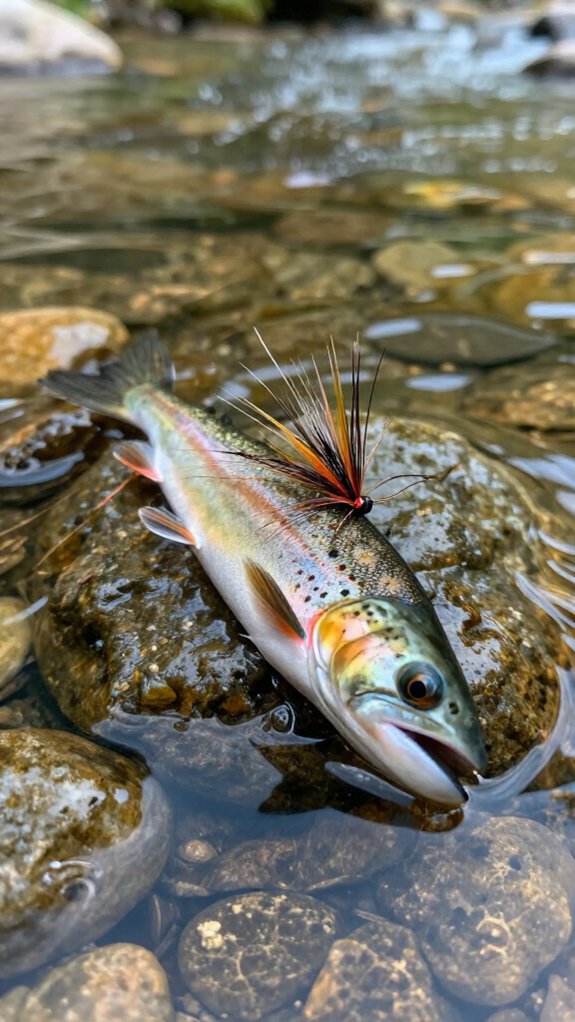
While streamers and swung flies get most of the glory, I’ll tell you straight up that nymphs are what put steelhead in my net when nothing else works. They’re my workhorse when the river’s running fast or deep, and conditions turn tough.
I’ve learned that matching your nymph to the water conditions makes all the difference. Here’s what I reach for:
- Prince Nymphs and Pheasant Tails for universal appeal
- Copper Johns when I need that flash
- Hare’s Ear for buggy, lifelike movement
I size them 12 to 16, going bigger and darker when the river’s brown and blown. Dead drifting is my go-to technique, long leaders, fluorocarbon tippets, and presentations so subtle the fish barely knows it’s being fooled.
I’ll add bead-heads for depth and soft hackles with CDC or partridge when steelhead get picky.
Egg Patterns That Match What Steelhead Actually Eat
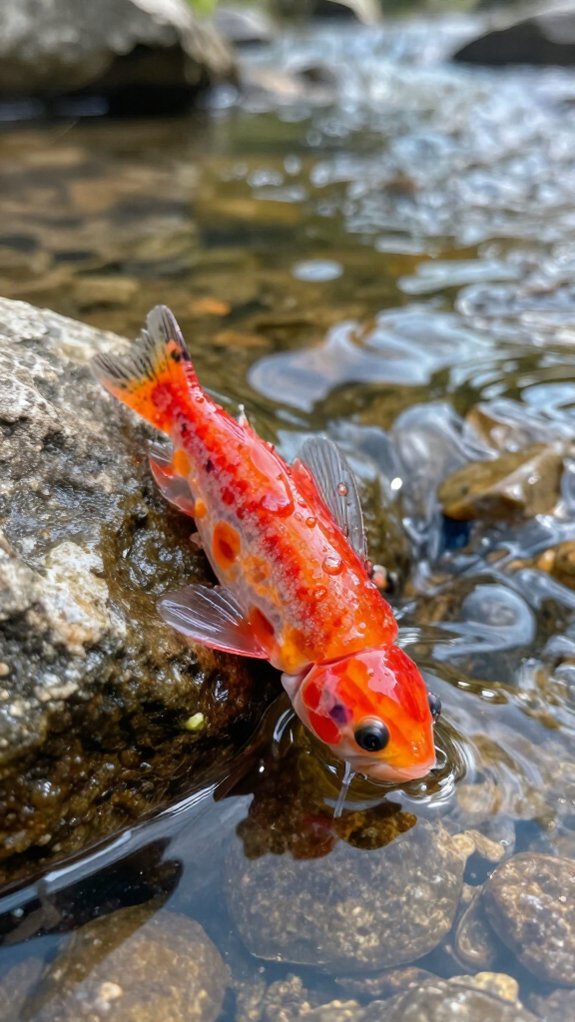
If there’s one fly I won’t hit the river without, it’s an egg pattern, because steelhead simply can’t resist them when they’re keyed in on spawning prey.
Choosing the Right Pattern
I stock my box with proven patterns: Y2Ks, Eggstasy Eggs, Glo Bugs, and Crystal Meths. Each mimics real eggs drifting through the current.
Color Selection Matters
Water clarity dictates my choice. In stained conditions, I’ll reach for fluorescent or hot pink for maximum visibility. When the water clears, I switch to natural shades like cheese, white, or pale pink. These versatile colors match what steelhead actually encounter during the spawn.
Size and Realism
I match my eggs to what’s naturally available. Realistic sizing and color-matched patterns consistently produce more hook-ups because steelhead recognize them as genuine prey.
Steelhead Streamer Flies for Aggressive Strikes
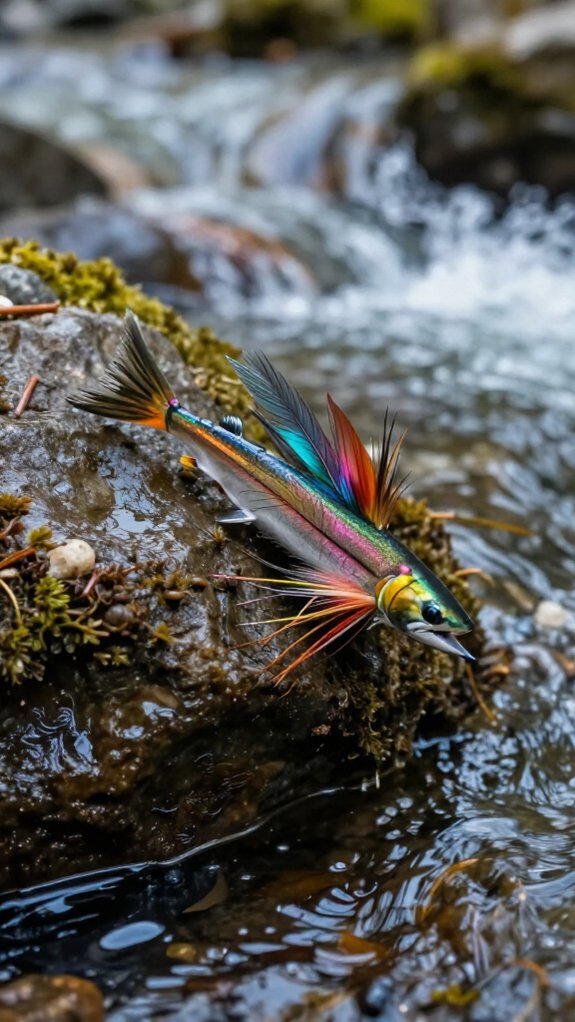
When steelhead aren’t keyed in on eggs, I’ll reach for a streamer to trigger their predatory instinct and draw explosive strikes from fish that want to chase something down.
Patterns That Move Water
Woolly Buggers and Flash-A-Buggers remain my go-to choices. Marabou breathes life with every twitch, while rubber legs kick out vibrations that steelhead feel through their lateral lines.
In stained water, I’ll upsize and reach for patterns packed with flash, those reflective elements cut through murk better than subtle naturals.
Making Them Hunt
I vary my retrieve based on water temperature. Steady strips work when fish are active. Erratic jigging triggers reaction bites from lethargic steelhead. Swinging streamers at a 45° angle covers water efficiently and lets aggressive fish ambush from behind structure.
Watch for that line hesitation, that’s your strike.
Rigging Steelhead Flies for Deep Drifts and Deadly Presentation
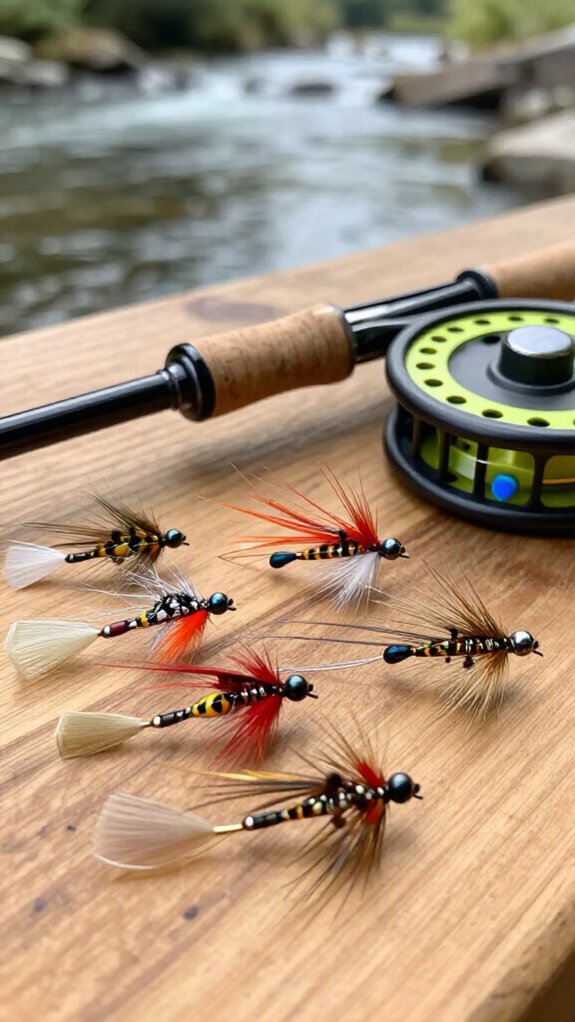
Even the best steelhead fly won’t catch fish if you can’t put it where they’re holding, and that’s where your rigging setup becomes the difference between a bent rod and a quiet day on the water.
I start with a long, tapered leader, ten feet minimum, to keep my drift tight and natural. Split shot placed above the fly punches it down to where steelhead hug the bottom, and I adjust weight placement until I feel that satisfying tick-tick of stone.
My line choice depends on depth: floating for shallower seams, sink-tip for heavier water. The key? Let the fly dead-drift or strip with agonizing slowness, mimicking wounded prey, not a fleeing baitfish.
Here’s my rigging checklist:
- Leader length matters — Longer tapers reduce drag and spook fewer fish
- Weight beats depth — Add split shot rather than switching lines when possible
- Read the water — Target seams and tailouts where steelhead rest without fighting current
Choosing Steelhead Flies by Season and Water Conditions
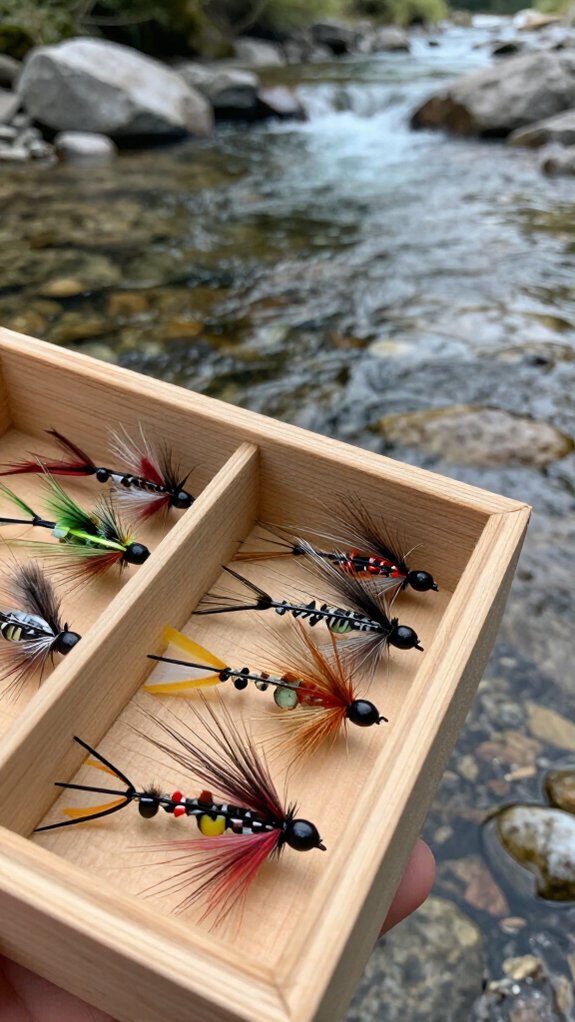
Once I’ve got my rigging dialed in, I don’t just reach for any fly in my box. I match my pattern to what the river’s telling me that day, because steelhead won’t move for a meal that doesn’t fit their mood or the conditions they’re facing.
Reading the Water
When the river’s running high and stained, I’ll tie on bright egg patterns in pink or fluorescent hues that cut through the murk.
But come those low, clear summer flows, I downsize to natural olives and browns—nymphs and small streamers that look like the real thing.
Seasonal Shifts
Fall and early winter? I’m reaching for meaty stoneflies and leeches. These profile-heavy patterns trigger aggressive takes as fish bulk up for spawning.
Spring runoff demands something different entirely—flashy, high-visibility patterns like Crystal Meth or Mop flies that punch through turbulent, debris-filled water.
Size matters too. I’ll drop two sizes when the water’s gin-clear, then beef up when visibility drops.
When Standard Steelhead Flies Fail: Unusual Colors That Work
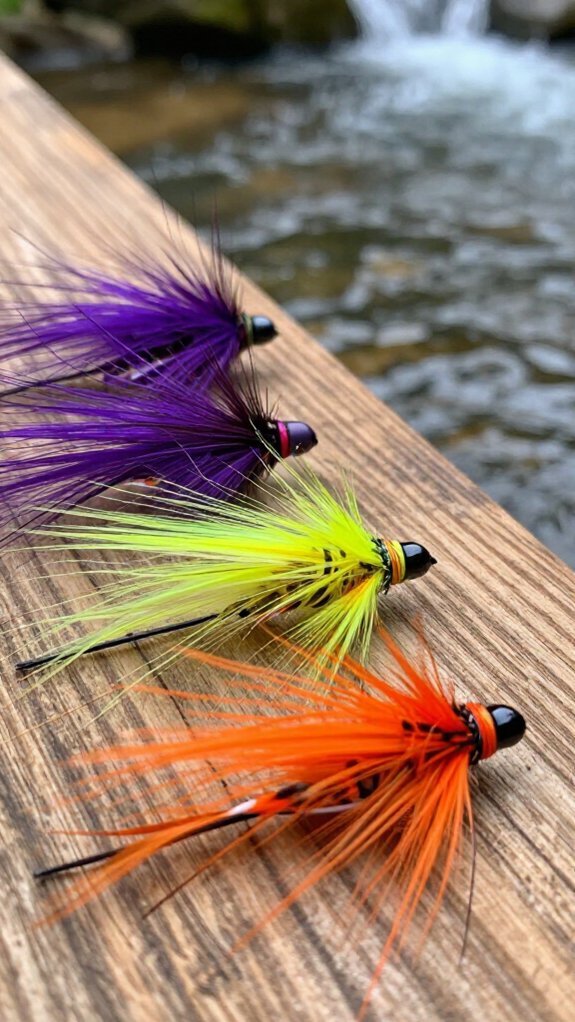
When standard patterns stop producing, I’ve found that reaching for off-wall color options like fluorescent pink or chartreuse often turns the day around.
Bright contrast patterns, think UV polar chenille against black or hot orange paired with purple, cut through murky water and grab the attention of pressured fish.
Don’t overlook unexpected combinations like purple, black, and blue either; I’ve watched wary steelhead hammer these unconventional hues when nothing else moved them.
Off-Wall Color Options
Why do steelhead sometimes ignore every classic pattern in your box? I’ve watched it happen, fish that’ve seen every standard offering turn their noses up. That’s when I reach for off-wall color options that demand attention.
When to Go Bold
I keep fluorescent pink, chartreuse, and UV-reactive shades ready for these stubborn moments. Studies show steelhead respond aggressively to colors they haven’t encountered repeatedly.
My go-to unusual colors include:
- Hot pink – triggers reaction strikes in clear water when naturals fail
- Purple – surprises pressured fish that’ve grown wary of orange and red
- Neon orange or fluorescent green – cuts through stained or low-light conditions when visibility drops
I build these into my box because water clarity and fish mood change fast. Bold, unconventional patterns stand out against typical naturals, and angler reports consistently back higher catch rates when standard flies get refused.
Bright Contrast Patterns
Standard patterns sometimes vanish into muddy, churned-up water no matter how well you fish them. That’s when I reach for bright contrast patterns that scream for attention.
Why High-Visibility Colors Work****
Steelhead detect hot pink, chartreuse, and bright orange even in stained water. These fluorescent hues cut through murk that standard patterns can’t penetrate.
I switch to neon-colored flies when:
- Water levels spike after rain
- Light fades at dawn or dusk
- Fish turn cautious and stop committing
Triggering Aggressive Strikes
Bright contrasting colors don’t just get noticed, they provoke reaction bites. When steelhead get finicky, that flash of unexpected color flips a predatory switch.
They strike before thinking.
Research from Oregon State University’s fisheries program confirms steelhead respond faster to high-contrast prey in turbid conditions. I keep chartreuse-and-pink intruders ready for exactly these moments.
Purple Black Blue
Even after bright patterns lose their magic, I’ve watched purple, black, and blue flies pull steelhead that refused everything else in my box. These unconventional colors shine when the river turns murky or the light fades.
Here’s why these hues deserve space in your fly box:
- Purple penetrates dirty water better than standard orange or pink, giving steelhead a target they can actually track.
- Black creates silhouette that pops against off-color currents, especially with subtle blue or purple flash accents.
- Blue triggers aggression in low-light mornings and evenings when these fish turn territorial.
I tie Crystal Meth patterns in purple-blue combinations and run black Sucker Spawn with iridescent highlights. When nothing’s working, I’ll swap to these darker, stranger tones and watch reluctant fish suddenly hammer the drift.
Frequently Asked Questions
What Are Some Good Fly Patterns for Steelhead Fish?
I’ve found egg patterns like Crystal Meths and McFly Foam Eggs work incredibly well, and I’ll always keep black Woolly Buggers handy.
When visibility drops, I’m reaching for bright Squirminators or Glo Bugs to trigger aggressive strikes from selective fish.
What Colors Attract Steelhead?
I use bright pinks, chartreuses, and corals in murky water, then switch to black, purple, or blue when it’s clear. I’ll often combine contrasting colors since Steelhead can’t resist that visual trigger.
Is a 6wt Enough for Steelhead?
I’ve landed steelhead up to 15 pounds on my 6wt, and it’s plenty for most situations. I’ll step up to a 7 or 8wt when I’m battling wind, heavy sink tips, or bigger rivers where those fish push 20 pounds.
What Is the Best Fly Fishing Setup for Steelhead?
I use a 9-10′ 6-8 weight rod with floating or sinking lines depending on depth, 10-12 lb leaders, and varied flies like eggs, nymphs, and streamers matched to conditions and fish behavior.
In Conclusion
Your fly box is like a painter’s palette, each pattern a different hue for the canvas of water before you. I’ve learned that steelhead don’t just feed; they respond to the story your fly tells.
Match the hatch, read the river, and trust that the right presentation turns ordinary thread and feather into irresistible temptation. Now tie one on—your next chrome-bright reward is waiting.