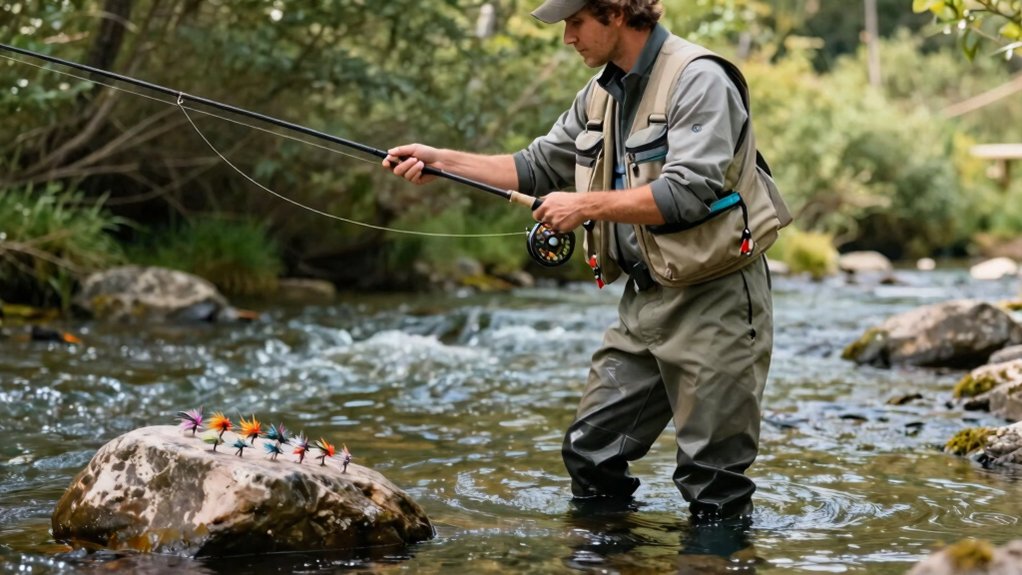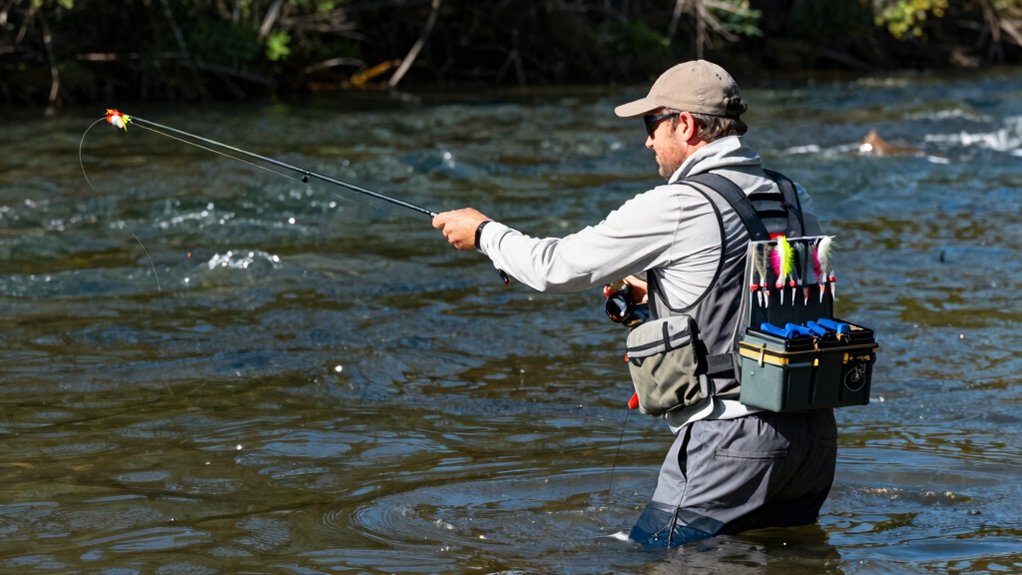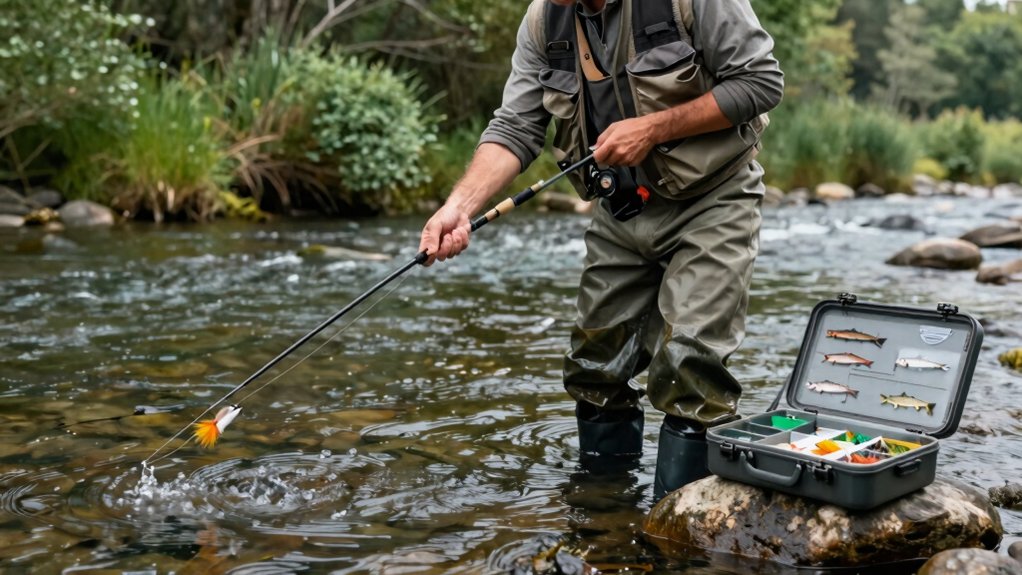
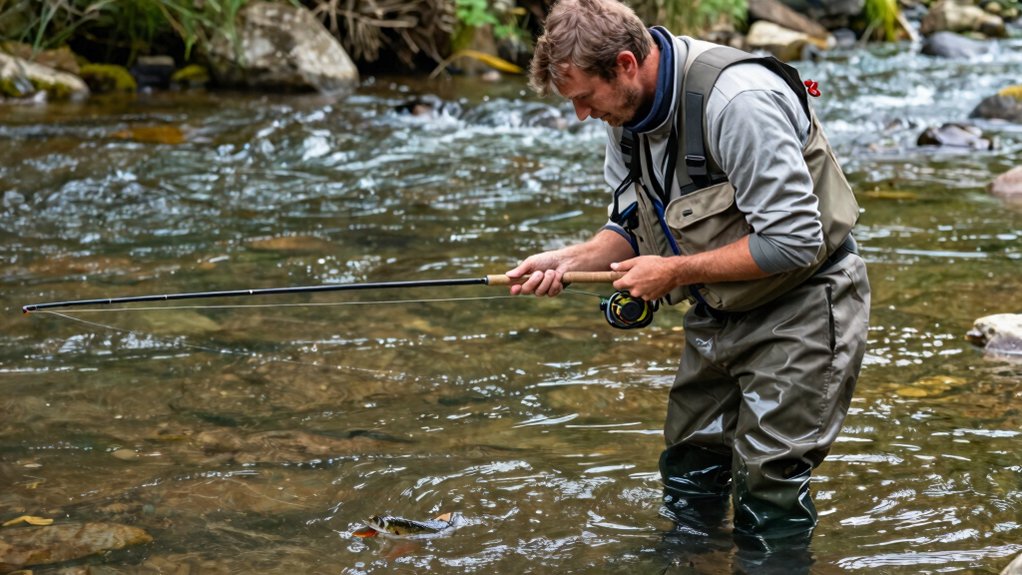

I choose my fly by reading three things first: water clarity, current speed, and depth. In clear water, I’ll reach for smaller, natural-colored patterns—olive, brown, or tan—that match what trout are actually seeing. When the water’s stained or tea-colored, I size up and add flash so fish can find my fly.
Muddy water means bulky, dark, heavily weighted patterns with maximum visibility. Fast currents and deep pools demand compact, heavy flies to hit the strike zone quickly, while slow, shallow water calls for lighter presentations with longer leaders for that natural drift. I’ll always check for hatches too: those tiny sailboat mayflies in riffles, tent-winged caddis year-round, or early stoneflies when water hits 55°F.
Matching what trout can see that day, rather than what I hope they’re eating, puts way more fish in my net, and there’s a simple system for building a fly box that covers every scenario you’ll face on the water.
Read Trout Water: Clear, Stained, or Muddy
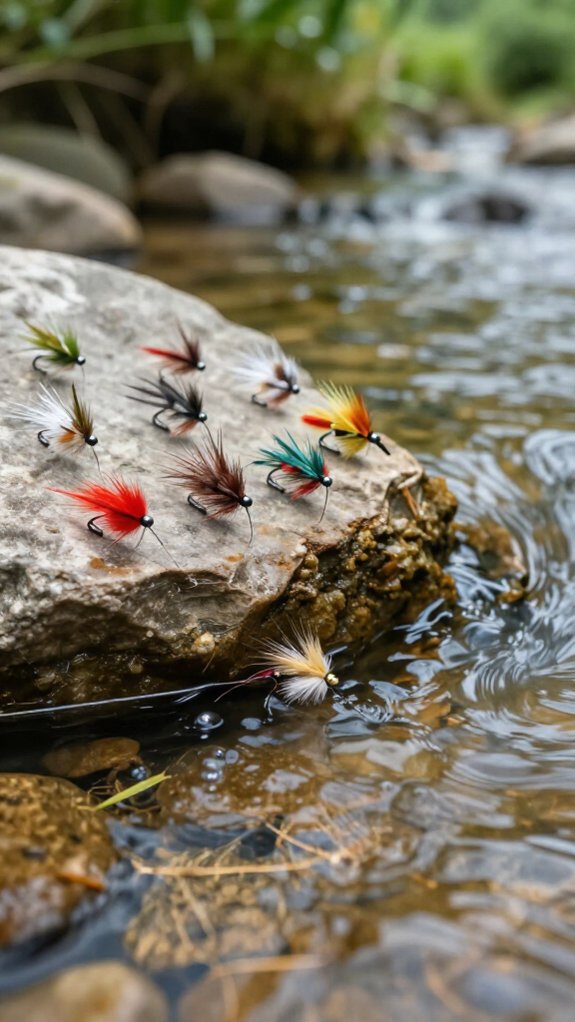
When I’m standing at the river’s edge with fly box in hand, the very first thing I do isn’t pick a pattern, it’s study the water itself, because what I can’t see beneath the surface determines everything about what the trout can see of my fly.
Clear Water Demands Stealth
In gin-clear conditions, I’m reaching for smaller, natural-colored flies that imitate specific insects precisely. Trout scrutinize every detail here, so I avoid anything flashy that’ll send them darting for cover.
Stained Water Calls for Visibility
When that water carries a tea-colored tint, I size up and darken my patterns. A bit of flash helps trout locate my fly without making it look artificial.
Muddy Water Requires Boldness
In chocolate-brown floods, bulky, dark, heavily weighted flies become essential. If they can’t see it, they can’t eat it.
Match Size and Weight to Current and Depth
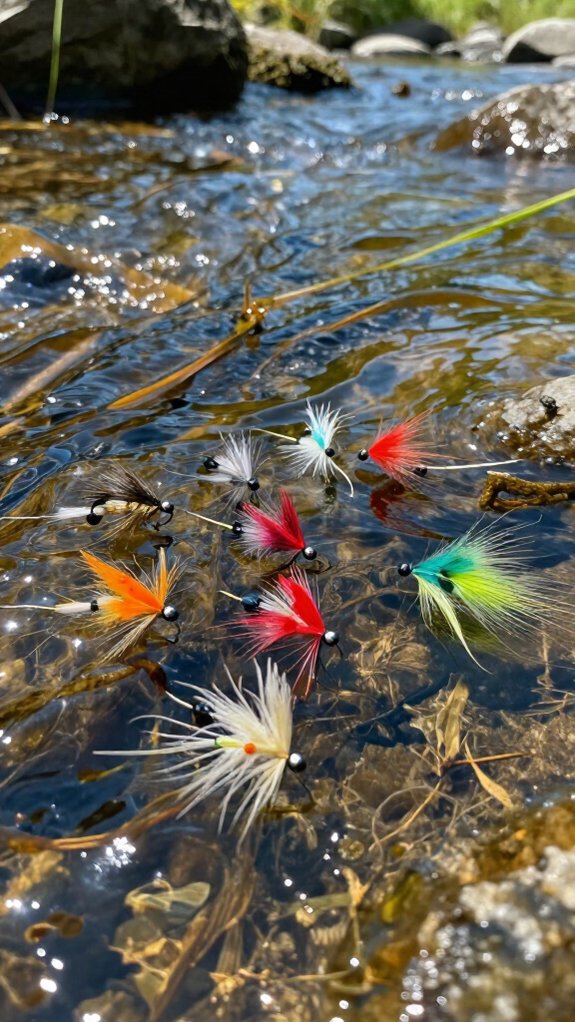
I match my fly’s size and weight to the water’s personality. Heavy, compact patterns punch through fast currents and drop quickly into deep slots.
While I scale down to lighter, more delicate offerings when the water slows and shallows. You’ll feel the difference immediately when your fly rides at the right depth instead of dragging or skipping over fish.
Let’s break down how I adjust for fast water tactics, slow water adjustments, and deep water solutions so you can read the river and respond with confidence.
Fast Water Tactics
Because fast water demands flies that fight the current rather than surrender to it, you’ll need to match every pattern’s size and weight to the river’s speed and depth if you want consistent strikes.
I’ll reach for heavier nymphs or streamers that punch through the surface film and drop into the strike zone before the current sweeps them away. In turbulent pockets, I size up, larger profiles push more water and trigger reaction bites from trout holding in seams.
For dry fly work, I’ll pick bulky, highly buoyant patterns that ride above the chop where fish can spot them. Here’s how I match conditions:
| Water Condition | Fly Choice |
|---|---|
| Shallow, fast riffles | Bead-head nymphs, size 12-14 |
| Deep, heavy runs | Heavily weighted streamers |
| Turbulent surface | Large attractor dries, size 8-10 |
| Pocket water | Robust, oversized nymphs |
I Always check that my hooks are stout enough to handle the extra weight without bending out.
Slow Water Adjustments
Slow water demands the opposite approach, instead of fighting the current, you’re working with it, and that starts with dialing back your fly size and weight.
Lighter Is Better
I reach for smaller, lighter flies in these conditions. Heavy patterns sink too fast and create unnatural drag that spooks wary trout. Unweighted or lightly weighted flies drift more naturally, matching the lazy pace of the water.
Match the Hatch Closely
Clear, slow water lets fish inspect your offering. I downsize to match the typically smaller insects found here and adjust color and profile to what’s actually hatching. A size 18 Pheasant Tail beats a bulky size 12 every time.
Refine Your Presentation
I use longer leaders and slack-line casts to eliminate drag. That extra slack buys you precious seconds of dead drift. Often the difference between refusal and strike.
Deep Water Solutions
Three things change the moment I need to fish deep: the weight I’m throwing, the speed I’m fighting, and where I expect trout to hold.
Getting Down Fast
I reach for heavily weighted nymphs or bead-head patterns when depth matters. These flies cut through the water column instead of drifting helplessly overhead. In faster currents, I’ll add even more weight, sometimes split shot, to maintain bottom contact where trout station themselves.
Matching the Menu
I size my flies to match naturals hugging the bottom or suspended mid-column. A #14 pheasant tail works when mayflies predominate. I scale up when stoneflies or larger prey are present.
Tools That Help
Sinking lines or tips become essential partners. They deliver my flies efficiently to feeding zones without the awkward drag of a floating line trying to pull everything under.
Identify the Hatch: Mayfly, Caddis, or Stonefly
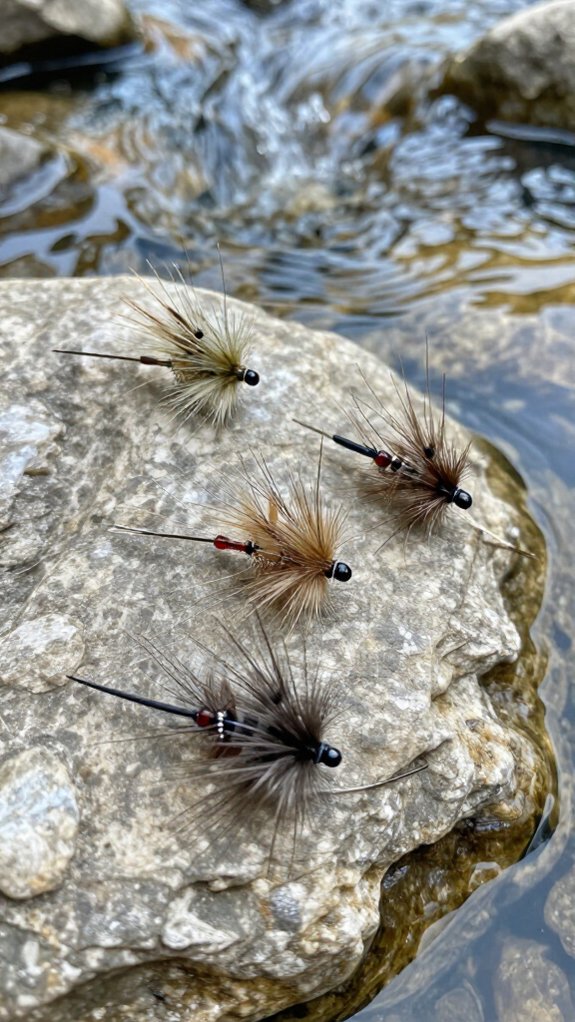
When I’m standing knee-deep in a river and bugs start dancing above the surface, I know I’ve got about thirty seconds to figure out what’s hatching before the feeding frenzy ends, so let’s break down how to tell a mayfly from a caddisfly from a stonefly without fumbling through your fly box.
Mayflies look like tiny sailboats with upright wings, and I spot them most often in shallow riffles during hatch season.
Caddisflies keep their wings flat against their bodies like little tents, and they’re year-round hatches I encounter everywhere.
Stoneflies show up early spring when water hits 55°F—these bruisers have two tails and flat wings, and they’re noticeably larger.
I match the shape first, then the size.
Small sailboat? Mayfly.
Flat-winged tent? Caddis.
Big double-tailed bug? Stonefly.
Pick Trout Flies: Dry, Nymph, or Streamer
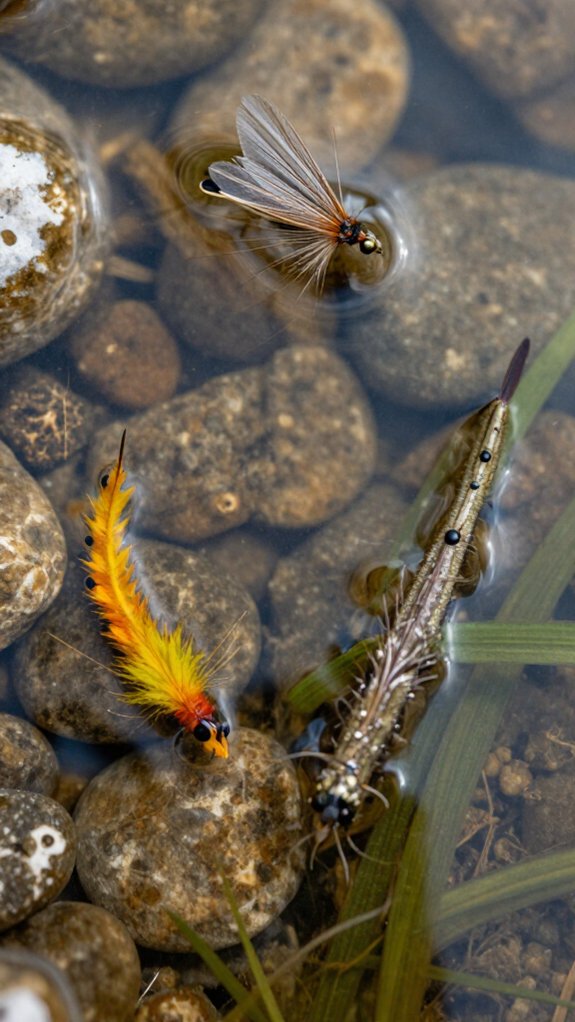
Once I’ve figured out what’s hatching, I’ve got to decide whether I’m tossing a dry fly, drifting a nymph, or stripping a streamer, and that choice hinges on where the trout are actually feeding, not just what bug is in the air.
Read the Water First
I scan for rises. If I’m seeing noses break the surface during a mayfly, caddis, or stonefly hatch, I’m reaching for a dry fly. There’s nothing like watching a trout sip my offering off the top.
Go Subsurface When Needed
When the surface stays quiet or the water runs deep and slow, I switch to nymphs. Trout do most of their feeding below, and I’ll drift through those holding zones where bugs tumble naturally.
Trigger Aggression
In low light or when I’m hunting bigger fish, I strip streamers through open water. That predatory chase, feeling the tug, never gets old.
Choose Drab or Flashy for Visibility Conditions
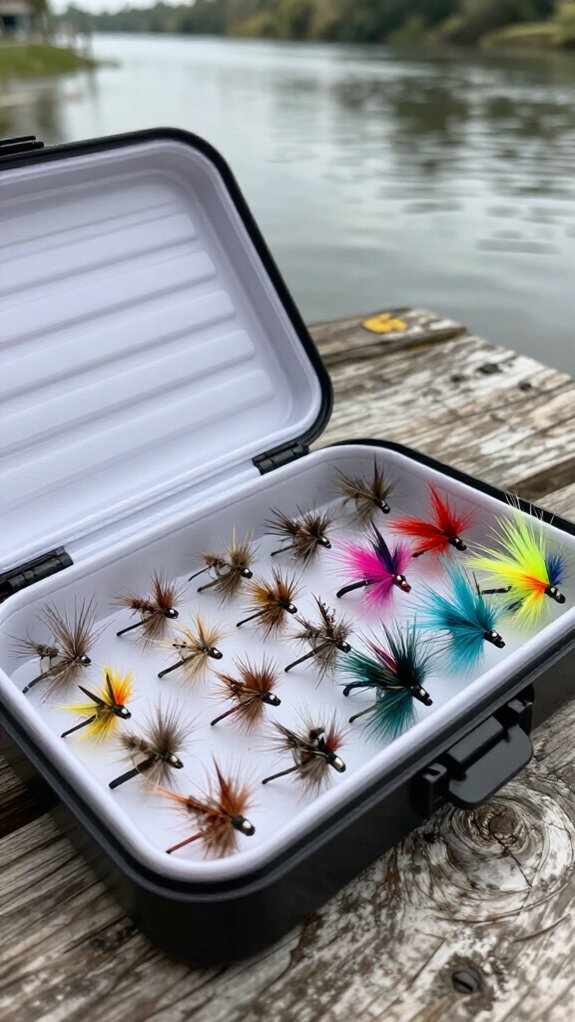
How do I know whether to tie on something subtle or something that screams for attention? I read the water clarity and let that guide me.
Match Your Fly to What Fish Can See
In gin-clear streams, I reach for drab, natural patterns, olive, brown, tan, that mirror real insects. Bright flash spooks wary trout here. But when rain muddies the water, I switch to beads, flashabou, and hot pink or chartreuse. Those fish can’t see subtle; they need a signal.
Here’s how I break it down:
| Water Condition | Fly Choice |
|---|---|
| Crystal clear | Drab, natural colors |
| Slightly stained | Subtle with small flash accent |
| Moderately stained | Balanced natural/flashy mix |
| Heavily stained | Bright beads, maximum flash |
| Muddy | Loud colors, heavy flash |
I adjust throughout the day as conditions shift. That flexibility puts more fish in my net.
Build a 12-Pattern Confidence Box
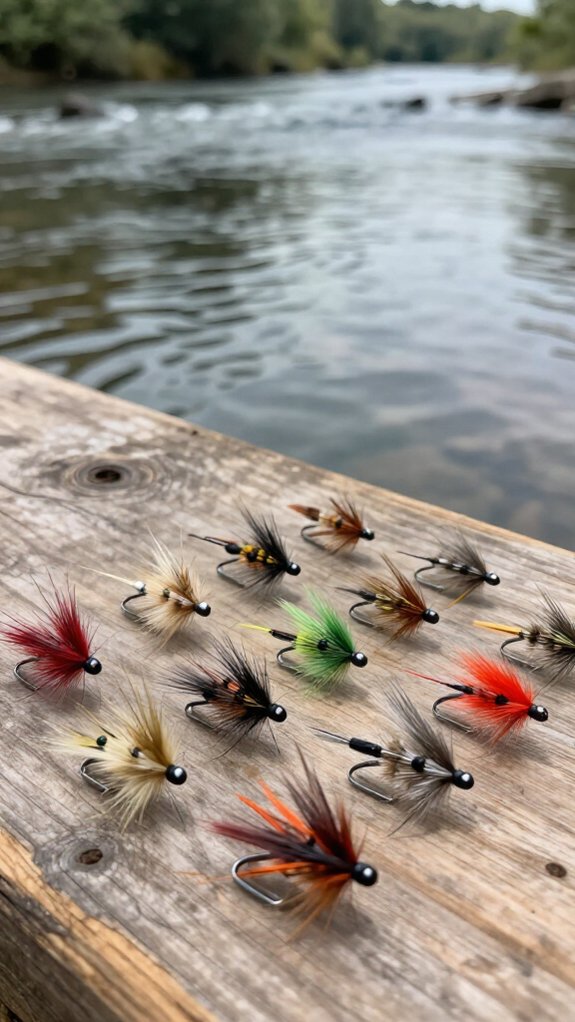
Because I’ve wasted too many mornings digging through a bloated fly box while the hatch of the year fades, I now keep a slim 12-pattern confidence box that covers every situation I’ll actually face on the water.
I select four categories that work everywhere:
- Dry flies and emergers for rising fish during hatches
- Nymphs in two weights to reach different depths quickly
- Streamers in contrasting colors for aggressive or stained-water fish
- Attractor patterns that trigger strikes when nothing’s hatching
Within each pattern, I carry two sizes and two shades, olive and tan, or black and white, to match natural variability without overthinking.
I invest in premium hooks and tough materials because losing a fish to a straightened hook ruins my day.
Every season, I swap patterns based on what’s actually working, not what’s pretty.
Frequently Asked Questions
How to Decide What Fly to Use?
I match the hatch by watching what’s on the water, then adjust for clarity, smaller flies in clear water, bulkier ones when it’s stained. I’ll go heavy in fast currents, light in slow, and switch to attractors when nothing’s hatching.
What Is the Holy Grail of Fly Fishing?
I believe the holy grail of fly fishing is finding one versatile pattern that consistently catches fish everywhere, though I know it’s really about balancing confidence flies with adaptability to ever-changing conditions.
Should I Get a 4 or 5 Weight Fly Rod?
I’d say go with a 5-weight; it hits the sweet spot for versatility. I can tackle small streams and larger waters alike, cast heavier flies when needed, and won’t feel undergunned when the wind picks up.
When to Use Dry Flies Vs Wet Flies?
I use dry flies when fish rise to surface insects during hatches, especially in calm, clear water. I switch to wet flies or nymphs when they’re feeding below the surface, particularly in faster or stained conditions.
In Conclusion
Choosing the right fly for changing water conditions isn’t luck, it’s a skill you can master. Like Odysseus reading the winds to guide his vessel home, you’ll learn to read every ripple and stain.
Start with these five steps, build your confidence box, and trust what the river tells you. The fish are there; now you’ve got the key to find them.