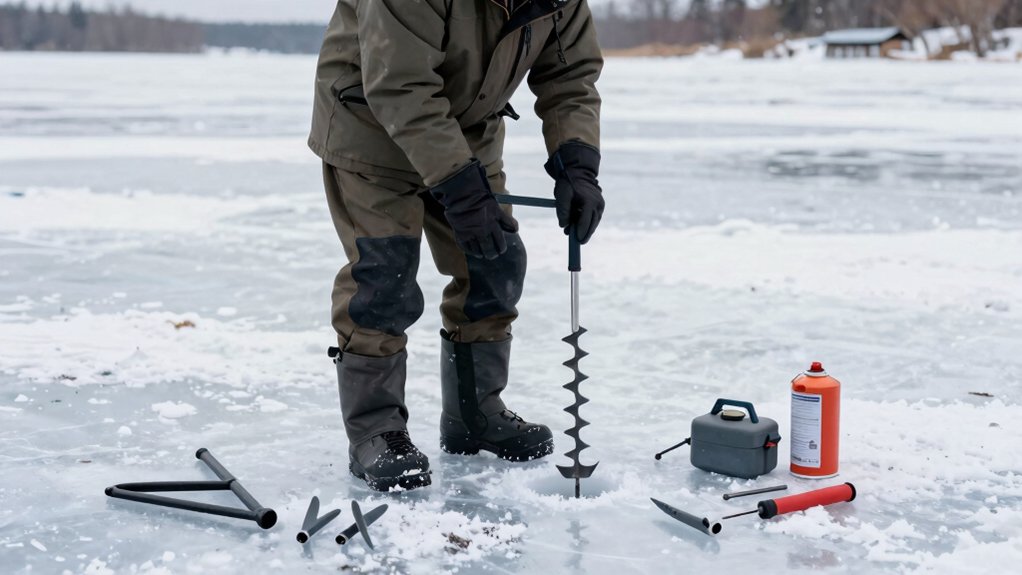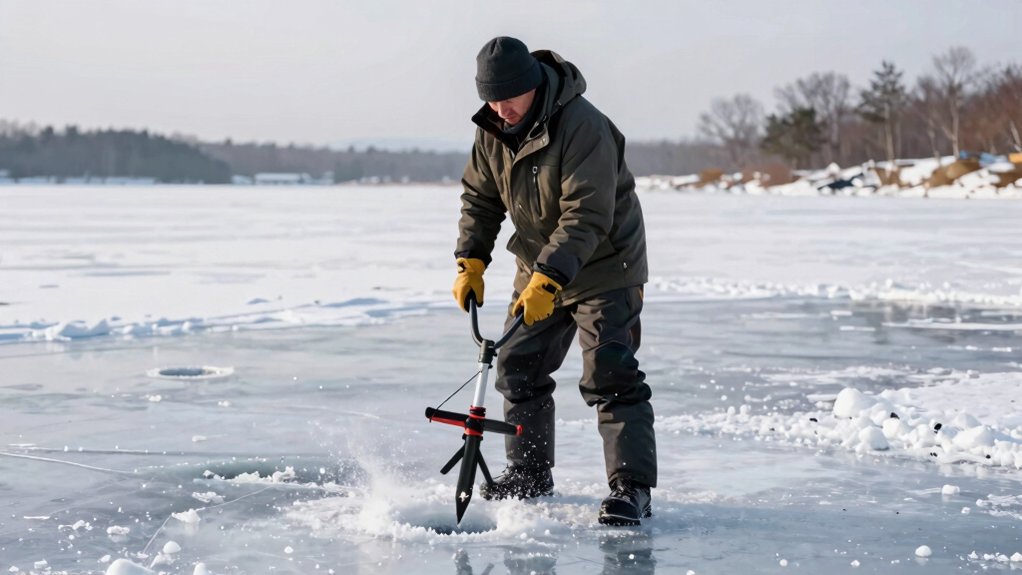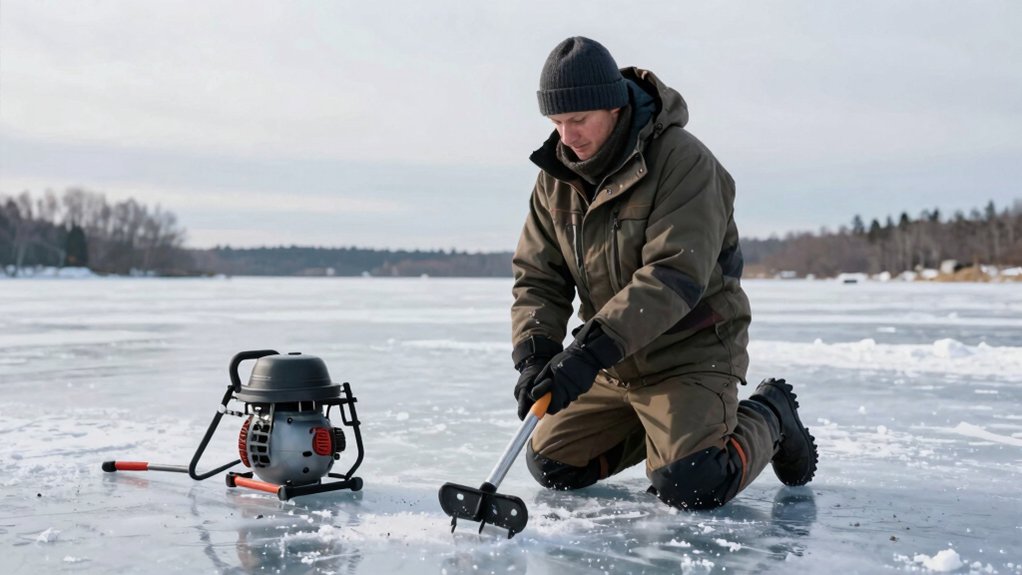
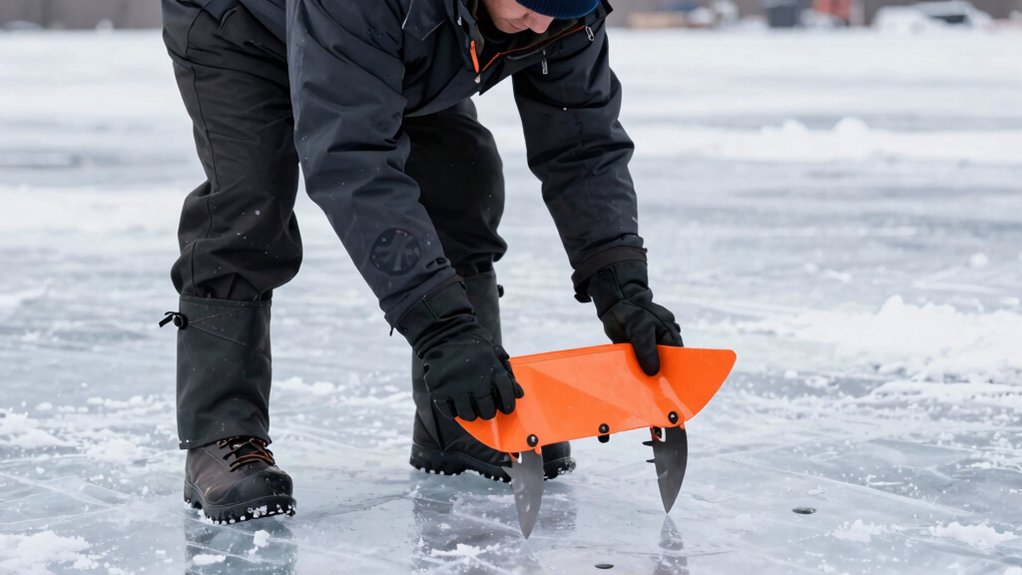

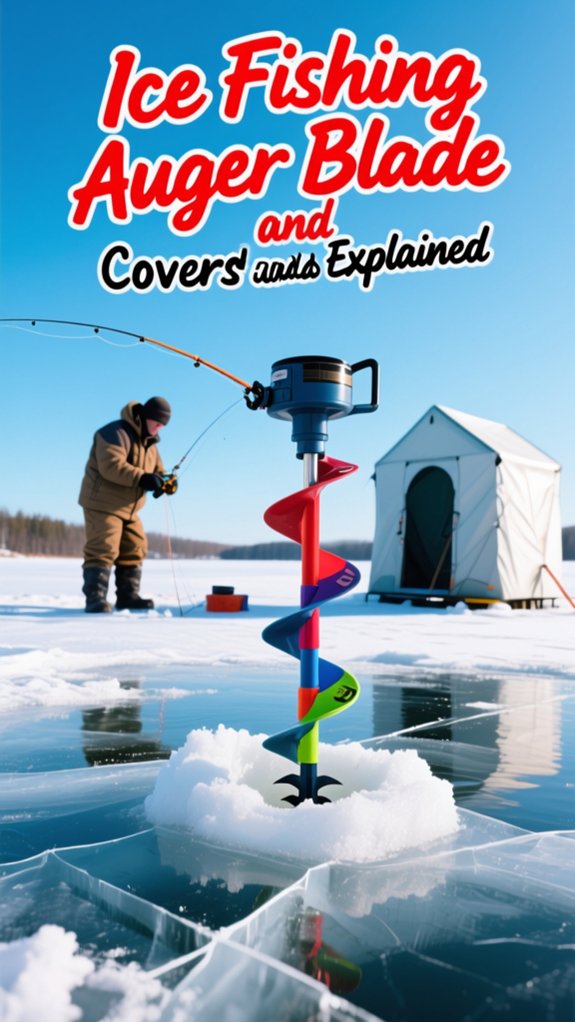
Ice fishing auger blade covers and guards shield razor-sharp edges from dulling, rust, and moisture while keeping your hands safe in freezing conditions. I’ve found the right cover preserves factory honing so you drill with less torque, absorbs impacts from bumpy sled rides, and prevents corrosion that ruins blades before mid-season.
You’ll choose from rubber bungees (budget-friendly but brittle), durable Cold Snap guards that resist ice buildup, or magnetic options for quick, fumble-free removal. Cold weather destroys cheap materials, rubber stiffens and cracks below freezing, straps snap off, and trapped moisture expands into damaging ice.
Match your cover precisely to blade size (6″, 7″, or 8″) and auger type, since universal fits often need tweaking. If you’re handy, DIY fixes like magnets glued inside covers or bleach jug guards reinforced with duct tape work surprisingly well.
Reputable brands like Cold Snap and Eskimo cost more upfront but outlast budget picks through brutal winters. There’s more to keeping your edges tournament-sharp through March than picking the right cover alone.
What Blade Covers Actually Protect: Sharp Edges, Gear, and Your Hands
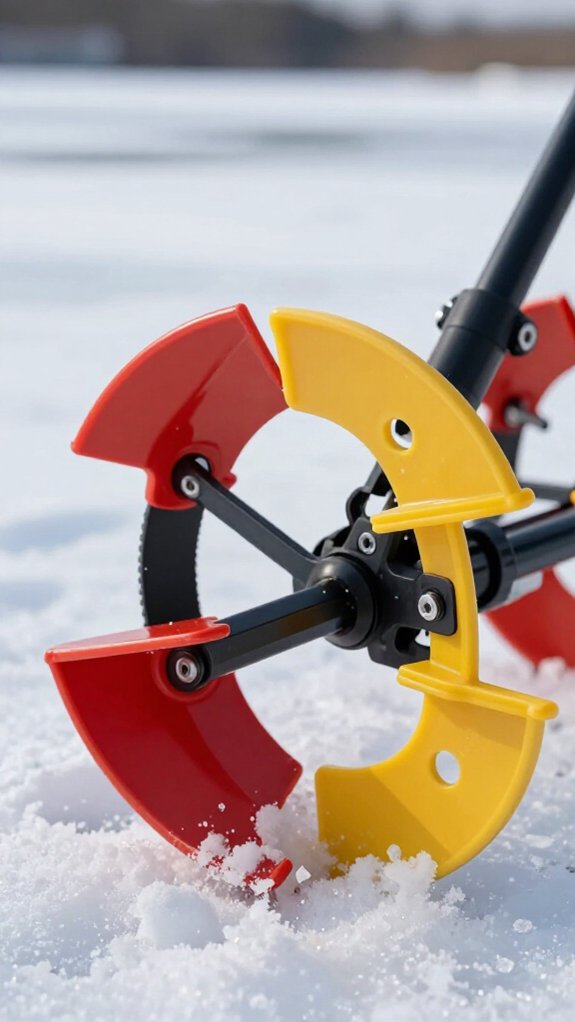
Although blade covers might seem like a simple afterthought, they’re actually your first line of defense against three things that can ruin a day on the ice: nasty cuts, damaged gear, and dulled blades that turn drilling into a chore.
Your Hands Take Priority
I’ve learned the hard way that a good blade guard isn’t optional, it’s essential. Those razor-sharp edges slice through ice like butter, but they’ll open your thumb just as easily when you’re wrestling gear in freezing temps. A proper cover keeps your digits intact.
Protecting Your Investment
Sharp blades cost serious money. I’ve seen buddies ruin $80 blades by tossing them loose in a sled. Covers absorb impacts during bumpy snowmachine rides and block moisture that causes rust.
Keeping That Factory Edge
Dull blades mean slower drilling, more sweat, and spooked fish. Covers preserve sharpness between trips so you’re cutting clean holes, not working overtime.
Blade Cover Types: From Rubber Bungees to Magnetic Cold Snap Guards
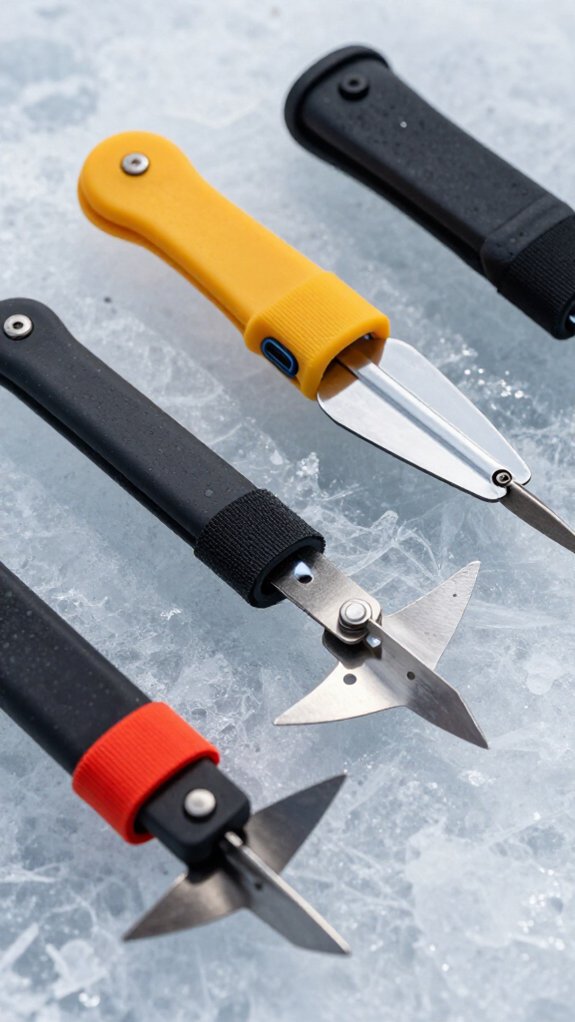
Not all blade covers are built equal, and I’ve learned that the hard way after watching a cheap bungee snap in twenty-below weather and send my blades skating across the ice.
Rubber Bungees: Budget-Friendly but Brittle
Rubber bungee covers prevail in the market because they’re cheap and everywhere.
I’ve watched them turn into useless rubber bands after a season or two, cracking when you need them most.
They’ll guard your Ice Augers in a pinch, but they’re hardly a reliable blade protector.
Stepping Up Your Game
Cold Snap guards changed how I fish.
Their durable design shrugs off brutal cold and fights ice buildup during long days.
I’ve drilled fifty holes and never fought frozen guards.
Magnetic Convenience
Magnetic guards snap onto existing covers for lightning-fast removal.
No fumbling with frozen straps when the walleye are biting.
Material Matters
I’ve seen Nils covers shatter like pottery.
Choose wisely, your fingers and gear depend on it.
Why Covers Fail in Subzero Temps (Know This Before You Buy)
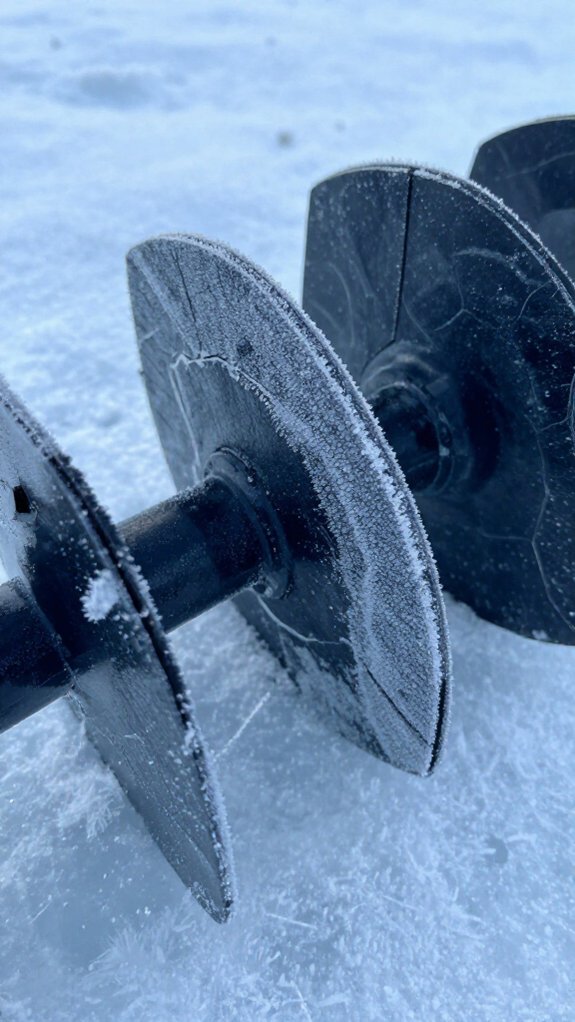
I’ve watched too many rubber blade covers turn into useless chunks of plastic the moment temps drop below zero, and it all starts with the materials themselves. When rubber and elastic hit subzero air, they stiffen up fast, losing that stretchy grip you need.
And I’ve seen straps snap clean off just from trying to pull them over sharp blades.
Toss in the moisture that’s everywhere out there, and you’ve got covers freezing solid to the metal, which means you’re either wrestling with ice or ripping the guard apart just to get fishing.
Material Vulnerability in Cold
Why do so many blade covers seem to fall apart just when you need them most? I’ve watched rubber guards turn into brittle shells the moment real cold hits. That flexible blade cover you trusted in October? It cracks like old plastic in January.
The Cold Truth About Materials
Rubber and elastic compounds stiffen and fracture below freezing. I’ve pulled covers off my auger only to find the rubber straps snapped clean through. The blade ends up exposed, and I’m fishing bare metal against my gear.
Plastics suffer too. Standard polymers aren’t built for low-temperature impact. Drop your auger on hard ice, and that cover might shatter instead of bounce.
Ice buildup compounds everything. Moisture creeps inside, freezes, expands, and stresses seams until they split. Internal adhesives weaken. What felt rugged at home becomes fragile in the field.
Elasticity Loss Problems
The real killer isn’t just what cold does to the cover itself, it’s what happens to the straps holding everything together.
Why Your Straps Give Out
I’ve watched rubber straps on my ice auger blade cover turn into rigid plastic sticks below 0°F. That satisfying stretch you need for a snug fit? Gone. The material shrinks, stiffens, and eventually cracks right through.
Hand augers suffer worst. You’re removing and reattaching covers constantly, and each cold cycle degrades the elastic faster. I learned this the hard way when a strap snapped on Lake Winnebago, leaving my blades exposed.
Subzero temps accelerate rubber deterioration dramatically. What lasts seasons in moderate weather fails within weeks of hardwater fishing. Plan on replacements, or upgrade to silicone or hook-loop alternatives before your next trip.
Moisture Accumulation Risks
Because I’ve pulled off a blade cover only to find my auger edges flecked with orange rust, I now treat moisture accumulation as the silent destroyer of otherwise solid gear.
When I’m out Ice Fishing Auger work in subzero temps, melted ice water sneaks into covers and stays put, even models with drainage holes fail if channels clog or can’t keep up.
Why Your Cover Can’t Win
Cold hardens rubber and plastic until they crack like old peanut brittle. Those tiny fractures become highways for moisture ingress.
Worse, trapped water freezes, expands, and warps the guard itself.
I’ve watched covers deform after just a few freeze-thaw cycles, turning protective shells into moisture traps.
What Actually Works
I check drainage paths before every trip and dry my Ice Fishing Auger blade completely before covering.
Skipping this invites corrosion that dulls cutting edges and shortens cover life.
Pick the Right Fit: Sizing for 6″, 7″, 8″ and Hand Vs Power Augers
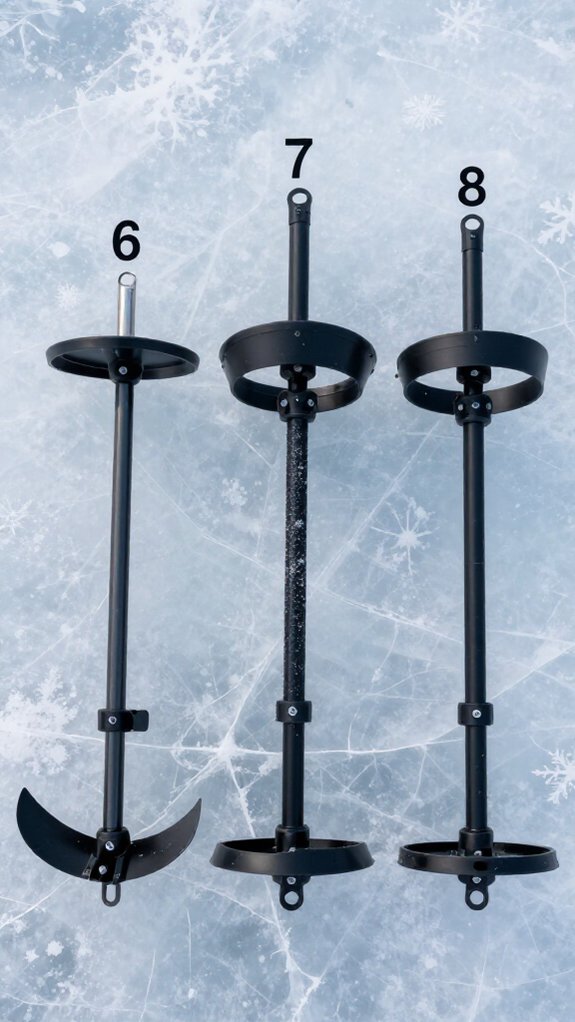
When I’m picking out a blade cover for my ice auger, I always start with the exact measurement, because a cover that’s even an inch off can leave sharp edges exposed or fit so loose it slips off in the truck bed.
Blade covers come in 6-inch, 7-inch, and 8-inch sizes, with each designed specifically for its matching diameter.
Hand auger blade covers are typically smaller and simpler, while power auger covers usually include extra straps or elastic to handle heavier motorized blades without shifting.
Correct sizing matters: It prevents blade exposure during storage, reduces injury risk, and protects your investment.
Many covers work across brands if the diameter and bolt pattern match, but I never skip verification.
An ill-fitting cover slips, offers incomplete protection, or jams when you need it off quick.
Cheap DIY Fixes That Survive Winter: Magnets, Knots, and Jug Mods
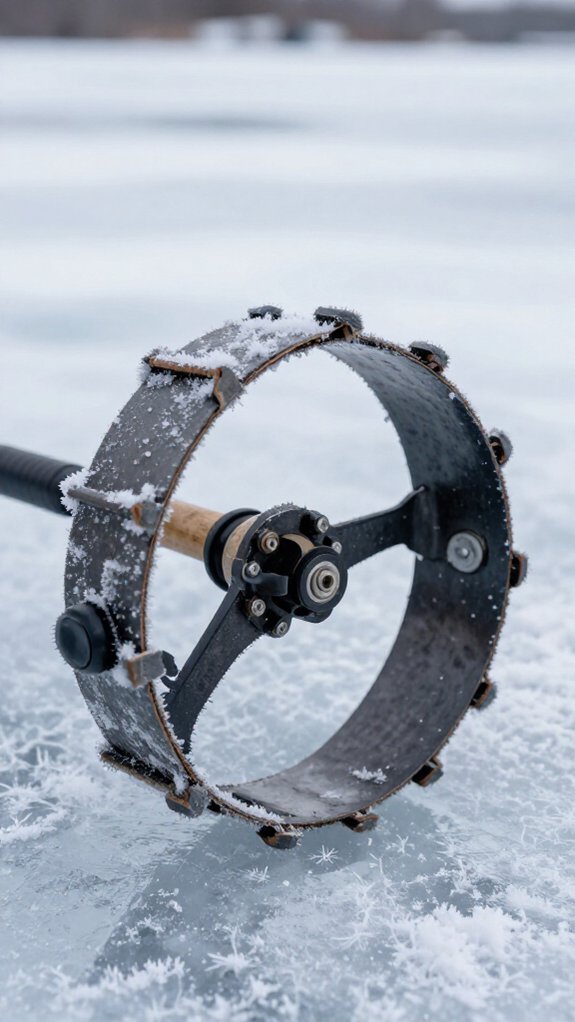
If you’ve ever winced at the price of a factory blade cover, I’ve got good news: some of the toughest winter solutions start in your junk drawer or recycling bin.
Magnets That Stick Through the Cold
I glue small magnets inside my existing covers, and they snap into place even when my hand’s too numb to fumble with straps. No more wrestling Ice Fishing Gear on the ice.
Knots Over Cracked Rubber
Rubber straps shatter at fifteen below. I swap them with paracord knots or bungee tension loops that flex when everything else goes rigid.
Jug Mods That Actually Fit
I slice the bottom off a bleach jug, and I’ve got a hand-formed guard that hugs blades tight. Reinforce the rim with duct tape, and it’ll survive season after season.
Where to Buy: Cold Snap, Eskimo, and Budget Picks Compared
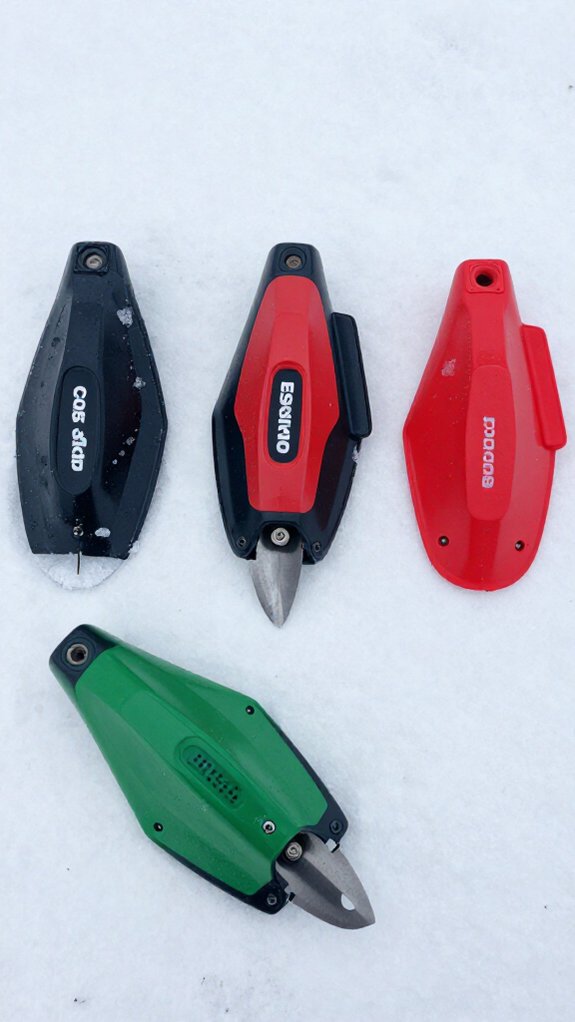
After testing dozens of blade covers across three hardwater seasons, I’ve learned that where you buy matters almost as much as what you buy.
Premium Pick: Cold Snap
I grab Cold Snap blade covers when I want season-after-season reliability. Their durability in brutal cold impresses me, though I’ve noticed the elastic straps loosen after heavy use. Their customer service shines when issues pop up.
OEM Confidence: Eskimo
Eskimo’s Model 43193 runs about $36 and earns consistent 5-star ratings. I appreciate the guaranteed fit on my 8-inch auger, no fumbling with adjustments on the ice.
Budget Route
For temporary ice fishing trips, I’ve used sub-$12 yellow covers and rubber strap guards. They work, but expect to tweak the universal fit.
My Take: Match your blade covers to your commitment level.
Frequently Asked Questions
Which Way Do Auger Blades Go On?
I mount auger blades with cutting edges facing outward and downward, sharp beveled sides pointing toward rotation. I check for markings, align edges to bite ice, and avoid reversing them since that kills efficiency and damages the blades.
How Often Should I Change My Ice Auger Blades?
I inspect my blades before every trip and replace them after roughly 50-100 holes, though ice conditions and how often I’m out there really determine when they’re dull.
I keep spares handy so I’m never stuck with chipped or uneven-cutting blades.
Can You Dig a Hole in Dirt With an Ice Auger?
I wouldn’t recommend it. Ice augers aren’t built for dirt, they’ll dull quickly, risk breaking, and can’t generate enough torque.
You’ll damage the blades and waste your money on repairs or replacements.
Are Gas Ice Augers Obsolete?
I Don’t think gas ice augers are fully obsolete yet, but they’re rapidly becoming dinosaurs, while electric models surge ahead—lighter, quieter, and drilling more holes per charge than a full gas tank allows.
In Conclusion
A quality blade cover isn’t optional gear, it’s cheap insurance against dull edges, torn shelters, and emergency room visits. I Know you’re thinking another accessory just means more bulk in your sled, but a failed cover mid-season costs way more time and money than a proper guard ever will.
Match your diameter, prioritize cold-flexible materials, and you’ll fish safer and sharper from first ice through spring thaw.