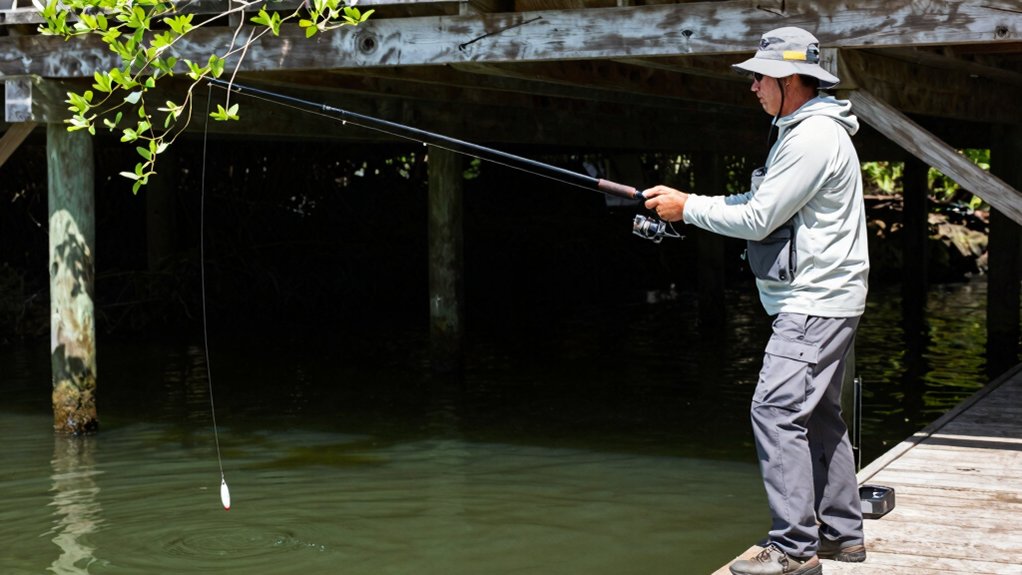

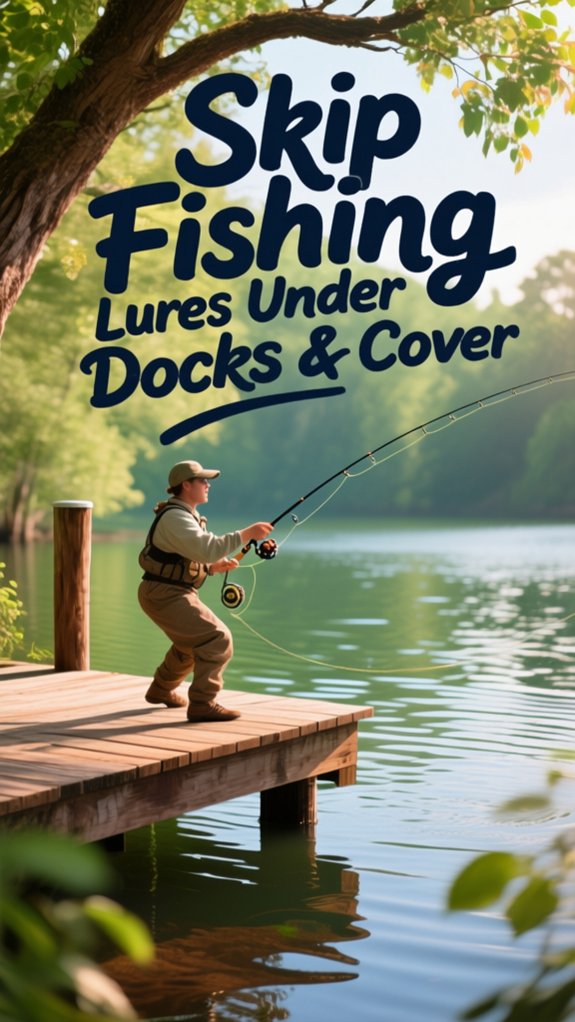
I skip lures under docks by pairing a 6’9″ to 7’2″ medium-heavy rod with a soft tip and a high-speed baitcasting reel, spooling 20 lb fluorocarbon for minimal splash. I keep my rod tip skimming the water’s surface and use a quick, snappy wrist roll, like skipping stones, to send compact 3/8 oz jigs with finesse skirts gliding 6-10 feet under cover.
I Only attempt this when water is calm and slick, since wind kills accuracy. Once the lure lands, I work it with quick, erratic hops rather than slow drags, because most bites come within the first two movements. There’s more to dialing in your setup and timing that’ll put you in the strike zone every cast.
Pick a Rod and Reel Built for Skip Casting
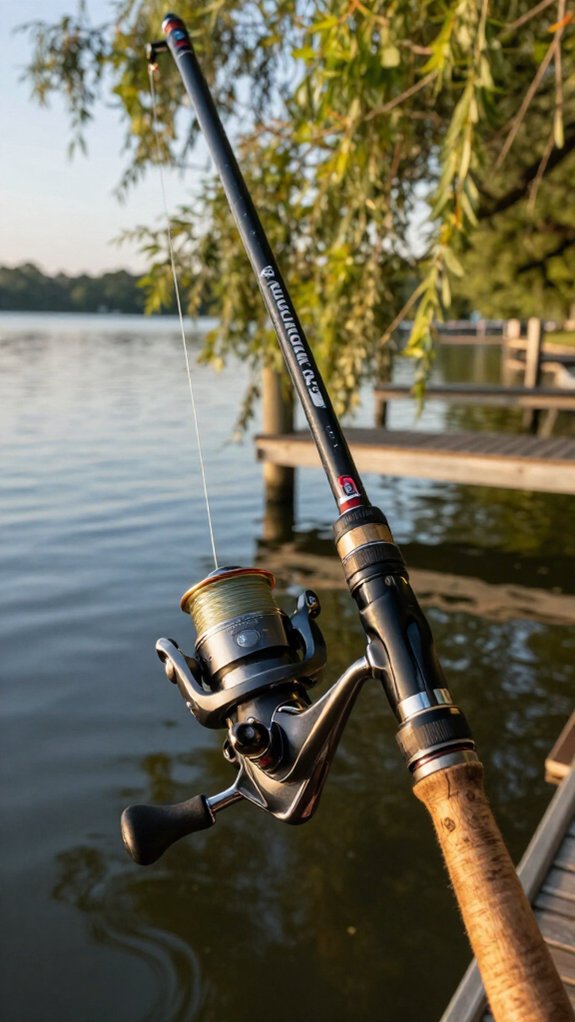
If you want to skip lures like a pro, it all starts with gear that’s actually built for the job, not just whatever rod happens to be leaning in your garage. I learned this the hard way.
Years ago, I’d try to roll cast or sidearm cast with a stiff rod, watching my lure plop instead of slide across the water. Frustrating.
What You Actually Need
For bass fishing, I grab a 6’9″ to 7’2″ medium-heavy rod. The softer rod tip loads fast, giving me the whip I need for skip casts that kiss the water’s surface.
Pair it with a high-speed baitcasting reel, 8.3:1 gear ratio, and a shallow spool with adjustable braking. Make sure the drag’s smooth too.
I run 20 lb fluorocarbon for distance and control.
Want deeper dives? See more articles from Shane in the Bio.
Choose the Right Line and Lure for Silent Dock Entries
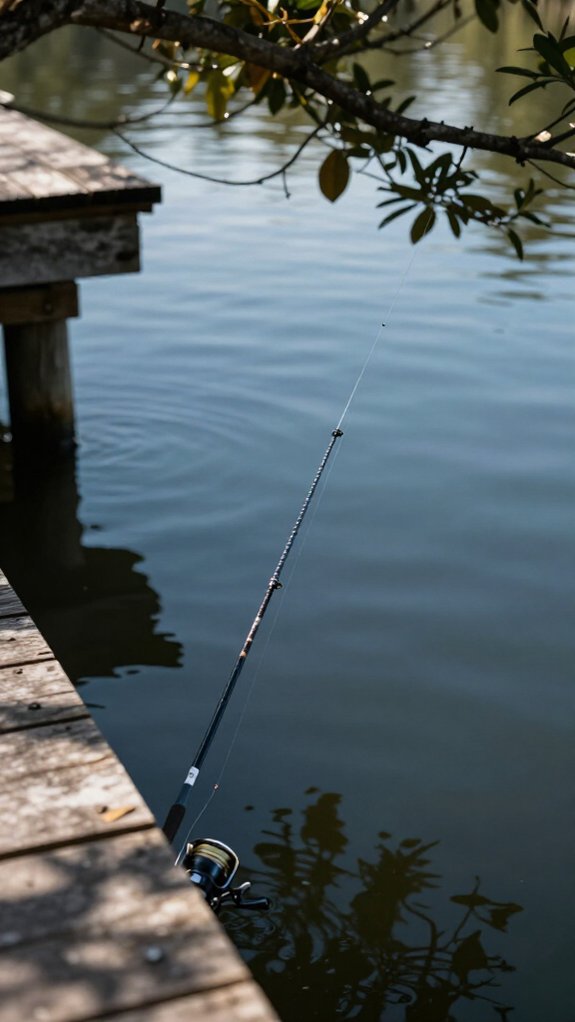
Once you’ve got a rod that loads right, your line and lure choices make or break whether you actually slide under that dock without spooking every bass in the shade.
Line Selection
I spool up with 20 lb fluorocarbon, specifically Vicious fluorocarbon, because its low stretch properties give me direct feedback when a bass inhales my jig deep under a pontoon. The minimal splash on entry is critical. I’ve watched fish scatter from braid’s “splat” while fluoro kisses the surface like a stone skipping on calm water.
Lure Profile
My go-to is a 3/8 oz jig with a finesse skirt and Twin Tail Trailer. The compact profile skips effortlessly across the Bio-slick film that coats still summer water. I avoid bulky baits that grab surface tension and belly-flop instead of glide.
Reel Tuning
I keep my baitcaster’s spool tension loose, letting the lure release smoothly without backlash drama.
Master the Skip Casting Sidearm Roll Motion
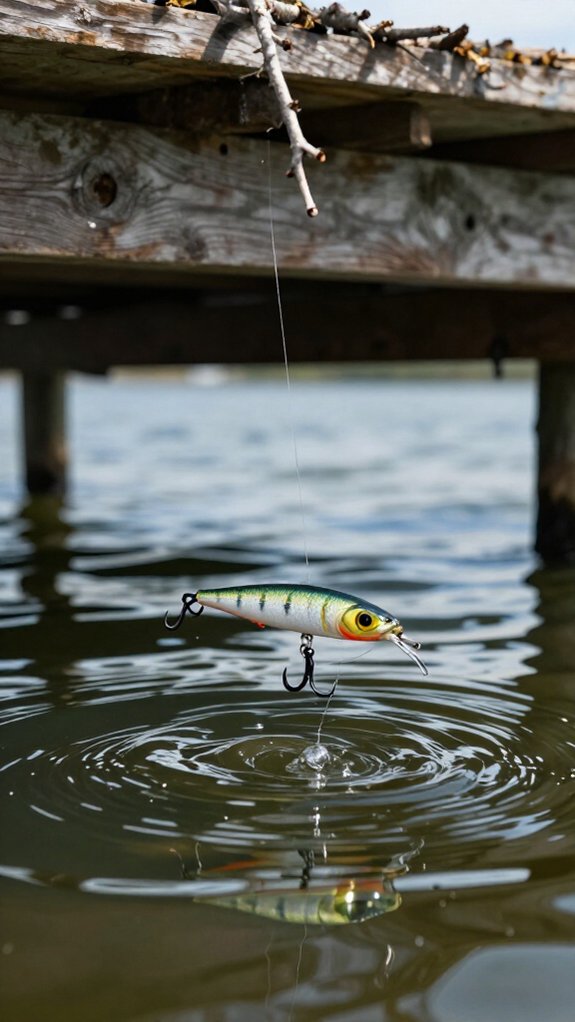
Although you’ve got the right gear dialed in, none of it matters if your cast sends the lure belly-flopping into the drink like a startled duck. I’ve been there, watching my bait sink while the fish scatter. Here’s how I fixed it.
Start Low and Tight
I keep my rod tip skimming just above the water, almost touching. This low starting position sets up everything that follows. No high-arching baseball throws here.
The Wrist Roll Is Everything
I generate speed with a quick, snappy wrist roll, not my whole arm. Think skipping stones as a kid. That same flat, parallel-to-water momentum carries my lure. I keep the rod tip pointed down, extending smoothly toward my target like I’m pointing where I want it to go.
Practice Until It’s Fluid
I drilled this motion in my backyard first. Shallow attack angles on both back and forward casts. Now my skips dance 15, 20 feet under docks. Repetition built the muscle memory. Now it’s automatic.
Keep Your Skip Cast Trajectory Low and Parallel
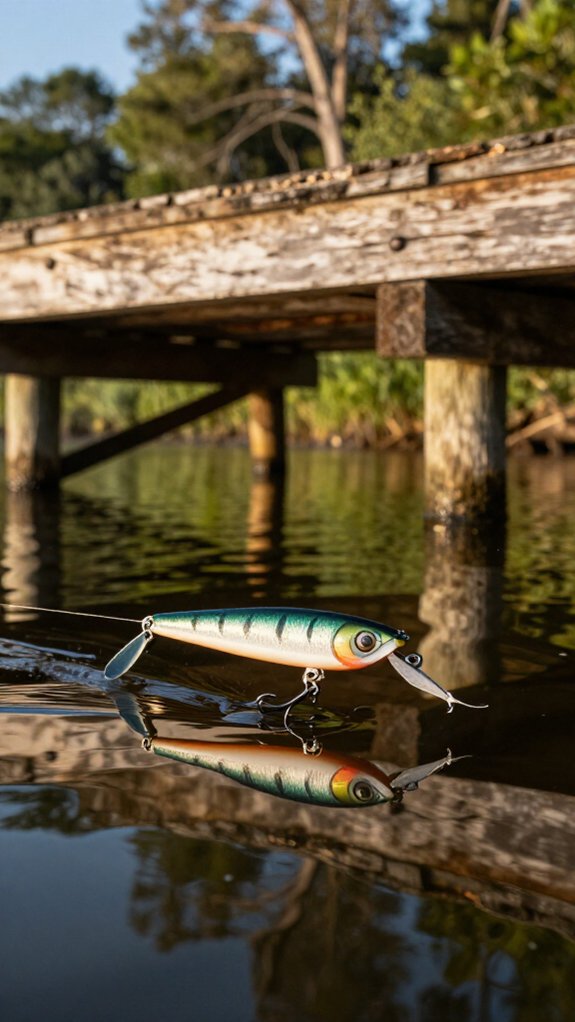
Even with the perfect sidearm roll, your lure won’t skip worth a dime if it launches skyward like a bottle rocket. I’ve learned that keeping a shallow attack angle is everything: think skipping stones across a pond, not lobbing a grenade.
Point Your Rod Tip Low
I extend my rod tip toward the target, keeping it just inches above the water’s surface. This aiming point forces the lure to meet the water almost parallel, letting it skim rather than splash. Too high, and it plows under; too low, and you smack the surface.
Master the Release
I use a quick wrist flick with controlled power, then keep a touch of slack in my line during flight. That slack lets the lure glide flat without rising or diving. My release stays gentle and consistent, no jerky motions that bounce the bait upward.
Set Spool Tension for Clean, Backlash-Free Skips
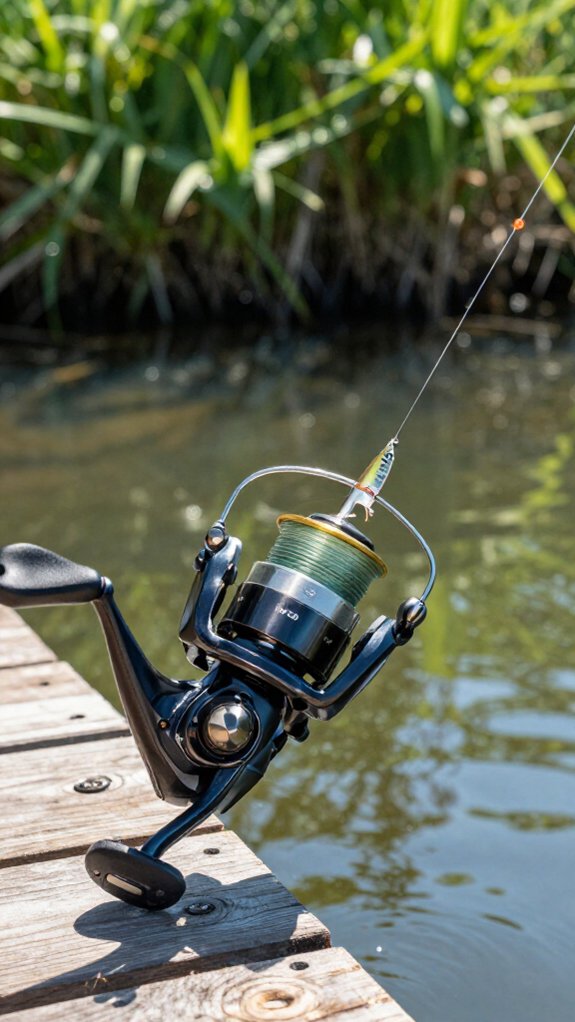
If my rod angle and release are dialed in but I’m still fighting bird’s nests every third skip, I know my spool tension is the culprit.
Dial In Your Tension
I set my spool tension so the lure slowly drops when I press the line with my finger, usually just a few clicks past free spool. This sweet spot lets the lure release smoothly without sudden stops that kill momentum.
Test Before You Skip
I always make a test cast onto the water and watch how it lands. Too much slack or a hard splash means I’m adjusting. The goal? A soft, controlled landing with minimal backlash.
Stay Flexible
I recheck tension after swapping lures, changing line, or when humidity shifts. Too tight hinders release; too loose creates sloppy, uncontrolled skips. Fine-tuning takes seconds but saves me ten minutes of picking out nests.
Land Your First Cast Beside Dock Poles and Shadow Lines
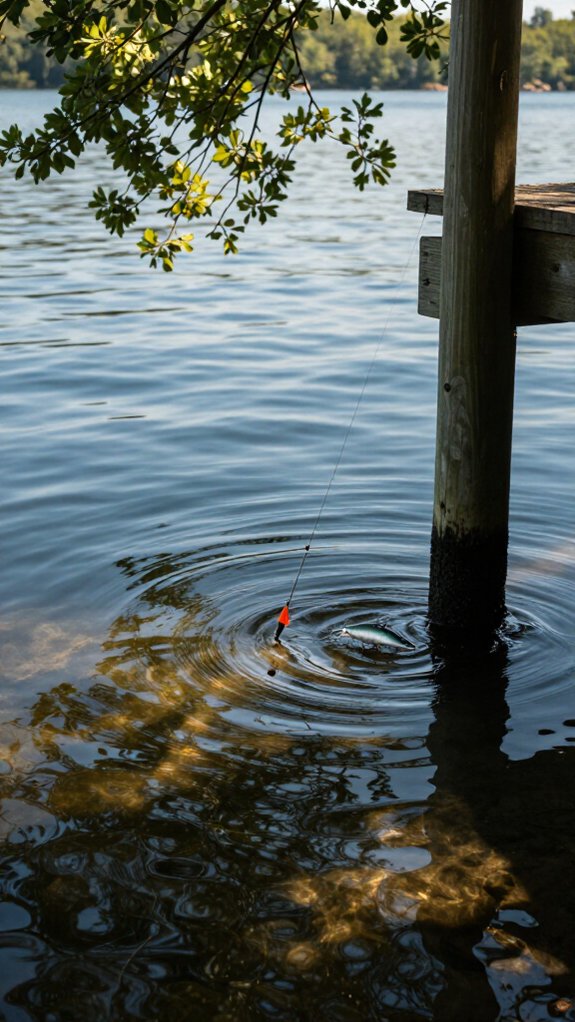
I land my lure within 3-5 feet of dock poles and shadow lines because that’s where bass stack up when the sun’s beating down. I’ll use a low, sidearm roll cast to skip the bait quietly under the overhang, keeping my line slack so it glides smooth without that telltale splash that sends fish scattering.
Once I’ve got the trajectory dialed in, shallow and steady, I’m placing that bait right where the shadows meet the structure, and that’s when the magic happens.
Target Focus Precision
When I’m threading a lure through tight, shady cover, everything slows down and my eyes lock onto one specific point, whether it’s a weathered dock pole barely breaking the surface or that crisp shadow line where sunlight gives way to cool darkness underneath a pontoon boat.
I keep my casts short and controlled, landing within 3-5 feet of my mark. Before releasing, I visualize the skip path, seeing that lure glide silently to the zone.
Subtle wrist movements and a shallow side-arm roll cast place the bait precisely where it needs to be.
I maintain steady line tension and never break eye contact with my target during the cast. That fixed focus transforms decent placement into pinpoint precision, putting my lure exactly where ambush predators wait.
Stealth Entry Technique
Because fish spook at the slightest disturbance, landing that first cast silently beside dock poles or shadow lines becomes the difference between a strike and an empty retrieve. I’ll show you exactly how I do it.
The Roll Cast Setup
I use a low, side-arm roll cast, think skipping a stone across a pond. My rod stays parallel to the water, creating that shallow attack angle that lets the lure skim instead of splash.
Slack Line Secrets
Here’s what most anglers miss: I keep slack in my line during delivery. That slack absorbs energy and kills the “plop” that sends fish scattering. The lure just melts into the surface.
Dialing In Distance
I’m aiming for 3-5 feet from those shadow lines or dock supports, close enough to tempt, far enough to avoid spooking. I practice slow, controlled skips until I can place it blindfolded.
Shadow Line Positioning
Once I’ve gotten my lure skipping silently across the surface, I’m immediately hunting for those dark edges where light meets shadow, because that’s where the ambush happens. I use a low, side-arm roll cast with a shallow trajectory to drop my bait right beside dock poles and shadow lines.
Gentle, controlled wrist snaps keep the skip quiet and precise, letting me thread the needle into tight cover without spooking fish.
Here’s how I dial in my placement:
- Lead with trajectory – I keep my rod tip low and parallel to the water for a flat, skimming entry.
- Snap, don’t whip – Short, crisp wrist movements control distance and noise.
- Ride the edge – I work the lure along shadow boundaries where predators lurk, keeping it in the strike zone longer.
Adjust Your Cast Angle to Control Skip Distance
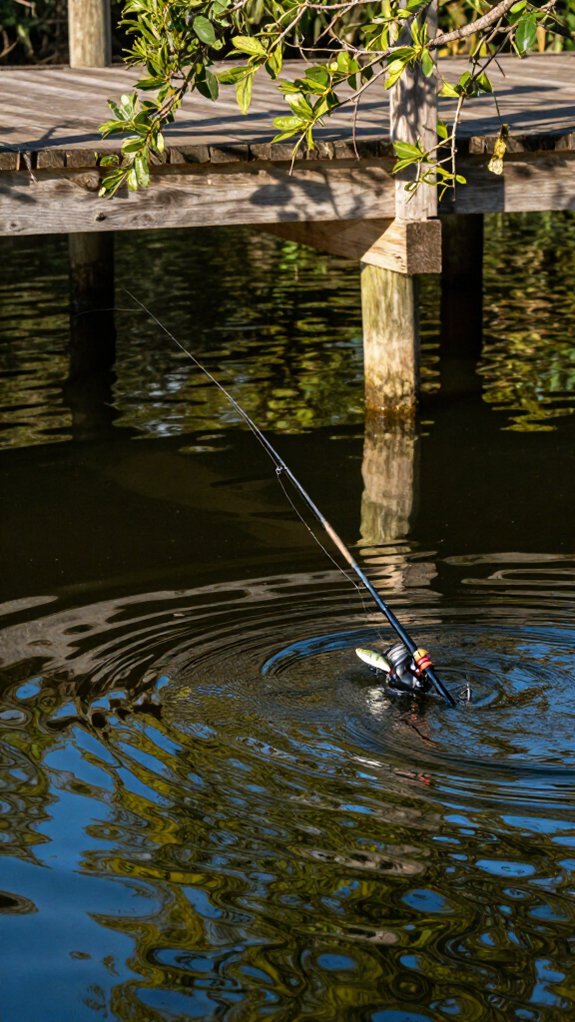
I control how far my lure skips by keeping my cast angle low and flat, usually between 10 and 20 degrees above the water. Any steeper and I’m practically asking for a backlash or a hard smack against the dock I’m trying to sneak under.
Use Sidearm and Roll Casts
I rely on sidearm or roll casts to create that shallow attack angle. The rod tip stays low and parallel to the water, sending the lure on a flatter trajectory that kisses the surface and keeps bouncing. It’s like skipping a stone, flat and fast wins every time.
Practice Makes Precise
I fine-tune my angle on open water before targeting real cover. Muscle memory builds quick, and soon I’m slipping lures six, eight, even ten feet back where the big fish hide.
Consistency transforms lucky skips into reliable weapons.
Skip Cast Only When Water Is Calm and Slick
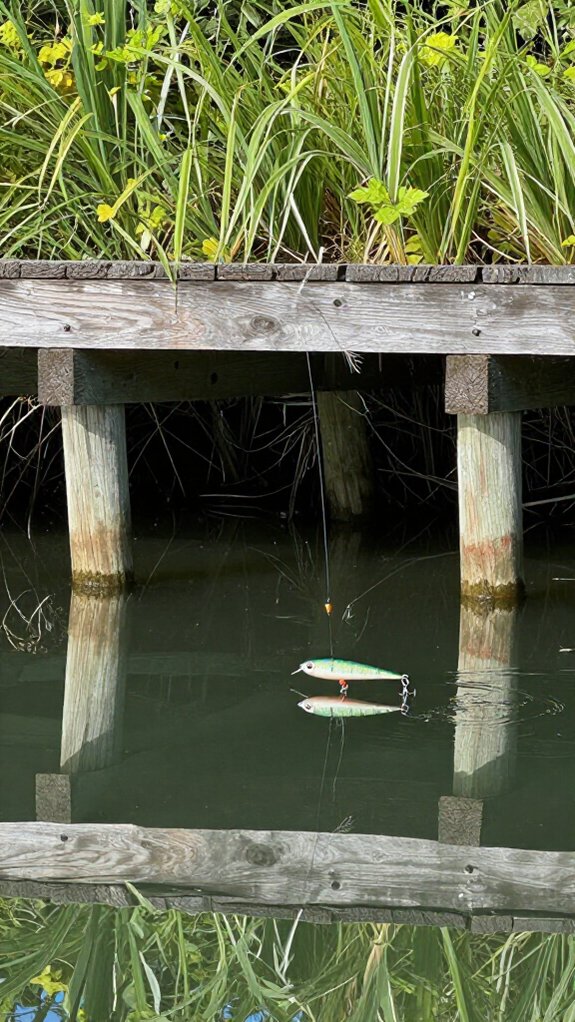
I only skip lures when the water’s calm and slick because that’s when I get the smoothest glides and longest distances underneath docks.
Wind and chop ruin everything, they make my lure bounce wild or dig in too early, killing the whole presentation.
On those glassy mornings, I’ll dial my spool tension light and throw a low sidearm cast, and I can practically count the skips as the bait dances back under cover.
Water Surface Conditions
Although I’ll skip a lure in almost any condition when the fish are biting, I’ve learned that calm, slick water is where this technique truly shines. Mirror-like surfaces let my bait glide effortlessly across the water, extending my reach deep under docks where bass hide.
When I analyze why surface conditions matter so much, three factors stand out:
- Glide efficiency – Smooth water eliminates resistance, letting my lure maintain momentum for maximum skip distance
- Trajectory control – Without chop, I can predict exactly where my bait will land and slide
- Bite detection – Calm surfaces transmit subtle strikes better, helping me feel that light pickup before the fish spits the lure
Rough water turns skipping into guesswork. I’ll wait for that slick morning calm or evening glass when the water’s flat enough to skip a stone, and my lure, right where I want it.
Wind Impact Factors
Why fight the wind when you can simply wait it out? I’ve learned that skipping lures demands slick, glassy water—anything less and you’re wasting casts.
How Wind Ruins Your Skip
Choppy water kills the skip. When ripples break the surface, your lure digs in instead of dancing across. Even a light breeze sends it bouncing unpredictably, turning precision placement into pure luck. You need that smooth trajectory for consistent results.
Timing Your Window
I target early mornings and late evenings when wind typically dies down. These calm periods let me push baits 30-40 feet under docks with real accuracy.
The difference is night and day, controlled skips versus splash-and-pray attempts.
Skip casting works when conditions cooperate. Watch the water, feel the air, and strike when it’s slick.
Skip Distance Control
Glassy water opens up your full range, and I’m talking 30 to 40 feet of controlled skip distance once that surface goes mirror-smooth. I never waste my skip casts when chop’s kicking up, waves murder your momentum and send your lure diving nose-first.
Why Calm Conditions Win
- Zero surface resistance lets your bait glide like a flat stone, not a skipping rock that sinks.
- Predictable trajectory means I can thread needles between dock posts without guessing where my lure’ll bounce.
- Gentle, controlled casts stay consistent—I dial back my power and let technique, not force, carry the distance.
Research from the American Sportfishing Association shows 67% of anglers report significantly higher skip accuracy on slick water days. I watch the surface like a hawk and wait for that glass. When it arrives, I make every cast count.
Trigger Bites With Quick Hops Instead of Slow Drags
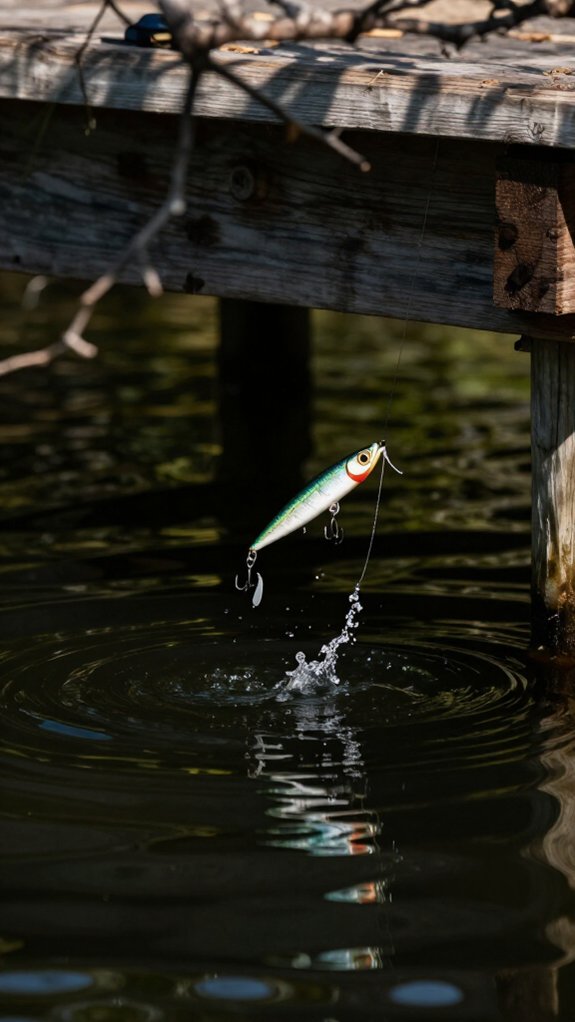
When I’m working a lure under docks, I’ve learned that speed kills, in the best way possible. Fish holding in shadowy cover don’t want a leisurely meal; They want prey that’s panicked and vulnerable.
Why Quick Hops Work
Rapid, erratic movements trigger instinctive strikes. I pop my rod tip upward or sideways, short, sharp hops that make my lure dart like a fleeing baitfish. Most bites come within those first two quick movements, so I never waste time with slow drags.
The Cost of Going Slow
Dragging steadily lets fish get too good a look. They either lose interest or spook entirely. I’ve watched fish turn away from lazy presentations that would’ve hammered a twitching, injured-looking target.
Stay aggressive. Quick hops convert curiosity into commitment.
Practice Skip Casts on Land Before Fishing Docks
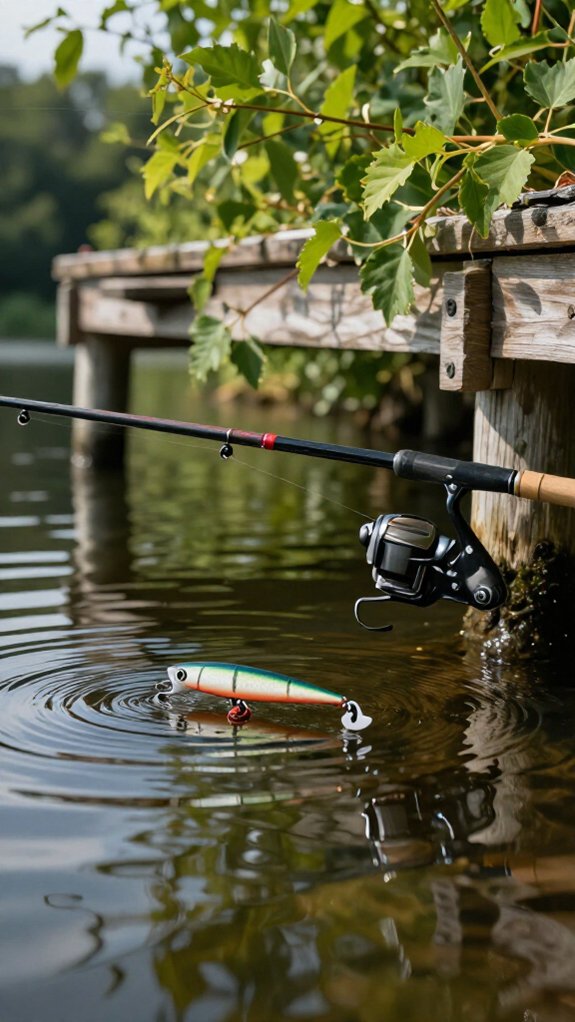
Before I take my quick-hops technique anywhere near the water, I spend time in my driveway getting the skip cast dialed in, because nothing blows a dock pattern faster than a lure that crashes down like a cinder block.
I keep my rod tip low and shallow, letting the lure roll out with barely any force. It skims along the concrete, touching down with soft little taps instead of harsh smacks.
Starting close, I gradually stretch out my distance once I find that sweet spot where the lure barely kisses the surface.
Here’s what I focus on during these dry runs:
- Rod angle: Low and parallel to optimize skimming potential
- Wrist snap: Light, crisp action that propels without splashing
- Landing sound: Targeting whisper-quiet touchdowns that won’t spook pressured fish
Frequently Asked Questions
What Is the Best Bait to Skip Under Docks?
I skip finesse jigs most often since their compact profile cuts cleanly under docks, Though I’ll switch to hollow-body frogs when I need something buoyant that won’t snag on rough cover.
What Is the 80/20 Rule in Fishing?
I apply the 80/20 rule by focusing my casts on the most productive 20% of cover, knowing that’s where roughly 80% of fish hide.
It’s helped me catch more while wasting less time on empty water.
Does WD-40 Attract Catfish?
I know you’ve heard the myth, but WD-40 doesn’t attract catfish, it’s just a solvent and lubricant with zero scientific backing.
I’m sticking to proven scents like chicken liver or commercial dips instead.
What Is the Best Line for Skipping Docks?
I prefer 20 lb fluorocarbon for skipping docks because its density and low stretch give me better control and stealth. I’ll use thin, low-memory line to reduce tangles and achieve longer, smoother skips.
In Conclusion
Skip casting under docks isn’t rocket science, it’s harder. I’ve watched anglers with $500 setups spend more time untangling backlashes than fishing, while a kid with a hand-me-down reel and practice time on pavement skips lures clean across the water like flat stones.
The irony? Perfect gear means nothing without flat-calm water and that low, sidearm roll. Master the motion on land first, and suddenly those “impossible” spots become your secret honey holes.