

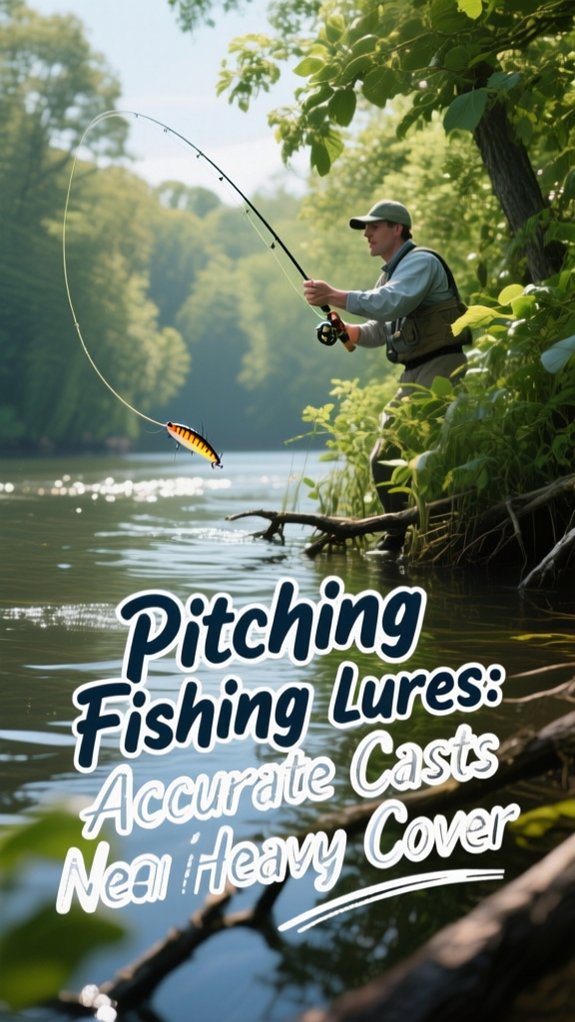
To pitch a lure accurately around heavy cover, I’ll swing my rod back to 10 o’clock with my thumb lightly on the spool, then bring it forward in a smooth pendulum arc and release at the exact moment to drop the bait quietly into tight pockets. I keep my rod tip skimming the surface to minimize splash, and I move my boat to find the best angle when obstacles block my path.
With a 7’3″ to 8′ moderate-fast rod and braided line, I get the control and stealth needed to place lures precisely where bass hide without spooking them. Practice with buckets or plates on land first, and you’ll build the muscle memory that makes this technique deadly on the water, there’s more to unpack about dialing in your gear and reading cover that’ll tighten your accuracy even further.
Master the Basic Pitching Motion

When I’m pitching a lure into tight cover, I always start by holding the bait in my casting hand with my thumb resting lightly on the reel spool. This gives me the control I need for a smooth, quiet release that won’t spook nearby fish.
The Pendulum Motion
I swing my rod back to around 10 o’clock, letting my forearm do the work while my wrist stays steady. Then I bring it forward toward my target in one fluid arc. The key isn’t brute force, it’s that controlled, pendulum-like swing that builds just enough momentum for the bait to travel where I want it.
Timing Your Thumb Release
As my rod swings forward, I release my thumb from the spool at precisely the right moment. This sends the lure gliding toward the cover with minimal splash.
I’ve found that matching my release to the forward motion takes practice, but once I’ve got it down, I can consistently drop baits right where I need them without spooking fish.
Keep Your Pitches Quiet and Accurate
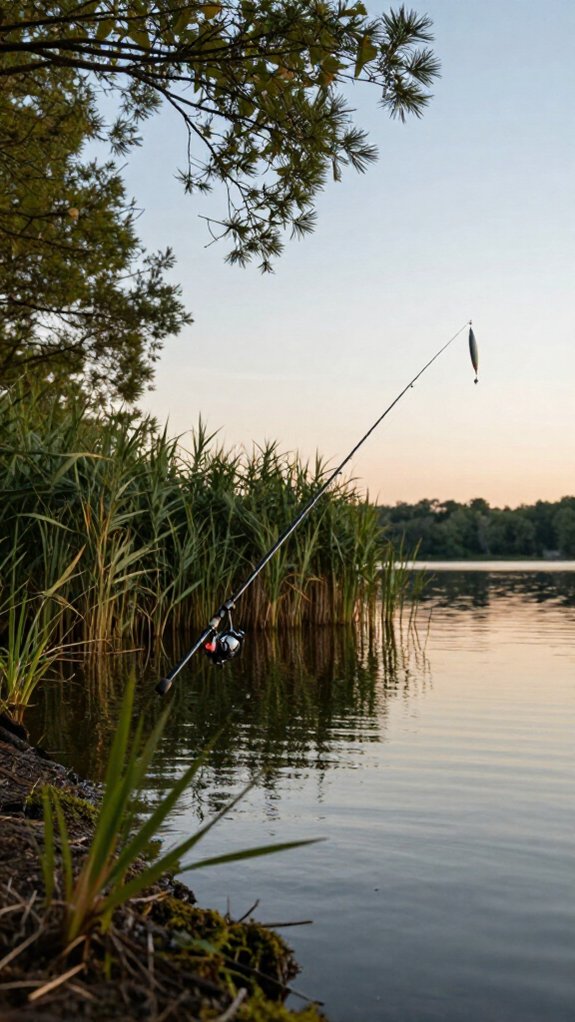
Why does a single loud splash ruin more fishing opportunities than a missed hookset? Because bass in heavy cover didn’t get big by being careless, they’re wired to freeze, then flee, at unnatural sounds.
Quiet Your Entry
When I’m flipping and pitching into tight spots, I keep my rod tip low and skimming the surface. This shortens the lure’s fall and kills the splash. I use a smooth, controlled motion, no herky-jerky wrist action that sends baits crashing through the mat.
The Soft Release****
I pause deliberately mid-pitch, letting momentum do the work. My lure slips in like a frog off a lily pad, not like a rock off a bridge. Practice this release until your bait barely dimples the water.
Accurate, quiet pitches put more bass in the boat. Period.
Angle Your Pitches by Moving Your Boat
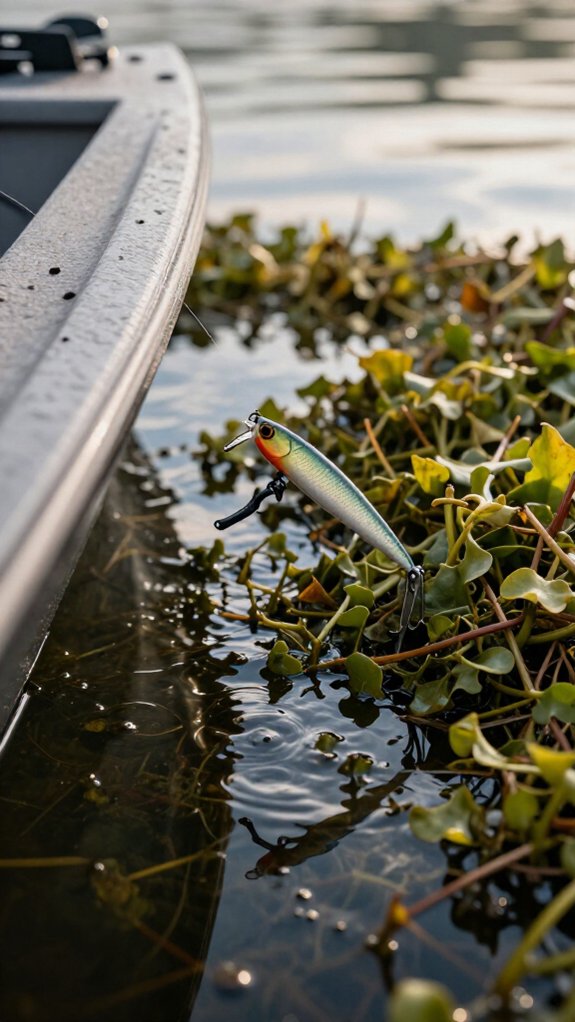
Even the quietest pitch falls flat if I’m casting from the wrong vantage point, so I’ll move my boat until I find the sweet angle that opens up the target.
Why Moving Your Boat Matters
When I’m working heavy cover, I don’t just sit and cast, I reposition constantly. Shifting my boat slightly forward or backward transforms impossible pockets into makeable targets. That tight lane behind a stump? Suddenly reachable with a 20-foot adjustment.
Finding the Right Approach
I’ll slide parallel to brush piles or nose into pockets to change my trajectory. Each move eliminates obstacles between me and my landing zone.
I’m not just searching for fish; I’m engineering the perfect entry angle.
Stealth and Precision
Strategic positioning keeps me farther from spooky fish while letting me drop my lure exactly where it needs to land. The right angle means quieter entries and more strikes.
Choose Your Pitching Gear: Rod, Reel, and Line
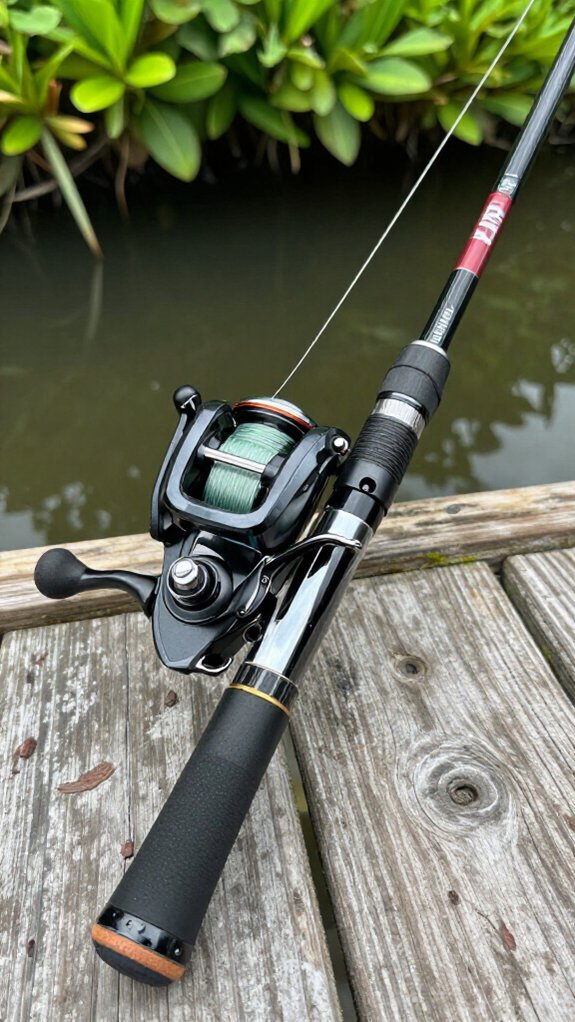
Once I’ve got my boat positioned at the perfect angle, my gear becomes the deciding factor between a lure that lands like a feather and one that spooks every fish in the zip code.
I reach for longer rods measuring 7’3″ to 8′ with moderate-fast action. The extra length creates a wider arc for pendulum motion, while a responsive rod tip transmits every tick and bump from submerged timber.
Reel & Line Setup
- Reel: 7.1:1+ gear ratio baitcaster, I’m retrieving slack instantly when bass strike
- Main line: 50-65 lb braided for near-silent entry and horsing fish through mats
- Leader option: 20-25 lb fluorocarbon when the water’s gin-clear and I need abrasion resistance against barnacle-encrusted docks
Matching gear density to cover thickness alters accuracy from guesswork into muscle memory.
Know When and Where to Pitch for Bass
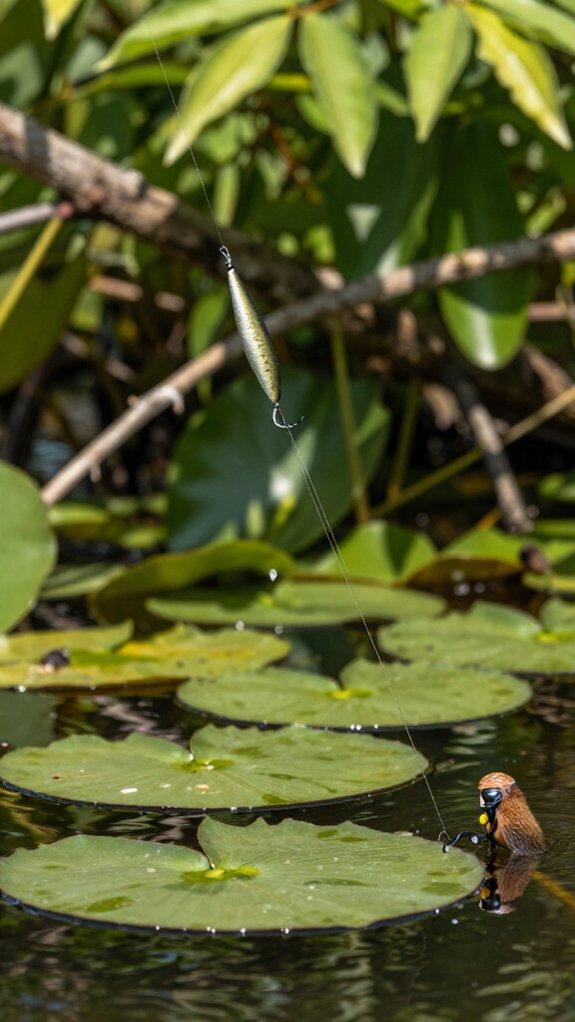
Pitching shines brightest when I’m threading a lure into places where traditional casts crash and burn, think matted grass, submerged timber, and the shadowy pockets beneath docks where bass tuck in tight. I use pitching around shallow cover whenever I need to place my bait accurately into zones no other technique can touch.
| Condition | Why Pitching Wins | Prime Target |
|---|---|---|
| Spawn/Post-spawn | Stealthy close-quarters presentation | Bedded fish in tight pockets |
| Pressured lakes | Minimal disturbance, accurate entry | Small openings in grass mats |
| Clear/stained water | Fish spook easily | Under docks, overhanging limbs |
| Dense vegetation | Traditional casts fail | Submerged timber, thick laydowns |
When bass are holding tight and refusing to chase, this approach becomes my secret weapon for tempting locked-down fish without spooking them.
Practice Pitching Drills on Land and Water
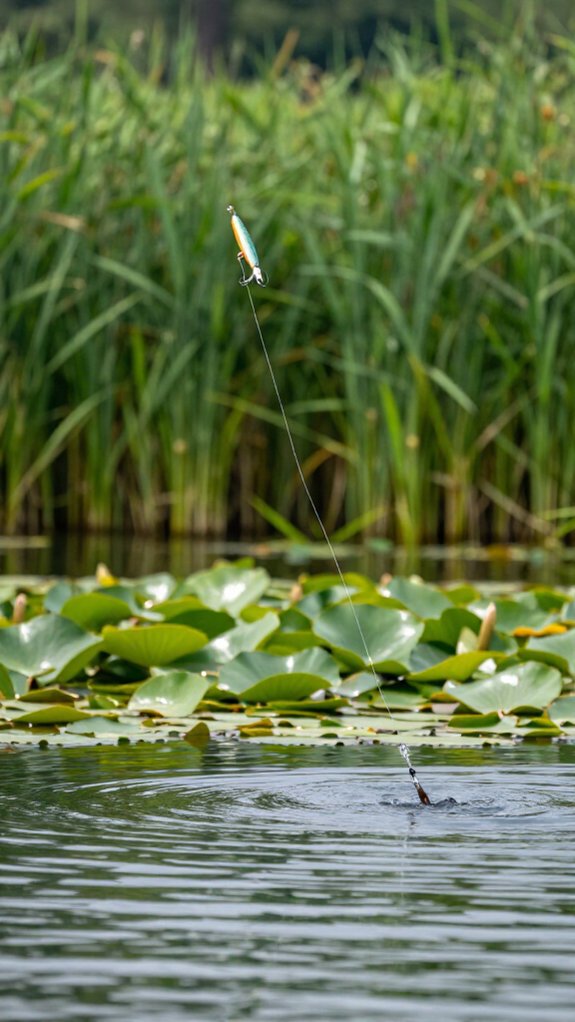
I start every pitching practice in my yard with buckets or marked spots to nail down accuracy and build smooth, repeatable muscle memory before I ever hit the water.
Once I’ve got that rhythm locked in, I take those same drills to docks and submerged cover where the real fish live, casting into specific zones just like I’d target on tournament day.
Trust me, land work sharpens your mechanics, but water application is where you’ll see if your setup truly performs when it counts.
Yard Practice Sessions
Before I hit the water, I spend time in my backyard or a nearby park drilling the mechanics until my hands remember the motion without my brain having to think. Yard practice builds accuracy through repetition without the pressure of real fish.
I set up a simple target system to track my progress:
| Target Setup | Purpose |
|---|---|
| Paper plate at 15 feet | Build short-range precision |
| Coffee can at 20 feet | Tighten landing zone |
| Hula hoop at 25 feet | Test distance control |
| Floating bucket in kiddie pool | Transition to water feel |
I use a lightweight lure and short, controlled motion, varying release points to see how angles change my results. After each session, I count my hits versus misses. That feedback loop turns conscious effort into automatic skill.
Water Application Drills
Once I’ve got the motion dialed in on land, it’s time to take those pitching skills to the water, because that’s where muscle memory meets the real chaos of wind, current, and actual fish.
Making the Leap to Real Conditions
For water application, I head to open water or a practice pond and simulate heavy cover scenarios. I focus on controlled, gentle entries that won’t spook fish. There’s no skipping the hard part.
Timed Pressure Tests
I grab a stopwatch and challenge myself: How many accurate pitches can I stick in 60 seconds? This practice builds speed without sacrificing precision when I’m racing against a fading bite window.
Dialing in Your Arsenal
I cycle through weights from 3/8 oz to 1 oz, matching what I’ll actually throw around docks and timber. Each weight behaves differently on the water, and I need to feel them all.
Review and Refine
I record sessions on my phone, then watch for splashy entries or missed distances. Spotting my own flaws beats guessing every time.
Frequently Asked Questions
Do Heavier Lures Cast Farther?
Yes, heavier lures cast farther because I’ve found their increased weight generates more momentum and better wind penetration. I just adjust my rod and line to maintain accuracy when I’m casting these heavier options.
What Is the 80/20 Rule in Fishing?
I apply the 80/20 rule by recognizing that roughly 80% of my catches come from just 20% of spots or techniques. I focus my efforts on those productive areas and proven methods, eliminating wasted time elsewhere.
What Lure Was Banned From Bass Tournaments?
I’ve seen several lures face tournament bans. The Juanita worm caused deep hooking, while the Senko’s wacky rig gave unfair advantages.
PowerBait’s attractants and electronic-enhanced baits also got restricted for creating unnatural edges.
What Bait Is Irresistible to Bass?
I won’t reveal the secret too quickly, but here’s what I’ve learned: live crawfish or scented soft plastics drive bass absolutely wild.
When I rig a creature craw or punch bait, I’m targeting their strongest senses, smell, taste, and predatory instinct. Nothing beats it.
In Conclusion
Pitching to heavy cover puts more bass in your boat when you do it right. I’ve spent years refining these techniques, and I promise they’re worth your practice time.
The Bottom Line
You don’t need to be a medieval archer threading a needle blindfolded, just steady hands and smart positioning. Master the low, rolling pitch. Keep your gear balanced. Move your boat to create better angles instead of forcing awkward casts.
The Bass Are Hiding in That Thick Stuff. Now You’ve Got the Roadmap to Reach Them.