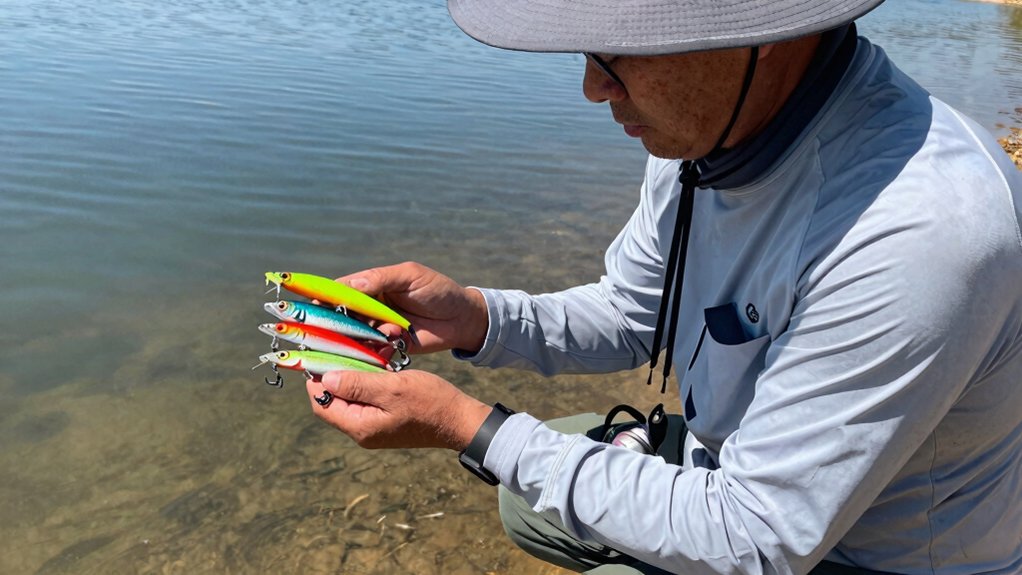
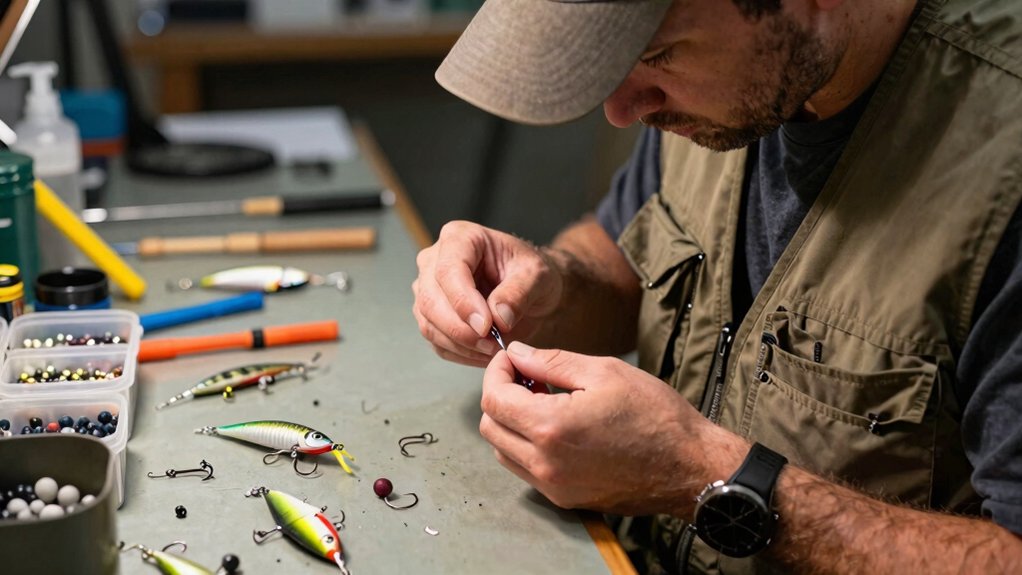

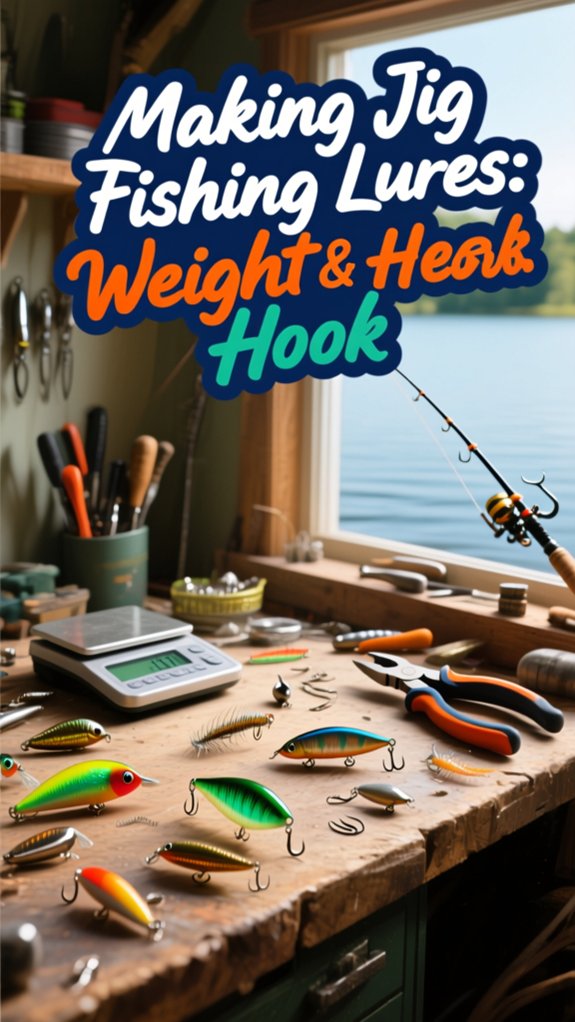
I make jig fishing lures by pouring lead into precision molds, weighing each head to hit my target, usually ⅜ oz for shallow water, ½–1 oz for depths past 30 feet. I match hook size to my quarry: #1–2 for finesse smallmouth, 3/0–5/0 for thick-shouldered largemouth.
I clean heads with alcohol, dip them in powder paint, and bake at 350°F for a chip-proof finish that survives rock piles and timber. Current and clarity dictate my final tweaks: lighter for clear mornings, heavier for stained flow. I always test swim action before tying on.
There’s more to dialing in the perfect presentation than these basics alone.
Make Jig Heads With Precise Weight Control
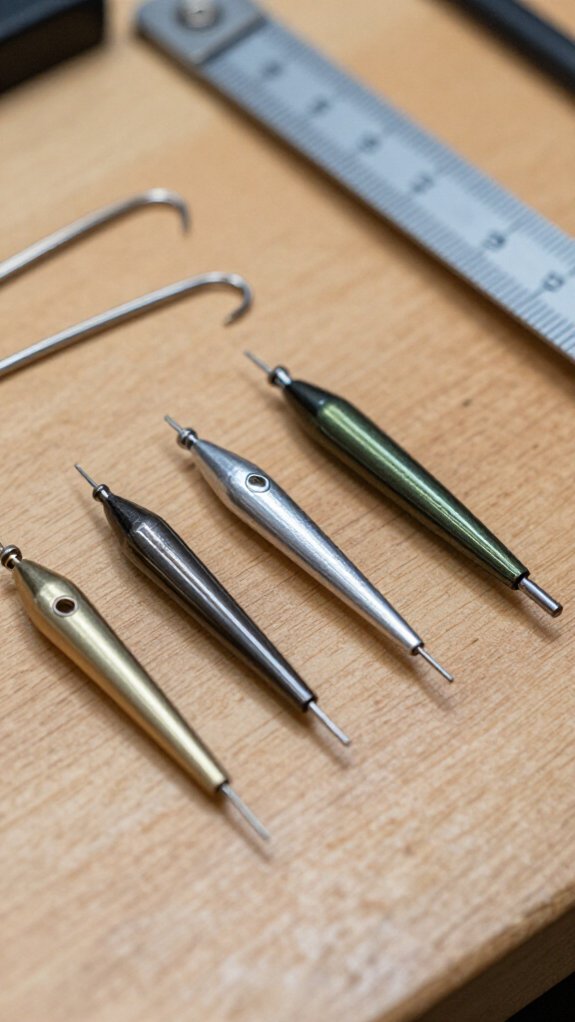
If you want your jigs to sink at the exact same rate and hit the strike zone with laser precision every cast, you’ve got to nail the weight from the very start.
Weigh Before You Pour
I always use a scale to measure my lead or soft lead alloy before pouring. This single step eliminates guesswork and keeps every jig head identical.
Mold Selection Matters
I pick a mold with my target weight specs, then pour carefully. Underfilling or overfilling throws everything off. I also watch my temperature closely; molten lead that’s too hot or too cool creates density variations that change the final weight.
Fine-Tune for Perfection
After pouring, I trim excess lead from the sprue for clean balance. Finally, I weigh finished jig heads on a precise scale, adjusting my process until every piece hits the mark.
Match Hook Size to Your Target Species
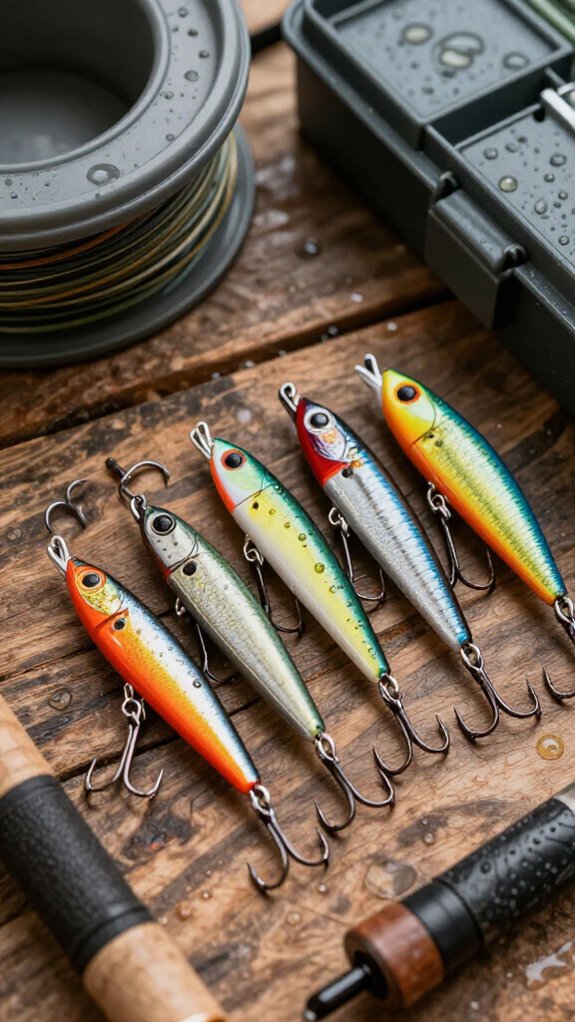
I match my hook size to three key factors: the species I’m chasing, the bait I’m rigging, and the structure I’m fishing.
For finesse jigging smallmouth, I’ll drop down to a size 1 or 2 hook.
But when I’m targeting thick-shouldered largemouth or toothy pike, I beef up to 3/0 or 4/0 without hesitation.
Getting this balance right means my bait looks natural in the water and I’ve got the backbone to stick and land fish when they commit.
Hook Size Basics
Why does hook size matter so much when I’m chasing bass? It directly determines whether I land that trophy or watch it swim away. I’ve learned that matching hook size to my target species isn’t optional, it’s essential for success.
When I’m finesse fishing, I’ll grab smaller hooks in the 1-2 range. But when I’m after bigger, aggressive bass, I need that beefier 3/0-5/0 hardware. The jig head’s design works hand-in-hand with my hook choice to create the perfect presentation.
Here’s how I break it down:
| Species | Hook Size | Best For |
|---|---|---|
| Finesse fishing | 1-2 | Subtle presentations, clear water |
| Smallmouth bass | 1/0-2/0 | Balanced bait action |
| Largemouth bass | 2/0-4/0 | Solid hook sets, thick cover |
I always consider my jig’s purpose and bait type. Heavy cover demands thicker, stronger hooks that won’t bend when I’m battling a brute. Get this right, and my hook-up ratio skyrockets.
Species-Specific Selection
Since every fish species fights and feeds differently, you’d be leaving bites on the table if you didn’t tailor your hook size to exactly what’s swimming below.
When I’m making jigs for panfish, I reach for #8-#12 hooks. These light wire hooks match their small mouths without tearing through delicate tissue.
Bass and Bigger Predators
For smallmouth bass, I stick with 1/0 or 2/0 hooks. They give me enough backbone without making the bait feel bulky.
Largemouth bass demand more: 3/0 to 5/0 handles their aggressive strikes and bigger bites.
Fine-Tuning Your Approach
I swap to lighter, finer hooks for finesse presentations and smaller fish.
Heavy cover? I beef up.
The gap matters too, wide-gap hooks improve my hook-up ratio on thick-shouldered fish, while straight shank designs slip through weeds better.
Match To Bait
Picking the right hook size starts with looking at what’s on the end of your line, not just what’s swimming below it. When you match to bait properly, your fishing lures perform exactly as designed.
I always pair hook size with my bait’s dimensions. Small plastics get #4 or #6 hooks to prevent bunching, while bulky creature baits need #1/0 or 2/0 hooks for clean rigging. Short-shank hooks excel for finesse presentations where subtlety matters; long-shank hooks grip bigger baitfish securely without tearing.
Water conditions dictate adjustments too. In crystal-clear water, I downsize for stealth. Punching through thick vegetation, I beef up to stronger, larger hooks that won’t bend.
Sharp points and durable coatings seal the deal. I’ve watched too many fish shake free from dull hooks.
Your bait and hook should work as one unit.
Paint and Bake Jig Heads for Chip-Proof Finish
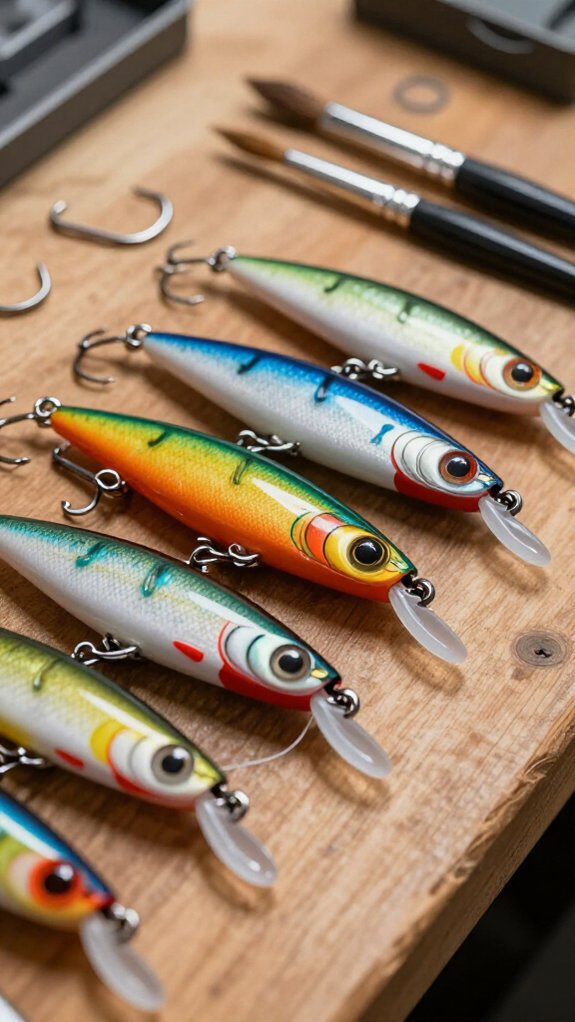
If you want your jig heads to survive repeated strikes and rocky bottoms without looking like they’ve been through a war zone, I’ve found that powder painting and baking is the only way to go.
Prep and Paint
I always clean my jig heads with alcohol first, any oil kills adhesion. Then I heat each head thoroughly before dipping into high-quality powder paint. That heat melts the powder instantly, giving me smooth, even coverage.
Build the Finish
I’ll apply multiple thin coats, letting each layer cool slightly before adding the next. This builds a glossy, rock-hard shell that laughs off underwater abuse.
Bake to Cure
Finally, I bake painted heads at 350°F for 15–20 minutes. This curing step transforms the coating into something truly chip-proof. Trust me, once you’ve felt that glass-smooth durability, you’ll never brush-paint again.
Tie Custom Skirts for Water-Specific Color Patterns
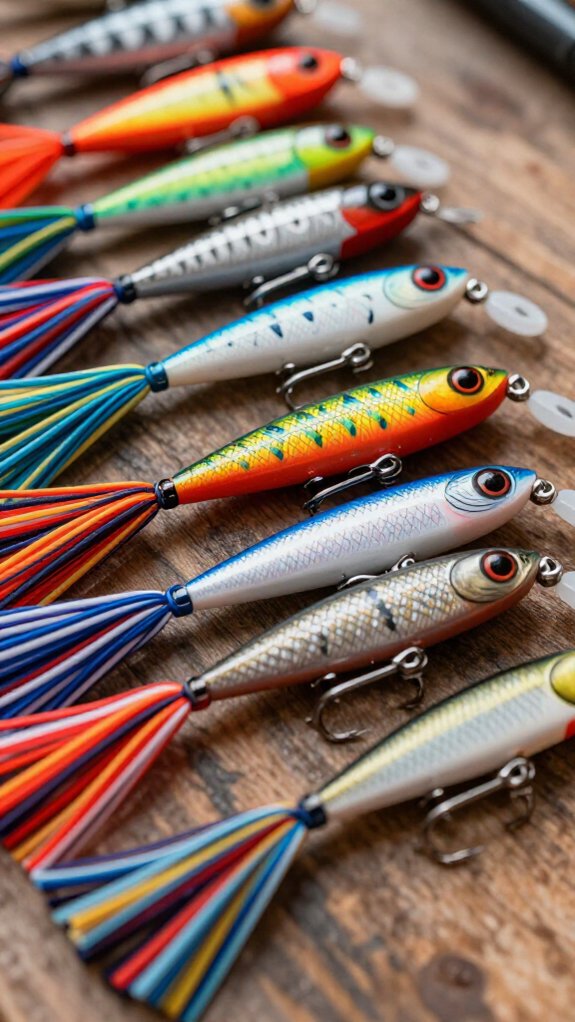
Once your jig heads are baked to a chip-proof finish, the real fun begins with dressing them up in skirts that actually match what the fish are seeing down there.
In my experience, lure making success hinges on water-specific color choices. I’ll pick silicone or rubber skirts that mirror local prey, natural greens when I’m jig fishing crystal-clear lakes, or loud chartreuse when visibility drops to inches.
Here’s how I build skirts that trigger strikes:
- Slice strands to my target length, watching them flare like a startled baitfish underwater
- Layer colors that echo seasonal forage, crawfish orange in spring, shad silver in fall
- Knot tight to the jig collar so nothing shifts during a violent hookset
- Test the pulse by dipping finished jigs, confirming that seductive breathing action
Tweak skirt length and color combos until you match what bass are keyed on that day.
Attach Weedguards and Trailers for Your Fishing Style
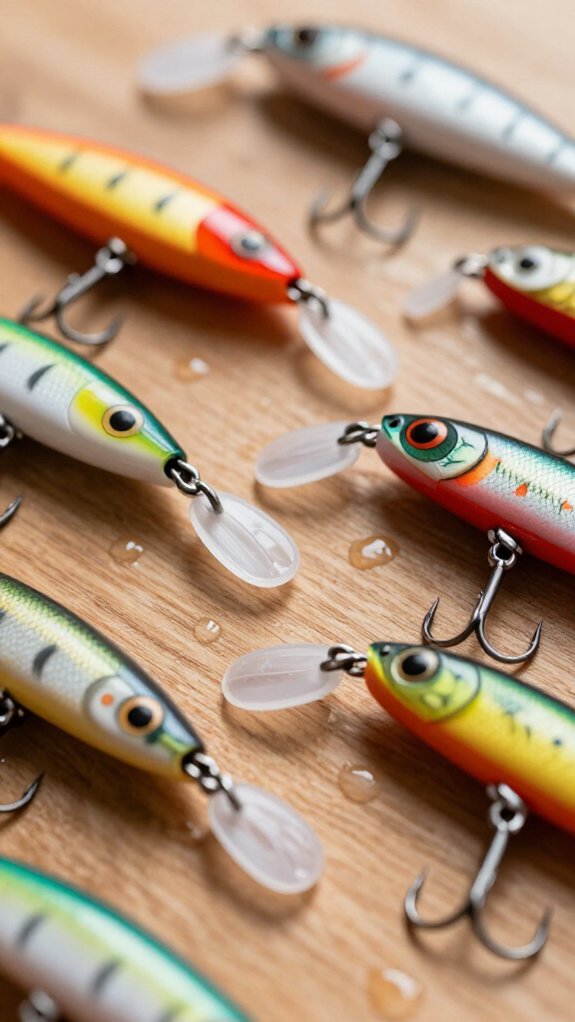
Because I fish everything from lily-pad jungles to brush-pile mazes, I’ve learned that a bare jig head is just asking for trouble, and missed fish.
Add Weedguards for Protection
I attach weedguards using super glue, inserting them carefully so they stay put without blocking hook penetration. I trim mine just
Choose Weight by Depth and Retrieval Speed
I match my jig weight to exactly where I’m fishing and how fast I’m working the bait, because getting that balance right means more strikes and better hookups.
For shallow water, I’ll grab a lighter jig around 1/8 to 3/8 oz and slow my retrieve so I’m not yanking the lure away from tentative biters.
When I’m probing deeper water or fighting current, I bump up to 1/2 oz or heavier to stay in contact with the bottom and feel every tick through my line.
Shallow Water Options
When I’m working shallow water, anything under about 10 feet, I’ll reach for a jig between 1/8 oz and 3/8 oz almost every time. I make sure the weight matches how fast I’m moving the lure. Slower retrieves demand lighter jigs so I don’t outrun the bite.
For hooks, I drop down to size 1 or 1/0 in skinny water. The bait stays lively and responsive, and I’m catching fish instead of spooking them.
Here’s what I’m picturing when I rig up:
- A 1/8 oz jig skipping across a sand flat like a fleeing crawdad
- The subtle thump of a 1/4 oz head ticking through submerged grass
- My line bowing slightly as current pushes against a slow-rolled 3/8 oz model
- A sudden twitch as a bass inhales the offering near a dock post
I’ll bump to 1/2 oz only when wind or current fights my control.
Deep Water Selection
Once I start probing depths past 20 feet, I’ll grab a 1/2 oz or 3/4 oz jig without hesitation, anything lighter just won’t punch through the thermocline fast enough or hold its position against the drift. In deep water, I slow my retrieve way down, letting that heavier head drag and tick along the bottom where bass hold tight to structure.
Here’s how I match weight to conditions:
| Depth | Recommended Weight |
|---|---|
| 20-30 ft | 1/2 oz |
| 30-40 ft | 3/4 oz |
| 40-50 ft | 1 oz |
| 50+ ft | 1-1.5 oz |
I keep my rod tip low and stay in contact, That way I’ll feel the strike and set the hook immediately. Vertical jigging works wonders too; I drop straight down, hop it twice, and let it fall on slack line. Heavier jigs aren’t just about reaching bottom, They keep my bait in the strike zone longer where sluggish deep fish won’t chase.
Adjust for Water Clarity and Current Conditions
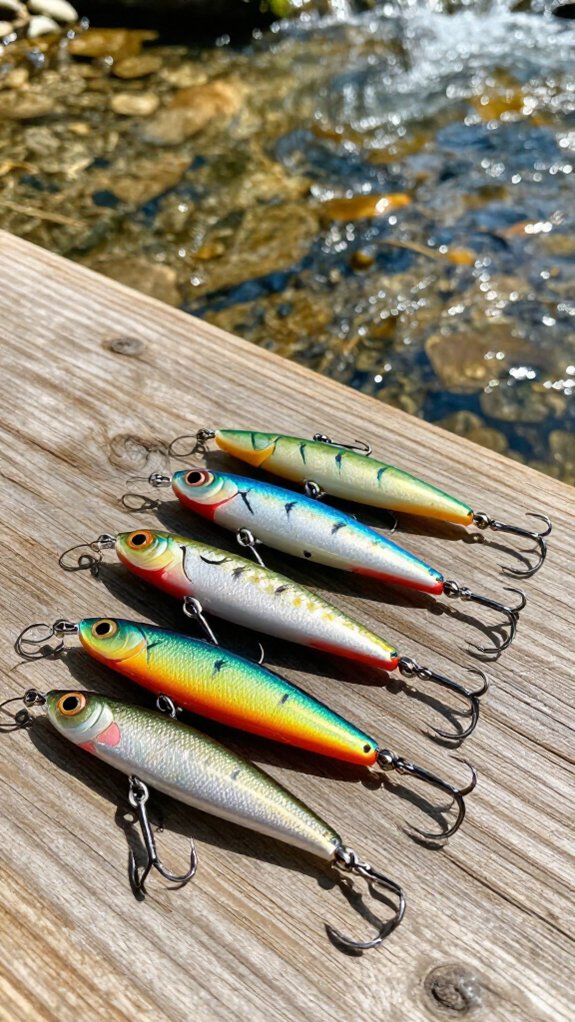
Because water clarity and current dictate how fish perceive your lure and how well you control your presentation, I always adjust my jig setup before making my first cast. I adjust for water clarity first: in gin-clear shallows, I’ll drop to 3/8 oz or lighter so my jig flutters down like a wounded minnow instead of crashing through the water column like a rock.
When I’m probing deeper water or the stain turns to chocolate milk, I bump up to 1/2 oz or more, fish feel that thump through their lateral line even when they can’t see.
Current matters just as much. Here’s how I picture each scenario:
- Clear, calm mornings — My light jig pendulums slowly, the thin hook barely visible, tempting pressured bass with subtle realism.
- Muddy, swirling backwaters — Heavier jigs thump bottom; thicker hooks drive home when fish slash blindly at vibration.
- Strong river current — I feel the tap-tap-tap of constant bottom contact, my rod loaded like a spring.
- Stained chop with blades — Flash erupts through murk, drawing curious strikes from fish hunting by disturbance alone.
Match Hook Style to Soft Plastics or Live Bait
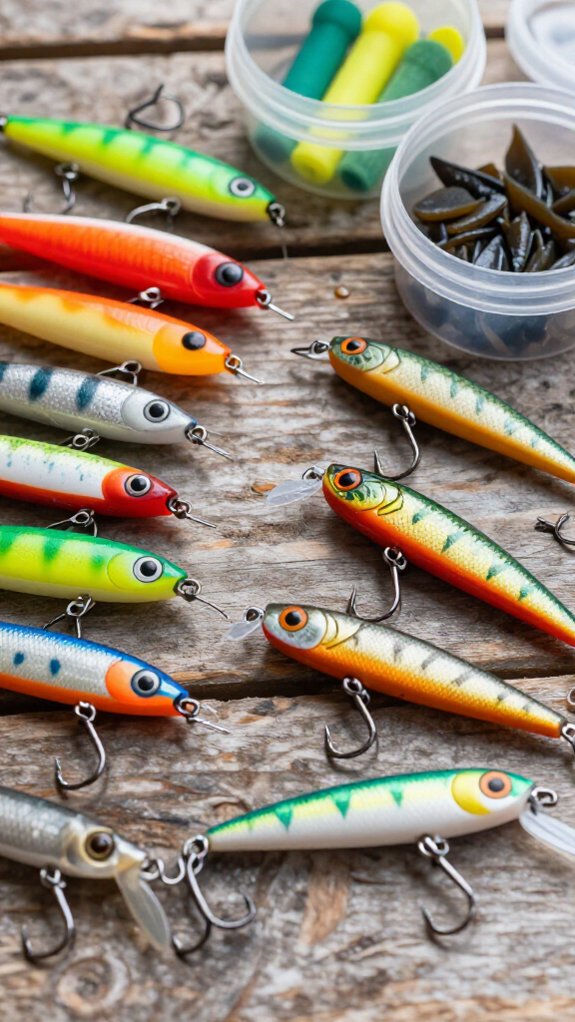
The hook you thread onto your jig head can make or break your presentation, so I always match the style to whatever I’m threading on, whether it’s a bulky creature bait or a lively minnow.
Hook Style Basics
For soft plastics, I reach for an offset shank hook. It keeps worms and craws from tearing and lets them swim naturally. Wide-gap hooks handle bulky plastics beautifully, while finesse hooks suit smaller profiles.
Live Bait Considerations
When I’m rigging live bait, I grab a heavier gauge hook. Big fish fight hard, and thin wire bends or breaks. A sturdy hook drives home cleanly and holds through the battle.
Size and Fit
I match hook size to bait size precisely, too much gap looks unnatural; too little misses strikes. That snug fit improves both presentation and penetration every cast.
Test Swim Action and Tune Before Fishing
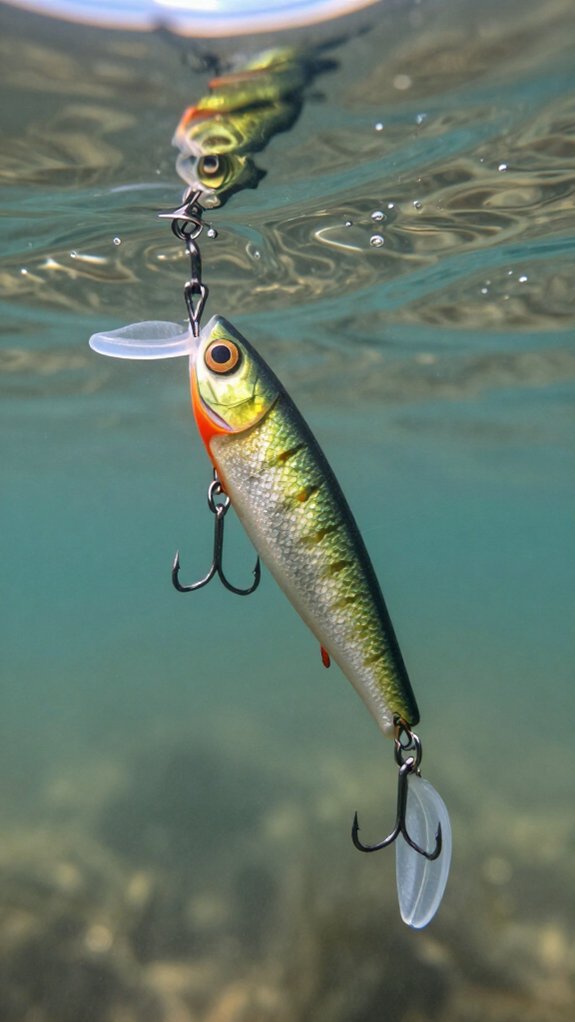
Before I ever make my first cast at a promising spot, I’ll drop my jig into a calm pocket of water and watch it swim, because what’s happening below the surface rarely matches what I picture in my head.
A proper test swim reveals everything. I adjust weight or hook size when my jig sinks too fast or rides too high. I always attach my chosen trailer first, since that rubber or feather changes vibration and fall rate dramatically. If I see unwanted spinning, I’ll tune hook placement and weight distribution until the action tracks straight.
Here’s what I’m watching for:
- The initial descent—does it flutter, glide, or plummet like a stone?
- The hop and drop—does the head stand up, or does it nose-dive?
- The trailer’s pulse—can I feel that thump through my rod tip?
- The steady retrieve—does it swim true, or wobble off-balance?
I’ll cycle through retrieves, dragging, hopping, swimming, until I find what triggers bites.
Frequently Asked Questions
Should You Use a Weight With a Jig?
I always use a weight with my jig since it lets me control depth precisely and target fish at different water levels. I’ll match the weight to conditions, heavier for deep or rough water, lighter for shallow, calm areas.
How Can I Make My Own Jigs for Fishing?
I heat lead in a pot, pour it into my mold with hooks already set, then powder paint and bake for durability, because nothing says “relaxing hobby” like molten metal and toxic fumes in my garage.
What Goes First, Hook or Weight?
I embed the hook into my mold first, then pour the lead to form the jig head, that’s how I’ve always done it. If I’m rigging a separate weight system, I’ll thread the weight after securing the hook to maintain proper balance and action.
Is It Cheaper to Make Your Own Jigs?
Yes, it’s cheaper to make my own jigs. I save money by buying materials in bulk, and my initial equipment investment pays off quickly.
I customize lures for any condition without paying store markups.
In Conclusion
Building your own jig fishing lures with precise weight and hook matching gives you an edge that store-bought versions simply can’t replicate. I’ve walked you through every step, from pouring lead with gram-scale accuracy to selecting hooks that match your target species’ mouth structure and your bait type.
The chip-proof paint finish, custom skirts tuned to local water conditions, and weedguards fitted to your fishing style all add up to a lure that outperforms off-the-shelf options. Remember: water depth, current, and clarity should drive your weight decisions, not guesswork.
When you test that first swim and watch your creation track true, won’t that satisfaction hook you for life? Start with one mold, one hook style, and one color pattern. Refine from there. Your tackle box, and your catch rate, will thank you.