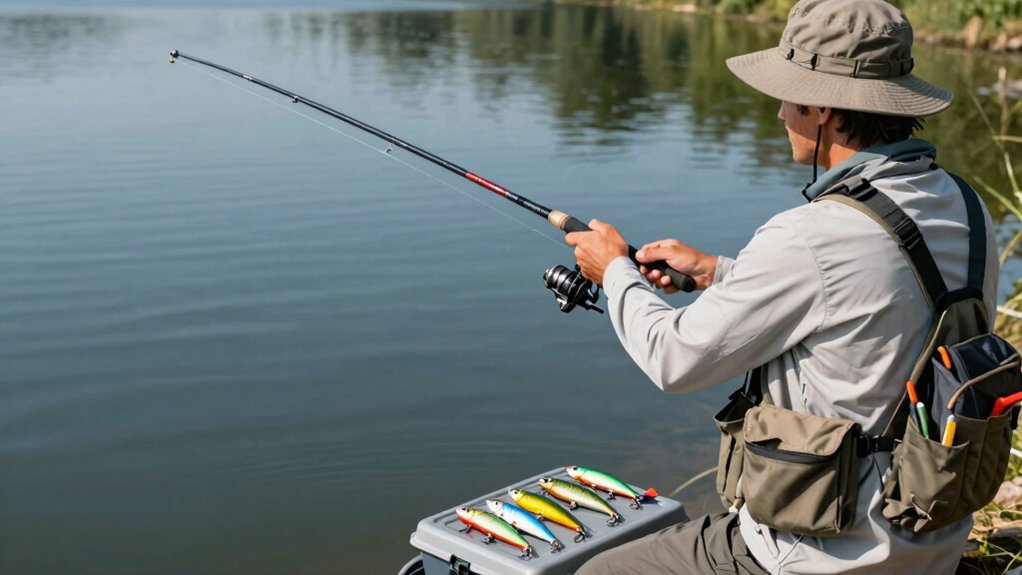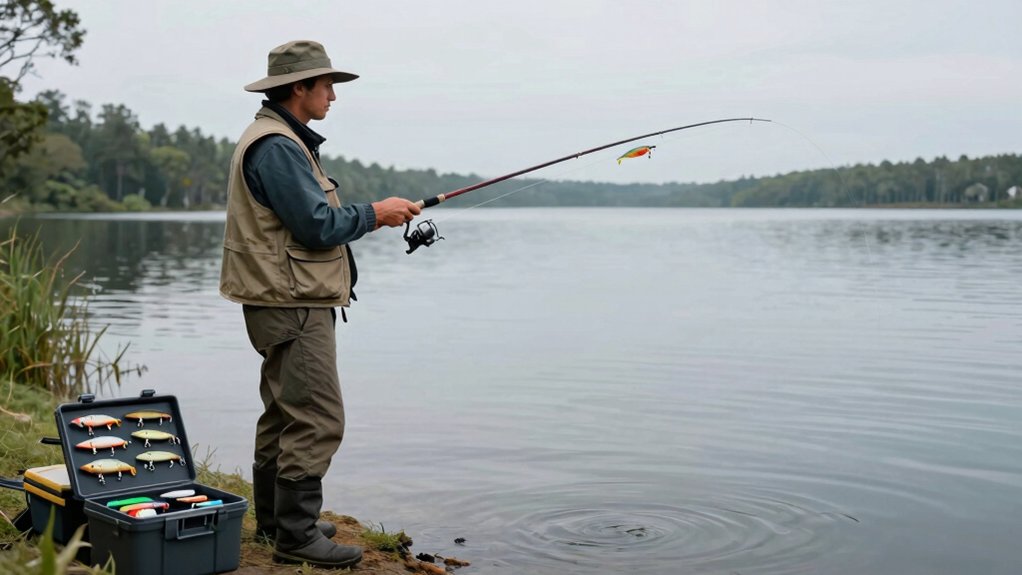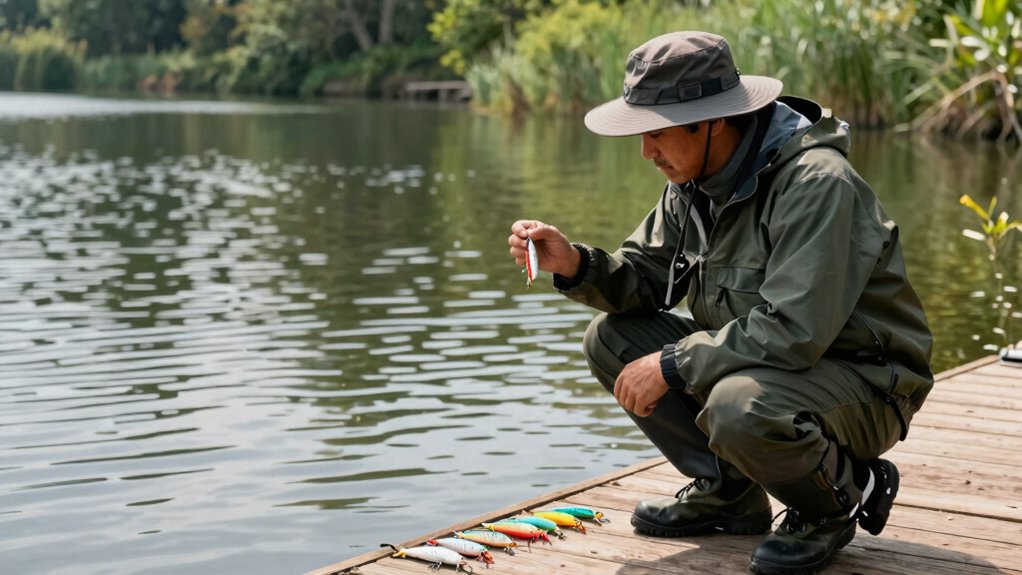
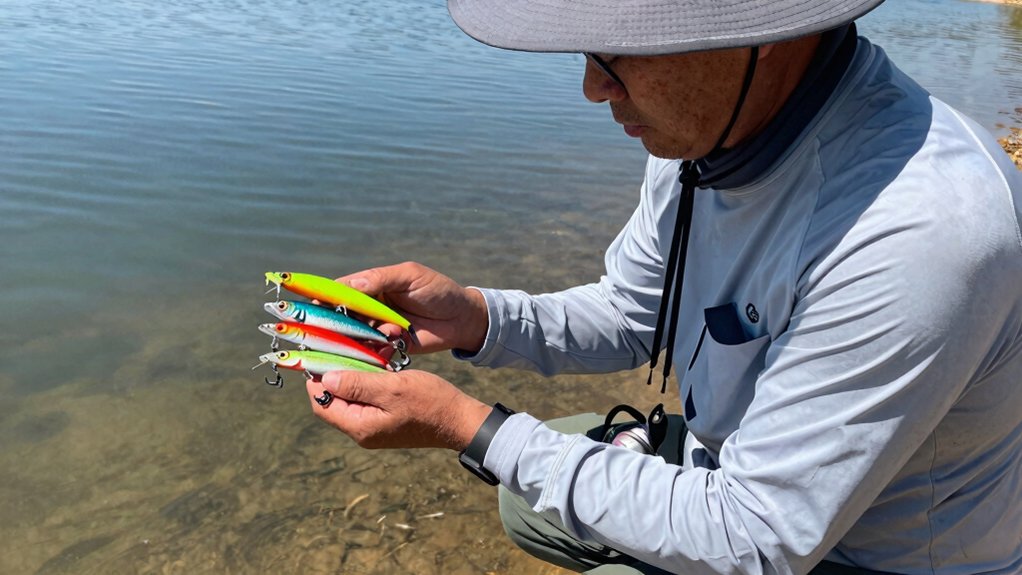

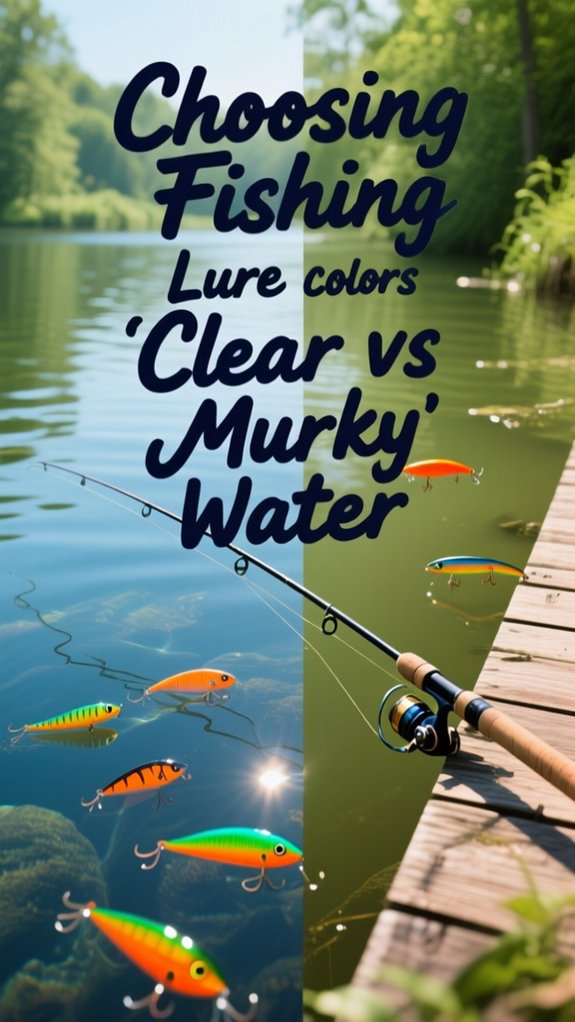
I match lure colors to water clarity because bass rely on sight in clear water and vibration in murky conditions. In gin-clear water, I reach for natural, translucent patterns like watermelon, ghost shad, and green pumpkin that mimic real forage without spooking wary fish.
When the water turns stained or muddy, I switch to bold, high-contrast colors like chartreuse, black, and bright orange that create silhouettes bass can detect through their lateral line. I also factor in available light and feeding mood, sometimes even in clear water, a flashy chartreuse triggers reaction strikes from followers that won’t commit to subtle presentations.
My simple three-category system covers every scenario without overloading my tackle box. Once you understand how bass perceive color at different depths and turbidity levels, choosing the right lure becomes second nature.
How Water Clarity Affects What Bass Detect
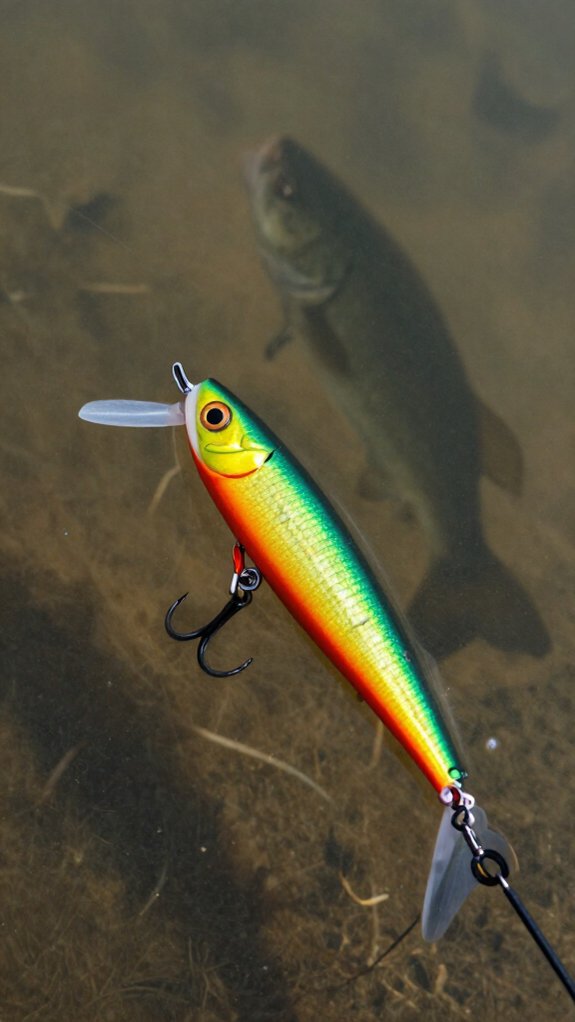
When I’m picking lure colors, water clarity is the first thing I check because it directly determines what bass can actually see.
How Visibility Changes Everything
Stained water cuts visibility dramatically. I’ve watched bass ignore perfectly matched naturals in murky conditions because they simply couldn’t detect them. That’s where contrast becomes your best friend.
What happens in poor visibility:
- Light conditions get filtered fast, reds and oranges vanish first
- Blues and greens penetrate deeper, staying visible longer
- Bass switch from sight-hunting to sensing vibration and silhouette
I always reach for bold blacks, chartreuses, or fluorescents when water clarity drops. These high-contrast choices create unmistakable profiles that bass can track even when they can’t make out fine details.
Match your approach to what the fish can actually perceive, not what you think looks good in your tackle box.
Best Lure Colors for Crystal-Clear Water
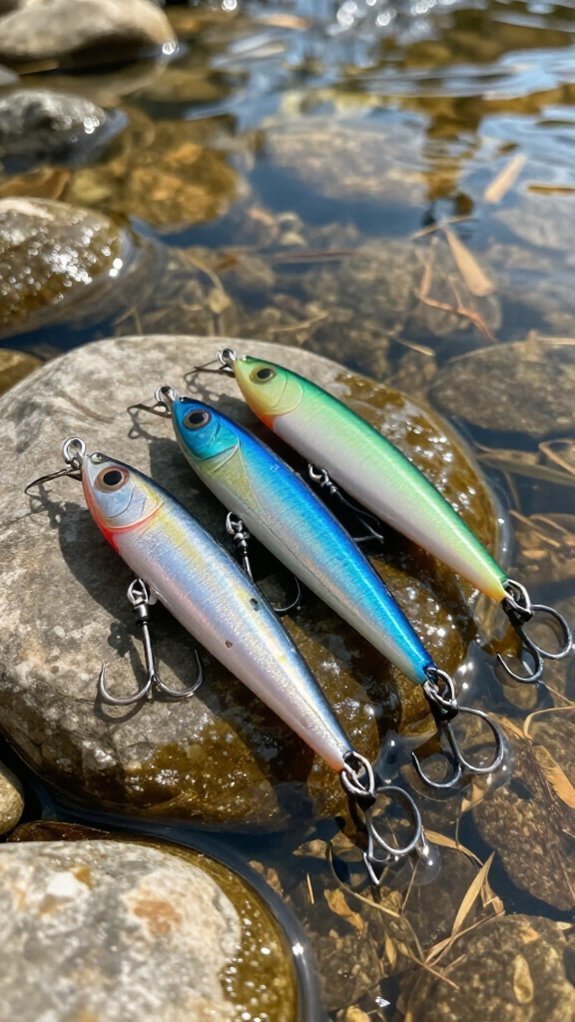
Because clear water lets bass inspect every detail of what I’m throwing, I’m swapping my approach entirely from what works in stained conditions. Natural colors become my go-to when water clarity is at its peak: greens, browns, and subtle shad patterns disappear against the background just like real prey.
I rely heavily on transparent lures with ghost-like finishes that let light pass through, convincing wary bass they’re chasing actual baitfish rather than hardware. When sunlight penetrates deep, shiny finishes mimicking reflective scales seal the deal on my baitfish imitation.
Bright chartreuse or neon orange? I leave those at home. Subtlety wins here. The more my lure resembles what’s actually swimming, the more strikes I convert into solid hooksets.
When Bright Colors Trigger Bites in Clear Water
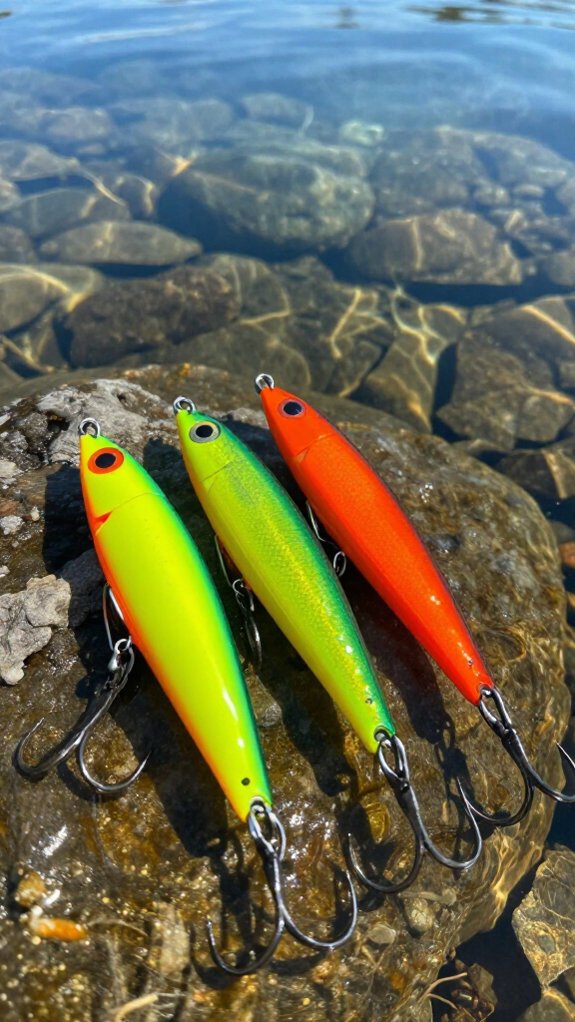
I’ve learned that bright colors don’t just work in muddy water, they can absolutely crush it in clear conditions when you understand the specific triggers.
Spring feeding aggression, that neon sign effect of chartreuse and orange flashing through gin-clear water, and provoking follow swipe responses from hesitant bass all come into play here.
Let me break down exactly when and why these high-vis hues turn clear-water bass from lookers into biters.
Spring Feeding Aggression
Spring’s the season when I’ll reach for chartreuse and white before anything else in my tacklebox, especially if I’m staring down gin-clear water where every detail shows.
Why Aggression Changes Everything
Spring feeding aggression means bass aren’t just eating, they’re hunting. When water temps climb and metabolism kicks in, these fish want active baitfish, and bright colors deliver exactly that visual stimulation that triggers explosive strikes.
Mimicking the Menu
Shad and shiners flush with spawning energy flash silver and chartreuse through the shallows. I’ve watched bass annihilate lures matching those vivid hues while ignoring natural patterns.
It’s about timing—when bass swarm flats chasing baitfish schools, high-visibility colors telegraph “easy meal” across distances that muted tones can’t touch.
Making the Most of It
- Throw reflective finishes on sunny days when light penetration peaks
- Fish shallow, spring bass stage aggressively there
- Speed your retrieve to match frenzied baitfish behavior
This window doesn’t stay open forever. Hit it right, and you’ll watch clear-water bass smash bright lures with conviction.
Neon Sign Effect
When the sun’s high and water’s crystal enough to spot a dime on the bottom, neon-colored lures flip a switch that natural patterns simply can’t reach. Bright chartreuse, hot pink, and electric orange evolve into underwater beacons that bass can’t ignore.
Why Neon Works in Clear Water
I’ve watched bass ignore perfect natural imitations, then crush a fluorescent lure on the very next cast. In clear water, visibility works against you—fish scrutinize everything.
But neon colors exploit that clarity, creating a shimmering effect that mimics injured baitfish flashing in panic.
The Science Behind the Flash
Research from Texas A&M shows bass strike reactive colors 40% faster in high-visibility conditions. Bright lures don’t look natural; they look vulnerable.
That urgency overrides caution.
When to Go Loud
I reach for neon when:
- Sun penetration exceeds 4 feet
- Bass follow but won’t commit to naturals
- Water temperature spikes above 75°F
Follow Swipe Response
Neon colors don’t just attract bass from afar, they flip a switch in fish that’ve already seen your lure.
When Followers Finally Bite
I’ve watched bass trail my bait for twenty feet in clear water, then turn away from natural patterns. That’s where bright colors change the game. When water clarity lets fish inspect every detail, subtle lure colors sometimes fail to seal the deal.
Bright colors—chartreuse, white, orange—send urgent visual signals that prey is injured or stressed. This triggers an instinctive fish response even from cautious followers.
Spring and early summer, when bass feed aggressively, I’ve found these hues especially deadly. Flashy, reflective finishes amplify the effect. You’re essentially giving trailing bass a reason they can’t ignore to strike now rather than later.
Best Lure Colors for Stained and Murky Water
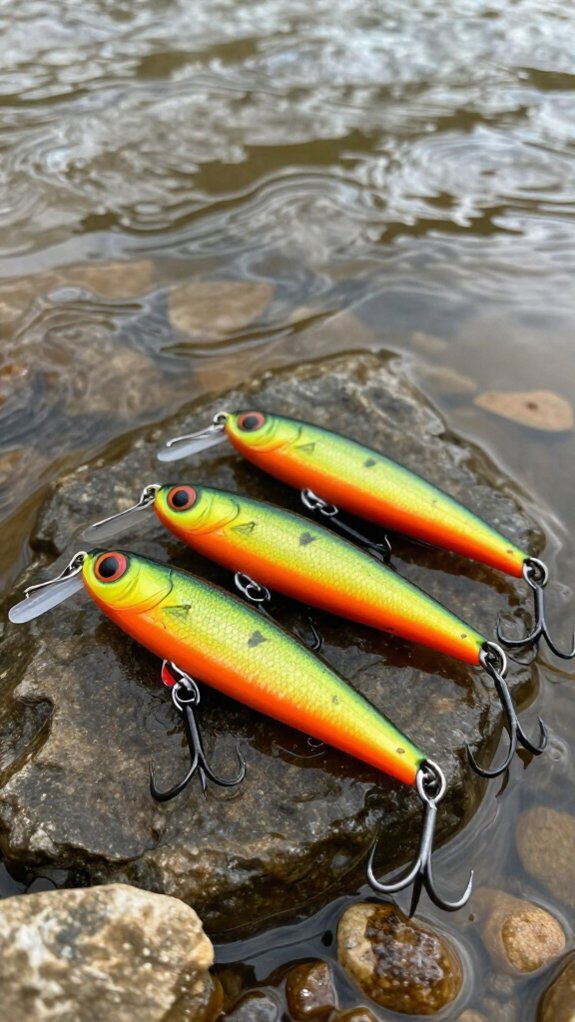
When I’m facing stained or murky water, I immediately reach for bold solid hues and high contrast choices that cut through the murk.
Chartreuse, black and blue, and bright orange create the strong silhouettes bass can actually detect in low-visibility conditions.
I’ll break down exactly why these colors work and how to pair them with the right presentation for maximum impact.
Bold Solid Hues
Stained and murky water doesn’t mean I can’t catch bass, it just means I reach for vibrant solid hues that cut through the murk like a flare in fog.
Why Bold Colors Rule Stained Water
When I’m fishing stained water, visibility drops fast. That’s why I rely on Chartreuse, Junebug, and Black and Blue. These vibrant colors create maximum contrast that bass can’t ignore.
Bright, opaque hues stand out against the gloom, letting fish detect my lure from farther away. Dark shades like black and purple form sharp silhouettes.
These are especially deadly during overcast days or dawn and dusk when light penetration tanks.
In muddy conditions, natural colors fade into nothing. I’ve watched solid brights outfish subtle patterns ten to one.
The research backs this: Bass strike what they can actually see, and bold solids demand attention.
High Contrast Choices
I take my solid brights one step further by mixing light and dark in single lures, high contrast combinations that bass spot even when the water looks like chocolate milk. These lure colors create unmistakable silhouettes that penetrate murky water where standard patterns fade to gray.
Black paired with red, bright orange, or clean white produces the strongest visibility profiles against stained backgrounds. Dark hues like black and purple carve definition where clarity fails, while chartreuse and white reflect whatever light penetrates, amplifying detectability.
I often add rattles to these high contrast setups. Bass in low-visibility environments rely heavily on lateral line detection, so noise bridges the gap when sight alone won’t suffice. Bold, highly visible patterns stack the odds in your favor, keeping your offering strike-worthy when conditions turn tough.
Match Your Lure Color to Local Forage
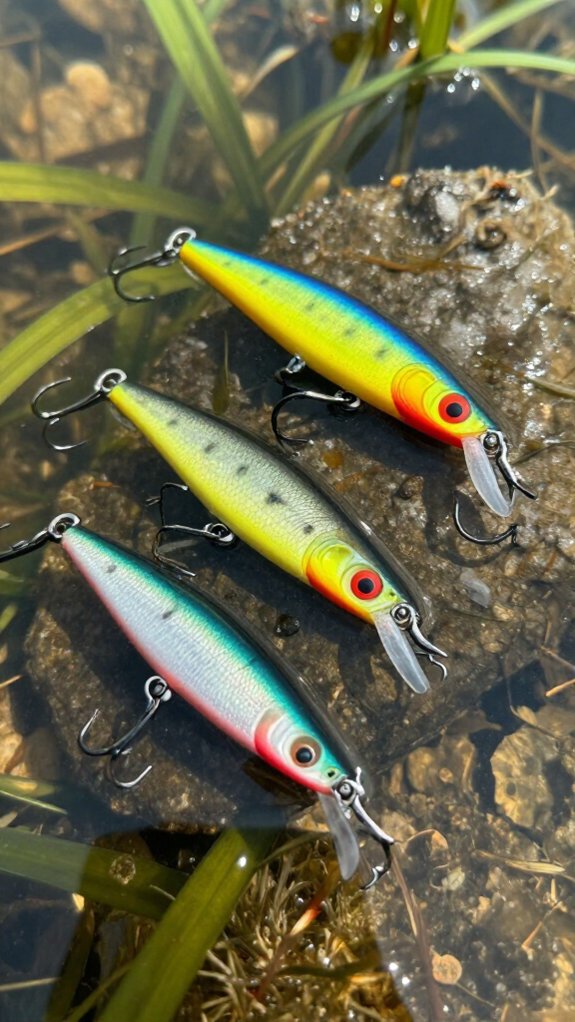
Why do some anglers catch bass after bass while others struggle with the same lure? I’ve learned it often comes down to lure color matching with local forage.
When I’m on the water, I pay close attention to what bass are actually eating—shad, crawfish, or bluegill—because bass recognize familiar natural prey and strike with confidence.
Water clarity and water conditions affect how well your presentation works, but matching the hatch remains essential. In murky water where crawfish predominate, I’ll throw dark or reddish hues like black and Junebug.
When shad are prevalent, I switch to clear, silver, or white patterns. I always scan the surface to observe baitfish colors before rigging up.
- Shad flickering like silver coins just below the surface
- Crawfish scuttling along rocky bottoms in rusty armor
- Bluegill hovering near docks with their olive flanks glowing
- Baitfish schooling in tight, nervous balls of flashing scales
- Bass exploding through the surface, mouths gaping white
Adjusting to local forage reshapes an average day into an unforgettable one.
How Soft Plastic and Hard Bait Colors Behave Differently
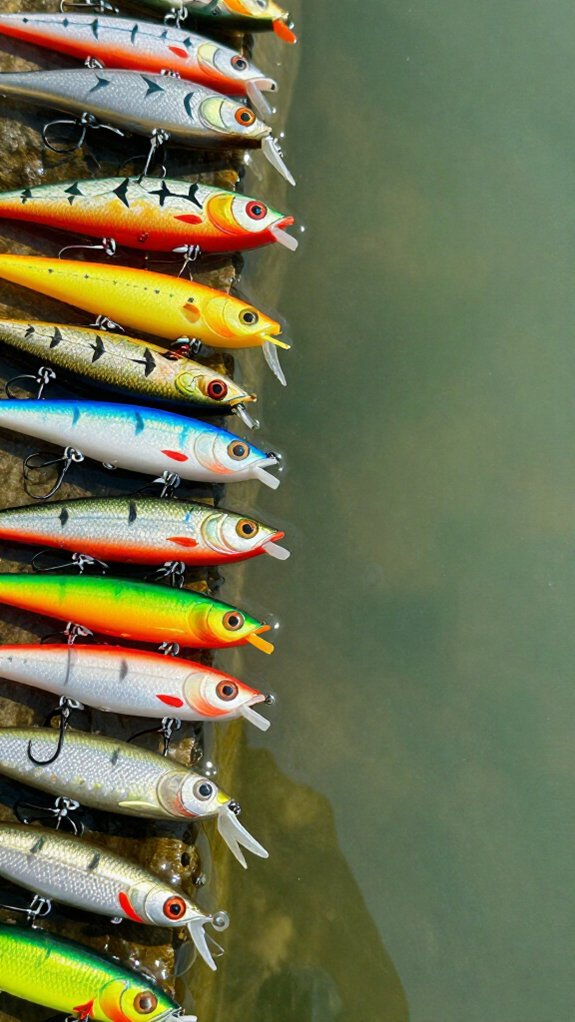
Although matching lure color to forage gives you a solid foundation, I’ve learned that the type of lure you’re throwing changes everything about how that color actually performs underwater.
Soft Plastics: Subtle and Natural
Soft plastics excel in clear water with translucent, lifelike hues that mimic baitfish. Their flexibility lets me dial in subtle color variations—pumpkinseed, watermelon, or ghost shad—that fool wary bass. The color behavior here depends on understated movement and natural presentation rather than flash.
Hard Baits: Bold and Reflective
Hard baits shine when water clarity drops. I’ll reach for metallics, chromes, or firetiger patterns that reflect light and create vibration. These lure colors punch through stained water, drawing reaction strikes from distance.
Matching Color to Conditions
Your choice between soft plastics and hard baits should hinge on water clarity. Clear conditions demand natural, muted tones. Murky water needs aggressive, reflective finishes that bass can’t miss.
Build a Minimal Lure Color System for Any Condition
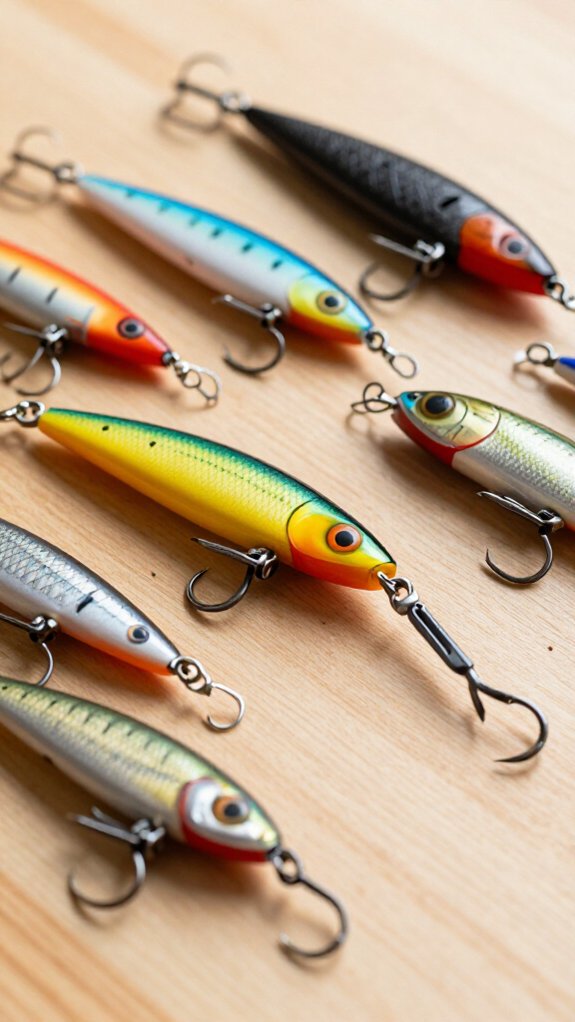
When you’re staring at a wall of lure colors that looks like a rainbow exploded, it’s easy to grab twenty shades and still feel unprepared. But I’ve found that narrowing down to three core categories keeps my tackle box light and my decisions quick.
My lure color system builds on lights, brights, and darks. I match water clarity to visibility needs: translucent finishes and natural tones like watermelon green pumpkin for clear water where I need to baitfish mimic, and solid chartreuse or black for murky conditions demanding maximum visibility. I keep just two trusted colors per category that flex across water conditions and seasons.
This foundation removes guesswork while letting me adjust for light levels and time of year without overthinking.
- White shad flickering like a wounded minnow in sunlit shallows
- Chartreuse cutting through coffee-stained backwater like a traffic cone
- Black silhouette looming against muddy depths where bass hunt by vibration
- Green pumpkin ghosting through gin-clear grass where giants spook easy
- Purple shimmer tempting twilight feeders when shadows swallow the lake
Frequently Asked Questions
What Color Lure Works Best in Clear Water?
I pick natural and translucent colors like green pumpkin, watermelon, or shad in clear water. These mimic real baitfish perfectly.
I match local forage when I can, and I’ll use ghost colors in bright sun to avoid spooking wary fish.
What Color Lures to Use in Murky Water?
I grab bright chartreuse, neon, or white lures for murky water since they create high contrast fish can’t miss. I’ll also throw black or purple when it’s overcast, and I always pick solid colors over translucent ones.
What Colors to Use in Clear Water for Fishing?
“Match the hatch” rings true, I stick with green pumpkin, watermelon, or ghost shad in clear water. I match local forage like bluegill, and won’t hesitate to throw white or pink when I need that extra visibility trigger.
What Color Lures Should You Use on a Cloudy Day?
I pick dark solids like black, blue, or purple for strong silhouettes, or bright chartreuse and orange for visibility. I’ll add rattles and skip reflective finishes since matte works better when clouds block the sun.
In Conclusion
Water clarity dictates lure color choice more than most anglers realize. I’ve learned that matching your presentation to visibility conditions isn’t just smart, it’s essential.
Start with natural hues in clear water, switch to high-contrast patterns when visibility drops, and always consider local forage. Remember the old adage: “Match the hatch, but don’t forget the window.” Build a compact system covering both extremes, and you’ll spend less time second-guessing and more time hooking fish.