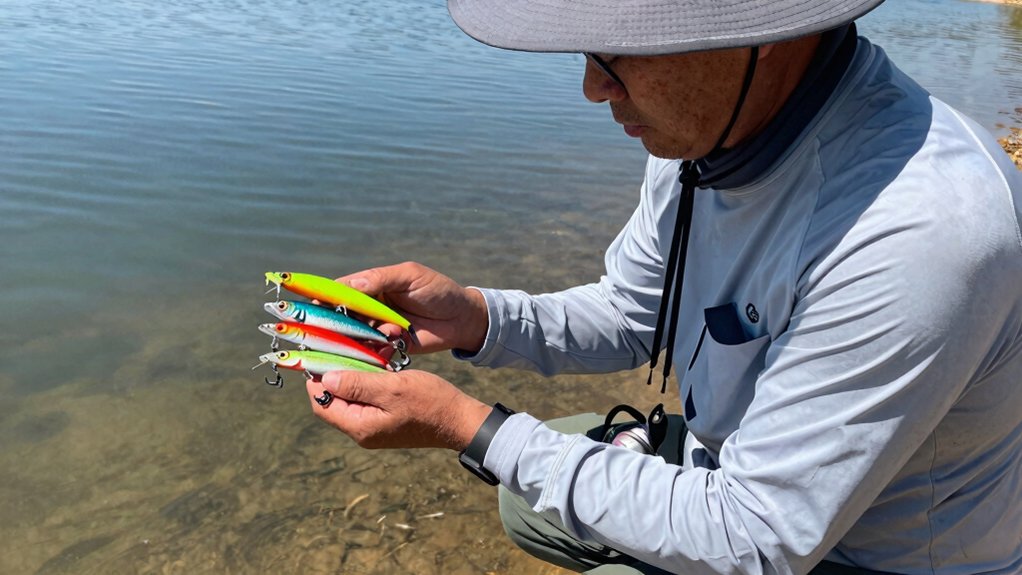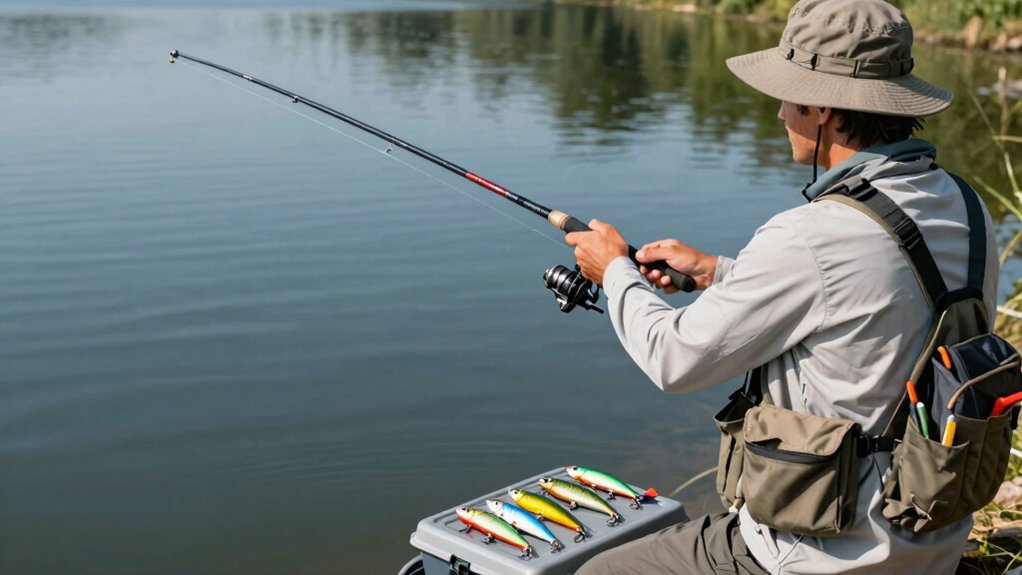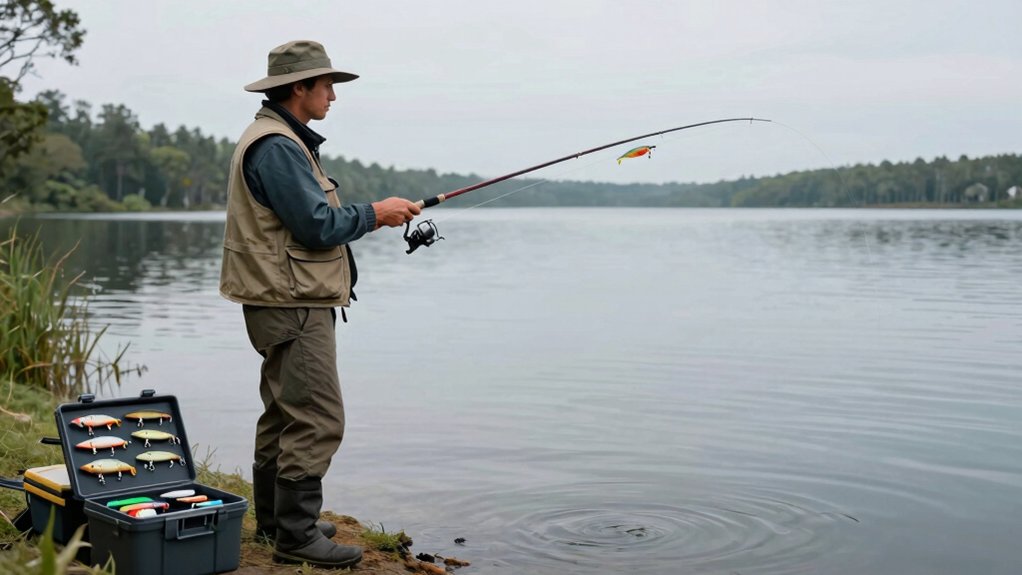
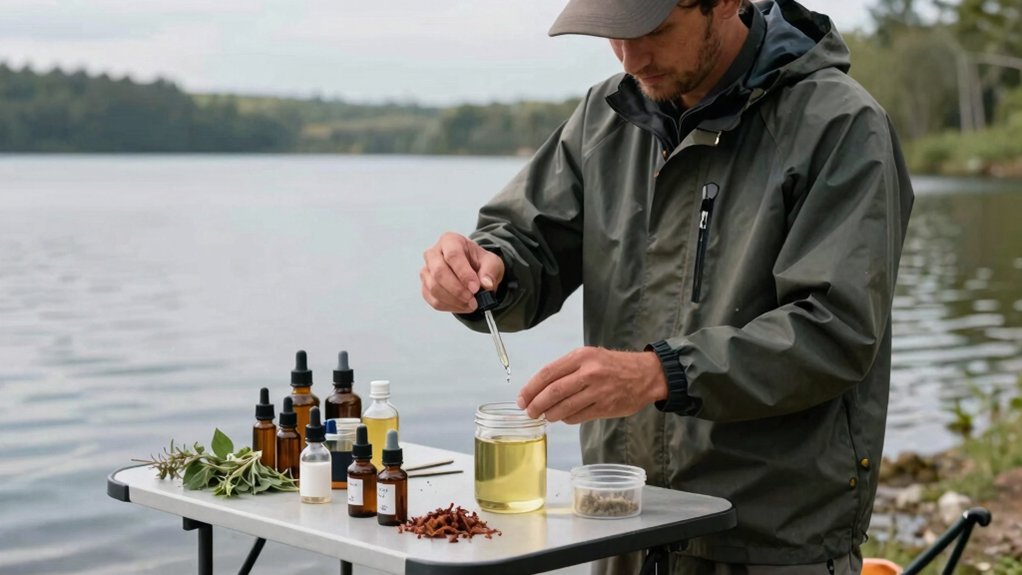

I make my own fishing lure scent by blending 1/4 cup fish oil with 1 tablespoon garlic powder until the aroma really pops, then I bottle it up. For freshwater, I keep things subtle with crayfish or baitfish oils, fish in lakes and rivers get spooked by anything too strong.
When I’m hitting the salt, I crank up the intensity with shrimp or crab extracts and add pheromone attractants because those tides wash scent away fast. If I need it to stick longer, I’ll melt petroleum jelly into my mix and let it cool into a thick gel that clings to lures for hours.
I dip soft plastics straight in, brush hard baits carefully, and coat jigs head to trailer, reapplying every 30–45 minutes when the bite slows. Everything goes into airtight, opaque containers in a cool spot so my batches stay potent for weeks.
There’s a whole science to matching scent strength with water conditions, and getting that dialed in changes everything.
Make a Basic Fish Oil and Garlic Lure Scent
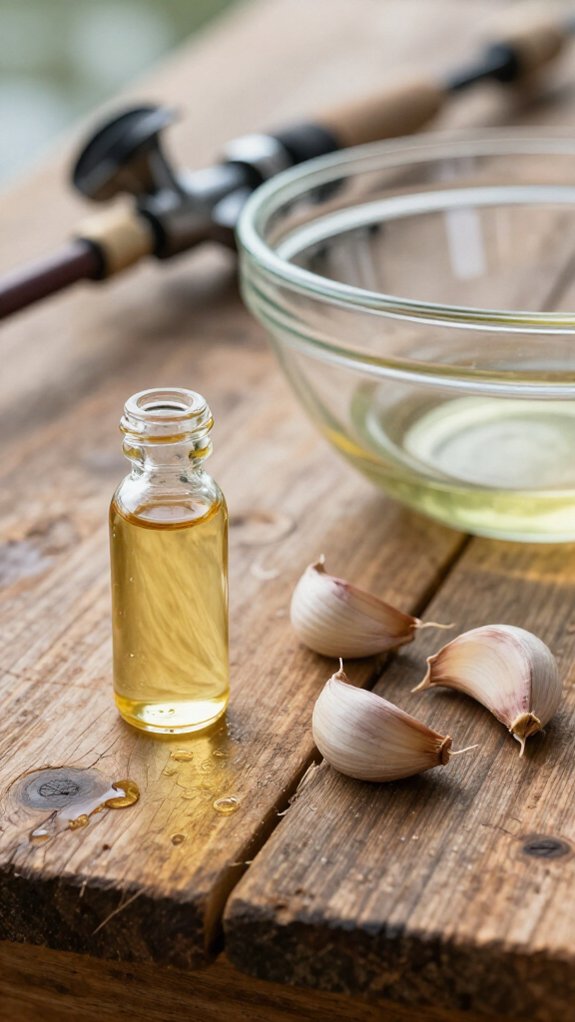
If you’re looking for a proven way to make your lures irresistible to fish, I’ll show you how to whip up a basic fish oil and garlic scent that will have predators tracking your bait from yards away.
Mix Your Base
I combine 1/4 cup of fish oil with 1 tablespoon of garlic powder or crushed garlic cloves. Fish oil delivers that fatty, prey-like smell predators crave, while garlic adds a pungent kick that triggers aggressive strikes.
Blend and Bottle
I mix thoroughly until the garlic disperses evenly throughout the oil, releasing a powerful aroma. Then I transfer the scent into a small spray bottle for quick, mess-free application.
Apply and Store
I apply this scent liberally to soft plastics, hard lures, or live bait before casting. Store your mixture in a cool, dark place to keep it potent and fresh trip after trip.
Tweak Your Scent for Freshwater or Saltwater
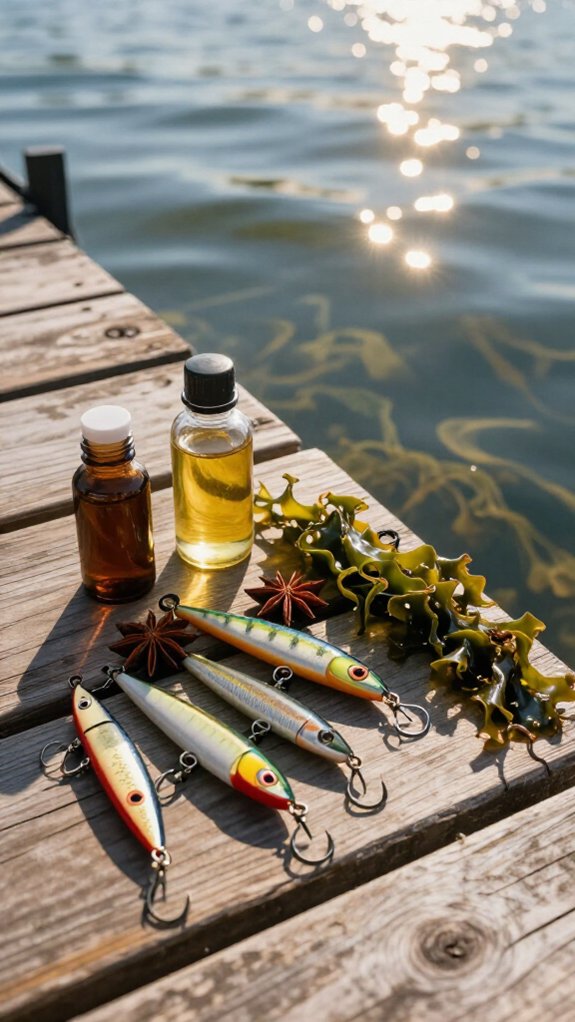
Whether I’m chasing bass in a quiet lake or battling redfish along a marshy coastline, I always match my lure scent to the water I’m fishing, and you should too.
Dialing In Your Scent Formulation
My freshwater and saltwater approaches differ completely. Here’s how I picture it:
- Saltwater: I grab shrimp or crab extracts and crank up the intensity with extra pheromone attractants—Redfish can’t resist that muddy, briny punch.
- Freshwater: I switch to crayfish or baitfish scents, keeping things subtle so I don’t spook skittish bass.
- Concentration matters: I use stronger oils for saltwater and lighter touches for freshwater.
- I test constantly: Water clarity and fish mood change daily, so I tweak my scent formulation until strikes tell me I’m dialed in.
Make a Gel Version That Sticks to Lures Longer
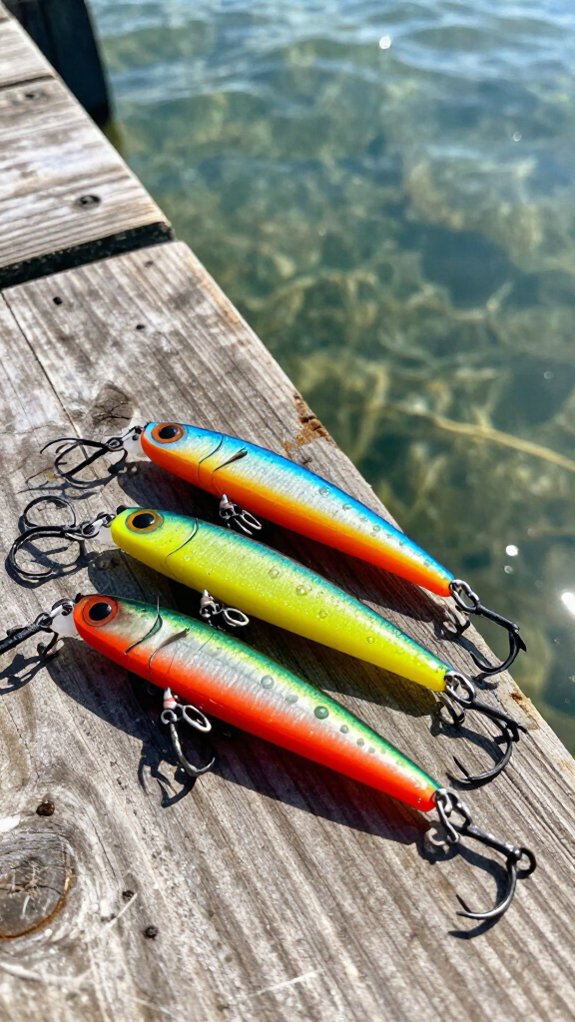
Liquid scents wash off faster than I’d like when I’m working a lure through heavy current or pounding surf, so I started making my own gel versions that cling to hard baits and soft plastics for hours instead of minutes.
Creating Your Gel Base
I melt petroleum jelly and blend it thoroughly with my favorite liquid scent, then let it cool into a firm, sticky consistency. The thick texture resists washing off, giving me sustained scent retention even in aggressive conditions.
Better Lure Application
For stronger adhesion, I use a small brush to apply the gel directly onto lure surfaces, or I’ll dip lures into the mixture before it fully sets. Adjusting the petroleum jelly-to-scent ratio lets me customize stickiness and strength for any fishing scenario.
I store my homemade gel scents in airtight containers, and they stay effective for weeks.
Apply Scent to Soft Plastics, Hard Baits, and Jigs
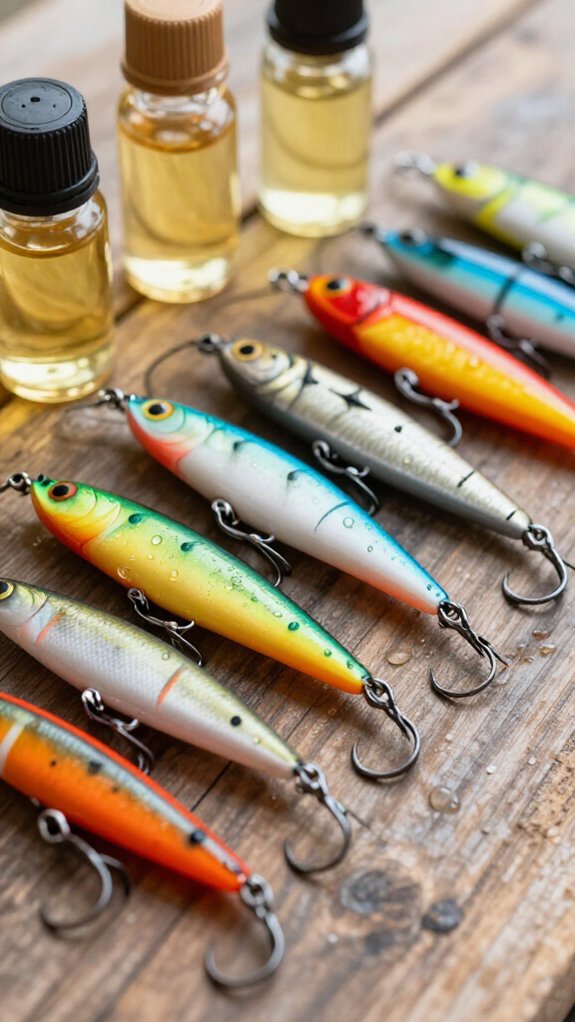
Because different lure types absorb and hold scent in unique ways, I’ve learned to match my application method to each bait style for maximum fish attraction.
Targeted Scent Application Methods
Here’s how I adapt my fishing techniques by lure type:
- Soft plastics – I dip or spray for full coverage, letting the porous material soak up scent like a sponge.
- Hard baits – I brush on coatings or inject scent directly into plastic bodies for slow release.
- Jigs – I coat both head and trailer with gel, allowing minutes to absorb before casting.
- All lure types – I reapply every 30–45 minutes, or immediately after landing fish.
Research from Berkley Fish Research Lab shows scented lures increase bite rates by 45%. I keep spray bottles accessible and refresh often, especially when moving between spots.
Scent-enhanced products designed specifically for fishing applications outlast homemade versions significantly.
Consistent reapplication metamorphoses ordinary lures into fish-attracting machines.
Store Homemade Scent for Months of Fishing Trips

I’ve learned that making a great homemade scent is only half the battle: keeping it potent for months requires proper storage from day one. I always store my batches in airtight containers right after mixing. This locks in those powerful amino acids and oils before they evaporate into thin air.
Here’s how I optimize shelf life:
| Storage Factor | What I Do | Why It Works |
|---|---|---|
| Container type | Choose opaque, airtight containers | Blocks light and air degradation |
| Location | Keep in cool, dry places away from heat | Prevents breakdown of active compounds |
| Labeling | Mark ingredients and preparation date | Tracks freshness for consistent quality |
| Portioning | Use small, resealable bottles | Minimizes air exposure during use |
| Monitoring | Check smell and consistency regularly | Catches spoilage before it wastes a trip |
I check my stored scents every few weeks. If something smells off or separates weirdly, I remix or toss it. No point risking a skunked day on the water.
Frequently Asked Questions
What Are Some Homemade Fish Attractants for Saltwater Fishing?
I blend crushed shrimp or crab shells with fish oil and alcohol for potent saltwater scents. I’ll sometimes ferment seafood scraps in saltwater for days, or mix tuna juice with garlic and hot sauce for extra attraction.
Does WD-40 Work as a Fish Attractant?
I don’t use WD-40 as a fish attractant because it’s petroleum-based and toxic to fish. There’s no scientific proof it works, and it likely repels fish with its chemical smell while harming aquatic ecosystems.
What Smells Attract Saltwater Fish?
You’d never guess what hooks them first, it’s not the flash. I rely on shrimp, squid, and baitfish oils; pheromone triggers seal the deal.
In murky water, I’m reaching for crab. Distance? My scent’s doing the work.
What Is the Best Scent to Attract Saltwater Fish?
I find baitfish and fish oil scents like mullet oil work best for saltwater fish, though I’ll match shrimp or crab scents when I’m targeting inshore species such as redfish or flounder specifically.
In Conclusion
Now you’ve got the know-how to craft lure scents that turn slow days into rod-bending action. Whether you’re dripping homemade fish oil onto a soft plastic for bass or gelling up garlic punch for redfish, that extra scent trail is your secret weapon.
Mix a batch this weekend, store it cool, and watch strikes come faster. Tight lines and fish on!