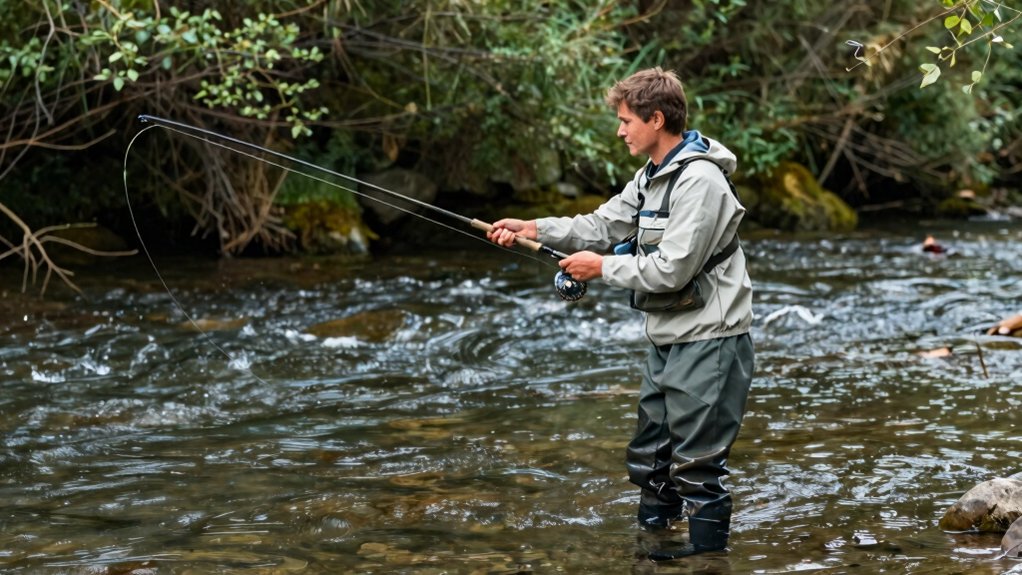

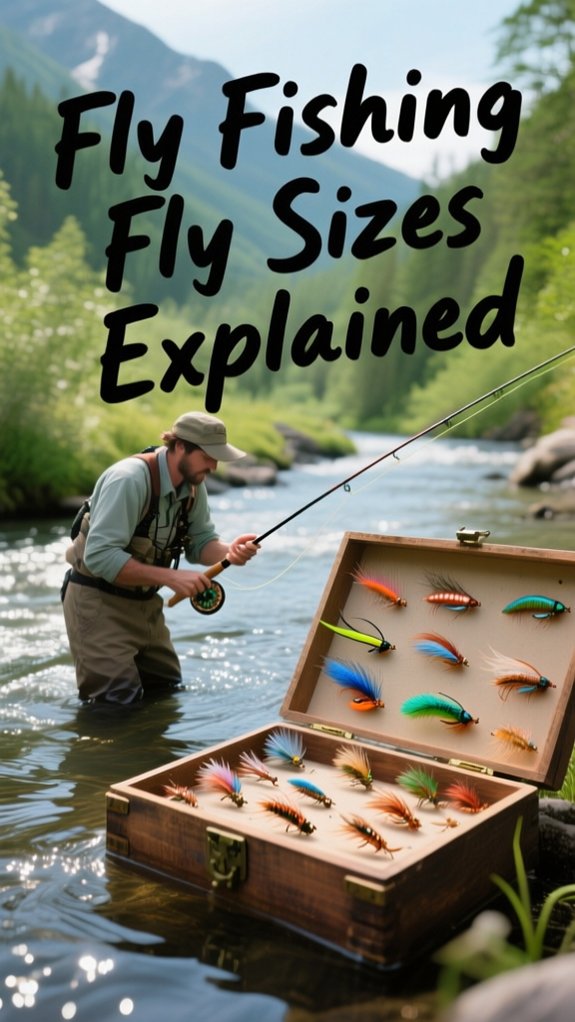
Fly sizes run opposite to what you’d expect: higher numbers mean smaller hooks, so a #18 midge is tiny while a #2 streamer is built for big grabs. I match size to what I’m seeing, tiny dimples get a 20-22 midge, splashy summer rises call for a 12-14 caddis.
When fish refuse my fly, I drop one size smaller before switching patterns entirely; it’s the fastest fix for picky trout inspecting naturals. Season matters too: winter means 18 and under for slow, cold fish, while summer lets you fish larger silhouettes with confidence.
The real skill is treating size, water conditions, and fish behavior as one continuous decision rather than guessing. Get that dialed, and you’ll spend less time swapping flies and more time setting hooks. There’s a method behind every adjustment that turns good anglers into consistently successful ones.
Five Fly Sizes to Start Catching Trout
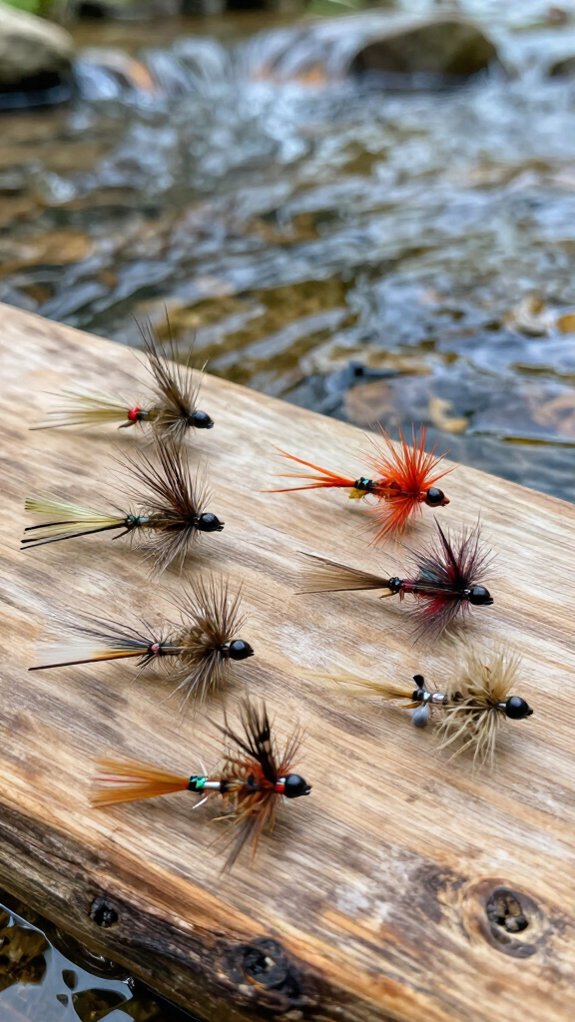
When I’m standing in a river and the trout start rising, I reach for a size 16 fly first because that’s where most mayfly hatches live, right in that sweet spot where hungry fish aren’t too picky and I’m not guessing blind.
But I don’t stop there. Here’s my five-size system:
Size 16 – My default. It matches the majority of mayflies you’ll encounter.
Size 14-12 – I tie these on when the hatch explodes. Big, visible flies cut through the chaos and grab attention when insects blanket the surface.
Size 18-20 – These become essential when trout start refusing my offerings or the hatch shifts to tiny BWOs or midges.
I always watch the naturals drifting by and adjust accordingly. If my fly gets ignored, I’ll bump up or down one size until I find what triggers that decisive take.
How Hook Sizes Work (Why #18 Is Smaller Than #8)
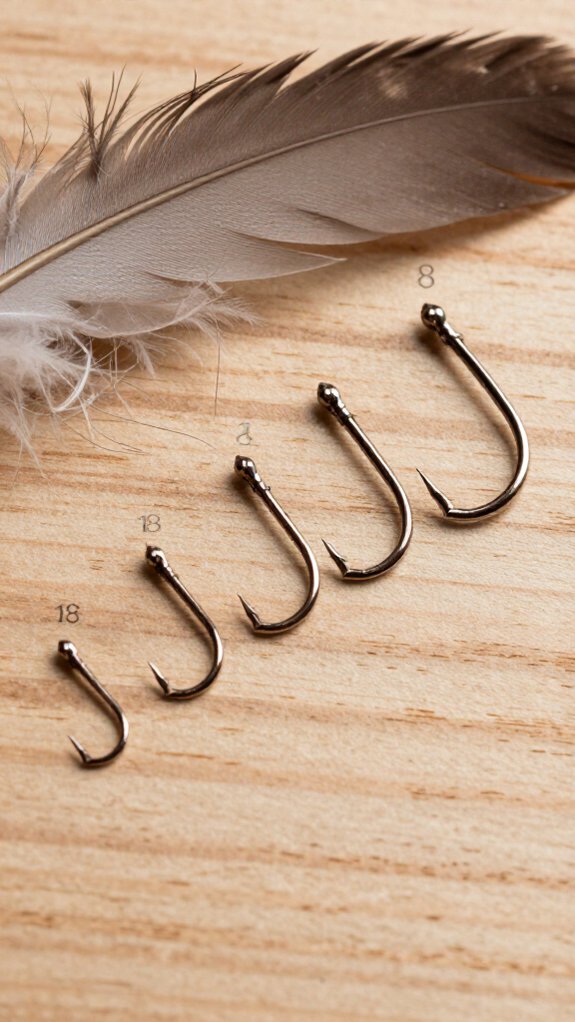
Although hook sizing seems backwards at first glance, I’ve learned that higher numbers mean smaller hooks, so that #18 midge hook I squint to thread is actually tinier than the #8 streamer I’d use for chasing bass.
The Numbering Breakdown
The system runs from #2 (big) down to #22 (tiny), measuring hook length and gap. Once you hit size 1, it flips to “aught” sizing—1/0, 2/0—where bigger numbers mean bigger hooks. Different manufacturers vary slightly, but the core rule holds.
Here’s how common sizes stack up:
| Hook Size | Typical Use | Hook Gap |
|---|---|---|
| #2-#4 | Large streamers, pike flies | Wide |
| #6-#8 | Woolly Buggers, bass bugs | Medium-wide |
| #10-#12 | Adams, Elk Hair Caddis | Medium |
| #14-#16 | Pheasant Tails, BWOs | Narrow |
| #18-#22 | Midges, tricos | Tiny |
I keep a cheat sheet taped to my tying desk, saves my eyes and my sanity.
Match Fly Size to Season: Winter vs. Summer Tactics
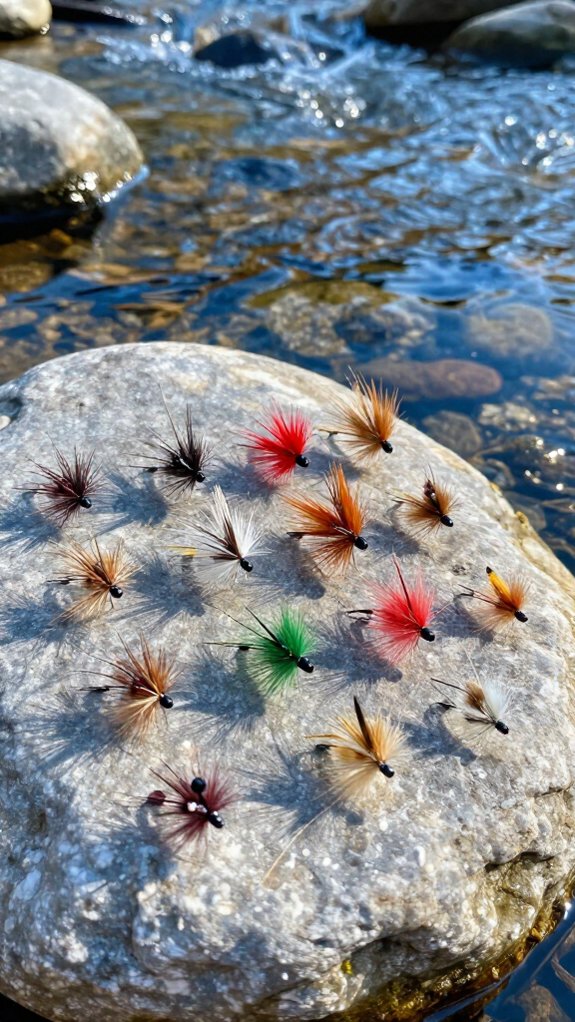
I’ve learned that matching my fly size to the season isn’t just good practice, it’s often the difference between a slow day and a memorable one.
Winter Tactics
When the water turns cold, I reach for smaller flies—typically size 18 and under. Cold temperatures slow insect metabolism, so mayflies and midges emerge smaller and less frequently. I’ll dead-drift tiny nymphs through slow, deep pools where trout conserve energy.
The takes are subtle, but the right size fly keeps me connected to finicky fish.
Summer Strategies
Come summer, I size up dramatically. Warmer water triggers explosive hatches—caddis, stoneflies, and terrestrials like hoppers demand flies from size 8 to 14.
I love watching trout slash at these bigger offerings with aggressive confidence.
The seasonal shift in insect availability guides every choice I make at the vise and on the water.
Size Flies to What’s Hatching: Reading the Water
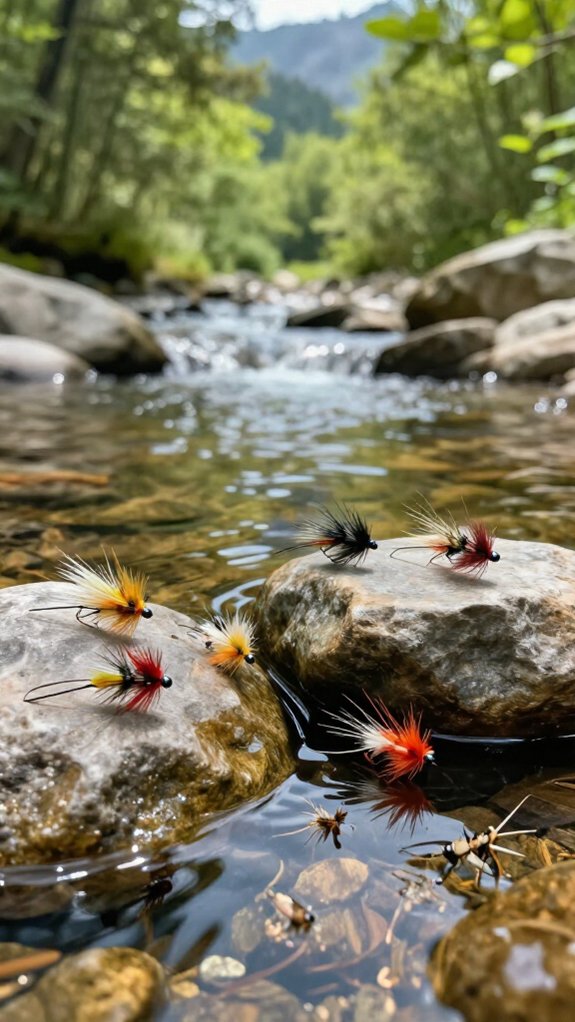
I start my day on the water by watching the surface like a hawk, because those subtle dimples and swirls tell me exactly what’s hatching and what size fly I need to tie on.
Once I spot rising fish, I’ll wade closer and look for the insects themselves. Maybe it’s size 16 mayflies dancing in the air or size 20 midges clustering in eddies, so I can match not just the species but the specific life stage they’re keyed on.
Paying attention to whether trout are slurping delicate emergers or smashing spent spinners helps me dial in the right size and profile before I even make my first cast.
Observe Surface Activity
How do you know what size fly to tie on when you can’t see what’s happening below the surface? I watch the surface like a hawk. Those subtle rings, splashy rises, or drifting insects tell me everything I need.
Reading What’s Happening
When I see delicate, tiny dimples, I’m thinking midges, size 20 to 26. Splashy, aggressive rises? That’s bigger fare, maybe size 10 to 14. I match my dry fly to what’s actually floating, not what I hope is there.
| Surface Sign | Fly Size to Tie On |
|---|---|
| Tiny dimples, subtle rings | 20–26 |
| Steady, sipping rises | 12–16 |
| Splashy, aggressive takes | 10–14 |
Peak hatch times, usually dawn or dusk, demand precise matching. I carry sizes 12 through 26 because conditions shift fast, and the trout won’t wait.
Identify Insect Stages
Surface rings only tell half the story, lifting a rock or skimming the water’s edge reveals what’s actually on the menu. I always carry a small seine net or even an old aquarium net to scoop what’s drifting by. Matching the hatch means matching the size, and that starts with knowing what stage the insects are in.
Check the Stages
Early hatch bugs run larger and bulkier—Fish notice them first. As the hatch progresses, naturals shrink. I’ll compare nymphs against my hook sizes right there on the bank.
Emergers hang in the film half-transformed, often smaller than the adults they’ll become.
When Fish Get Picky
During thick hatches, trout lock onto one size. If I’m getting refusals, I drop one hook size smaller, sometimes that’s all it takes.
When to Size Your Fly Bigger or Smaller Than the Hatch
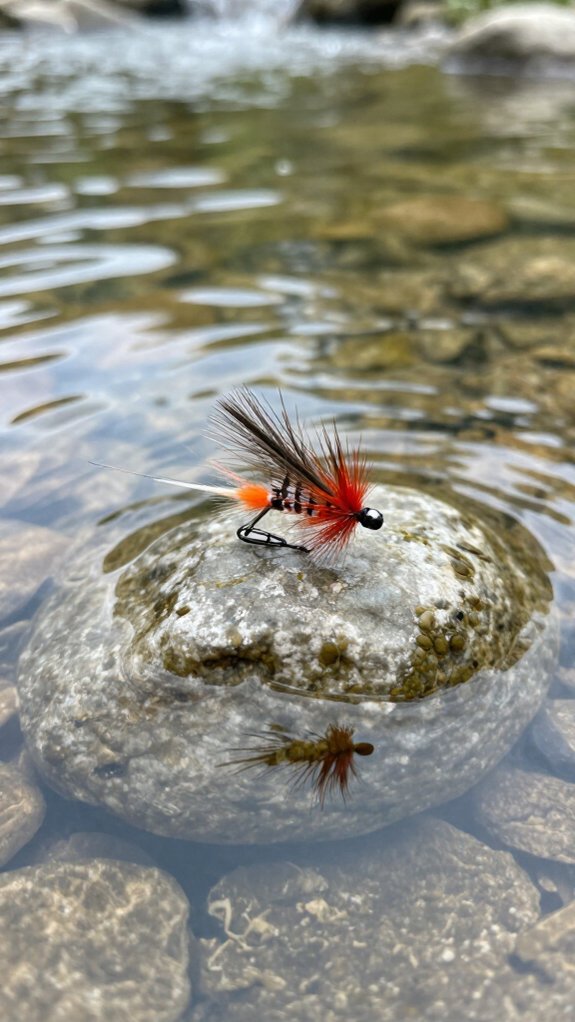
When I’m standing in a river watching a hatch unfold, one of the first things I ask myself is whether I should match the natural insects exactly, or deliberately go bigger or smaller.
Here’s my simple strategy:
| Situation | Size Adjustment |
|---|---|
| Aggressive fish, fast currents | Go bigger for visibility |
| Cautious fish, sparse hatches | Size down for realism |
| Heavy hatches, abundant insects | Slightly larger to stand out |
In faster water, I’ll often bump up my fly size because turbulent currents hide smaller patterns. The fish simply can’t see them.
But when I’m staring at picky trout in glassy pools, I reach for something smaller than what’s drifting by. Those fish have time to inspect every detail.
I also watch refusal patterns closely. If I’m getting looks but no takes with a size 16, I’ll try an 18, or swing to a 14 if they seem aggressive. Water clarity matters too; gin-clear streams demand more precise matching than stained water where contrast wins.
Fish Ignoring Your Fly? Troubleshooting Size Adjustments
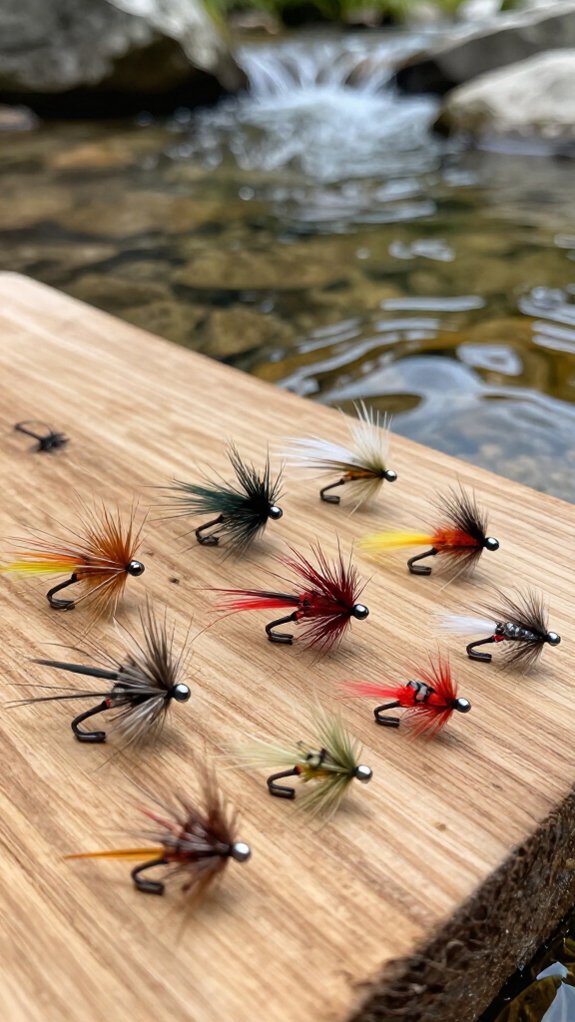
When fish keep passing up your fly, I start by diagnosing whether it’s a true refusal or just a missed drift, since that tells me if size is really the culprit.
If they’re consistently turning away after a close look, I’ll downsize one or two hook sizes to match something more vulnerable, like an emerger or crippled insect, because selective trout often key on the easiest meal.
Just remember, if they still refuse after you’ve gone smaller, the problem’s probably your fly’s profile or pattern, not its size.
Diagnosing Refusal Causes
If you’re watching fish rise all around your fly without taking it, I’ve learned that size mismatch is usually the culprit I’m quickest to blame.
Reading the Refusal
When trout refuse repeatedly, they’re telling me something’s off. I watch the naturals drifting by. Are they smaller than my imitation? Often I’ll drop one or two sizes to match emerging or crippled insects struggling in the film. That subtle downsizing frequently turns looks into eats.
When Size Isn’t Everything****
Sometimes I’ve adjusted size perfectly and still get rejected. That’s my signal to look deeper. Profile, color, or behavior might need tweaking. Research from Montana State University found selective trout can reject flies based on minute details beyond size alone.
Persistent refusal means I’ve got more detective work ahead.
Downsizing Persistent Refusals
Once I’ve ruled out drag and presentation flaws, I’ll reach for my fly box and start dropping sizes, because nothing turns a stubborn refusal into a confident take quite like giving that trout exactly what it’s already looking at.
I watch fish ignore my size 16 during a heavy hatch, and that’s my cue. They’re keyed on something smaller, more delicate. I’ll drop to an 18 or 20, sometimes even finer, until I see that subtle shift from inspection to commitment.
When naturals blanket the surface, selectivity spikes. A smaller profile reduces suspicion and matches the exact stage fish are targeting.
Here’s my systematic approach:
- Drop one size first, Fish behavior reveals preferences faster than guessing
- Match the insect stage precisely, Emerger versus adult matters as much as millimeters
- Let each refusal guide your next choice, Building toward that perfect intersection of size and silhouette
Frequently Asked Questions
Can You Provide a Chart of Fly Sizes for Fly Fishing?
I can’t display a visual chart, but I’ll outline the sizes I use: nymphs and dries run 12-16, streamers 8-10, trout patterns 10-22, midges 24-26, and bass or saltwater flies at 2/0 or 4/0.
Is a Size 12 Hook Bigger Than a Size 10?
No, a size 12 hook isn’t bigger, it’s smaller, like a shrinking shadow as numbers climb. I picture the sizing scale as an upside-down staircase: The higher I step, the tinier the hook becomes.
Can You Explain the Different Sizes of Fly Hooks and Their Uses?
I use smaller numbered hooks like #2 for big fish and larger numbers like #32 for tiny insects. I’ve found #12-16 work best for trout dries, while 2/0 handles saltwater predators.
How Big Is a Size 14 Fly?
A size 14 fly’s roughly the length of a grain of rice, about 3 millimeters. I use these versatile patterns constantly since they imitate mayflies, caddisflies, and terrestrials that trout can’t resist during most hatches.
In Conclusion
Getting your fly size right is the fastest way to turn quiet days into productive ones. I’ve seen anglers using #6 grasshoppers in January and wondering why the trout won’t budge, meanwhile, a simple #18 midge does all the work.
Studies from Montana State University show trout reject improperly sized flies up to 60% more often than matched offerings. Start with five core sizes, read the hatch, and adjust from there. You’ll feel that tug more often, I promise.