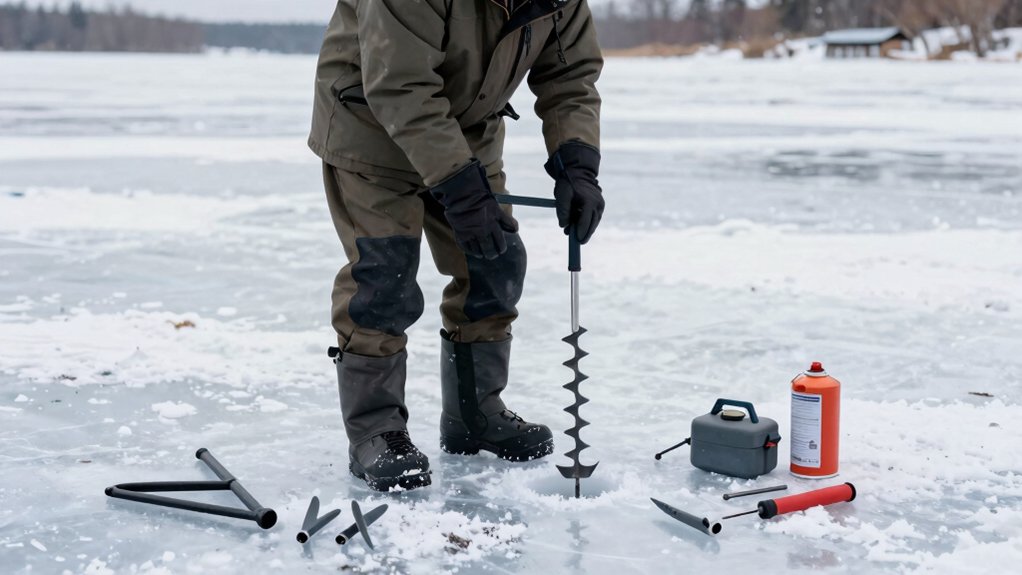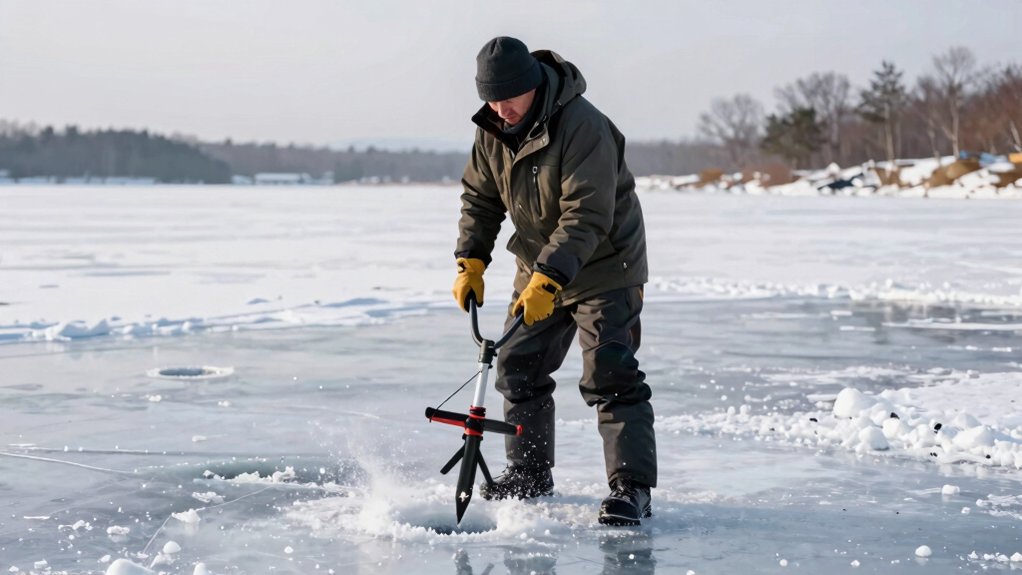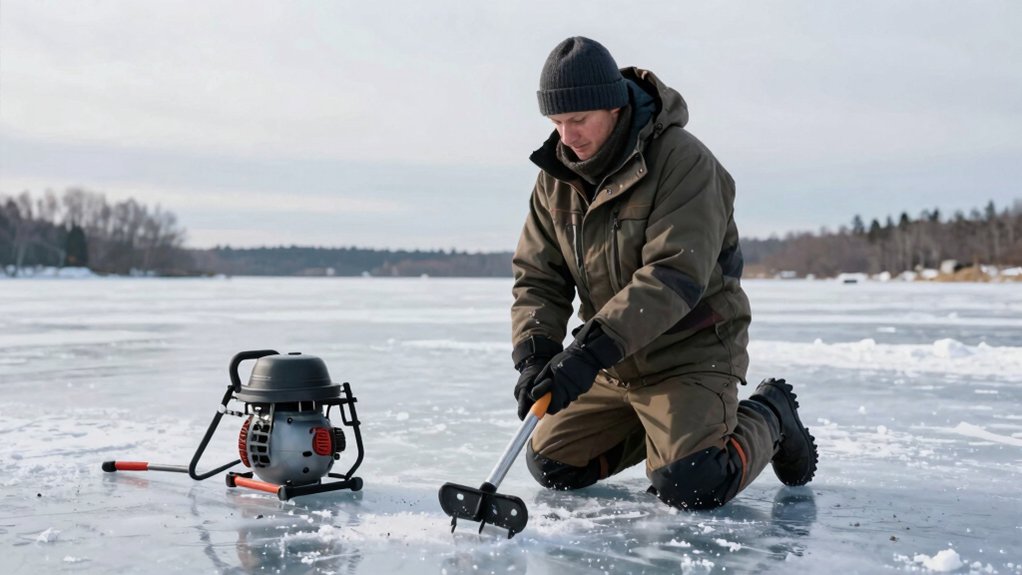
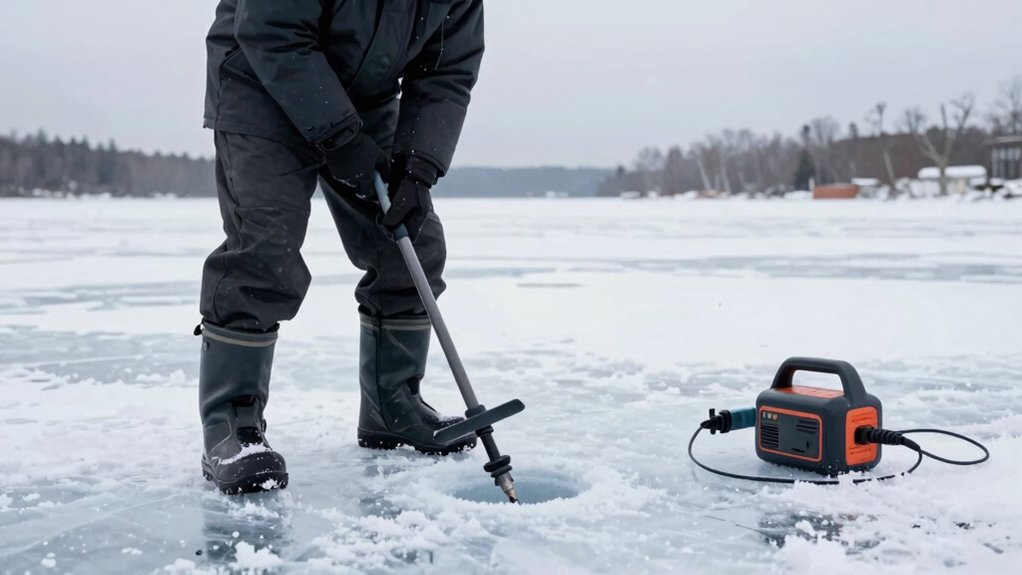

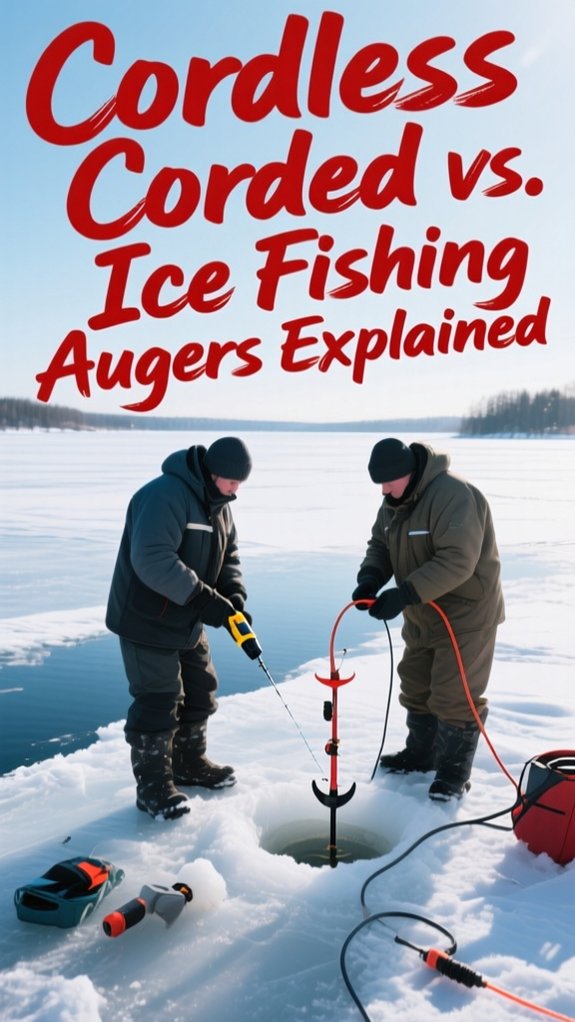
Cordless augers give you freedom to roam with 40V lithium batteries drilling 70–100 holes through 16 inches of ice, while corded models deliver unlimited runtime when you’re posted up near power.
I choose cordless for mobility on remote lakes and ice under a foot thick, but grab a corded auger for marathon sessions in thick ice where steady torque matters. Your ice thickness, portability needs, and access to power outlets determine which belongs in your sled, stick around and I’ll break down exactly how to match your setup to your fishing style.
Cordless vs. Corded Ice Augers: How Each Powers Through the Ice
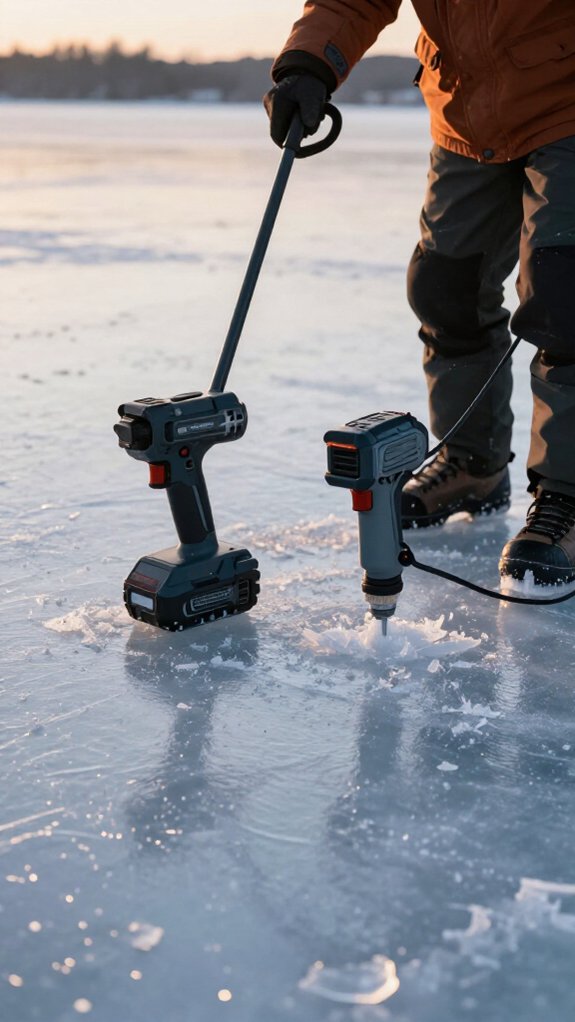
When I’m staring down at a foot and a half of frozen lake, the last thing I want is an auger that quits before I do, so I pay close attention to how cordless and corded models actually translate power into holes through the ice.
A power comparison reveals surprising shifts. Today’s cordless ice auger with brushless motors and high-capacity lithium batteries punches through 70-100 holes in 16 inches of ice—matching what corded ice auger units deliver without the tether.
Battery power depends on voltage; 40V systems outperform older 20V setups noticeably. Meanwhile, corded ice auger tools give unlimited juice for unlimited ice drilling, no range anxiety when ice thickness demands marathon sessions.
For ice fishing, I weigh mobility against endurance. Cordless frees me from outlets, but corded never dies mid-hole.
Go Anywhere Drilling: Why Cordless Augers Win on Mobility
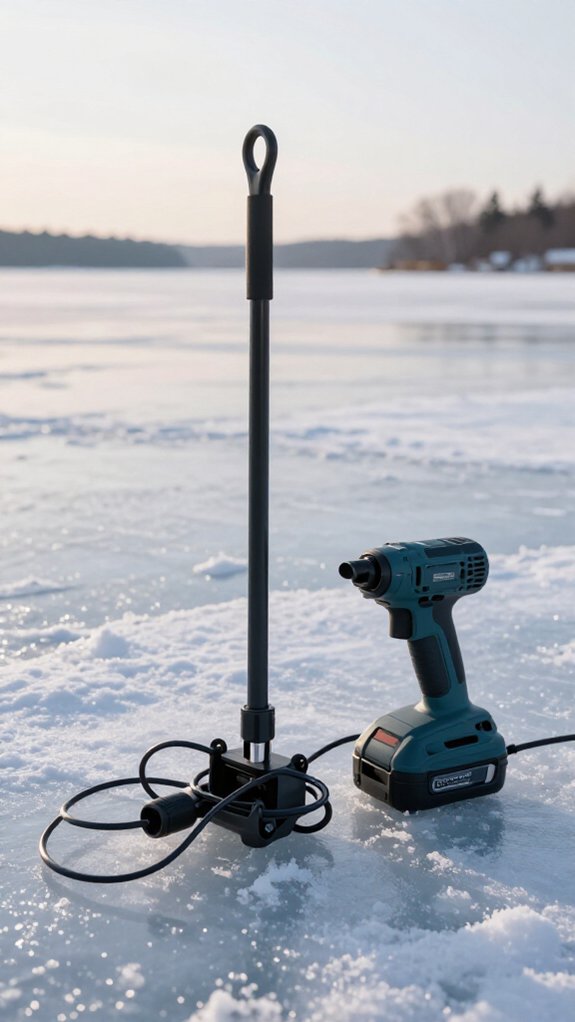
I don’t need to outlast the ice, I need to outmaneuver it. That’s exactly why cordless augers dominate when mobility matters most.
Freedom to Roam
With cordless augers, I’m never anchored to a power source. I drill holes anywhere the fish are biting, no extension cords, no generators, no limits. Modern lithium-ion batteries pack enough punch for 70-100 holes per charge, letting me chase schools across the entire lake.
Built for the Hike
The lightweight design transforms how I fish remote locations. I shoulder my gear and trek across pressure ridges without the back-breaking haul of corded units. Quick setup means less time rigging, more time jigging.
Safer, Simpler Days
No cords means zero tripping hazards on slick ice. That safety and convenience lets me focus entirely on the bite, not my footing.
Unlimited Runtime: When Corded Augers Outperform Batteries
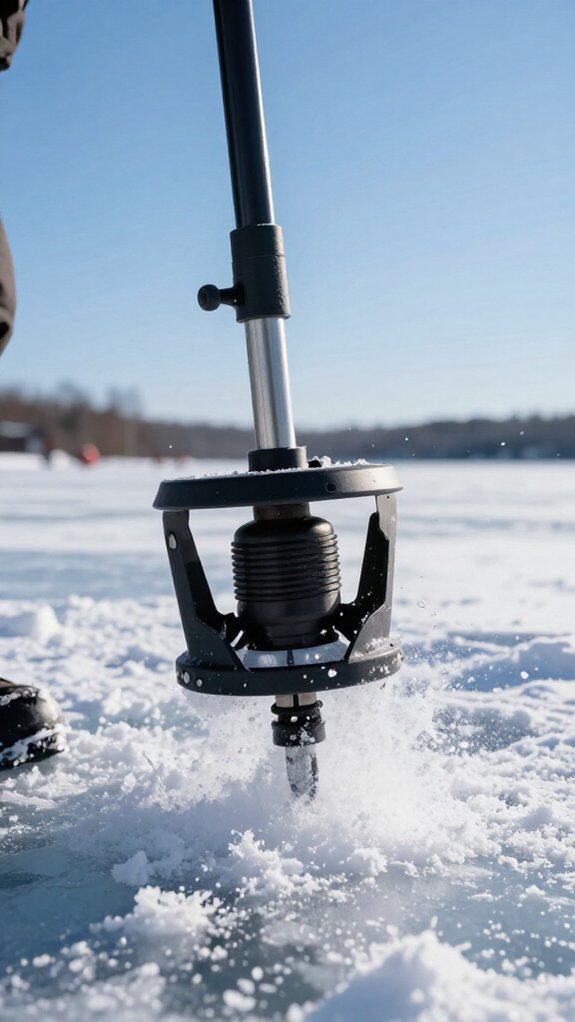
Although cordless augers free me to roam, there are days when I’m planted in one spot, drilling hole after hole through thick ice, and that’s when corded power becomes my best friend.
Why I Trust Corded for Marathon Sessions
When I’m punching dozens of holes searching for active fish, unlimited runtime matters. Corded augers plug into any electrical outlet and keep spinning without pause. No battery swaps, no charging breaks, just continuous operation.
| Feature | Corded Advantage |
|---|---|
| Power supply | Unlimited from outlet |
| Cold weather | No battery drain |
| Drilling efficiency | Steady torque in thick ice |
That power consistency changes extended drilling from frustrating to fluid. I’ve watched buddies fumble with dead packs while my auger hums through two feet of hard water. For ice fishing reliability during all-day expeditions, corded units simply deliver.
Ice Thickness and Hole Size: Matching Auger Power to Your Needs
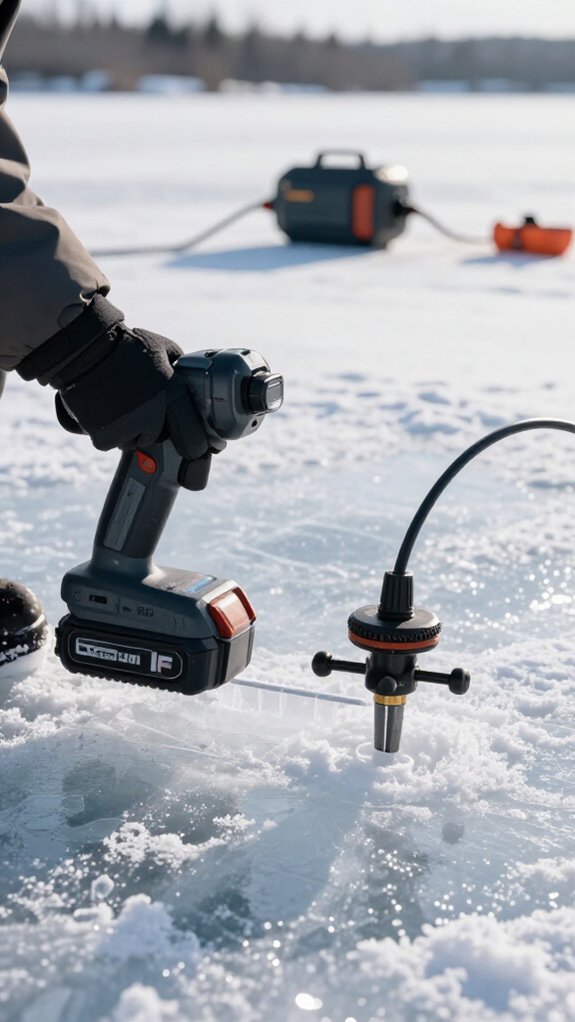
The ice beneath your boots dictates exactly how much muscle your auger needs to bring. I’ve learned that matching auger power to ice thickness and hole size isn’t just about convenience, it’s about drilling efficiency and preserving your gear.
Finding Your Power Match
For ice up to 16 inches thick, a 40V electric auger with a 10-inch bit handles beautifully. The drill capacity feels effortless, and battery life stays solid through a morning of hole-hopping.
But when ice depth pushes past 20 inches, you’ll feel the strain. That’s where gas augers or high-voltage electric models shine, cutting through dense layers without bogging down.
Smaller 6-8 inch holes? Lighter cordless units work fine. Scale up your hole size or hit 24+ inches of ice, and you’ll want that heavy-duty power match to avoid burning out your motor, or your arms.
Subzero Performance: Which Auger Type Handles Extreme Cold
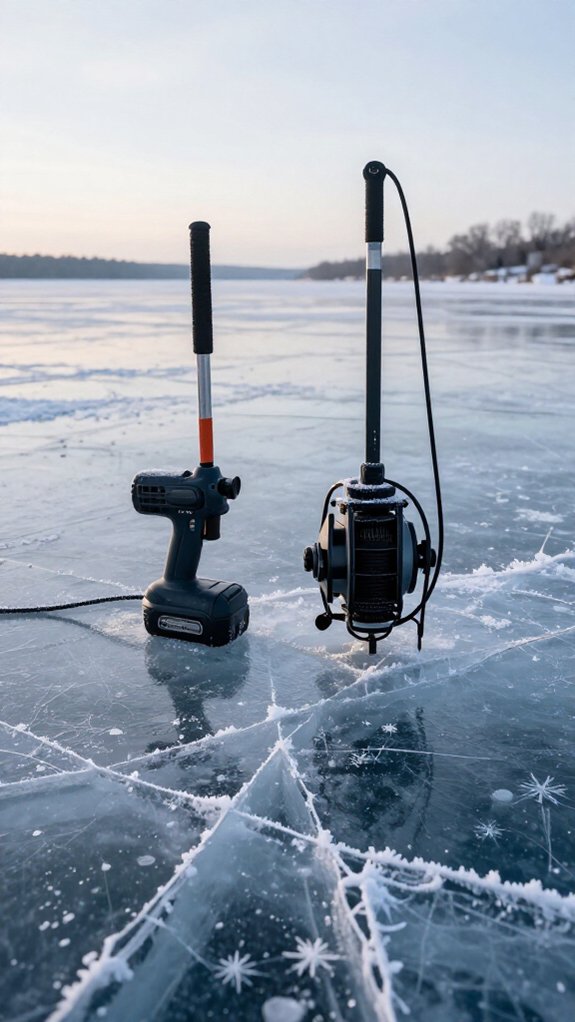
When temperatures plummet below zero, I want you to know that battery cold tolerance and motor power retention become the make-or-break factors for your auger’s performance.
I’ve seen too many anglers caught off guard by stiff cables and sluggish motors, which is why I’m breaking down how modern cordless systems actually outperform corded options in extreme cold.
Let’s look at what keeps these machines drilling when the mercury drops.
Battery Cold Tolerance
How do cordless augers actually hold up when the mercury plummets past zero? I’ve found that modern lithium-ion batteries deliver surprising cold tolerance when you manage them right.
Battery Performance in Extreme Cold
Quality lithium-ion batteries retain 85-90% capacity at -20°F with proper insulation. Without battery warming, you’ll see runtime reduction and power loss. That’s why I always recommend high-capacity batteries, 5 Ah models offset efficiency drops significantly.
What Actually Works
Testing shows cordless augers drilling 150+ holes at -15°F with minimal efficiency in cold conditions. Proper insulation and keeping spare batteries warm inside your jacket makes a real difference.
The Corded Advantage
Corded electric augers eliminate battery cold performance concerns entirely. They draw steady power regardless of temperature, offering unmatched reliability when cold-weather resilience matters most.
Motor Power Retention
Although battery capacity grabs most of the attention, motor power retention is what separates a smooth drilling experience from a frustrating battle with frozen water.
When I’m drilling through two feet of ice at -20°F, I need torque consistency I can trust. Here’s what I’ve learned about cold weather performance:
Cordless Advantages
Lithium-ion batteries in today’s electric augers retain 85-90% capacity even in subzero temperatures. That’s impressive resilience when your fingers are freezing and the fish are biting.
Corded Reliability
Corded models with brushless motors and smart power management maintain steady speed regardless of temperature, no battery warming required.
The Real-World Difference
Studies show both cordless and corded electric augers deliver efficient operation in extreme cold. However, cordless vs corded isn’t about compromise anymore. With proper insulation, battery-equipped models now outperform gas augers at -40°F, giving me faster holes with less downtime between spots.
The True Cost of Ownership: Batteries, Fuel, and Generator Hassle
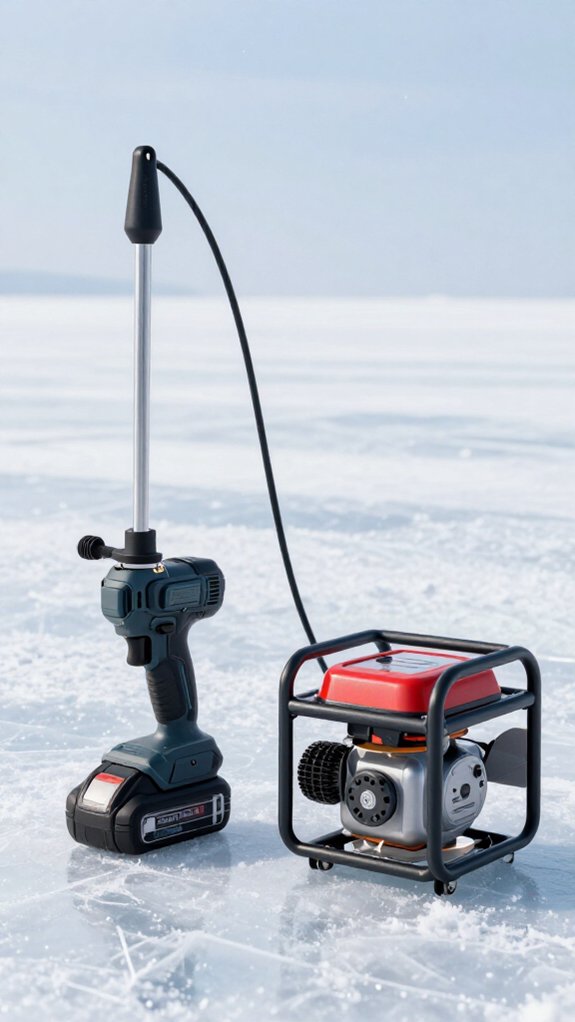
Because I’ve tracked every dollar I’ve spent on ice fishing gear over fifteen seasons, I can tell you the real cost of an auger goes far beyond what you pay at the register.
Breaking Down the Real Expenses
When I compare cost of ownership, electric augers win on long-term savings. My batteries run about $32.50 yearly—nothing compared to gas augers demanding constant fuel refills, oil mixing, and maintenance that drains hundreds annually.
Lithium-ion batteries laugh at -40°F when kept warm in my jacket pocket. No generator hassle, no hauling extra gear, no noise spooking fish.
Here’s my math: recurring expenses for gas add up fast. Batteries last 3-5 seasons with minimal upkeep. I’ve eliminated the unpredictable costs and headaches entirely.
Choose Your Auger: A 3-Minute Decision Checklist for Ice Anglers
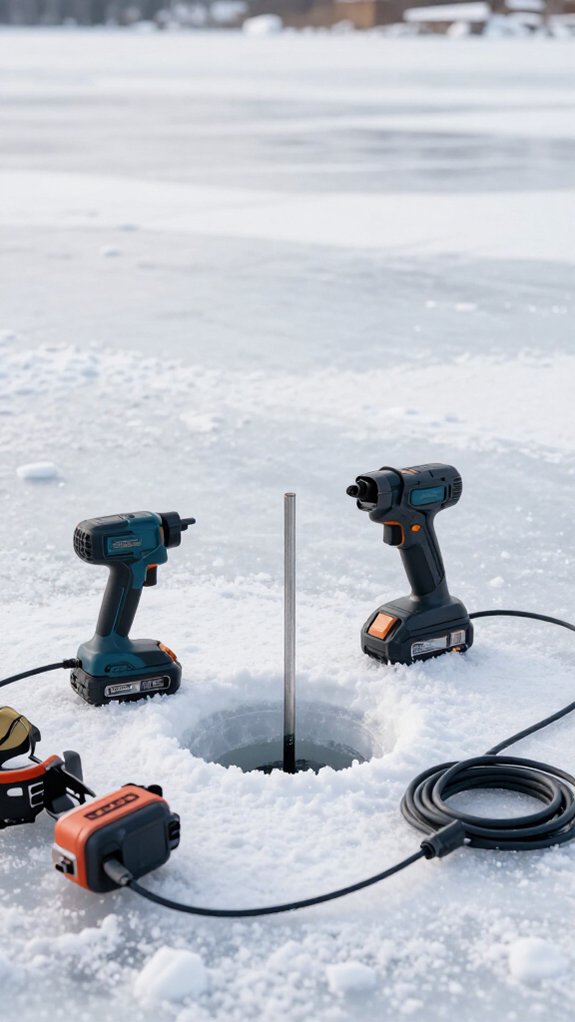
I weigh my ice thickness needs first, knowing I’ll want a corded auger’s relentless torque if I’m punching through three feet of hardwater.
But I’ll grab a cordless model when I’m hopping between panfish holes on twelve inches of early-season ice.
Portability priorities come next. I’m honest about whether I’m hiking a mile across a wind-swept lake or setting up thirty feet from my truck’s inverter.
Finally, I check my power source preference against reality: Do I own three charged batteries and a backup plan, or am I parked beside a reliable generator that’ll never quit mid-drill?
Ice Thickness Needs
When I’m staring down at a frozen lake trying to decide what auger to grab, ice thickness is the first thing I check, because it determines whether I’ll be drilling holes all morning or fighting a dead battery before I even set my first tip-up.
Match Power to Ice Depth
For ice thickness under 12 inches, I reach for a lightweight cordless auger with a 20V or 40V battery. It’s plenty of drilling power for quick, efficient cuts without lugging heavy ice fishing equipment.
Once ice depth exceeds 16 inches, I switch strategies. That increased resistance demands higher auger capacity: either a beefier electric ice auger or a reliable gas auger with serious torque.
Deep Ice Demands More
Drilling through 2–3 feet? I need extended battery life and raw muscle, typically found in 40V systems or proven gas models. Corded options fail me here, they’re chained to outlets, useless on remote, thick ice.
My Quick Rule: Under 12 inches, go portable auger; over 16 inches, prioritize power.
Portability Priorities
Portability often seals the deal for me after I’ve sized up the ice, because lugging gear across frozen lakes separates enjoyable trips from exhausting chores.
Weight and Maneuverability
I grab my cordless auger when I’m trekking to remote locations because it weighs just 20–30 pounds, half what corded models tip. That lighter weight transforms my mobility across slush and snow, letting me weave between pressure ridges without fighting bulk.
Setup Freedom
Battery capacity keeps me drilling without tethering myself to extension cords or hunting for a power source. I enjoy quick drilling anywhere my ice fishing setup takes me, no outlet required.
For anglers prioritizing portability, cordless augers deliver unmatched convenience and freedom on the ice.
Power Source Preference
Because I’m standing on a frozen lake with a decision to make, I start by asking myself one question: what’s powering my day?
For me, this boils down to how I want to fish and where the juice comes from.
Cordless augers run on lithium-ion batteries, giving me freedom to roam.
Corded augers keep me tethered to a power supply, usually within 50-100 feet of an outlet.
Here’s my quick checklist:
- Mobility matters: Do I need to chase fish across the lake?
- Battery management: Can I trust my gear in subzero temps? Modern cordless electric augers handle 70-100 holes per charge with smart systems.
- Location reality: Is there even a power source nearby?
For remote ice fishing, I grab cordless every time.
The portability wins.
Frequently Asked Questions
Are Electric Ice Augers Worth It?
I Find electric ice augers absolutely worth it since they’re lightweight, drill plenty of holes per charge, run quietly without fumes, work in extreme cold, and need barely any maintenance compared to gas models.
Who Makes the Best Battery Operated Ice Auger?
StrikeMaster rules with their 40V series, and I’ve seen why: Their lithium-ion batteries retain over 85% capacity at -40°F, letting me drill up to 100 holes per charge through 16-inch ice without breaking a sweat.
What’s the Best Auger for Ice Fishing?
I prefer cordless augers for most ice fishing since I’m not tethered to cords and can drill 100 holes per charge. If I’m fishing thick ice daily, I’d consider corded for uninterrupted power.
What Is the Best Cordless Drill for Ice Auger Fishing?
The best cordless drill for ice auger fishing is a brushless 18V+ model with 4.0 Ah lithium-ion batteries, like Milwaukee’s M18 Fuel, it’s a beast that chews through thick ice without breaking a sweat.
In Conclusion
I’ve drilled thousands of holes through ice, and I’ve learned that the “perfect” auger doesn’t exist, only the perfect match for how you fish. Whether you’re chasing crappies on a frozen metro lake or trekking miles for lake trout, your choice between cordless and corded power comes down to mobility versus endurance, cold-weather reliability versus raw cutting stamina.
Coincidentally, the same weekend I finally committed to a cordless setup, my buddy’s generator died three miles from the truck, stranding him with a dead corded auger while I kept drilling. That moment crystallized everything I’d researched about ice fishing power systems. Choose based on your real fishing patterns, not hypothetical extremes, and you’ll spend less time troubleshooting and more time pulling fish through the hole.