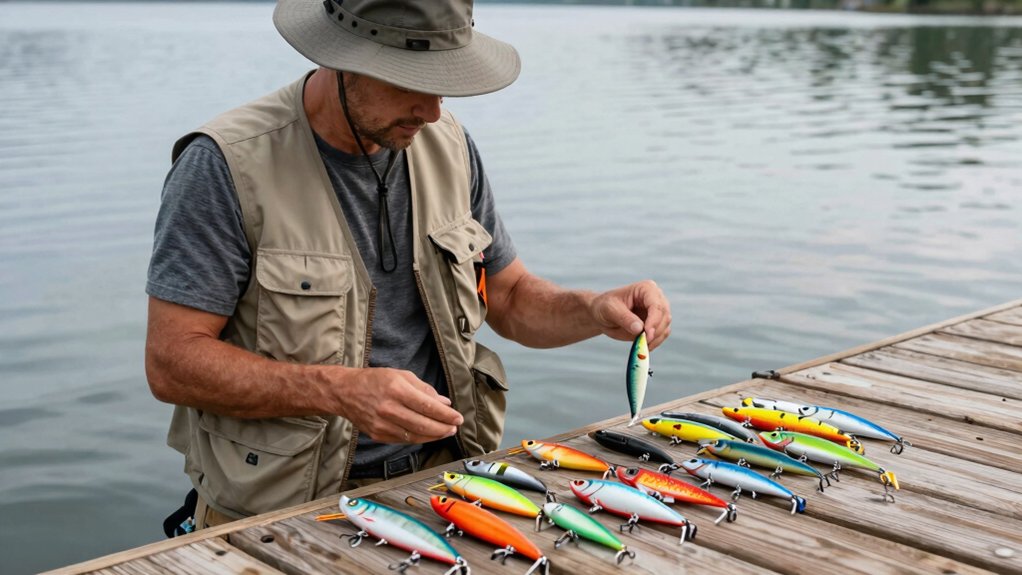
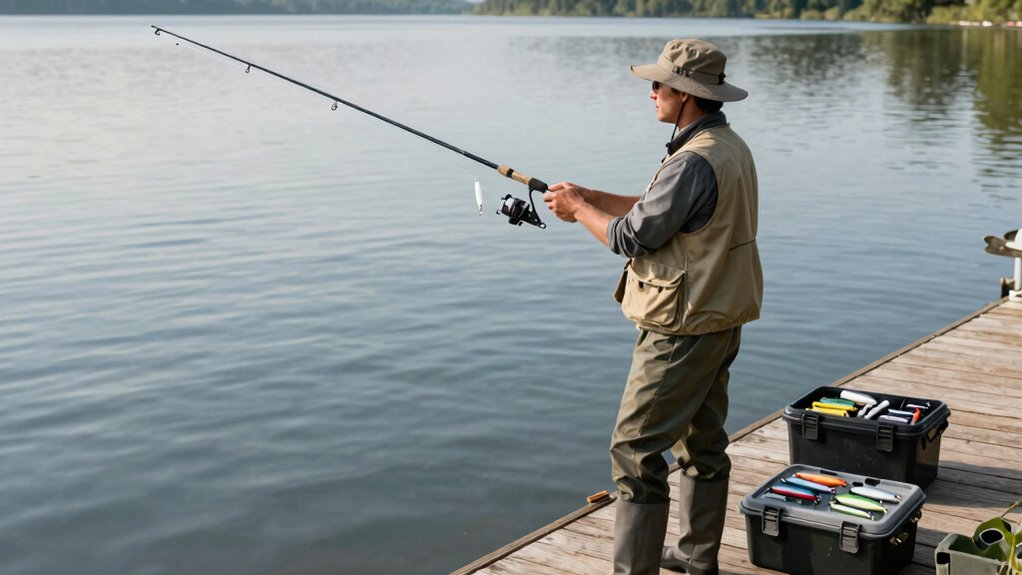

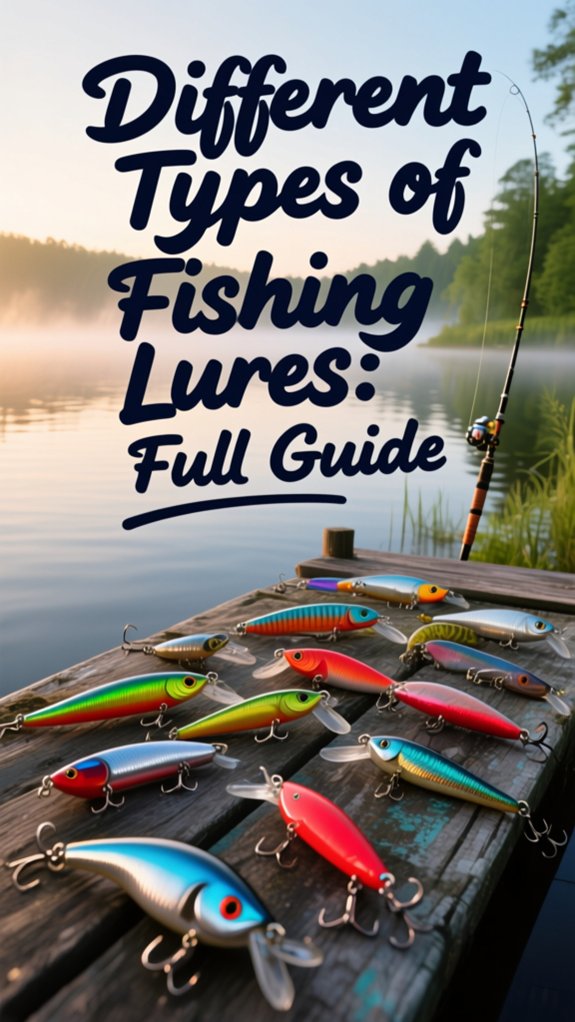
The main types of fishing lures are crankbaits and plugs that dive and wobble like fleeing baitfish; jigs that punch through cover and hug bottom structure; spinnerbaits and inline spinners that flash and thump in murky water; soft plastics that pulse with lifelike subtlety for finicky fish; swimbaits with paddle tails that replicate whole baitfish profiles; topwater lures that trigger explosive surface strikes; and fly patterns that precisely match local insect hatches.
Each family serves a distinct purpose, and knowing when to throw which one separates anglers who catch fish from those who just get their line wet. Stick around and I’ll walk you through exactly how to match these lures to the conditions you’re facing.
Crankbaits and Plugs: Hard Fishing Lures That Dive and Wobble
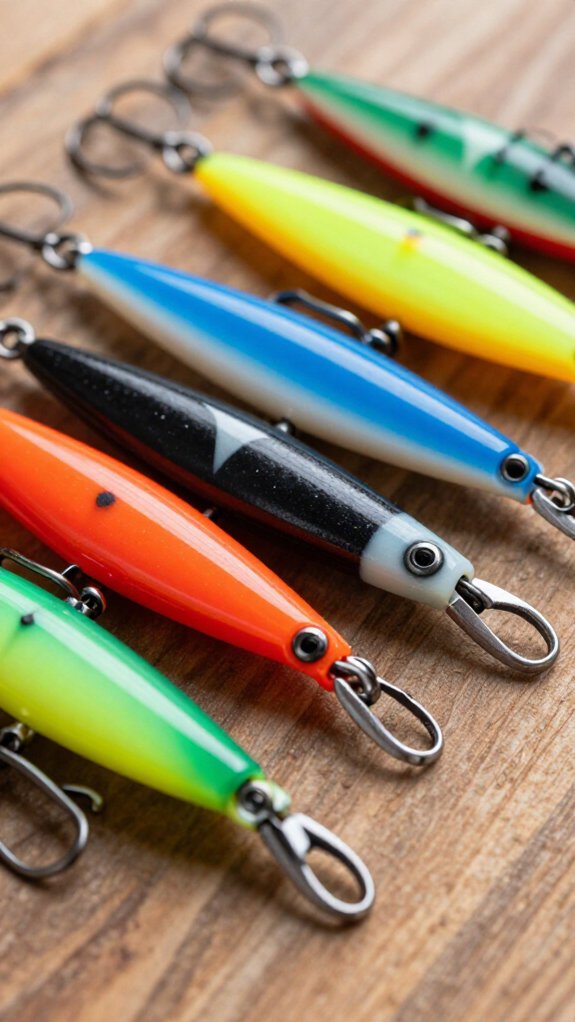
If you’re looking to cover water quickly and trigger aggressive reaction strikes, crankbaits and plugs deserve a permanent spot in your tackle box. These hard plastic lures mimic baitfish with remarkable realism.
I’ve found they excel when predators are actively feeding.
How They Work
The secret’s in the lip. That angled bill forces the lure downward, creating a diving motion that sends it to precise depths. As you retrieve, you’ll feel that distinctive wobbling vibration through your rod.
It’s the swimming action that drives fish wild. The side-to-side motion perfectly imitates injured or fleeing prey.
Choosing Your Depth
I stock three main types:
- Squarebills, shallow runners (2-5 feet), perfect for bumping cover
- Medium divers, mid-range depths (5-10 feet)
- Deep divers, reaching 15+ feet for suspended fish
Fishing Techniques That Work
Vary your retrieve speed and try stop-and-go patterns.
I’ll burn them fast, then pause. Often, that’s when bass and pike hammer it.
Jigs: Weighted Fishing Lures for Bottom-Hugging Action
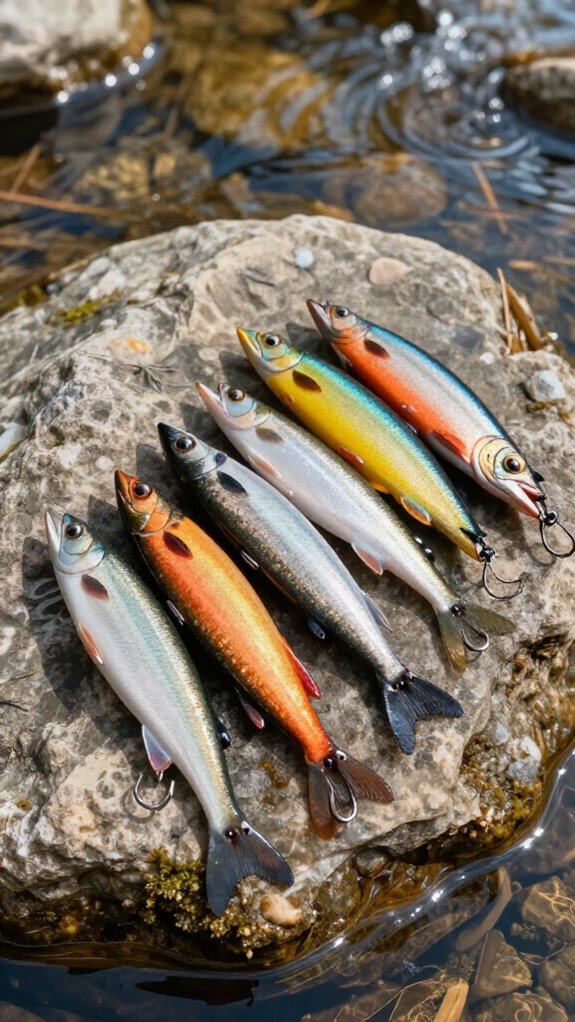
When I’m targeting fish holding tight to structure, jigs are my go-to weapon for dragging along the bottom and tempting strikes from stubborn bass, walleye, and everything in between.
The magic starts with a weighted head that plummets fast and stays down. I pair mine with soft plastics or trailers that flutter on the drop. The skirt pulses with every hop, mimicking crawfish or panicked baitfish. This bottom-hugging action triggers reaction bites when nothing else works.
Here’s why I never leave shore without them:
- Football jigs excel on rocky bottoms where fish species hug structure
- Finesse jigs tempt pressured fish in clear water
- Flipping jigs punch through thick vegetation
- Casting jigs cover water fast
- Hair jigs shine in cold water when bites turn subtle
Spinnerbaits and Inline Spinners: Flash and Vibration That Triggers Strikes
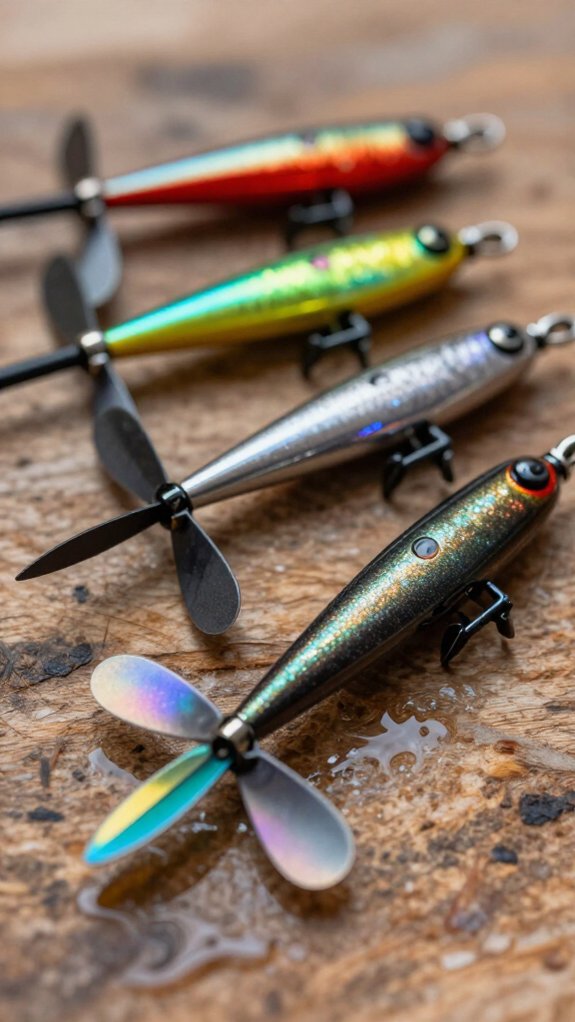
I’ll break down how blade design varieties, retrieval techniques, and target species strategies work together to make spinnerbaits and inline spinners some of the most reliable reaction baits in your tackle box.
Different blade shapes, Colorado, willow, and Indiana, each throw off distinct flash and thump patterns that I’ve learned to match to water clarity and fish mood.
Once you’ve picked the right blade, adjusting your retrieve speed and angle lets you control depth and vibration intensity.
Knowing which species respond best to each style helps you pick the perfect tool for bass, pike, walleye, or trout on any given day.
Blade Design Varieties
Blade design is where spinnerbaits and inline spinners truly separate themselves from every other lure category, because that spinning metal disk isn’t just decoration, it’s a precision tool that converts your retrieve into flash and vibration fish can feel in their lateral lines from surprising distances.
I’ll break down what you need to know:
- Colorado blades churn slowly and throw off massive vibration—Perfect when bass can’t see two feet in front of them
- Willow leaf blades slice fast with minimal drag, giving you flash that mimics a school of fleeing shad
- Indiana blades split the difference, balancing thump and shimmer for versatile conditions
- Larger metal blades amplify everything, calling in fish from farther away when you’re covering water
- Changing blade shape lets me tune my presentation without swapping the whole lure
That skirted hook on spinnerbaits pairs with these spinning options differently than inline spinners’ direct wire setup, but both exploit the same predatory instinct.
I’ve watched bass crush these in chocolate-milk water where nothing else gets noticed.
Match your blade to your conditions, and you’re already ahead of most anglers on the water.
Retrieval Techniques Explained
How exactly do you turn a spinnerbait or inline spinner into a fish-catching machine once it hits the water? I control my retrieve techniques to manipulate how the lure works through the water column.
My reeling speed determines everything. Faster retrieving speed intensifies flash and vibrations, drawing aggressive reaction strikes. I slow down when fish seem hesitant, letting the blade thump steadily.
| Retrieve Style | Reeling Speed | Best Application |
|---|---|---|
| Burn | Fast | Top of water column, active fish |
| Steady | Moderate | Mid-depth, searching pattern |
| Slow-roll | Slow | Deep water column, cold fish |
Spinnerbaits with their horizontal-spinning blades create that signature thump plus visual flash. Inline spinners generate tighter, rapid vibrations straight down the line. Both cut through murky water where visibility drops. I match my retrieve to conditions, and fish can’t resist that injured baitfish imitation.
Target Species Strategies
Once I’ve dialed in my retrieve, the next question becomes: what species am I actually targeting with all that flash and vibration? Both spinnerbaits and inline spinners trigger strikes from predatory target fish by mimicking distressed baitfish, but I match my lure types to specific fishing conditions and target species.
Picking the Right Tool for Your Target Species
I grab spinnerbaits when I’m chasing bass or pike through thick weeds and timber. Their thumping blade cuts through murky water where visibility drops.
For trout, walleye, or perch in open water, I’ll thread on inline spinners and keep my retrieve steady.
- Bass smash spinnerbaits bounced through heavy cover
- Trout can’t resist inline spinners in current seams
- Walleye hunt flash during low-light periods
- Pike ambush vibration in stained water
- Perch stack up where inline spinners flutter
I always let fishing conditions dictate my choice.
Chatterbaits and Blade Baits: When to Choose Sound Over Sight
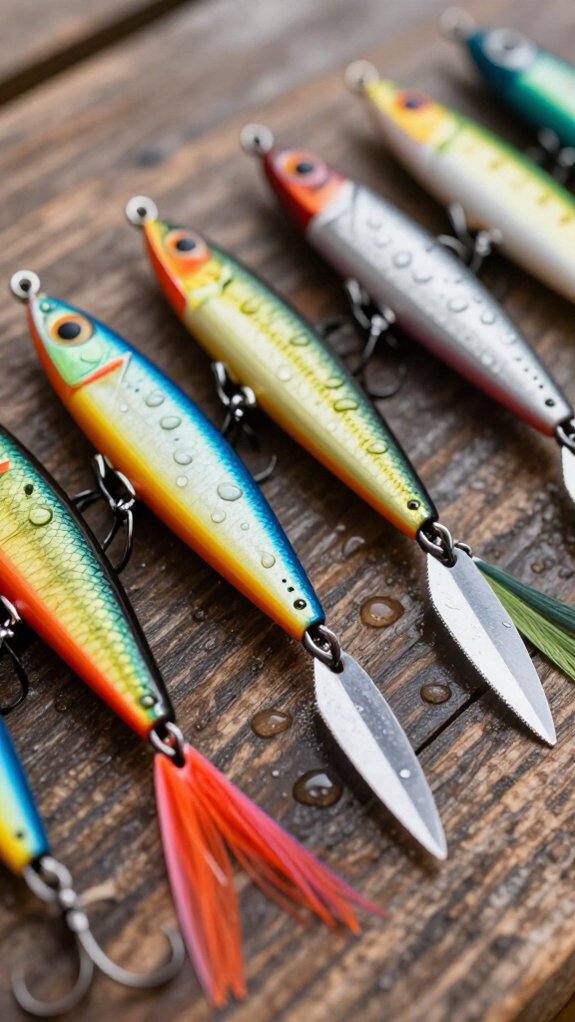
When I’m staring into chocolate-milk water where I can’t see my hand six inches below the surface, I immediately reach for lures that do the shouting for me.
Why Sound Wins in Low-Visibility
Chatterbaits and blade baits become my go-to weapons when visual cues fail. Here’s the breakdown:
- Chatterbaits combine flash with aggressive sonic vibrations, giving fish multiple reasons to strike even when they can’t see clearly.
- Blade baits lean hard into pure vibration and sound to attract predators when sight is basically useless.
Research from the American Fisheries Society shows fish response to acoustic stimuli increases up to 40% in stained conditions. The vibrations from these lures penetrate deeper water layers, calling fish from beyond visual range.
I switch to sound-based presentations whenever low-visibility combines with active feeding, it’s like ringing the dinner bell they can’t ignore.
Soft Plastic Baits: Lifelike Action for Finesse Presentations
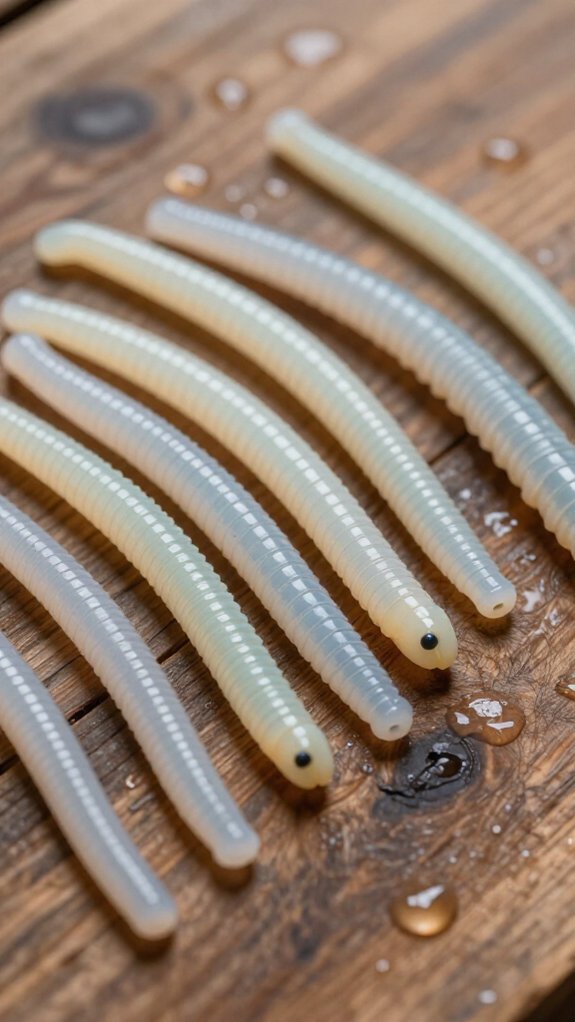
While chatterbaits shout for attention in murky water, I’ll switch to soft plastics when fish are tight-lipped and I need to whisper instead of yell.
Soft plastic baits use flexible materials that pulse and flutter like natural prey: worms, crawfish, or baitfish, giving me that subtle lifelike action that triggers hesitant biters.
Here’s why I always keep these in my tackle box:
- Worms and stick baits excel for wacky or drop shot finesse presentations
- Creature baits and craws imitate bottom-dwelling natural prey perfectly
- Tubes and shad tails offer versatile rigging techniques for any depth
- Toads buzz across lily pads with irresistible surface disturbance
- Trailers customize my jigs with extra action and bulk
Whether I’m punching mats or dragging a Carolina rig, Soft plastic baits let me adapt my rigging techniques to whatever the fish demand that day.
Spoon Lures: Simple Metal That Mimics Injured Baitfish
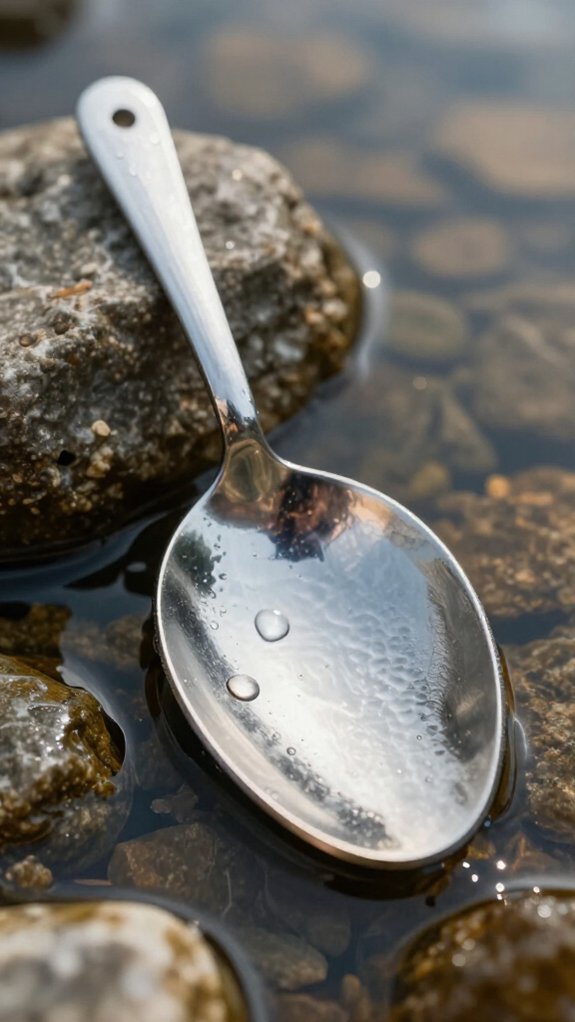
Soft plastics let me whisper to pressured fish, but sometimes I need to flash a distress signal that predators can’t ignore from fifty yards away. That’s when I reach for spoon lures.
These curved metal lures are deceptively simple. Their wobbling, flashing movement perfectly imitates an injured baitfish struggling near the surface. I’ve watched trout, walleye, pike, and muskies crush spoons on bright days when that reflective surface throws off irresistible shimmer.
What makes spoon lures so reliable? It’s all physics. The curved body creates a wide, erratic wobble that triggers instinctive strikes from predatory fish.
I always attach a snap-swivel to prevent line twist, then let the metal lures do the work, whether I’m casting toward structure or trolling open water. No fancy retrieve needed. Just steady motion and confidence.
Swimbaits: Realistic Fishing Lures With Natural Swimming Motion
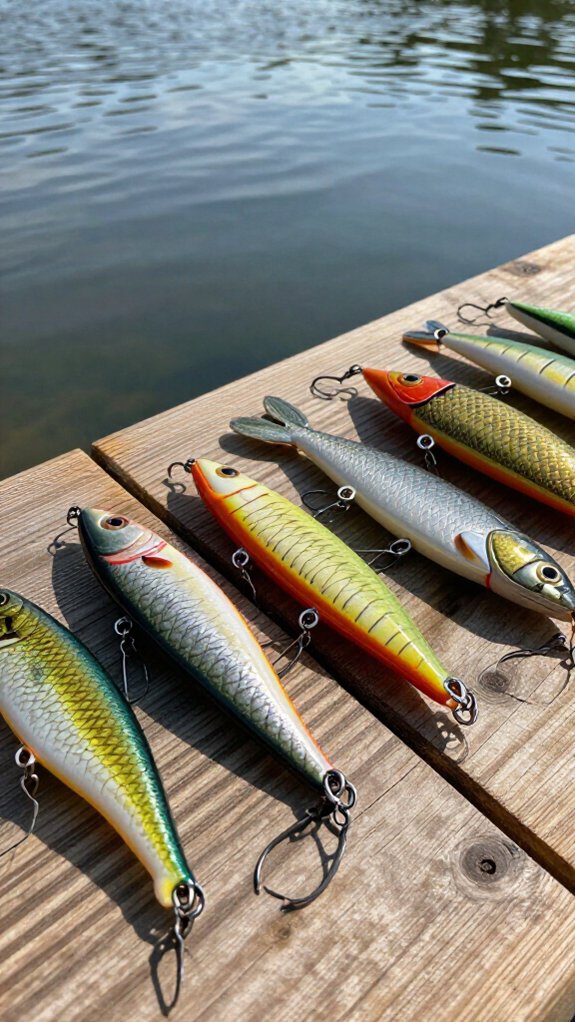
If I need to convince a trophy bass that there’s an easy meal swimming by, I’ll tie on a swimbait every time. These realistic lures mimic actual baitfish with uncanny accuracy, fooling even the wariest predators.
Why Swimbaits Dominate
I love how soft plastic construction lets swimbaits flex and pulse with natural motion. That paddle-shaped tail kicks out a seductive thump that triggers reaction strikes from big fish.
- Soft plastic bodies create lifelike flexibility predators can’t resist
- Paddle tails generate irresistible natural motion at any speed
- Sizes and colors match virtually any baitfish species
- Slow or fast retrieves produce deadly realistic wobble
- Proven killers for bass, pike, walleye, and trout during feeding windows
I’ll vary my retrieve based on depth and activity level, letting these lures glide through strike zones with convincing authenticity. When big fish want a genuine-looking meal, nothing else compares.
Topwater Lures: Surface Explosions for Aggressive Feeders
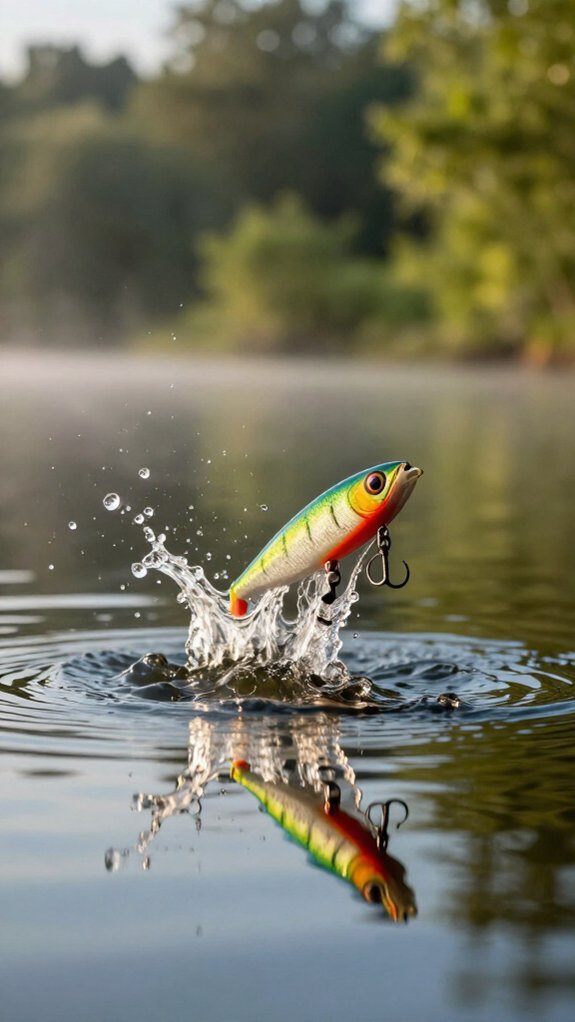
Swimbaits work magic below the surface, but nothing matches the heart-stopping thrill of a bass exploding on a topwater lure. These floating baits mimic frogs, mice, and insects to trigger aggressive feeders into violent surface explosions.
Types and Techniques
I rely on poppers for sharp popping sounds and buzzbaits for continuous gurgling wakes. Each creates distinctive surface disturbance that bass can’t ignore.
When They Work Best
Topwater lures shine when water temperatures exceed 55°F. I target lily pads, overhanging brush, and shaded banks where bass ambush prey from below.
The Visual Rush
There’s nothing like watching a lunker inhale your bait. That split-second pause before setting the hook, pure adrenaline. For heart-pounding action and explosive strikes, topwater fishing delivers unparalleled excitement.
Fly Lures: Precision Imitations for Selective Feeders
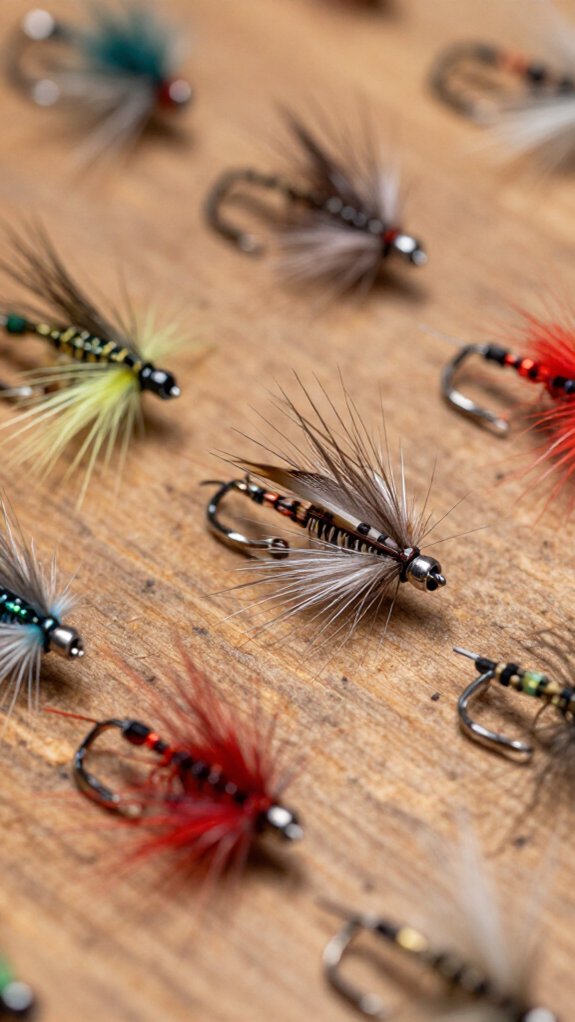
I want to walk you through how dry fly design, wet fly techniques, and matching local hatches work together to fool those picky, selective feeders you’ve probably cursed at on slow days.
When I’m tying or choosing a dry fly, I’m thinking about whether it rides high and natural on the surface film, because trout sipping emergers during a hatch won’t tolerate a drag-free float that looks wrong.
From there, I’ll switch to wet fly techniques when fish drop below the surface, and I always check what’s actually hatching before I pick a pattern, since nothing kills a day faster than presenting a Blue-Winged Olive imitation when the river’s buzzing with caddis.
Dry Fly Design
When I’m targeting picky trout sipping delicately off the surface, nothing beats a well-crafted dry fly that rides high and looks exactly like the hatch happening right then.
I focus on hatch matching because trout lock onto specific insects during a hatch. My fly tying centers on precise insect imitation, slender bodies, upright wings, and delicate legs that mirror naturals drifting downstream.
The secret stays in buoyant materials. I select foam, cork, or stiff hackle fibers that resist water absorption. A well-wrapped hackle collar creates essential surface tension, letting the pattern sit in that magical surface film without breaking through.
Here’s what I prioritize in every dry fly build:
- Lightweight hooks that don’t drag the pattern under
- Balanced hackle density for stable floating posture
- Realistic silhouettes visible to anglers and fish alike
- Proper proportions matching natural insect measurements
- Quick-drying materials for repeated casts without waterlogging
Wet Fly Techniques
Although dry flies steal the spotlight during visible surface hatches, I’ve found that wet fly techniques consistently produce strikes from trout that refuse to rise, fish holding deep, feeding on emergers or drowned insects just below the film.
Why Wet Flies Work
I tie my wet flies with fur, feathers, and threads to craft realistic profiles that pulse and breathe underwater. These aquatic critters sink where the feeding happens, imitating drowned adults, baitfish, or struggling emergers.
Casting and Stripping Methods
I rely on two approaches: dead-drifting with the current or active retrieves. Here’s how I match tactics to conditions:
| Water Conditions | Retrieve Style |
|---|---|
| Fast, broken water | Dead drift with tension |
| Slow, clear pools | Slow strips with pauses |
| Deep runs | Downstream swing |
Reading water conditions helps me pick the right wet fly and presentation for my target fish.
Matching Local Hatches
How often have you watched trout rise all around your fly while ignoring it completely? That’s the frustration of poor matching hatches. When I’m fly fishing, I don’t just guess, I study the water surface, catch insects, and match their size and color precisely.
Why Matching Hatches Works
- Dry flies float perfectly to imitate emerging insects on the surface
- Wet flies sink to mimic drowning or subsurface prey imitation
- Artificial bait selection changes based on what’s actually hatching
- Timing peak emergence periods triggers aggressive strikes from selective feeders
- Carrying diverse patterns lets me adapt when conditions shift
I’ve learned that exact size matters more than perfect pattern detail. A size 18 Pheasant Tail beats a sloppy size 14 every time. Watch, match, cast, and suddenly those refusing trout can’t resist.
Lure Selection: Matching Conditions to the Right Bait
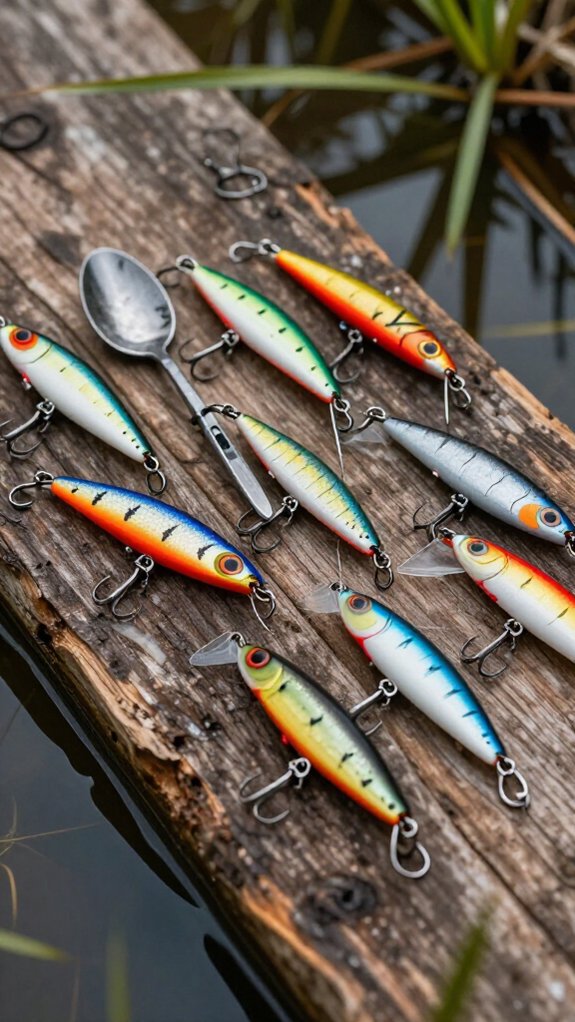
I don’t just grab whatever lure looks good in my tackle box, I’m matching every detail to what the water and weather are telling me that day. Smart lure selection starts with reading water clarity. I’ll throw chartreuse or firetiger when it’s stained, but switch to shad or green pumpkin patterns when the water’s gin-clear.
Diving depths matter just as much. I check my crankbait bills and line diameter to hit the strike zone where bass are holding, whether that’s six feet or twenty.
Cover and structure dictate my rigging too. I’ll pitch a weedless jig into thick hydrilla, but reach for a suspending jerkbait when I’m probing open channel swings.
Seasonal fishing keeps me honest. When that January cold front drops water temps into the low forties, I slow way down with a finesse jig or dead-sticked jerkbait. Lure color, speed, and profile, it’s all connected.
Frequently Asked Questions
What Is the Best Type of Lure for Fishing?
I can’t pick one best lure, it depends on what I’m after and where I’m fishing. I’ll match my lure to the species, water conditions, and how the fish are feeding that day.
What Smells Do Fish Hate?
I know fish hate strong artificial scents like garlic, pepper, and ammonia. They’ll avoid cinnamon and menthol too.
Even my perfume or heavily scented baits can send them swimming away fast.
What Is the Most Used Fishing Lure?
I cast, I retrieve, I catch, soft plastic worms lead my freshwater arsenal. They’re versatile, affordable, and irresistible to bass.
When I’m covering water fast, I’ll grab crankbaits or spinnerbaits instead.
Do Bass Prefer Lures or Live Bait?
I find bass prefer lures when they’re actively feeding in warm water, but I’ll switch to live bait during cold seasons when they’re sluggish.
My experience shows lures offer more versatility for triggering aggressive strikes.
In Conclusion
You now know every lure type that’ll fill your tackle box, and more importantly, when each one sings its siren song to hungry fish. But here’s the thing: the water’s waiting, and that monster bass you’ve been dreaming about? He’s down there right now, deciding whether to strike.
The question isn’t if you’ll catch him. It’s which lure you’ll tie on first. Your move, angler.