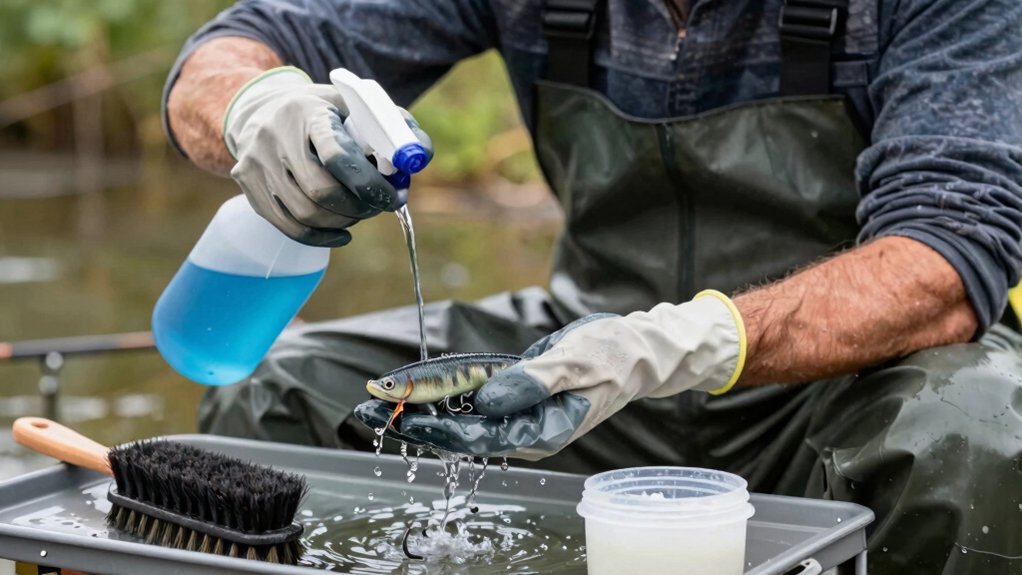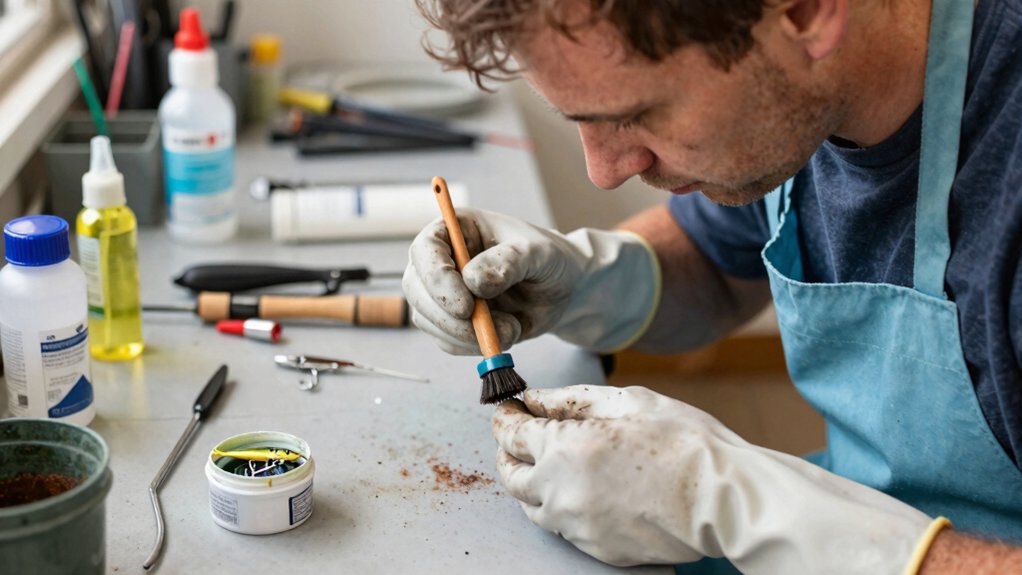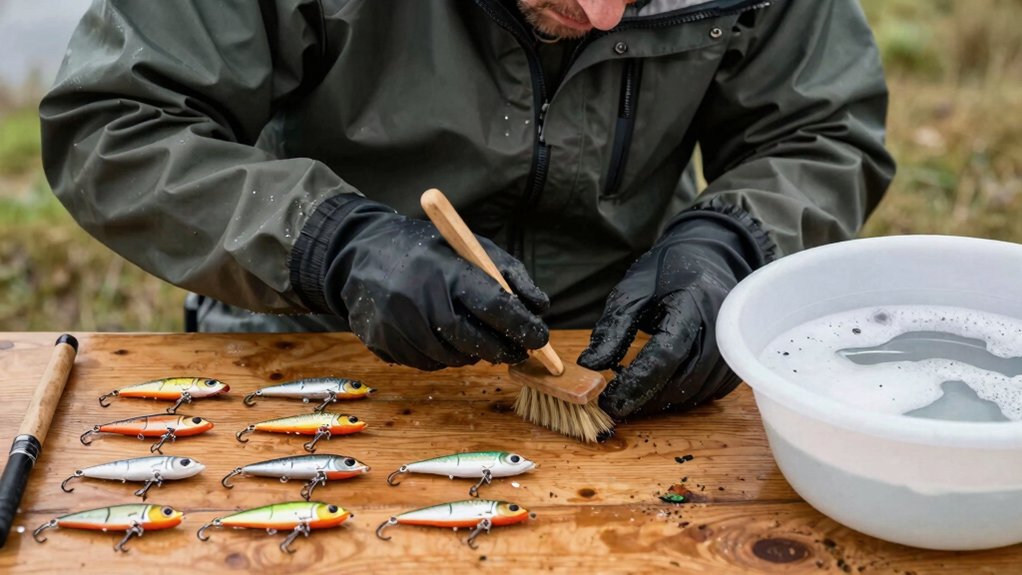
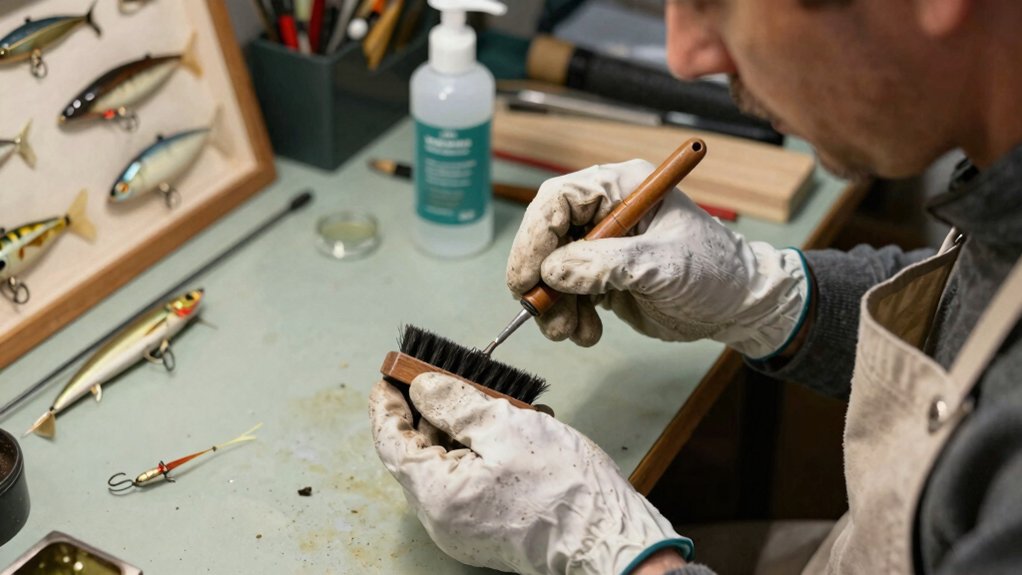

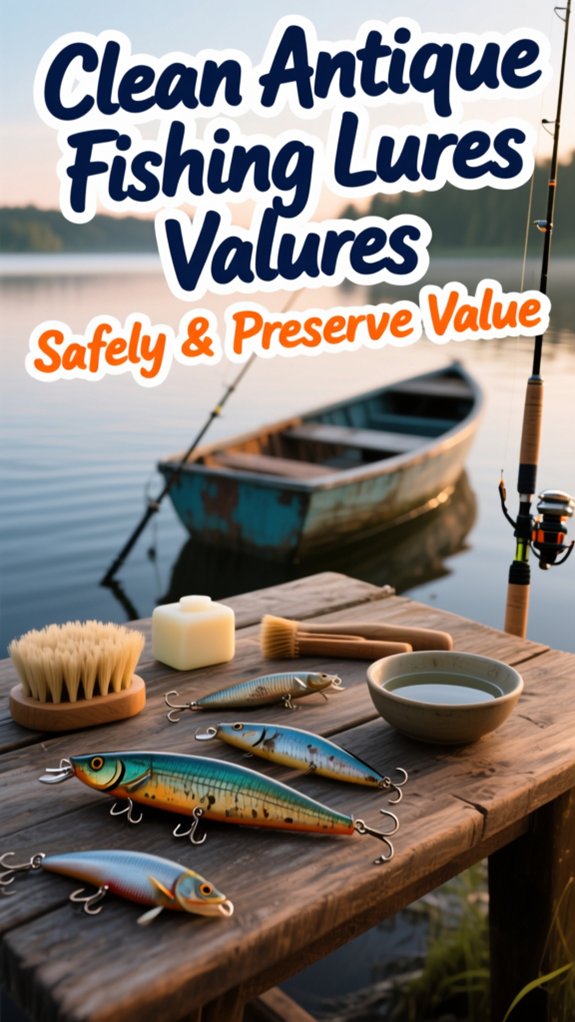
I start every antique lure cleaning with a quick water test on hidden spots like the belly or tail, since original lacquer finishes shrug off moisture way better than most repaints. I’ll gently brush off dust first, then use warm soapy water for fur, cork, or paint, never ammonia or lacquer thinner.
For rusted hooks, I apply a little heat from a soldering iron and penetrating oil, waiting 10–15 minutes before carefully unscrewing to avoid stripping. I always photograph the lure beforehand and decide whether that aged patina adds character or just hides the original paint underneath.
Once clean, I store everything at 40% humidity with a hygrometer handy, cracking the case open now and then to prevent moisture buildup. Stick around and I’ll walk you through exactly how to spot a factory finish versus a later touch-up that could change everything about how you handle a piece.
Will Water Ruin My Lure? Quick Surface Tests
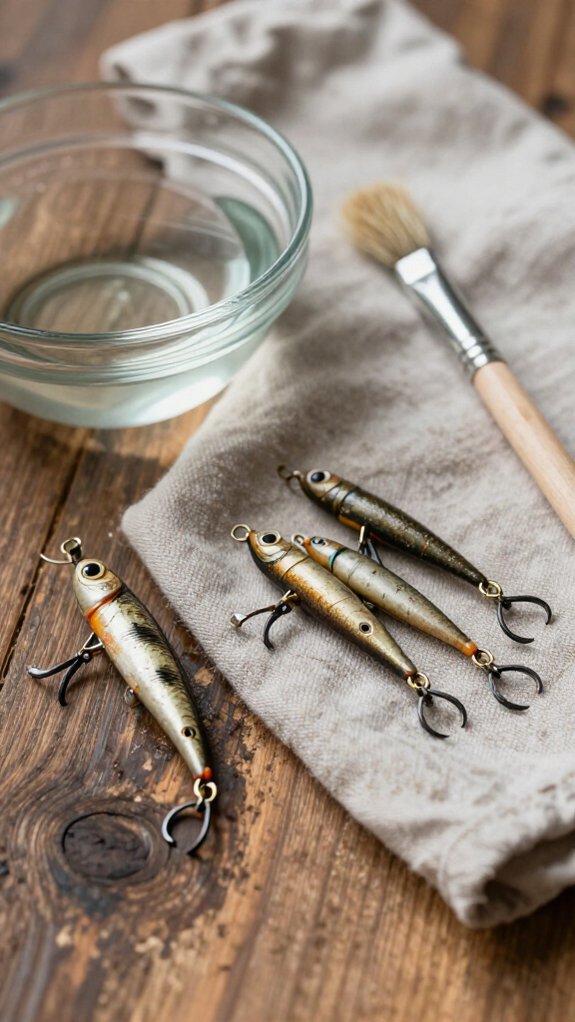
Before I dunk any antique lure in soapy water, I always run a quick surface test on a hidden spot, because nothing stings worse than watching a $200 Creek Chub’s paint swirl down the drain.
Why a Surface Assessment Saves Your Treasure
I start every surface cleaning session with a simple water resistance check. I dab a tiny amount of water on a test area, usually the belly or near the tail where eyes won’t wander. This reveals paint stability fast. If I see lifting, peeling, or flaking, I stop immediately.
Water damage hits re-painted or re-coated lures hardest, while original lacquer or enamel finishes typically hold stronger.
My Safer First Step****
For lure preservation, I grab a dry cloth or soft brush to lift dust and dirt. That delicate finish deserves patience, not a reckless rinse.
Remove Rusted Hooks Without Stripping Screws
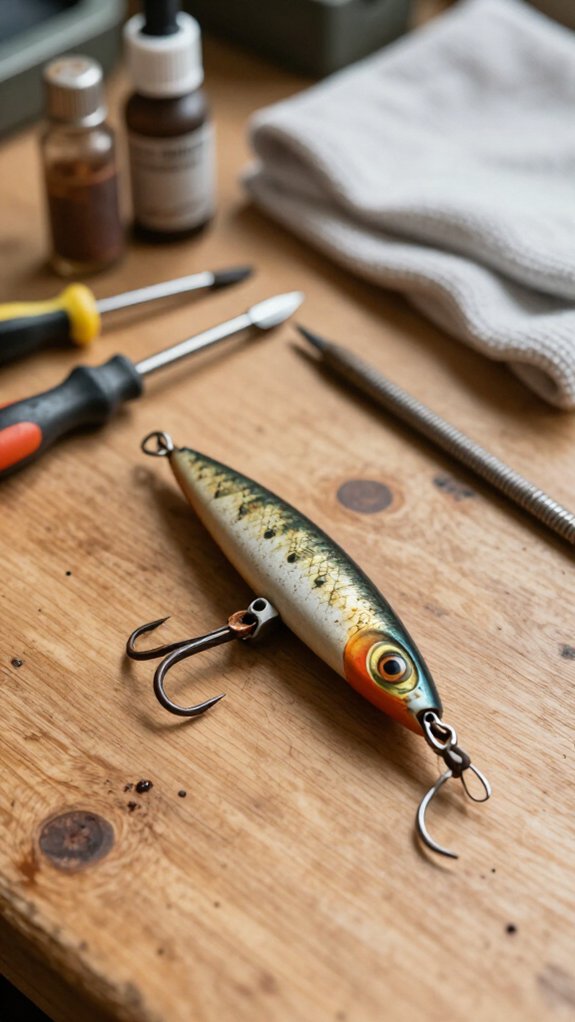
Rusted hooks can turn a beautiful antique lure into a wall hanger if I’m not careful, so I’ve learned to treat every screw like it’s the last original part holding the story together.
Loosen the Grip
When I tackle rusted hooks, I start with gentle heat from a soldering iron applied directly to the screw head. This expands the metal and breaks the corrosion’s hold without scorching the lure body.
Next, I drip penetrating oil or rust remover around the rusted screws and let it sit for ten to fifteen minutes.
Patience here saves me from stripped heads later.
Twist, Don’t Tear
I grab precision screwdrivers or fine tweezers to slowly unscrew each fastener. If I feel resistance, I stop and add more oil.
Forcing it destroys the screw and kills value.
Replace Smart
Once free, I swap rusted hooks with period-correct hardware to maintain integrity and prevent future corrosion, helping preserve value for years to come.
Clean Fur, Cork, and Painted Finishes Safely
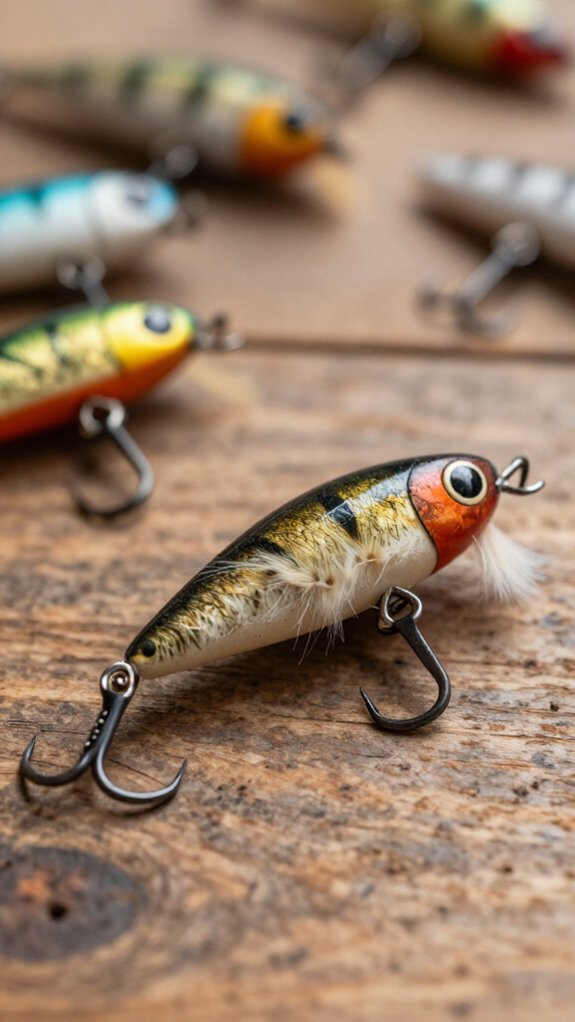
With the hardware sorted, I turn my attention to the lure body itself, those delicate fur, cork, and painted finishes that give each piece its character and collectible appeal.
For cleaning fishing lures with fur finishes, I’ll give them a gentle wash using warm water and dish soap, then let them air dry completely. Feathers and fur also respond well to lanolin-based hand cleaner or diluted Woolite, rinsed thoroughly.
On cork handles, I use fine steel wool carefully, just enough to clean and develop that natural patina without aggressive scrubbing.
For painted finishes, I stick to mild soap and water only. I always avoid harsh chemicals like ammonia or lacquer thinner that’ll strip original paint.
Before diving in, I test every method on an inconspicuous spot first.
Decide: Preserve Patina or Remove Grime?
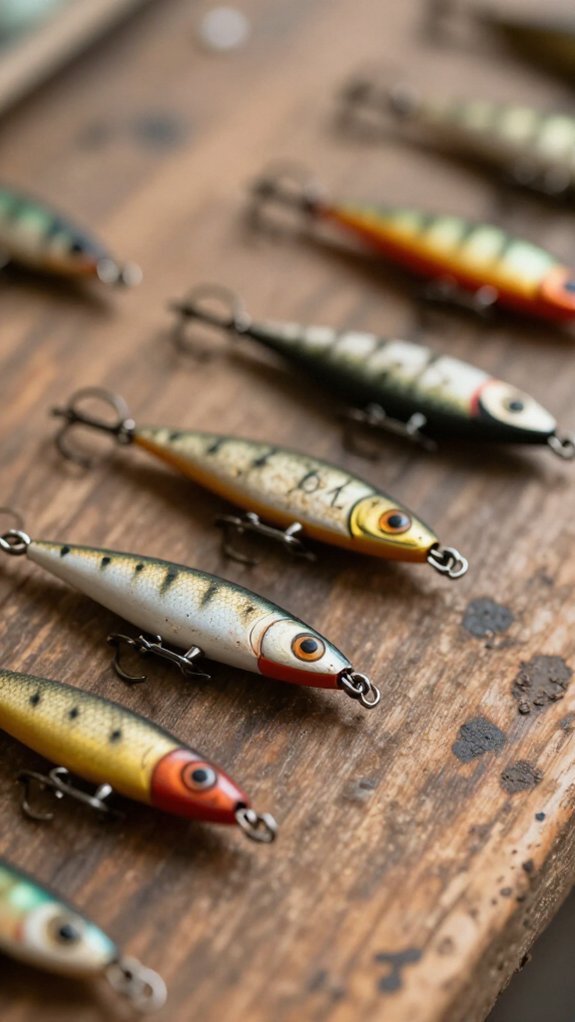
Once I’ve got my lure’s surface grime assessed, I’m standing at the crossroads every collector faces: do I let that decades-old patina tell its story, or do I gently coax the dirt away and bring back a bit of original shine?
I know preserving that aged finish often protects my lure’s value. Most collectors covet authenticity over bling. But when grime masks the original paint beneath, careful cleaning makes sense.
Here’s my approach:
- I photograph everything before touching a thing
- I test if dirt’s superficial or embedded
- I choose delicate, gentle methods that won’t strip character
Aggressive restoration destroys what makes these treasures special. I’d rather preserve a lure’s soul than risk damaging irreplaceable history.
Store at 40% Humidity to Stop Cracking
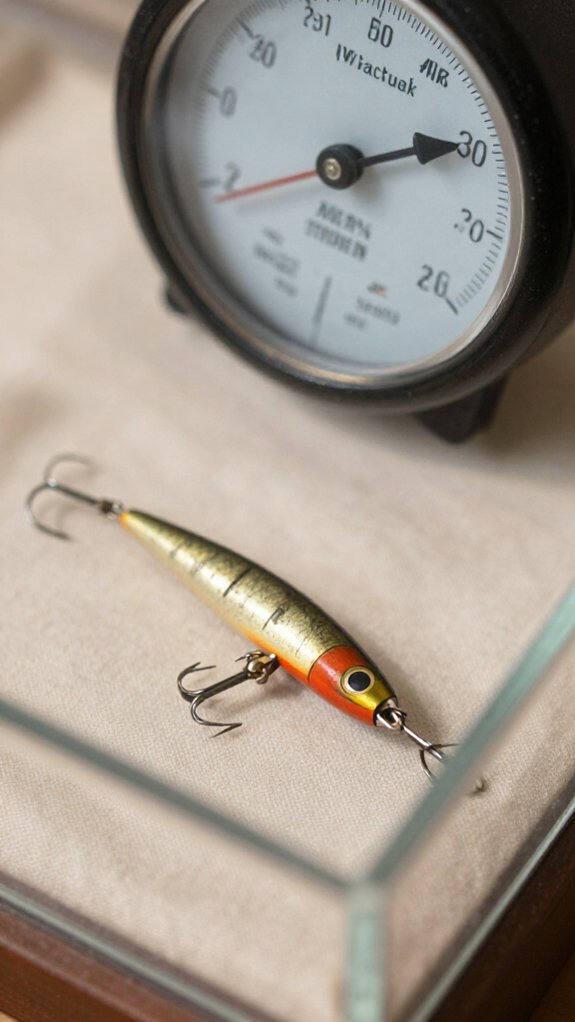
After I’ve decided how to handle my lure’s surface, I’m turning my attention to where it’ll live long-term, because even a perfectly cleaned antique can crack and crumble if the air around it’s too dry or too wet. I aim for 40% humidity in my storage space: that sweet spot keeps wood and paint from drying out and developing cracks.
| Issue | Solution |
|---|---|
| Dry air cracks paint | Maintain 40% humidity |
| Fluctuations damage varnish | Use stable storage location |
| Moisture buildup | Briefly open cases regularly |
| Unsure of levels | Install a hygrometer |
| Local humidity shifts | Add mineral-free water caps |
I check my hygrometer weekly. Too much moisture softens finishes; too little makes them brittle. For preservation, I slip small water caps into display cases when my antique lures need extra stability. That controlled environment protects every layer, varnish, paint, and wood, keeping my collection fishable for decades.
Frequently Asked Questions
Are Antique Fishing Lures Worth Anything?
I can tell you antique fishing lures are definitely worth something, I’ve seen rare ones sell for hundreds or thousands of dollars depending on their maker, condition, and how original they remain.
What Is the Best Way to Clean Antique Fishing Lures?
You might worry that gentle cleaning won’t remove years of grime, but I’ve found warm water and mild soap with a soft toothbrush works perfectly, no harsh chemicals needed to preserve that valuable original finish.
What Is the Most Valuable Antique Fishing Lure?
Rare early Heddon, Pflueger, or Creek Chub lures command top prices, especially those with unique paint schemes, factory errors, original boxes, or ties to famous anglers: I’ve seen pristine examples sell for thousands.
What to Do With Vintage Fishing Lures?
I treat my vintage lures like buried treasure, displaying prized pieces in shadow boxes while fishing with sturdy duplicates.
I’ll sell rare gems to collectors, trade with fellow enthusiasts, or pass them down as family heirlooms.
In Conclusion
You can clean antique lures without destroying their value, it just takes knowing when to stop.
I’ve ruined a perfect Creek Chub by over-polishing its cheeks, yet saved a Heddon River Runt by simply wiping dust from its glass eyes. The contrast stings: aggressive restoration drops prices 40-60%, while gentle preservation often maintains worth.
Humidity control’s your quiet hero here—cracking finishes hate dry air more than dirt itself. Trust the grime that tells a story; challenge the rust that steals one. Your tackle box holds history, not just hardware.