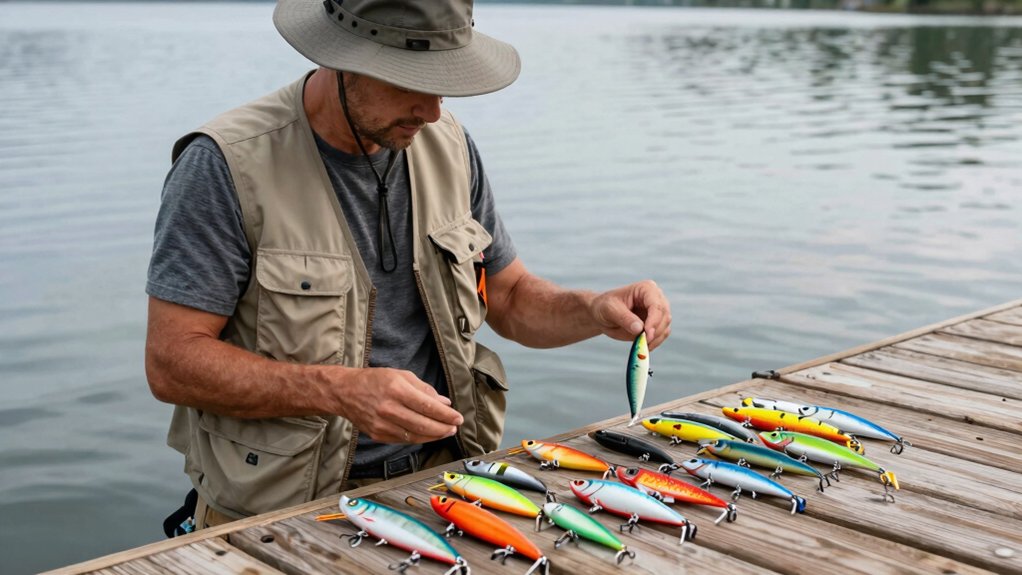

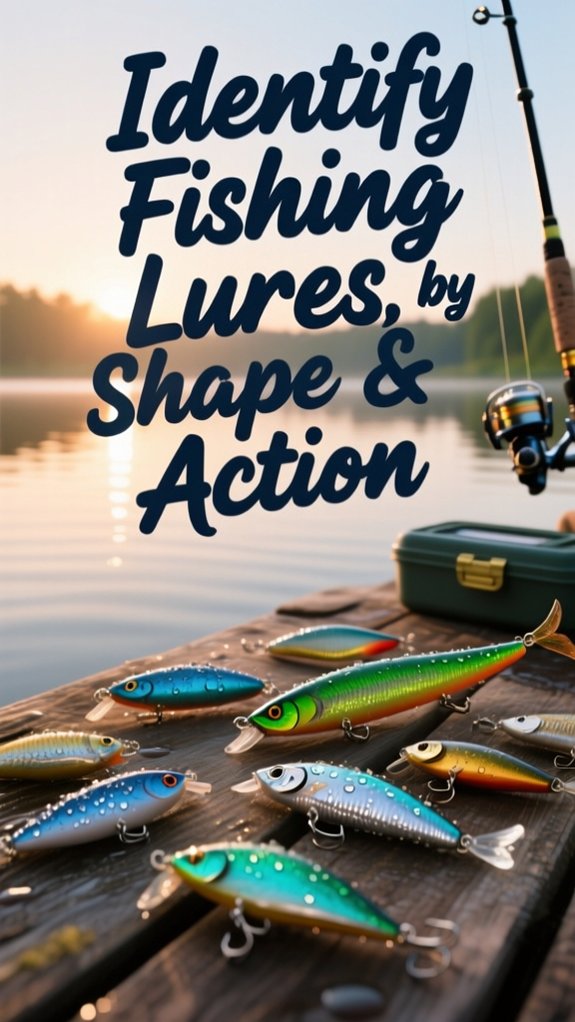
I identify fishing lures by reading their physical design the same way a fish reads prey, starting with the lip, body shape, and the action each produces in the water. A crankbait’s stout, rounded body and large angled lip send it diving deep with a tight, vibrating wobble, while a jerkbait’s slim profile and smaller lip create erratic, darting movement near the surface that mimics injured baitfish.
Topwater lures announce themselves through sound and splash: poppers spit sharply, walking baits sashay side-to-side, and buzzbaits churn a continuous wake. Metal lures separate by behavior too: spoons flutter and flash like dying baitfish, blade baits sink fast with heavy vibration, and spinnerbaits use willow or Colorado blades to trade between flash and thump.
Soft plastics reveal their purpose through tail design; paddle tails kick steadily, curly tails flutter and vibrate, and forked tails slice with lifelike side-to-side motion. Match these visual and mechanical cues to water conditions: natural colors in clear water, bright chartreuse or reflective finishes when visibility drops, and you’ll pick the right lure without second-guessing. There’s more to uncover about dialing in your presentation for specific species and seasons.
How to Identify Fishing Lures by Their Lips First
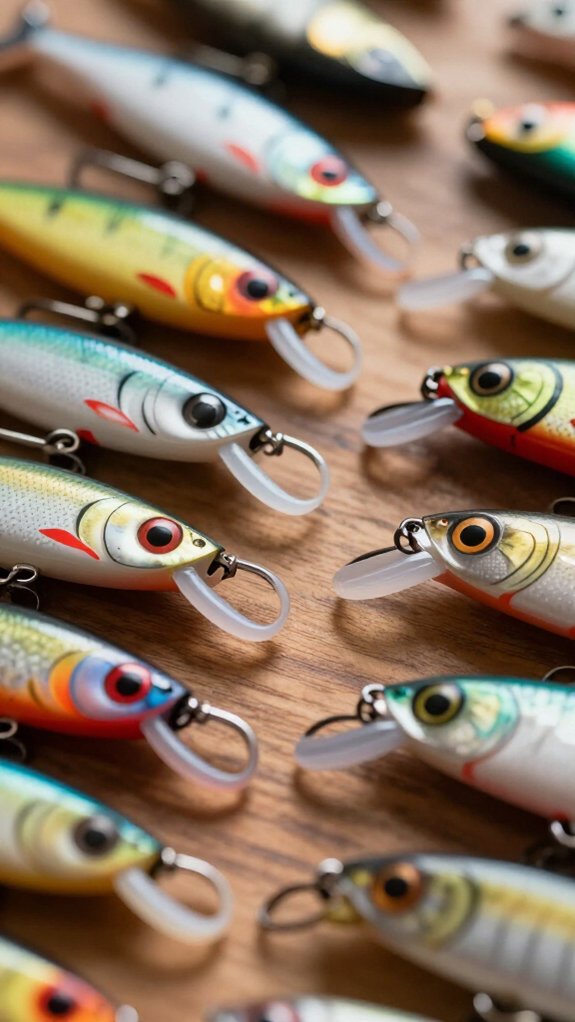
If I’m staring at a lure I’ve never seen before, I’ll check its lip first because that single piece of plastic or metal tells me almost everything I need to know about where it swims and how it behaves in the water.
Reading the Lure Lip
I look at the lure lip’s size and angle to predict diving depth. A big, sharply angled lip screams deep diver, while a flat or tiny lip belongs to surface lures or shallow-diving presentations.
Shape and Material Matter
Lip shape reveals action secrets. A square lip deflects off cover with a wide hunt; a rounded lip tracks tighter. Lip material, plastic or metal, also hints at design purpose, with harder plastics often tuning faster wobbles.
Quick ID Tips
- Long, angled lips = deeper crankbaits
- Short, flat lips = topwater or shallow work
That’s my first filter every time.
Crankbaits: Look for the Short, Stocky Body and Tight Wobble
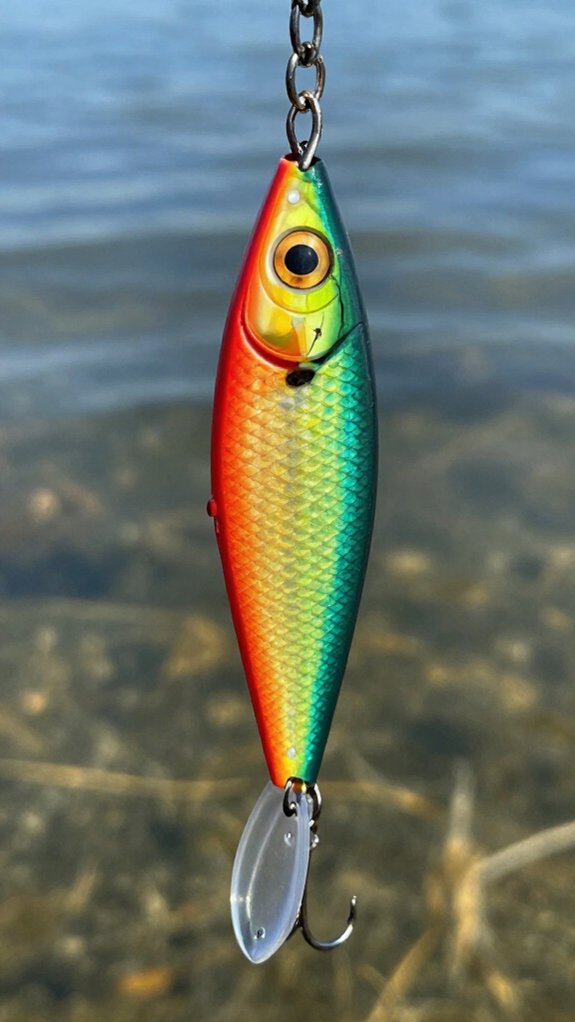
Once I’ve checked the lip and confirmed I’m looking at a crankbait, I immediately shift my attention to the body shape, because that’s where the real magic happens.
Spot the Short, Stocky Profile
I’m always looking for that unmistakable short, stocky body—rounded and fat with a wide front profile that screams “small baitfish.” This compact design isn’t just for looks; it’s built for performance. The curved lip I spotted earlier works with this shape to control diving depth and create that signature wobbling action.
Feel the Tight Wobble
When I reel one in, I can feel the tight wobble pulsing through my rod. Those quick turns generate vibrations that trigger aggressive strikes. It’s this combination, compact design, tight wobble, and calculated movement, that makes crankbaits my go-to for covering shallow to mid-water zones fast.
Jerkbaits vs. Crankbaits: Tell Them Apart by Shape and Movement
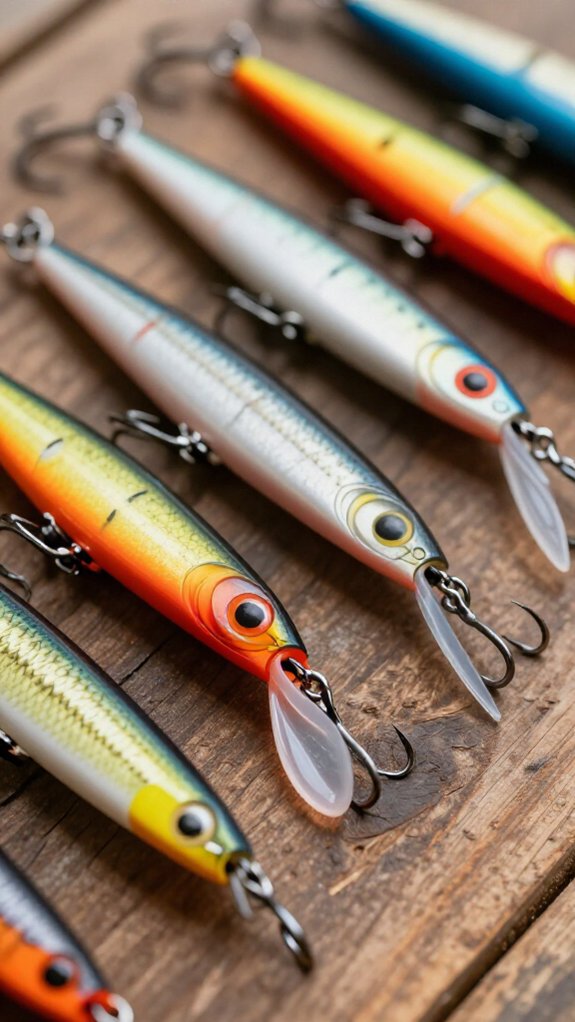
While crankbaits rely on that short, stocky body and steady retrieve to mimic healthy baitfish, jerkbaits take a completely different approach with their long, slender profile and erratic, darting action.
I tell anglers to check these key differences:
- Shape: Crankbaits are stout and rounded; jerkbaits are elongated and slim.
- Lip size: Crankbaits sport a larger, angled bill for deep diving; jerkbaits use a smaller lip for subtle movement.
- Action: Crankbaits wobble steadily on a constant retrieve; jerkbaits need sharp jerks and pauses to create unpredictable, darting action.
- Diving depth: Crankbaits plunge deeper depending on bill design; jerkbaits stay shallower, working surface to mid-water.
That aggressive wobble versus injured-baitfish twitch? That’s your visual cue. Match the movement to what bass are hunting, and you’ll trigger more strikes.
Topwater Lures: Find Them by Surface Splashes and Sound
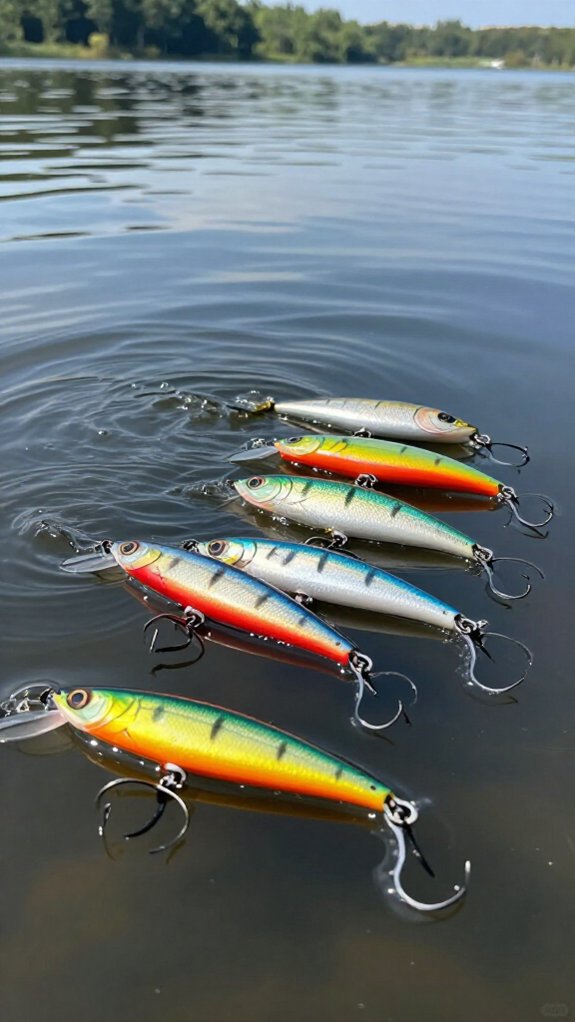
Because topwater lures float and create unmistakable surface commotion, you can spot them in action before you ever feel a strike. I watch for surface splashes and listen for the distinctive sound these floating baits generate across the water surface.
What to Look and Listen For
The disturbance they create mimics injured prey. Here’s how different lure action produces unique splash effects:
| Lure Type | Signature Surface Activity |
|---|---|
| Poppers | Sharp popping sound with water spray |
| Walking Baits | Side-to-side splash pattern |
| Frogs | Soft bubble disturbance |
| Buzzbaits | Continuous buzzing wake |
I cast near cover and retrieve with sharp jerks to optimize surface splashes. The sound and vibration trigger explosive strikes from below. When you see that water erupt, you’ll know why topwater lures remain my favorite for heart-pounding action.
Spinnerbaits and Inline Spinners: Read the Blade Design
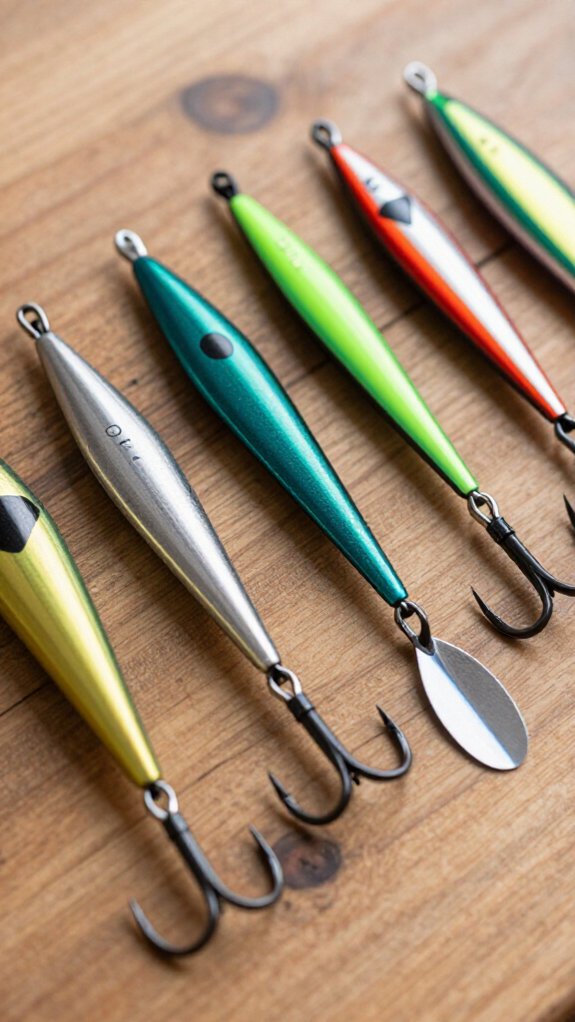
I identify spinnerbaits and inline spinners by focusing on their blade design, since that’s what separates an effective catch from a wasted cast.
Here’s how I break down what matters:
- Inline spinner blades spin around a wire shaft, simple, streamlined, and perfect for covering water fast.
- Spinnerbait frames look like safety pins with wider blades that wobble and create serious resistance.
- Blade shape changes everything: willow blades spin faster with more flash, while Colorado blades thump out heavier vibration.
I match retrieval speed and blade color to water conditions. Murky water demands more vibration and flash, while clear water calls for subtler approaches.
The skirted hook on a spinnerbait adds lifelike movement, and adjusting how I retrieve changes whether that blade runs above or below the bait.
Spoon Lures: Spot the Curve, Flash, and Flutter-Fall Action
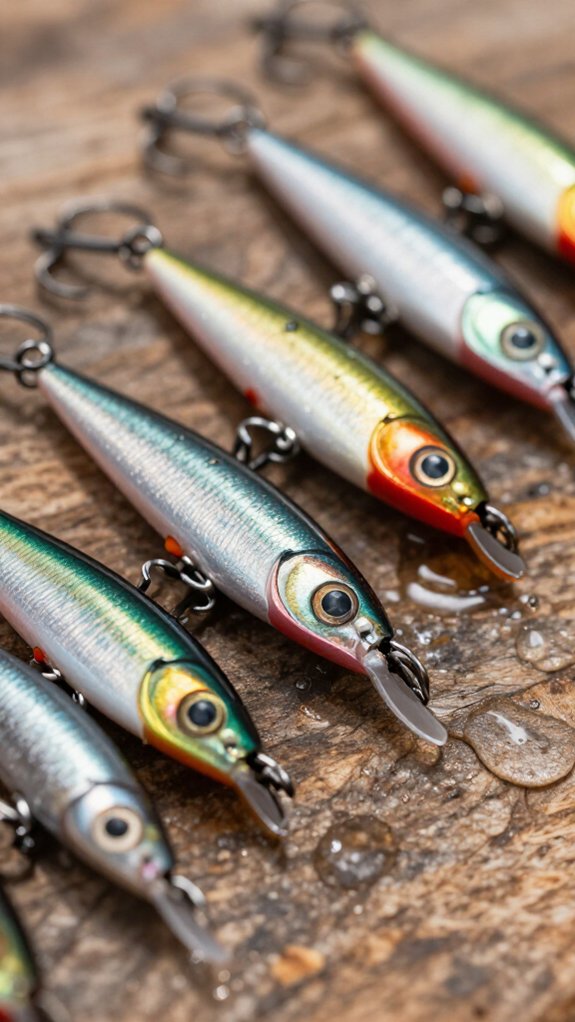
I spot spoon lures by their curved, concave metal bodies that catch light like a dinner spoon underwater, sending flashes in every direction to mimic a struggling baitfish.
When I retrieve one, I watch for that signature flutter-fall action, an unpredictable zigzag wobble that drives predators wild in both clear and murky conditions.
I’ll break down exactly how to identify their key features, understand what makes them move, and know when to tie one on for your best shot at hooking up.
Identifying Spoon Features
When I’m sorting through my tackle box, spoon lures always stand out because of that unmistakable curved, concave metal body. It’s the signature shape that makes them wobble, flash, and flutter through the water like nothing else. That curved design isn’t just for looks; it creates the reflection and erratic movement that drives fish wild.
Here’s what I check when identifying spoon features:
- Concave metal depth — Deeper curves mean wider wobbling and more dramatic flash
- Curved profile angle — Steeper angles create tighter vibrations; gradual curves produce slower, wider sweeps
- Flutter-fall motion quality — I watch how the spoon sinks; quality spoons helicopter down with unpredictable, injured-baitfish action
- Fall speed indicators — Thicker, heavier spoons drop faster with less flutter; thin, lightweight models sink slowly with exaggerated side-to-side movement
Spoon Action Mechanics
The curved, concave body of a spoon lure isn’t just for show, it’s a precision-engineered tool that changes simple water resistance into fish-triggering chaos.
How the Magic Happens
That curved shape does heavy lifting underwater. When I retrieve a spoon, it produces a distinctive wobbling motion with a flashing reflection that predators can’t ignore. The metal catches light and throws it in every direction, essentially yelling “food here!” to anything watching.
The Deadly Flutter-Fall
Here’s where spoons truly shine. On the falling action, that same curved shape creates an erratic motion—a fluttering action that looks exactly like distressed prey tumbling through the water column.
I’ve watched bass absolutely demolish spoons on the drop when the lure flutters unpredictably.
This combination of flash and flutter proves devastatingly effective in bright conditions, where reflected light can attract fish from surprising distances.
Spoon Fishing Applications
Whether I’m fishing clear reservoirs or stained rivers, I’ve learned to match the right spoon style to the conditions I’m facing. Spoon lures work because their curved shape and reflective metal create irresistible flash and wobbling that triggers strikes.
Here’s how I apply different spoon techniques:
- Spot the curve, I check the concave or convex bend to predict how aggressively the lure will wobble through the water column.
- Maximize flash, In murky water, I choose highly polished reflective metal to send light signals fish can’t miss.
- Master the flutter-fall action, I pause my retrieve to let casting spoons glide downward, mimicking dying baitfish.
- Match the setup, I select weedless or trolling variants based on structure and target species.
This approach lets me adapt my presentation to any fishing conditions I encounter.
Jigs: Identify by the Weighted Head and Vertical Drop
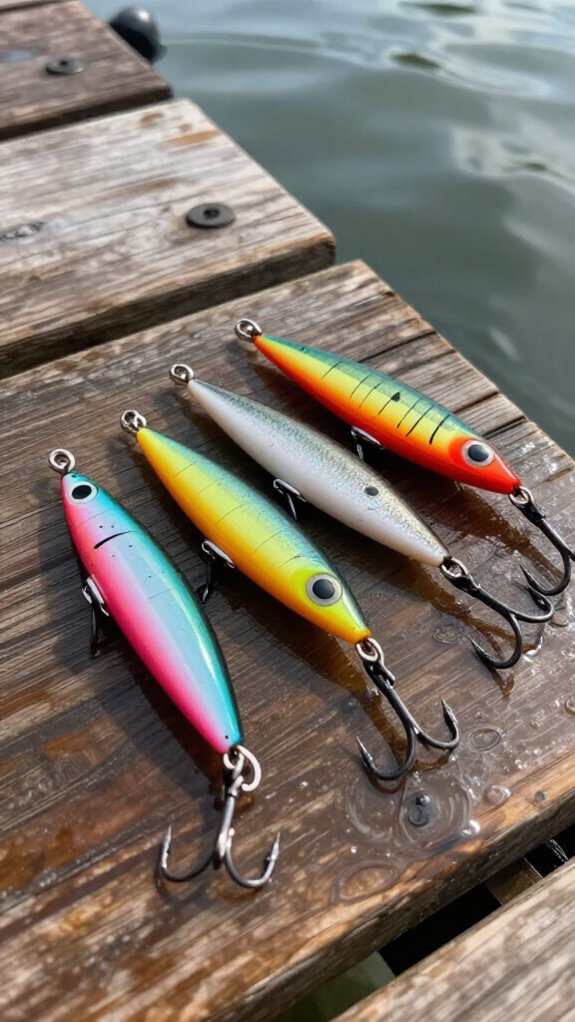
I spot jigs instantly by that bulky, rounded head, that’s my first giveaway every time. That weighted head shape isn’t just for looks; it’s what makes this lure sink like a stone and gives you total control during vertical fishing.
Why the Weighted Head Matters
The weighted head powers the jig’s signature vertical drop. When I cast and sink, I’m targeting bottom-dwelling fish with sniper precision: bass hugging rock piles, walleye on deep structure. No other lure drops this fast or stays this true.
The Skirted Body and Action
Below that head, you’ll find a skirted body, rubber or silicone strands that pulse and flare with every hop. I work mine with a sharp jigging technique: lift, drop, let it flutter. The rod does the work; I just dictate the tempo. That darting, injured-prey motion triggers reaction strikes when nothing else works.
Soft Plastics and Swimbaits: Check Tail Shape and Swimming Style
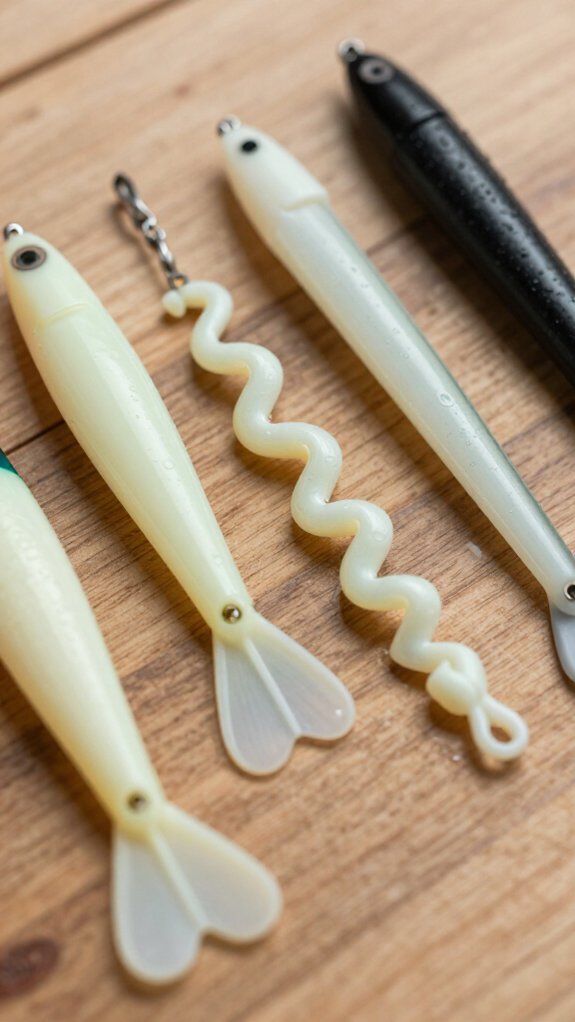
I identify soft plastics and swimbaits by their tail shape first, since paddle tails, curly tails, and boot tails each create completely different swimming actions in the water.
A paddle tail kicks and glides like a fleeing baitfish when I retrieve it steadily, while a curly tail sends out vibrations and fluttering water disturbance that triggers bites from curious predators.
Matching these swimming action types to my target species and current conditions is how I choose the right soft plastic every time.
Tail Shape Varieties
When I’m sorting through my tackle box before a trip, I always check the tail shape first on my soft plastics and swimbaits because it’s the single clearest clue to how that lure will behave in the water.
Here’s how I break down tail shape varieties:
- Paddle tail swimbaits sport a rounded, flat tail that kicks and wobbles with steady retrieves, perfect for covering water fast.
- Curly tail soft plastics twist through the water, creating irresistible vibration and fluttering movement that mimics wounded prey.
- Forked tail designs split naturally, generating lifelike side-to-side swimming motion that fools pressured fish.
- Matching tail shape to conditions saves me time; I’ll grab paddle tails for current, curly tails for cold water, and forked tails when bass want realism.
That swimming motion? It starts at the tail.
Swimming Action Types
| Tail Shape | Swimming Action | Best Retrieve Speed |
|---|---|---|
| Paddle tail | Kicking, baitfish-like lure movement | Steady to fast |
| Curly tail | Vibrating, side-to-side wobble | Slow to moderate |
| Segmented tail | Erratic, lifelike darting | Variable |
| Straight tail | Subtle, gliding descent | Ultra-slow |
| Forked tail | Tight, rapid flutter | Medium |
I’ll drop a curly tail soft plastic in a bucket and watch, it’s unmistakable. That thumping vibration screams “injured prey.” Crank up retrieve speed on a paddle tail swimbait, and you’ll feel the rod tip pulse with every kick. The swimming style changes everything.
A 2019 survey by Bassmaster found 73% of tournament anglers adjusted tail selection based on water temperature, not just color. I’ve learned to trust my eyes: if the lure movement looks alive, it probably is. Test your swimming action before you cast.
Match What You’re Seeing to Water Clarity and Cover
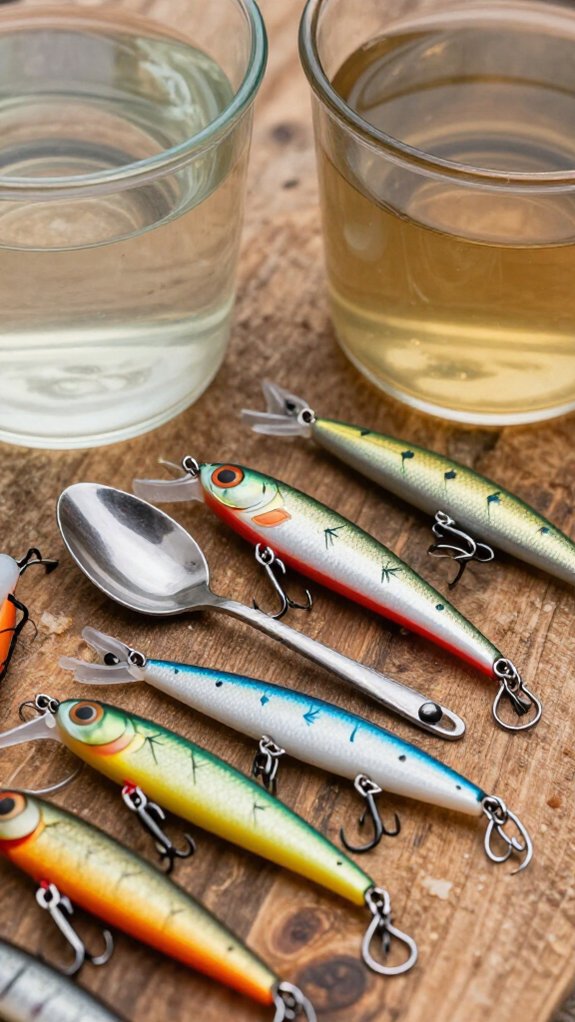
Because water clarity and cover type dictate how fish see and react to your lure, I’ll match my presentation to what’s actually in front of me rather than guessing.
Here’s how I break it down:
- Clear water demands subtlety. I pick natural color and realistic patterns so my lure action mimics real prey without spooking fish.
- Stained or murky water calls for visibility. I switch to bright chartreuse or reflective finishes that cut through the gloom.
- Heavy cover means going weedless. I slow my retrieval speed and jig vertically through shallow water vegetation without snagging.
- Open water and depth require different tools. I reach for sinking crankbaits or swimbaits that match local baitfish size and shape.
Matching these variables keeps my presentations honest and my strike rate higher.
Common Look-Alikes: Avoid These Identification Mistakes
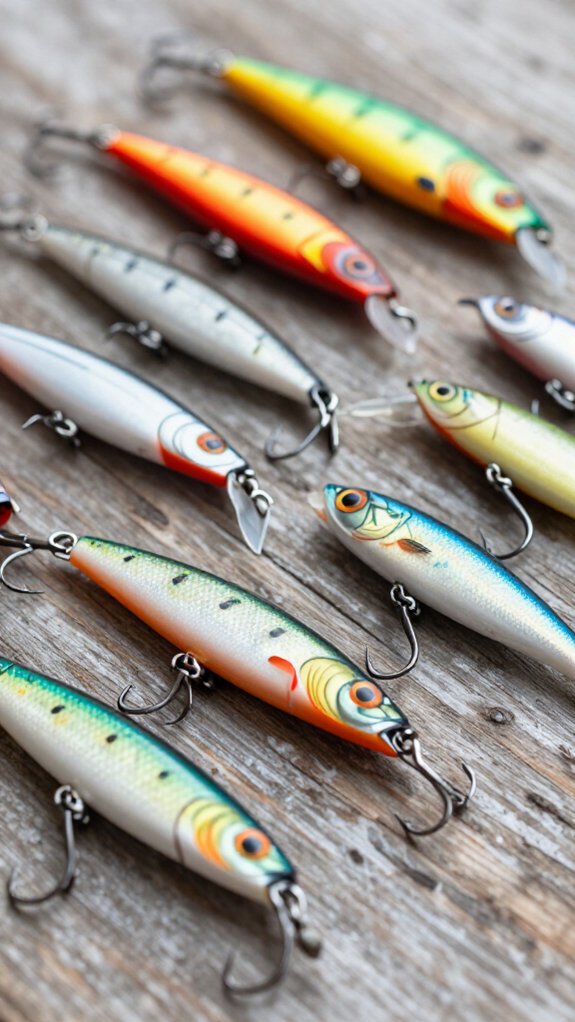
I’ve spent years sorting through tackle boxes only to grab what I thought was a jerkbait and realized, too late, that I’d tied on a crankbait with the wrong dive profile. These elongated twins share minnow shapes but behave entirely differently in water.
Soft Plastics That Fool You
Plastic worms and soft plastics mimic nightcrawlers so convincingly I’ve nearly rigged live bait by mistake. Check texture—soft plastics feel rubbery, not slick.
Metal Confusion
Metal spoons curve and flash with a fluttering motion, while blade baits vibrate heavily and sink fast. Weight gives them away.
Surface Mix-Ups
Topwater lures like poppers and prop baits both break the surface, but poppers splash from concave noses; prop baits churn water with spinning blades.
Bottom Dwellers
Jigs carry weighted heads, whereas creature soft plastics rely solely on flexible limbs for action. Feel the head—it’s unmistakable.
Frequently Asked Questions
Is There an App to Identify Fishing Lures?
Yes, I’ve used apps like Fishing Lure ID and TackleBox to identify lures by uploading photos or descriptions. They’ll analyze shapes and colors.
Though I’ve found results vary with image quality and database coverage, so I don’t rely on them completely.
What Is the 80/20 Rule in Fishing?
I apply the 80/20 rule by recognizing that roughly 80% of my catches come from just 20% of my lures. I focus my efforts on mastering those few proven performers instead of spreading myself thin across dozens of options.
What Lure Was Banned From Bass Tournaments?
The Lunker City Slug-Go got banned from bass tournaments because I can rig it weedless and it catches huge bass too easily, giving me an unfair advantage over other anglers competing fairly.
Can You Explain the Different Types of Fishing Lures and How They Work?
I’ll break down lure types like a chef revealing secret ingredients: Crankbaits dive and wobble with their bills, jerkbaits dart side-to-side when I twitch them, spinnerbaits flash and thump, spoons flutter like wounded prey, and topwaters explode across the surface.
In Conclusion
You can now tell any lure apart in seconds by its lip, body shape, and how it moves through the water. But here’s the thing, knowing the lure is only half the battle.
The real magic happens when you match that lure to the right depth, speed, and retrieve for the conditions you’re facing. Get that combination locked in, and you’ll feel that heart-stopping thump on your line before you ever see the fish coming.