
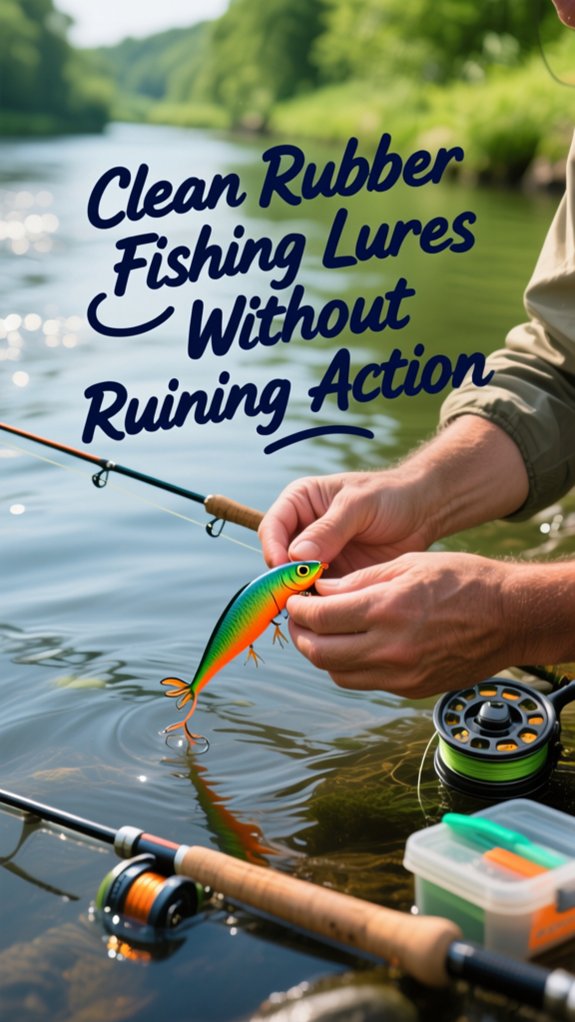
I protect my rubber lure’s lifelike action by inspecting them first, stiff, cracked tails won’t survive scrubbing. I stick to warm water, mild dish soap, and a soft-bristled toothbrush, skipping anything abrasive. Light salt rinses off easy; caked grime needs a 10-minute soak first.
I work stains with gentle circular motions, always testing hidden spots, and never touch solvents that harden rubber. A full air-dry hanging or flat on a towel keeps them from warping before breathable storage. There’s more to keeping these baits tournament-ready than meets the eye.
Check Rubber Lure Condition Before Cleaning
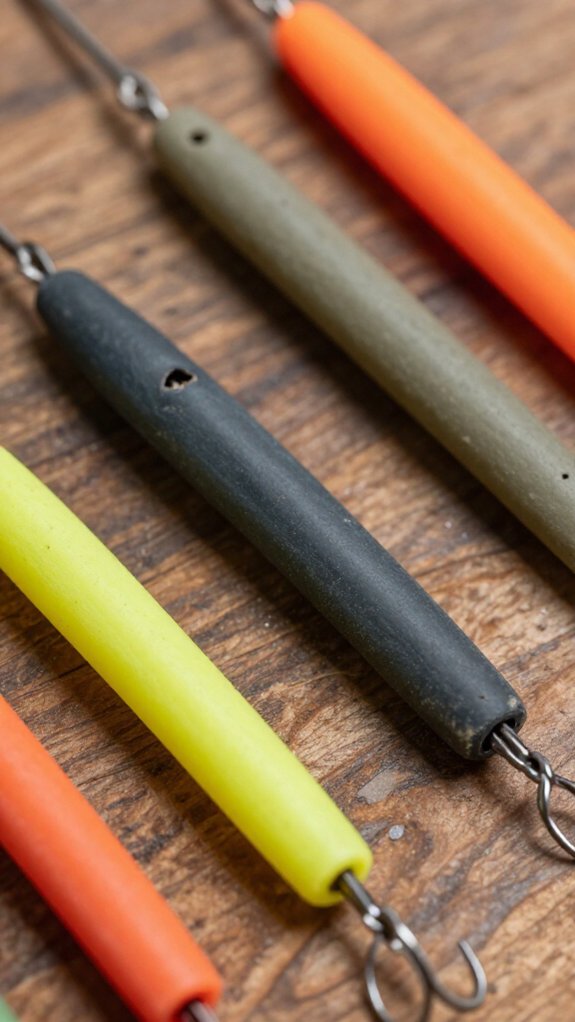
Before I scrub a single lure, I always take a close look at what I’m working with, because cleaning a damaged bait can turn a small problem into a ruined one.
Spot the Warning Signs
I inspect every rubber lure for cracks, tears, or deterioration first. Tiny splits worsen fast under scrubbing pressure, so catching them early saves me from trashing a favorite bait.
Test What Still Works
I check flexibility by gently bending the tail and body. If it’s gone stiff or brittle, that’s damage from age or UV exposure, meaning cleaning won’t restore it anyway.
Assess Before You Act
I also scan for sticky residue, loose hooks, or compromised paint. Knowing the exact condition helps me avoid aggressive methods that accelerate deterioration or strip finishes I want to keep.
Choose Soft Brushes and Mild Cleaners for Rubber Lures
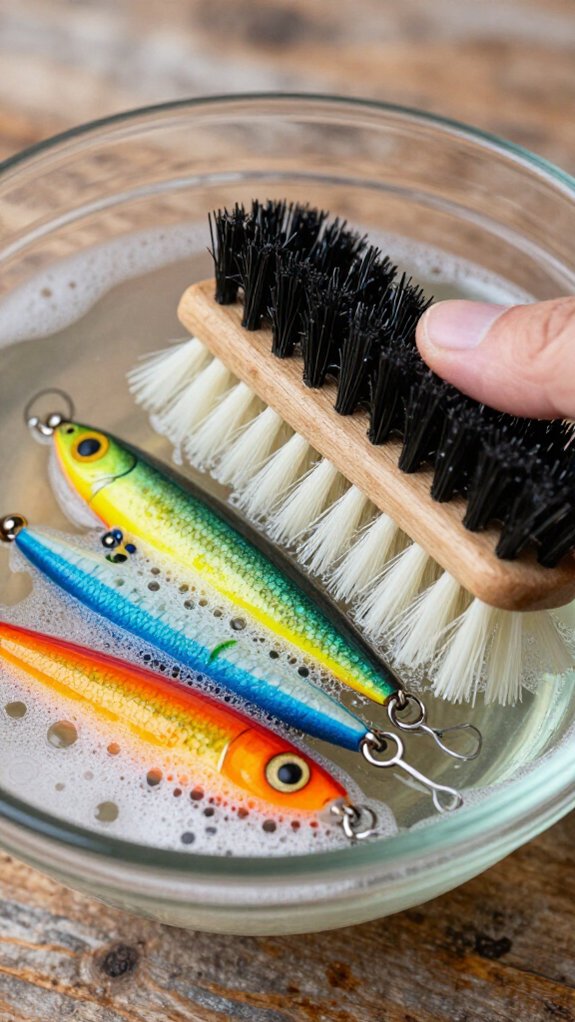
I always reach for a soft-bristled toothbrush or foam applicator when I’m cleaning my rubber lures, since anything stiffer’ll chew up that supple action I’ve paid good money for.
For soap, I stick with a few drops of mild dish soap diluted in warm water, or I’ll grab a plastic-safe cleaner if the grime’s really baked on from a long day on the water.
Pairing these gentle tools with an easy circular scrub keeps my baits snapping back to life cast after cast, instead of ending up cracked and lifeless in the tackle box.
Gentle Brush Selection
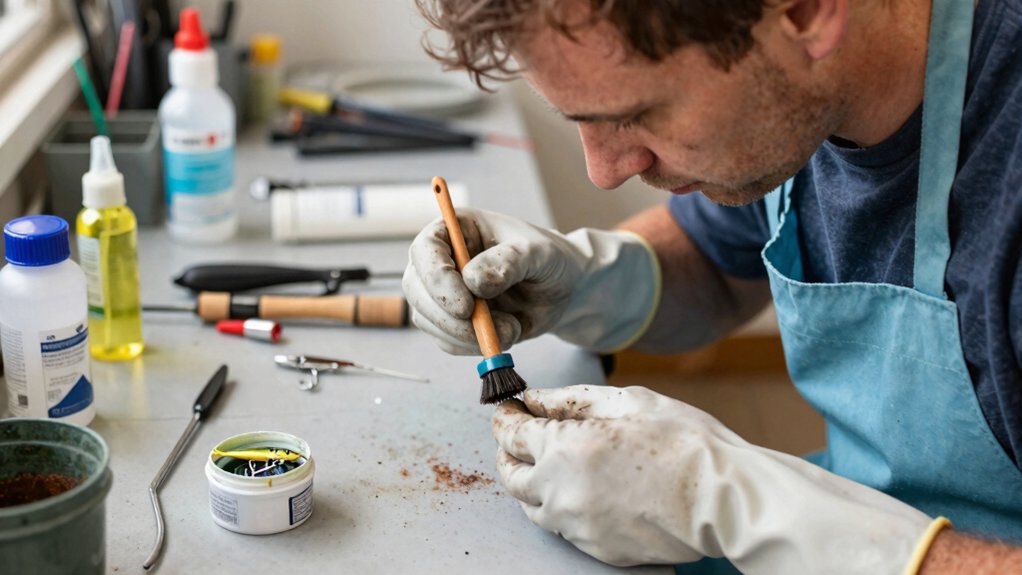
When I’m cleaning my rubber fishing lures after a long day on the water, I’ve learned that the brush I reach for matters just as much as the cleaner itself. I always grab a gentle brush, usually an old toothbrush with soft, pliable bristles that flex against the rubber without digging in.
| Brush Type | Best For | Avoid If |
|---|---|---|
| Soft-bristled brushes | Detailed tail cleaning | Heavy algae buildup |
| Makeup brushes | Dusting off dry debris | Wet, caked-on grime |
| Baby bottle brushes | Hollow-body lures | Tight, delicate appendages |
| Foam-tipped swabs | Eye sockets, joints | Large surface areas |
| Fingertip scrub pads | Flat-sided swimbaits | Thin, floppy tails |
I pair my cleaning tool with a non-abrasive cleaner and test it first on a hidden spot. Stiff bristles spell disaster, they will puncture tails and ruin action fast. I check my soft-bristled brushes weekly for wear. Frayed bristles scratch, so I replace them before they cause surface damage.
Mild Soap Options
Three drops of mild dish detergent in a bowl of warm water is all it takes to break down the fish slime and lake grime clinging to my rubber lures without eating into the material. I stick with mild soap options because harsh chemicals strip away the plasticizers that keep tails wagging and tentacles fluttering.
My Go-To Cleaners
- Dish soap, cuts through fish oils fast
- Gentle hand soap, fragrance-free varieties work best
- Soapy water, warm, not hot, to preserve flexibility
When cleaning rubber, I’ll dip a soft cloth into the solution and work in gentle circles. No scrubbing. The soapy water lifts residue without stressing the material.
I always rinse twice. Leftover soap film can stiffen skirts and kill the action that triggers strikes.
Rinse Light Dirt or Soak Heavy Grime on Rubber Lures
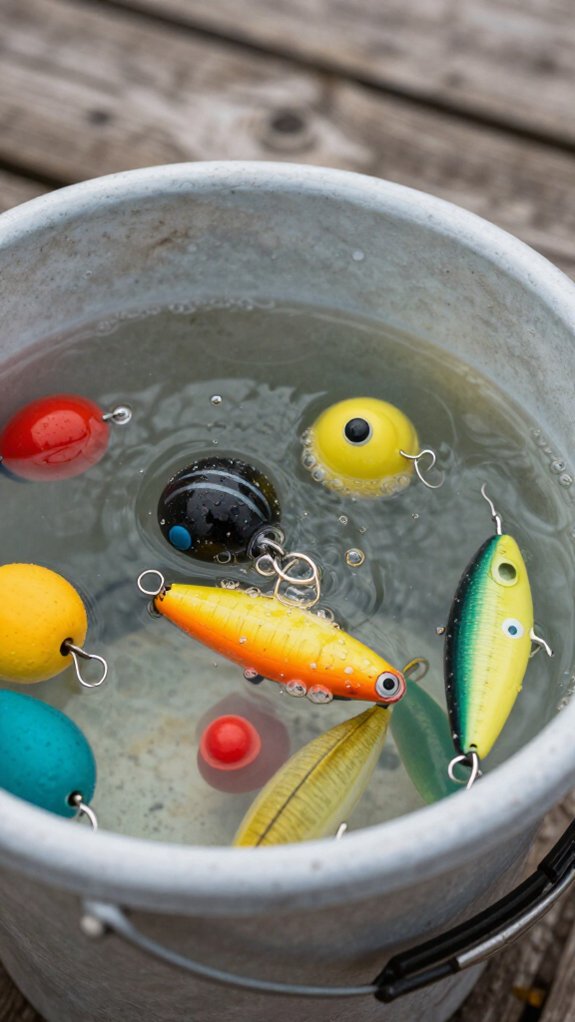
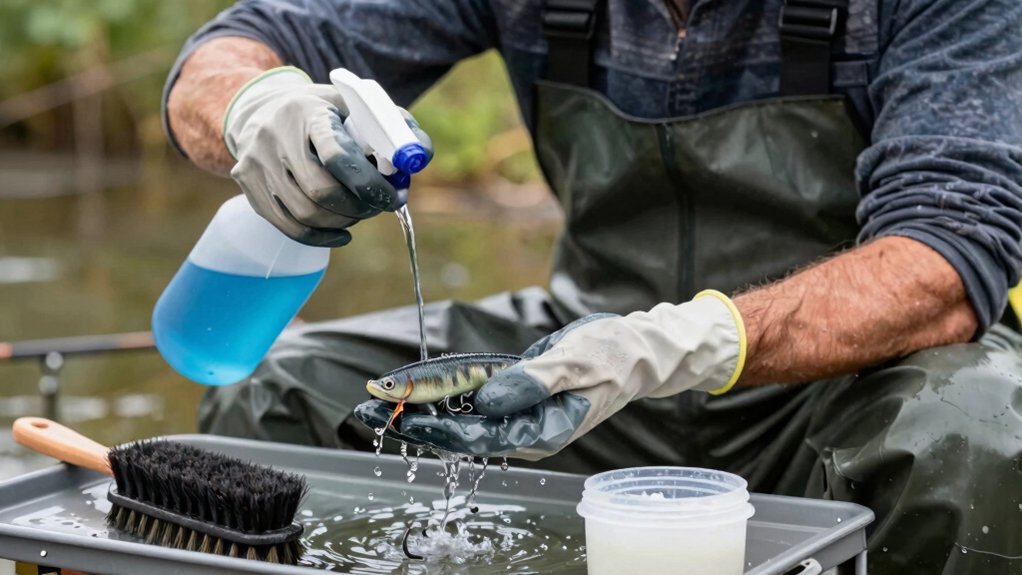
Since rubber lures pick up gunk after every cast, I rinse mine with warm water right after I’m off the water. It’s the quickest way to stop light dirt, algae, and salt from setting in and ruining that soft, lifelike action fish can’t resist.
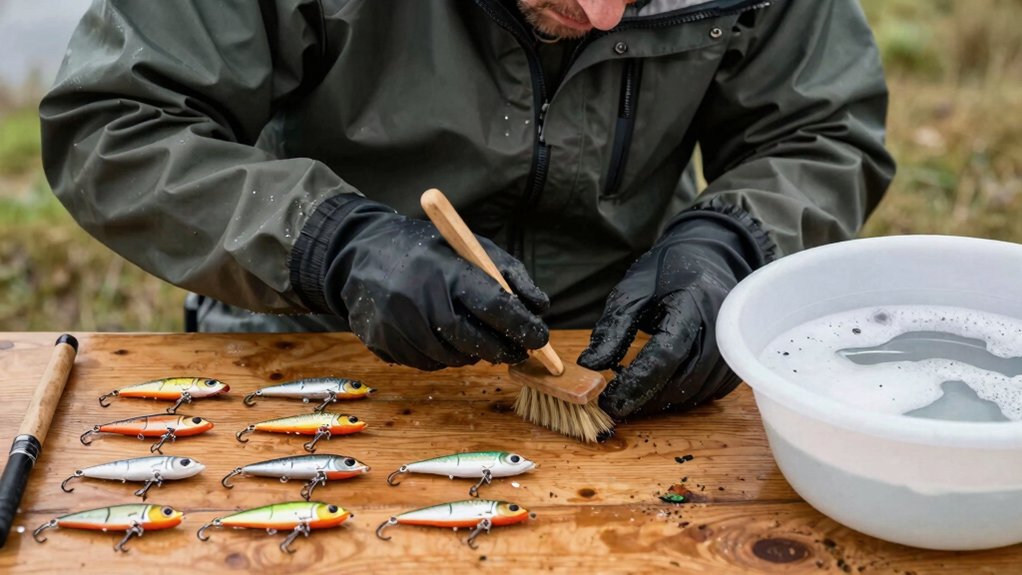
When I’ve let dirt build up or I’m dealing with stubborn grime, I don’t scrub harder, I soak. I’ll fill a bowl with warm water and a few drops of mild dish soap, then drop my lures in for 10-15 minutes. That soak loosens the gunk without me manhandling the rubber.
After soaking, I give them another quick rinse under running water, shake off the excess, and let them air dry. No heat, no harsh chemicals, just clean, flexible lures ready to swim true on my next trip.
Scrub Rubber Lure Stains With Light Pressure
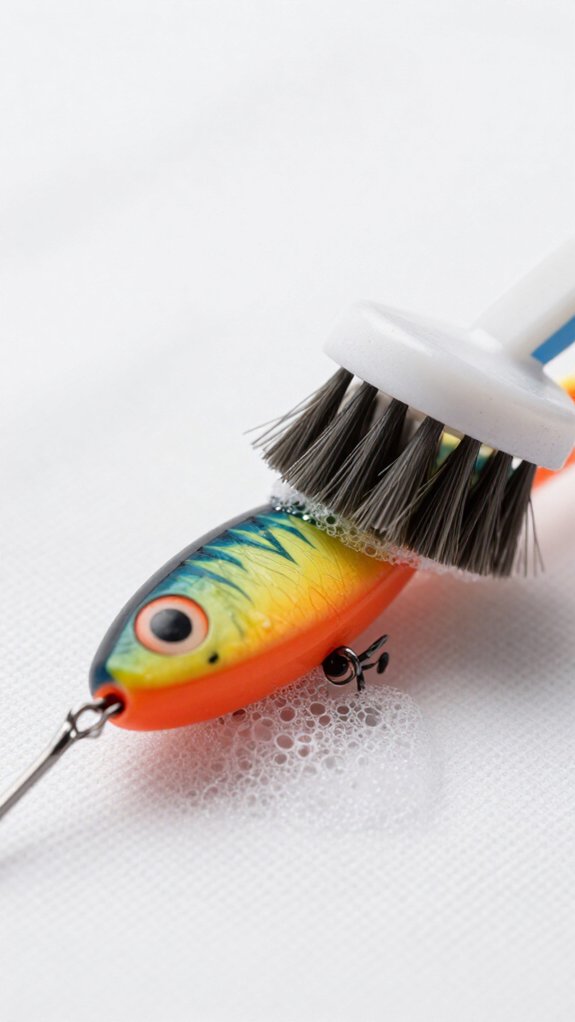
Rinsing and soaking will get you most of the way there, but sometimes rubber picks up those stubborn stains that need a gentler touch.
I grab a soft cloth or sponge with mild soap and warm water to clean my rubber lures. I apply light pressure and gentle scrub in circular motions, focusing only on stained areas. Too much force tears the material or ruins that lifelike wiggle fish can’t resist.
| Tool | Pressure Level | Risk if Wrong |
|---|---|---|
| Soft cloth | Light | Safe, preserves action |
| Sponge | Light | Safe, maintains flexibility |
| Abrasive pad | Heavy | Tears, deformed rubber |
| Stiff brush | Heavy | Ruined lure action |
| Fingernail scrub | Heavy | Permanent damage |
I always test a hidden spot first. Afterward, I rinse thoroughly with clean water. No soap residue means my lures swim true on the next cast.
Restore Sticky or Hardened Rubber Lures
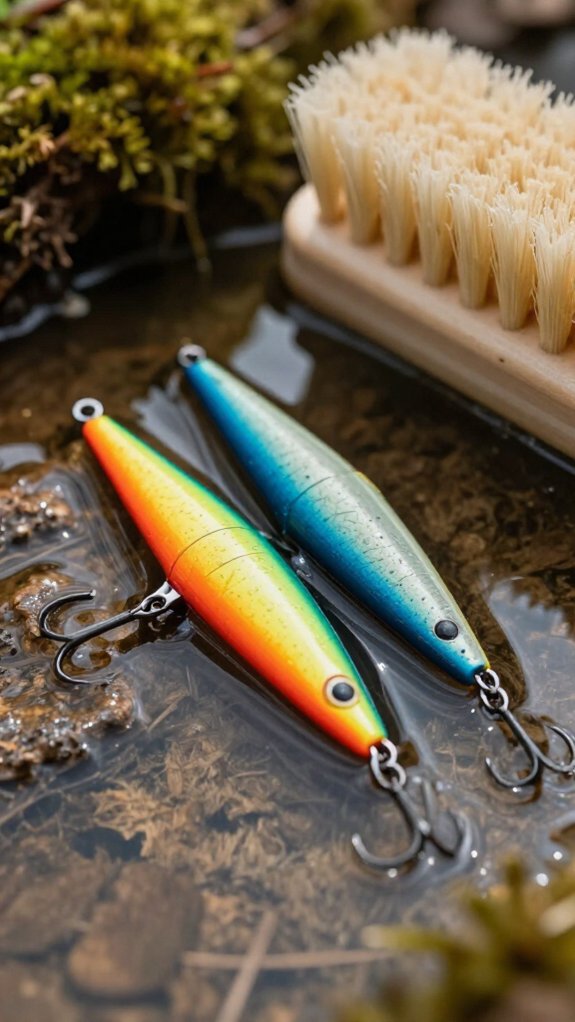
When rubber lures start feeling tacky or stiffen up like old boots left in the sun, they’re telling you they’ve lost their natural oils and flexibility. I know that sinking feeling of watching a once-lively bait swim like a stick.
Bring Back the Bounce
I soak my rubber lures in warm water mixed with mild soap for about 15 minutes. This loosens debris and starts restoring that supple action you paid for.
Clean and Condition Gently
After soaking, I rub the surface lightly with my fingers or a soft cloth to lift waxy buildup. For stubborn cases, I’ll use a dab of lanolin-based hand cleaner or diluted Woolite. Nothing harsh.
I’ve seen solvents crack rubber faster than a summer drought.
Dry Before Storing
I always air dry lures completely in a well-ventilated spot. Trapped moisture kills action and invites mold, and nobody wants a fuzzy jig.
Air Dry and Store Rubber Lures Flat or Hanging
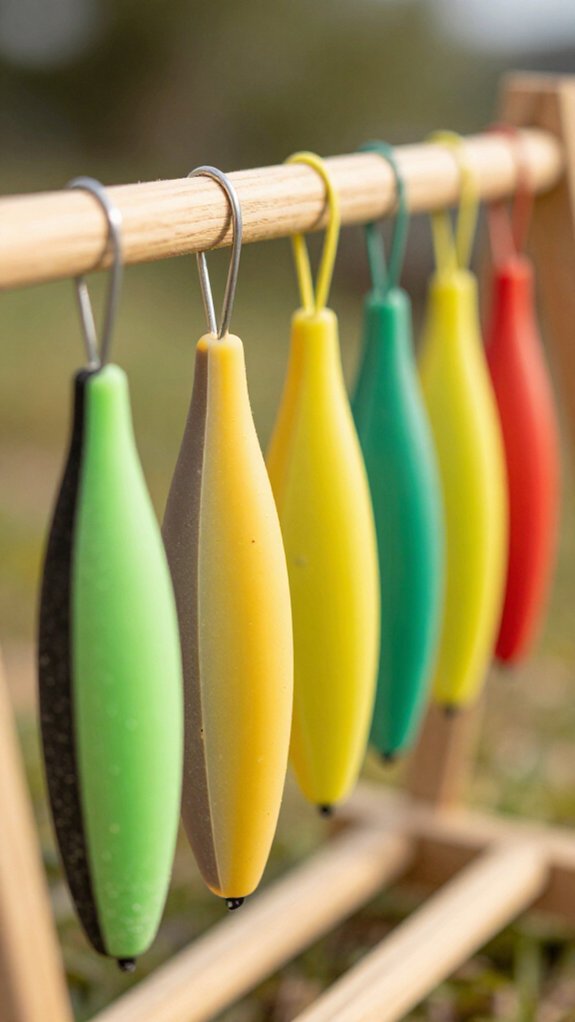
Once my lures are clean, I’ve got to get the drying and storage right or all that work goes to waste. I always air dry my rubber lures completely before putting them away, since trapped moisture ruins their flexibility and invites mold.
Here’s how I handle drying and storage:
- I hang rubber lures through the nose or tail using a hook or string, letting air circulate freely around every tentacle.
- I lay delicate or long-tailed lures flat on a clean, dry towel to prevent stretching or warping.
- I ensure they’re bone-dry before I store them, checking joints and crevices where water hides.
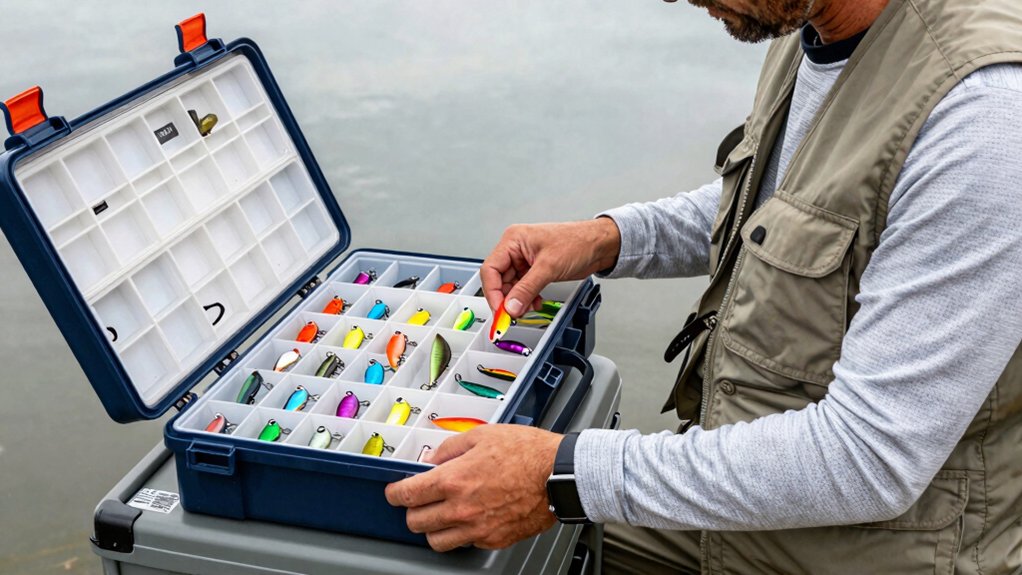
- I use breathable hangers or containers with ventilation holes, never cramming lures together where they’ll stick or deform.
Proper drying keeps that lifelike action intact trip after trip.
Frequently Asked Questions
How to Clean Dirty Fishing Lures?
I soak my dirty lures in warm, soapy water for fifteen minutes, then gently rub them with my fingers or a soft cloth. I’ll use a soft brush for stubborn spots, rinse thoroughly, and air dry them completely.
What Lure Was Banned From Bass Tournaments?
I investigated the theory and found the Live Target Frog was banned from many bass tournaments in 2011. Its excessive surface disturbance gave anglers an unfair advantage, violating rules about splash and commotion limits.
Can You Use WD-40 on Fishing Lures?
I don’t recommend using WD-40 on your fishing lures. It leaves residue that attracts dirt, deteriorates rubber, and ruins their natural swimming action.
I’ll stick with mild soap and water to keep my lures performing their best.
Can You Use Rubbing Alcohol to Clean Fishing Reels?
I use rubbing alcohol on my reels, but I’m careful, it’s great for metal grime, yet it’ll crack plastic and rubber if I’m sloppy. I target dirt with a soft cloth, Then lubricate properly afterward.
In Conclusion
Keeping your rubber lures in “retirement-ready” health doesn’t take much, just a little TLC after each trip. I’ve seen too many anglers send perfectly good baits to an “early rest” by skipping basic maintenance.
Treat them gentle, clean them smart, and they’ll keep dancing for years. Your tackle box will thank you, and so will your catch rate.