
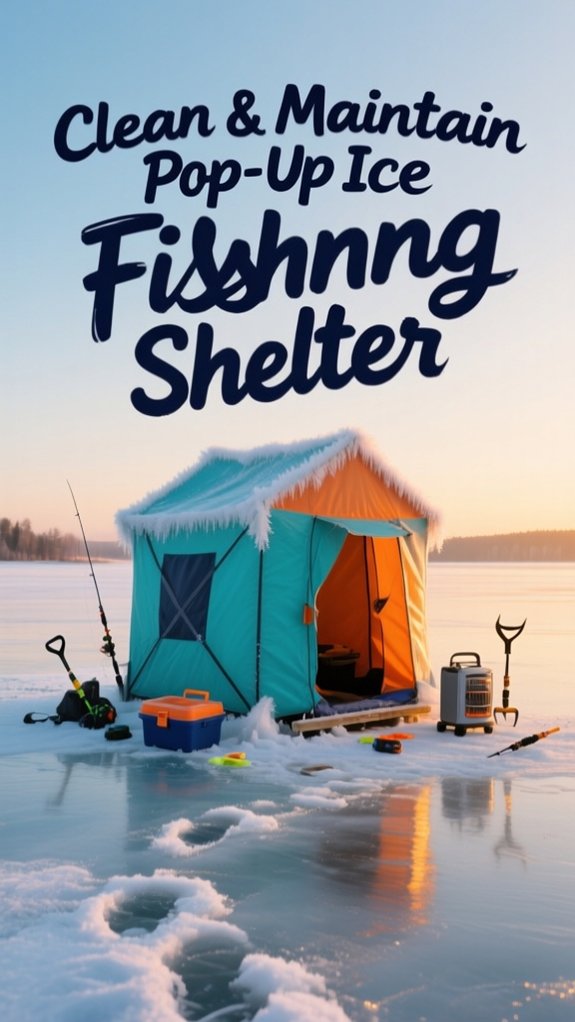
I keep my pop-up ice shelter in top shape by clearing snow and ice before it freezes solid, then washing the fabric with mild soap and warm water to stop salt damage and mildew. I inspect zippers and seams for wear, lubricate hinges and tracks with silicone spray, and store everything dry, raised, and critter-proof until next season.
These five habits take under thirty minutes total and save me hundreds in replacement costs, there’s even more to know about protecting your investment when the mercury drops.
Clean Up Right After Fishing (Remove Snow and Ice Before It Freezes)
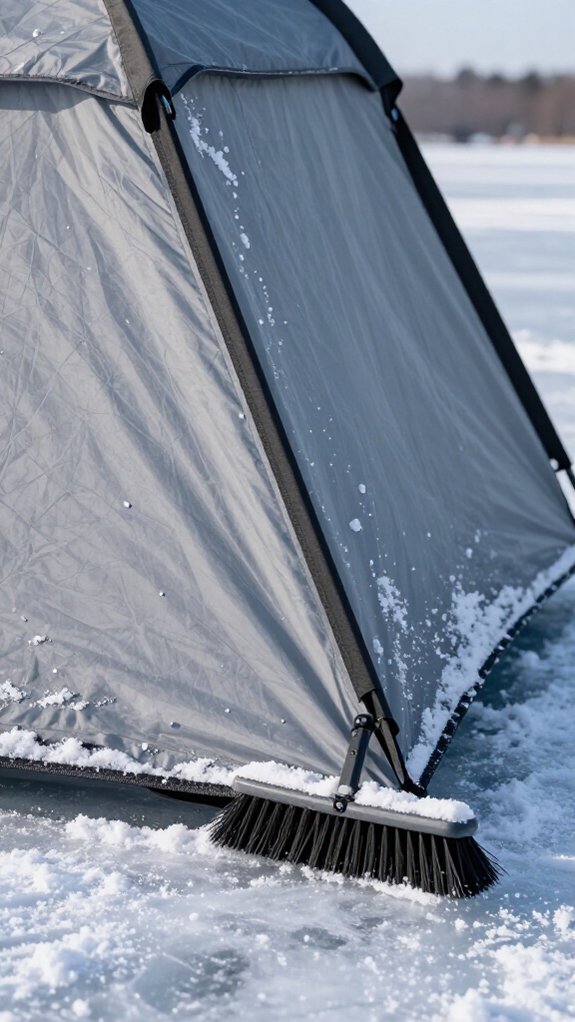
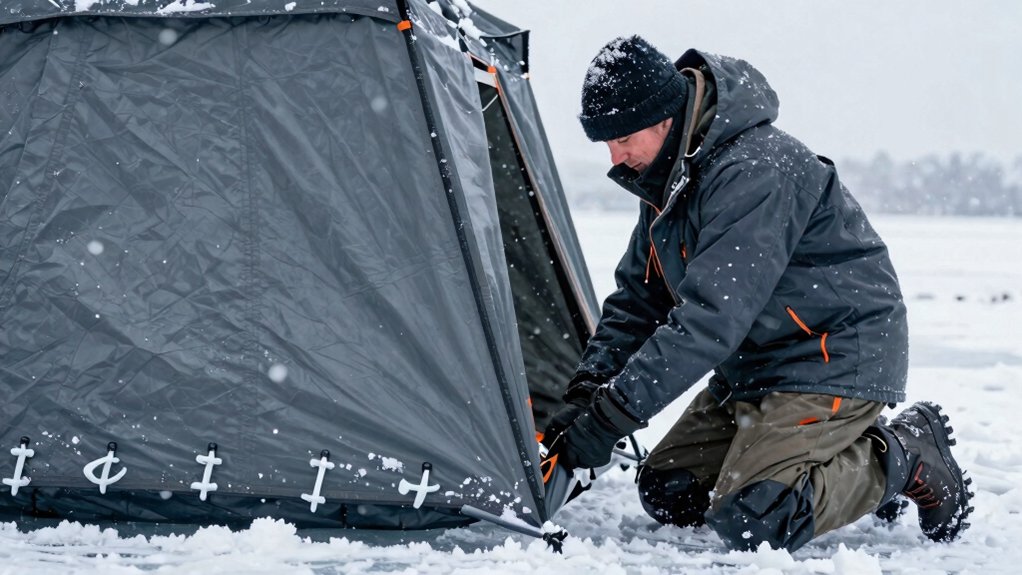
Before I even think about packing up my rods, I make sure my shelter’s clear of snow and ice, because once that stuff freezes solid, I’m looking at a headache I don’t need.
Why Timing Matters
Ice fishing puts your gear through brutal conditions. That powdery snow on your roof? It turns into dead weight fast.
I’ve seen frames warp from neglect, and trust me, a twisted hub ruins your whole season.
My Quick-Clear Routine
I grab a snow brush and sweep the roof first, working down the sides. Takes maybe three minutes.
Here’s what I’m preventing:
- Frozen zippers and fabric that crack when folded
- Extra pounds stressing the frame
- Meltwater pooling inside during the drive home
Clean it now, or fight it later. After years on the ice, I’ll take the brush every single time.
Wash and Dry Your Shelter’s Fabric (Stop Mold, Mildew, and Salt Damage)
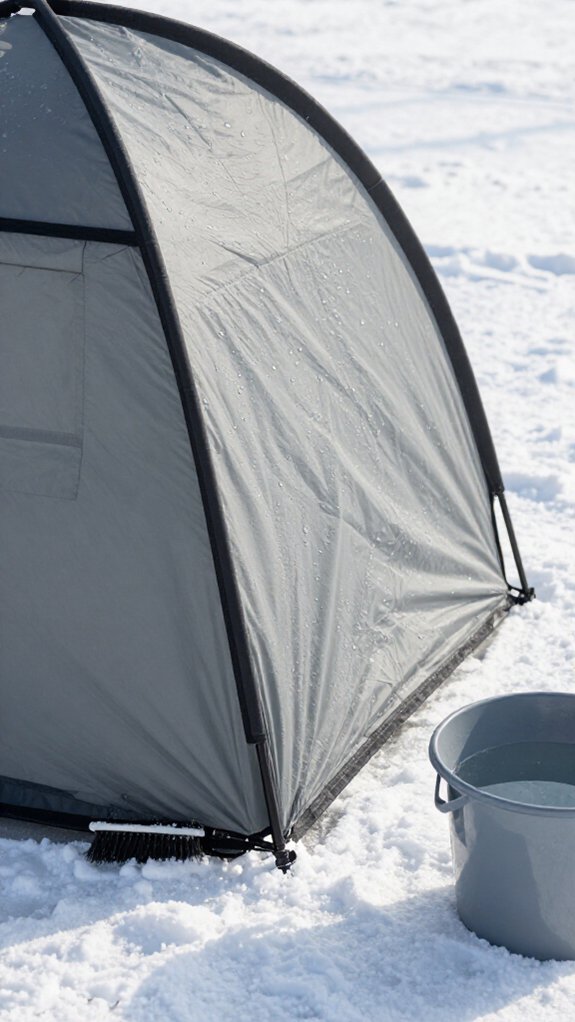
Once I’m off the ice and back home, I don’t just stuff my shelter in the garage and forget about it, because that damp, salty fabric is a ticking time bomb for mold, mildew, and rot.
Wash It Right
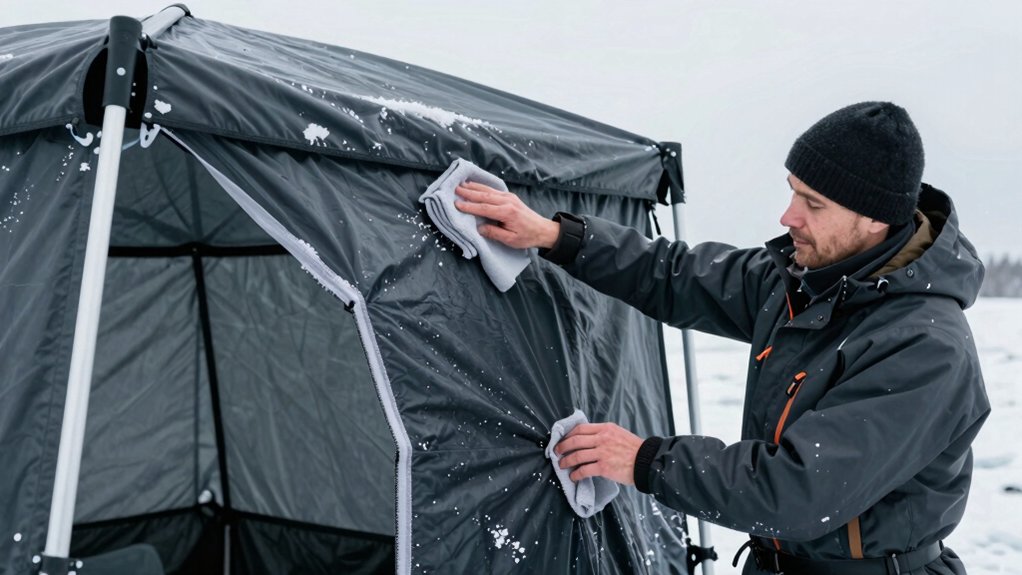
I grab mild soap and warm water to gently clean my fish house fabric. No harsh detergents—they’ll chew through the material faster than a northern through a shiner.
Rinse and Dry Completely
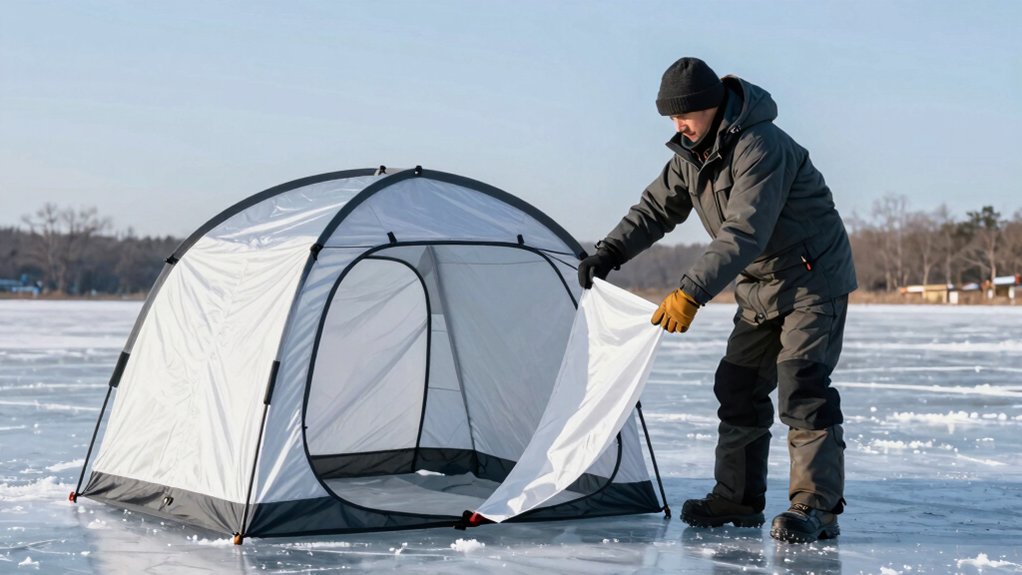
I rinse thoroughly, chasing out every soap bubble. Leftover cleaner weakens threads over time. Then I air dry the whole shelter in sunshine with good airflow.
Trapped moisture breeds funky smells and fuzzy spots.
Skip the Aggressive Stuff
I never blast it with a pressure washer or scrub with abrasive brushes. I also spot-check for salt deposits from slushy boots and road spray, wiping them away before they eat holes in my investment.
Inspect Zippers, Seams, and Poles (Catch Damage Before It Spreads)
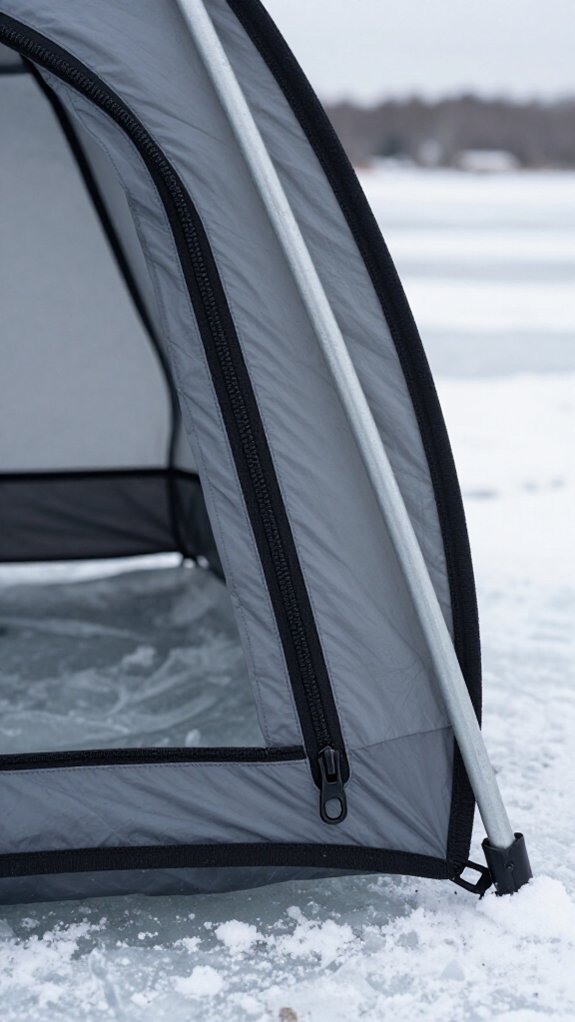
After my shelter’s fabric is clean and bone-dry, I turn my attention to the hardware that holds everything together, zippers, seams, and poles, because a tiny tear today becomes a gaping hole mid-season when the wind’s howling and I’m 20 miles from shore.
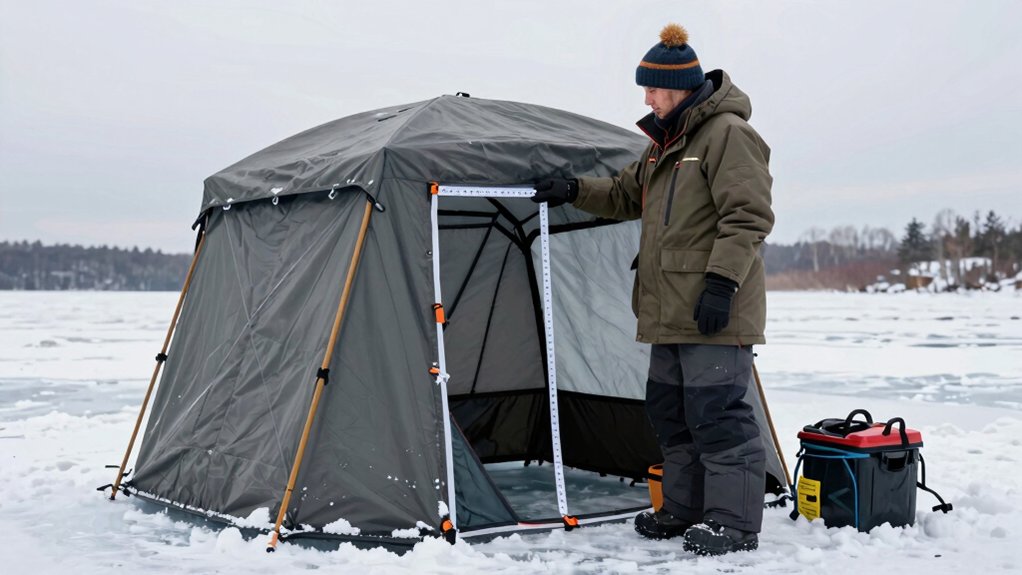
I check every zipper for fraying or corrosion, running my fingers along teeth to feel for catches that’ll snag at 10 below. I examine seams for cracking or water intrusion marks.
Then spot-check poles for stress bends or loose fittings where ice weight could snap fiberglass.
When I find fabric pulling from seam tape, I reapply compatible repair tape immediately. Catching this damage now preserves my shelter’s insulation and waterproofing, saving me from a miserable, drafty day when the bite’s heating up and retreat isn’t an option.
Lubricate and Tighten While You Inspect (Keep Everything Moving Smoothly)
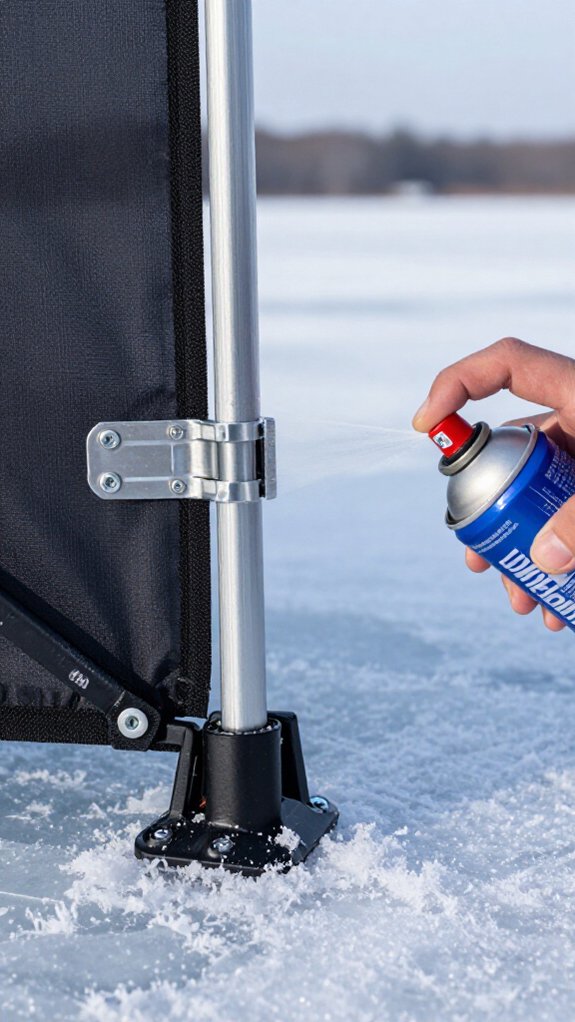
While I’m already hands-on with every zipper and seam, I make it a point to keep things moving smoothly, literally, because nothing kills a quick setup faster than a hinge frozen stiff or a lift mechanism that groans like it’s begging for mercy. I grab a silicone-based lubricant and hit every moving part—hinges, zippers, lift mechanisms—before they seize up in the cold.
| Component | Action | Frequency |
|---|---|---|
| Hinges | Lubricate with silicone spray | Every 2-3 trips |
| Zippers | Apply dry lubricant | Monthly |
| Lift mechanisms | Lubricate tracks, check resistance | Pre-season |
| Screws/bolts | Tighten with drill or wrench | Each inspection |
| Sliding tracks | Inspect for corrosion, lubricate | As needed |
I tighten loose fasteners as I go, nothing worse than a rattling frame spooking fish below. I check sliding tracks for wear and hit them with lubricant if they drag. For ceiling storage lifts, I use a drill attachment to ensure they glide free. Catching a sticky point early saves me from wrestling gear in subzero wind.
Store Dry, Elevated, and Critter-Proof (Protect Your Shelter Until Next Ice)
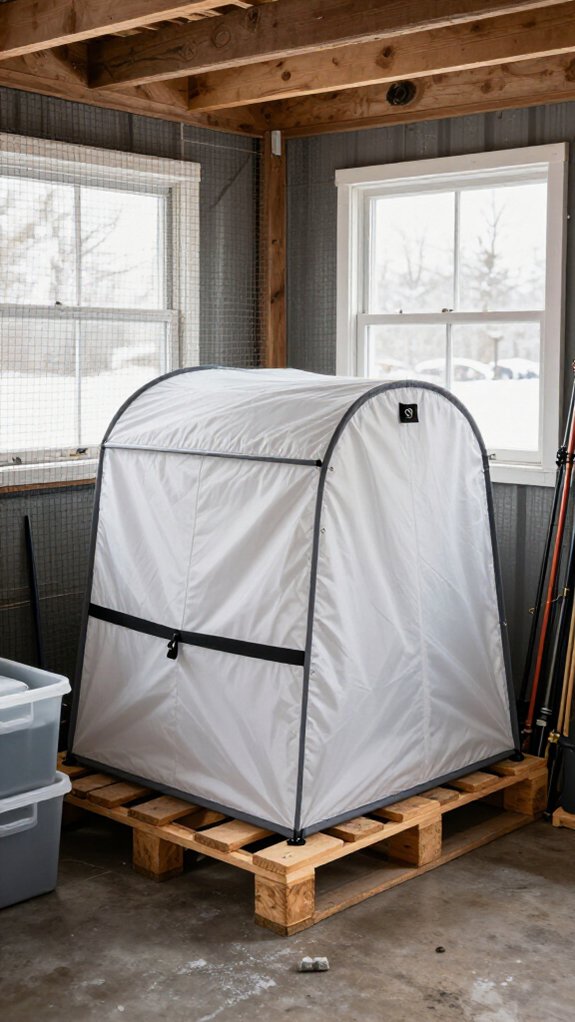
Because moisture and mice don’t care how much you spent on your shelter, I’ve learned that where and how I store my pop-up matters just as much as how I fish it.
I always store dry, raised, and critter-proof to protect my investment until the next ice season.
Here’s my storage routine:
- Hoisting the shelter overhead with a ceiling lift, watching it float above my garage floor like a giant winter kite
- Scrubbing the sled bottom until the plastic gleams, smelling that clean, soapy freshness
- Tucking dryer sheets between folded fabric, imagining mice wrinkling their noses and turning away
- Airing everything on sunny afternoons, feeling warmth beat through the material as trapped moisture escapes
Before packing away, I double-check every zipper and seam. A dry, raised, critter-proof shelter means I’m drilling holes next season, not shopping for replacements.
Frequently Asked Questions
How to Maintain an Ice Fishing Shelter?
I air out my shelter on sunny days to fight moisture and mold. I scrub the sled bottom with soapy water, dry it well, and reseal seams with quality sealant.
I store it raised off the ground.
How to Maintain a Flip Over Ice Shelter?
I maintain my flip-over ice shelter by wiping it down with mild soap and water, checking and tightening all fasteners and hinges, inspecting fabric for tears, clearing snow from the roof, and lubricating moving parts regularly.
How Do I Clean My Pop-Up Camper?
Like a shield against time’s wear, I wash my pop-up camper with mild soap and water, then wax it with marine-grade polish. I inspect seams, ventilate thoroughly, clear debris, and tighten fasteners to keep it standing strong.
How Long Can Fish Sit on Ice Before Cleaning?
I clean my fish within 30 minutes of catching them for optimal freshness, though they’ll stay good on ice for 4-6 hours. Don’t let them sit longer than that, or bacteria starts spoiling the meat.
In Conclusion
Your pop-up shelter is more than fabric and poles, it’s your fortress against the biting wind, your base camp for the stories you’ll tell for years. Treat it with respect, and it’ll stand sentinel season after season, ready when the ice calls your name again.
Tight lines, friend.