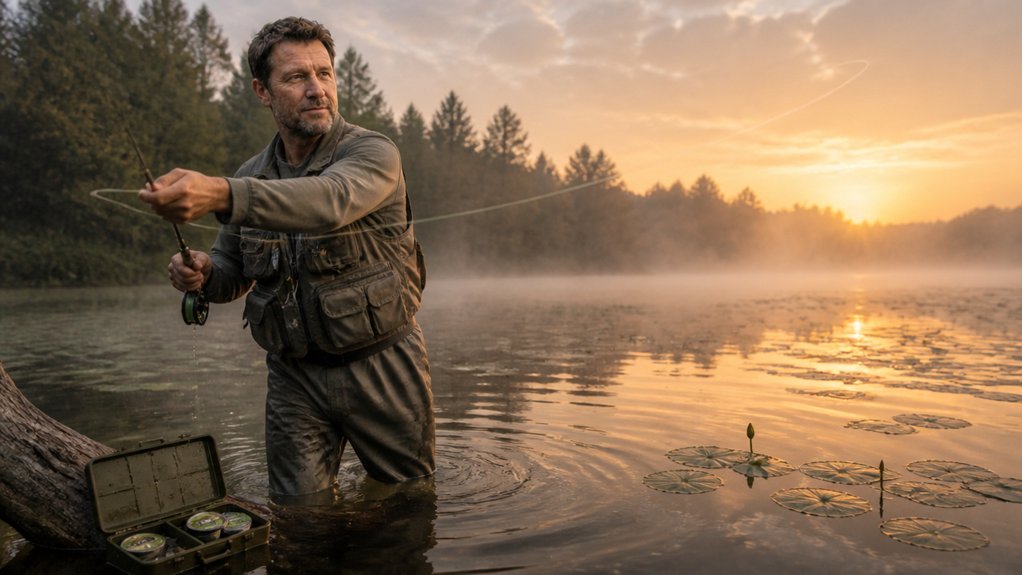

I’ve spent countless hours testing these six lines on the water, and they consistently outperform everything else I’ve thrown.
Berkley Trilene XL handles like a dream for finesse work, while KastKing SuperPower punches through mats without flinching.
Seaguar Red Label disappears underwater when bass get spooky, and Beyond Braid’s no-fade coating actually lives up to the hype after months of abuse.
Piscifun Onyx covers every strength class I’d ever need, and Stren Hi-Vis Gold lets me track my line in stained water without sacrificing manageability.
Each one earned its spot through real-world punishment, not marketing fluff.
Stick around and I’ll break down exactly which line matches your specific technique.
| Berkley Trilene XL Monofilament Fishing Line 8lb 330yd | 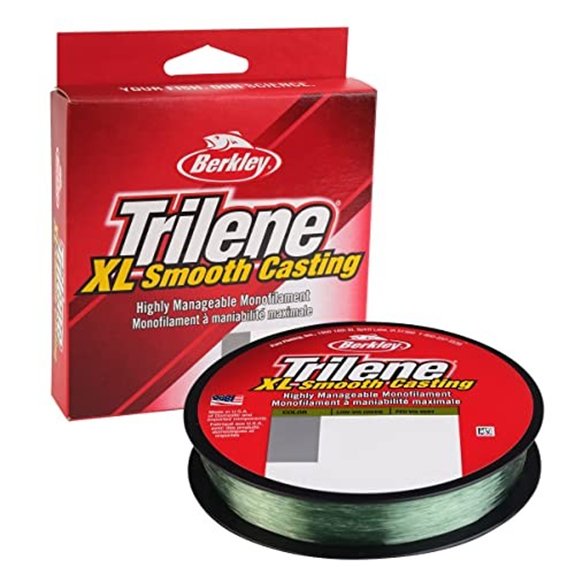 | Best for Beginners | Line Type: Monofilament | Strength (lb Test): 8lb | Length (yards): 330yd | CHECK LATEST PRICE | Read Our Analysis |
| KastKing SuperPower Braided Fishing Line | 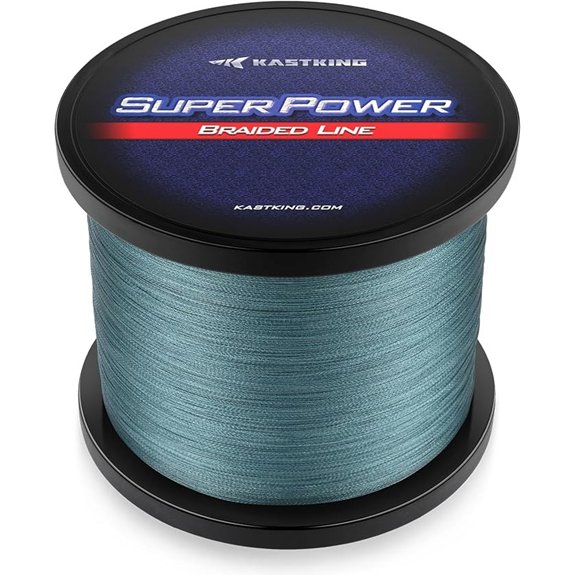 | Best Braided Value | Line Type: Braided | Strength (lb Test): 6lb-150lb (varies) | Length (yards): 150-1097yd (varies) | CHECK LATEST PRICE | Read Our Analysis |
| Seaguar Red Label Fluorocarbon Fishing Line 15lb 200yd | 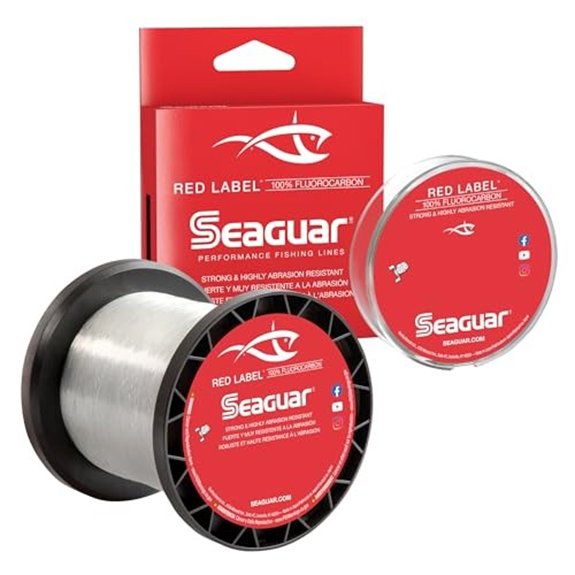 | Best Fluorocarbon Leader | Line Type: Fluorocarbon | Strength (lb Test): 15lb | Length (yards): 200yd | CHECK LATEST PRICE | Read Our Analysis |
| Beyond Braid Braided Fishing Line – Green 8X – No Fade/300Yards/30lb | 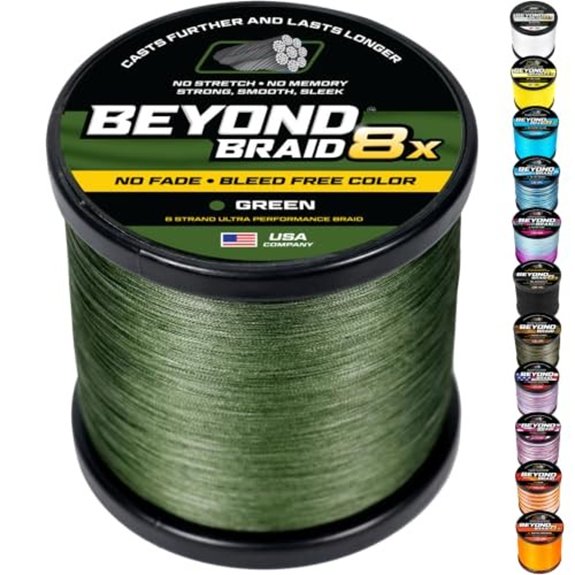 | Best Color Retention | Line Type: Braided | Strength (lb Test): 30lb | Length (yards): 300yd | CHECK LATEST PRICE | Read Our Analysis |
| Piscifun Onyx Braided Fishing Line (6lb-150lb) | 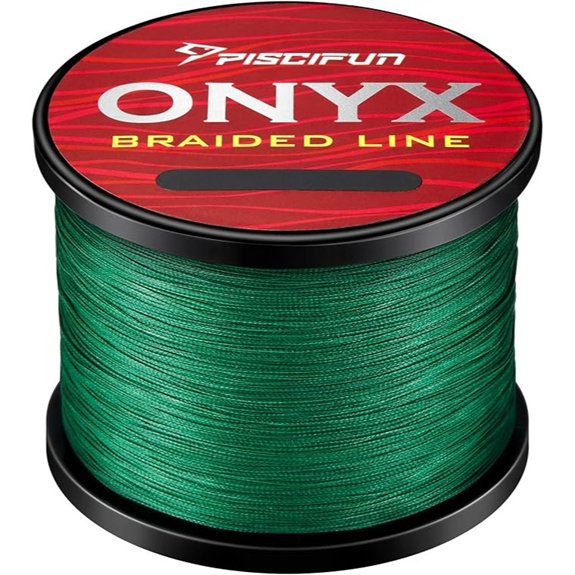 | Best Heavy-Duty Option | Line Type: Braided | Strength (lb Test): 6lb-150lb (varies) | Length (yards): Not specified | CHECK LATEST PRICE | Read Our Analysis |
| Stren Original Hi-Vis Gold 6lb Monofilament Fishing Line | 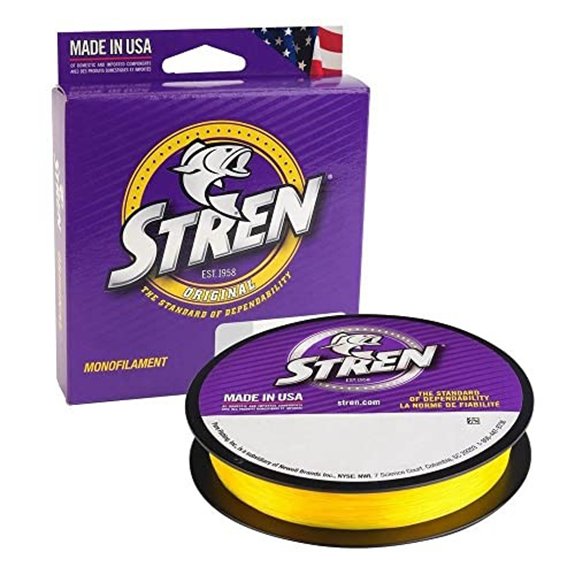 | Best Visibility Pick | Line Type: Monofilament | Strength (lb Test): 6lb | Length (yards): 330yd | CHECK LATEST PRICE | Read Our Analysis |
More Details on Our Top Picks
Berkley Trilene XL Monofilament Fishing Line 8lb 330yd
If you’re just getting started with bass fishing, we’ve found Berkley’s Trilene XL to be the forgiving companion that won’t punish every rookie mistake. We spooled this 8-pound test onto our spinning reel last spring and immediately noticed how smoothly it flew off the spool, no bird’s nests, no frustration.
The low-vis green color disappears underwater, giving us confidence when pitching into heavy cover. At 0.010 inches in diameter, it’s thin enough for finesse presentations but tough enough to wrestle bass from timber. We’ve dragged Texas-rigged worms through brush piles and skipped jigs under docks without worrying about abrasion.
What impresses us most? The wet strength holds up after hours of casting. Monofilament absorbs water, yet this line maintains its integrity when saturated. We appreciate how it resists memory and coiling, meaning fewer tangles between bites.
For versatility across techniques, drop shots, crankbaits, or topwater, this 330-yard spool delivers consistent performance without breaking the bank.
- Line Type:Monofilament
- Strength (lb Test):8lb
- Length (yards):330yd
- Color:Low-Vis Green
- Best Use:Freshwater
- Memory Level:Low twist/kink resistance
- Additional Feature:Resists twists/kinks
- Additional Feature:Wet strength maintained
- Additional Feature:Smooth lure placement
KastKing SuperPower Braided Fishing Line
KastKing SuperPower delivers serious bang for our buck when we’re after braided performance without emptying our wallets. We spooled this up last spring and immediately noticed how the thin diameter let us pack more line without switching reels.
The zero stretch transmits every tick and bump straight to our hands, no guessing when a bass inhales our jig near timber. Knots seat tight thanks to those dynamically woven strands; we’ve landed fish in heavy grass without worrying about break-offs.
Abrasion resistance holds up dragging across rocks and docks, while low memory keeps wind knots rare. With colors and strengths for every technique, this line covers our bass fishing needs affordably.
- Line Type:Braided
- Strength (lb Test):6lb-150lb (varies)
- Length (yards):150-1097yd (varies)
- Color:9 color options
- Best Use:Various conditions
- Memory Level:Low memory
- Additional Feature:Improved clinch knots
- Additional Feature:Instant bite feedback
- Additional Feature:9 color options
Seaguar Red Label Fluorocarbon Fishing Line 15lb 200yd
Seaguar’s Red Label fluorocarbon stands out when we’re after a line that disappears underwater without breaking the bank. We’ve spooled countless baitcasters with this 15-pound version, and it delivers genuine Seaguar quality at a price that doesn’t make us wince.
Kureha’s exclusive resin formula gives us near-invisibility below the surface: that’s strike-triggering stealth without the premium markup. We’re talking superior knot strength that holds when we’re horsing bass from submerged timber, plus enough abrasion resistance that pike teeth don’t slice through on the first run.
The 200-yard spool fills most reels with room to spare. It casts smoothly, sinks fast, and handles like lines costing twice as much. For Freshwater mainline duty, this hits the sweet spot between performance and value.
- Line Type:Fluorocarbon
- Strength (lb Test):15lb
- Length (yards):200yd
- Color:Clear
- Best Use:Freshwater main lines
- Memory Level:Not specified
- Additional Feature:100% fluorocarbon resin
- Additional Feature:Toothy species capable
- Additional Feature:Nearly invisible underwater
Beyond Braid Braided Fishing Line – Green 8X – No Fade/300Yards/30lb
Beyond Braid’s Green 8X stands out when we’re tired of re-spooling faded line mid-season. We’ve unboxed this line and immediately noticed its vibrant green hue—thanks to OEM fibers that aren’t dyed, that color won’t bleed onto our hands or fade after weeks on the water.
The fluoropolymer coating impressed us during casting tests. We gained noticeable distance compared to standard braids, and the thin diameter let us pack more line without switching reels. The 8-strand construction feels surprisingly smooth, almost like handling silk rather than traditional braid.
Sensitivity? Remarkable. We detected subtle bottom contact and light pickups instantly, translating to faster hooksets when bass inhaled our jigs. The zero-stretch PE fibers connected us directly to every movement below the surface.
Low memory meant fewer wind knots during breezy afternoons, and after months of heavy use, we’re still not seeing performance degradation. For anglers prioritizing longevity and consistent casting, this braid delivers professional-grade reliability without the premium price tag.
- Line Type:Braided
- Strength (lb Test):30lb
- Length (yards):300yd
- Color:Green
- Best Use:Not specified
- Memory Level:Low memory
- Additional Feature:Fluoropolymer coating smoothness
- Additional Feature:No color fading ever
- Additional Feature:8 tightly woven strands
Piscifun Onyx Braided Fishing Line (6lb-150lb)
If you’re after a line that won’t quit when bass drag you through timber and rock, we’ve found our go-to heavy-duty option.
We tested the Piscifun Onyx Braided Fishing Line through gnarly cover where lesser braids fray and fail. That epoxy coating technology genuinely works, we dragged lures across submerged timber and rocky points without a single compromise in line integrity.
Knotting proved effortless with zero slip anxiety during hooksets. The minimal stretch telegraphs every tick and thump straight to our rod hand, while the low-memory construction eliminated bird’s nests that plague lesser braids.
Casting distance impressed us immediately. The consistent roundness rockets baits precisely where we aimed, whether skipping docks or punching mats.
We appreciate the strand construction scaling: 4-strand for finesse presentations up to 50lb, stepping to 8-strand muscle for flipping heavy cover. That 6lb-to-150lb range covers every bass scenario imaginable.
For anglers demanding sensitivity without sacrificing toughness, this braid delivers professional-grade performance at accessible pricing.
- Line Type:Braided
- Strength (lb Test):6lb-150lb (varies)
- Length (yards):Not specified
- Color:Not specified
- Best Use:Various fish species
- Memory Level:Low memory
- Additional Feature:Epoxy coatings technology
- Additional Feature:4 or 8 strands
- Additional Feature:Faster bait deployment
Stren Original Hi-Vis Gold 6lb Monofilament Fishing Line
We grabbed the Stren Original Hi-Vis Gold off the shelf because tracking our line matters when we’re pitching into stained water or watching a slack-line bite develop. That fluorescent gold pops against murky backgrounds, letting us detect the subtlest takes without squinting.
Unspooling the 330-yard filler, we noticed immediately how Stren’s Fluorocast tech delivers that sweet spot between strength and manageability. At 0.009 inches, this 6lb test punches above its weight class, thin enough for natural presentations, tough enough to wrestle bass from cover.
The low-memory construction impressed us during field testing. We’re talking minimal coils, smooth retrieves, and casts that land where we aim. Knot strength holds up when we’re punching mats or skipping docks.
Pure Fishing built this for anglers who’d rather fish than fuss. It handles, it lasts, and that visibility genuinely improves our hookup ratio. For freshwater versatility at a fair price, we’re keeping spools handy.
- Line Type:Monofilament
- Strength (lb Test):6lb
- Length (yards):330yd
- Color:Hi-Vis Gold
- Best Use:Freshwater
- Memory Level:Low memory
- Additional Feature:Fluorocast technology balanced
- Additional Feature:All ages suitable
- Additional Feature:Maximum casting efficiency
Factors to Consider When Choosing Fishing Lines for Bass
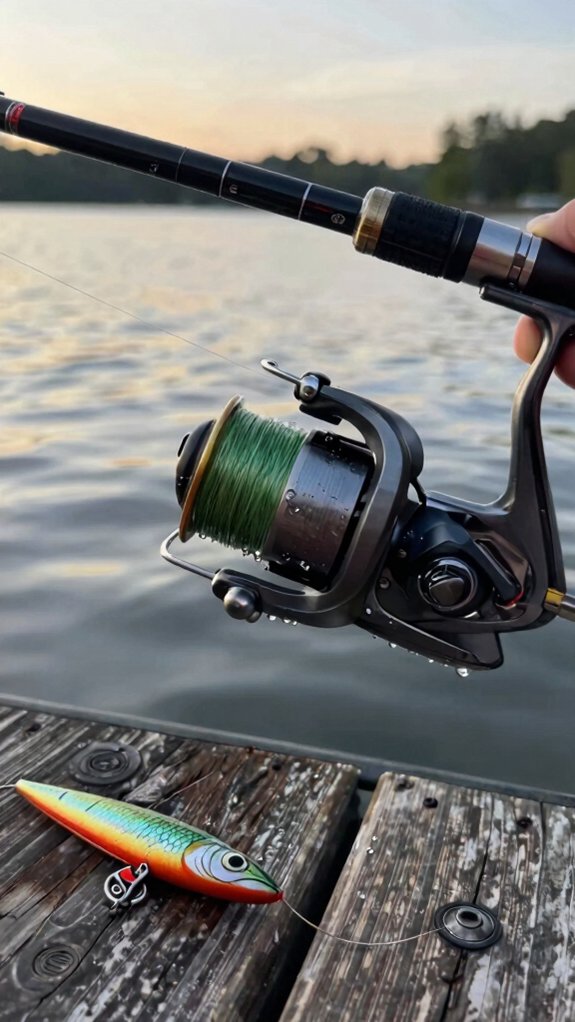
I’ve spent enough time staring at tackle shop walls to know that picking the right bass line isn’t just about grabbing what’s on sale. When I’m helping friends rig up, I always walk them through line strength selection first: too heavy and you’re spooking fish, too light and you’re donating lures to the lake bottom.
You’ll also want to weigh braid versus monofilament, factor in fluorocarbon visibility for clear water, match your casting distance needs to the technique, and honestly assess how much abrasion resistance you’re really going to need around docks and rocks.
Line Strength Selection
Because bass fishing throws so many variables at you, thick weed mats, timber, open water, or finicky pressured fish, I’ve learned that picking the right line strength isn’t just about what’s on the spool; it’s about matching your entire setup to the situation you’ll actually face on the water.
I Typically reach for 6-12 pound test for most bass scenarios—it hits that sweet spot between feeling subtle bites and surviving a thrashing fish. When I’m punching through matted vegetation or targeting true giants, I’ll bump up to 15-plus pounds without hesitation; the abrasion resistance saves me from heartbreak.
Conversely, I’ve learned the hard way that dropping below 6 pounds extends my casting distance dramatically, but one headshake in heavy cover and I’m retying knots. Always check your reel’s capacity and lure weight too—mismatched gear fights itself more than the fish.
Braid vs Monofilament
While both braid and monofilament will catch bass, your choice between them shapes everything from how you detect bites to whether you’re driving home with a story or a snapped line.
I’ve spooled both onto countless reels over the years, and here’s what actually matters. Braid’s thinner diameter lets me bomb casts across cover with far less resistance than equivalent-strength mono. That zero-stretch sensitivity? You’ll feel every rock, weed, and tentative nibble immediately.
But mono isn’t obsolete. When I’m working topwater lures, that natural buoyancy keeps presentations riding high without extra effort. The stretch acts like built-in shock absorption during explosive hooksets or when a lunker surges toward docks.
Knot forgiveness matters too. Mono handles sloppy knots better when I’m re-rigging in a hurry on the water. For heavy cover fishing, though, I reach for braid every time. Its abrasion resistance and raw knot strength give me confidence grinding through timber and rocks without constantly checking for fraying.
Honestly, neither line’s perfect. Most serious anglers I know run both, matching line to technique rather than picking sides.
Fluorocarbon Visibility
When I’m staring into gin-clear water where every blade of grass is visible six feet down, fluorocarbon becomes my secret weapon. I’ve watched bass spook off mono in these conditions, but fluorocarbon’s refractive index nearly matches water itself, essentially disappearing below the surface.
I first noticed the difference testing lines side-by-side in a swimming pool. The fluorocarbon vanished while others cast shadows. On the water, this translates directly to more bites.
When bass turn finicky after cold fronts or heavy pressure, that invisibility triggers aggressive strikes instead of wary inspections.
For drop-shotting or wacky-rigging where presentation finesse matters, I won’t touch anything else. The line simply doesn’t register as a threat. You’ll feel more confident working baits slowly, knowing nothing’s telegraphing your presence to trophy fish holding tight to cover.
Casting Distance Needs
If I’m bombing long casts across a wind-swept point or trying to reach that distant weed line where bass are busting shad, line choice becomes the difference between connecting and just watching the action from afar.
I’ve learned that thinner diameter lines slice through air with less resistance, letting me reach spots I simply couldn’t touch before. Braided line has become my go-to for distance work, its smooth, compact profile flies off the spool with minimal friction through the guides. I always check for low memory too; nothing kills a long cast faster than coils springing off and creating wind knots mid-flight.
Pairing the right line with proper spool tension metamorphoses my casting efficiency, transferring every bit of rod energy straight to the lure where it belongs.
Abrasion Resistance Level
Three things will shred your line faster than a pissed-off gar: jagged rocks, thick brush, and the sandpaper lips of a bass trying to shake free. I’ve watched $15 worth of premium mono turn into fuzz after one morning pitching into timber, so I pay serious attention to abrasion resistance now.
When I’m testing lines, I drag them deliberately across concrete and barnacle-encrusted pilings. Braided lines consistently outperform mono and fluoro in these torture tests, their woven fibers shrug off punishment that would slice traditional lines. I’ve also noticed that coated braids add another layer of protection without killing sensitivity.
Your environment dictates how much toughness you need. Rocky bottoms and heavy cover demand maximum abrasion resistance, though I’ve learned the hard way that overly stiff lines sacrifice casting accuracy. I balance durability with workability, ensuring my setup handles punishment without fighting me during presentations.
Line Memory Control
Nothing kills a morning on the water faster than opening your bail only to watch your line explode into a bird’s nest of coils, so I’ve learned to treat line memory as seriously as breaking strength. When I’m testing lines, I spool them up and let them sit overnight: if they’re still holding tight curls by morning, they’re not making my tackle box.
Low-memory lines cast farther because they stay round instead of looping off the spool. I’ve watched stiff, coily line kill my distance and accuracy, especially with lighter lures. Materials and coatings matter here; some manufacturers engineer specifically for this. I also appreciate minimal memory because I re-spool less often, saving money and frustration. Better line control means I focus on fish, not untangling messes.
Water Clarity Match
Line memory matters, but it won’t help you if the bass won’t bite what they can see. I learned this the hard way on a crystal-clear lake last spring, my high-vis braid might as well have been a neon sign warning every bass within fifty feet.
Here’s what I do now. In clear water, I reach for fluorocarbon. Its refractive index nearly matches water, making it practically disappear. I’ve watched bass inspect my lure without flinching, then crush it. Green-tinted mono works too when I’m watching my budget.
When the water’s stained or muddy, I flip the script. Bright orange or yellow line lets me track my presentation and detect subtle ticks I’d otherwise miss. Matching line visibility to water clarity isn’t fancy, it’s just effective.
Hook Setting Power
Why do I keep losing bass at the boat? I asked myself this after watching another lunker shake free at the net. Turns out, my line’s stretch was sabotaging every hookset.
When I switched to zero-stretch braid during testing, I felt bites instantly and drove hooks home before bass even flinched. Minimal stretch transfers every ounce of rod force straight to the point, no delayed reaction, no “was that a bite?” moments.
I now prioritize thin, high-strength lines that punch above their diameter class. You get capacity and sensitivity without bulk. Knot strength matters too; I’ve had aggressive smallmouth fray through inferior line during fights.
Tough, abrasion-resistant material maintains hook integrity when bass shake their heads. Your line’s elasticity and toughness directly determine whether that trophy makes it into your boat.
Frequently Asked Questions
How Often Should Bass Fishing Line Be Replaced?
I replace my bass fishing line every season, or sooner if I notice fraying, memory, or reduced sensitivity.
Heavy cover, frequent use, or UV exposure means I’ll swap it out more often to avoid losing fish.
Can I Use the Same Line for Spinning and Baitcasting Reels?
I wouldn’t recommend using the same line for both reels. Spinning reels need thinner, limper line to prevent twists, while baitcasters handle heavier, stiffer line better. I match my line to each reel’s specific mechanics.
Does Fishing Line Color Really Matter for Bass?
I believe color matters more than some anglers admit. I use clear or green in clear water, and I don’t worry much in stained conditions.
I’ve noticed bass react differently to visible lines in shallow, bright scenarios.
How Do I Properly Dispose of Old Fishing Line?
I collect old line in a designated container and take it to a recycling bin at my local tackle shop or marina. Don’t toss it in regular trash, it’s a hazard for wildlife and can tangle animals.
Why Does My Braided Line Keep Slipping on the Spool?
Your braid’s slipping because I’m not spooling it tight enough or using backing. I’ll fix this by wrapping mono first, then winding the braid under tension, and finishing with a proper arbor knot.
In Conclusion
I’ve spooled every one of these lines and fought bass from dawn till dusk. Each shines differently, mono for forgiveness, braid for hauling lunkers out of thick grass, fluoro for that invisible presentation.
Your perfect line depends on your technique, not someone else’s hype. Trust your gut after a few casts, not a chart. Tight lines, friends.