
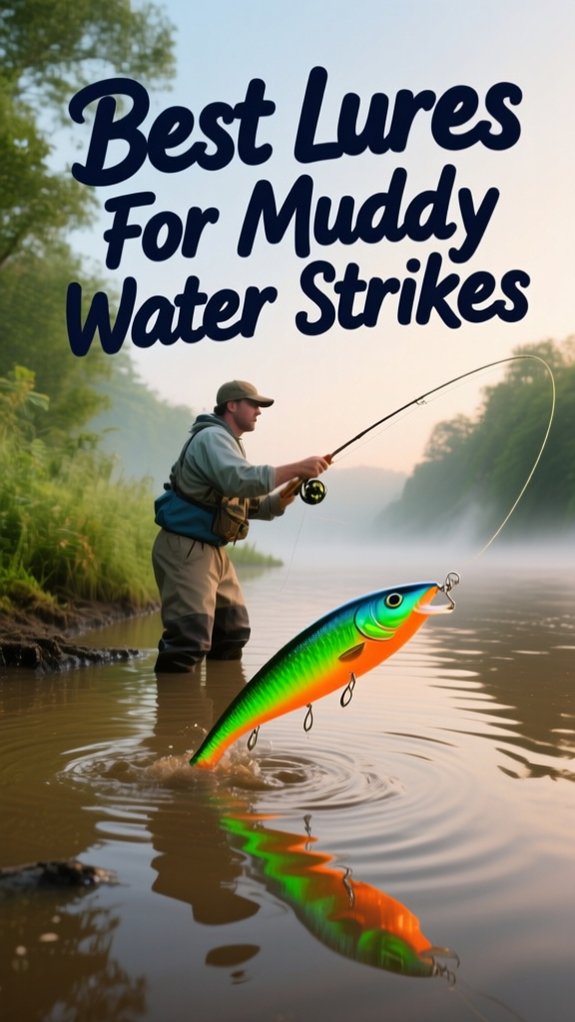
When visibility drops, I rely on lures bass can feel and hear, bladed jigs with bulky trailers, double Colorado spinnerbaits in chartreuse-white, and squarebill crankbaits that crash into cover. I’ll add rattles to flipping jigs for punching matted grass, and reach for buzzbaits or poppers at dawn when surface disturbance draws strikes from distance.
Larger blades create heavier thump, gold finishes amplify flash, and steady retrieves enhance vibration when sight is useless. Matching lure action to specific cover, skipping vibrating jigs into laydowns, burning squarebills through rock, turns muddy water into an advantage by triggering reaction strikes instead of feeding strikes. There’s more to uncover about blade sizes, retrieve speeds, and simple modifications that’ll put extra fish in your boat.
The 4 Lure Types That Dominate Muddy Water
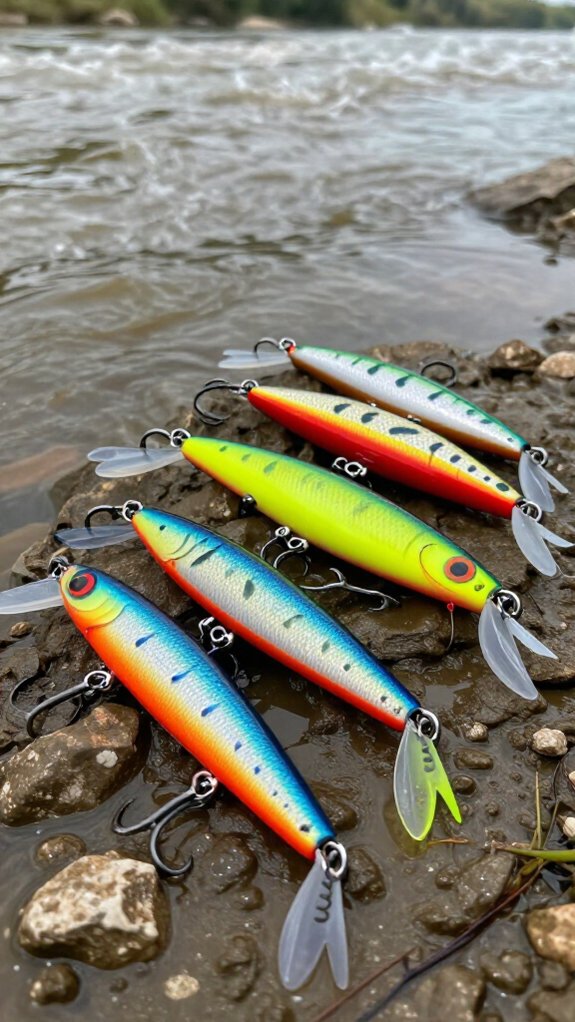
When visibility drops to near zero, I’ve learned that success hinges on switching to lures bass can actually find, and that means leaning hard on vibration, sound, and flash.
Bladed Jigs and Soft Plastics
I’ll reach for a bladed jig first. That thumping blade sends shockwaves through murky water that bass feel in their lateral lines. I’ll pair it with bulky soft plastics, think paddle-tail trailers or thick craws, that pulse with every hop. The combo creates a dinner bell effect they can’t ignore.
Crankbaits and Topwater
Squarebill crankbaits smash into timber and rocks, triggering reaction strikes with their wobble and deflection. When bass push shallow, I’ll work buzzbaits or poppers across the surface. The gurgle and splash cut through turbidity, giving fish an audible target they can home in on from several feet away.
Spinnerbaits That Cut Through Muddy Water
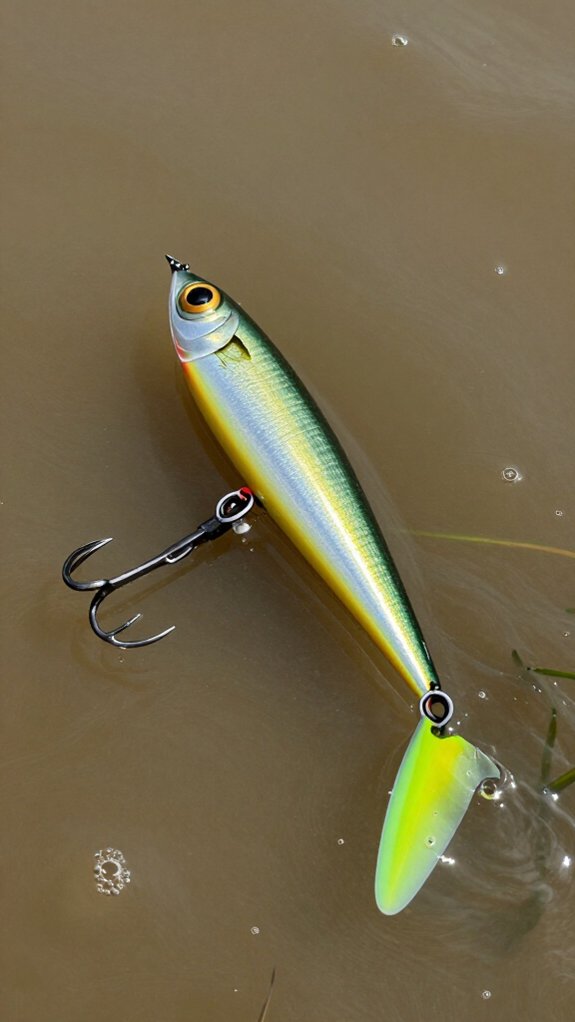
Spinnerbaits cut through muddy water when the blade combination, color, and retrieval speed work together to optimize vibration and visibility.
I’ve found that pairing Colorado blades with specific skirt colors and slowing my retrieve creates a thumping profile bass can track even in zero-visibility conditions.
Let’s break down exactly how to build and fish these setups for consistent strikes when the water’s running dirty.
Blade Combinations Matter
Because muddy water robs bass of their sight range, I’ve learned the hard way that blade choice isn’t just preference, it’s survival for my spinnerbait’s effectiveness.
I reach for double Colorado blades, specifically No. 5 and No. 3 combinations, when the water’s cold and muddy. These blades generate serious water displacement that bass feel through their lateral lines, even when they can’t see.
For brutal conditions, I’ll upsize to No. 6 willow leaf or massive No. 1 Colorado blades. The heavier thump cuts through murk like a dinner bell.
Sometimes I’ll run a single large Colorado when I want that dull, resonant thump bass zero in on.
My go-to compromise? Pairing Colorado with willow leaf, merging vibration and flash for maximum attraction.
Color Visibility Essentials
Once I’ve got my blade combination locked in, I turn my attention to colors that punch through the mud. In muddy water, color visibility isn’t just helpful, it’s essential for getting strikes.
High-Contrast Colors Win
I reach for chartreuse or white skirts and blades every time. These bright hues reflect more light, cutting through murky conditions so bass can actually find my lure. Gold blades add another layer of attraction, creating both flash and louder vibrations that help fish home in when they can’t see well.
Size Up for Success
Pairing those visible colors with larger Colorado blades amplifies the effect. The increased vibration and water displacement create a dinner bell bass can’t ignore.
When water clarity drops, this combination of contrasting colors and heavy thump transforms a blind cast into a targeted invitation.
Retrieval Speed Adjustments
When I’m working a spinnerbait through chocolate-milk colored water, I’ve learned that retrieval speed isn’t just a preference, it’s the difference between a bent rod and a skunked day.
Here’s how I dial in the perfect pace:
- Slow and steady – I keep my spinnerbait crawling along the muddy bottom where bass lurk, letting those blades churn deliberately.
- Match the vibration – A moderate retrieval speed lets bass feel and track the bait before they commit.
- Speed bursts – Sometimes I’ll accelerate suddenly to trigger reaction strikes when fish won’t chase steadily.
In truly thick muddy water, I’ll upsize to Colorado blades and slow way down. That combo of thump and flash cuts through the murk.
Pay attention to how bass respond. Your retrieval speed adjustments turn missed opportunities into solid hooksets.
Chatterbaits for Vibration in Muddy Water
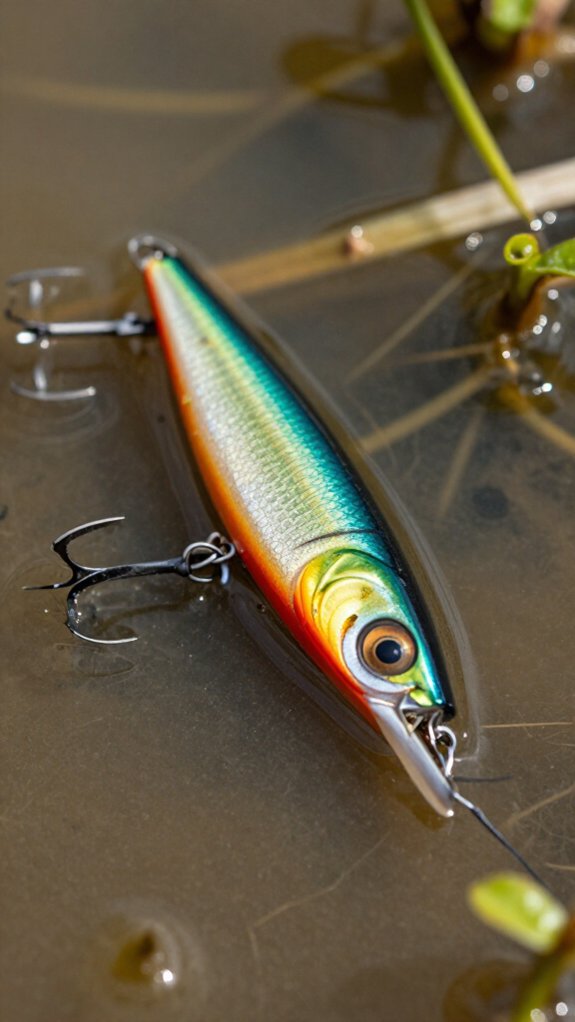
I’ve found that vibrating jigs cut through the murk like nothing else when bass can’t see past their noses. The bigger the blade, the more water you push: I’m talking No. 6 willow or Colorado blades that thump hard enough for fish to feel coming.
And don’t sleep on skipping these into thick cover. That dull, heavy thump of a Big Blade model paired with a soft plastic trailer turns skipped presentations into bite magnets even in the dirtiest water.
Why Vibrating Jigs Excel
Because visibility drops to near zero in muddy water, I’ve learned that bass must rely on their lateral lines to detect prey, which is exactly why vibrating jigs like Chatterbaits have become my go-to weapon when the water looks like chocolate milk.
How They Trigger Strikes
Vibrating jigs create intense vibration that cuts through murky conditions. I’ve watched bass hammer these lures when they wouldn’t touch anything else. The sharp pulsing action mimics fleeing baitfish, and that flash combined with thumping vibration gives fish two reasons to bite.
Why They Outperform
Research backs what I’ve experienced on the water:
- Dual-sensory appeal — flash plus vibration reaches fish when sight alone fails
- Deflection advantage — bouncing off cover creates extra noise and disturbance
- Proven results — field tests show significantly higher strike rates in muddy water versus non-vibrating options
Blade Size Matters
Once I’ve committed to throwing a vibrating jig in muddy water, I immediately reach for models with larger blades, specifically No. 6 willow leaf or No. 1 Colorado sizes, because they push significantly more water and generate the thumping vibration bass need to home in when they can’t see more than a few inches.
Why Big Blades Dominate Muddy Water
Big blades simply displace more water and create stronger pressure waves. In muddy water, bass rely heavily on their lateral line to detect prey, and those oversized blades send unmistakable signals through the murk.
I also keep double Colorado setups with No. 5 and No. 3 blades handy for cold, muddy conditions. Their dull, rhythmic thumping cuts through visibility challenges better than willow blades’ faster flutter.
When the water’s slightly less turbid, I’ll downsize to No. 3 or No. 4 blades for quicker retrieves with less drag.
Skipping Into Cover
Chatterbaits excel at skipping into thick cover when visibility drops, combining the water-displacing power of a vibrating jig with a design that resists snagging better than most moving baits.
I love how these lures skip under docks and brush like a flat stone across a pond. Their compact profile and weighted head let me place them precisely where bass hide without constant hang-ups.
Here’s what makes them deadly in muddy water:
- Larger blades – No. 6 willow leaf or Colorado sizes push serious vibration that bass feel from feet away
- D-shaped blade design – Deflects off timber and rocks, triggering reaction strikes from ambush predators
- Bright color patterns – Chartreuse and black/blue with contrasting blades cut through the murk
I slow my retrieve to a steady crawl. That persistent thump travels farther in muddy water, pulling hidden bass out to investigate.
Topwater Lures Bass Can Actually Find in Murky Water
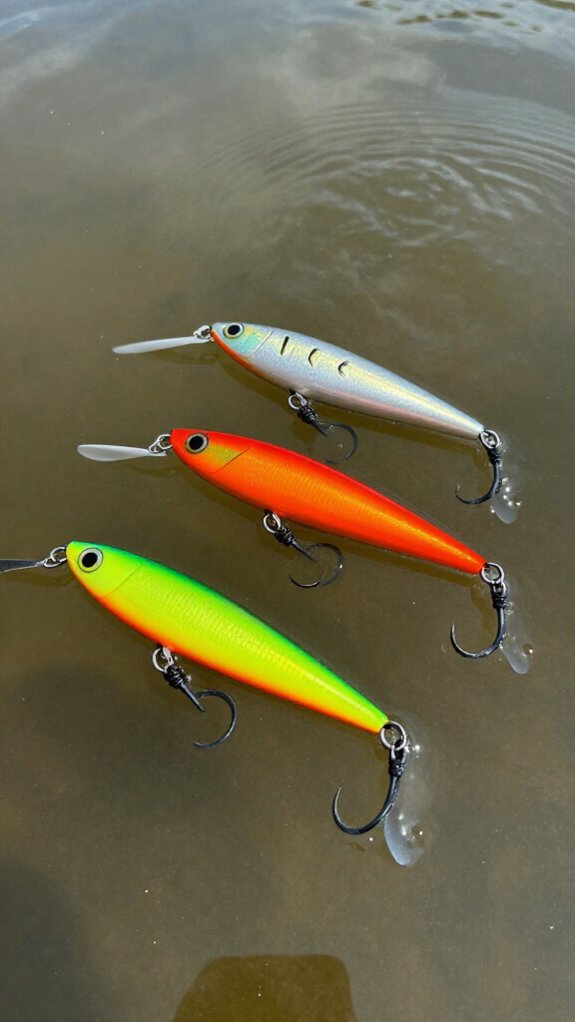
When the water looks like chocolate milk, I’ll reach for a buzzbait or popper without hesitation because bass don’t need crystal-clear visibility to crush a topwater lure. They just need to feel the chaos.
Why Topwater Lures Dominate Muddy Water
Topwater lures excel in muddy water because bass hunt by vibration and sound when they can’t see. I’ll throw chartreuse or white patterns that create maximum contrast against dark, stained water.
A squeaky buzzbait with rattles acts like a dinner bell. Bass zero in on the racket and explode upward.
Timing and Presentation
I focus on dawn, dusk, and overcast days when surface strikes peak. The splash and commotion mimic panicked baitfish, triggering vicious reaction strikes.
Don’t overwork the lure; let the blade’s thump and the popper’s bloop do the heavy lifting. In murky conditions, subtlety fails—make noise, create disturbance, and hold on tight.
Flipping Jigs for Muddy Water Heavy Cover
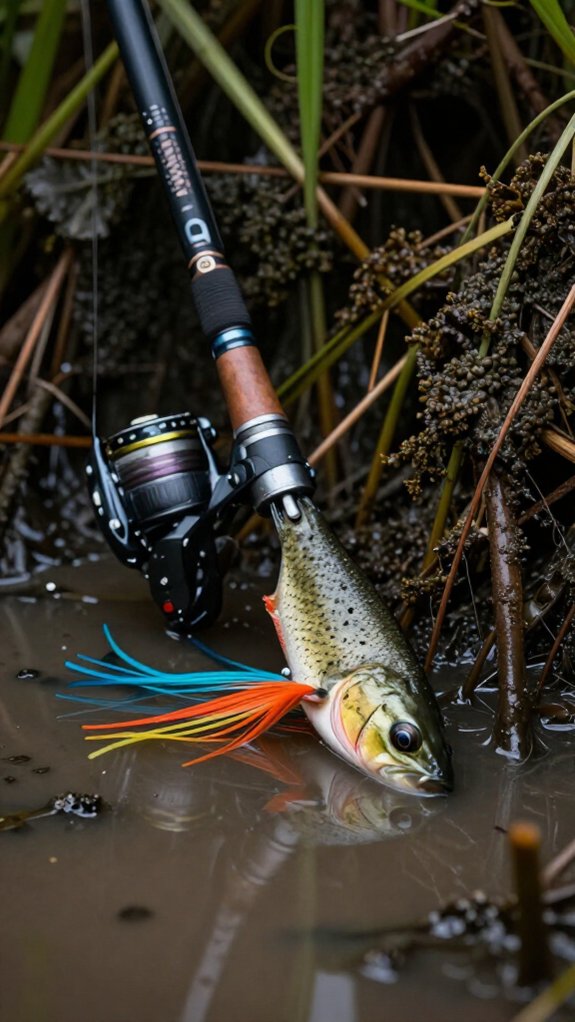
If I’m punching through matted grass or working submerged timber in chocolate-milk conditions, I’ll tie on a 1/2-ounce flipping jig without a second thought. That hefty head punches through thick cover and gets down where bass hold when visibility drops to near zero.
Here’s why this setup prevails in muddy water:
- Bulky trailers – I thread on a large craw or plastic chunk that pushes water and creates a target bass can feel through their lateral line.
- Rattle additions – I slide a rattle into the trailer or jig body so fish home in on vibration when they can’t see.
- Slow, steady falls – I let the flipping jig pendulum down on a semi-slack line, giving bass time to locate and crush it.
Heavier weights keep me in constant contact with bottom structure, turning missed opportunities into solid hooksets.
Squarebills That Crash Into Muddy Water Cover
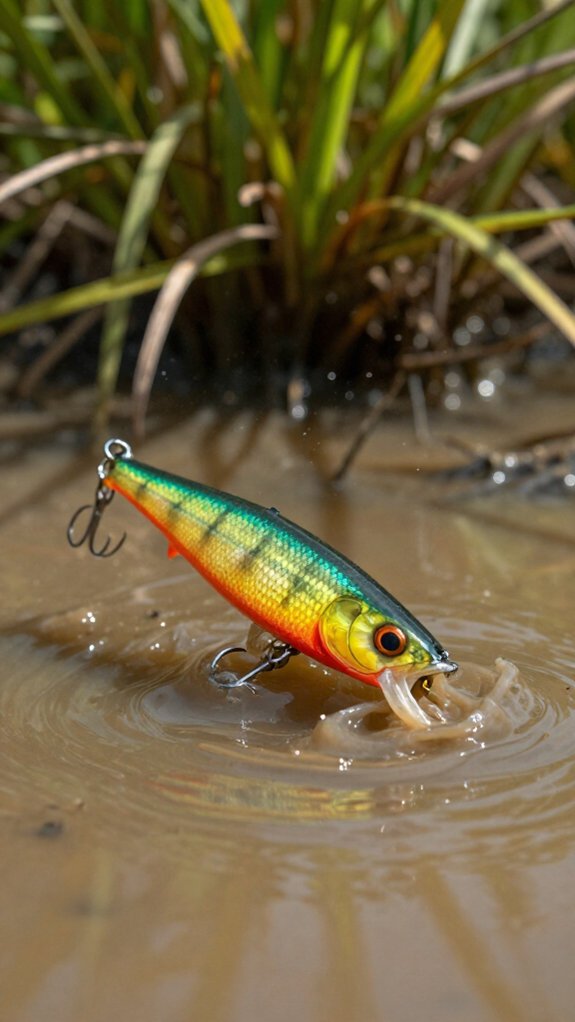
Since I need a lure that’ll hunt down bass in stained, obstacle-filled water, I’ll reach for a squarebill crankbait and start banging it into everything I can find.
Why Squarebills Rule Muddy Water
The squarebill’s deflection magic happens when I crash it into rocks, logs, and submerged debris. That sharp, square-shaped lip kicks the lure sideways at contact, triggering reaction strikes from bass I can’t even see.
In low-visibility conditions, I’m counting on vibration and flash, not sight.
Speed Kills in Stained Water
I burn my squarebill faster in muddy water. The increased speed creates more noise and harder impacts against cover, which bass feel through their lateral lines.
Studies show bass rely heavily on vibration detection when visibility drops below six inches.
Finding the Sweet Spots
I target laydowns, stumps, and riprap banks where cover concentrates ambush predators. Every collision is a potential strike.
Blade Sizes and Color Combos for Dirty Water
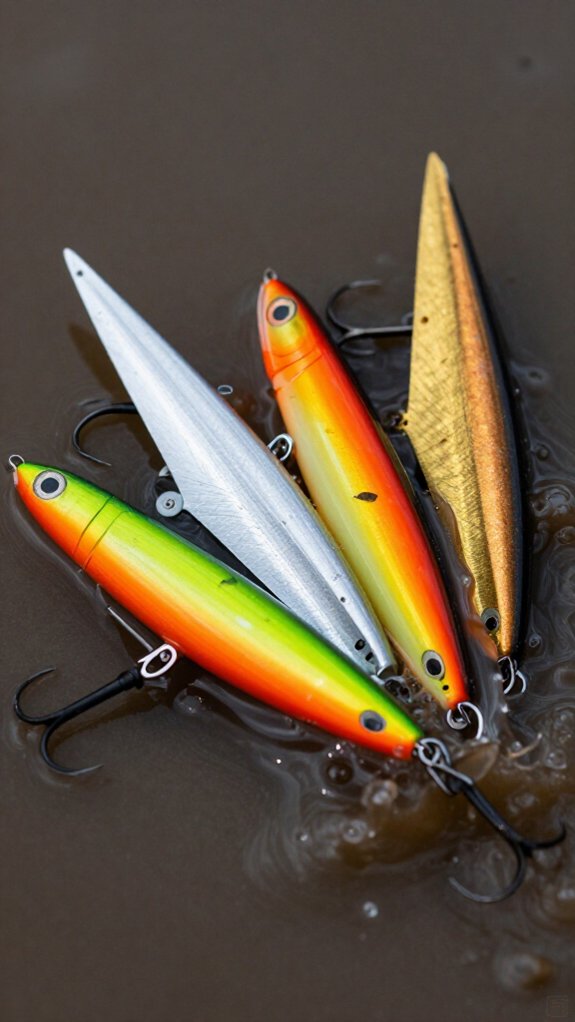
I’ve found that upsizing your blades and dialing in high-contrast colors makes the difference between a skunked day and a rod-bending afternoon when visibility drops below two feet.
I’ll reach for a No. 1 Colorado or No. 6 willow leaf on my spinnerbaits because they push serious water and create that thumping vibration bass can track without relying on sight.
Pairing those big blades with chartreuse-gold or black-white combos gives fish a visible target they can’t ignore, even when the water looks like chocolate milk.
Optimal Blade Sizes
When I’m staring into chocolate-milk colored water, I reach for bigger blades without hesitation, because in muddy conditions, vibration and water displacement matter far more than flash. Big blades push more water, creating a pressure wave bass feel through their lateral lines even when they can’t see the lure.
Here’s what I’ve learned works best:
- No. 6 willow leaf or No. 1 Colorado blades – These monsters thump hard and displace serious water, making them impossible for bass to ignore in stained conditions.
- Double Colorado setups with No. 5 and No. 3 blades – The dull, rhythmic thumping cuts through cold, muddy water when bass are sluggish and need extra encouragement.
- Larger blades on vibrating jigs – They naturally slow your retrieve, maximizing vibration time and giving fish more opportunity to locate and crush your lure.
High-Visibility Color Combos
For trailers, I slap on black-and-blue soft plastics or dark-colored chunks that silhouette against the background.
Metallic finishes on both blades and skirts amplify every rotation, turning vibration into visual dinner bells.
These aren’t subtle presentations, they’re aggressive, calculated moves designed for one thing: more strikes when visibility drops to near zero.
Retrieve Speed Adjustments for Muddy Water
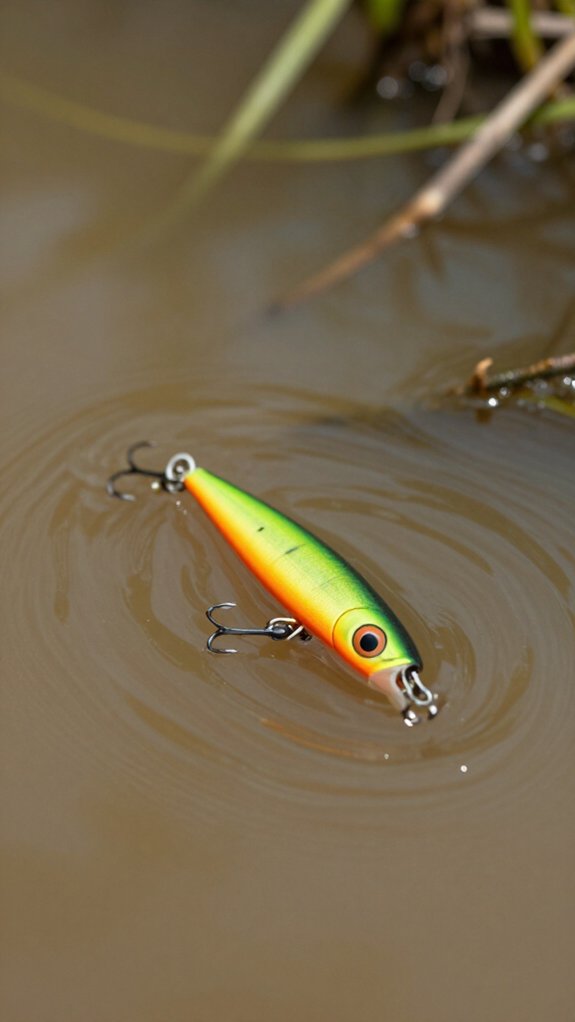
Because bass rely so heavily on their lateral lines to hunt when visibility drops, I’ve learned that dialing in your retrieve speed becomes just as critical as lure selection in muddy water.
I’ll break down how I adjust my approach:
- Steady retrieve with spinnerbaits and vibrating jigs, I keep a moderate, consistent pace to optimize noise and vibration that cuts through the murk.
- Slow roll when it’s cold. Dropping temperatures demand a more deliberate presentation so sluggish bass can track and commit.
- Speed bursts for aggression. Sometimes I’ll burn a lure faster to mimic fleeing baitfish and trigger reaction strikes from active fish.
I always experiment throughout the day. What starts working at dawn might change by noon, so I let the bass tell me their preference.
Cover-Specific Lure Matching for Muddy Conditions
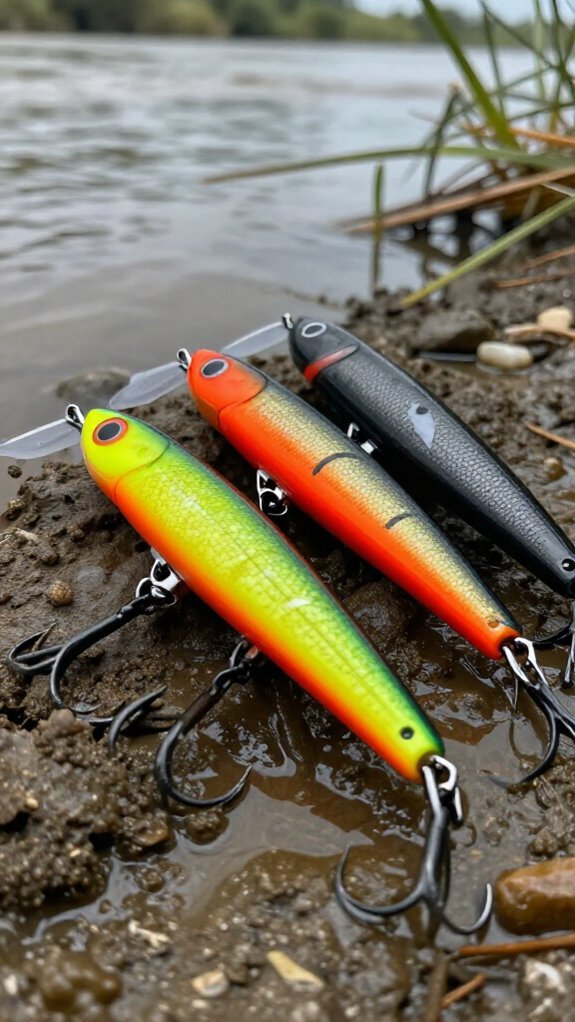
While matching your retrieve speed helps bass find your lure in muddy water, pairing the right lure to the specific cover you’re fishing seals the deal on more bites. That’s where cover-specific lure matching becomes your secret weapon.
Vegetation vs. Wood: Choose Wisely
I reach for vibrating jigs when I’m punching through submerged vegetation. They slice through grass without hanging up. But I avoid them in timber-heavy areas where every cast becomes a battle with snags.
Skip and Slide
When I’m targeting laydowns and limb-filled cover, spinnerbaits frustrate me. Their hooks stay vertical, limiting penetration. Vibrating jigs skip beautifully underneath, putting my bait where bass hide.
Open Water Options
For overhanging cover or open water near structure, spinnerbaits with larger blades create the thump and flash that triggers reaction strikes in muddy water when visibility drops to inches.
Simple Lure Modifications That Stick More Fish
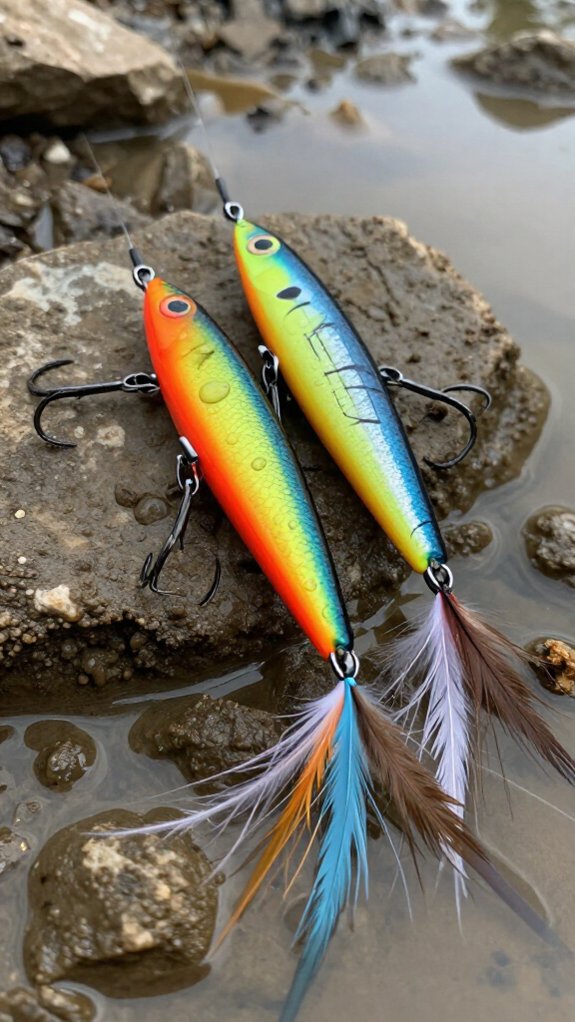
Even the best lure choice falls flat if you haven’t tweaked it for chocolate-milk conditions. I’ve learned that a few simple modifications turn decent days into memorable ones when visibility drops to near zero.
Three Modifications That Save the Day
- Add trailer hooks to your spinnerbaits. Bass swipe more than commit in murky water, and that extra hook catches short-strikers I’d otherwise miss.
- Swap to high-contrast trailers and loud skirts. Chartreuse, white, or thumping materials create vibrations bass feel before they see anything.
- Spike-It dye your soft plastics. That extra pop of color penetrates the mud-stained water column.
I secure skirts tightly with rubber bands to prevent shedding after repeated casts. These tweaks cost pennies but deliver strikes when standard setups go ignored.
Frequently Asked Questions
What Lures Work Best in Muddy Water?
I rely on spinnerbaits with Colorado blades, vibrating jigs, and black-and-blue flipping jigs when I’m fishing muddy water. I’ll also throw buzzbaits when bass are active on top.
These lures create enough vibration and noise that fish can’t miss them.
Will Bass Hit Topwater in Muddy Water?
I know bass’ll hit topwater in muddy water, especially when they’re actively feeding near the surface. I use noisy buzzbaits and poppers because the sound and vibrations attract them through their lateral line when visibility’s poor.
How to Fish Super Muddy Water?
I relish making things harder than they need to be, so I ignore the obvious: I sling bright spinnerbaits and chatterbaits tight to cover, slow my retrieve way down, and let vibration do what my eyes can’t.
What Color Lures Are the Best to See in a Dark River for Fish?
I pick bright chartreuse, white, or chartreuse-white combos for maximum visibility in dark rivers. I’ll also throw black or blue-black lures when I want strong silhouette contrast against murky water.
In Conclusion
When the chocolate milk rises and visibility drops to six inches, I’m reaching for vibration and contrast every single time. Spinnerbaits and chatterbaits become my underwater sirens, singing through the murk where bass hunt by feel more than sight.
I’ve learned that muddy water isn’t a curse, it’s an invitation. Slow down, beef up your blades, and trust that thump. The fish are still there; you’re just speaking their language now.