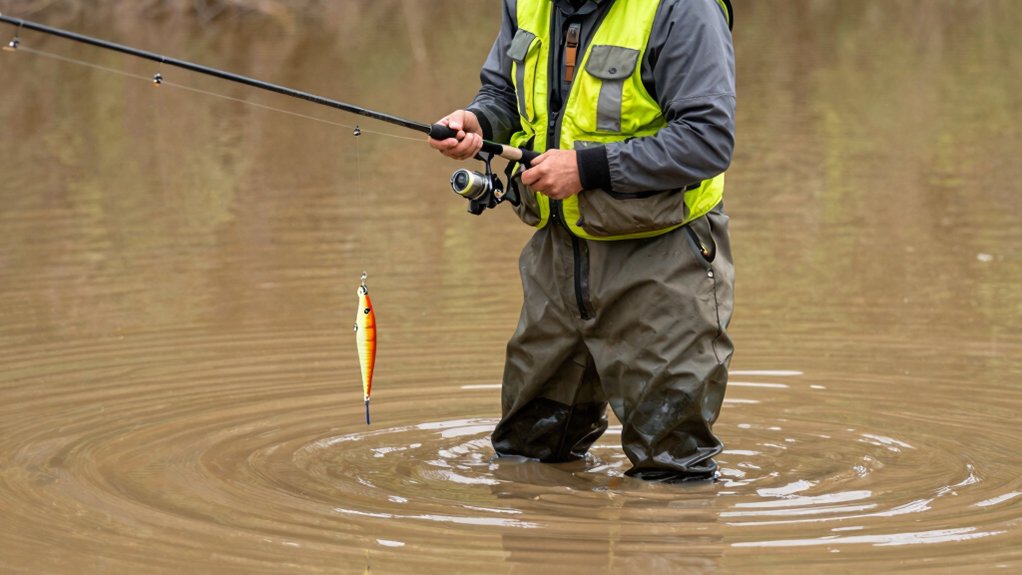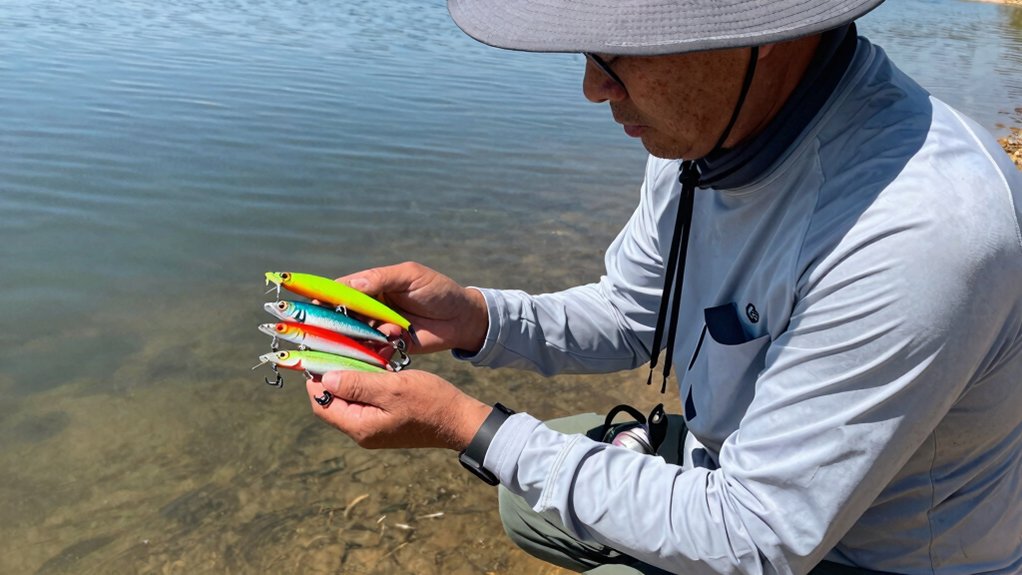
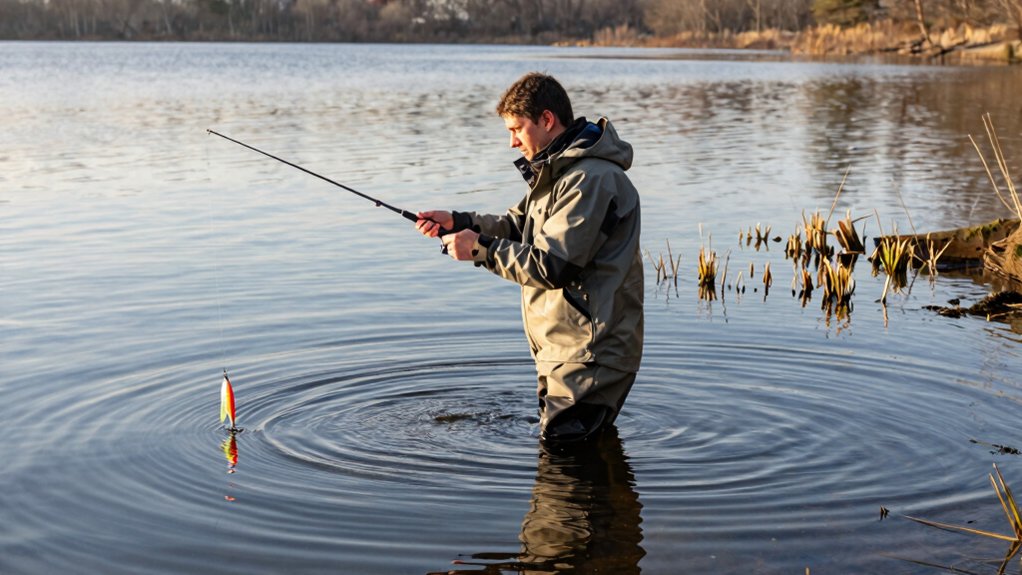

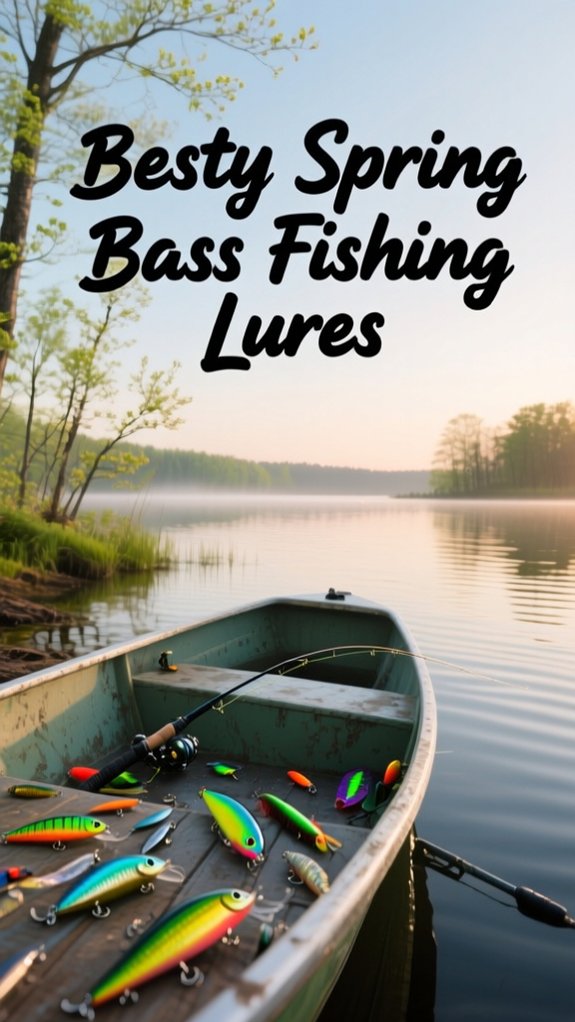
When I’m targeting active bass in early spring, I reach for suspending jerkbaits first, they mimic dying shad with that irresistible flutter that cold-water bass can’t ignore.
As temperatures climb past 50°F, I’ll switch to lipless crankbaits and chatterbaits, burning them fast to trigger reaction strikes. I always match my retrieve speed to the water temperature: slower and more deliberate when it’s cold, quicker and more aggressive as it warms. Color choice matters just as much: natural greens and browns for clear water, bright chartreuse or white when spring rains stain things up.
The right lure at the right speed in the right color turns tentative follows into solid hooksets, and there’s more to dialing in each presentation than most anglers realize.
Spring Jerkbaits: Match the Fleeing Baitfish Trigger
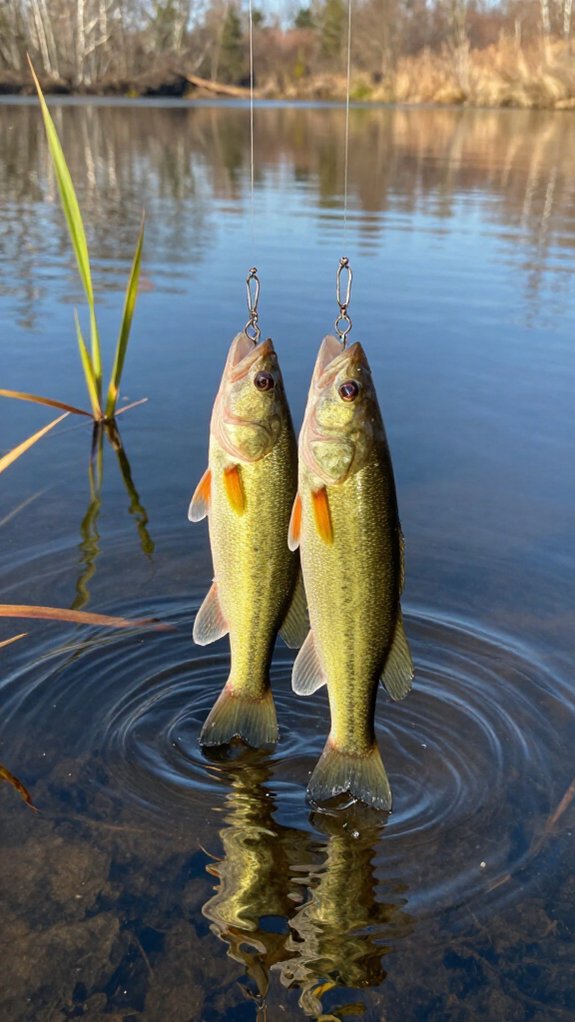
When water temperatures hover in the low 50s and bass are shaking off winter sluggishness, I’ll reach for a suspending jerkbait before almost anything else in my tackle box.
Why Spring Jerkbaits Dominate
These fishing lures excel because they deliver a dead-on baitfish imitation that early spring bass can’t ignore. I’ll work a tight, darting cadence—jerk, pause, let it hang, mimicking a wounded shad. That pause is everything. It triggers vicious reaction strikes from fish too lethargic to chase down prey.
Dialing In Your Approach
I adjust my retrieve based on water temperature. Colder water means longer pauses, sometimes 10-15 seconds. Warmer? I’ll speed it up. I Stick with Elegy Bone, Northern Secret, or GP Pro Blue for visibility in spring’s stained conditions.
Where to Throw Them
I target shallow flats, rocky points, and timber where bass ambush fleeing baitfish. Spring jerkbaits don’t just catch fish, they turn tough days into memorable ones.
Spring Chatterbaits: Slow-Roll Shallow Structure for Cold Bass
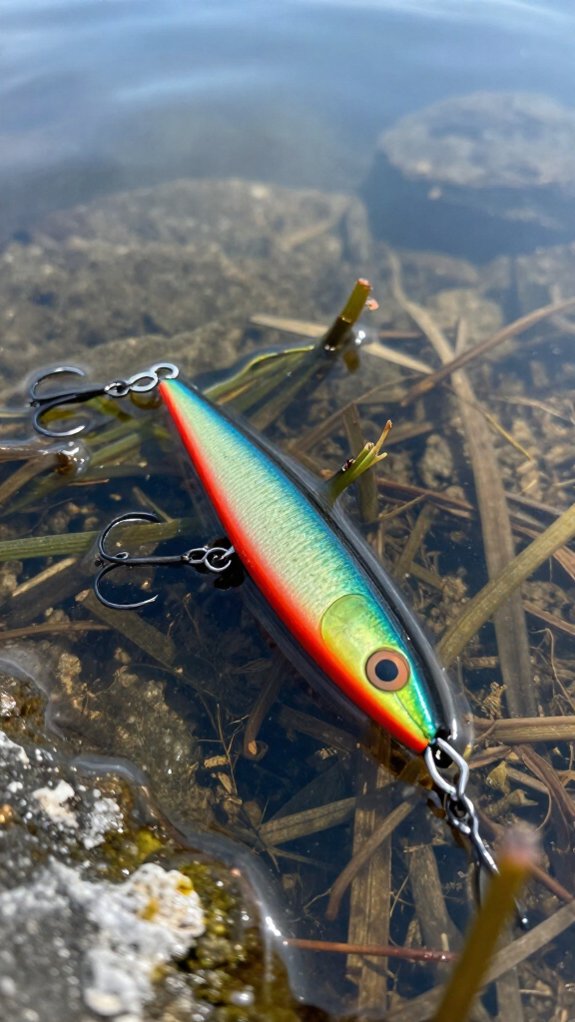
I’ll pick a 3/8 to ½ oz white or chartreuse model to match my water conditions. Then I’ll slow-roll it just above rocky points and timber where cold bass are holding tight to structure.
I keep my retrieve steady and moderate, never burning it, since lethargic fish won’t chase down a fast-moving lure in 45-50 degree water.
I’ll also thread on a Gary Yamamoto Zako trailer for extra bulk and a more vulnerable profile that sluggish bass can’t ignore.
Lure Selection Basics
Once water temperatures creep into the low 50s, I’ll reach for a Chatterbait before almost anything else in my tackle box. There’s simply no better tool for slow-rolling shallow structure when bass are still shaking off winter’s sluggishness.
Picking the Right Weight and Color
For early spring bass, I stick with 3/8 to ½ oz lures. White works in stained water, brown/black mimics crawfish, and chartreuse shines in clearer conditions. Match the local forage and you’ll get more bites.
Adding Trailers
I never fish mine bare. Soft plastics like the Zako trailer add bulk and slow the fall, giving cold fish more time to commit. That extra undulation can mean the difference between a follow and a strike.
Reading the Cover
Water temperature dictates where bass hold. I’ll target rocks, wood, and emergent vegetation—places that absorb warmth. These spots attract baitfish, and that’s where I’ll position my retrieval.
The right setup turns reluctant early spring bass into active biters.
Retrieval Speed Techniques
I dial in my retrieve speed based on what the water’s telling me, because a Chatterbait only triggers strikes when its blade thumps at the exact tempo cold bass are willing to chase.
Mastering Spring Chatterbait Speeds
In cold water, bass metabolisms lag. They’re hunting wounded baitfish, not chasing healthy ones. That’s why I fine-tune my retrieve techniques to match their lethargic mood.
Here’s how I adjust my approach:
- Start with a slow retrieve, reel just fast enough to feel the blade hum against your rod tip.
- Maintain a steady retrieve, avoid speeding up; consistency beats flash in 45-55°F water.
- Twitch in pauses, killing the bait triggers reaction strikes when bass won’t commit to chasing.
- Stay glued to the bottom, bounce rocks and wood; that’s where early spring bass stage.
Drop your retrieval speed as temperatures fall further. When they’re barely moving, neither should your lure.
Spring Lipless Crankbaits: Vibration That Calls in Active Bass
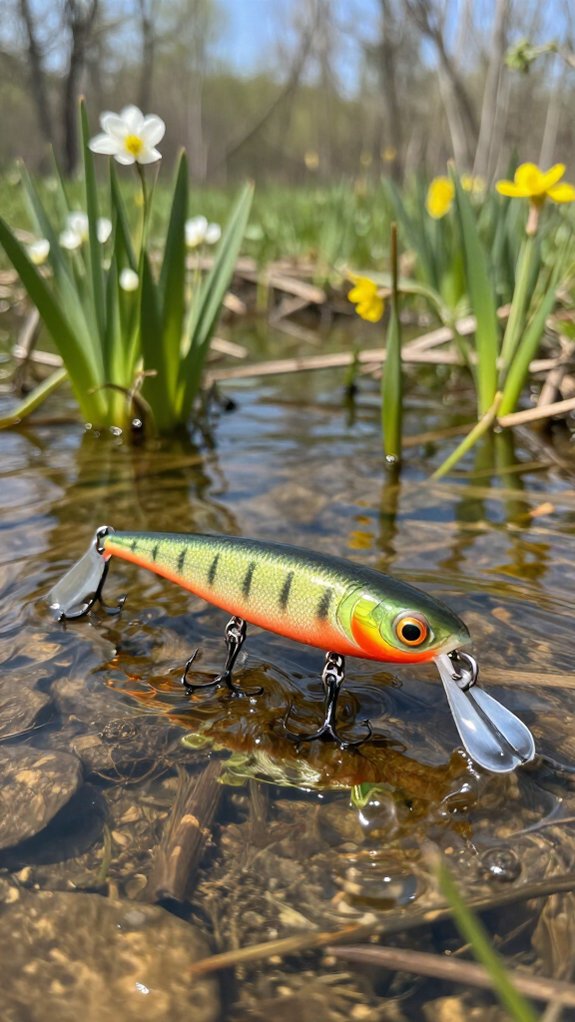
I reach for a lipless crankbait when I need to turn a quiet day into a feeding frenzy, because that tight, high-frequency vibration travels through the water column like a dinner bell bass can’t ignore.
Burn it fast across grass flats or riprap points, and you’ll feel the rod load up with aggressive strikes from fish reacting to what sounds like a panicked baitfish.
Don’t overlook color choice either. I’ll tie on red or perch patterns in early spring since they mimic the natural forage bass are keyed on, and I’ve watched those shades pull reaction strikes when nothing else would move a fish.
Vibration Triggers Strikes
When water temperatures start climbing and bass shake off their winter sluggishness, I’ll reach for a lipless crankbait every single time because nothing else generates the kind of vibration that pulls aggressive fish in from ten feet away.
Here’s how I amplify that vibration to trigger more strikes:
- Mimic injured baitfish, I work my lure with tight, vibrating movements that signal easy prey to active bass.
- Rattle them in, Those internal BBs create sound waves bass can’t ignore, especially in stained spring water where visibility drops.
- Keep it steady, A moderate retrieve speed lets vibrations resonate consistently through the water column.
- Pause and flutter, I’ll kill the lure briefly, letting it sink and flutter like dying shad before resuming my retrieve.
That dying action triggers reaction strikes from bass that won’t pass up an easy meal.
Color Selection Matters
Vibration gets bass to notice your lure, but color’s what seals the deal once they’re close enough to see it.
I always match my color choice to water conditions. In stained or muddy water, I’ll throw vibrant hues like red or chartreuse, these enhance visibility and trigger aggressive reaction strikes from active pre-spawn bass. The rattling BBs inside amplify that attractiveness, giving fish multiple sensory cues to lock onto.
When water clears up, I switch to natural shad or perch patterns. These mimic actual prey during the spring feeding frenzy without spooking wary fish.
Here’s what I’ve learned: contrast matters. A white belly with a dark back creates flash and definition that bass can’t ignore. That simple color split increases your lure’s visibility from every angle, turning curious followers into committed biters.
Spring Senko Tactics: Bed Fishing and Finesse Presentations
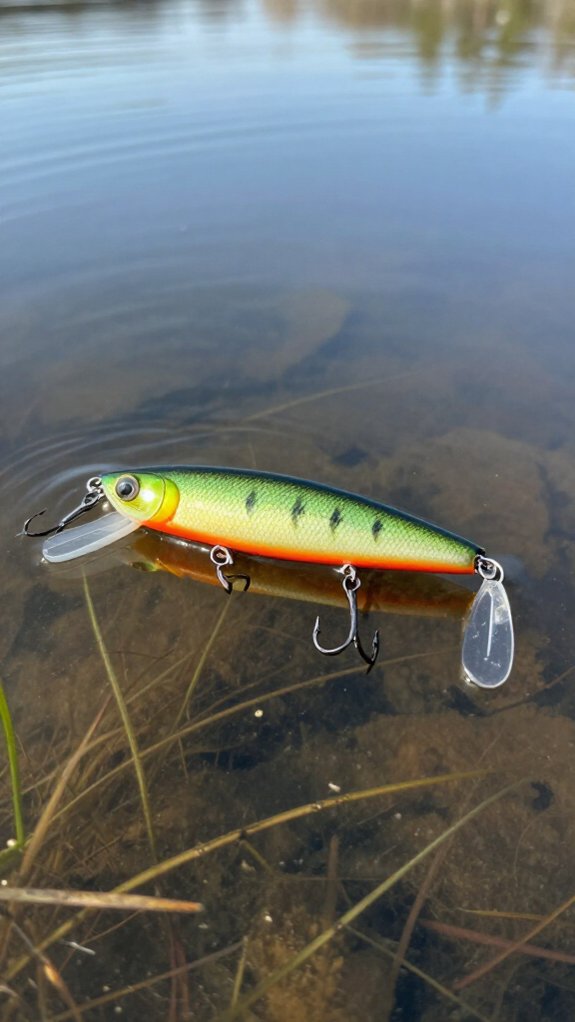
Because bedded bass can lock their jaws tight against aggressive lures, I turn to Senko finesse tactics when I’m staring at a fish that’s guarding its nest but won’t commit.
I’ve found that finesse presentations like Wacky or Texas rigged Senkos provoke subtle strikes from bass in early spring that bigger baits simply can’t trigger. There’s something about that slow, spiraling fall that bedded bass can’t ignore.
Here’s my approach for spring Senko tactics and bed fishing:
- Cast directly onto spawning beds and let the Senko rest, mimicking an injured baitfish that tempts protective instincts.
- Work it painfully slow; aggressive retrieves spook nesting bass instantly.
- Target low-light periods when bass loosen up on delicate finesse lure presentations.
- Match watermelon or green pumpkin colors to water clarity.
This patient approach turns lockjaw bass into committed biters.
Spring Football Jigs: Bottom Contact for Rocks and Wood
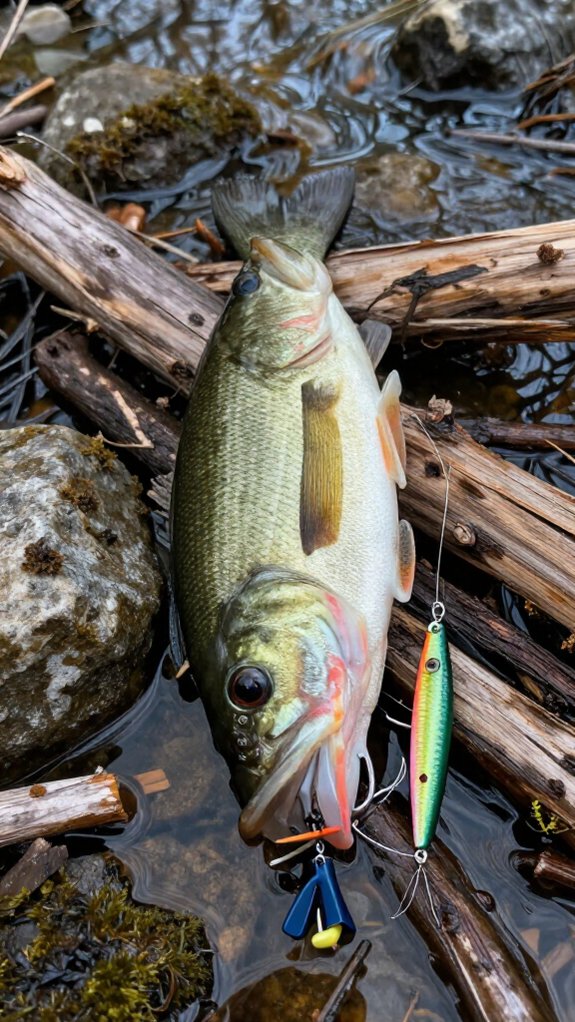
I rely on football head jigs when I need to maintain constant bottom contact across rocky shelves and timber without snagging up every cast. The wide, rounded head shape lets me drag and hop through structure that would hang up other presentations.
While my trailer choice determines whether I’m imitating a fleeing crawfish or a slow-moving baitfish.
I’ll walk you through picking the right head weight for depth and current, then match it with trailers that add bulk and action without killing the jig’s natural rolling motion.
Jig Head Design
When I’m probing rocky points and timber-lined banks in early spring, nothing gives me the confidence to feel every contour like a well-designed football jig head. I rely on this specific jig head design because it transforms how I work rocky cover and timber without constantly snagging.
Here’s why this head shape dominates:
- Football Profile – The rounded, compact shape rolls over rocks and through wood without wedging tight
- Flat Bottom Surface – Creates consistent bottom contact when I drag or hop along the substrate
- Controlled Descent – Achieves that perfect slow fall rate that triggers reaction bites
- Weight Options – ¼ to ½ ounce keeps my presentation bottom-hugging in 8-15 feet
I pair mine with trailer soft plastics, and the head’s stability lets me maintain contact even on irregular structure. You’ll feel every pebble and log transition through your line.
Trailer Selection Tips
A football jig head is only half the story. What you thread onto that hook determines whether you’re presenting a convincing meal or just another piece of hardware tumbling through the rocks.
Soft Plastic Choices
I reach for crawfish or creature bait trailers in early spring because they mimic the natural prey bass are keyed on. A bulky soft plastic trailer with active appendages generates vibration that sluggish fish can’t ignore.
Color and Fit
Natural colors dominate my selection—green pumpkin, watermelon, and brown match spring forage perfectly. I always match trailer size to jig weight: 3–4 inches pairs with ¼ to ½ oz models for balanced bottom contact.
Secure that trailer tight so it doesn’t shift when I’m grinding through rocks and wood.
Spring Hair Jigs: Finesse Bottom Presentations for Cold Bass
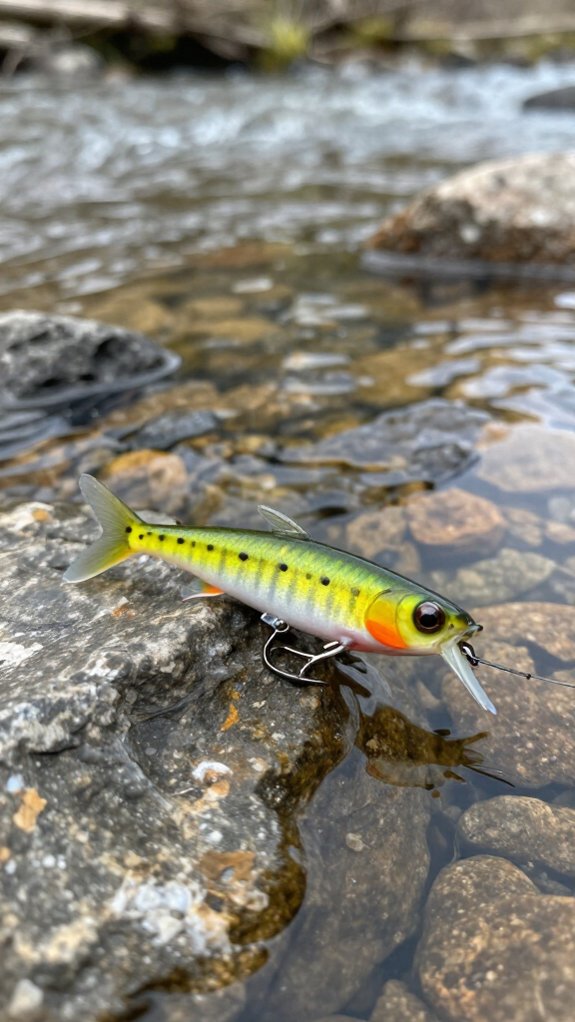
Although the water’s still bone-chilling cold, spring hair jigs let me work the bottom with surgical precision and coax bites from bass that’d ignore flashier offerings. These finesse bottom presentations excel when I’m targeting cold bass hunkered down in cover-heavy areas.
Here’s how I optimize hair jig success:
- Match the prey — I choose natural colors that mimic crayfish or small baitfish bass are keyed on.
- Slow it down — I drag and hop deliberately, letting the hair breathe and pulse with minimal effort.
- Add soft plastics — Trailers like crawfish imitations enhance profile and trigger more strike responses.
- Stay in contact — I maintain bottom feel to detect subtle pickups from sluggish fish.
The compact design lets me probe timber, rocks, and grass without snagging, turning tentative nips into solid hooksets when nothing else works.
Water Temperature: The Speed Control for Every Lure
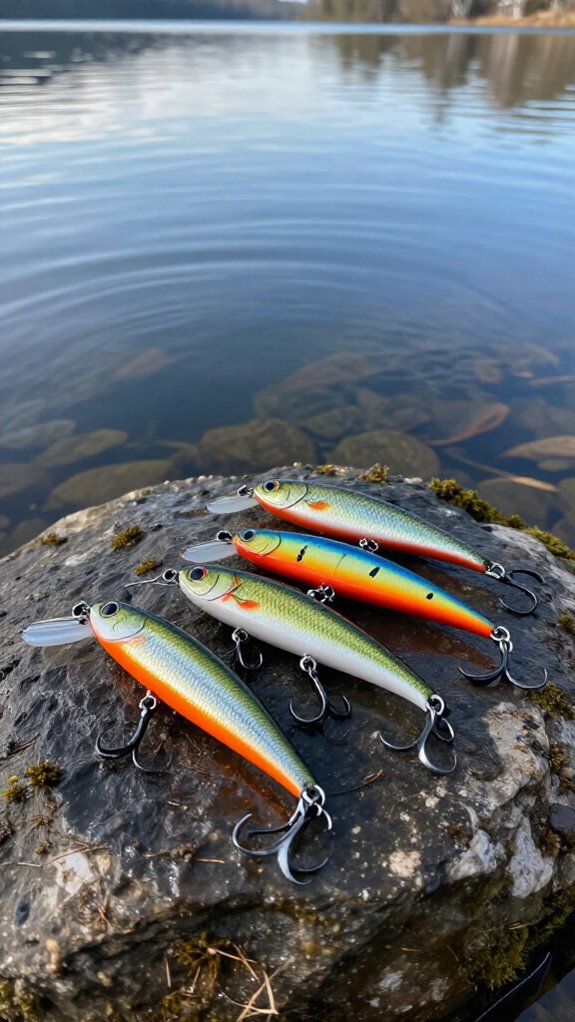
Water temperature dictates every retrieve speed decision I make on the water, turning my lures from ignored hunks of plastic into irresistible prey.
Reading the Thermometer
When water temperatures drop below 50°F, I’m reaching for suspending jerkbaits and finesse worms. Bass get sluggish, so I match their mood with a slow presentation, tight wobbling lure actions that mimic dying baitfish. These subtle movements still trigger reaction strikes without forcing bass to chase.
Warming Up the Retrieve
Once water temperatures climb into the 50s°F, everything changes. I’ll burn lipless crankbaits and aggressive jerkbaits with fast retrieves. Active bass want chasing, and increasing lure speed matches their metabolism.
The Golden Rule
I adjust lure speed incrementally. Every degree matters. Cold water demands patience. Warming water rewards aggression. Dial in your retrieve, and you’ll turn follows into ferocious strikes.
Spring Water Clarity: Choose Colors Bass Actually See
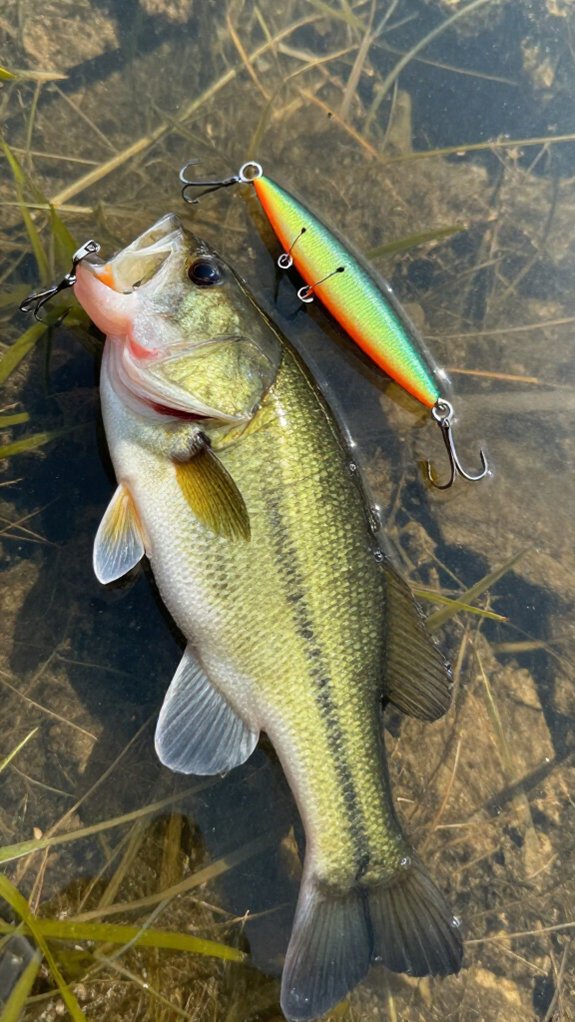
Because bass don’t see the world like we do, I’m not just throwing whatever color looks good to my eyes. I’m picking shades that actually register in their ultraviolet-to-blue-green vision.
Water clarity dictates everything about bass visibility. In gin-clear conditions, I’m reaching for transparent lures in green pumpkin or watermelon that mimic natural forage without spooking wary fish. When spring rains muddy things up, stained water demands chartreuse, white, or shad patterns that cut through the murk.
Here’s how I match lure colors to conditions:
- Crystal clear: Transparent lures in subtle browns and greens
- Slightly stained: Watermelon red or light pumpkin with flake
- Moderately dirty: Chartreuse and white combinations
- Chocolate milk: Bright oranges or black-and-blue for maximum contrast
Getting this right means more bites when bass are actively feeding.
Speed Kills: Retrieve Tweaks That Trigger Reaction Strikes
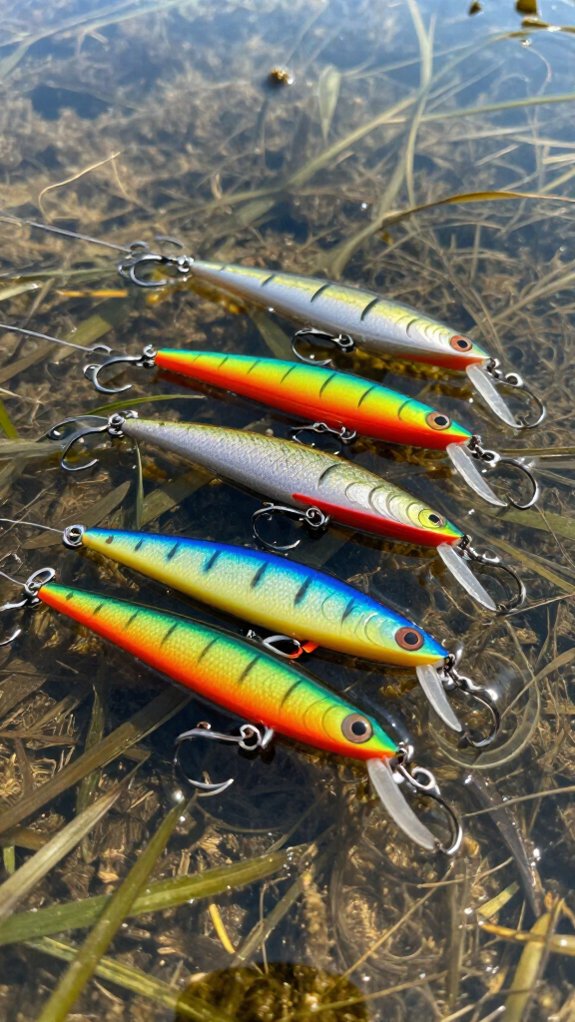
Since early spring bass are still shaking off winter sluggishness, I’m not waiting for them to chase down a meal, I’m forcing their hand with speed changes that trigger instinctive reaction strikes before they can think twice.
I’m dialing up lure movement with strategic retrieve speed adjustments. With jerkbaits, I’m working quick, erratic jerks that mimic wounded baitfish. Those pauses let the lure suspend, then a violent snap triggers explosive strikes. When I’m burning lipless crankbaits, I’m reeling fast to optimize vibration and rattles that pull bass from ten feet away. I’ll mix short pauses with rapid twitches to keep lure movement unpredictable.
Here’s how I adjust my retrieve for amplified impact:
| Lure Type | Retrieve Technique | Trigger Mechanism |
|---|---|---|
| Jerkbaits | Quick jerks, long pauses | Imitates dying shad |
| Crankbaits | Burn and kill pattern | Flash and vibration pulse |
| Spinnerbaits | Steady fast retrieve | Covers water, locates schools |
| Soft plastics | Twitch-pause-jerk sequence | Erratic escape motion |
Vary your retrieve constantly. Speed kills hesitation, and that’s when you’ll stick ’em.
Early Spring Bass Behavior: Why Cold Water Changes Everything
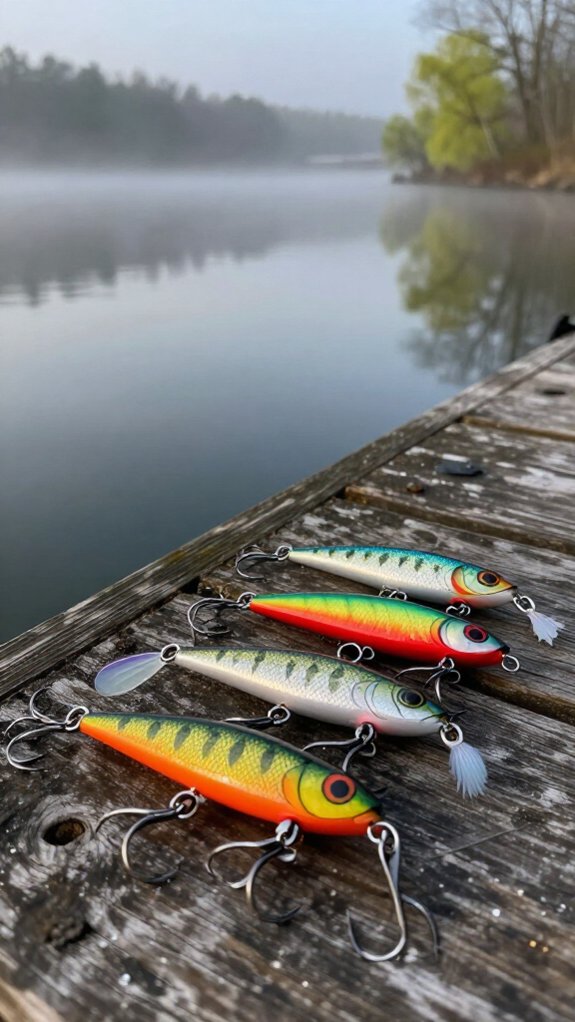
I watch bass behavior shift dramatically when that water temperature drops. Cold water slows their metabolism, and suddenly these predators turn lethargic. They hug structure, rock piles, creek channels, timber, seeking any warmth they can find.
Here’s what I’m seeing on the water:
- Metabolism crashes – Digestion takes forever, so they feed selectively
- Structure becomes home – Deep, protected areas hold the majority of fish
- Speed kills your chances – Fast retrieves get ignored completely
- Slow presentation wins – Methodical, subtle movements trigger bites
That lethargic response means your summer confidence baits stay in the box. I match my retrieve to their energy level, dragging baits painfully slow across bottom contours where they’re holding.
Frequently Asked Questions
What Lures Are Good for Early Morning Bass Fishing?
I rely on suspending jerkbaits and finesse worms for subtle presentations, switch to natural lipless crankbaits or small swimbaits for reaction strikes, and throw topwater walkers or frogs when bass are shallow and feeding aggressively before sunrise.
What Kind of Bait Do Bass Like in the Spring?
I reach for suspending jerkbaits and lipless crankbaits when bass want subtle, slow-moving prey. Soft plastics like small worms and paddle tails work wonders too.
I’ll match natural shad or crawfish colors to fool ’em.
In Conclusion
Match water temperature to lure speed, cold bass want slower, steady retrieves, while warming water lets you rip and react. Pick jerkbaits for fleeing baitfish, chatterbaits for shallow structure, and Senkos for finicky bed fish.
Let current conditions, not your confidence, choose your color and cadence. Spring success isn’t about owning every lure, it’s about picking the right presentation and patiently probing until those sluggish giants snap. Slow, steady, and strategic wins the season.