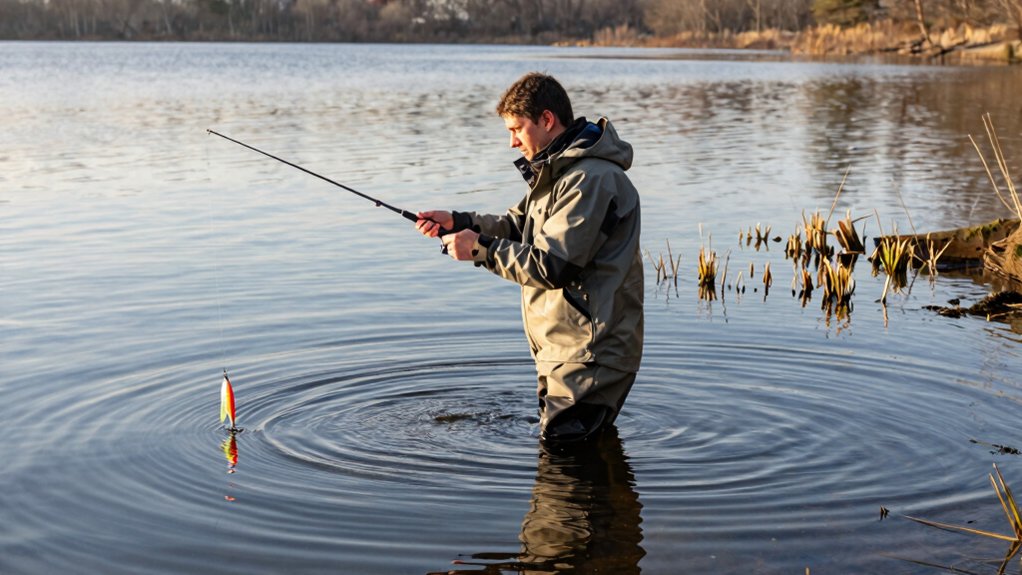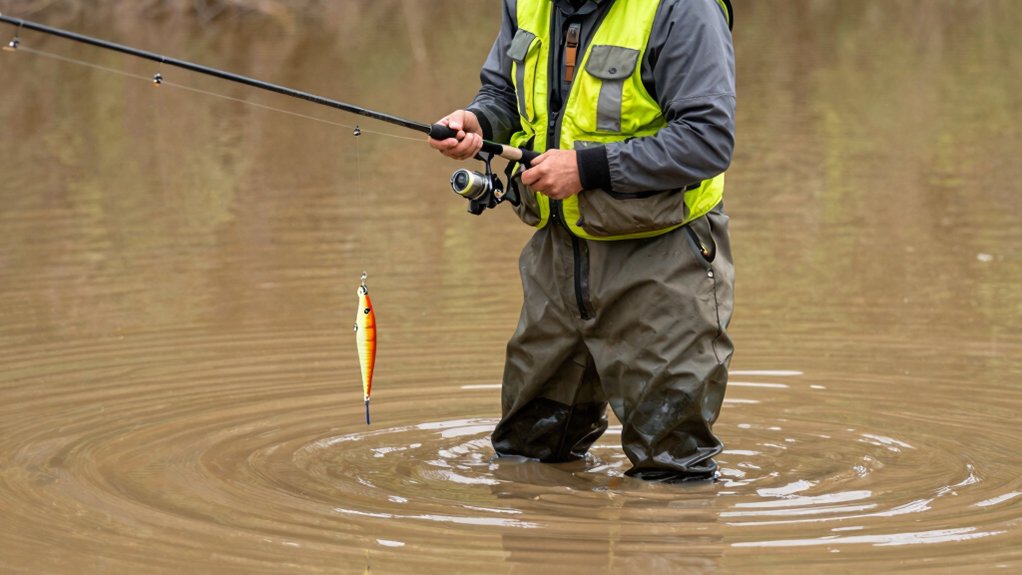
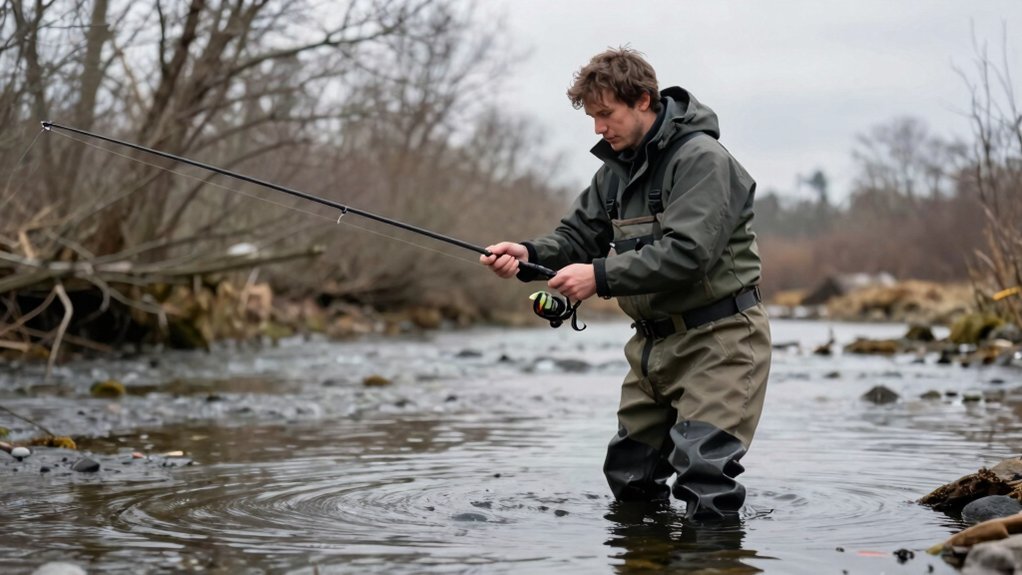

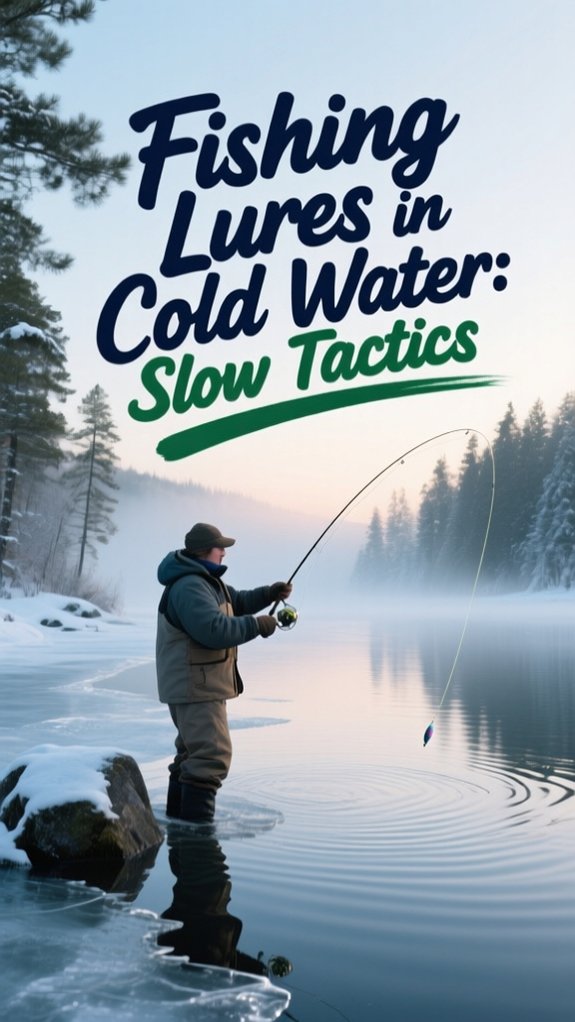
When water drops below 50°F, I slow my retrieve to a crawl since bass metabolism halves and their strikes become subtle ticks instead of thumps. I twitch jerkbaits with 5-15 second pauses to mimic dying shad, drag lipless crankbaits along bottom with steady rod movement, and probe deeper with swimbaits on weighted heads.
I build sensitivity with braid mainline and fluorocarbon leaders to catch those barely-there bites. Steep chunk-rock banks and docks near deep water hold lethargic fish tight to cover. Staying patient and watching my line for jumps and weight shifts turns followers into keepers, and there’s more to dialing in each technique.
Slow Your Presentation for Cold Water Success
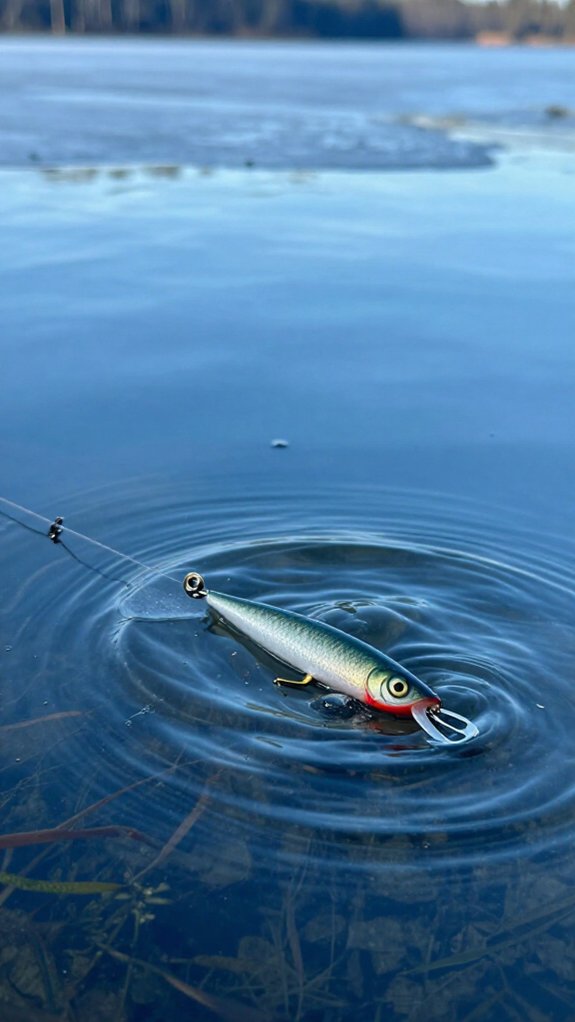
When the water temperature drops, I immediately dial my retrieve speed back to a crawl because bass simply can’t chase down fast-moving prey like they do in summer. This slow presentation isn’t just helpful, it’s essential for triggering strikes from cold water bass.
I rely on a solid pausing technique with every cast. I’ll twitch a jerkbait or drag a jig, then let it sit motionless. That pause gives sluggish fish time to locate and commit to your bait.
These fishing tactics demand patience. I’ll wait five, ten, even fifteen seconds between movements when it’s truly frigid.
According to research from the American Fisheries Society, bass metabolism drops 50% below 50°F, confirming what I experience on the water, slow and methodical wins every time.
The 5 Best Cold Water Bass Lures
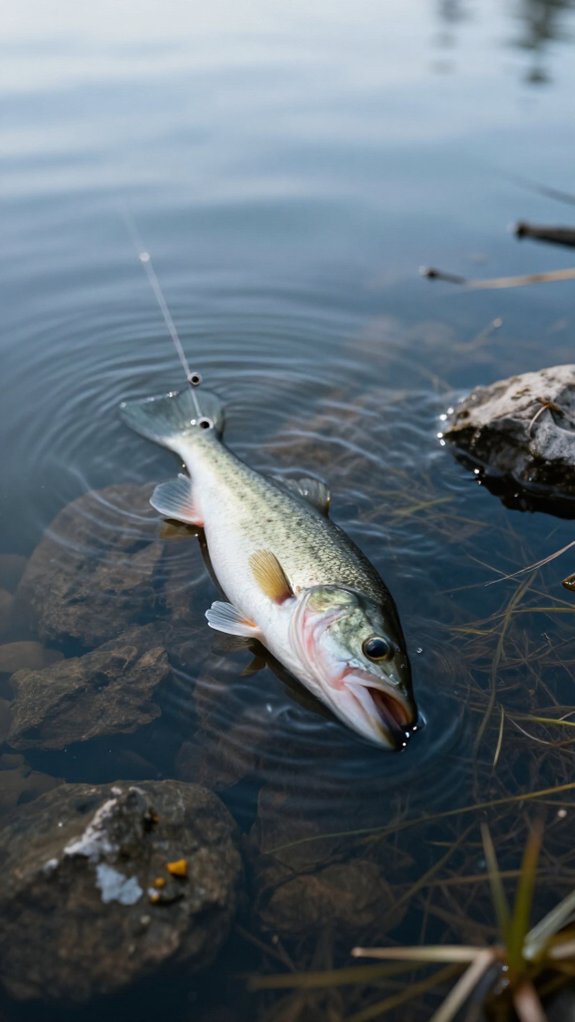
Because bass turn so selective once the mercury plummets, I’ve learned that choosing the right lure matters far more than simply fishing slowly.
My Go-To Cold Water Arsenal
I’ve narrowed my cold water bass tackle down to five proven performers:
- Jerkbaits – The Megabass Vision OneTen suspends perfectly, mimicking sluggish baitfish that bass can’t resist.
- Red Eye Shad – I work these lipless crankbaits with slow, yo-yo retrieves in shallow to mid-depth zones.
- Flat-sided crankbaits – Strike King’s KVD 1.5 excels along channel swings when retrieved deliberately.
- Swimbaits – Weighted jig heads let me probe deeper holding areas methodically.
- Blade baits – Silver Buddy and Molix Trago Vibe rule when I’m fishing shallow, vibrating seductively during slow lifts and drops.
These slow tactics alter stubborn cold water bass into committed biters.
Build a Sensitive Rod Setup for Winter Bass
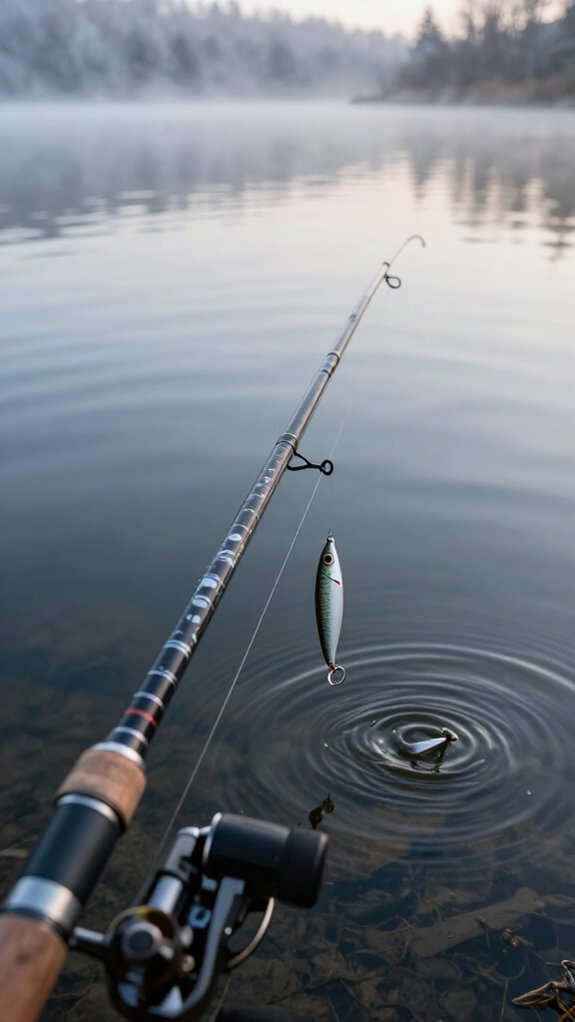
Even the most perfectly chosen lure won’t catch what you can’t feel, which is why I’ve learned that detecting those whisper-soft winter bites starts with building a rod setup that practically telegraphs every twitch and tap through my hands.
Choosing Your Foundation
I reach for a 6’6″ medium-heavy Abu Garcia Ike Series spinning rod when water temperatures plummet. This sensitive rod transmits vibrations I’d otherwise miss, essential when bass barely move their mouths.
Line and Reel Pairing
I spool a 3000-size reel with 15 lb braid and a 2-foot fluorocarbon leader. The braid’s near-zero stretch means I feel everything, while the leader keeps my presentation stealthy.
Action and Technique
Fast action improves my hooksets during sluggish retrieves. When I’m working a finesse jig through icy water, that responsive tip lets me detect bites without yanking prematurely.
I pair this with a moderate gear ratio reel to maintain control over my slow, deliberate presentations.
Retrieve Jerkbaits and Crankbaits for Winter Bass
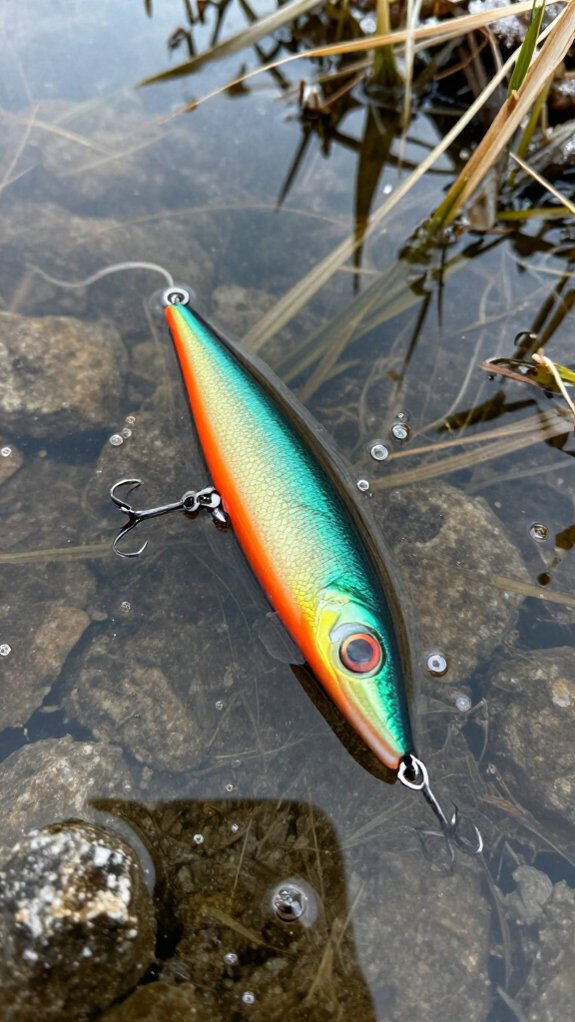
I slow my retrieve to a crawl when I’m working jerkbaits and crankbaits in cold water, because bass simply won’t chase down fast-moving prey when their metabolism drops.
Getting the suspension timing right on a jerkbait like the Vision OneTen means letting it hang motionless for five, ten, even fifteen seconds. That’s when sluggish bass move in for an easy meal.
With crankbaits, I’ll grind them along the bottom at a steady pace, keeping my rod tip low and feeling for every subtle tick that might be a strike.
Jerkbait Suspension Timing
Why do so many winter bass hit a jerkbait during the dead-still pause, not the twitch? In cold water, that’s when your lure mimics a dying shad, helpless, suspended, irresistible.
Mastering the Suspension
I fish my jerkbaits with brutal patience. The water’s cold, so bass won’t chase. I twitch once or twice, then let that jerkbait hang. The pause lasts forever—sometimes ten seconds or more—while the lure suspends perfectly, neither rising nor sinking.
Tuning Your Timing
- Start with 5-second pauses and stretch them longer as the water chills
- Watch your line for subtle ticks during the dead zone
- Upgrade to true suspenders like the Megabass Vision OneTen for consistent depth control
Your jerkbait’s suspension isn’t a flaw, it’s the feature that fools sluggish winter bass into biting when nothing else works.
Crankbait Retrieve Speed
When I’m dragging a crankbait through winter water, I’m barely crawling it along at about one to two feet per second, any faster and I’m blowing past fish too cold to chase. That slow retrieve speed isn’t just preference; it’s physics. Bass metabolism drops dramatically below 50°F, so I’m matching their lethargy, not fighting it.
I pause constantly, letting my crankbait suspend or flutter helplessly. These pauses, sometimes five to ten seconds, give sluggish bass time to commit. I use short, controlled twitches rather than aggressive rips. Rapid retrieves spook inactive fish; steady cadence converts.
Here’s how I adjust my approach:
| Cold Water Scenario | Retrieve Adjustment |
|---|---|
| Water 40-45°F | 1 ft/sec with 8-10 sec pauses |
| Water 45-50°F | 1.5 ft/sec with 5 sec pauses |
| Clear water visibility | Slower with longer suspends |
| Stained water | Slightly faster with vibration |
| Bottom contact lost | Pause and drop, then crawl |
Depth Control Methods
Because winter bass hug tight to structure and rarely venture upward for a meal, staying in their face demands precision rather than brute force.
Mastering Depth Control
I dial in depth control by matching my slow retrieve to the water column’s temperature layers. When I’m working jerkbaits, I extend pause duration, sometimes ten to fifteen seconds, letting the bait suspend like a dying shad right in their zone.
Bottom Contact is Everything
For crankbaits, I grind slowly enough to feel gravel, rock, or timber tick the bill. If I’m not touching bottom, I’ll shorten my cast angle or switch to a deeper diver. That subtle, steady retrieve with minimal rod movement keeps me in the strike zone longer.
Adjust on the Fly
I vary pause duration and retrieve speed throughout the day. Colder mornings demand longer hangs; afternoon sun might let me crawl slightly faster. The goal? Never let that lure rise above their nose.
Target These Locations When Water Temperatures Drop
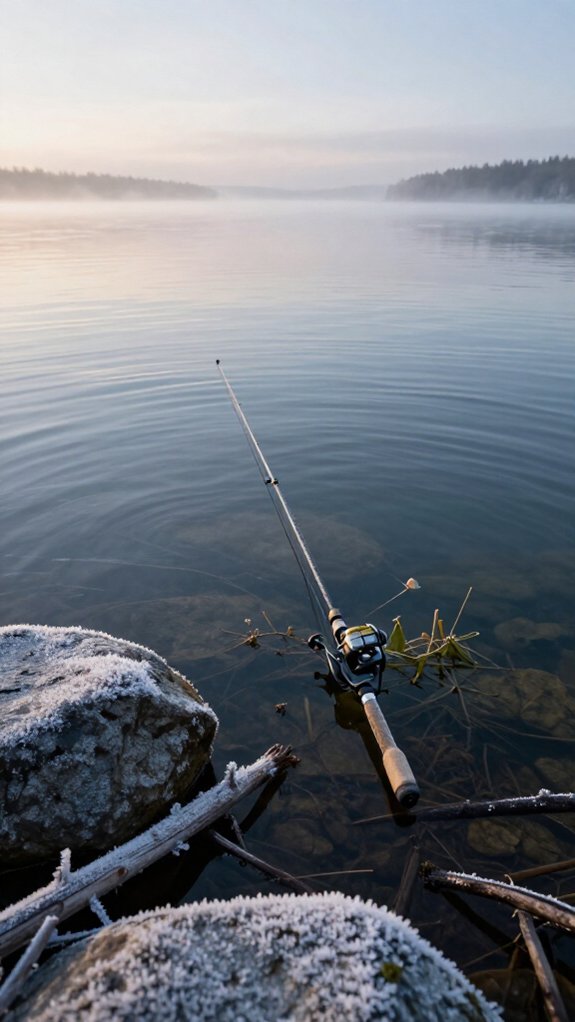
Finding the right spots becomes everything once that thermometer starts dropping, since bass don’t just disappear, they relocate to very specific places where they can survive and still feed.
Shallow Water, Cover, and Structure in Winter
I focus on shallow water with nearby cover—docks, seawalls, riprap, and bridge pilings—because bass need quick refuge when cold fronts hit. These spots let them slide deeper or shallower without burning energy.
I also hunt steep, chunk-rock banks with a 45° slope. The angled structure absorbs heat and holds baitfish, making it prime winter real estate.
My electronics help me spot isolated cover and structure others miss—single laydowns, submerged timber, or rock piles. I skip open, flat areas entirely. Bass bunch tight to shelter now, and I’d rather fish five precise targets than drift fifty empty acres.
Adjust Your Retrieve When Bass Won’t Commit
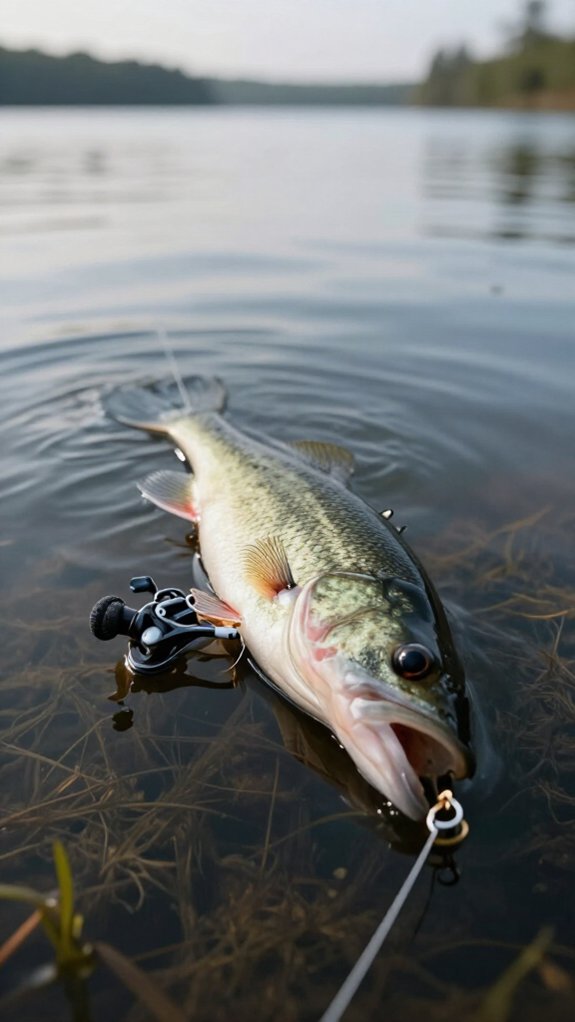
Even the best winter spots won’t produce if your retrieve sends bass racing away instead of inviting a bite. I’ve learned that a slow retrieve is essential when water temps drop below 50°F, bass simply won’t chase anything fast.
The Power of the Pause
Longer pauses are my secret weapon. I’ll let my lure suspend or drift for 10–20 seconds, sometimes feeling like eternity. That hesitation triggers bites from fish too lazy to pursue.
Dial in Your Movements
Subtle movements matter. I barely twitch my rod tip, imagining I’m moving a feather underwater. Small hops mimic dying baitfish that bass can’t resist.
Reading Strike Cues
Watch for line ticks, weight changes, or slight jumps during pauses. That’s when lethargic bass commit. Trust me, patience converts followers into keepers.
Frequently Asked Questions
Why Am I Not Catching Anything With Lures?
I suspect you’re retrieving too fast or ignoring pause timing. I find cold water kills fish metabolism, so I slow everything down, downsize my lures, and target deeper holding areas where lethargic fish actually stack up.
What Is the 80/20 Rule in Fishing?
I apply the 80/20 rule by recognizing that 80% of my catches come from 20% of my techniques and spots. I focus my efforts on those high-producing methods, like slow presentations, rather than spreading myself thin across ineffective tactics.
What Lure Was Banned From Bass Tournaments?
I know ninety percent of anglers still ask about controversial lures, and I’ll tell you straight: the Strike King Red Eye Shad got banned from bass tournaments.
Its violent vibrations damaged habitats and created unfair advantages, so officials prohibited it.
What Is the Most Effective Bait for Catching Bass in Cold Water?
I find suspending jerkbaits like the Megabass Vision OneTen most effective for cold-water bass. I’ll fish them slowly with long pauses, letting them hover in place to trigger strikes from sluggish fish unwilling to chase faster presentations.
In Conclusion
Cold water bass fishing rewards patience like a chess match against a sluggish opponent. Slow your retrieve, downsize your lures, and embrace the methodical pace winter demands.
I’ve watched anglers change skunked days into memorable catches simply by trading urgency for intention. The fish haven’t disappeared, they’re just whispering instead of shouting. Listen closely, match their energy, and you’ll feel that unmistakable thump even when the mercury plummets. Winter trophies belong to the steady-handed.