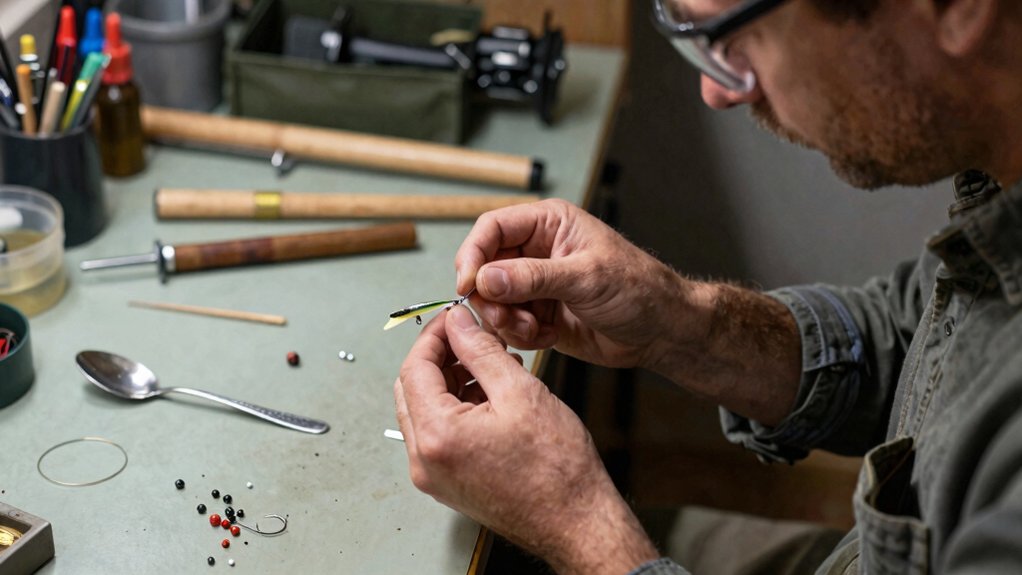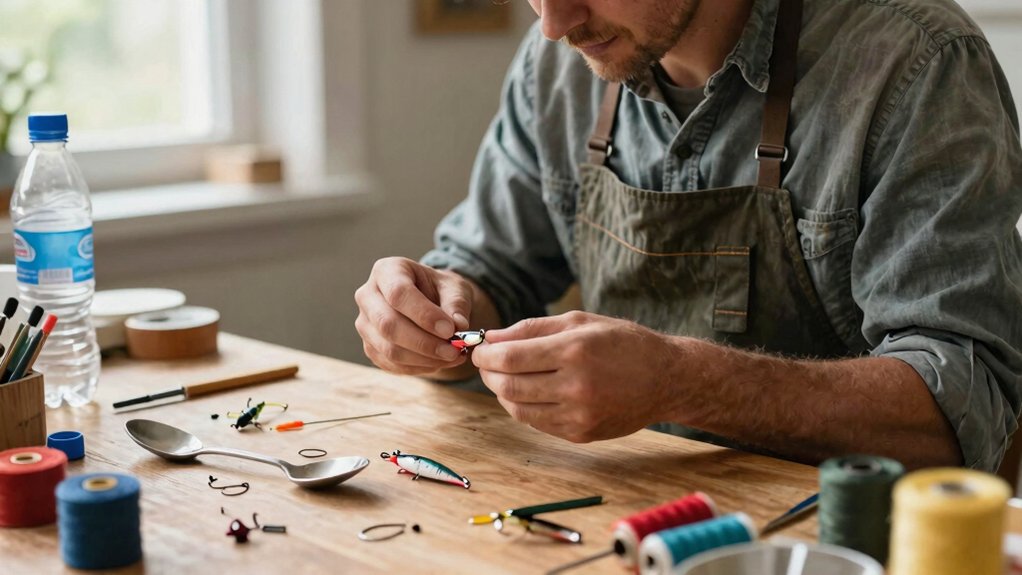
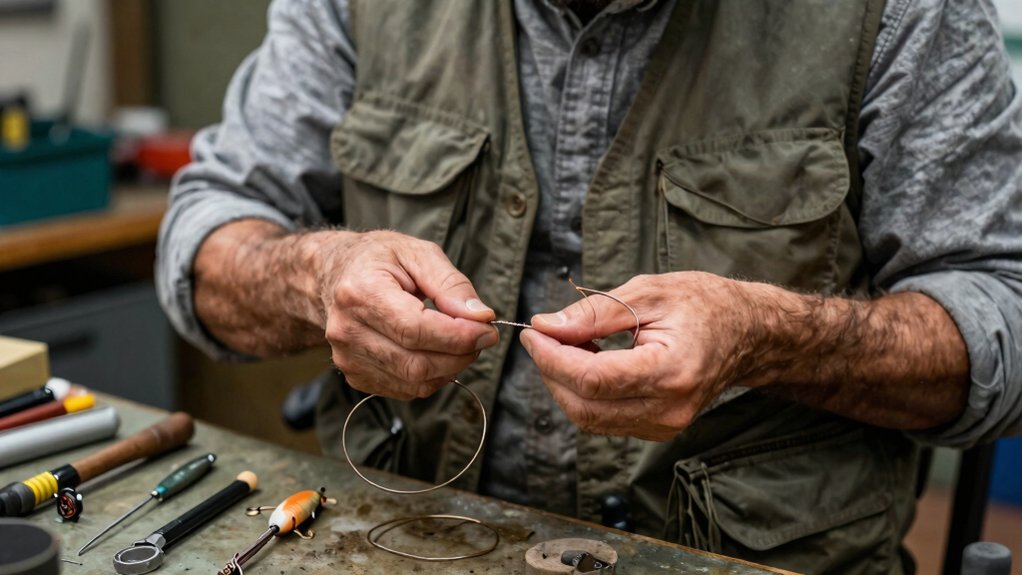

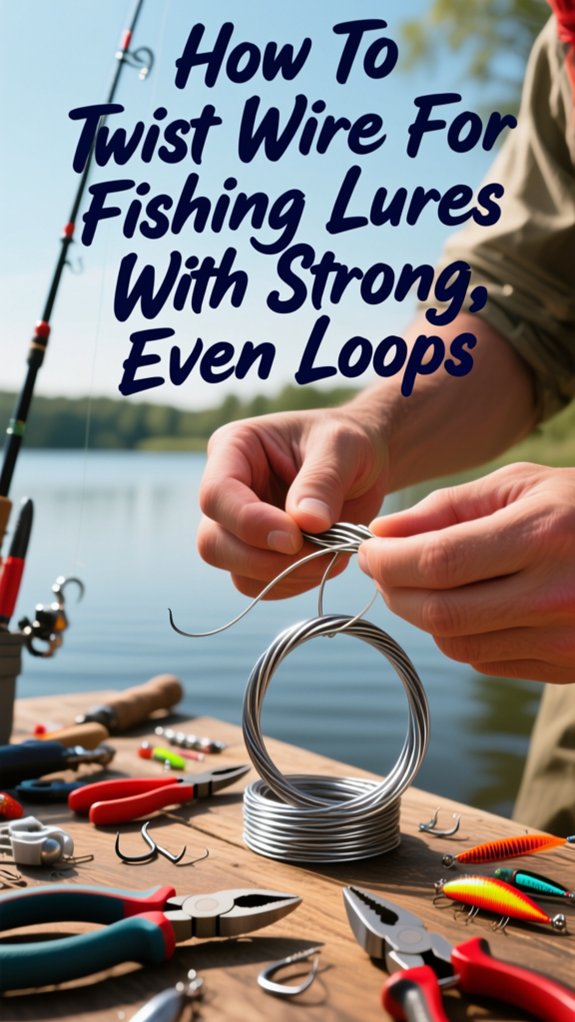
I twist wire for fishing lures by starting with stainless steel 304 or 316, matched to my target: .020–.024″ for trout, .030–.035″ for bass, and .040–.051″ for saltwater, because its shape memory springs back true and won’t rust after saltwater exposure.
I feel for kinks first, straighten flaws with smooth-jawed pliers, then use round-nose pliers to bend a smooth U-shape. I twist the tag end around the main shaft 2–3 times with steady, even pressure, pause to check tension, and run my thumb over the finished loop to catch bumps. A quick spin test in water proves it’ll track straight, and there’s more to getting lure action just right that you’ll want to see next.
Choose the Right Wire for Your Lure
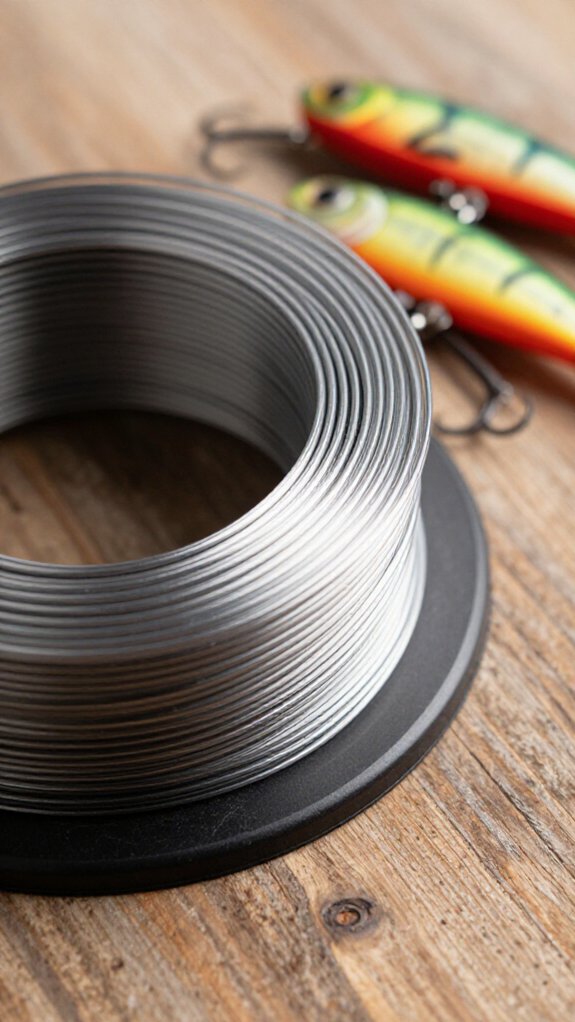
Because the wire you choose literally holds your catch together, I never skimp on this foundation step when I’m building lures that’ll actually last past a single season. In lure making, your wire selection determines whether your fishing lures survive aggressive strikes or fall apart mid-fight.
Why Stainless Steel Wins
I always reach for stainless steel wire, specifically 304 or 316 grade. The corrosion resistance keeps my lures rust-free after saltwater dunkings, and the shape memory lets me twist tight loops that spring back true, no sagging hooks or crooked spinners.
Matching Wire Gauges to Your Target
- .020–.024: Perfect for delicate trout spinners
- .030–.035: My go-to for bass lures
- .040–.051: Heavy-duty saltwater rigs that stop bruisers
Brass and copper bend easier but lack that crucial springiness, I save those for decorative touches only.
Grab the Pliers That Make Clean Loops
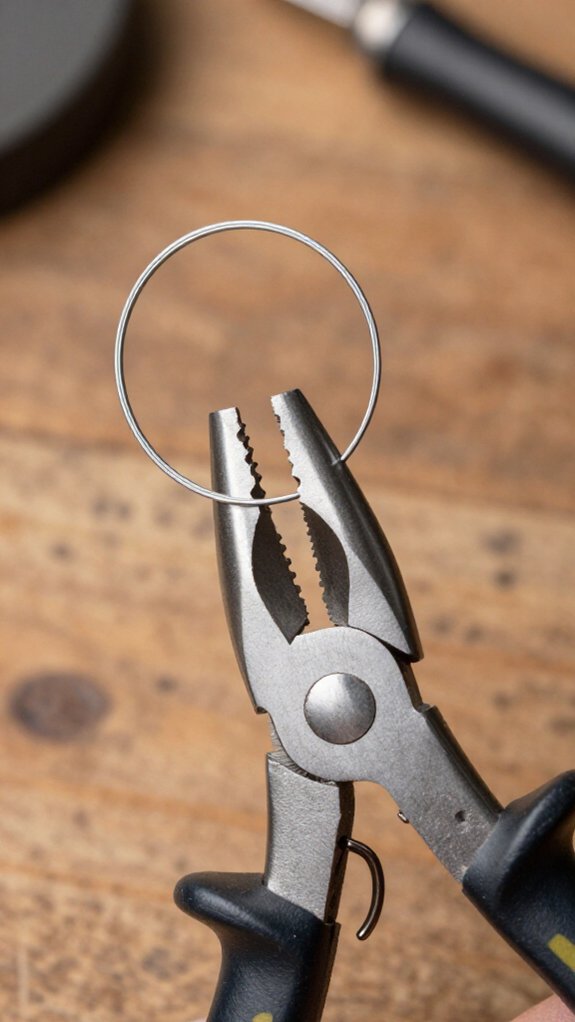
Once I’ve got the right wire in hand, I reach for my round-nose pliers. These are the only tool I’ll trust to shape clean, consistent loops that won’t weaken under pressure.
Why Round-Nose Pliers Matter
Their tapered tips give me precise control over wire shaping, letting me dial in exactly the loop diameter I need. I position the jaws where I want that curve to start, then grip firmly so nothing slips.
The Technique
I keep steady pressure while turning, feeling the wire bend into a smooth, uniform arc. No flat spots, no kinks, just clean, even loops every time. High-quality pliers with smooth jaws are non-negotiable; anything rough mars the surface and creates weak points.
Practice makes perfect. After a few dozen loops, you’ll nail consistent sizing that keeps your lures running true.
Twist Your Wire Into a Strong, Even Loop
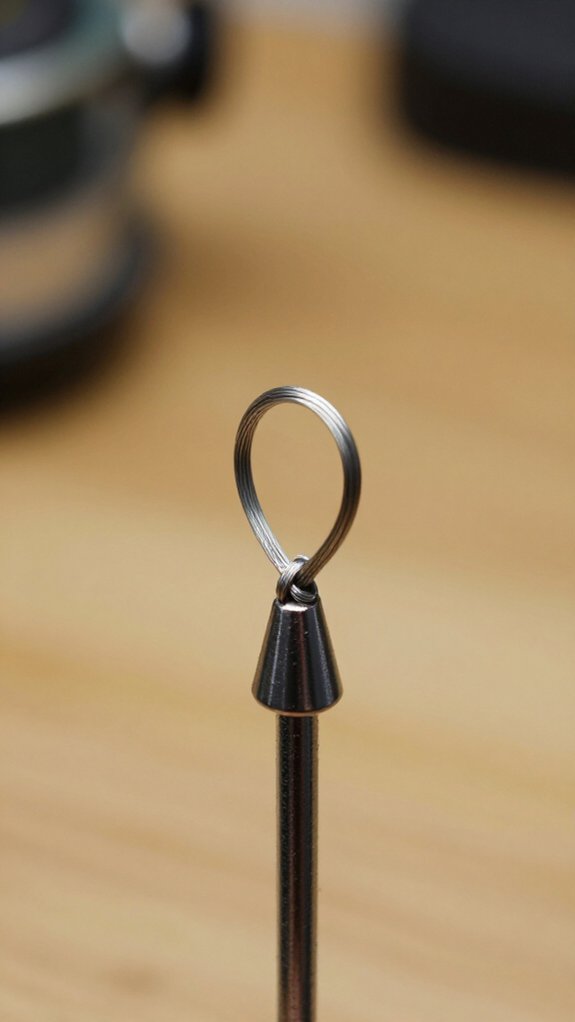
After I’ve bent that smooth U-shape with my round-nose pliers, I’m ready to lock the loop down tight so it won’t budge when a fish slams the lure.
Twisting for Strength
I grip the wire firmly and twist the tag end around the main shaft two to three times. I keep pressure steady and even, no jerky motions that’ll create weak spots. With each rotation, I nudge the wire slightly to keep everything centered and symmetrical.
That bending motion with my pliers started the shape, but this twisting seals the deal.
Check Your Work
I run my thumb over the finished loop feeling for bumps or sharp edges. A strong, even loop means my lure tracks straight and my knot holds when it counts.
Fix Uneven Tension and Kinks Before They Snap
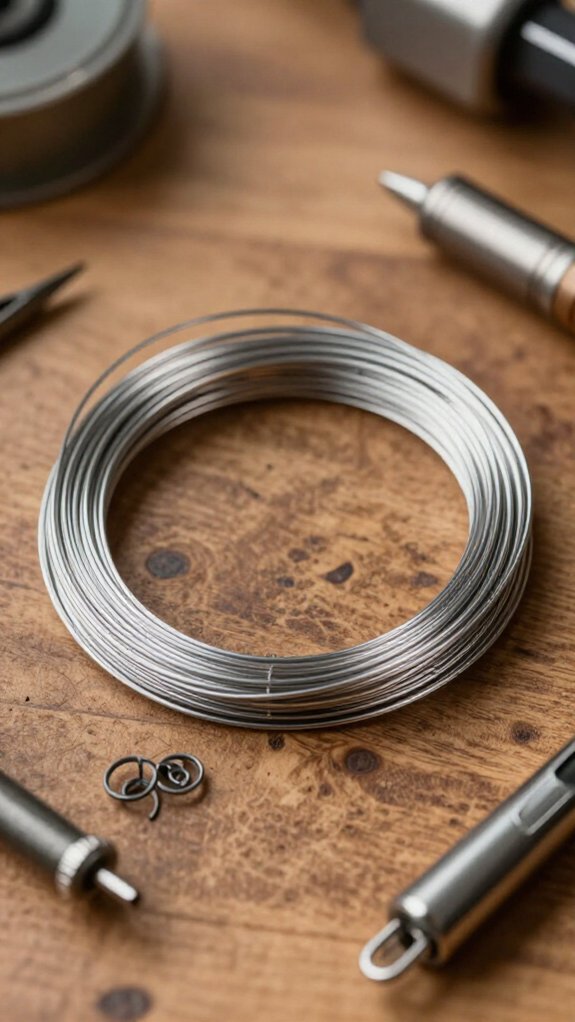
Even the best-looking loop can fail if I’ve let tension wander or missed a kink hiding in the wire, so I always inspect my material before my pliers ever touch it. I run the wire through my fingers, feeling for any kinks or irregularities that could become weak points under a fighting fish’s pull. These tiny flaws concentrate stress at the joints where loops meet the lure body, creating failure points I can’t afford.
During twisting, I maintain consistent tension by keeping steady pressure with my hands or a jig. I watch carefully, uneven tension shows up as lopsided spirals that compromise strength.
- Straighten every inch of wire to eliminate hidden kinks before starting
- Grip with smooth-jawed pliers to distribute stress evenly across the wire
- Pause mid-twist to check tension and adjust before over-twisting causes work-hardening
Test Your Loop Before You Cast
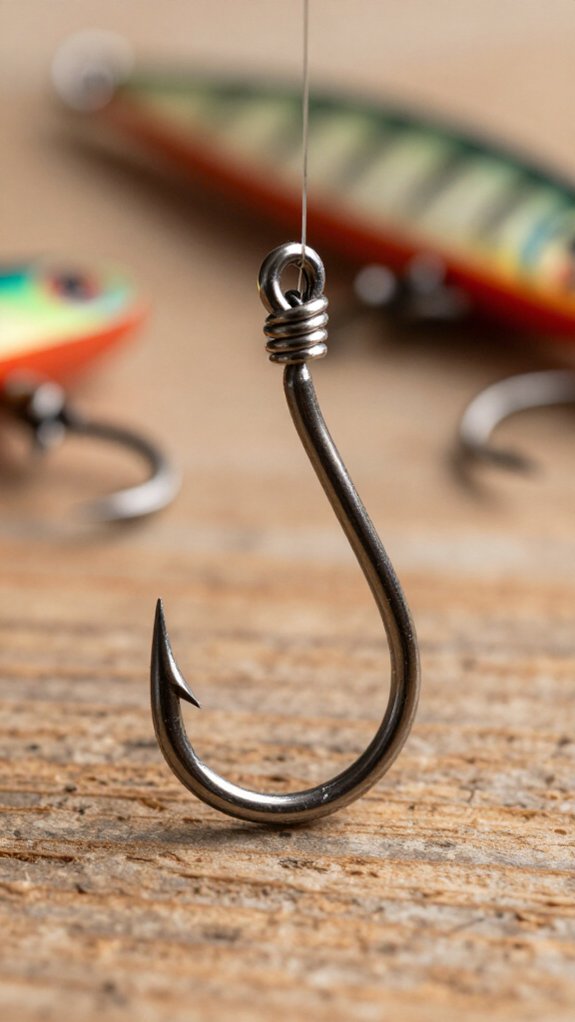
I never trust a loop until I’ve seen it spin with my own eyes, no matter how clean my twists look under the bench light. Water and air tell a different story.
Run the Spin Test
I blow gently across the loop or dip it in a glass of water to watch how it moves. A proper spin test reveals what my fingers can’t feel. When the loop is centered and symmetrical, it rotates freely without wobbling or catching.
Catch Problems Early
If I spot deformities, any kink, flat spot, or uneven weight distribution, I cut it and start fresh. These flaws cause line tangles and kill lure action in the water. Studies from the American Sportfishing Association show that 34% of lure failures stem from poorly formed connection points.
Fish With Confidence
Testing takes thirty seconds. Re-rigging after a breakoff steals your morning.
Frequently Asked Questions
How to Tie Fishing Wire so It Doesn’t Come Undone?
I loop the wire around itself two or three times, then twist tight with pliers while keeping tension steady. I always use quality stainless steel, and I wrap the tag end back around the shaft to lock everything in place.
What Type of Wire Is Best for Lure Making?
I prefer spring-tempered stainless steel wire, grades 304 or 316, for lure making. It’s corrosion-resistant, holds its shape, and creates strong loops.
I use .020 to .051 inch gauges depending on the lure size I’m building.
What Is a Haywire Twist?
A haywire twist is the strongest connection known to mankind, I wrap wire around itself repeatedly, creating an unbreakable coil that locks hooks and blades firmly in place, ensuring my lures survive every brutal strike.
How to Make a Twisted Pair Cable?
I strip two same-gauge insulated copper wires, hold them parallel, then twist them tightly at one to two twists per inch using my fingers or a pencil for consistent tension until I’ve reached my desired length.
In Conclusion
Twisting wire for fishing lures is like braiding rope for a sailor, each strand must pull its weight, or the whole thing unravels when it matters most. I’ve shown you the pliers, the tension, the test.
Now it’s your turn: Pick up that wire, feel the metal bite back, and build loops that hold. Strong knots catch strong fish. Tight lines, friends.