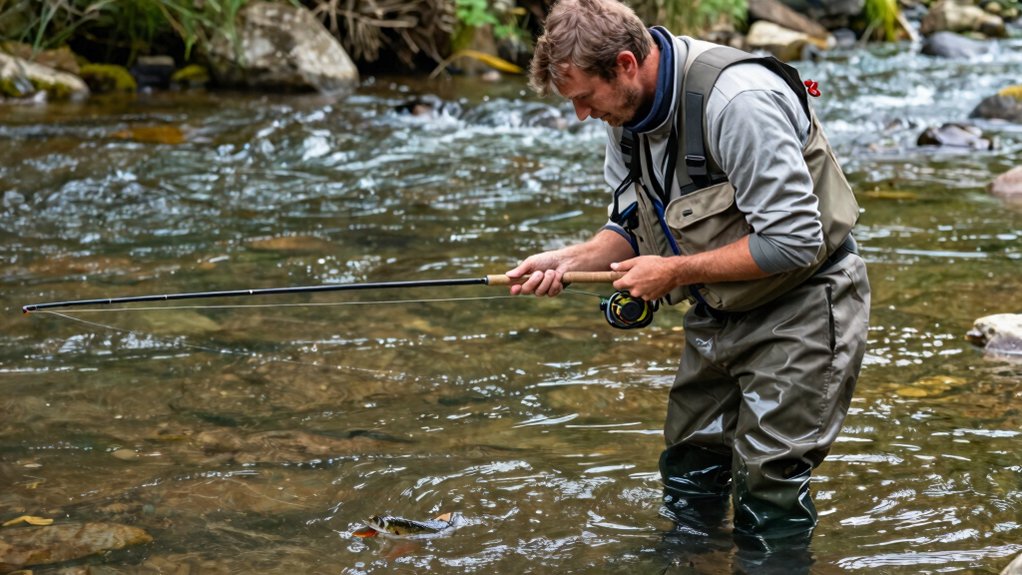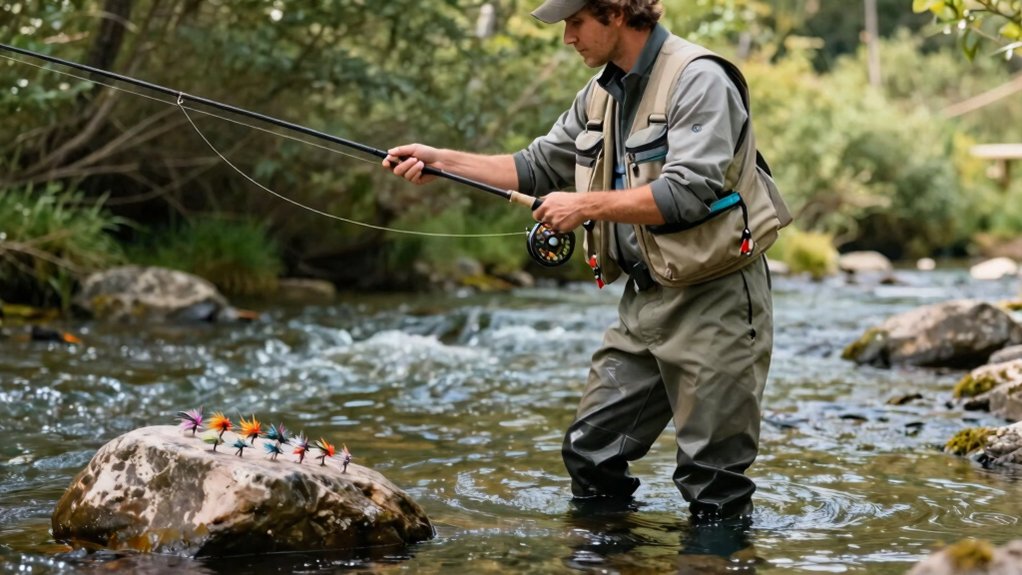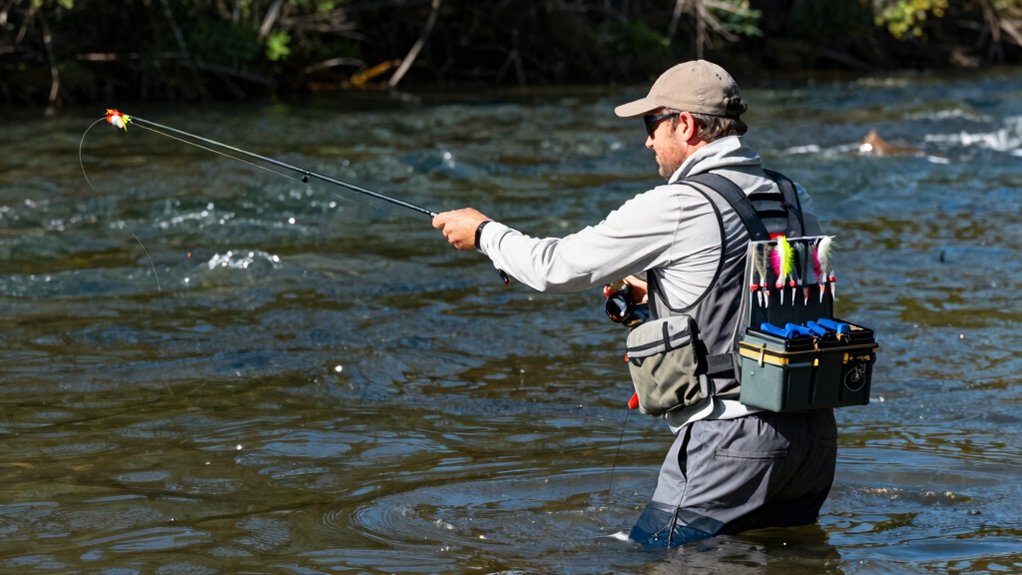
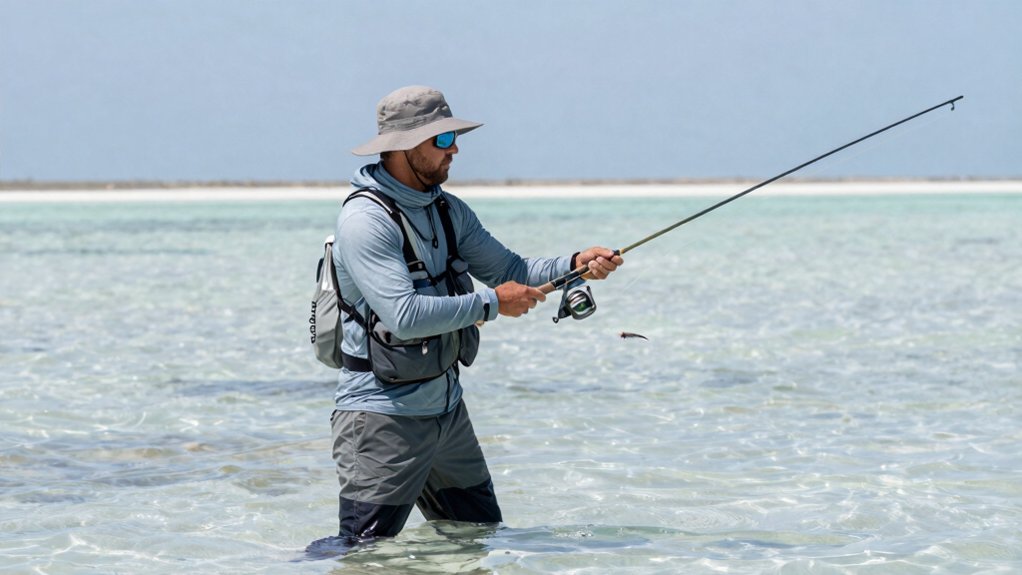

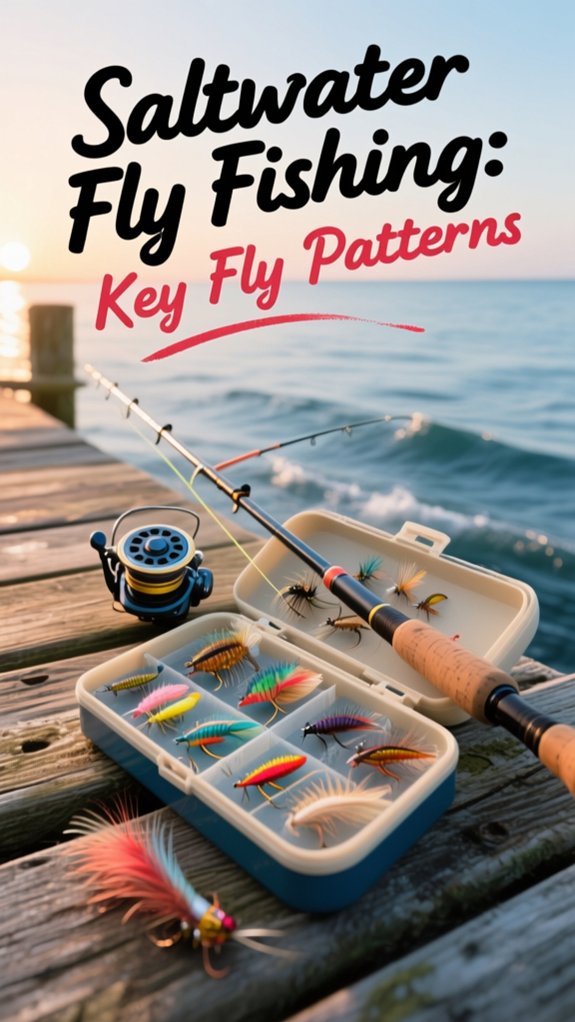
I focus on ten proven patterns that match five core prey types: shrimp, crabs, baitfish, sandworms, and mollusks. My go-tos include the Clouser Minnow and Deceiver for baitfish, Merkin Crab and Sidewinder Crab for crustaceans, and weighted shrimp patterns with kicking action.
Size and weight matter more than exact color—I typically fish flies 1.5 to 2 inches long, adjusting lead eyes or bead-chain to hit the right depth without tumbling. Natural browns, greens, and grays work most days; I save chartreuse and pink for murky water.
Build a compact 12-fly box around these categories and you’ll spend less time swapping patterns and more time catching fish, here’s exactly how to pick and rig each one.
Your Saltwater Fly Pattern Matters Less Than You Think
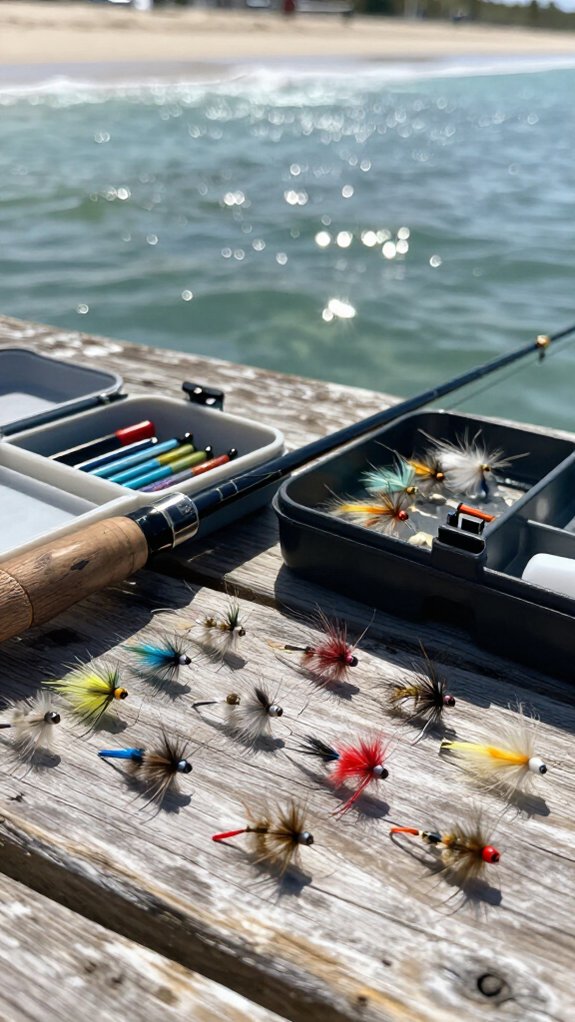
Although I’ll spend hours debating fly patterns at the tackle shop, I’ve learned that my saltwater success rarely hinges on whether I’m throwing a Clouser, a Shrimp, or some boutique creation with seventeen different materials.
What actually matters is size, shape, and movement.
The Real Deciders
I stick with impressionistic patterns that suggest prey rather than replicate it exactly. A sparse, lively fly that matches the general profile and behaves naturally in current consistently outfishes hyper-realistic patterns that look perfect in the vise but dead in the water.
My Tinkering Approach
I’ve found more success customizing three or four proven patterns, adjusting weight, trimming materials, varying retrieve speed, than constantly swapping elaborate specialty flies.
Striped bass don’t count materials; they react to silhouette and motion.
Presentation and profile beat pattern perfection every time.
5 Prey Types Every Saltwater Fly Must Match
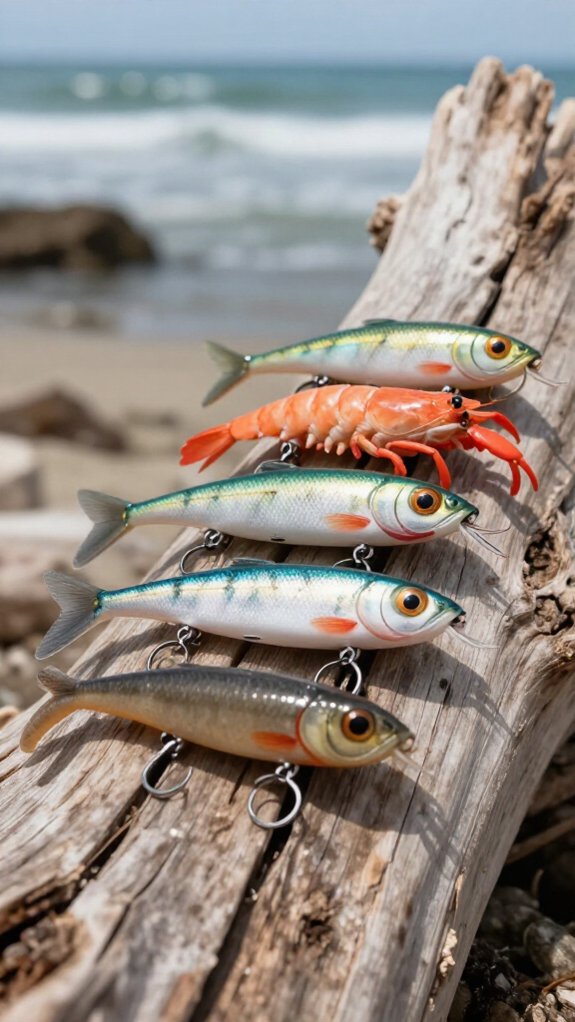
Whether I’m wading a flat at dawn or poling the edges of a marsh, I don’t pick my fly until I know what’s on the menu, because saltwater fish aren’t opportunistic in the abstract; they’re keyed in on specific prey that changes with tide, season, and bottom structure.
Five prey types predominate my fly box. Sandworms wriggle through mud and grass, drawing redfish and stripers. Crabs scuttle sideways, so I match their size and buoyancy with patterns that plink down like the real thing. Shrimp snap backward when threatened, flies with kicking legs trigger this escape response.
Baitfish school and flash, demanding slender profiles in brown, green, pink, or white, typically 1.5 to 3 inches. Mollusks anchor the bottom, completing the menu when predators root for dinner.
10 Saltwater Fly Patterns That Work Coast to Coast
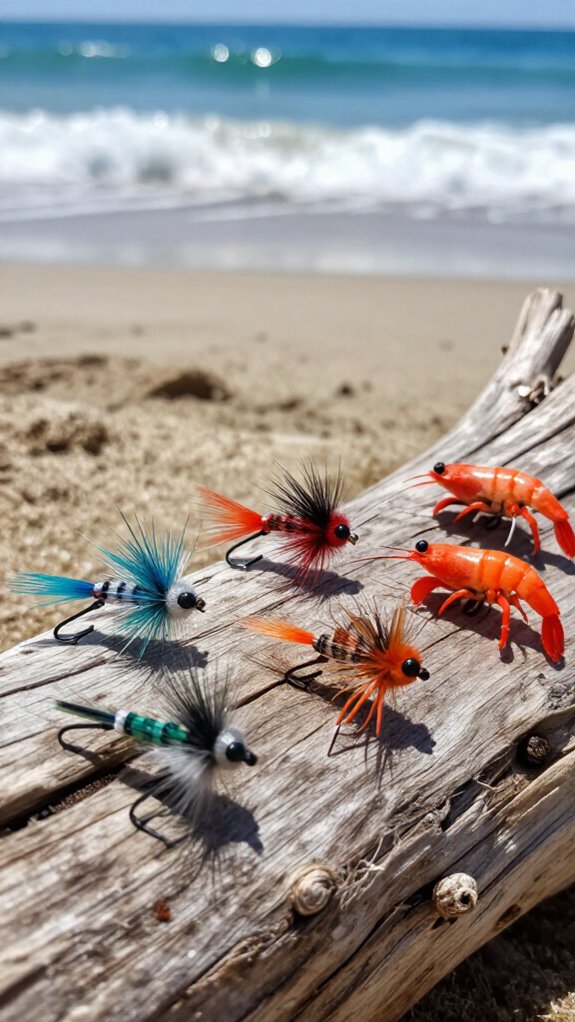
I’ve narrowed down ten saltwater fly patterns that consistently produce results whether I’m casting along the Atlantic, Gulf, or Pacific coasts. These patterns break neatly into three categories: essential attractor patterns that trigger aggressive strikes, versatile baitfish imitations that match the most common prey, and critical crustacean flies for when fish key on shrimp or crabs.
Let me walk you through each category and show you exactly which flies belong in your box, and why they earn their keep from coast to coast.
Essential Attractor Patterns
When I’m packing for a trip that might take me from the mangroves of Florida to the rocky shores of Maine, I don’t overthink my fly selection. I reach for proven attractor patterns that flat-out catch fish everywhere.
Why Attractors Work
I rely on impressionistic designs like the Clouser Minnow, Deceiver, and EP Peanut Butter because they nail the basics: size and profile. These flies don’t mimic exact anatomy; they suggest life. That simplicity lets me cover water fast and trigger reaction strikes from species that’ve never seen each other.
My Coast-to-Coast Go-Tos
- Clouser Minnow: Weighted and versatile, chartreuse over white crushes stripers, redfish, and snook
- Deceiver & Half and Half: I scale these up or down, swap colors, and fish them anywhere
These patterns sit in every saltwater fly shop for good reason. They’ve earned their place in my box through pure, repeatable results.
Versatile Baitfish Imitations
If I had to pick one category of flies that earns its keep from the surf line to the flats, it’s baitfish imitations that move like the real thing and don’t fall apart after a single toothy encounter. The Clouser Minnow leads the pack, I’ve caught everything from snook to striped bass on this worldwide staple that mimics glass minnows with a deadly jigging action.
Deceiver flies bring serious versatility; Bob Popovics originally designed them for hard-charging stripers, and I’ve since modified them in countless color combos for redfish, blues, and tarpon. For those nervous, suspending presentations that drive predators wild, I’ll reach for a Borski Slider or Epoxy Baitfish, both drifting just sub-surface where the big fish prowl.
| Fly Pattern | Best Conditions | Target Species |
|---|---|---|
| Clouser Minnow | All depths, all currents | Striped bass, snook, redfish |
| Deceiver | Surf, rips, open water | Bluefish, tarpon, false albacore |
| Borski Slider | Shallow flats, calm edges | Bonefish, permit, redfish |
| Epoxy Baitfish | Clear water, finicky fish | Sea trout, snook, juvenile tarpon |
| Weighted variant | Deep channels, heavy tide | Grouper, cobia, big stripers |
Size matters—I’ve found 1.5 to 2 inches hits the sweet spot most days. Match local baitfish colors or go bold with chartreuse and white when the water’s stained. Durability seals the deal; quality bucktail and synthetic fibers withstand savage strikes far longer than cheap imitations.
Critical Crustacean Flies
Crustacean flies prevail in my saltwater boxes because nothing triggers strikes like a crab dropping onto a flat or scuttling across the bottom.
I rely heavily on the Merkin Crab with its splayed hackles, silicone legs, and lead eyes. It’s widely considered the most effective permit fly and perfectly mimics juvenile blue crabs.
Crab flies work because they’re tied with textured shells using silicone sealer and weighted to flutter down slowly, imitating real crustaceans in any water condition.
For retrieves, I use steady strips or crawling motions with patterns like the Sidewinder Crab and Defensive Crab to match resting or fleeing behavior.
Here are four keys to choosing crab flies:
- Realism matters—textured shells and proper weighting trigger more strikes
- Match local species—Baffin Blue Crab and modified Merkins target regional prey
- Prioritize durability—quality materials withstand repeated casts and fish
- Vary your retrieve—slow, natural movement outperforms frantic stripping
How to Size and Weight Saltwater Flies Right
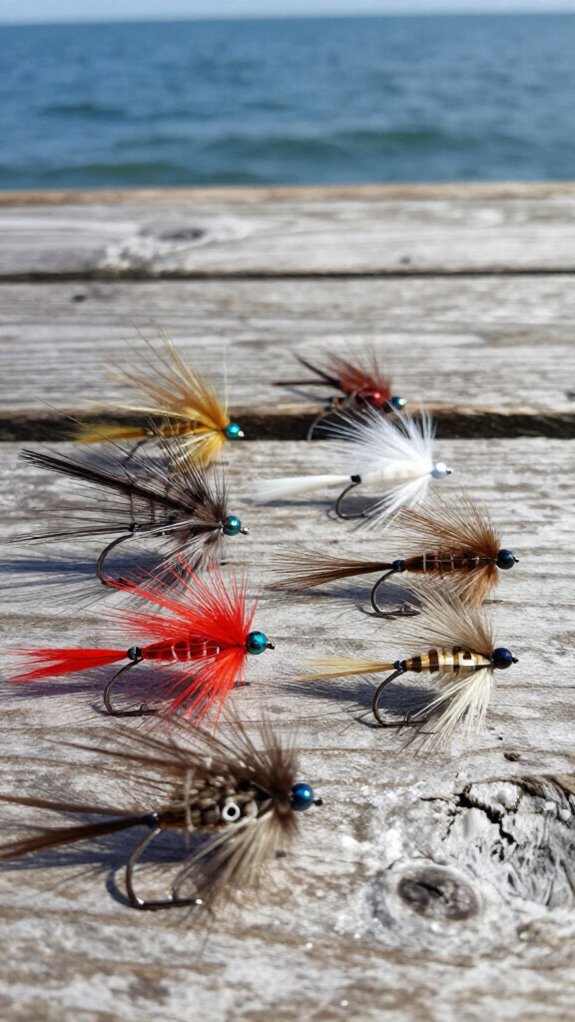
I size my saltwater flies by matching the hook to whatever baitfish or crustacean the fish are chasing, since a #2 or #4 profile that mirrors the natural prey triggers more strikes than guessing.
Then I balance castability with depth by choosing lead eyes for bombing down to structure, bead-chain for moderate drops, or no weight at all when I’m stalking tailing fish on skinny flats.
Finally, I’ll bulk up the weight when the tide rips hard, because a fly that can’t punch through the current never reaches the strike zone no matter how pretty it looks.
Match Hook to Prey
Why do some saltwater flies get crushed while others get ignored? I’ve learned it’s often about hook-to-prey matching.
Sizing Your Hook Right
I match hook size to what the fish are actually eating. For bigger baitfish and crabs, I’ll tie on #6 to 3/0 hooks. When shrimp or tiny juveniles are on the menu, I downsize to #8 or #10. The profile has to look right, or predators won’t commit.
Building in Weight
I add lead wire, bead-chain eyes, or heavier hooks to get down where fish are holding. In strong current or deep water, you need that extra mass.
My Four Rules for Hook Selection:
- Match hook size to prey dimensions
- Choose forged or stainless steel for durability
- Add weight to reach target depth
- Adjust materials to control sink rate
Balance Castability Depth
Getting a saltwater fly to cast like a bullet and swim at the right depth takes more than luck, it takes deliberate choices about size and weight that work together from the moment the line leaves your rod tip.
I tie my flies between 1.5 and 2 inches long, about 3/8 inch wide—compact enough to cut through wind but substantial enough to feel right in the water. Hook size matters too; I stick with #4 or #2 for most applications.
Here’s how I match weight to purpose:
| Weight Type | Best For |
|---|---|
| Bead-chain eyes | Shallow flats, subtle presentation |
| Lead wraps | Moderate depths, quicker sink |
| Heavier dumbbell eyes | Deep channels, fast drops |
| Natural buoyant materials | Suspending, lifelike swimming |
I distribute weight carefully so the fly doesn’t tumble or spin. When I get that balance right, the fly lands accurately and swims true at whatever depth I’m targeting.
Adjust for Current
Current changes everything about how a fly behaves once it hits the water, so I’m constantly adjusting size and weight to match what the water’s doing.
Strong currents and deep water demand heavier flies with lead eyes or tungsten to punch down fast. Calm, skinny water calls for lighter, sparsely weighted patterns that drift naturally without spooking fish.
Here’s how I dial it in:
- Assess current speed before choosing any fly
- Match weight to depth, heavier isn’t always better
- Test sink rates with short strips to find the zone
- Fine-tune on the water by swapping patterns until fish respond
I’m always watching how the fly tracks through the water. If it’s racing over their heads or dragging bottom, I’ll swap weights until it hovers right in the feeding lane where predators expect an easy meal.
The Color Truth No Tackle Shop Tells You
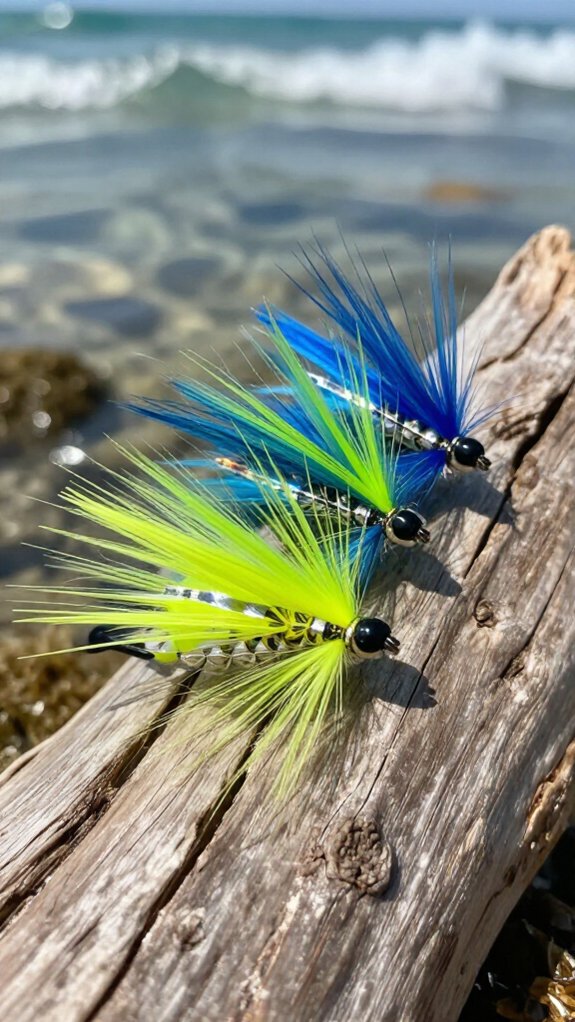
Although tackle shops love to display walls of flies in every shade imaginable, I’m here to tell you that color matters far less than you’ve been led to believe.
What Actually Triggers Strikes
I’ve watched too many anglers obsess over whether their shrimp pattern should be pink or orange while ignoring what really counts. Size, shape, and movement drive saltwater bites, not fancy color schemes.
The Simple Palette That Works
Stick with naturals: browns, greens, and grays mimic real bait across conditions. When water turns murky or light fades, I’ll reach for bright, high-contrast hues purely for visibility.
The Adjustment That Matters
Here’s what experience teaches: swapping fly colors rarely saves a slow day. Changing size, profile, or how I present the fly? That’s where the magic happens. Match your prey’s behavior and dimensions first. Color’s just window dressing.
The 12-Fly Saltwater Box That Handles 90% of Situations
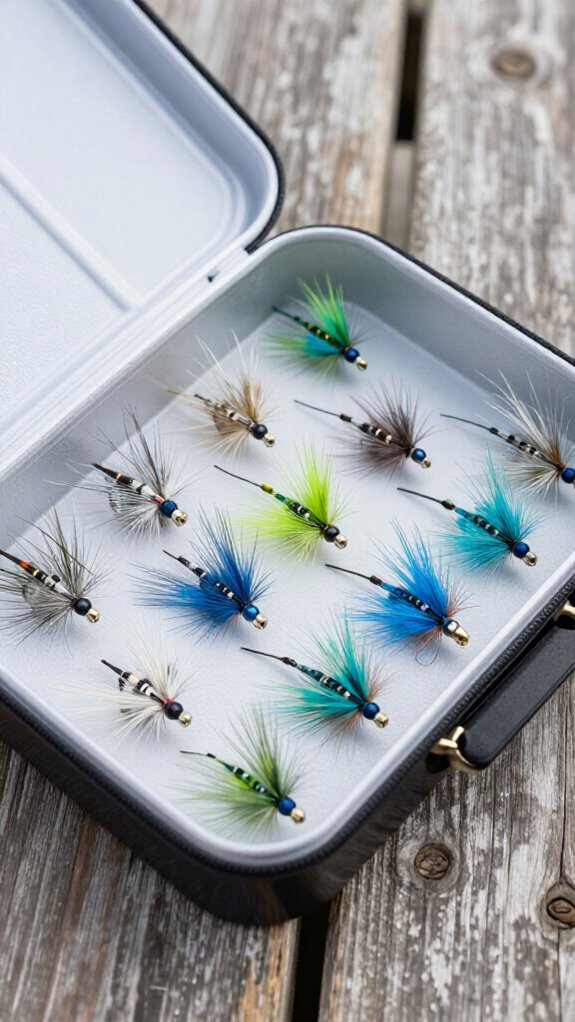
If you’re tired of hauling a suitcase of flies every time you hit the flats, I’ve got good news: a carefully chosen dozen patterns will handle almost everything saltwater fishing throws at you.
I build my core box around four proven categories that mirror what predators actually eat. Here’s what earns its spot:
- Shrimp patterns like the Borski Slider for cruising fish in skinny water
- Crab flies such as the Merkin for bottom-hugging species
- Baitfish imitations including the Clouser Minnow for depth versatility
- Topwater bugs for explosive surface strikes at dawn
I select durable flies I can resize or recolor to match local forage. Quality hooks and materials matter more than quantity.
With these twelve patterns, I’m ready for redfish, snook, or stripers without the baggage.
Frequently Asked Questions
What Are the Best Flies for Saltwater Fly Fishing?
I rely on Clouser Minnows for versatility, crab flies like Merkin Crabs for redfish and permit, shrimp patterns for widespread success, and topwater flies such as Gurglers when I’m chasing tarpon or explosive surface strikes.
What Is the Holy Grail of Fly Fishing?
They say the best things aren’t things at all, and I’ve found that’s true here: the holy grail isn’t one fly, it’s my ability to read water, adapt patterns, and present them convincingly to whatever’s hunting below.
What Is the Most Difficult Fly to Tie?
I believe the Merkin Crab is the most difficult fly I’ve ever attempted to tie. Its intricate claws, precise proportions, and multiple materials demand advanced skills.
I’m still perfecting that realistic profile and natural sinking behavior.
What Is the Most Beautiful Fly?
I find the Merkin Crab most beautiful with its intricate, realistic profile and splayed hackles. The Baffin Blue Crab’s vibrant colors also catch my eye, while Lefty’s Deceiver flows elegantly through the water.
In Conclusion
The right saltwater flies come down to matching five prey types and carrying a tight, versatile box. I’ve learned that color matters less than presentation, and sizing beats pattern obsession every time.
Build your 12-fly arsenal around proven coast-to-coast workhorses, and you’ll spend less time second-guessing and more time bent on the rod. At the end of the day, the best fly is the one you fish with confidence.