
The right accessories and replacement parts turn any ice auger into a hardwater workhorse. I’ve found that cordless drill adapters like the Clam Drill Plate Pro paired with lightweight lithium batteries let you zip through ice without the gas-can hassle, though I always pack spares since cold drains power fast.
Matching blade material to conditions matters too: high-carbon steel bites hard ice, while serrated edges chew through stubborn thick spots. Extensions add 16–24 inches of reach when drilling through 36-plus-inch ice, and I never skip blade guards after nearly slicing a thumb during a rushed morning setup.
Watch for wobbling in the shaft collar and grit in the hardware; these small warning signs prevent catastrophic mid-trip failures. Keep threads greased, fasteners tight, and quality replacement parts on hand, and you’ll spend more time fishing than fussing with gear that’s let you down. There’s plenty more to know about squeezing every season out of your setup.
Can You Use a Cordless Drill as an Ice Auger?
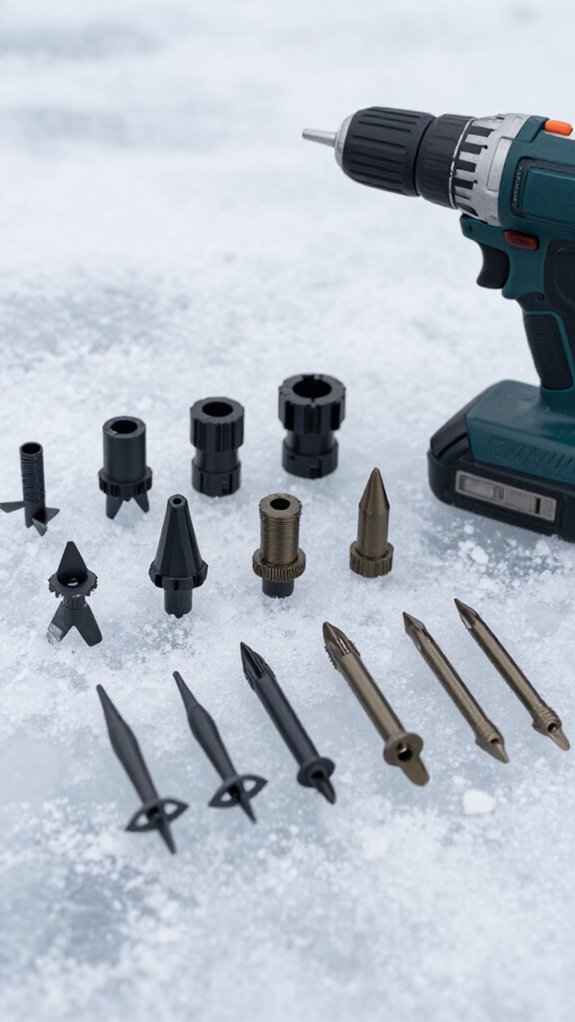
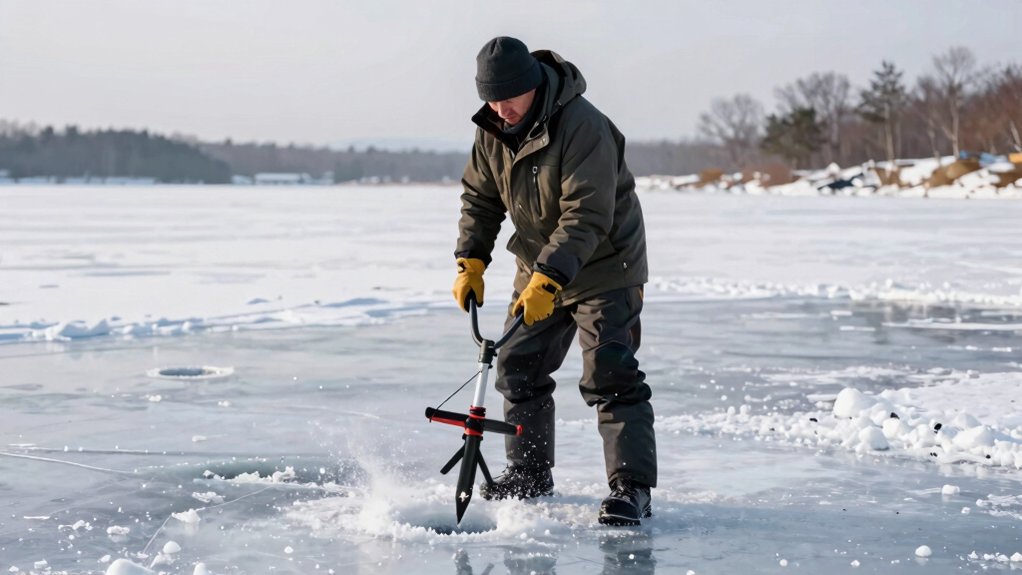
If you’re looking to cut through ice without lugging around a heavy gas-powered auger, I’ve got good news: a cordless drill absolutely can double as your ice auger with the right setup. I converted my DeWalt last season using a Clam Drill Plate Pro adapter, and now I’m drilling holes faster than ever.
Here’s what you’ll need:
- Adapter – Secures your drill to the auger shaft (Bear Creek makes a solid alternative)
- Blade – Sharp cutters that bite through ice efficiently
- Extension – Essential for thicker ice; I carry two 12-inch sections
The Lite-Flite Lithium 24v keeps things featherlight on long hikes. Just watch your battery life, cold drains power fast. Stock adapter-specific replacement parts before they wear thin mid-trip.
How to Choose Replacement Blades for Your Ice Conditions
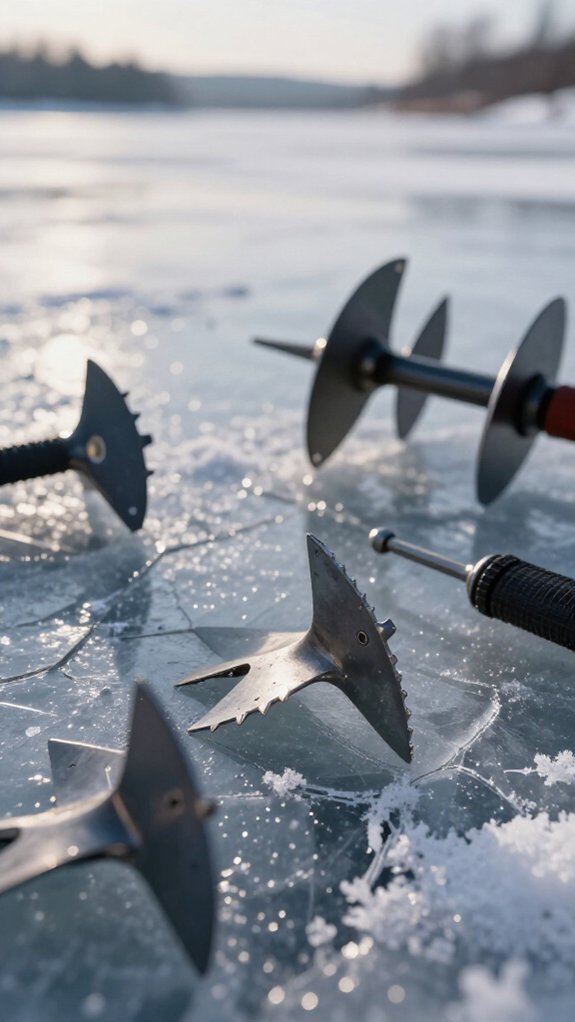
I always start by matching my blade material to the ice I’m punching: high-carbon steel bites hard into frozen lakes when I’m chasing late-season walleye, while stainless steel saves me headaches during those slushy, salt-kissed early mornings on coastal bays.
Then I look at what’s waiting below my boots: serrated edges chew through two feet of stubborn pressure ice like butter, but they’d be overkill on the six-inch skim I fish in January.
Getting this pairing right means I’m drilling clean holes faster, saving my arms for the fight instead of the grind.
Blade Material Selection
Since you’re staring at a wall of blade options online or at the shop, I’ll cut through the noise: picking the right replacement blade material comes down to matching your ice conditions and how hard you push your gear.
Stainless steel blades are your go-to if you’re fishing humid or salty environments. They’re corrosion-resistant and shrug off moisture that eats lesser metals.
I reach for high carbon steel when I want razor-like sharpness and superior edge retention, though you’ll need to wipe them dry to prevent rust.
For brutal, blue-hard ice, Swedish boron steel delivers unparalleled durability and stays wicked sharp through dozens of holes.
Your choice hinges on where you fish and how often. Prioritize corrosion resistance near the coast, edge retention for precision work, or pure toughness when the ice fights back.
Ice Thickness Matching
When you’re staring down at eight inches of black ice versus two feet of blue-hard slab, the blade on your auger needs to be talking the same language as what’s beneath your boots. Ice thickness dictates everything about your replacement blades choice.
For thinner ice, I reach for stainless steel blades with finer tooth patterns. They slice clean without fighting. But when I’m punching through 12-plus inches of dense, blue-hard stuff, I switch to high-carbon steel types with aggressive turbo or power blade configurations. Those larger teeth chew through without bogging down my drill.
Here’s what I always double-check:
- Blade size matches my auger’s diameter exactly
- Cutting edge design suits the ice I’m facing
- Auger compatibility prevents wobble and uneven wear
Thick, abrasive ice demands coated blades or protectors too. I’ve learned that replacing dull blades beats burning out my entire auger mid-season.
Ice Auger Extensions: How Deep Can You Actually Drill?
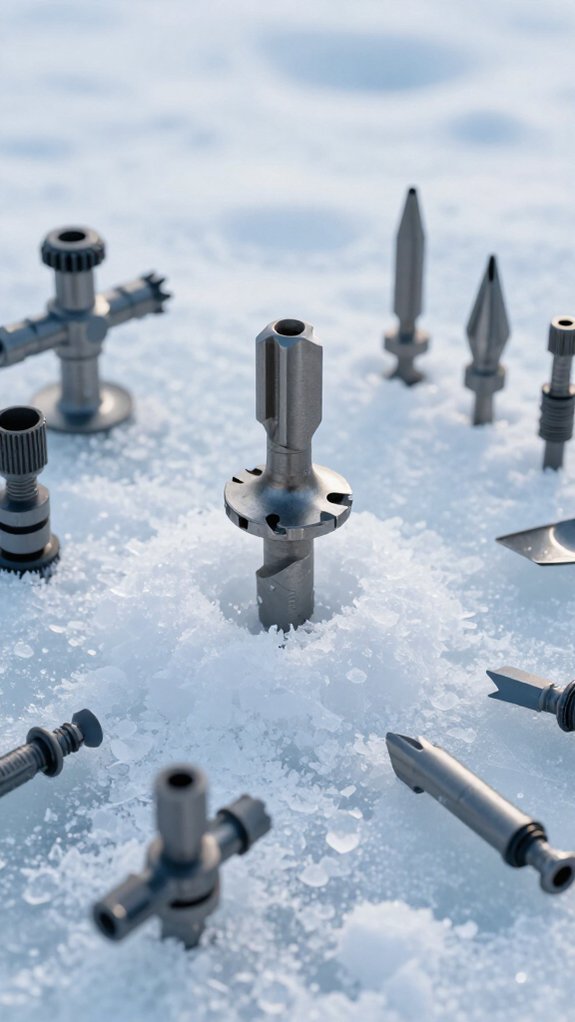
Although most standard ice augers handle the typical 18 to 24 inches of winter ice you’ll encounter on popular lakes, I’ve learned the hard way that Mother Nature doesn’t always play by the rules, especially when I’m chasing late-season walleye on northern Canadian Shield waters where ice can balloon past three feet thick.
That’s where ice auger extensions save the day. These add-ons typically stretch 16 to 24 inches, pushing your drilling depth to 36-48 inches total. I’ve drilled through 40-plus inches of solid ice using a power auger with the right extension length.
But auger compatibility matters—hex, steel, and power extensions fit differently. Here’s what I’ve found works:
| Extension Type | Max Ice Thickness |
|---|---|
| 16-inch steel | 36-40 inches |
| 18-inch hex | 38-42 inches |
| 24-inch power | 44-48 inches |
| Combo setup | 50+ inches |
| Standard (no ext.) | 18-24 inches |
Watch your stability though—longer shafts wobble more. Match your extension to actual ice thickness, not just ambition.
Do You Really Need Blade Guards? Safety vs. Convenience
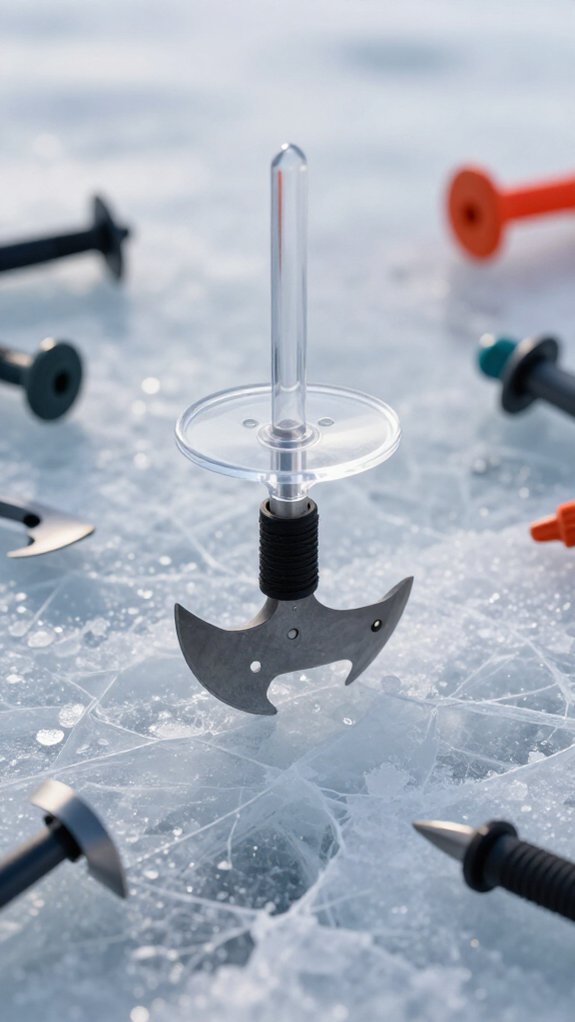
You don’t need blade guards to drill through ice, but I’ll never forget the morning I reached for my auger in the back of my truck and felt the sting of a fresh slice across my palm, blood on my bibs before I’d even set my first tip-up.
That injury taught me blade guards aren’t optional accessories, they’re essential protection. Here’s what I’ve learned:
- Safety first: Quality blade guards prevent accidental cuts during transport and handling.
- Blade longevity: Guards protect blades from chips and dulling, saving replacement costs.
- Model-specific fit: Durable plastic guards designed for your auger ensure optimal coverage.
- The trade-off: Some anglers skip guards for convenience, but I’ve found the extra seconds aren’t worth the risk.
Regulatory standards often recommend blade guards, and I follow them. My hands stay intact, my blades stay sharp, and I fish with peace of mind.
Battery Life and Power Upgrades for Electric Ice Augers
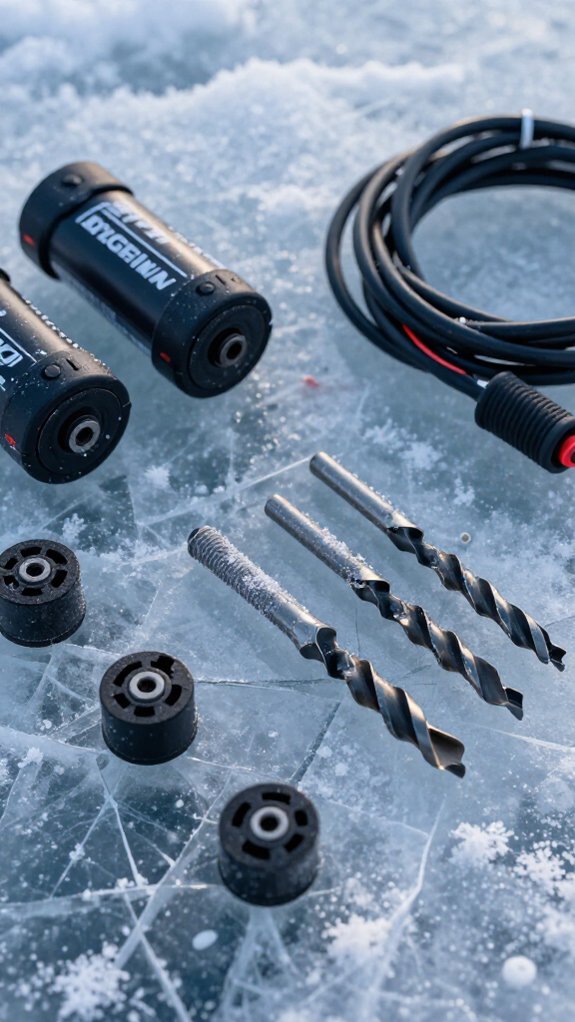
Three seasons ago, I watched my buddy’s electric auger die halfway through a thick ice sheet on Lake Winnibigoshish, leaving us scrambling for a backup hand auger while the morning bite turned hot without us. That morning taught me everything about battery life.
Battery Upgrades That Actually Matter
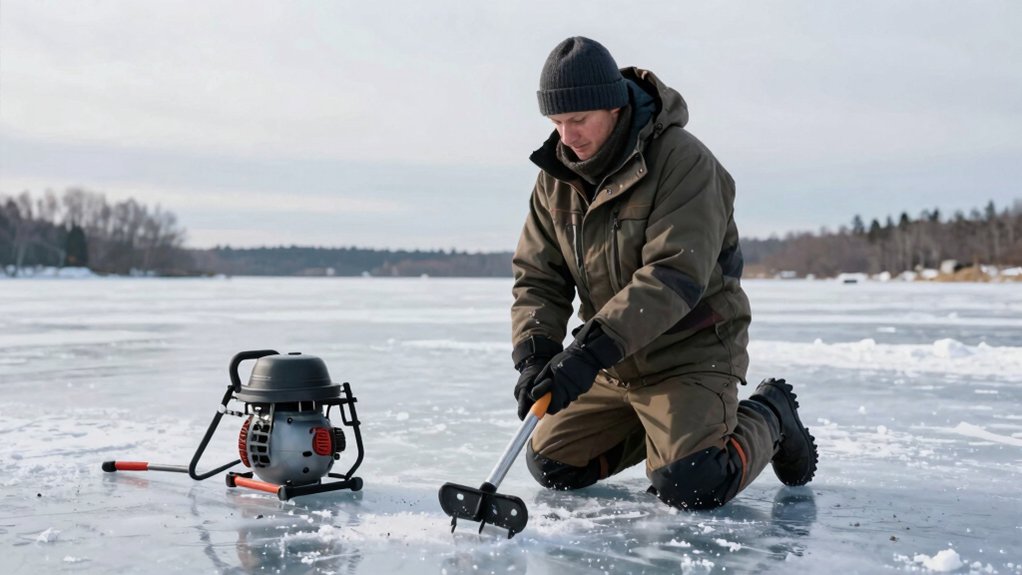
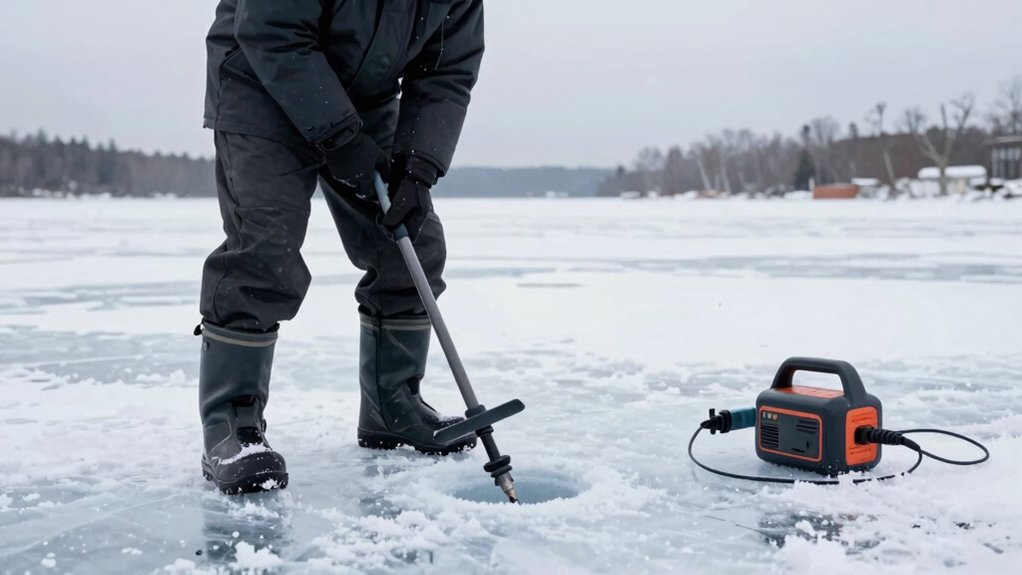
I’ve learned battery upgrades redefine your entire ice fishing experience. I upgraded to Eskimo’s 40V 4Ah battery ($229.99) and nearly doubled my drilling runtime. For marathon days, I pack spare rechargeable batteries, no more mid-trip recharging panic.
Power and Reach
Your power drill setup benefits from quick-connect compatibility and auger extension kits for thicker ice. I keep Eskimo’s 40V Charger ($74.99) in my shack for fast top-offs between holes.
Protect Your Investment
I replace aging batteries before performance drops. Consistent power maintenance optimizes your electric auger’s lifespan and keeps you drilling when walleyes are biting.
Replacement Parts That Break First (and How to Spot Wear)
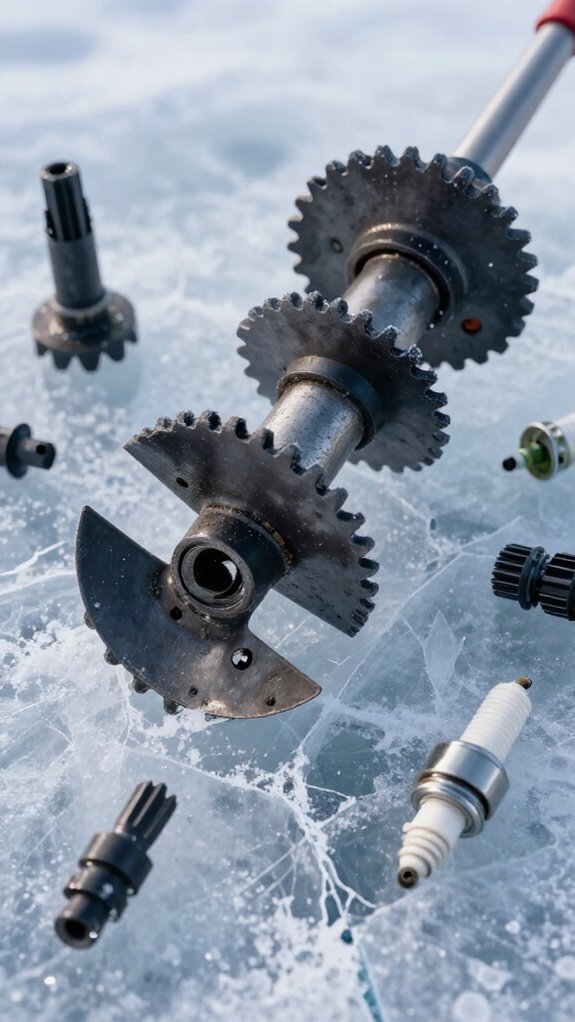
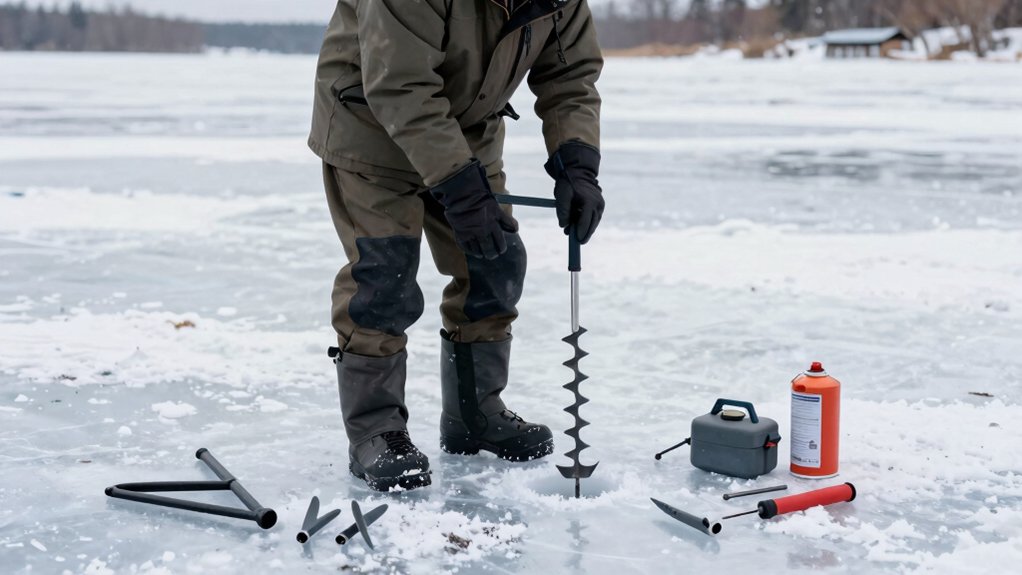
I always check my auger blades first because that’s where you’ll spot trouble before it ruins a day on the ice. Look for chips, dull edges, or any corrosion that makes the motor work harder than it should.
While I’m inspecting the cutting end, I also give the shaft connection a wiggle to catch looseness or cracks that could leave me stranded with a spinning motor and a stuck bit.
These two spots take the worst beating from frozen water and torque, so catching wear early keeps the drill turning smooth and your holes cutting clean.
Blade Wear Signs
How can you tell when it’s time to swap out your auger blades before you’re left drilling through thick ice with a dull, struggling bit?
I’ve learned that catching blade wear early saves me from frustrating mid-trip failures and keeps my holes clean.
Here’s what I watch for:
- Chipped edges on the cutting edges that catch light and feel rough to your fingertip
- Dullness that turns drilling into a workout, You’ll feel the auger vibrating instead of biting
- Cracks spreading from the blade tips, especially after hitting gravel or frozen debris
- Uneven wear between blades causing your bit to wobble and cut slow
I inspect my cutting edges every few trips. Rust spots and serrated teeth that’ve lost their bite mean blade replacement is coming.
Trust me, swapping blades beats yanking a stuck auger from half-drilled ice.
Shaft Connection Failure
Blade wear isn’t the only thing that’ll leave you stranded on thick ice. Your shaft connection can fail just as catastrophically, and usually without warning.
I’ve seen connection failure ruin more mornings than I care to count. It starts small: a wobble in your hex shaft, maybe some grit in the collar hardware. Ignore it, and you’re drilling half a hole before everything seizes.
Here’s what I check every trip:
- Visible cracks around the collar or shaft junction
- Excessive play when you wiggle the auger head
- Corrosion on bolts and fasteners (salt and moisture love these spots)
Cheap replacement parts are tempting, but mismatched bolts or weak shafts practically guarantee failure. I learned that the hard way on Lake Winnebago at fifteen below.
Proper maintenance takes five minutes—Tighten fasteners, replace worn hardware, and grease threads. Your shaft connection will thank you when you’re punching through two feet of hardwater.
Frequently Asked Questions
What Are the Different Parts of an Auger?
I know an auger’s parts include the blade, shaft, motor or power source, handle, and housing. You’ll find replacement blades in stainless or high carbon steel, with shafts varying in length for different ice thicknesses.
How Often Should You Replace Ice Auger Blades?
Like a chef’s knife losing its edge mid-service, I replace my blades every 20-30 holes. I’ve learned dull cutters strain my motor and waste precious fishing time, so I inspect them before every trip.
What Are the Accessories Available for Ice Augers for Drills?
I use adapters like the Polar Ice Drill Adapter to connect my drill to augers, plus blade guards, replacement blades, extension kits for thick ice, and conversion kits that turn my cordless drill into a power auger.
Who Makes the Best Ice Fishing Auger?
I believe StrikeMaster, Eskimo, and K-Drill all make excellent ice fishing augers, and I’ll pick based on my specific needs: StrikeMaster for cutting power, Eskimo for battery convenience, or K-Drill for lightweight portability.
In Conclusion
I’ve learned that smart auger maintenance isn’t about buying every accessory, it’s about matching your gear to real ice conditions. After testing drill adapters on early ice and watching blades dull on frozen gravel, I prioritize blade guards and condition-specific replacements.
My electric auger’s battery lasts longer with cold-weather storage, and I check extensions before late-season deep drilling. Replace parts at first wear signs, not failure. Your safety and catch rate depend on it.