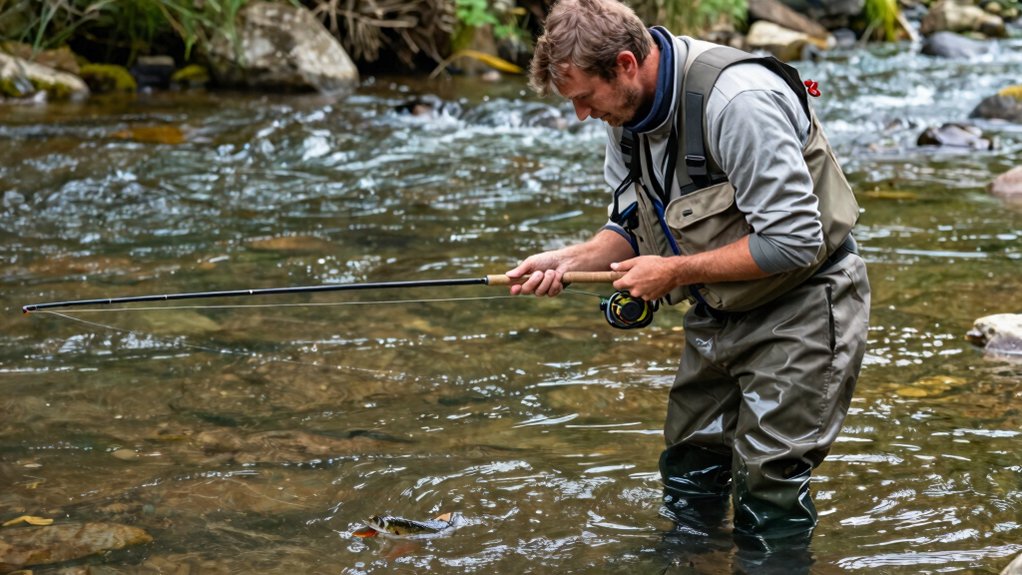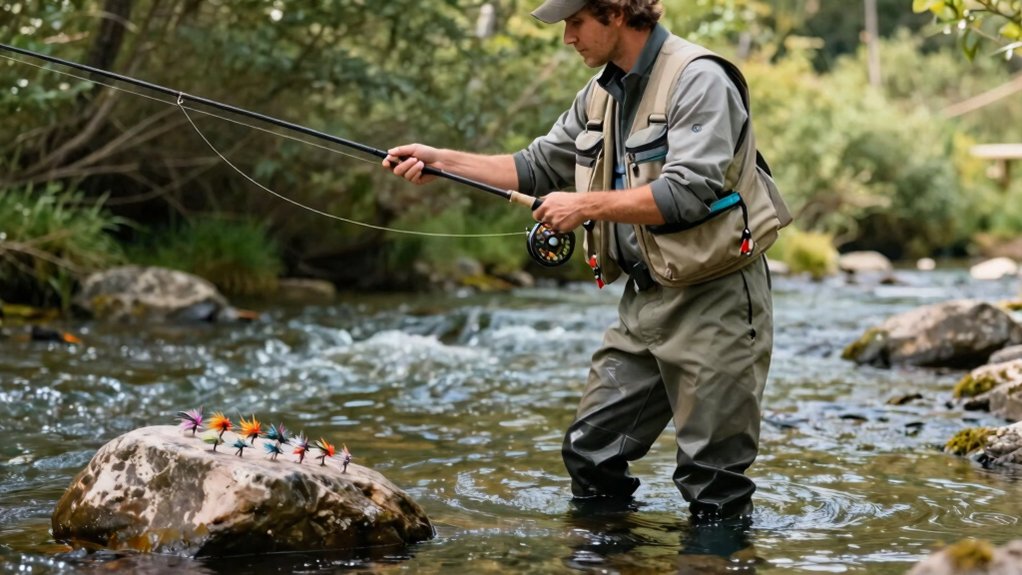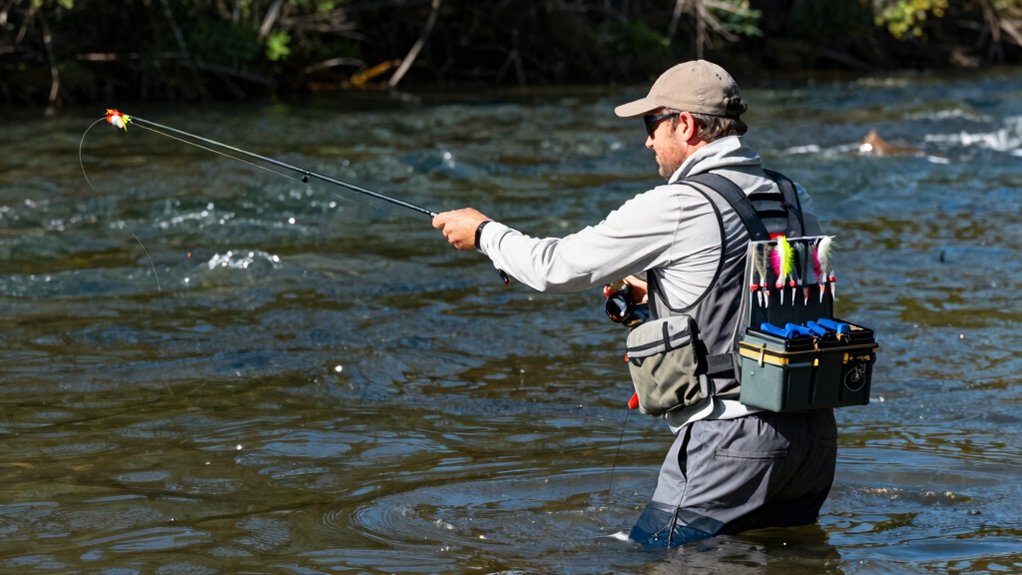
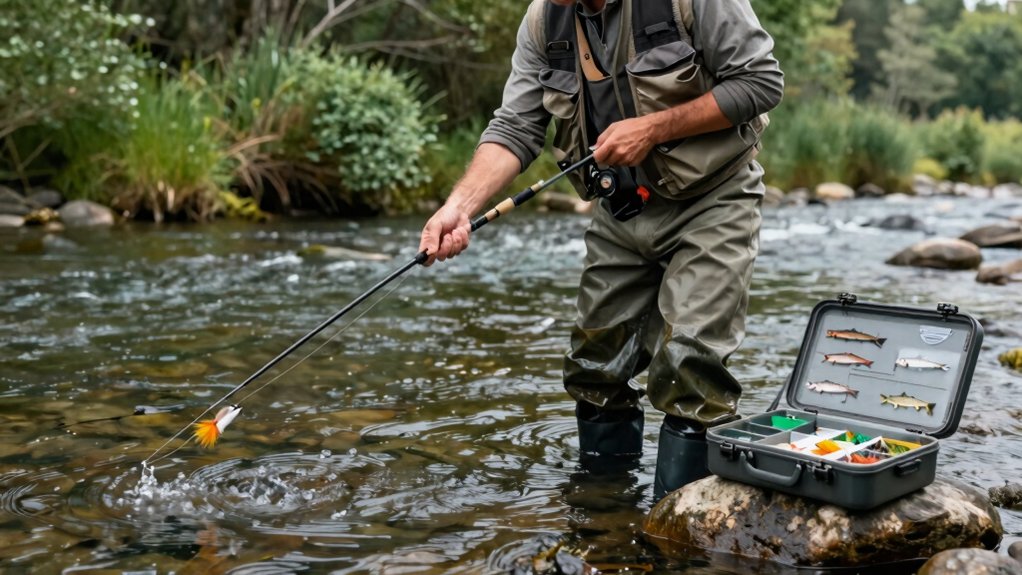

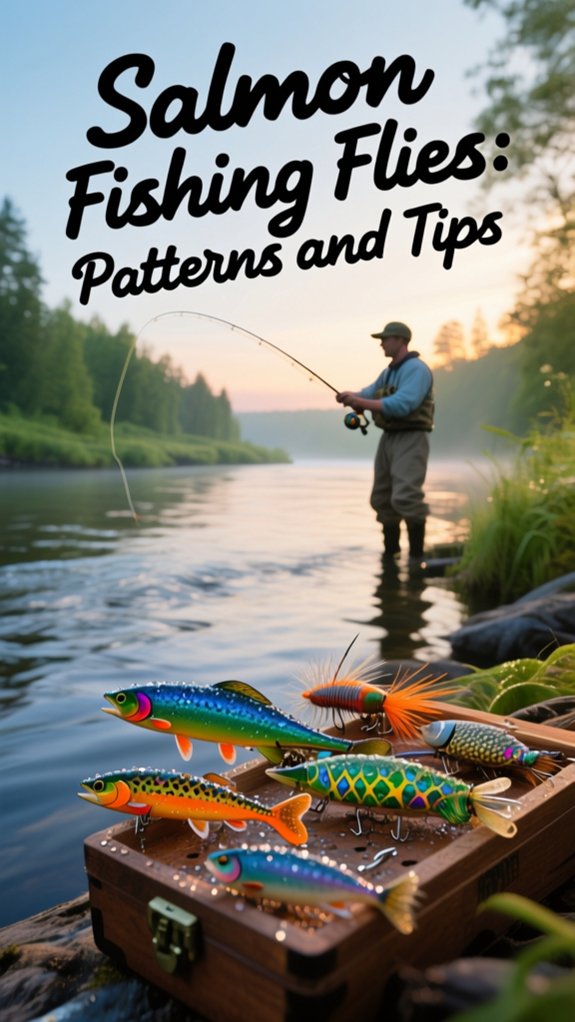
I choose salmon flies by matching their weight, size, and color to the water conditions I’m facing. For deep, fast water, I’ll grab flies dressed with dense materials and pair them with T-17 or T-20 sink tips to stay in the strike zone.
In shallow or clear runs, I switch to smaller sizes (6-8) with sparse dressings and muted tones like olive or soft orange to avoid spooking fish. When visibility drops, bright UV combinations like pink/chartreuse cut through the murk.
Tube flies let me swap patterns quickly without retying, while hooked patterns track truer in heavy current. I keep my box lean and versatile, rotating patterns based on recent success rather than packing every color imaginable, and there’s more to dig into on matching sink tips and color strategies below.
How to Choose King Salmon Flies That Sink and Swim
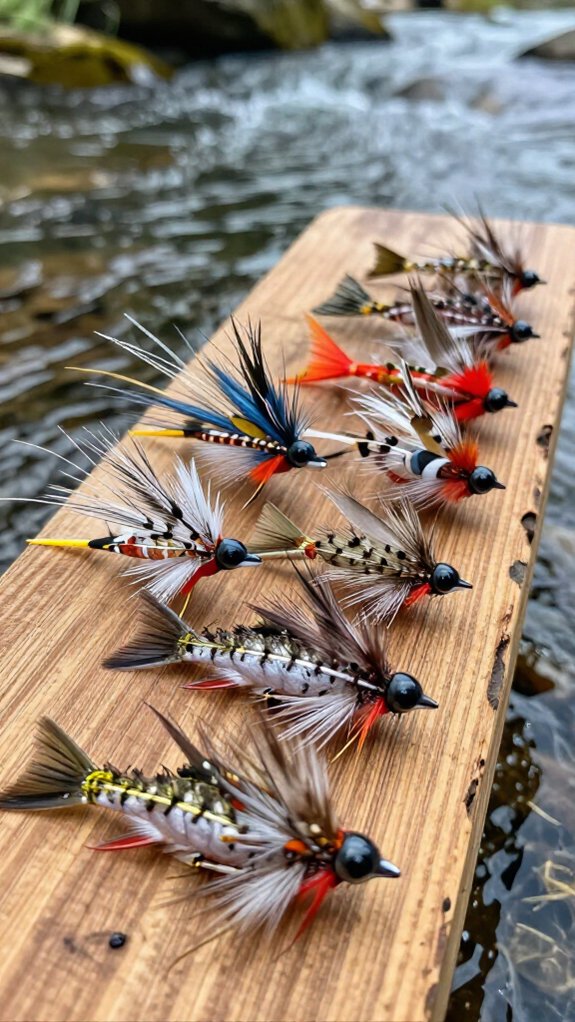
When I’m targeting king salmon in deep runs or fast currents, I need flies that drop fast and swim true. Otherwise, I’m just decorating the water while the fish hold below.
Pick Dense Materials
I always reach for flies tied with lead or tungsten. These high-density materials punch through the water column and keep my offering in the strike zone where kings actually feed.
Size Down When It’s Low
In skinny water, I swap to smaller, sparser patterns. Less bulk means quicker sinking and more natural movement. Exactly what pressured fish want to see.
Add Visibility
Deep or stained water? I’ll tie on chartreuse or pink. Those bright, contrasting colors cut through the murk and trigger aggressive strikes from fish that might otherwise ignore my fly.
Weight Smart
Tube flies and weighted hooks give me extra penetration without sacrificing swimming action. I balance every dressing carefully, too much material kills both sink rate and lifelike motion.
Matching Sink Tips to Water Depth and Current Speed
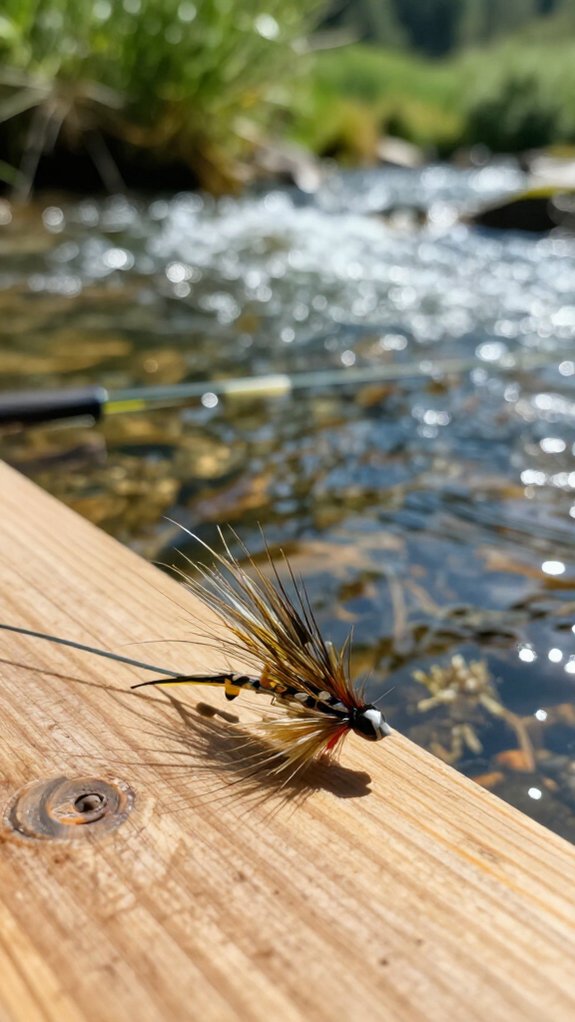
Because I’ve already dialed in the right fly, I need my sink tip to actually deliver it to where kings are holding, otherwise that perfect pattern never gets seen.
Reading the Water
I’ll size up depth and current before rigging up. In skinny water and tail-outs, I’ll grab T-11 or T-14 for a natural drift without that telltale drag. But when I’m staring into a deep, roaring bucket, that’s T-17 or T-20 territory. Anything lighter and my fly’s riding high and useless.
Matching Current to Tip Weight
Faster water demands heavier tips. I picture it like this: the river’s pushing back, so I’m punching down harder. For mid-water fish or snaggy bottoms, I’ll switch to intermediate or slow-sinking tips to hover right in their faces.
I constantly adjust length and weight through the swing, keeping that fly dancing in the zone where kings actually eat.
Tube Flies vs. Hooked Patterns for King Salmon
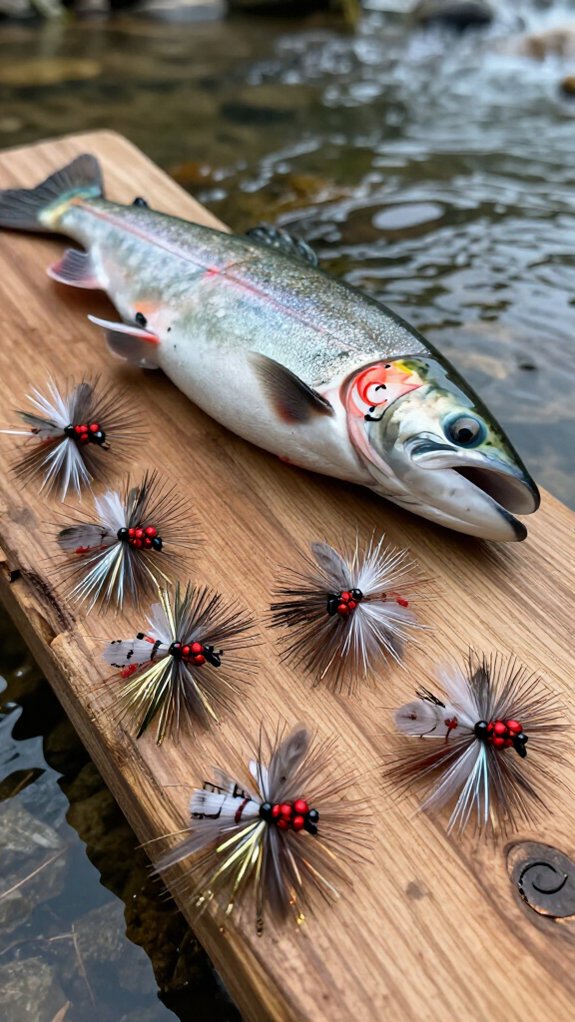
I’ve switched between tube flies and hooked patterns enough times to know each has its moment on the water, so let’s break down what actually matters when you’re targeting king salmon.
Tube flies give you that quick-change flexibility and killer swimming action that turns heads in deep, fast water. Plus they’re gentler on fish if you’re releasing.
Hooked patterns keep things simple for traditionalists and hold up fine for most situations, though you’ll burn through more of them over a season.
Tube Fly Advantages
Tube flies give you a serious edge over traditional hooked patterns when you’re chasing king salmon, and once you see how they perform in deep, heavy water, you’ll understand why so many experienced anglers won’t leave home without them.
I swap patterns in seconds without re-rigging my entire setup, just slide off the old tube and thread on a new one. No more fumbling with knots when the bite turns on.
You’ll love the bigger, bolder designs that demand attention in fast, deep runs. The exaggerated profiles and vibrant colors cut through murky water like nothing else.
The swimming motion feels alive. Because the body moves independently from the hook, tube flies pulse and dart with current in ways fixed-hook patterns simply can’t match.
In turbulent water, that extra action converts follows into brutal strikes.
When a 40-pound king crushes your fly, the separate hook takes the punishment while your carefully tied pattern survives for the next fish.
Hooked Pattern Benefits
While tube flies have their place, I’ll reach for a well-tied hooked pattern when I need a fly that punches through heavy current and gets into the strike zone fast.
Better Penetration and Action
Hooked patterns sink naturally and track true in deep, fast water where kings hold. I don’t fight the current; I work with it. The direct connection between materials and hook creates a lifelike, no-nonsense presentation that triggers committed strikes.
Built to Last
I customize these patterns with durable materials, brass cones, synthetic flash, tough hackle, and they keep fishing trip after trip. No slipping, no rotating, just consistent performance when I’m into my third hour of swinging through a run.
When the river’s running hard and I need reliability over quick changes, hooked patterns deliver exactly what aggressive king salmon demand.
Color Combos That Trigger Aggressive Strikes
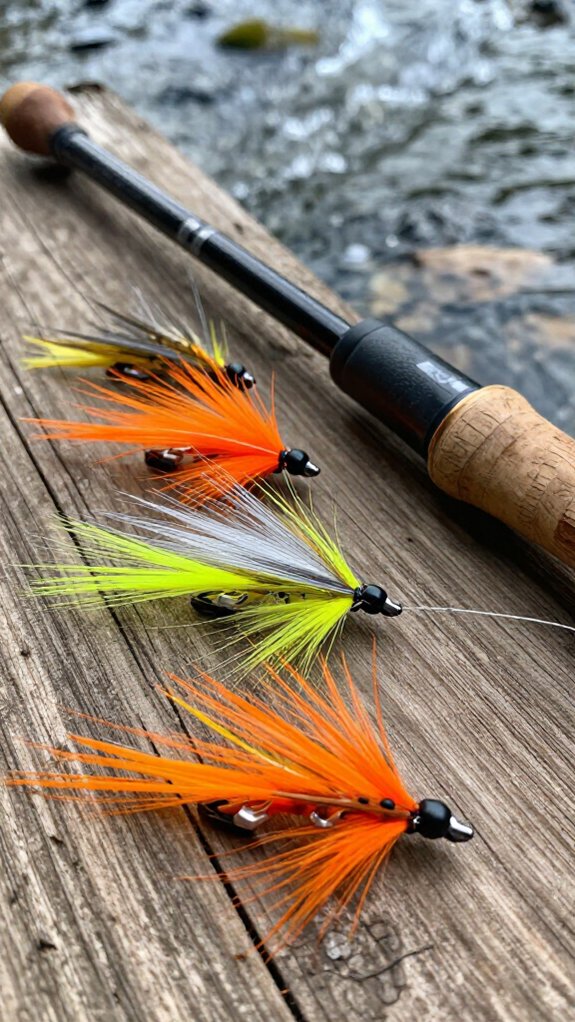
Bright UV combinations and chartreuse-blue pairings consistently outperform standard patterns when I’m targeting aggressive salmon in stained or low-light water.
I’ve watched fish hammer fluorescent UV pink and cerise patterns that barely look natural to my eye, yet register as vivid prey signals through their specialized vision.
When I pair that ultraviolet pop with the electric contrast of chartreuse and blue, I’m essentially waving a visual flag that triggers instinctive, violent strikes even from fish that aren’t actively feeding.
Bright UV Combinations
When the water’s running chocolate brown or the light’s fading fast, I’ll reach for bright UV combinations every single time because salmon simply can’t ignore that electric punch of UV pink paired with chartreuse or UV orange matched with blue.
Why UV Works Wonders
UV reflective materials convert ordinary flies into beacons that salmon spot from impressive distances. I’ve watched fish turn aggressively on patterns they’d completely ignore in standard finishes.
The science backs this up, research from the University of Queensland shows salmon possess UV-sensitive vision that helps them hunt in turbid conditions.
Proven Patterns to Tie On
- Scott Howell’s Guide Intruder (UV pink/chartreuse)
- Brian Silvey’s Tail Light with UV finishes
I always add flashabou or tinsel to amplify that underwater flash. These fluorescent elements don’t just catch light, they create an almost holographic glow that triggers instinctive strikes even when visibility drops to mere inches.
Chartreuse Blue Pairings
If there’s one color pairing I won’t leave home without, it’s chartreuse and blue. This high-contrast combo cuts through murky water like a distress signal that salmon simply can’t resist attacking.
Why This Combo Works
I combine these colors because they mimic vivid prey that triggers predatory instincts. Chartreuse grabs attention; blue adds depth and contrast that natural hues simply can’t match.
When I Reach for It
I tie these on when conditions turn tough:
- Low light mornings or evenings
- Stained or glacial runoff water
- Overcast skies that dull other patterns
Proven Patterns That Deliver
My go-to flies include Scott Howell’s Squidro and Hartwick’s Flashtail Tube, both consistently draw crushing strikes from king salmon.
I’ve watched my strike rates climb dramatically when standard patterns go ignored.
Trust me, this pairing turns slow days into memorable ones.
Downsizing Flies for Low, Clear Water
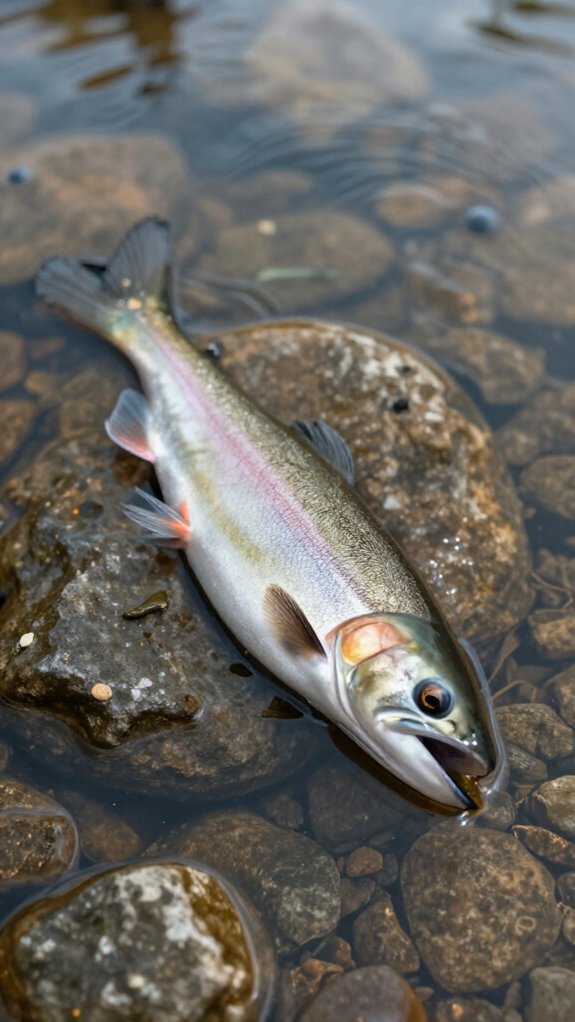
Because salmon can spot every unnatural twitch and bulky silhouette when the river drops low and turns glassy, I’ve learned to leave my bigger patterns at home and reach for sizes 6 through 10 instead.
I strip back excess materials until my flies look almost sparse—lightly dressed Comets and Popsicles sink faster and wiggle more convincingly in that transparent water. Heavy eyes or tungsten beads help them drop quickly without creating surface disturbance.
I also dial down the flash. Muted olives, browns, and soft oranges replace my brighter patterns because I’ve watched fish scatter from anything too loud in skinny water.
The result? More takes, fewer refusals. When the river runs low and clear, subtlety isn’t just smart, it’s essential.
Building a Fly Box for Changing Conditions
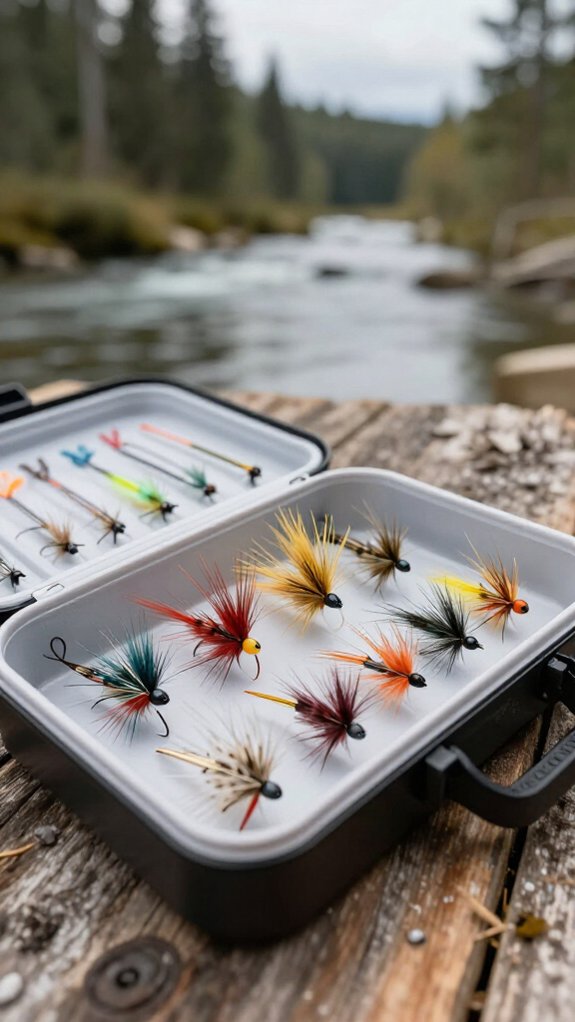
While I used to stuff my fly box with whatever patterns caught my eye at the shop, I’ve learned that versatility, not volume, is what actually turns a slow day into a memorable one. Salmon rivers are moody; they’ll run chocolate brown and thundering one morning, then drop to a clear, gentle trickle by afternoon.
Size Matters
I carry sizes 6-8 for gin-clear water when fish spook easily, and sizes 2-4 when murky conditions demand something they can actually see.
Color Strategy
Natural egg patterns work when fish feel secure. I switch to chartreuse or pink when visibility drops and I need that extra pop.
Weight & Style
Light, sparse flies ride high in shallow runs. Heavy, dressed patterns punch through fast, deep currents. Streamers, marabous, tube flies, each has its moment.
I rotate my box constantly, swapping out what worked last trip for what the river’s showing me today.
Frequently Asked Questions
What Is the Most Popular Salmon Fly Pattern?
I consider the Allys Shrimp the most popular salmon fly pattern, and I’ve found it works across multiple seasons. Classic alternatives I use include the Black Bear Green Tag and Blue Charm.
What Are Some Common Salmon Fly Patterns Used in Fishing?
I rely on Allys Shrimp, Black Bear Green Tag, and Blue Charm for most situations. I’ll also tie on Carlson Coho or Chinook Spey when targeting specific species, adjusting colors based on water clarity and season.
What Is the Best Fly Fishing Setup for Salmon?
I use high-density graphite rods like the Sage Igniter paired with intermediate Skagit heads and T-17 sink tips, keeping two rigs ready since 73% of anglers miss strikes during equipment switches in changing conditions.
What Fly Patterns Are Best for Catching Chinook Salmon?
I favor big, bright patterns like Scott Howell’s Guide Intruder and Hartwick’s Flashtail Tube in chartreuse/blue or pink for Chinook. I’ll also throw dark egg-sucking leeches or wooly buggers when water’s low and clear.
In Conclusion
You don’t need a hundred flies to catch king salmon, you need the right ones for the conditions you’re facing. Last October, I watched a buddy switch from a 3-inch purple-and-black tube to a sparse 1.5-inch olive leech in low, clear water.
He’d been skunked all morning; twenty minutes later, he landed a 28-pound hen that crushed the smaller pattern. Build a compact, versatile box, stay observant, and you’ll spend less time rigging and more time fighting fish.