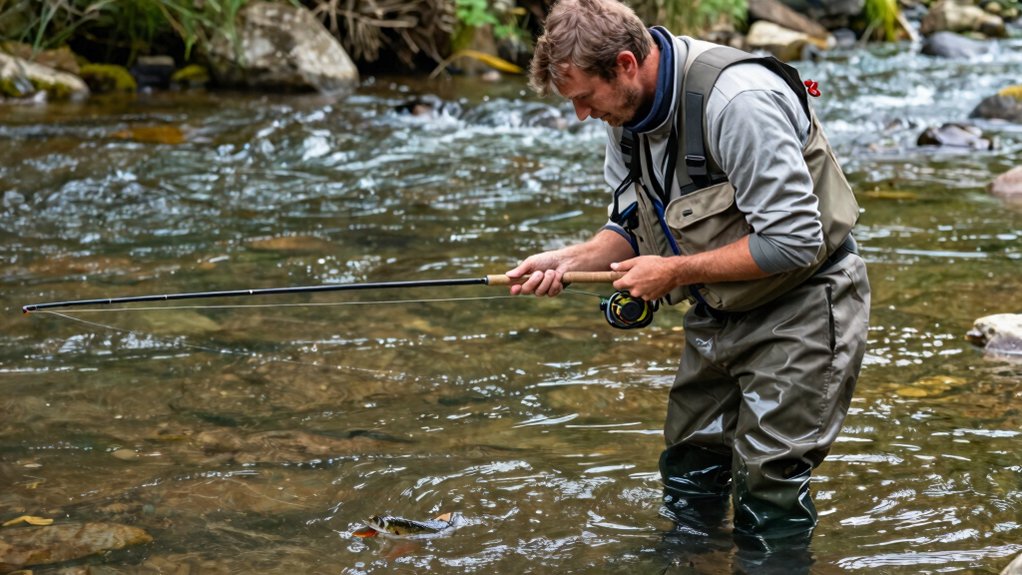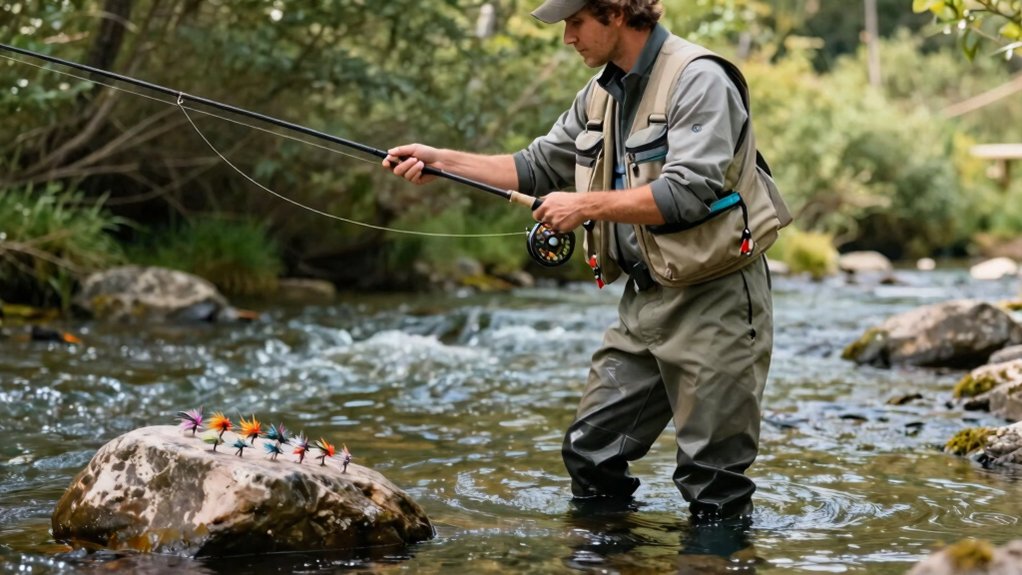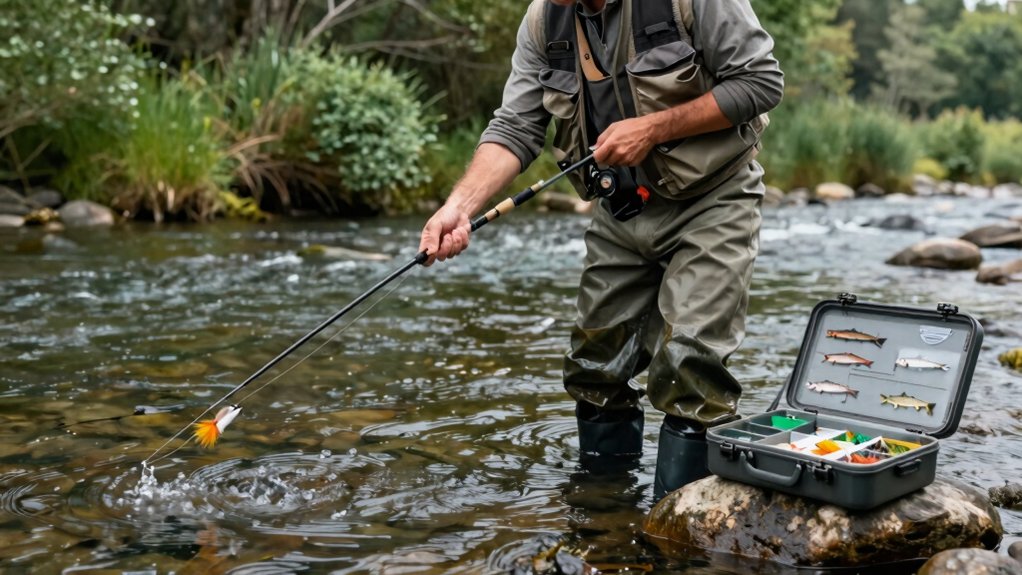
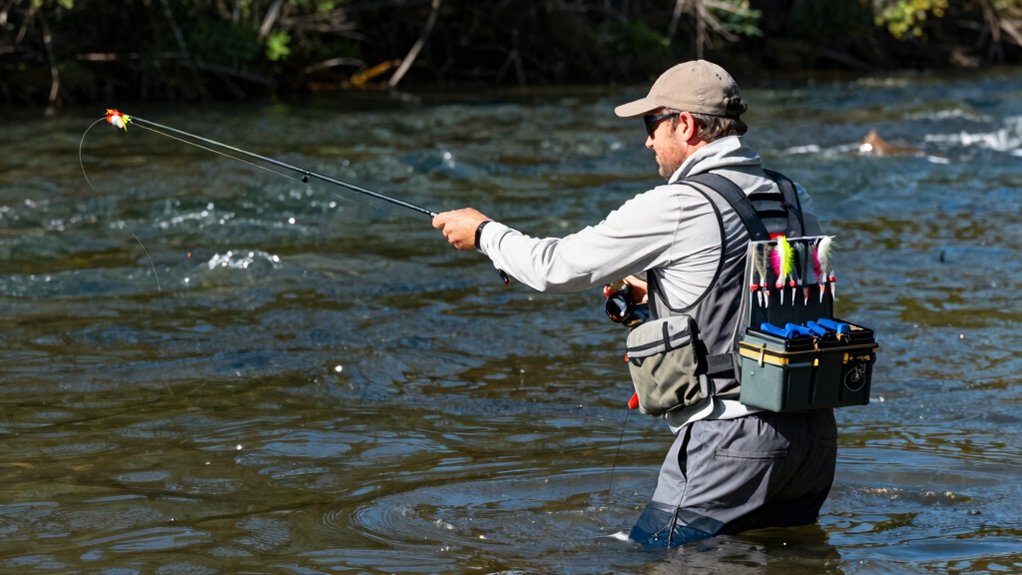

I rely on six proven patterns that cover every situation from explosive surface strikes to deep structure probing. For topwater, poppers and divers create the disturbance that triggers reaction bites at dawn and dusk, while gurglers offer a subtler option when bass get skittish.
Below the surface, streamers with flash and realistic eyes mimic injured baitfish in murky water, and weighted Woolly Buggers plus crayfish patterns work through rocks and timber where bass ambush prey. Match your retrieve speed to water temperature, slow and subtle below 50°F, aggressive when they’re active, and you’ll spend more time fighting fish than changing flies. Stick around and I’ll walk you through exactly when to reach for each pattern.
Start Here: The Only Five Bass Flies You Actually Need
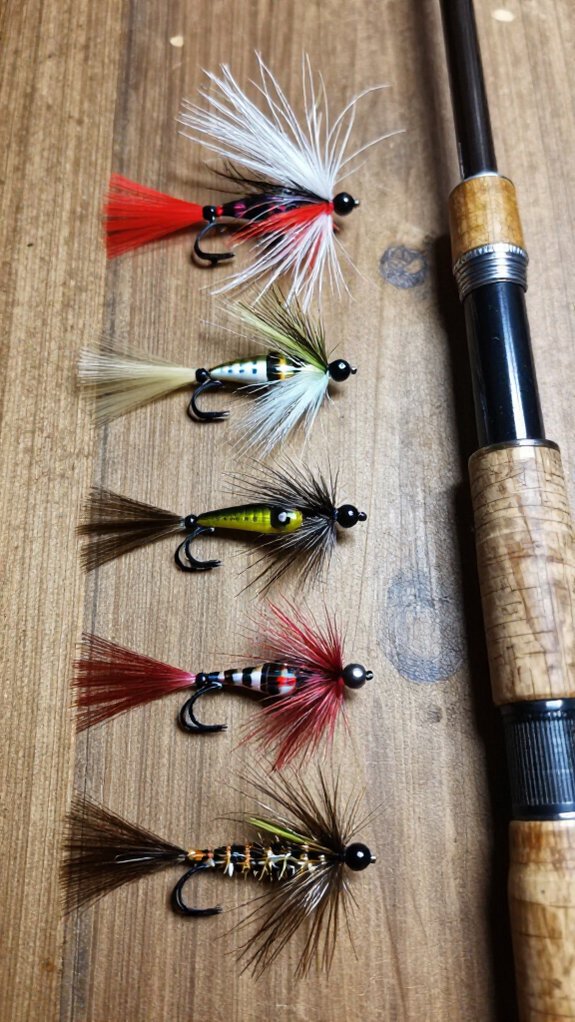
If you’re just getting into bass fly fishing, I’ll cut straight to what matters: you don’t need a box stuffed with patterns to start catching fish.
The Essential Five
I rely on just five proven flies sized 4–8: Murray’s Regular Hellgrammite, Shenk’s White Streamer, Murray’s Dying Dace Minnow, Betsy Streamer, and Murray’s Strymph. These five cover the bases by mimicking minnows, dace, and small fish that bass already hunt.
Why They Work in Tough Conditions
When water runs low and clear, these patterns shine. I’ll pinch a split shot 6–8 inches above the fly to dial in depth precisely. That small adjustment puts my offering right where bass hold without spooking them.
Presentation Beats Pattern
I’ve learned subtle twitches and slow strips outperform fancy retrieves. Master these five flies with proper presentation, and you’ll outfish anglers cycling through dozens of patterns.
Poppers and Divers: Fishing the Surface for Explosive Strikes
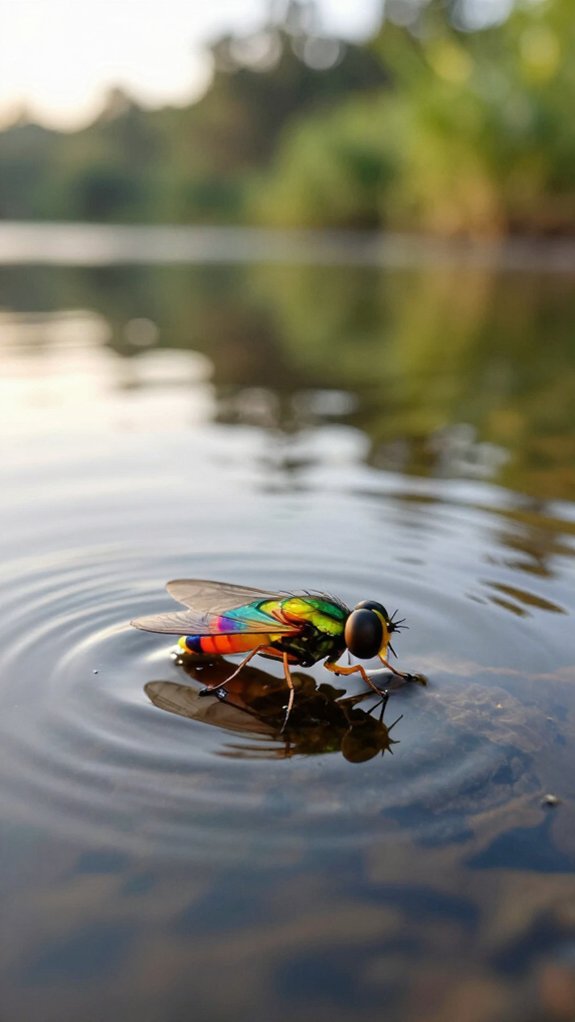
Foam poppers with their cupped faces kick up a racket that bass can’t ignore, and I’ve watched fish explode on them from twenty feet away when nothing else would move a fish.
When I need something subtler that still makes noise, deer hair divers sit heavy in the film and pop with that satisfying “PLOOP” on every strip. It’s like ringing a dinner bell in skinny water.
Both styles let you work the surface hard or barely twitch them, and that’s the versatility that keeps them in my boat all season long.
Foam Popper Design
Why do bass explode on surface lures with such ferocity? They’re reacting to what sounds like injured prey struggling helplessly, and that’s exactly what a well-designed foam popper delivers.
Building the Perfect Popper
I rely on foam poppers because their cupped or flat faces throw serious water with each twitch. That loud bloop and splash triggers predatory instincts bass simply can’t ignore.
Foam beats balsa for my regular outings. It’s tougher, takes abuse from toothy bass, and won’t drain my wallet when I need replacements.
Retrieval Tricks That Work
I vary my retrieve constantly:
- Short, sharp pops for aggressive fish
- Slow, steady strips when bass seem hesitant
Details That Seal the Deal
Rubber legs and hackle-feather tails add lifelike movement between pops. Those extra wiggles often convert curious follows into violent strikes.
Deer Hair Divers
When I’m after bass that want something more subtle than a foam popper’s aggressive commotion, I reach for a deer hair diver, a fly that combines the visual appeal of surface fishing with a sound profile that drives predators wild. I pack and trim spun deer hair to create a buoyant, diving action that imitates frogs, baitfish, or mice.
With short, fast strips, I produce that unmistakable “PLOOP” that echoes across still water.
The magic happens during the float-back phase. After a quick, jerky retrieve, I let the diver resurface, and that’s when explosive strikes come—Bass can’t resist what looks like injured prey struggling to escape.
| Feature | Why It Matters |
|---|---|
| Buoyant deer hair construction | Stays afloat while creating diving action |
| Customizable shapes | Matches local forage: frogs, baitfish, mice |
| Loud “PLOOP” sound | Triggers predatory instinct from distance |
| Float-back strike window | Most hits occur as diver resurfaces |
| Durable, color-customizable | Works in fresh and saltwater environments |
The Gurgler: Quieter Presentations When Bass Won’t Commit
If the bass are following your popper but won’t seal the deal, I’m swapping to a Gurgler without hesitation. This fly sits lower in the water and produces less commotion, which often converts those curious followers into committed biters.
Here’s why the Gurgler earns its spot in my box:
- Its low profile creates minimal splash, perfect for clear water situations
- The aerodynamic shape sails through the air for quick, accurate casts
- Short, rapid strips trigger reaction strikes from wary fish
- Slow, steady pulls imitate struggling frogs when bass turn lazy
- Subtle surface disturbance won’t spook pressure-educated bass
I’ve watched too many followers vanish into the depths after refusing loud presentations. The Gurgler’s whispered invitation frequently proves irresistible when nothing else works.
Streamers: Matching Injured Baitfish Below the Surface
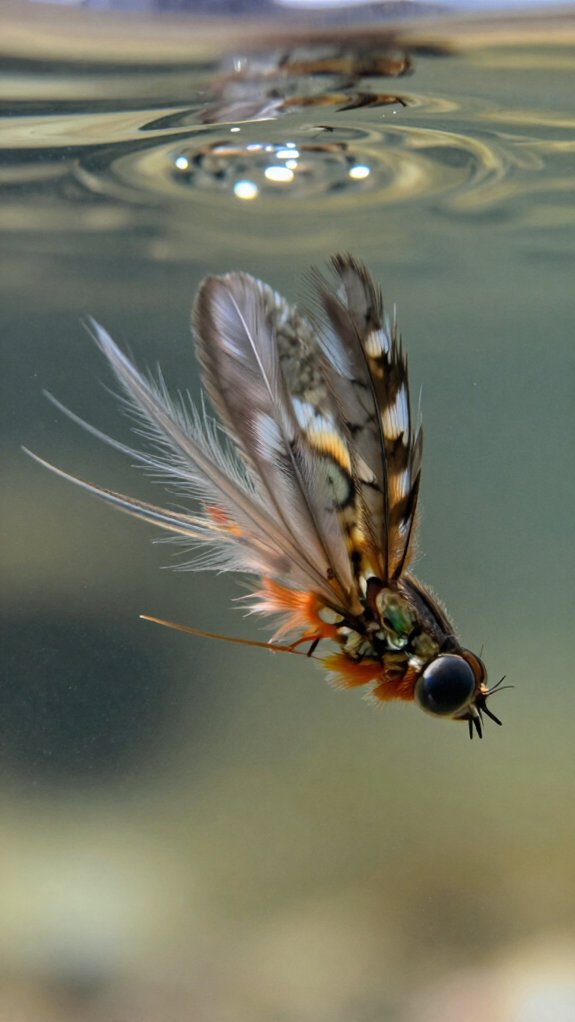
Surface tricks have their place, but I’m reaching for a streamer the moment I suspect bass are holding deeper and feeding below the foam line. These flies imitate injured baitfish with flash and realistic eyes that catch attention in murky water.
I vary my retrieve based on what the fish want, sometimes quick strips, other times a dying flutter. Natural bucktail or hackle feathers create lifelike swimming action that triggers reaction strikes.
| Streamer Type | Best Use |
|---|---|
| Unweighted | Slow, subtle presentations near structure |
| Weighted | Quick sinking to reach deep holding fish |
| Flash-heavy | Stained or low-light conditions |
| Natural materials | Clear water, wary bass |
| Large profile | Targeting trophy fish, matching big baitfish |
I’ve caught bass in farm ponds and coastal marshes with these patterns. Match the size to local forage and you’ll draw strikes from fish that ignored everything else.
Woolly Buggers and Crayfish Patterns for Structure Fishing
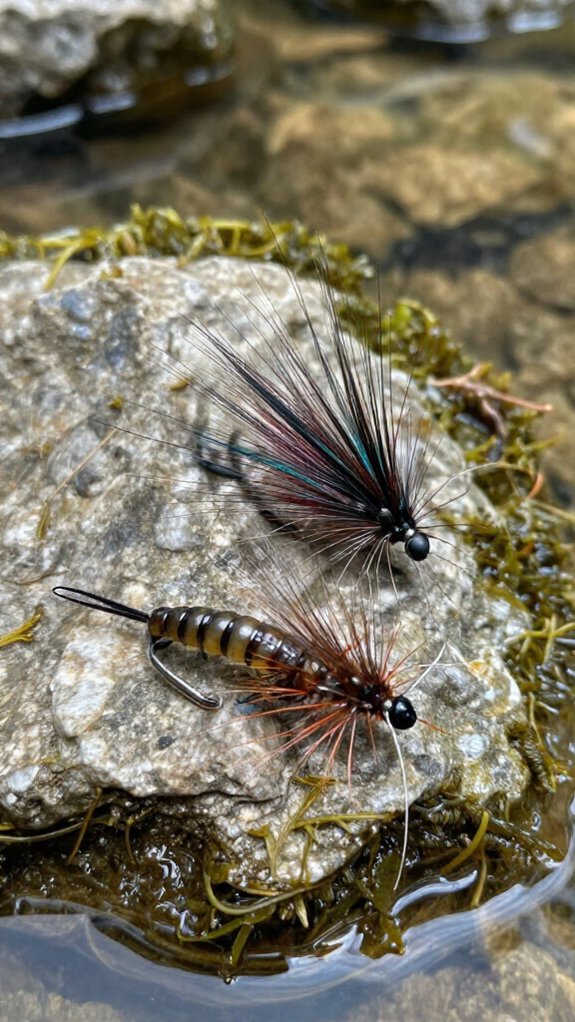
Although streamers work well in open water, I turn to Woolly Buggers and crayfish patterns once I’m staring at laydowns, rock piles, or submerged timber where bass ambush prey. These flies sink fast and dance through cover where predators lurk.
Here’s why they prevail in structure fishing:
- Woolly Buggers mimic baitfish, crayfish, or nymphs with equal conviction
- Realistic claws and olive, black, or brown bodies match local forage
- Weighted versions jig beautifully to imitate stunned prey
- Rubber legs and flash materials create irresistible movement in murky water
They crush it from rocky freshwater bottoms to saltwater jetties.
I work these patterns slowly, letting them tick off rocks and flutter through branches. When bass hug tight to cover, nothing draws violent strikes quite like a well-placed Bugger or crayfish imitation.
Read the Water: Choosing Surface vs. Subsurface Bass Flies
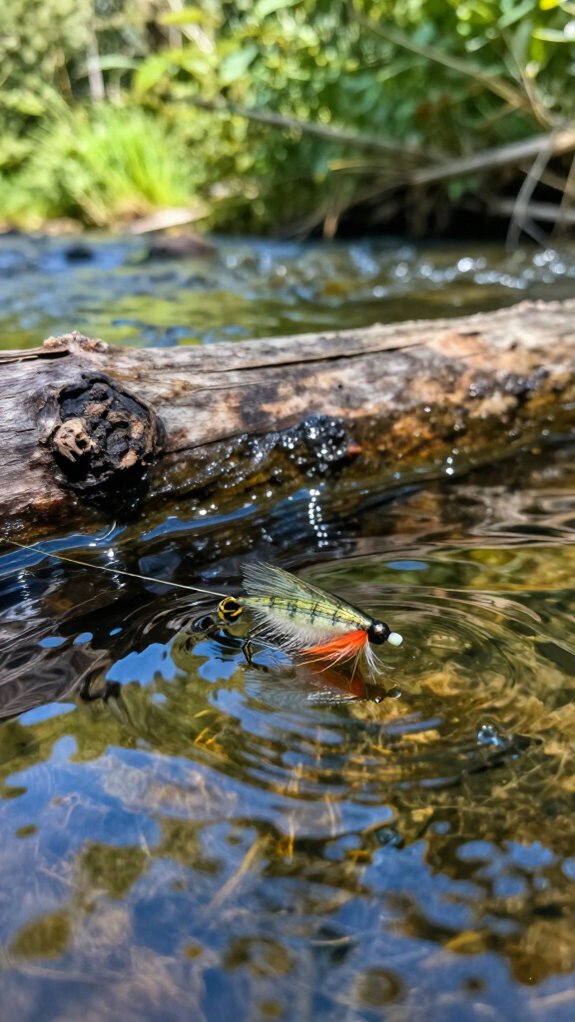
When I’m standing at the water’s edge, my first move isn’t reaching for a fly box, it’s watching what’s actually happening on and below the surface.
Reading the Signs
I look for ripples, swirls, or baitfish getting pushed. If bass are busting the surface at dawn or during a hatch, I’ll grab a popper or frog, something that splashes and creates noise. Those visual and auditory triggers trigger aggressive strikes.
Going Deeper
But when the sun’s high and the water’s calm, or when I’m working ledges and drop-offs, I switch to streamers. These imitate disoriented baitfish below the surface, and that’s where bass hold when temperatures drop.
Quick Decision Guide
- Surface flies: Low light, active feeding, visible prey
- Subsurface flies: Deep water, cold conditions, baitfish patterns
Match your fly to what you observe, not what you hope is happening.
When They Won’t Eat: Troubleshooting Refusal Patterns
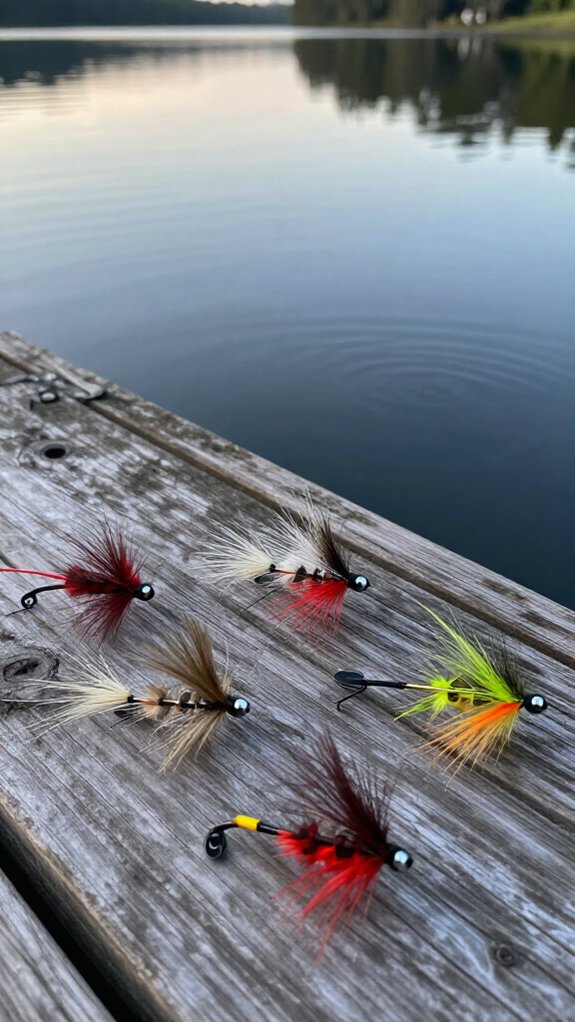
When bass turn up their noses at your offerings, I always start by checking the water temperature and adjusting my retrieve speed accordingly.
Cold bass move sluggishly and won’t chase a fast strip, so I’ll slow way down with long pauses between twitches.
While warm, active fish often need that quick, erratic darting motion to trigger a reaction strike.
It’s a simple two-step fix that turns more refusals into solid hookups once you match their metabolic mood to how you’re working the fly.
Water Temperature Factors
Water temperature is often the invisible culprit behind those maddening days when bass follow your fly to the boat but won’t commit. I’ve learned to check the thermometer before blaming my fly selection.
- Below 50°F, their metabolism crawls and they’ll ignore even perfect presentations.
- Above 85°F, lethargy sets in and surface feeding shuts down.
- Rapid temperature swings stress bass into complete lockjaw.
- Cold water pushes them deep, making your topwater pointless.
- Extreme temps scramble their feeding cues entirely.
When I see these conditions, I don’t waste time with my usual favorites. I’ll switch to slower-sinking patterns and target deeper structure where comfortable bass still feed. Comprehension of temperature’s grip on bass behavior saves me from fruitless casting and points me toward fish that’ll actually eat.
Retrieve Speed Adjustments
Why do bass sometimes stare at your fly like it’s invisible, then bolt away without so much as a nudge? I’ve been there, heart pounding, fly perfect, presentation clean, and nothing. When refusals happen, I adjust my retrieve speed before swapping flies.
| Condition | Retrieve Speed | Action |
|---|---|---|
| Cold water, sluggish bass | Slow | Long pauses, subtle twitches |
| Active, chasing fish | Fast | Rapid strips, fleeing baitfish |
| Neutral, watching bass | Variable | Mix speeds, find the trigger |
| Post-front, low activity | Very slow | Dead-drift with tiny movements |
| Reaction strikes needed | Burst then pause | Sudden acceleration, full stop |
I watch their body language. No aggression means I’m wrong. I’ll slow down to mimic injured prey or speed up to spark that chase instinct.
Sometimes it’s a twitchy rhythm that finally flips the switch. Experiment until you find their tempo.
Frequently Asked Questions
What Are Some Good Topwater Flies for Bass?
I use frog flies with weed guards in heavy cover, poppers when visibility drops, and deer hair divers to mimic fleeing baitfish. Surface Seducers also trigger strikes by replicating injured prey with sound and vibration.
What Fly Line to Use for Streamer Fishing?
I reach for a weight-forward floating or intermediate line when I’m seducing bass near the surface, or I’ll grab a sink-tip when I’m plumbing the depths where the bigger specimens lie in wait.
Is a 6wt Good for Streamers?
I find a 6wt excellent for streamers. It handles weighted patterns with ease, lets me cast into cover accurately, and provides enough backbone for bigger bass without feeling too heavy during long days on the water.
What Line Should I Use for Topwater Bass?
I’ll cast my words like a well-placed popper: grab a weight-forward floating line, 5-7 weight, to keep your fly dancing the surface.
It’s your wand, your paintbrush, control and distance made simple.
In Conclusion
You don’t need a dozen fly boxes to catch bass, just five proven patterns matched to where the fish are feeding. Studies show bass attack surface lures at rates up to 3x higher in low-light conditions, which is why I’ll always reach for a popper or Gurgler at dawn before switching to streamers as the sun climbs.
Match your fly to the water column, read the bass’s mood, and you’ll spend less time guessing and more time setting hooks.