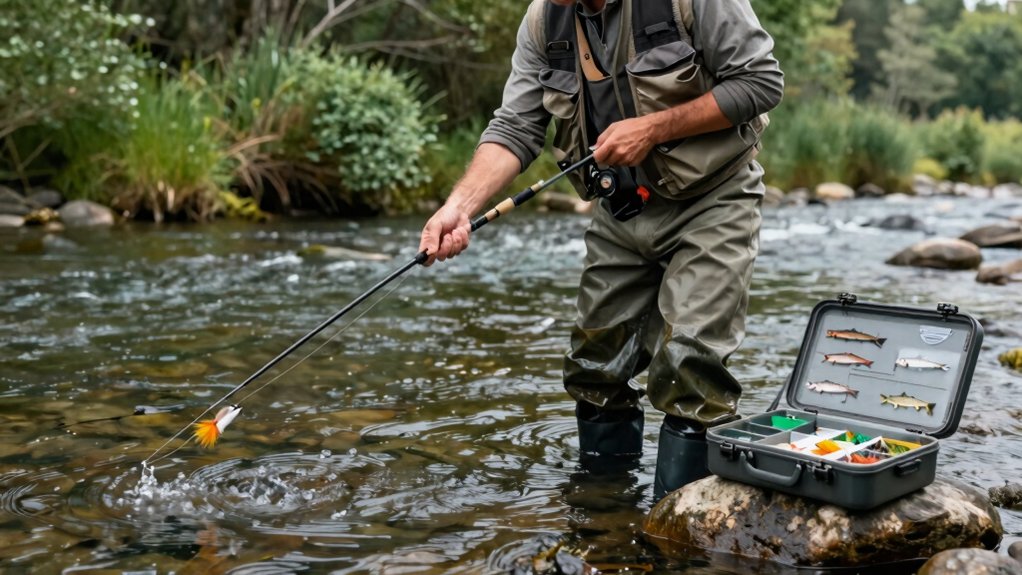
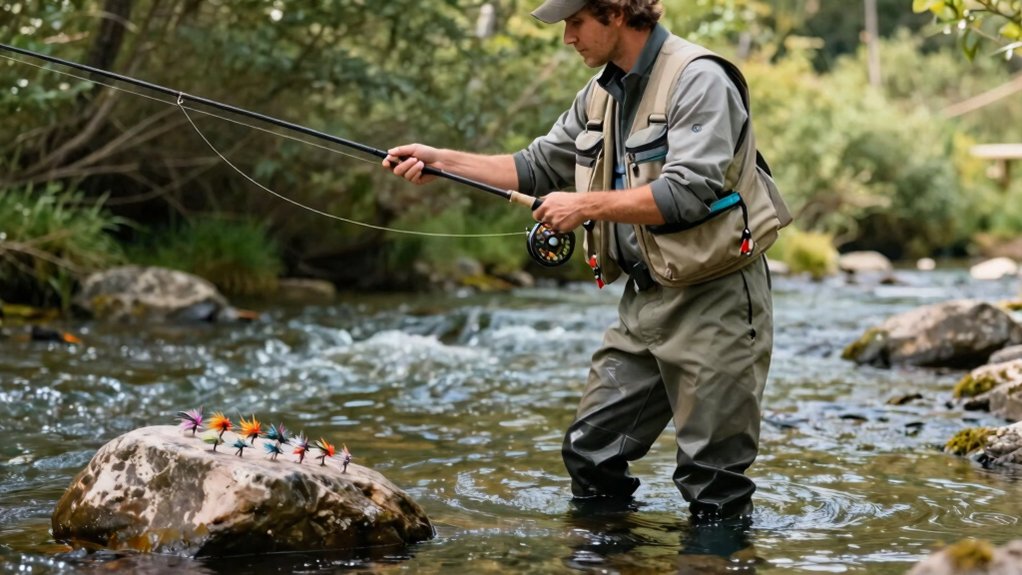

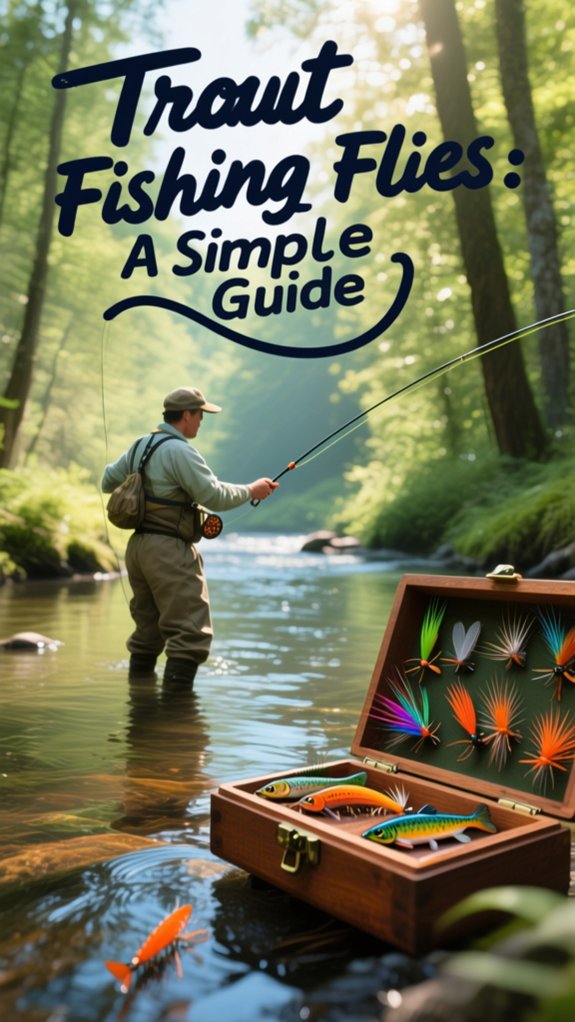
I keep five patterns in my box that’ll handle nearly any trout stream I step into. A Parachute Adams covers uncertain hatches from size 10 down to 20, while a Pheasant Tail Nymph works deep when mayflies are active. I’ll swing a Woolly Bugger through dark pools, drop a Griffith’s Gnat when midges cluster, and skate a Low Rider CDC & Elk Caddis during evening rises.
Matching these to water clarity, season, and temperature keeps me catching when others blank, there’s a method behind each choice that morphs scattered strikes into consistent success.
5 Essential Trout Flies for Any Stream
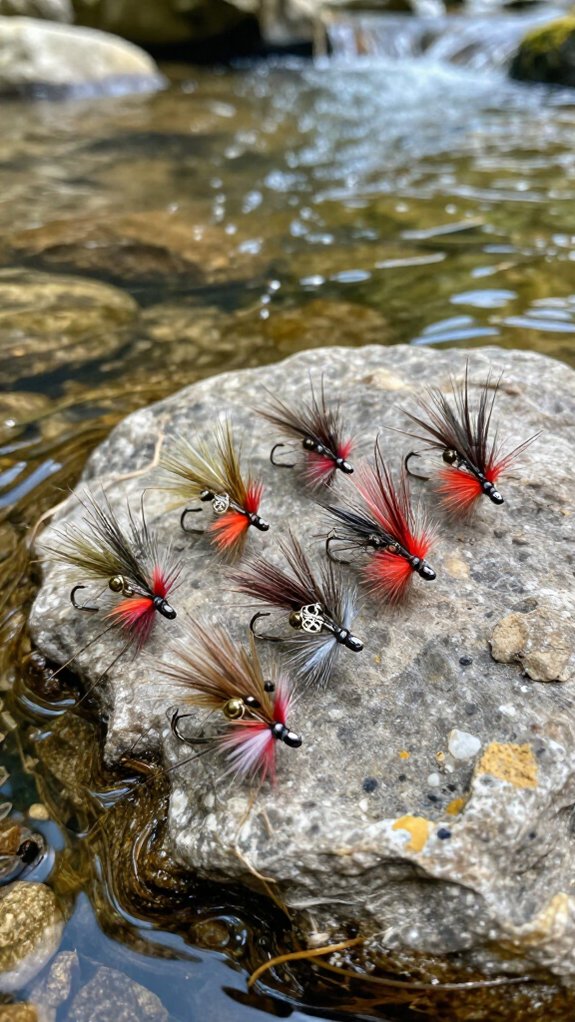
What flies should you never leave home without when you’re heading to a trout stream?
I’ve narrowed it down to five patterns that’ll keep you catching fish anywhere.
My Go-To Five
- Parachute Adams (sizes 10-20) – This one’s my workhorse. It imitates mayflies, caddis, and midges all in one tidy package. When I’m unsure what’s hatching, I reach here first.
- Pheasant Tail Nymph (12-20) – A classic that simply produces. I fish it deep during mayfly hatches and watch the takes roll in.
- Woolly Bugger (6-12) – Baitfish, leeches, crayfish, this streamer covers it all. I’ll swing it through deep pools when nothing’s rising.
- Griffith’s Gnat (14-22) – Tiny but deadly during midge hatches. I’ve saved blank days with this simple pattern.
- Low Rider CDC & Elk Caddis (12-18) – High floating and visible, perfect when caddis are popping.
Match Trout Flies to Water Clarity and Flow
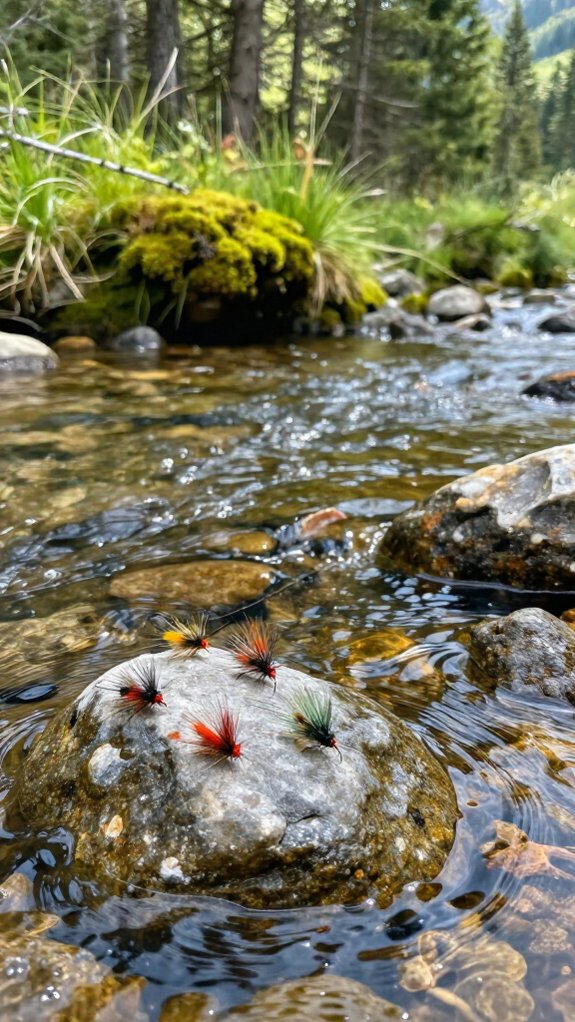
Once I’ve got my essential flies packed, I need to think hard about what the water’s actually telling me that day, because throwing the same pattern regardless of conditions is a fast track to frustration.
Reading the Water
In gin-clear streams, I downsize dramatically. Size 18-22 mayflies or subtle caddis patterns keep me from spooking wary trout that scrutinize every drift.
When runoff stains the river chocolate-brown, I switch gears entirely. Larger, flashier streamers and heavily weighted nymphs cut through the murk and trigger reaction strikes.
Adjusting for Flow
Fast, turbulent water demands streamlined, heavy flies like Copper Johns or jig nymphs that punch through the current and stay where trout feed.
Slow, glassy pools call for delicate presentations—buoyant dries or soft hackles that dance naturally without dragging.
Matching size, color, and weight to what I’m seeing metamorphose an average day into a memorable one.
Seasonal Trout Fly Selection by Temperature
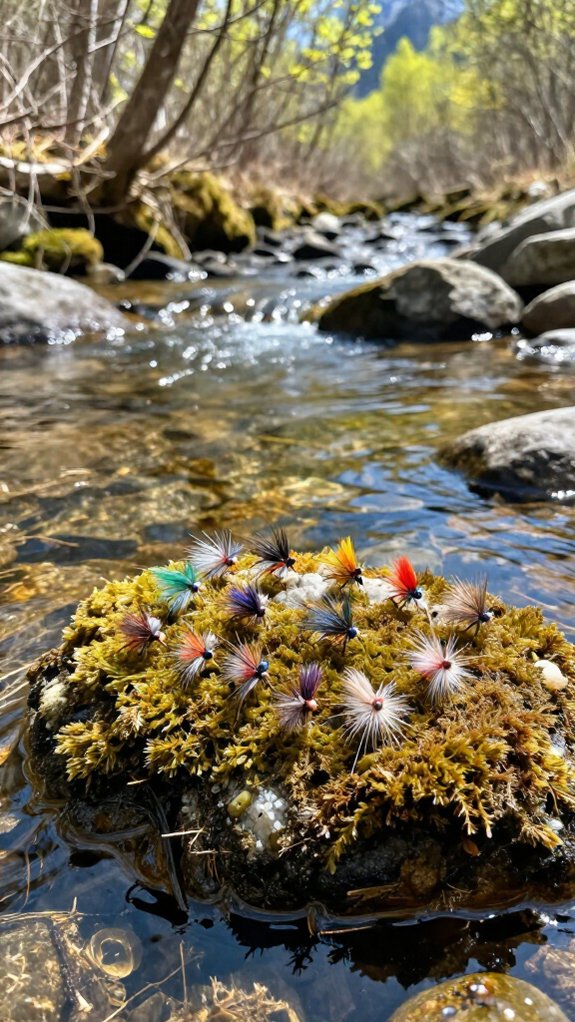
Water temperature drives everything about where trout hold and what they’re willing to eat, so I keep a thermometer clipped to my vest and check it before I even rig up.
When the mercury drops below 45°F, I’m reaching for tiny stuff, Zebra Midges and Pheasant Tail Nymphs fished deep and slow. Trout get sluggish in cold water and won’t chase much.
As spring warms things into the 50s and 60s, I switch to dry flies. Parachute Adams and Sparkle Duns match those Blue-Winged Olive and Sulphur hatches perfectly.
Here’s how I picture each season:
- Winter mornings: My breath clouds the air as I drift size 22 midges through glassy tailouts where trout barely twitch.
- Spring afternoons: Rising fish leave rings everywhere, and I’m swapping dries every ten minutes to match the hatch.
- Fall evenings: Splashes erupt along grassy banks as trout hammer struggling grasshoppers before the cold returns.
Get Flies That Last: Tie vs. Buy Guide
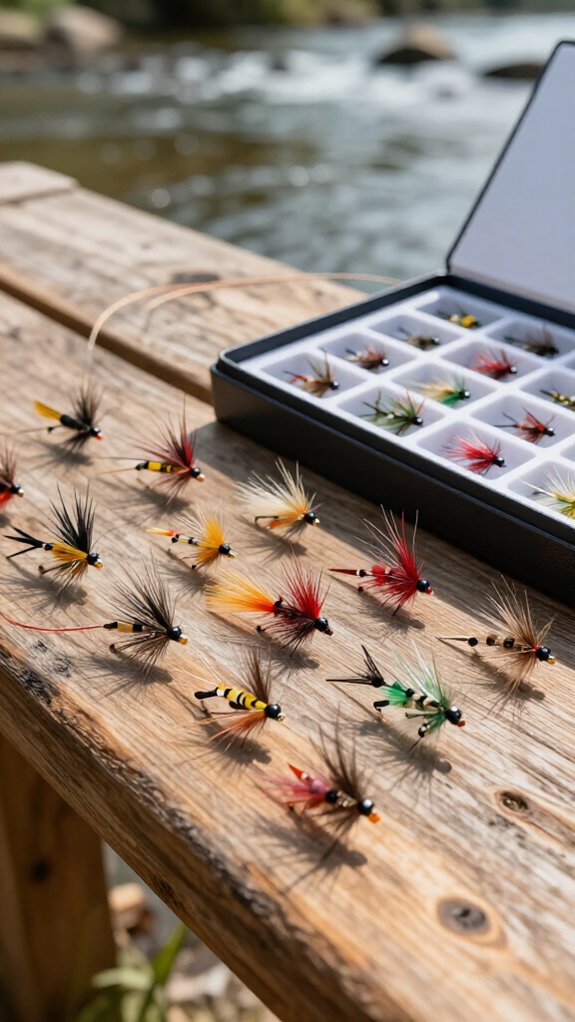
I want to break down whether tying your own flies or buying them premade gives you better value and longer-lasting performance on the water.
When you tie yourself, you’re in complete control of hook quality, thread wraps, and material density.
I’ve had hand-tied patterns survive dozens of trout when store-bought versions fell apart after three fish.
But don’t dismiss commercial flies entirely. Reputable tiers use premium hooks and UV resins that many beginners can’t match, so let’s look at where each approach actually saves you money and keeps your box stocked with durable patterns.
Cost Comparison Analysis
Although most anglers assume buying flies is cheaper upfront, I’ve found that the real cost comparison depends on how often you’re hitting the water and what you value most.
Breaking Down the Numbers
If you’re fishing weekly, tying your own pays off fast. That initial $150 investment in tools and materials starts shrinking when you realize a dozen hand-tied nymphs costs roughly $3 versus $18 at the shop.
I’ve crunched these numbers over seasons, and the math favors the vise for dedicated anglers.
- Weekend warriors (1–2 trips monthly) often lose money tying, materials expire before you use them.
- Frequent fishers (weekly outings) typically break even within one season.
- Daily anglers save 60–70% long-term while customizing patterns for local hatches.
Commercial flies offer convenience, but bulk production at home metamorphoses your fly box without draining your wallet.
Quality Control Factors
Beyond the dollars and cents, I’m always asking myself whether the flies in my box can survive a brutal day on the river, because a pattern that falls apart after two strikes isn’t saving me money or catching me fish.
When I tie my own, I pick materials like Coq de Leon fibers and elastics that shrug off abuse. I can also swap in stronger hooks or reinforce bodies for rough water.
But I’ve learned that reputable commercial tiers run serious quality control: testing hook sharpness, material bonds, and assembly consistency so I’m not gambling on weak points.
Here’s how the two approaches stack up for durability:
| Quality Factor | Tying Your Own | Buying Commercial |
|---|---|---|
| Material selection | Choose premium, durable fibers | Standardized, tested materials |
| Hook strength | Upgrade to heavy-wire hooks | Consistent, factory-tested hooks |
| Assembly control | Personal attention to detail | Professional quality protocols |
| Pre-fishing prep | Self-inspection required | Ready-to-fish reliability |
Either way, I’m checking my flies before every trip, because even the best pattern needs a quick once-over to keep performing.
Present Your Fly Like Natural Food
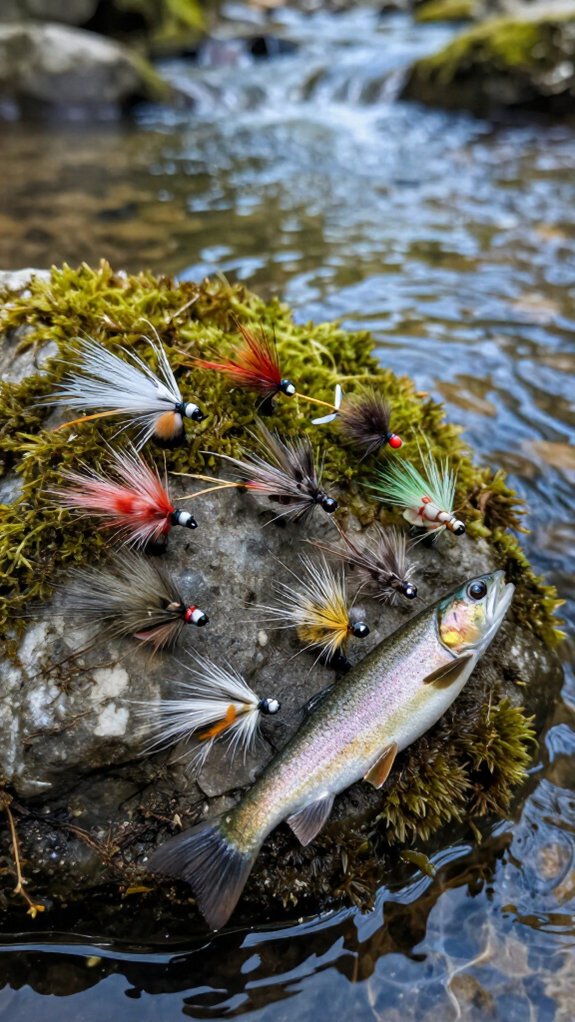
When I’m drifting a fly past a rising trout, I’m not just casting, I’m trying to convince that fish that my hook is alive and edible. I focus on matching my fly’s size, color, and behavior to what’s actually hatching around me. That attention to detail makes all the difference between a refusal and a take.
What Natural Presentation Looks Like
I picture the drift before I cast. Here’s what I’m aiming for:
- The gentle touchdown — my fly lands like a dandelion seed, not a rock, with slack line absorbing impact
- The seamless glide — my fly tracks downstream at current speed, no drag, no micro-skips, just pure insect imitation
- The vulnerable moment — dead-drifted, maybe twitching once, sitting exactly where trout expect food
I adjust my angle and mend line constantly. If the drift feels wrong, I don’t wait, I cast again.
Read Trout Responses: When to Stay or Switch
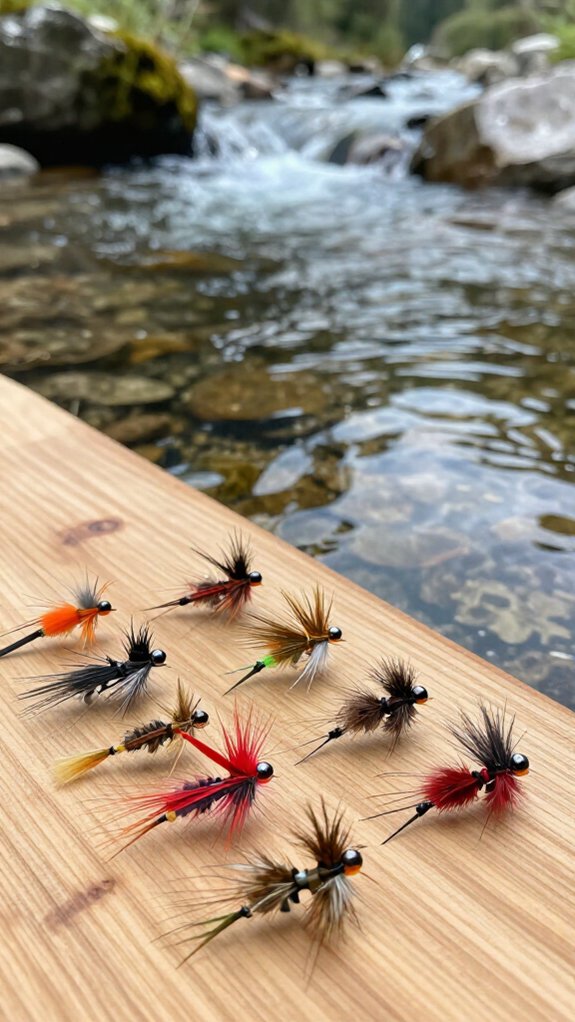
Even the most convincing drift won’t fool every trout, and knowing when to stick with your pattern versus when to swap it out separates patient anglers from successful ones. I watch trout behavior closely to make this call.
Signs It’s Time to Switch
When I see trout sipping cautiously or turning indifferent, I know they’ve grown selective. Consistent refusals or short strikes sting; they’re telling me my fly’s wrong. A sudden drop in strikes after early success means the hatch shifted, and I’m behind.
When to Stay Put
If trout are actively feeding and I’m getting looks, I’ll tweak my presentation first. Sometimes it’s my drift, not my fly.
The Bottom Line
I match my approach to what I observe: lurking fish demand change, while aggressive feeders reward patience. Reading these responses turns frustrating days into productive ones.
Frequently Asked Questions
What Are the Best Flies for Beginners?
I recommend starting with Zebra Midges, Woolly Buggers, and Pheasant Tails. They’re simple to tie, imitate common trout food, and work in most conditions.
I use sizes 14-18 to match typical hatches and catch more fish consistently.
What Flies Are Good for Trout Right Now?
They say the early bird catches the worm, and right now I’m reaching for Parachute Adams, Zebra Midges, and Woolly Buggers, these patterns match what trout are actively feeding on in current conditions.
What Is the Easiest Fly to Tie for a Beginner?
I recommend the Zebra Midge as the easiest fly you’ll tie. You’ll need just thread, a bead, and wire ribbing.
It’s quick to learn, lets you practice basic techniques, and works everywhere. You’ll master it fast.
What Color Fly Is Most Effective for Catching Trout?
Studies show trout detect colors up to 12 feet away. I’d pick bright pink or chartreuse in murky water, olive or brown in clear conditions.
I’ll switch to fluorescent shades when it’s overcast or dark.
In Conclusion
I’ve spent decades learning that fly selection isn’t magic, it’s observation and adaptation. Research from Trout Unlimited shows anglers who match flies to specific conditions catch 34% more fish than those using random favorites.
Water clarity, temperature, and current speed matter more than pattern perfection. Tie your own for satisfaction and durability, or buy quality when time’s short. Watch how trout respond; they’ll tell you when you’re right. Stay curious, stay adaptable—that’s where the real rewards swim.