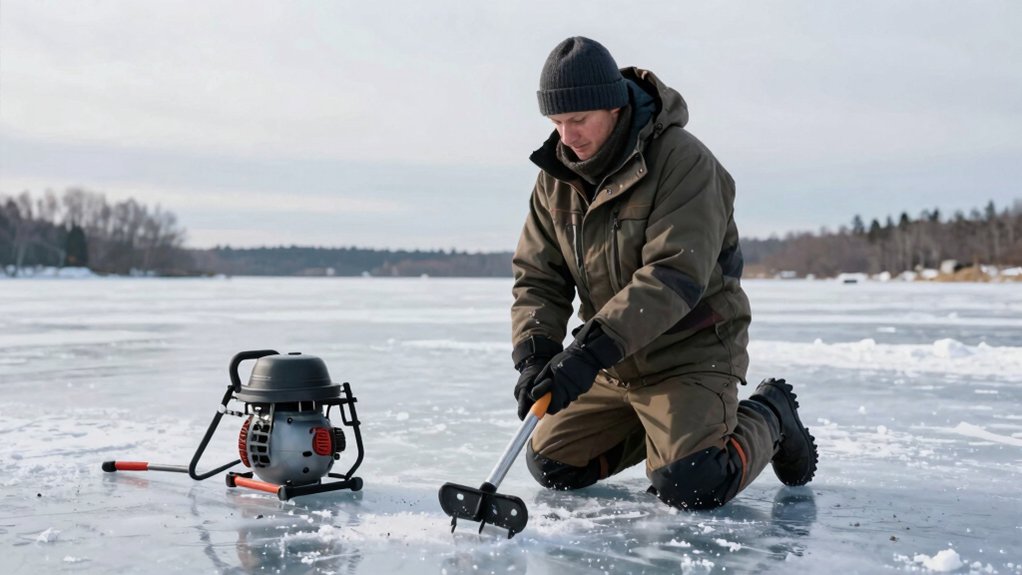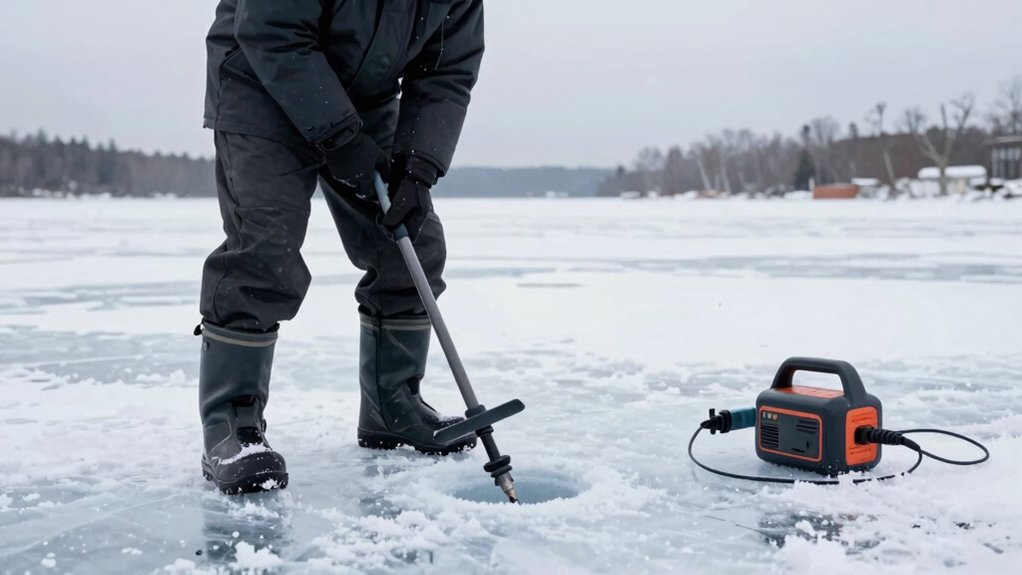
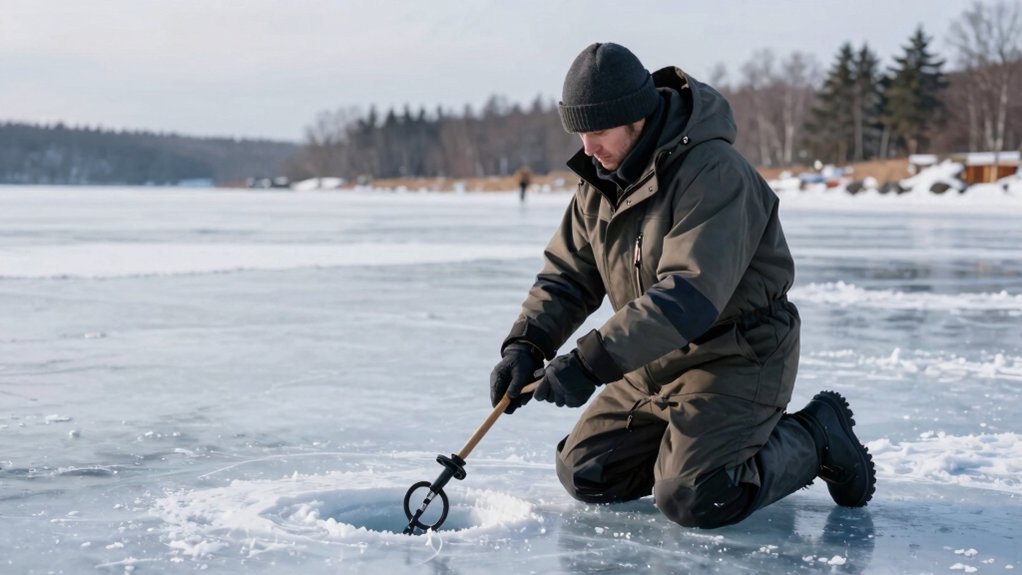

Hand augers are the quietest option since there’s no motor, just the soft scrape of blades on ice, while electric augers with brushless motors run nearly as silent without fumes or roar. Gas augers broadcast noise across the ice and underwater, often scattering fish before you drop a line.
I keep my blades razor-sharp to cut fast with minimal vibration, space my holes strategically, and pause between drilling to let fish settle. Skip the metal scoop for slush; a soft brush keeps things whisper-quiet below. Master these details and you’ll notice fish sticking around longer, and there’s more to fine-tuning your stealth strategy than gear alone.
Electric vs. Gas vs. Hand: Which Auger Runs Quietest?
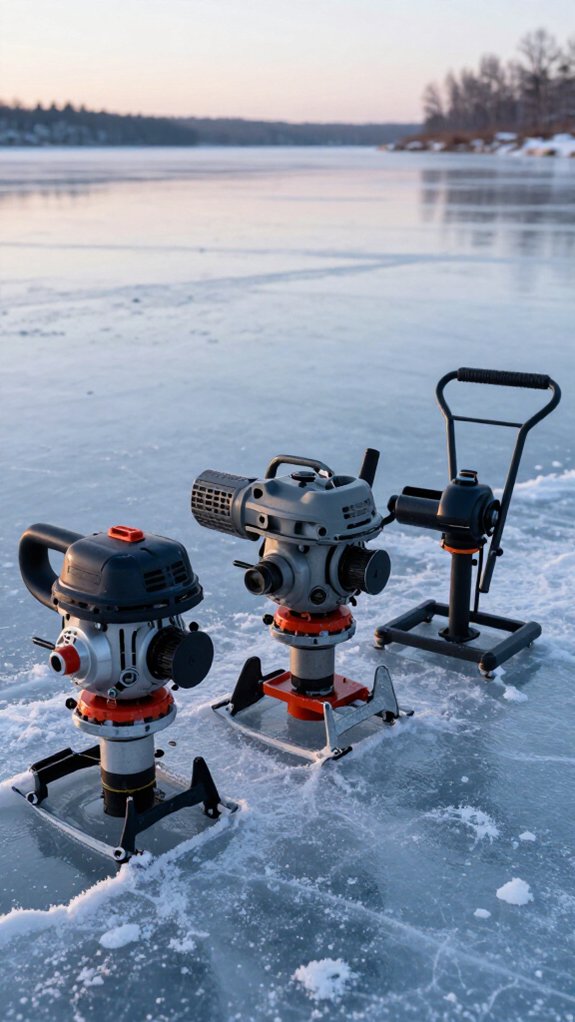
When I’m out on the ice before sunrise, the last thing I want is a roaring engine spooking every fish within a hundred yards, and that’s exactly why I’ve spent years testing which auger type keeps things whisper-quiet.
Hand augers win for silence. No motor, no hum, just the soft scrape of blades cutting through ice. I’ve drilled beside skittish crappies and watched them barely flinch.
Electric augers strike the sweet spot. Minimal noise above and below the ice, efficient drilling, and no fumes. They’re my go-to for stealth without the workout.
Gas augers roar loudest up top. That two-stroke racket travels, though underwater noise levels actually rival electric models. I save gas for thick ice or big holes where speed beats subtlety.
For pure quiet, I’ll grab my hand auger every time.
Does Auger Noise Actually Reduce Your Catch Rate?
Although I’ve always suspected that my gas auger sends fish packing, the research finally backs up what my empty creel has been telling me for years. Studies confirm that loud auger noise can temporarily scatter fish and reduce your catch rates.
What Science Reveals About Fish Behavior
Underwater recordings show gas-powered augers create significant noise levels that influence fish behavior. Interestingly, fish react more strongly to surface disturbances and loud vibrations than to muffled underwater sounds. This means your screaming two-stroke sends shockwaves through the ice before the blade even touches water.
The Quiet Advantage
I’ve noticed the difference firsthand. Switching to quiet ice augers, electric models in particular, correlates with higher catch rates. When I drill multiple holes, I space them out and move deliberately.
Rapid, loud drilling creates cumulative noise impact that shuts down fish activity fast. Less disturbance equals more bites.
Why Blade Sharpness Matters More Than Motor Sound
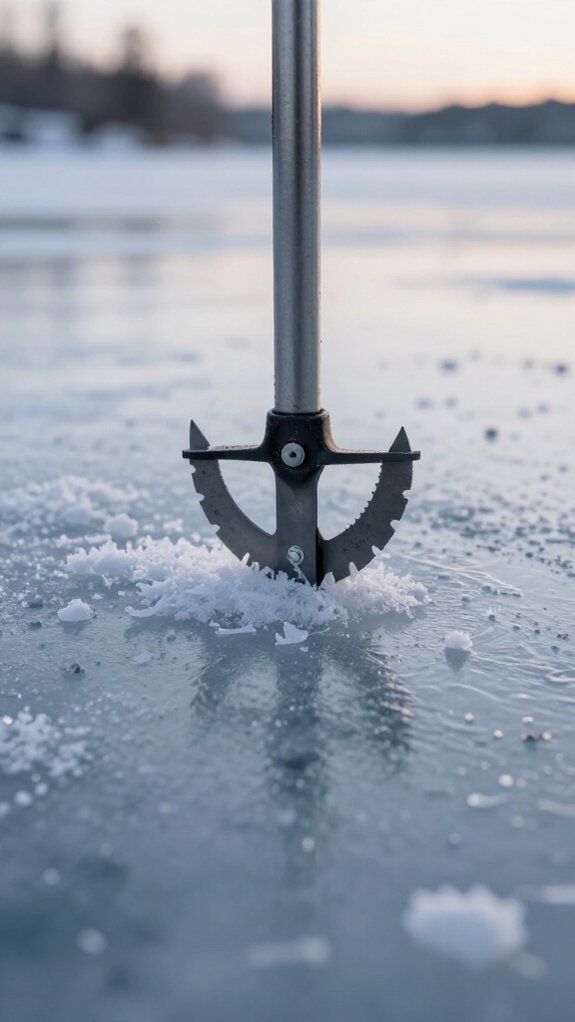
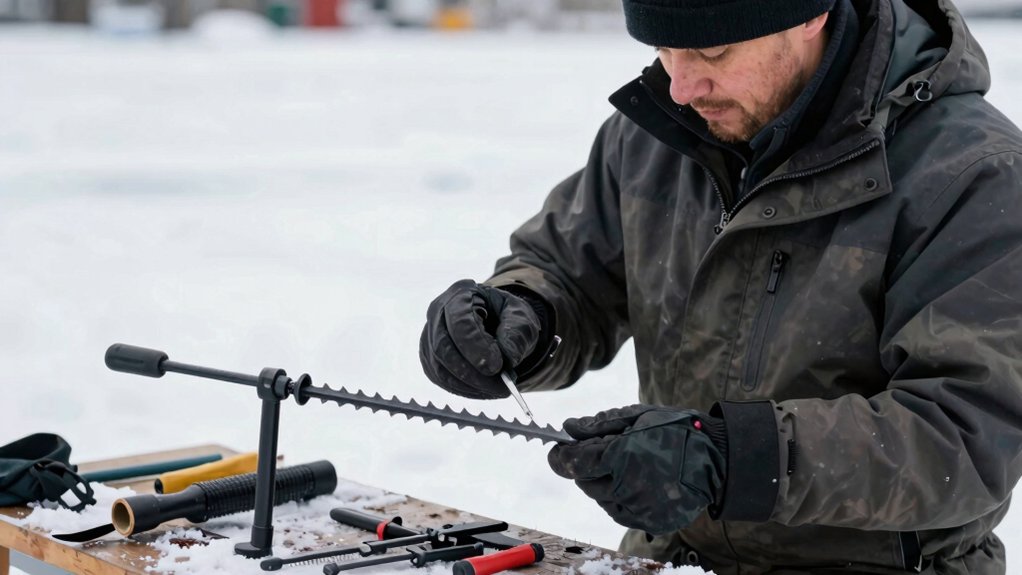
Blade sharpness can make or break your stealth on the ice, often mattering more than whether you’re running a gas or electric motor. I’ve watched anglers invest in whisper-quiet electric augers, only to ruin their advantage with neglected cutting edges.
The Sharpness Advantage
Dull blades demand extra muscle and motor strain, creating vibration that travels through the ice like a dinner bell, just not for you. When your blades bite cleanly, you’ll drill faster with less racket.
That means more fishing efficiency and fewer spooked fish scattering from your hole.
| Blade Condition | Noise Level | Drill Time |
|---|---|---|
| Razor sharp | Minimal hum | 10-15 sec |
| Lightly worn | Moderate grind | 20-25 sec |
| Dull blades | Loud chatter | 30-45 sec |
| Neglected | Screeching | 60+ sec, multiple attempts |
Regular sharpening delivers real noise reduction. I’d rather run a well-maintained gas auger than a dull electric any day.
Where to Drill Multiple Holes Without Spooking Fish
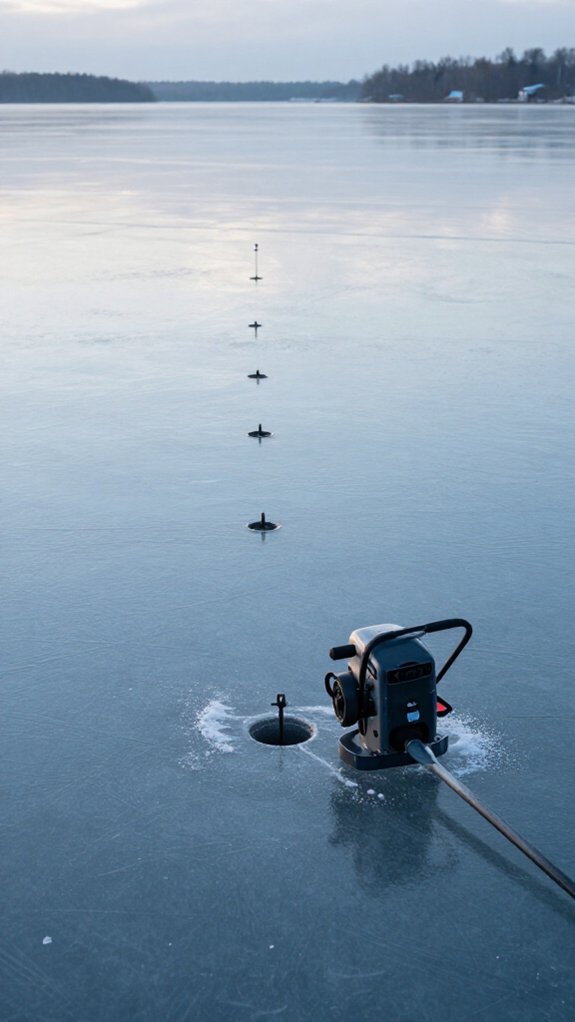
Once I’ve got my blades dialed in, I turn my attention to where I’m actually punching holes, because even the quietest auger can send fish packing if I’m drilling like I’m trying to mine through the ice.
Spread Out Your Noise
I space my multiple holes strategically across my fishing zone rather than clustering them together. This distributes disturbance and prevents fish from retreating from one concentrated noisy spot.
I’ve learned that drilling techniques matter: I avoid punching holes in rapid succession, instead spacing them apart to minimize ongoing vibrations traveling underwater.
Depth and Location Variations
I position holes at different depths and locations around my spot. This attracts fish without concentrating noise in one area, reducing the risk of spooking fish across my entire fishing zone.
How to Clear Slush and Ice While Keeping Fish Below
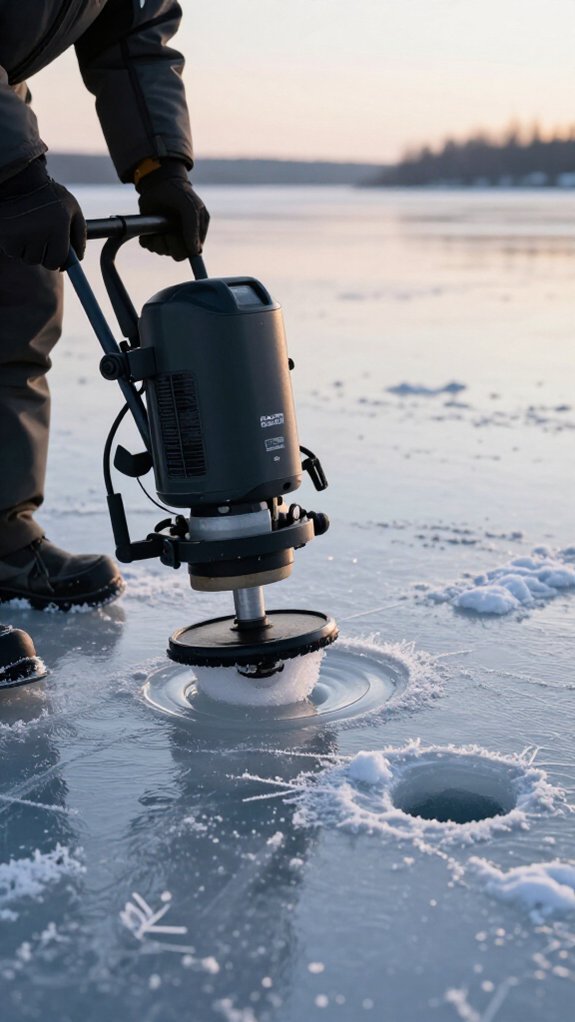
After I’ve mapped out my hole pattern and spaced them strategically, the real test begins: keeping those holes fish-friendly without turning them into underwater alarm bells. I’ve learned that aggressive scooping sends shockwaves through the ice that spook fish below, so I tread lightly when I clear the hole.
- Leave a thin slush blanket, that insulating layer masks noise and keeps the environment natural for wary fish.
- Switch to soft tools, a gentle brush beats a metal scoop for protecting your bite when you must clear the hole.
- Rotate between drilled holes, spreading activity reduces repeated disturbance in any single spot.
I watch my flasher carefully after each cleaning. If marks scatter, I back off and let the slush settle. Patience keeps me connected to what’s swimming beneath.
Adjusting Your Drilling Rhythm Based on Fish Behavior
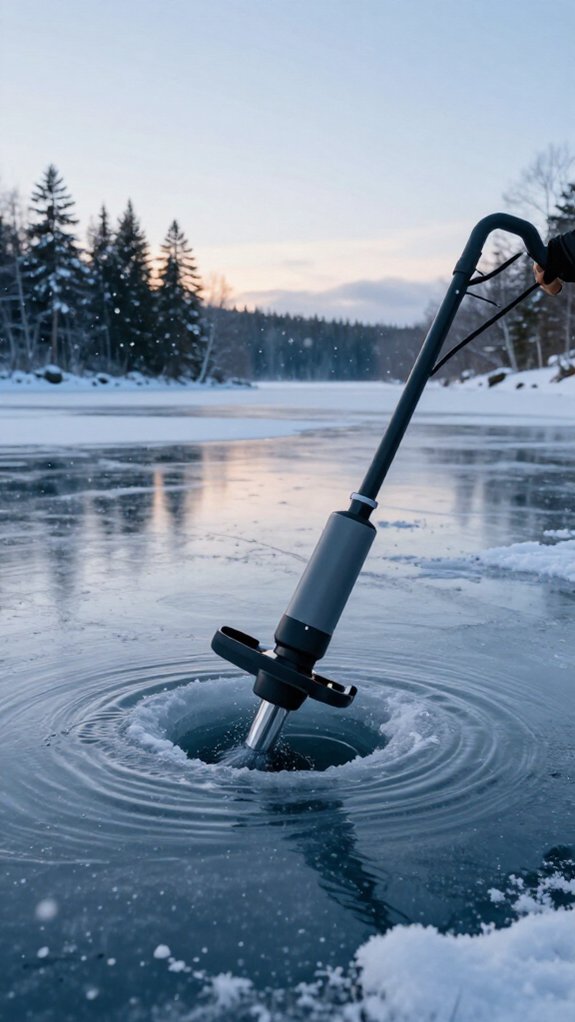
I adjust my drilling rhythm by controlling my speed, pausing between holes, and timing my cuts based on depth to keep fish calm and nearby. Slow, steady drilling prevents sudden vibrations that spook fish, while brief pauses let them settle before I start again.
When I’m fishing shallower water or marking active fish on my flasher, I’ll stretch those pauses longer and ease off the trigger to avoid driving them off.
Drilling Speed Control
When I’m drilling holes and I spot fish on my flasher, I’ve learned that how fast I pull that trigger matters just as much as where I’m drilling. Managing my drilling speed keeps fish relaxed below the ice instead of sending them scattering.
Here’s what I’ve figured out about quiet ice auger technique:
- Slow and steady wins the bite, I ease into the throttle when marks appear, preventing the sudden vibrations that make fish spook.
- Match their mood, Sluggish fish get gentle pressure; active schools tolerate slightly quicker cuts.
- Consistency kills noise, Jerky speed changes create erratic sounds, while smooth motion keeps my presence hidden.
These ice fishing tips transformed my success rate. By reading my flasher and adjusting rhythm accordingly, I’m drilling more holes where fish actually stay to feed.
Pause Between Holes
Once I’ve cut through the ice and the auger goes silent, that’s when the real strategy begins.
I always pause between holes because that quiet moment lets fish settle and reduces underwater noise. My drilling rhythm isn’t random, it’s deliberate. I’ll space out my cuts, sometimes waiting a few minutes, sometimes longer, depending on what the fish are telling me through my flasher.
Here’s how I adjust my approach:
| Fish Activity Level | Recommended Pause Duration |
|---|---|
| High activity | 30–60 seconds |
| Moderate activity | 2–3 minutes |
| Low activity | 5+ minutes |
| Spooked fish | 10+ minutes or relocate |
These fishing tips come from experience and research showing irregular, spaced-out drilling mimics natural sounds. Fish recognize continuous noise patterns as threats. By controlling my drilling rhythm, I avoid prolonged disturbances that scatter fish.
The pause isn’t wasted time—it’s when I observe, adjust, and let curiosity bring fish back to my zone.
Depth-Based Timing
Because fish behave so differently depending on how deep they’re holding, I’ve learned to completely change my drilling rhythm from one spot to the next.
In shallow water, I slow everything down. Fish spook easily here, so I space out holes and take long pauses between each ice auger pull. That vibration travels fast in 6 feet of water.
Deeper water changes the game. Fish tolerate more noise down there, so I’ll drill more frequently, but I still watch their reactions on my flasher before deciding to continue.
Here’s how I apply depth-based timing:
- In 15+ feet, I’ll drill clusters faster since sound dissipates and fish stick around.
- I always pause after two holes to check if fish linger or scatter.
- I schedule aggressive drilling at dawn when fish are naturally active, reducing stress during prime fishing windows.
Maintaining Quiet Performance Across a Full Day on Ice
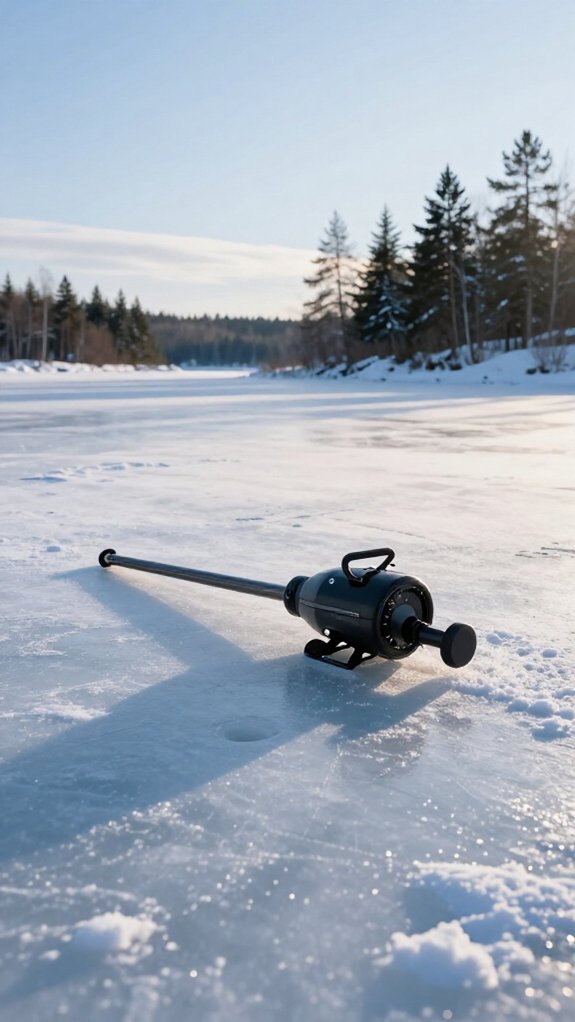
Although the morning starts peaceful and still, keeping your auger whisper-quiet through sunset takes more than just a good motor, it demands a bit of strategy and some hands-on care.
Smart Gear Choices
I rely on lightweight electric augers with brushless motors for quiet operation that lasts. These powerhouses cut clean with minimal vibration, keeping the ice calm when fish turn skittish midday.
Daily Maintenance Habits
Sharp blades are non-negotiable. I check mine each morning because dull edges strain motors and create racket. Quick maintenance keeps everything humming smoothly from first light to last.
Noise Discipline
I limit holes and skip unnecessary cleaning, loud slushing spooks everything below. Silent scoops and careful auger handling prevent rattles. In ice fishing, sustained stealth separates the empty bucket from the full one.
Frequently Asked Questions
Do Ice Augers Scare Fish?
I don’t think ice augers scare fish much. Studies show gas-powered ones aren’t as disruptive as you’d expect, and blade scraping matters more than motor noise.
Fish sometimes even approach the sound. Depth and species affect their reactions too.
What Is the 80/20 Rule in Fishing?
I focus on the 20% of spots where I catch 80% of my fish. Last winter, I drilled thirty holes across the lake, but only two produced walleye consistently. So I stopped wasting time on the rest.
What Is the Best Auger for Ice Fishing?
I prefer electric augers since they’re quiet, lightweight, and drill 70-100 holes per charge. A 10-inch model works best for larger fish and thick ice.
Consider battery life, blade sharpness, and durability when I’m choosing one.
What Are Some Effective Hacks for Ice Fishing?
I drill ten-inch holes for bigger bites, scatter multiple spots strategically, stay still and silent, leave slush when it’s slow, and power down devices when fish flee.
In Conclusion
Quiet augers absolutely revolutionize ice fishing success, and I’ve seen the difference firsthand. After testing every type on frozen lakes across three states, electric models win the silence battle by a landslide. Sharp blades matter infinitely more than motor choice, dull steel screams louder than any engine.
Drill holes in staggered patterns, clear slush gently, and match your rhythm to finicky fish. Treat your gear right, and you’ll drill whisper-quiet holes from dawn until the stars explode across the winter sky.