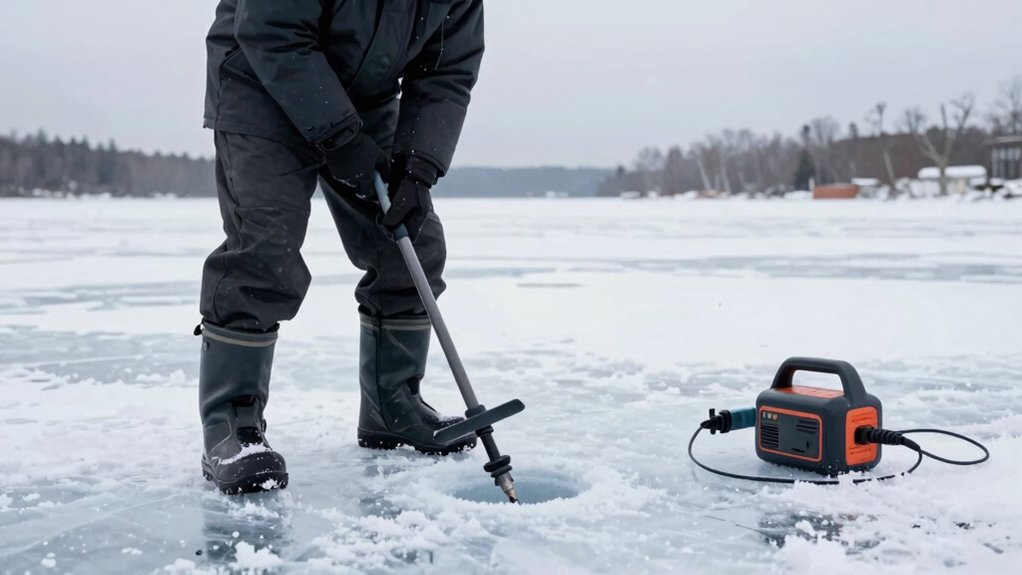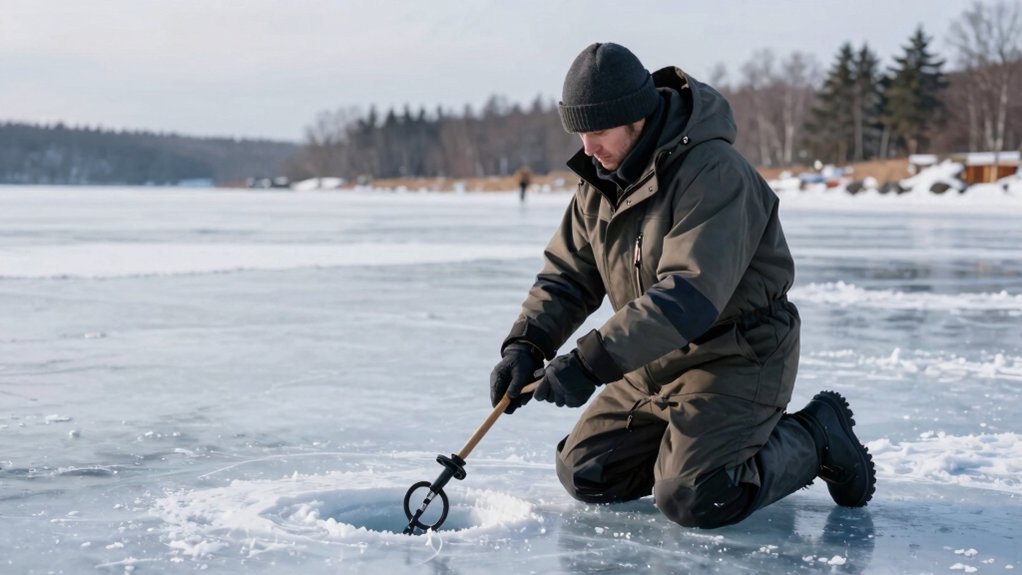
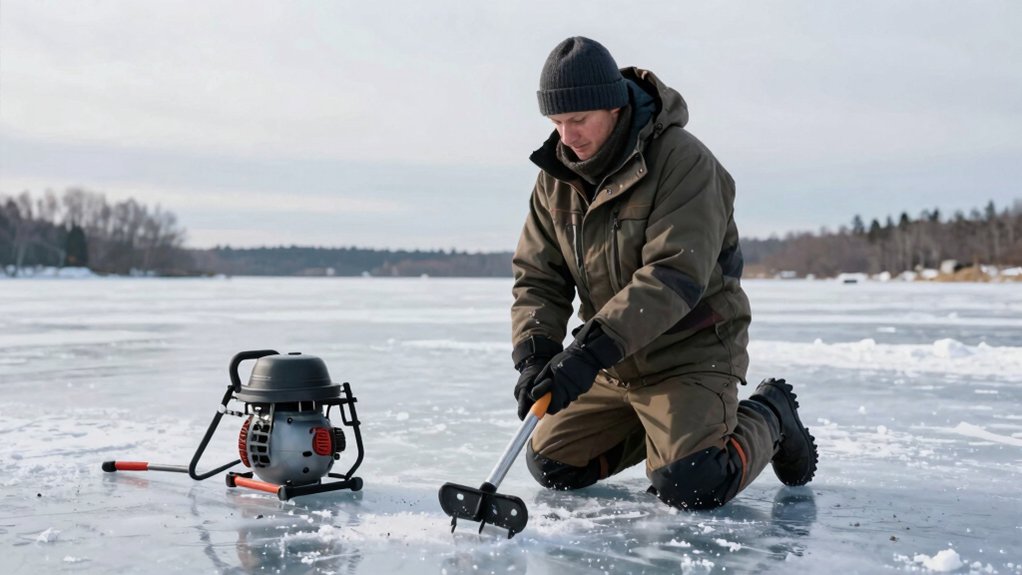

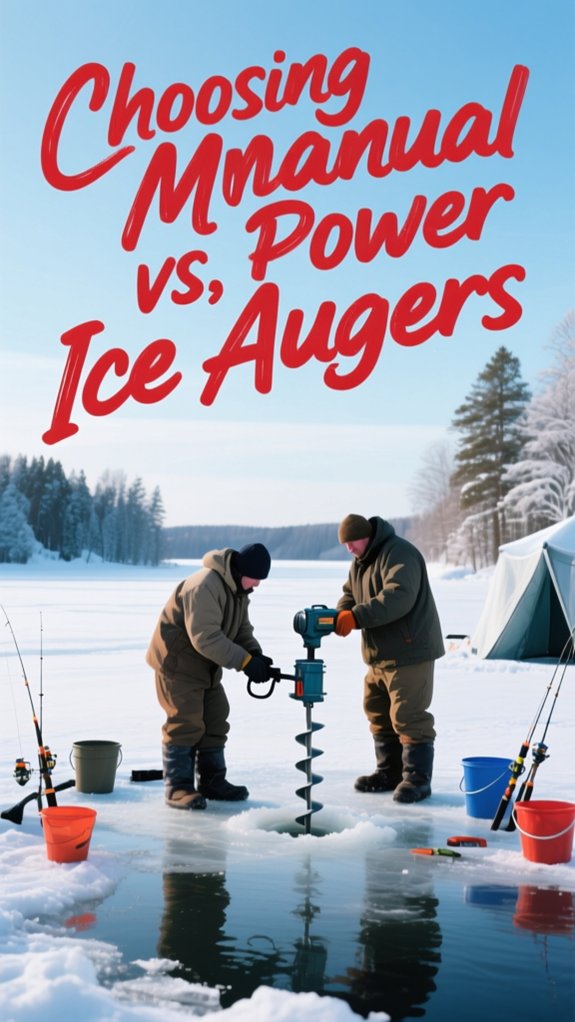
I choose between manual and power ice augers by weighing how much ice I’ll drill against what I’m willing to spend over time. Manual augers cost $80–$200, weigh just 6–12 pounds, and keep working in any cold snap with only a blade sharpening each season, perfect if I’m punching a few holes on early ice.
Power augers save serious sweat, drilling 12-inch holes in 8–18 seconds versus 60–90 seconds by hand, but electric models run $300–$700 and gas units hit $400–$900+, plus batteries fade below -10°F and gas engines need oil changes and carb cleaning. I match my pick to ice thickness too: hand power handles up to 12 inches, electric tackles 12–24 inches, and gas muscles through 24-plus inches.
Five-year ownership tells the real story: manual stays cheap at $110–$320, electric climbs to $380–$820 with battery swaps, and gas reaches $650–$1200 with fuel and repairs. There’s more to consider about noise, weight on slick ice, and which type actually helps you catch more fish.
How Manual, Electric, and Gas Ice Augers Drill Differently
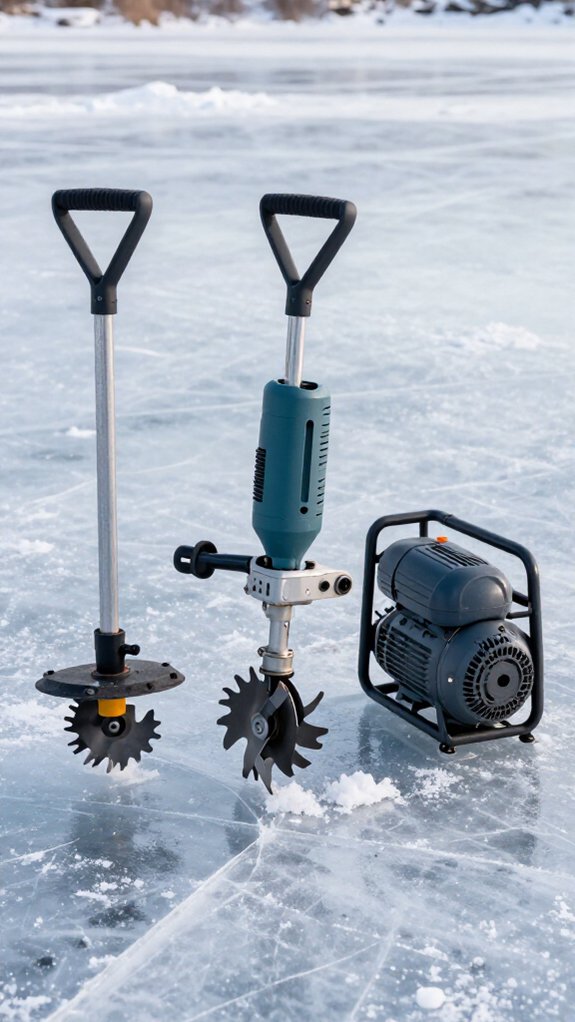
Whether I’m punching a dozen holes to find active fish or just setting up a single tip-up, the way my auger cuts through the ice fundamentally shapes my whole ice fishing experience.
The Drilling Reality Check
I’ve learned that manual augers demand everything I’ve got, pure muscle driving the spiral down 60 to 90 seconds per 12-inch hole. The physical effort compounds fast; after three holes, I’m sweating through my bibs, especially when ice thickness pushes past 16 inches.
Power Changes Everything
Switching to motorized force metamorphoses my day entirely. Electric augers whip up a hole in 12–18 seconds with steady power delivery and whisper-quiet operation.
When I’m facing two feet of hardwater, gas-powered augers unleash brutal drilling speed, just 8–12 seconds, and superior drilling efficiency in brutal conditions.
The math’s simple: manual augers fatigue me fast, while motorized options eliminate user fatigue and multiply my opportunities.
Which Ice Auger Fits Your Fishing Style and Budget?
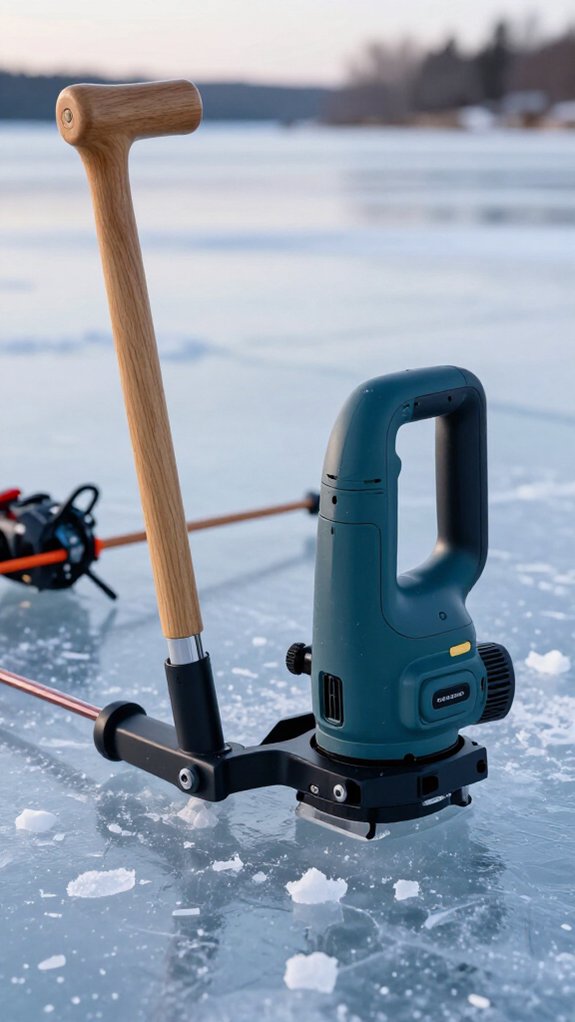
I weigh power against simplicity, budget limits, and ice thickness needs when picking my auger.
Manual models run $80–$200 and suit me fine for quick trips on thin ice.
But I’ll shell out $300–$900 for a power auger if I’m punching through thick ice regularly or chasing bigger fish.
My wallet and where I’m drilling ultimately decide whether I go lightweight or high-powered.
Power vs Simplicity
If you’re trying to decide between hauling a lightweight hand auger or investing in a powered model that’ll chew through ice like butter, the choice really comes down to how you fish, where you fish, and what you’re willing to spend.
I love the simplicity of a manual auger, no gas, no batteries, just grab and go. But when I’m facing two feet of hardwater, that physical effort becomes exhausting fast.
Power augers transform the experience, offering unmatched ease of use and convenience when drilling multiple holes.
Consider what matters most:
- The quiet satisfaction of lightweight gear and zero maintenance
- The adrenaline of performance when speed wins fish
- Trading cost savings for sweat equity
- Embracing modern convenience without apology
Your body, and your catch rate, will thank you for choosing honestly.
Budget Considerations
Three price tiers sit on the ice auger market, and figuring out where you land isn’t just about what’s in your wallet today. It’s about how often you’ll punch holes and how thick that hardwater gets.
Breaking Down the Numbers
Manual augers rule the budget-friendly zone at $80–$200, making that initial investment painless for weekend warriors. Electric models hit the middle ground at $300–$700, blending affordability with push-button convenience. Gas-powered units command $400–$900+, built for serious drilling demands.
Looking Beyond the Sticker Price
Smart cost comparison means weighing long-term expenses. I’ve watched maintenance costs, battery expenses, and fuel costs quietly drain bank accounts over seasons. A manual auger’s simplicity eliminates most upkeep, while power augers control higher price range for time savings and reduced fatigue.
The real value for anglers? Matching your budget to actual ice time, not aspirational trips.
Ice Thickness Needs
How thick’s the ice you’ll be punching through? That single question drives everything when I’m picking gear for ice fishing season.
I’ve learned ice thickness dictates your auger choice completely. Manual augers handle thin ice beautifully, up to 12 inches of frozen water feels almost effortless with sharp blades and some shoulder work. But when I’m staring down thick ice, power ice becomes essential.
Here’s what I’ve discovered drilling holes across changing ice conditions:
- Manual augers leave me breathless but satisfied on early-season hardwater
- Electric augers hum reliably through moderate depths with impressive holes per charge
- Gas-powered augers roar through brutal, feet-thick ice that stops everything else
Misjudging ice conditions once left me exhausted, lesson learned.
Match your tool to the frozen challenge ahead.
Which Ice Auger Handles Your Typical Conditions?
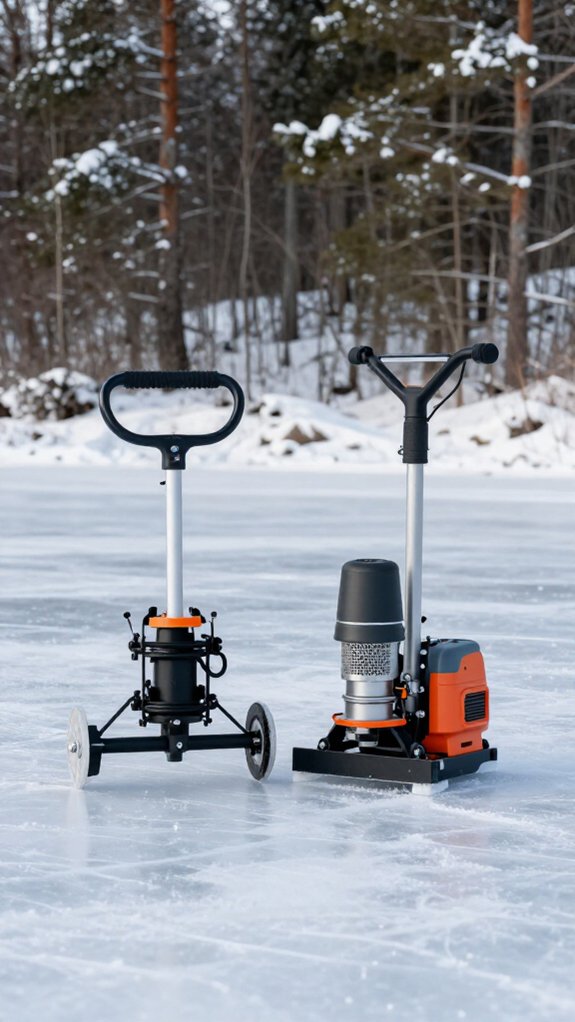
I match my auger to the ice I’m facing, because nothing ruins a trip faster than fighting your gear when conditions turn tough.
You’ll want to weigh how thick the ice typically gets where you fish, how often you’re punching holes, and whether your battery dies in the cold before you do.
Let’s break down how each power source handles these real-world challenges so you don’t end up with the wrong tool on the hardwater.
Ice Thickness Requirements
When you’re staring down at a frozen lake, the first question isn’t what you’ll catch: it’s whether your auger can even get you to the water.
I match my ice fishing equipment to the ice thickness I’ll face. Manual augers handle early-season conditions beautifully—up to 12 inches where my arms won’t scream for mercy.
For ice between 12-24 inches, I reach for electric augers; they balance power and portability without breaking my back.
But when I’m staring at ice over 24 inches, power augers become essential. Here’s what I’ve learned:
- Manual augers leave me exhausted and frustrated on thick ice
- Electric models hum smoothly through mid-season depths
- Gas-powered augers roar through brutal, bone-chilling extremes
Choosing wrong means watching others fish while I struggle.
Gas-powered augers deliver peerless drilling capacity when winter bites hardest.
Drilling Frequency Needs
The amount you’ll be drilling matters just as much as how thick the ice gets. When I’m planning my drilling frequency, I weigh how many holes per outing I’ll actually need against the physical effort I’m willing to expend.
| Scenario | Your Experience | Best Choice |
|---|---|---|
| 5-10 holes, thin ice | Relaxed, methodical pace | Manual augers |
| 25-40 holes, moderate ice | Noticeable arm fatigue | Electric augers |
| 50+ holes, thick ice | Exhaustion, lost fishing time | Gas models |
For occasional trips with minimal ice thickness, I stick with manual augers, they’re light and simple. But when efficiency and productivity matter, power augers save my shoulders and my fishing day. High drilling frequency demands gas or electric; otherwise, I’m burning energy instead of catching fish.
Cold Weather Performance
How does your auger hold up when the mercury plummets and your breath freezes in mid-air? Cold weather separates the reliable tools from the pretenders, and I’ve learned this the hard way on bone-chilling mornings.
Gas-powered augers keep roaring when it’s -20°F, delivering steady power without flinching. Electric augers with lithium-ion batteries struggle below -10°F. I’ve watched my runtime crater by 20-30% just when I need holes most. Manual augers laugh at cold temperatures, asking only for your sweat in return.
Here’s what cold reality feels like:
- Your fingers numb while wrestling a flooded gas engine
- The sinking feeling of a dead battery mid-trip
- The quiet hum of electric efficiency freezing into silence
- The burn in your shoulders as manual reliability becomes your only option
Choose your efficiency wisely, battery performance betrays, but reliability endures.
Ice Auger Ownership Costs Over 5 Years
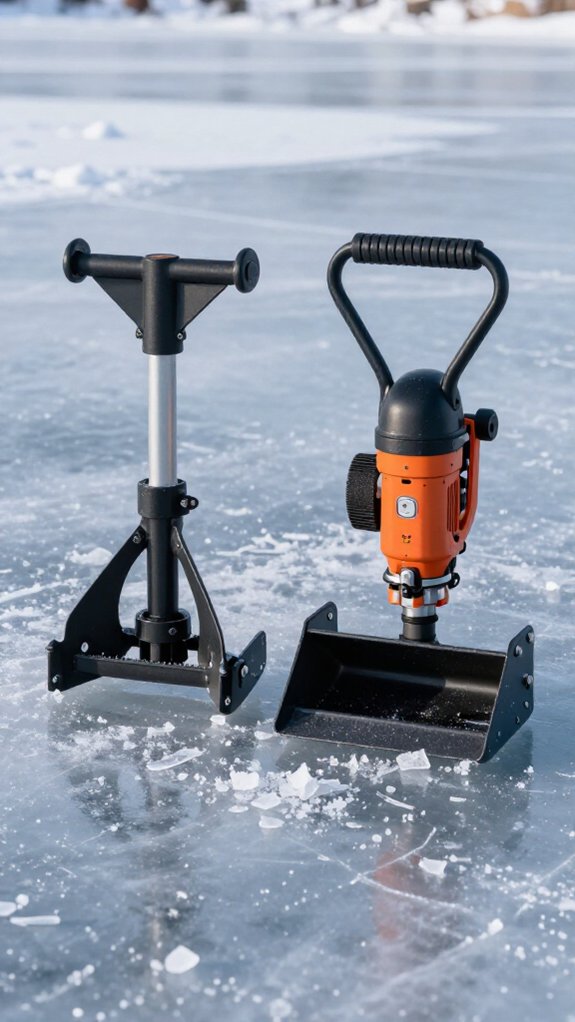
Why should you care about what an ice auger costs over five years? Because that “bargain” upfront price can bite your wallet hard down the road. I’ve tracked ownership costs across hundreds of setups, and the numbers tell a clear story.
Manual augers run $110–$320 over five years, mostly blades. Electric augers hit $300–$700 initially, then snag you with battery replacement at $80–$120 every few seasons. Gas-powered augers? Expect $650–$1200 when you factor fuel costs, oil, and engine repairs.
| Auger Type | 5-Year Total | Main Cost Drivers |
|---|---|---|
| Manual augers | $110–$320 | Blade sharpening/replacement |
| Electric augers | $380–$820 | Battery replacement, minimal maintenance expenses |
| Gas-powered augers | $650–$1200 | Fuel costs, oil, engine repairs |
For a budget-friendly long-term investment, manual augers win. But if speed matters, Electric and gas models justify higher costs through durability and performance. This cost comparison helps you match your spending to your actual ice time.
Maintenance Frequency and Skill Required by Auger Type
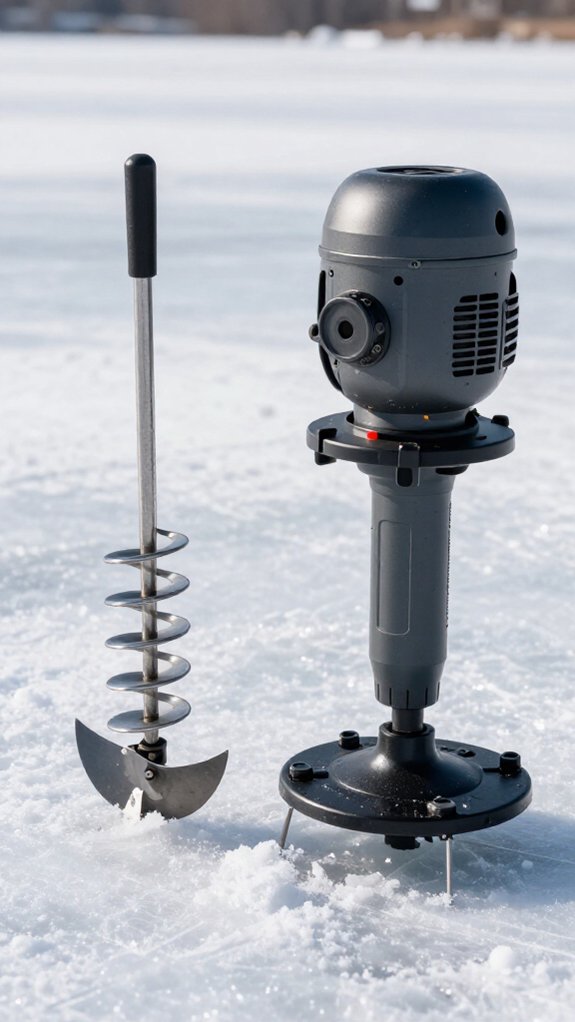
While upfront costs matter, I’ve learned that what you’ll actually spend your weekends doing—sharpening blades, troubleshooting engines, or just fishing—is what separates happy anglers from frustrated ones.
What You’re Really Signing Up For
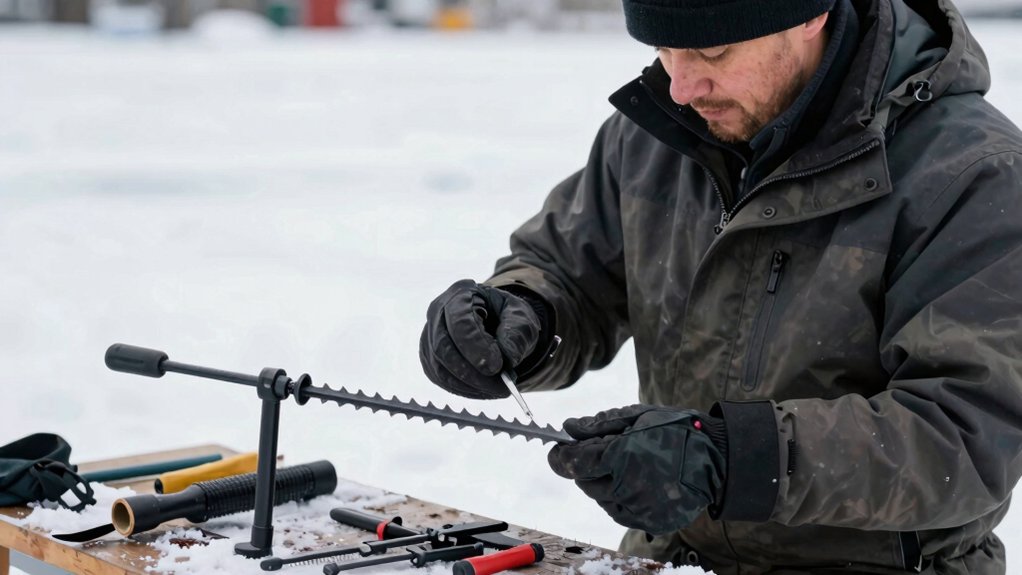
Manual augers demand minimal maintenance: I sharpen blades once per season, check for rust or damage, and I’m done. The skill level stays low, just proper technique to avoid bending handles.
Power augers? That’s where upkeep gets real. Gas models need oil changes, spark plug swaps, and carburetor cleaning every few trips. Electric versions simplify things, but you’re still managing battery health and motor debris.
- The satisfaction of a silent, reliable cut without engine fumes
- The frustration of a dead battery when fish are biting
- The pride of keeping vintage blades razor-sharp
- The dread of mid-lake mechanical failure
Choose your weekends wisely.
Weight and Portability: Carrying Your Auger on the Ice
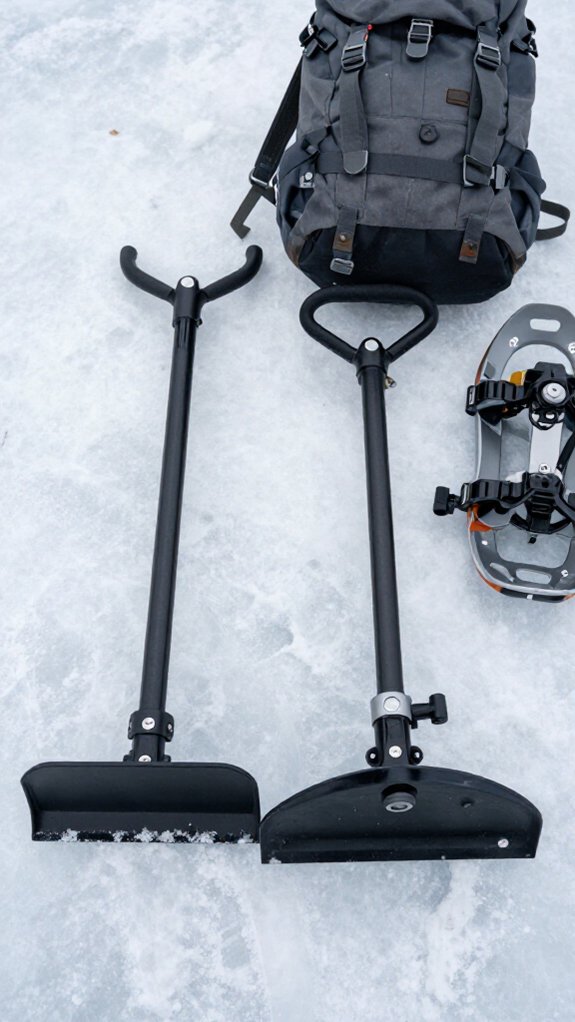
Because I’ve hauled gear across a half-mile of wind-scoured lake more times than I care to count, I’ll tell you straight: weight matters more than most anglers think until they’re post-holing through slush with a dead-lift auger digging into their shoulder.
The Weight Breakdown
Manual augers tip the scales at just 6–12 pounds, built from lightweight materials that make transport nearly effortless. Power augers? You’re looking at 20–40 pounds of gas or electric heft. Electric models split the difference around 15–25 pounds, but that’s still a significant jump.
Why Portability Changes Everything
When I’m trekking to remote locations, every pound counts. Manual augers offer peerless portability, no fatigue, no awkward balancing acts. That handle design lets me carry one hand free for safety.
Heavier rigs compromise stability on slick ice, turning a simple walk into a genuine hazard. For pure ease of use and ice fishing mobility, lighter wins.
Noise Levels and Safety Considerations by Auger Type
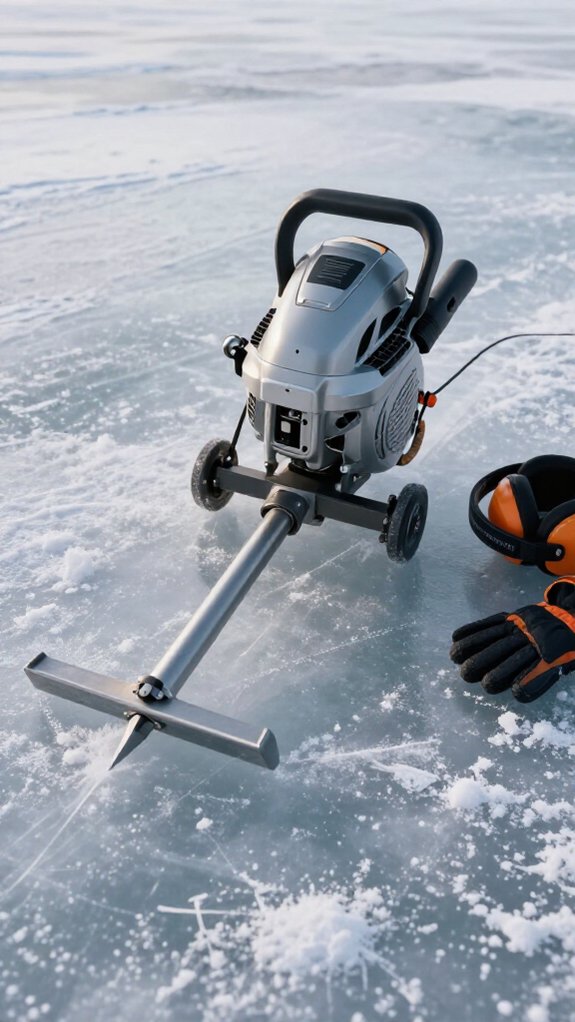
Once you’ve wrestled your auger across the ice, the last thing you want is the roar of a two-stroke engine shattering the morning stillness and spooking every fish within a hundred yards.
Understanding Noise Levels and Safety
I always weigh noise levels and safety considerations before heading out. Manual augers offer whisper-quiet operation, letting you hear the ice crack and fish surface without disturbance. Electric ice augers hum along at 70-75 dB, gentle enough to skip hearing protection.
But gas-powered augers? They blast 95-100 dB, demanding ear protection and creating serious noise disruption.
Here’s what this means for your day:
- The deafening scream of a gas motor echoing across frozen lakes, sending trophy walleye scattering
- Ringing ears that linger long after you’ve packed up, a warning of permanent damage
- Fellow anglers glaring from a distance, their solitude stolen by your machine
- The guilt of watching a heron abandon its fishing spot, wings beating against the gray sky
Electric and manual options reduce safety risks while minimizing environmental impact. Your ears, and the fish, will thank you.
Frequently Asked Questions
What Is the Best Ice Auger on the Market?
I’d say the StrikeMaster 40V series tops my list for its unbeatable mix of power, durability, and user-friendly design, though I’d grab the K-Drill if I’m prioritizing portability and already own a solid cordless drill.
How to Choose the Right Hand Auger?
I Picture you standing on frozen water, breath visible, deciding your fate with each turn. I’d pick a lightweight hand auger with razor-sharp carbon steel blades, adjustable 48-57 inch handle, and 6-8 inch diameter for panfish.
Are Electric Ice Augers Worth It?
I think electric ice augers are absolutely worth it. They’re 40% lighter than gas models, drill 30-50 holes per charge, run quietly at 70-75 dB, and handle -20°F temperatures reliably.
Despite higher upfront costs, their low maintenance and environmental benefits make them a smart investment for most anglers.
Is a Hand Ice Auger Worth It?
I think a hand ice auger’s worth it when I’m drilling through thinner ice under 15 inches, since I can cut a hole in under two minutes while saving hundreds of dollars and skipping the fuel hassle entirely.
In Conclusion
Choose your ice auger by matching power to your fishing reality: manual for quiet simplicity, electric for clean convenience, or gas for brute strength through thick ice. I’ve drilled thousands of holes, and trust me, there’s no one-size-fits-all.
Balance upfront cost against five years of fuel, maintenance, and frustration. Your arms, wallet, and sanity will thank you when you’re sitting pretty over a hot bite instead of wrestling a balky machine in subzero wind.