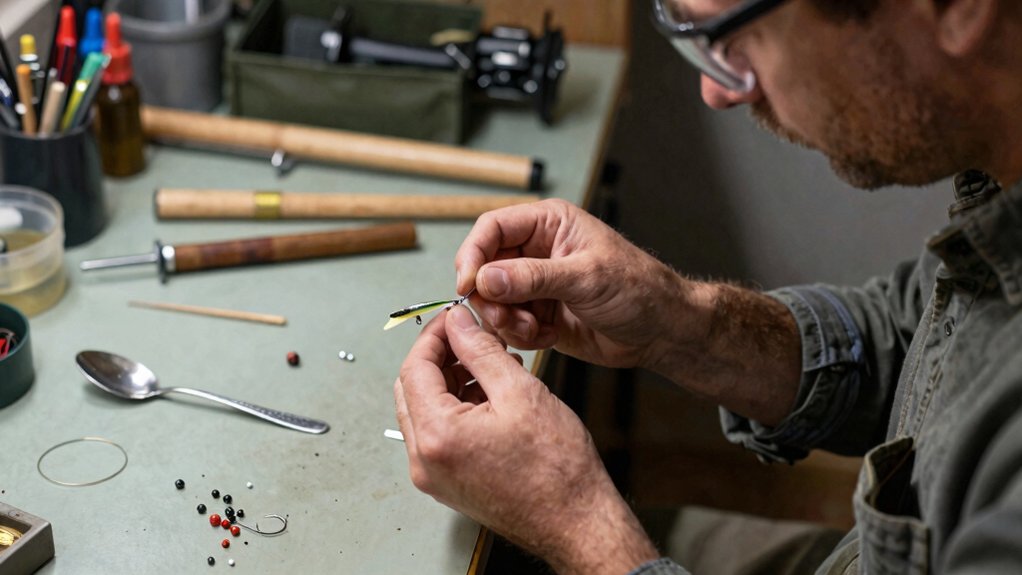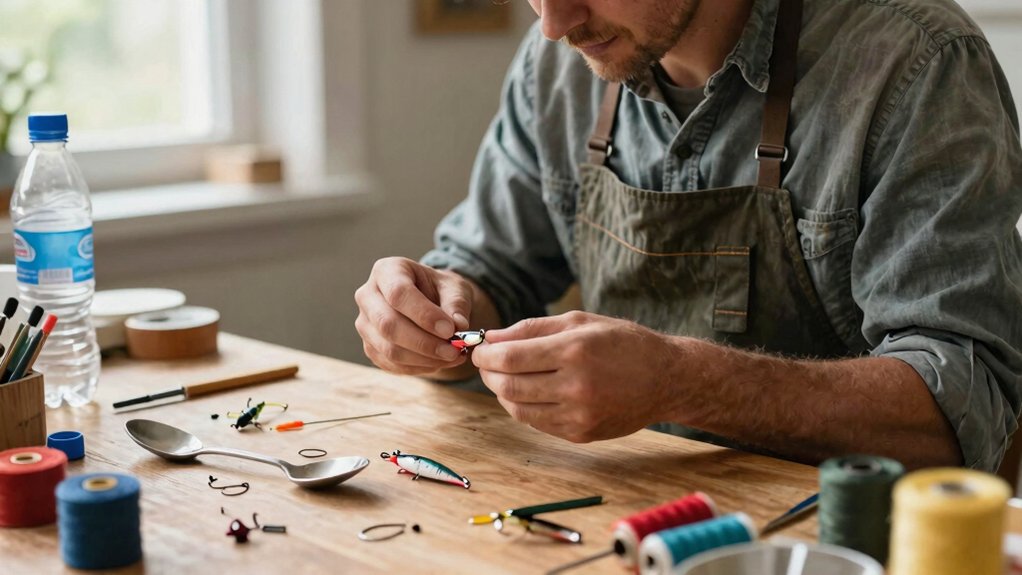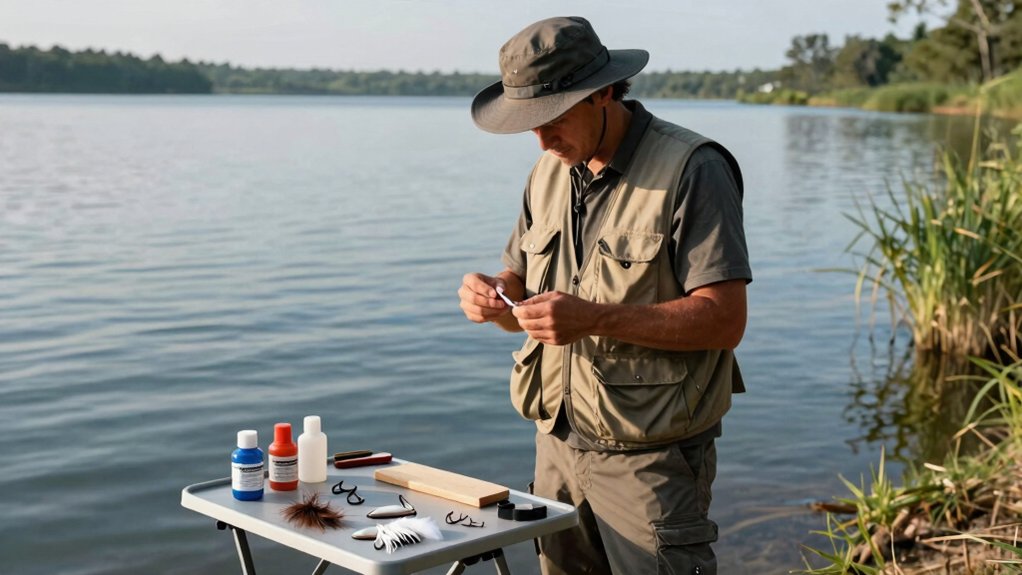
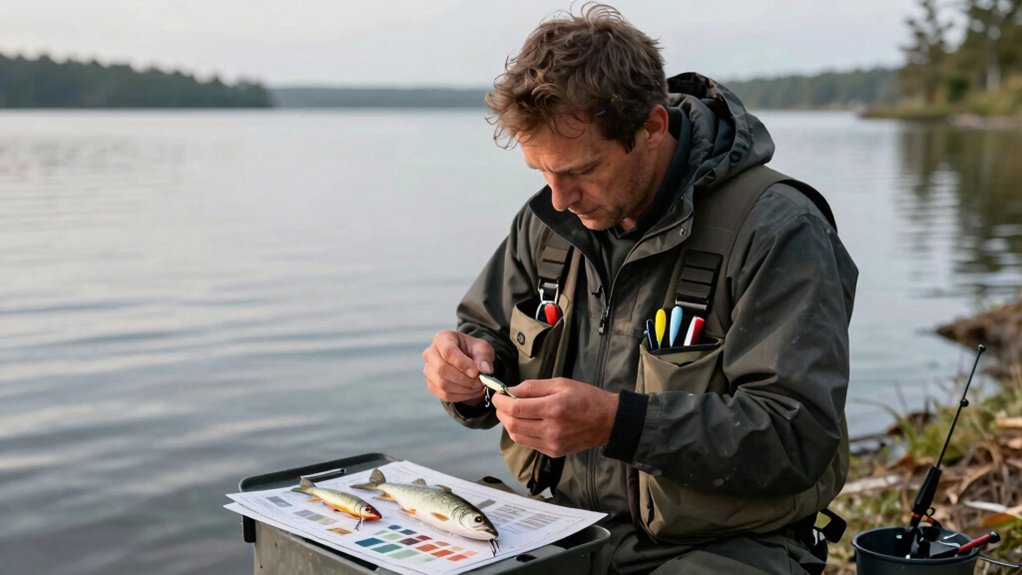

I make walleye lures that match local forage by dissecting baitfish right at my workbench, measuring every dimension from forked tail to body depth so my finished lure triggers that instant recognition bite. I sketch those measurements before I start building, then choose blades, jigs, and soft plastics that replicate the exact profile, typically 4–6 inches for shad or shiners.
I pool-test each build to confirm it hits 6–14 feet with natural action, and I rebuild monthly as fish shift depths with the seasons. Stick around and I’ll walk you through the exact steps so your next trip ends with a heavier cooler.
Dissect Baitfish to Copy Their Exact Measurements
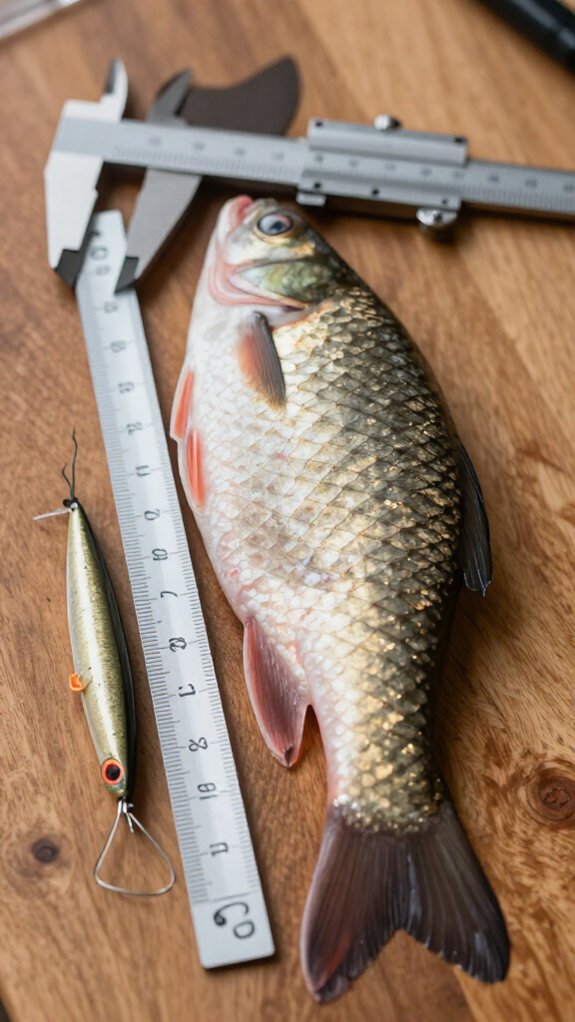
If you want walleye to slam your lure instead of just eyeing it, you’ve got to start by knowing exactly what they’re already eating.
Get Hands-On With Match Theory
I always carry a ruler and caliper when I’m scouting. I’ll net a few baitfish from the area, then record every measurement that matters: length, width, and body depth.
What to Measure First
- Length: Most forage fish run 3–6 inches.
- Width and depth: These dimensions determine your lure’s bulk and silhouette.
- Tail shape: Forked, rounded, or tapered affects swimming action.
Build From Real Data
I sketch these measurements onto paper before touching any lure design. When your plug mirrors the exact proportions of local prey, walleye don’t hesitate. They recognize the meal immediately and strike without suspicion.
Precision beats guesswork every time.
Size Your Lures to Match Local Prey
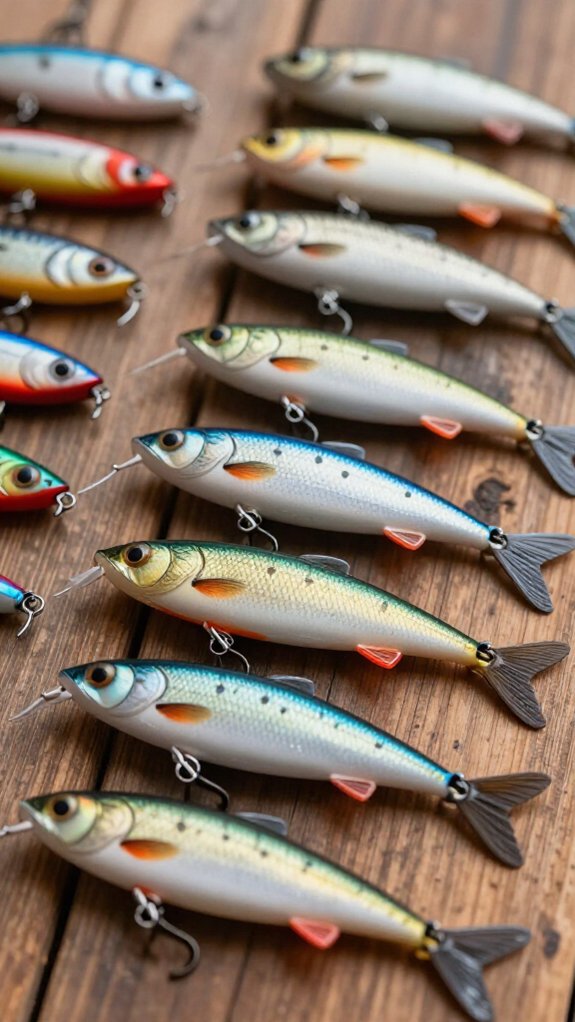
Why do some days on the water leave you empty-handed while others fill your livewell? I’ve learned it often comes down to lure size and precise forage matching.
When I’m sizing my lures, I start by studying what’s actually swimming around me. Most lakes hold 4-6 inch shad or 3-4 inch shiners and perch, so I build my minnow profile to those exact measurements. I watch for young-of-the-year fish and match their growth stage.
Seasonal adjustment matters tremendously. In spring, I use smaller, more subtle presentations. By fall, I’m throwing larger, profile-heavy baits like No.12 X-Raps to imitate mature baitfish size.
This progression mirrors natural prey development and triggers strikes from both eater-sized and trophy walleyes.
Gather Materials: Blades, Jigs, and Soft Plastics
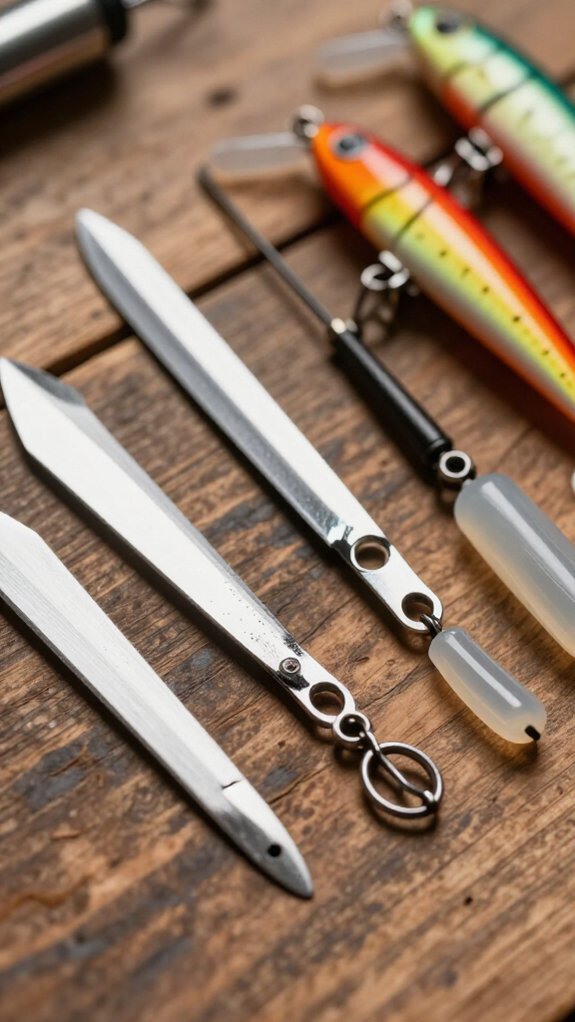
Before I tie on a single lure, I’m standing at my workbench sorting blades, jigs, and soft plastics into piles that’ll become my walleye-catching arsenal. I’m building spinner rigs that actually fool fish, and every piece matters.
Here’s what I’m gathering:
- Blades – I’m grabbing #4 Baitfish Spinner Rigs or #5 Colorado blades for serious flash and thump that calls walleye in from distance.
- Jigs – I’m stocking 1/8 oz to 3/8 oz weights so I can match depth and current without oversizing.
- Soft plastics – I’m picking paddle tails and jerk shads that wiggle like distressed baitfish.
- Colors – I’m packing natural and bright shades to adapt as conditions shift.
I’m also threading on scented soft plastics or tipping with live bait when bites turn tough.
Pick Color Patterns That Mimic Natural Prey
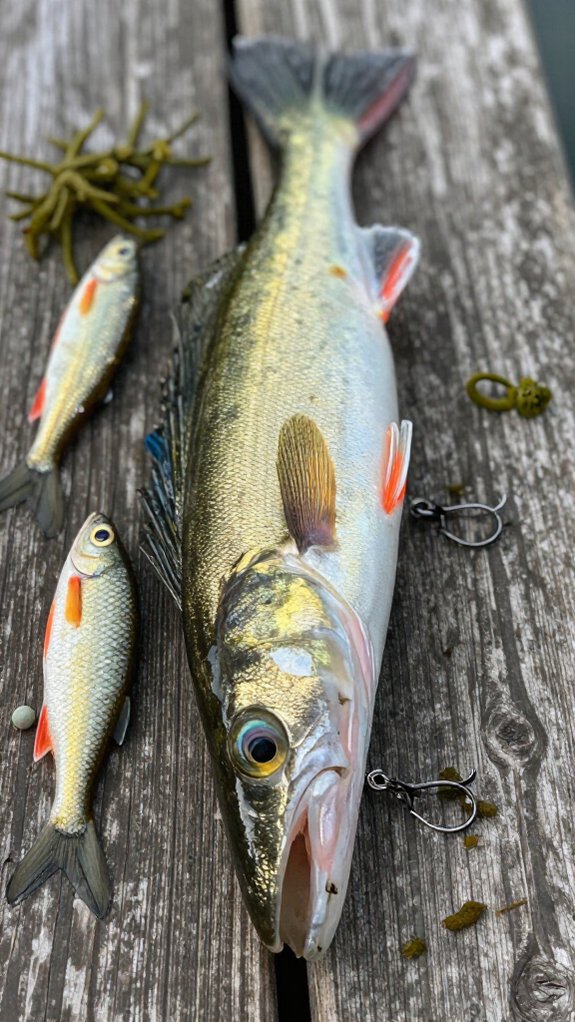
I match my lure colors to whatever baitfish walleye are chasing in my local water, whether that’s silver-sided shad, yellow perch with their bold stripes, or dark-backed ciscoes.
I’ve learned that realistic finishes, translucent tones in clear water, brighter hues when it’s murky, make my homemade lures far more convincing than flashy, unnatural schemes.
Match Local Forage Colors
Since walleye are keyed in on what’s already swimming in front of them, I’ll always start my lure selection by matching the local forage. Getting lure matching right means nailing the forage colors that dominate your waters.
Here’s how I dial in baitfish imitation every time:
- Start with natural hues, silver, white, and translucent tones mimic shiners, ciscoes, or smelt perfectly.
- Add forage-specific markings like subtle striping or dots to match local prey profiles.
- Factor in water clarity, I’ll reach for brighter colors in stained water and subdued natural hues when it’s gin-clear.
- Observe seasonal shifts since perch might flash green in summer while shad sport that classic silver-black back year-round.
This approach keeps my presentations honest and my hookups consistent.
Choose Realistic Finishes
Although color gets the credit, it’s the finish on a lure that seals the deal when a walleye’s inspecting your bait up close. I always build my lure colors around the natural forage in my target lake, ciscoes, smelt, or shiners in Sunset Country waters.
For a realistic baitfish look, I’ll spray silver, white, or translucent pearl finishes that catch light like actual scales. I hand-paint scale patterns and add 3D eyes because that lifelike appearance triggers committed strikes, not just curious follows. I size my lures to match typical prey, usually 4-6 inches. Water clarity dictates my final touch: natural hues in gin-clear depths, brighter contrasts when the water’s stained.
| Water Condition | Finish Choice |
|---|---|
| Clear water | Translucent silver, subtle scale lines |
| Stained water | Bright chartreuse, orange bellies |
| Low light | Glow, UV-enhanced patterns |
| Sunny days | Reflective chrome, holographic foil |
| Deep water | Darker backs, high-contrast sides |
Build in Erratic Action and Blade Flash
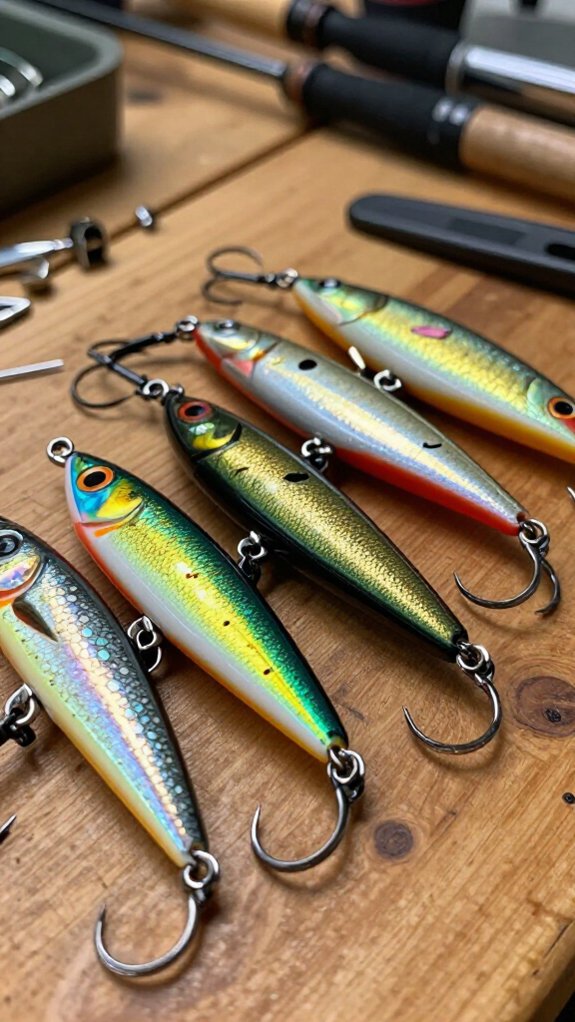
When you’re trying to fool a walleye into striking, predictable movement is your enemy, so I build lures that dance and flash like a panicked shad trying to escape. Here’s how I dial in that killer erratic action and blade flash:
- Size up your spinner blades – I use #4 or larger spinner blades for intense blade flash and vibration that screams “fleeing baitfish” to nearby walleye.
- Let Them Spin Wild – I attach blades with ball bearings or swivel joints so they wobble unpredictably, never settling into a boring rhythm.
- Pick Quick Oscillators – Lightweight Colorado or Mack’s Smile Blades give me irregular flashing patterns that drive fish nuts.
- Chaos by Design – I angle blades differently or stack multiples, then work an irregular retrieve with speed bursts and pauses to seal the deal.
Integrate Scent During Assembly, Not After
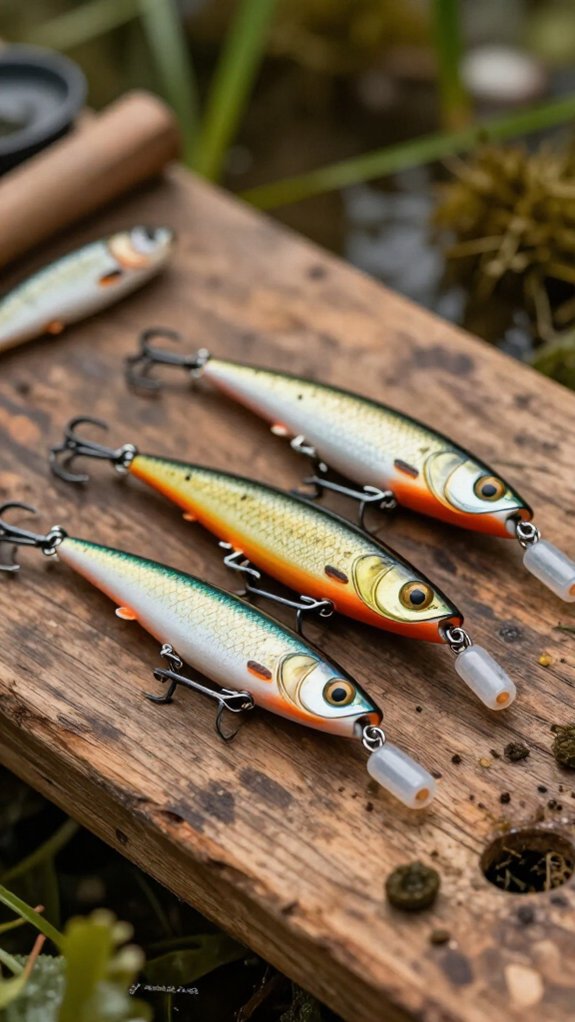
I build scent into every walleye lure during assembly because slapping it on afterward is like spraying cologne on a raincoat, most of it washes away before it ever reaches a fish’s nose.
Soak Before You Rig
I always apply attractant directly to soft plastics before rigging anything. I’ll soak bodies and tails in scented gel overnight, or inject liquid attractant into lure cavities with a syringe.
This locks scent deep into the material, not just skimming the surface.
Target the Hot Zones
During assembly, I focus on high-contact areas:
- Soft plastic tails that flutter through strikes zones
- Inner cavities where water flows and releases scent gradually
- Bait tips where walleyes first mouth the lure
This approach keeps scent releasing throughout my entire retrieve, turning following fish into committed biters.
Pool-Test Then Rebuild for Seasonal Depths
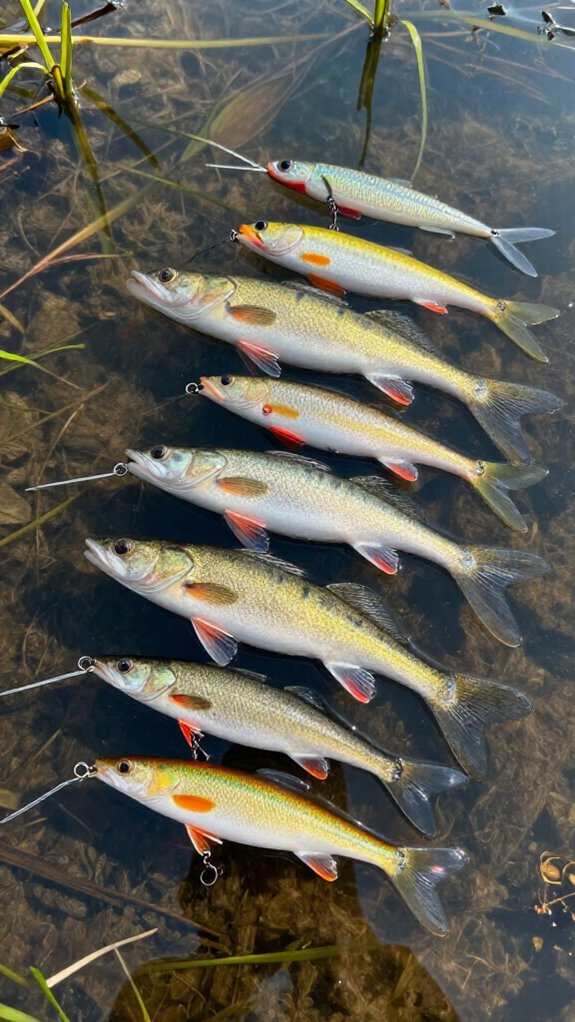
I always start by running my fresh lure prototypes through controlled pool tests so I can watch exactly how they move, flash, and suspend without fighting current or wind.
Once I see how a lure behaves, I’ll tweak the weighting, buoyancy, or line attachment point to hit the specific depths where walleye are feeding that season. Shallow and aggressive in spring, then chasing bait down deep come summer.
Every test tells me something worth rebuilding for, whether it’s slimming the profile to match young-of-year perch or adding more thump to trigger strikes in stained water.
Pool-Test Your Lures
Before I tie on a freshly built lure and send it into open water, I always head to the nearest swimming pool to see exactly how it behaves.
Pool-testing reveals whether my lure depth matches where walleye are feeding. I watch how the lure tracks, wobbles, and suspends, critical for forage mimicry that triggers strikes.
Here’s my systematic approach:
- Cast and retrieve at various speeds to observe action and stability
- Use the line-out measurement technique to estimate actual running depth
- Note whether weight adjustment is needed to hit target zones
- Document results for seasonal changes when forage shifts deeper or shallower
If the lure doesn’t dive far enough or swims unnaturally, I’ll tweak it before it ever touches lake water. This saves precious fishing time and builds confidence in every presentation.
Rebuild For Depths
Once I’ve dialed in a lure’s action at the pool, I’m already thinking about how it’ll perform when walleye shift their feeding depths from spring’s shallow flats to summer’s deeper structure.
Pool-Test Your Starting Point
I count line out from my reel to the first guide, roughly 20 inches, to gauge where my lure’s actually running. This baseline tells me if I’m hitting that 6-to-14-foot strike zone walleye prefer.
Rebuild for Seasonal Changes
When fish move deeper, I’m adjusting rigging fast. I’ll swap sinker weights or shift lure distance behind the boat. Spring finds me covering water in shallow water. By July, I’m rebuilding for 20-foot breaks.
Stay in the Zone
I re-pool-test monthly. Water temps shift, and so do walleye. That lure depth I trusted in May? It’s probably wrong by August. I tweak, test, and trust my measurements, no guesswork.
Frequently Asked Questions
What Color Lure Do Walleyes Like Best?
I Choose natural colors like silver or pearl in clear water, but I’ll switch to chartreuse or purpledescent when it’s stained or dim. I’m always matching what they’re actually eating where I’m fishing.
What Is the Number One Walleye Lure?
I’m casting into that glassy evening water when my No.10 X-Rap suspending lure stops mid-retrieve, there’s a walleye.
It’s the number one lure because it perfectly matches forage size, suspends realistically, and triggers strikes in any conditions I’ve faced.
How Old Is a 7 Lb Walleye?
A 7-pound walleye’s typically 15 to 20 years old, though I’ve learned it varies by region. Northern fish grow slower, so they’ll hit that weight later than southern populations.
That’s a trophy-sized, well-aged fish you’re holding.
What Smell Attracts Walleye?
I’ve found that minnow, shiner, and perch scents draw walleye in fast, coincidentally, the same morning I switched to fish oil extract, I landed three trophies when nothing else worked.
Garlic and anise enhance strikes too.
In Conclusion
Matching your lures to local walleye forage isn’t just effective, it’s the angler’s equivalent of Michelangelo studying anatomy before painting his David. When you dissect baitfish, measure precisely, and build lures that flash, dart, and smell like dinner, you’re not fishing blind anymore.
You’re speaking the walleye’s language. So Grab your tools, hit the workbench, and craft something worth striking. The next trophy’s waiting where art meets water.