
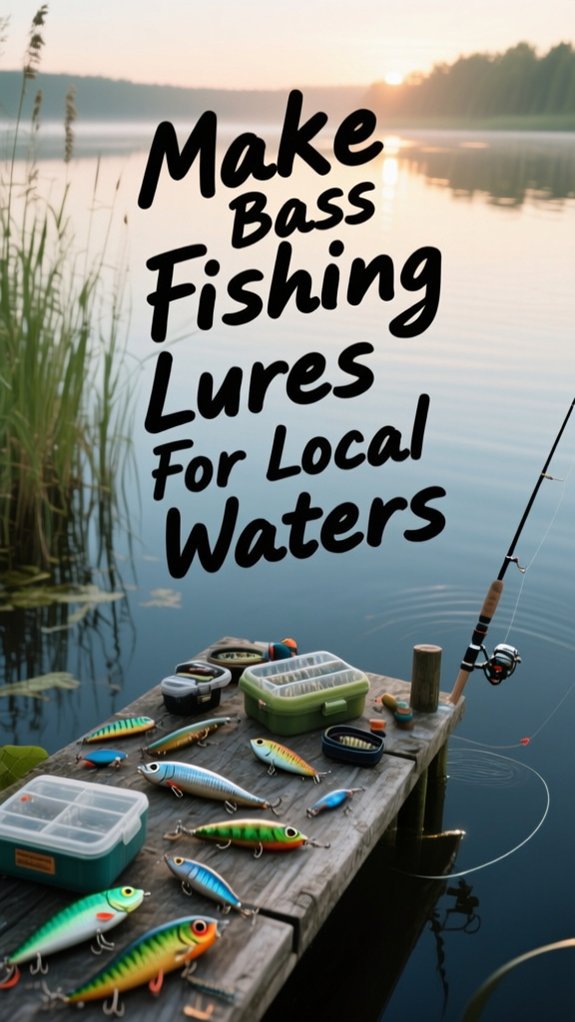
I build custom bass lures by shaping wood or plastic blanks to match my local water conditions, small flat bodies with cupped lips for shallow water, streamlined forms for deep casting, and rugged shapes for heavy cover.
I add blades and rattles for vibration and sound that bass detect from 100 meters away, then match colors to clarity: natural greens and browns for clear water, bright chartreuse for stained conditions. After testing each lure’s swim action and adjusting weight placement or paint as needed, I’ve learned that fine-tuning these details turns a good lure into one that outperforms anything store-bought, and there’s more to the craft than meets the eye.
Gather Your Materials: What You Need to Build Bass Lures at Home
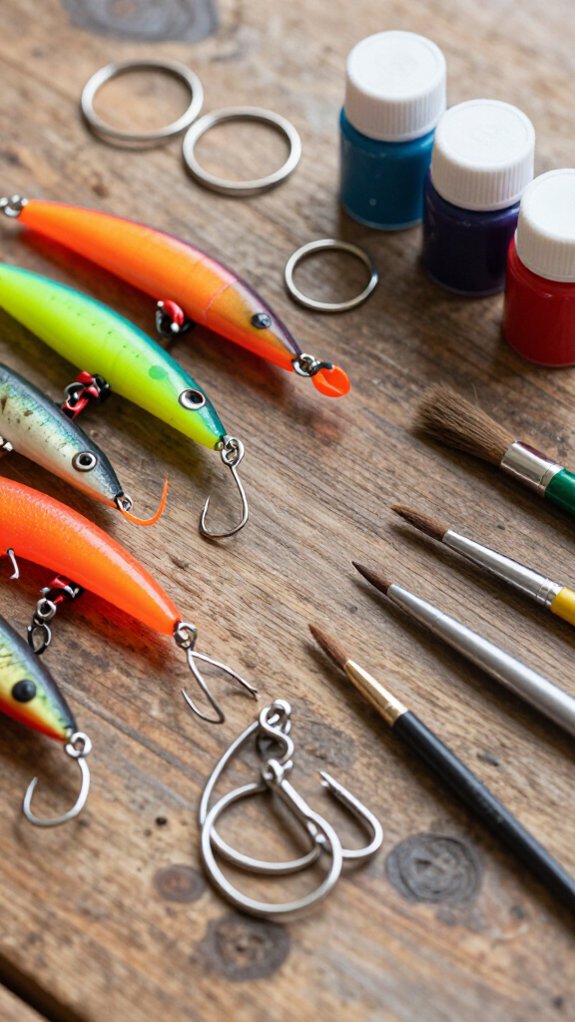
Before you can start carving and painting your first bass lure, you’ll need to round up the right materials and tools, and I promise it’s simpler than it sounds.
What You’ll Need
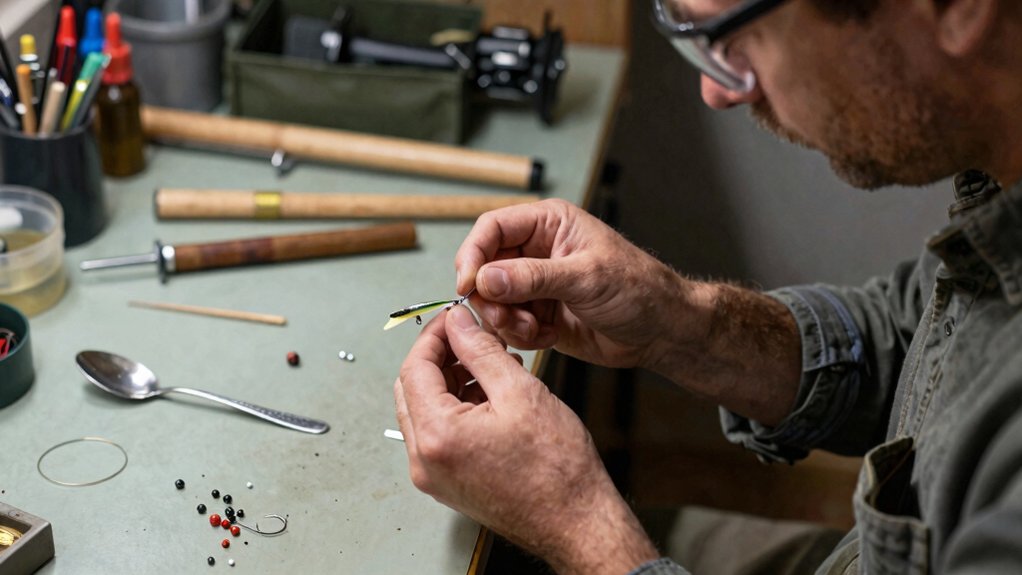
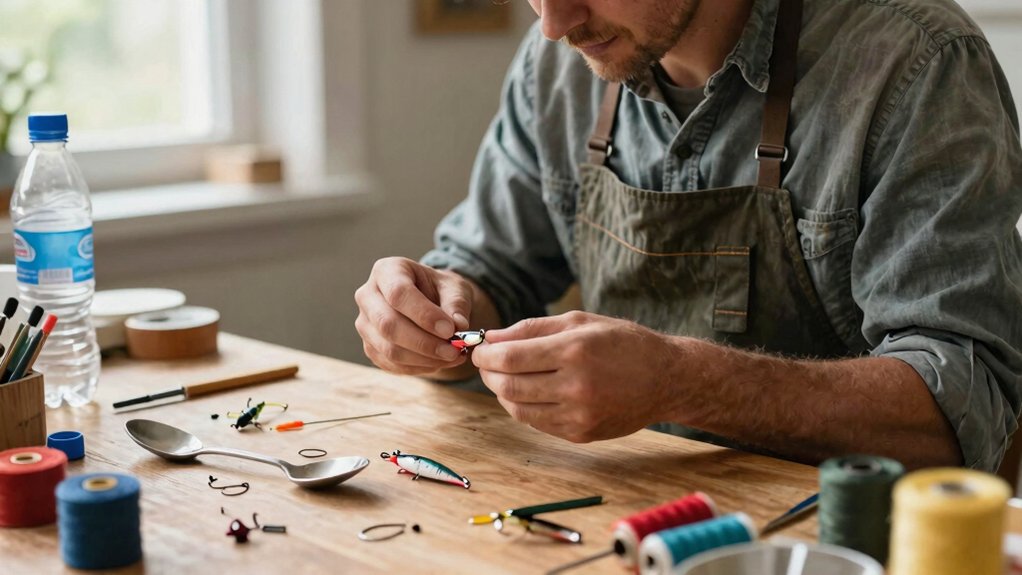
I grab my materials first: wood or plastic blanks for the body, plus hooks, weights, paint, and sealant to finish.
For tools, you’ll want a drill for precise holes, sandpaper for smoothing rough edges, and waterproof adhesive to lock everything together. Pliers and a coping saw round out my kit nicely.
Where To Shop
I source components from hardware stores, craft shops, and outdoor suppliers, quality matters when you’re trusting your catch to homemade gear.
Stock greens and browns for clear water, chartreuse for murky conditions. Don’t forget rattles or BBs; that extra sound triggers aggressive strikes from curious bass.
Build the Body: Shaping Lures for Shallow, Deep, and Heavy Cover Waters
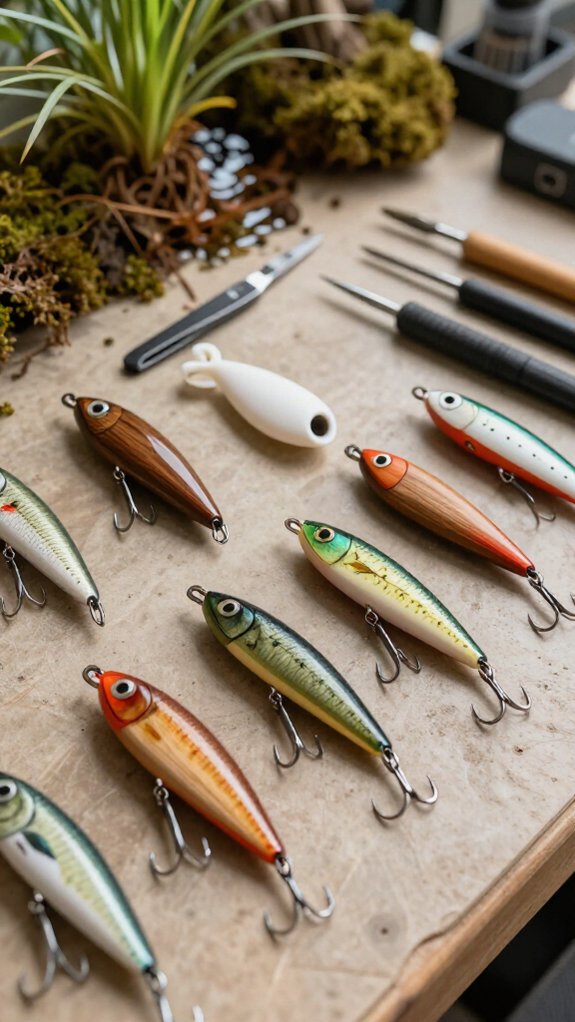
Once I’ve got my materials laid out, I start shaping the body based on exactly where I’m planning to fish, since a lure built for skinny water won’t do me any good when bass are holding twenty feet down.
For shallow water, I carve smaller, flatter bodies that nail prey mimicry of minnows or insects skimming the surface. I’ll add cupped lips to my crankbaits for precise depth control.
Deep water demands a different body design entirely. I shape larger, elongated forms with a streamlined profile to bomb long casts and sink slowly, matching deep-dwelling baitfish.
Heavy cover? That’s where abrasion resistance saves the day. I build rugged shapes with reinforced edges and wide, flat surfaces that shrug off timber and rock.
| Water Type | Body Size & Shape | Key Feature |
|---|---|---|
| Shallow water | Small, flat | Quick surface strikes |
| Deep water | Large, elongated | Streamlined profile for distance |
| Heavy cover | Rugged, reinforced | Abrasion resistance |
| Clear water | Smaller, subtle | Natural prey mimicry |
| Murky water | Larger, vibrant | Aggressive draw |
Add Action Elements: Blades, Rattles, and Buoyancy Adjustments
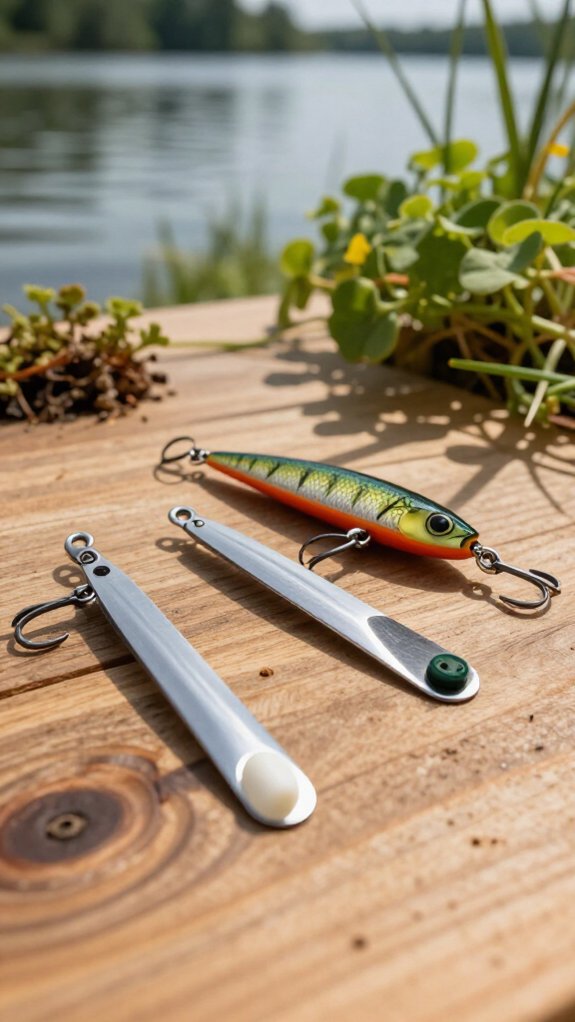
Now that I’ve shaped the body for my target water, it’s time to bring the lure to life with action elements that trigger strikes when bass can’t see or simply need an extra nudge.
Blades and Rattles
I attach willow or Colorado blades to generate vibration that cuts through murky water where visibility drops. These blades create flash and thump that bass feel through their lateral lines.
I also embed rattles inside hollow bodies. This sound helps bass locate my lure in stained conditions.
Research from the American Fisheries Society shows bass detect low-frequency vibrations up to 100 meters away. Combining blades and rattles dramatically amplifies reaction strikes during active feeding periods.
Buoyancy Adjustments
I fine-tune buoyancy with foam inserts or lead weights. This lets me control sinking rates and lure action across different water depths.
Proper buoyancy gives me precise lure control, making my presentation mimic struggling prey.
Pick Lure Colors: Match Clarity and Local Prey Bass Feed On
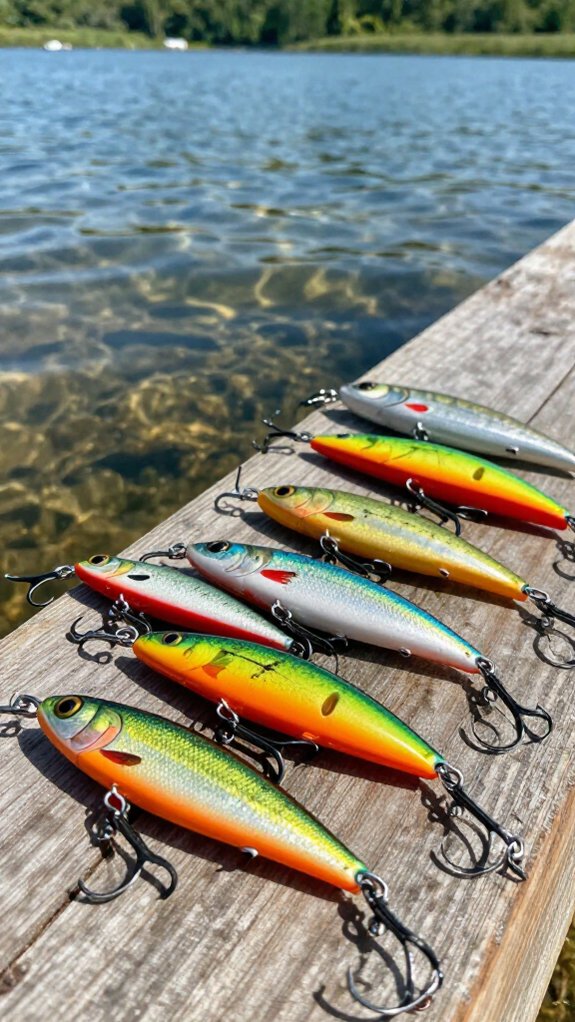
I match my lure colors to two things every single trip: how much I can see underwater, and what the bass are already chasing.
Reading Water Clarity
When I’m staring into gin-clear water, I reach for natural colors—greens, browns, and whites that disappear against the bottom. These tones mimic crawfish scuttling along rocks or shad flickering through sunlit columns.
Bass feeding in these conditions scrutinize every detail, so prey mimicry matters.
Murky Water Solutions
Flip the script in stained water. Bright colors like chartreuse and fluorescent orange cut through the haze, triggering reaction strikes before bass get a close look.
I’ll add reflective tape or internal rattles to replicate the shimmer and sound of local prey when visibility drops.
Know Your Forage
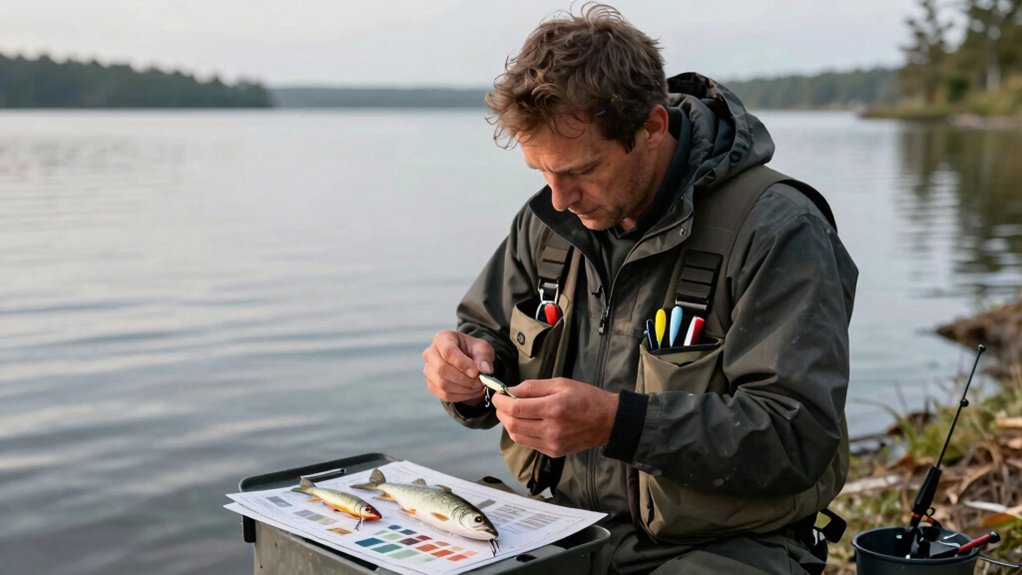
I always peek into bass stomachs or watch surface activity. Matching lure colors to dominant local prey, whether it’s silver shad or rust-colored crawfish, closes the deal when water conditions change.
Test Your Homemade Bass Lures: What to Fix After First Casts
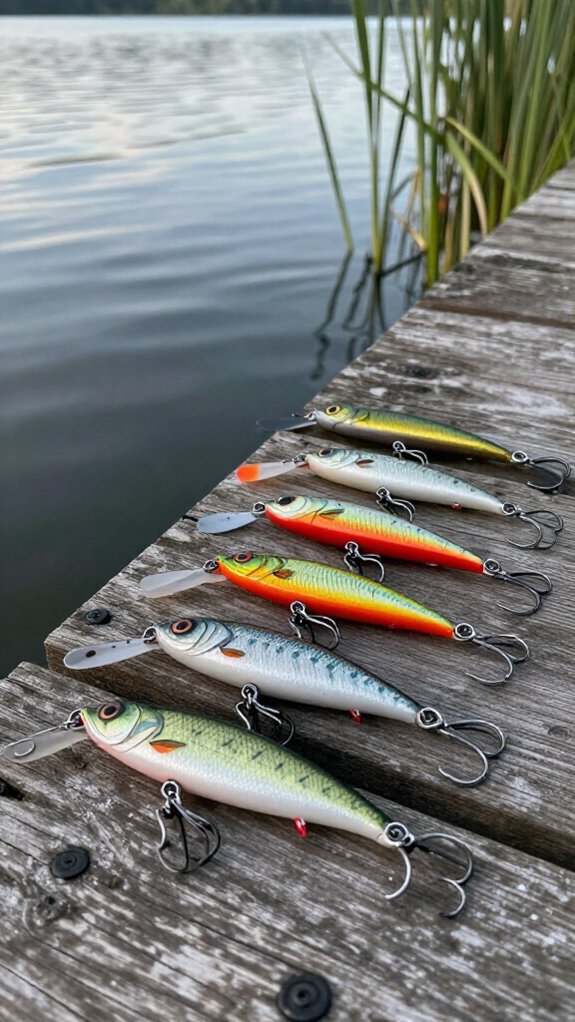
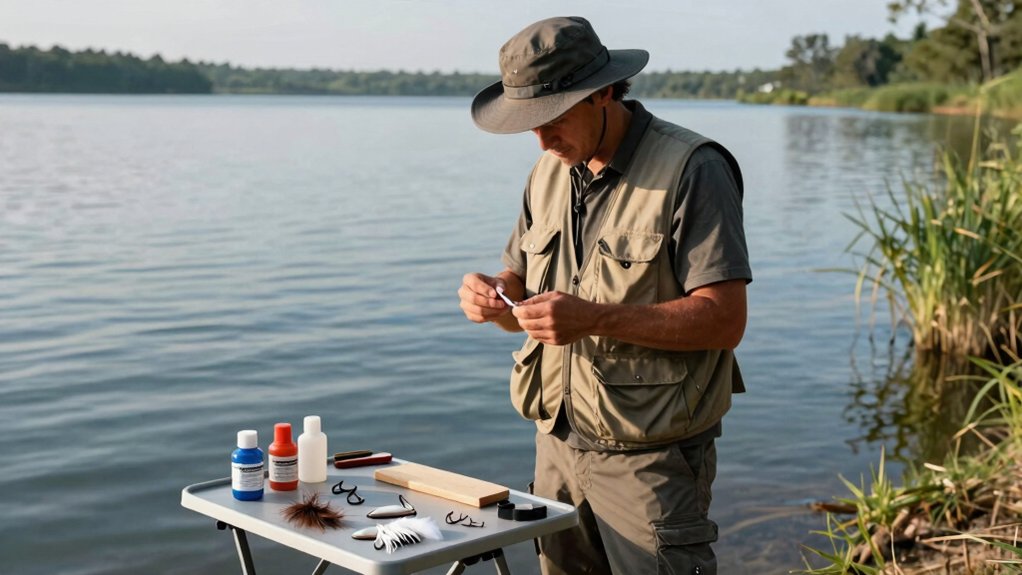
Before I ever tie a homemade lure onto my main line for a full day of fishing, I’ll put it through a controlled test run in shallow water where I can watch every twitch and flutter from the bank. Testing reveals what the workbench hides.
What I Watch For
- Imbalance and weight placement: I study whether the lure swims true or rolls awkwardly, then I make adjustments by shifting lead or trimming the bill until it tracks straight.
- Paint chipping and cracking: After the first cast, I inspect for signs of wear; any flaw hurts visual attractiveness, so I’ll reseal immediately.
- Performance across water conditions: I switch locations to compare how color and action read in different water clarity, tweaking patterns when bass ignore the offering.
Frequently Asked Questions
What Are the Best Bass Lures for Specific Water Conditions?
I match my lures to water clarity and depth: I’ll throw finesse plastics in clear water, bright spinnerbaits when it’s stained, deep-diving crankbaits for cold depths, and topwater frogs during summer’s low light, adapting keeps me catching bass consistently.
What Are Some Homemade Lures I Can Make for Bass Fishing?
Making lures is like painting with purpose, I craft soft plastic worms using silicone molds, carve wooden poppers that dance on topwater, and build spinnerbaits with custom blades that flash like fleeing baitfish in local waters.
What Is the 80/20 Rule for Bass Fishing?
I use the 80/20 rule to focus my efforts, roughly 80% of my bass come from just 20% of my lures and techniques. I’ve learned to identify those high-percentage patterns and master them instead of spreading myself thin.
What Lure Was Banned From Bass Tournaments?
I’ve learned that large topwater frogs with multiple hooks faced tournament bans, and I’ve also seen restrictions on lead sinkers, certain soft plastics, overly bright or reflective lures, and anything containing phosphorescent or glow-in-the-dark materials.
In Conclusion
Making your own bass lures for local conditions isn’t just rewarding, it’s like holding a secret key to your home waters. You’ve gathered materials, shaped bodies for every depth, added action elements that sing underwater, and matched colors to what bass actually eat.
Now get out there and test. When that first fish crushes your handmade crankbait, you’ll feel the difference custom craft makes. Tight lines, and trust your work.