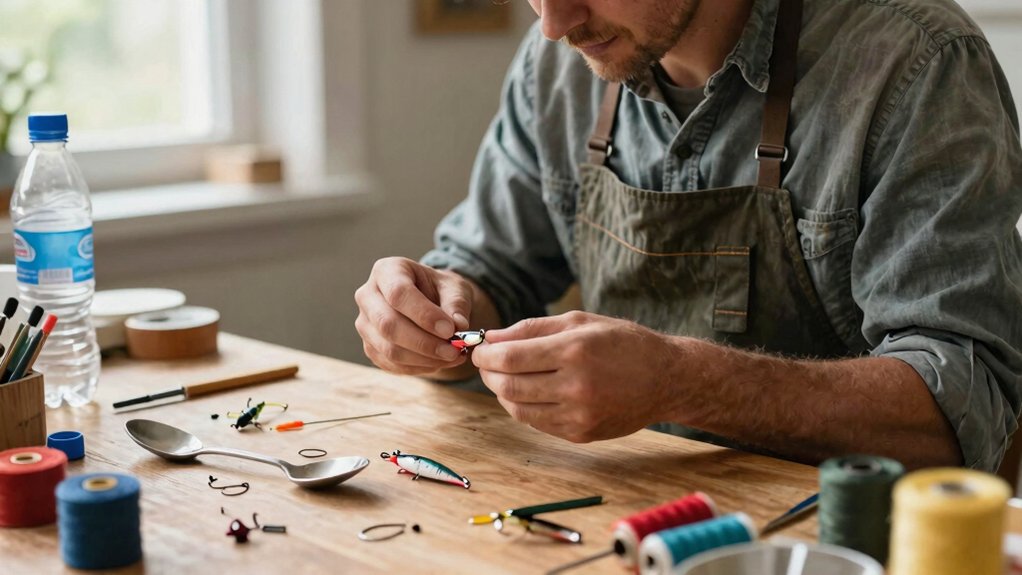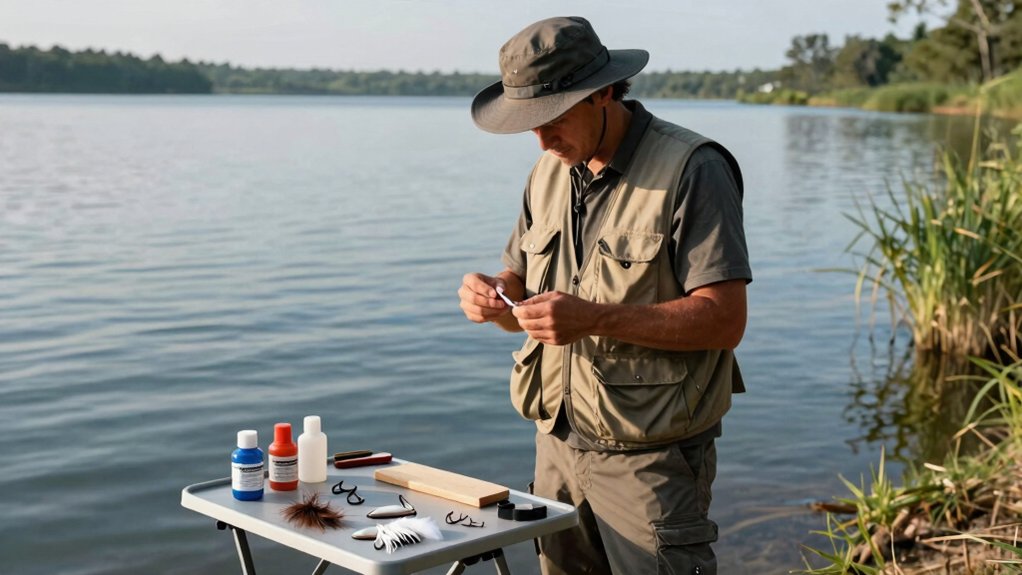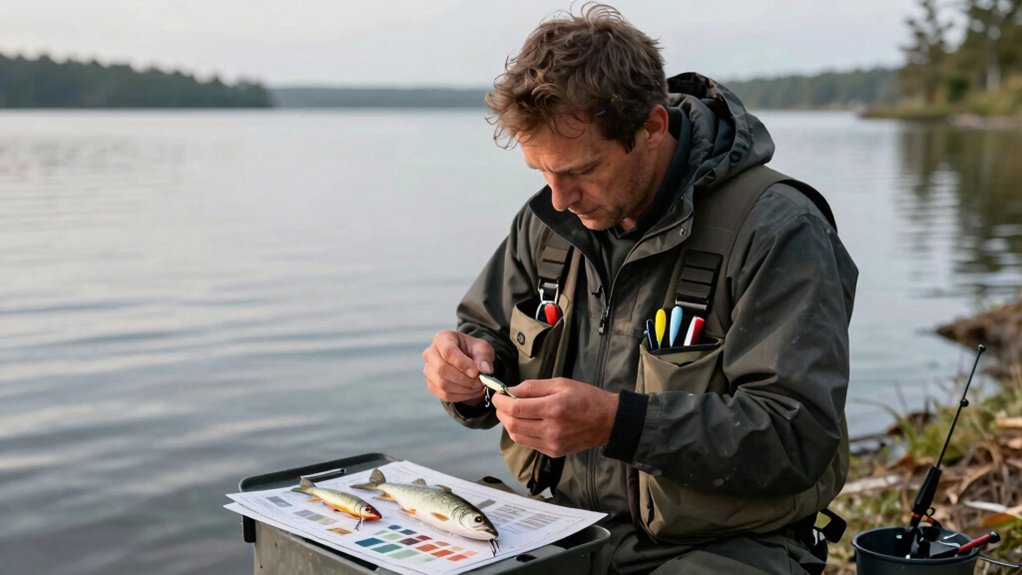
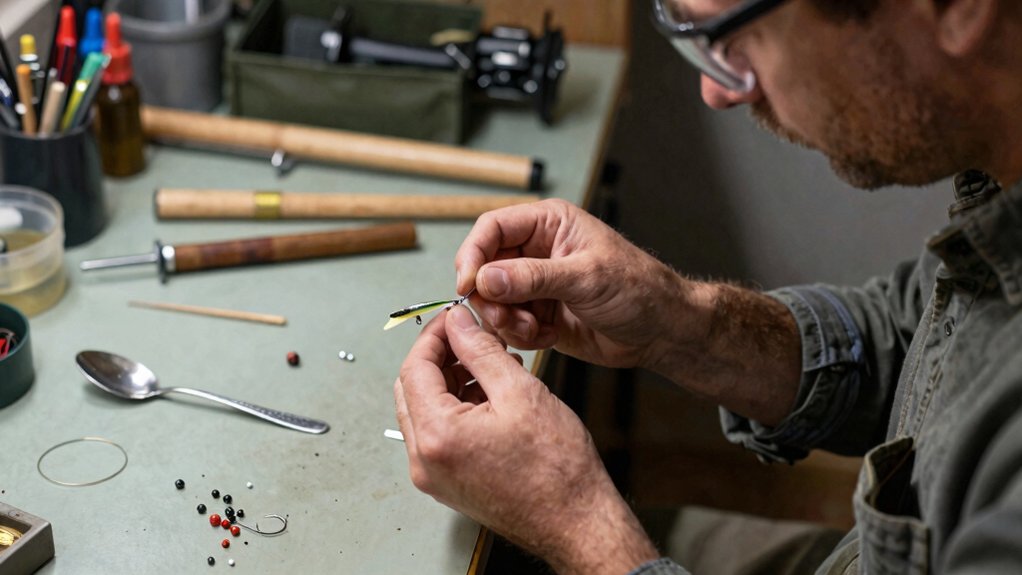

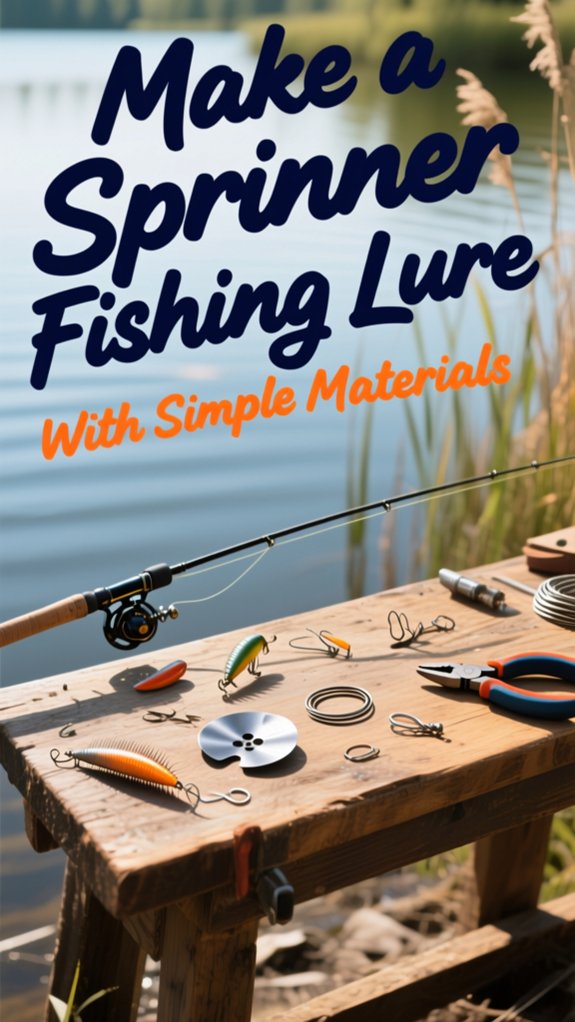
You can build a spinner lure with just a safety pin, a spoon fragment, and a few beads. I bend the pin into a wire shaft, thread a blade onto a clevis, and slide it on with beads as spacers to keep everything spinning free.
A hook at the end, treble or single, depending on what I’m after, completes the setup. Match blade size to your target: tiny blades for trout, larger ones for bass. Test the spin before you cast; if it stalls, add a bead or tweak the wire.
There’s a reason this simple design has caught fish for over a century, and I’ll show you exactly how to dial yours in.
Choose Your Blade Size and Color Before You Build
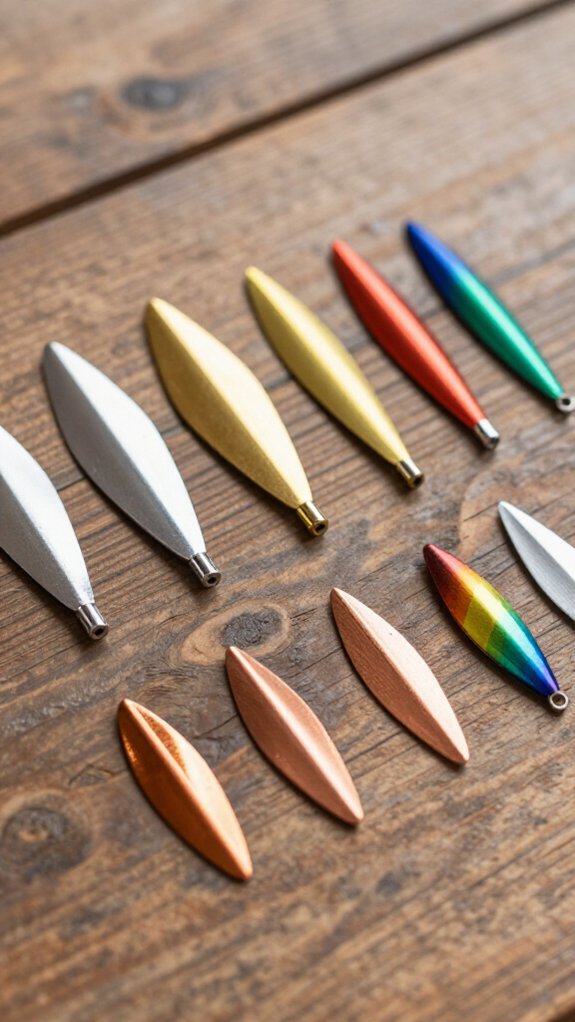
Before I thread a single bead or twist a single wire, I always lock in my blade size and color, because this choice determines whether my spinner will whisper or shout to the fish I’m after.
Why Blade Size Matters
I pick smaller blades, like Mepps Aglia, when I’m finesse fishing and want subtle vibration. I reach for larger blades when I need serious flash and thump to draw fish from cover.
The blade size directly shapes how much water my lure displaces and how aggressively it hunts.
Reading Water Conditions for Blade Color
Water conditions dictate my blade color every time. I’ll slap on gold when I’m staring at murky, stained water, that flash cuts through the gloom like a beacon.
In clear water, I’ll switch to bright reds or chartreuses because those vivid visuals trigger reaction strikes from sight feeders.
The Payoff of Pre-Selection
Pre-selecting my blade size and color before I build means I’m crafting purpose-built weapons, not guessing.
Gather These 6 Essential Spinner Lure Materials
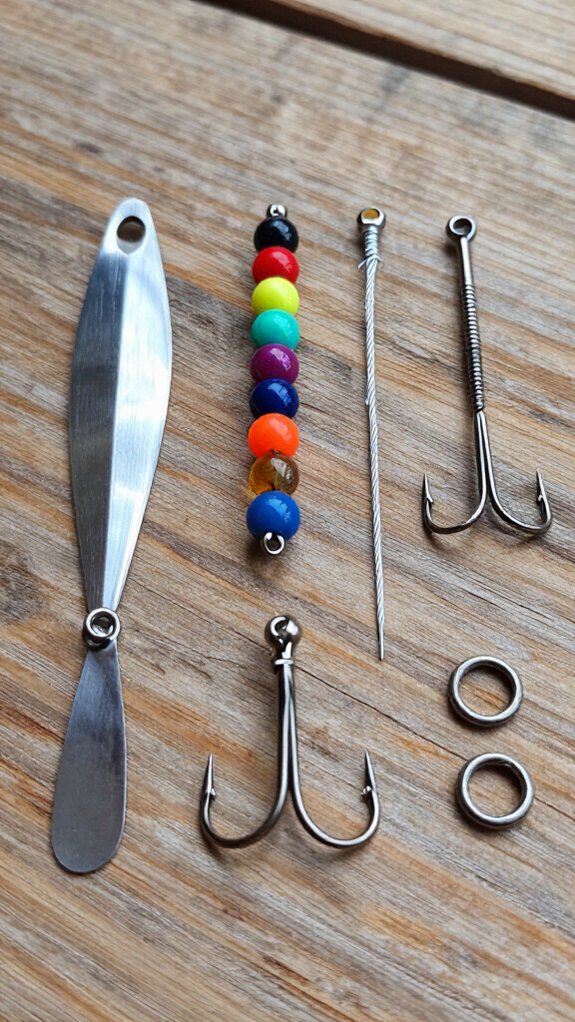
Once I’ve settled on my blade size and color, I reach for my materials box, because a spinner lure is only as good as the components holding it together.
The Core Six
I always start with a wire shaft, pre-formed or custom-bent, to serve as the lure’s backbone. Next come spinner blades, brass or steel beauties that flash and thump through the water, drawing strikes from curious fish.
Small beads and spacers keep everything separated so the blade spins freely without grinding against the hook.
Speaking of hooks, I grab a sharp treble or single, fixed or ring-swapped depending on my target species.
Finally, quality pliers are essential for bending, wrapping, and locking everything tight.
These six materials transform simple wire and metal into a fish-catching machine.
Assemble Your First Spinner Lure Step by Step
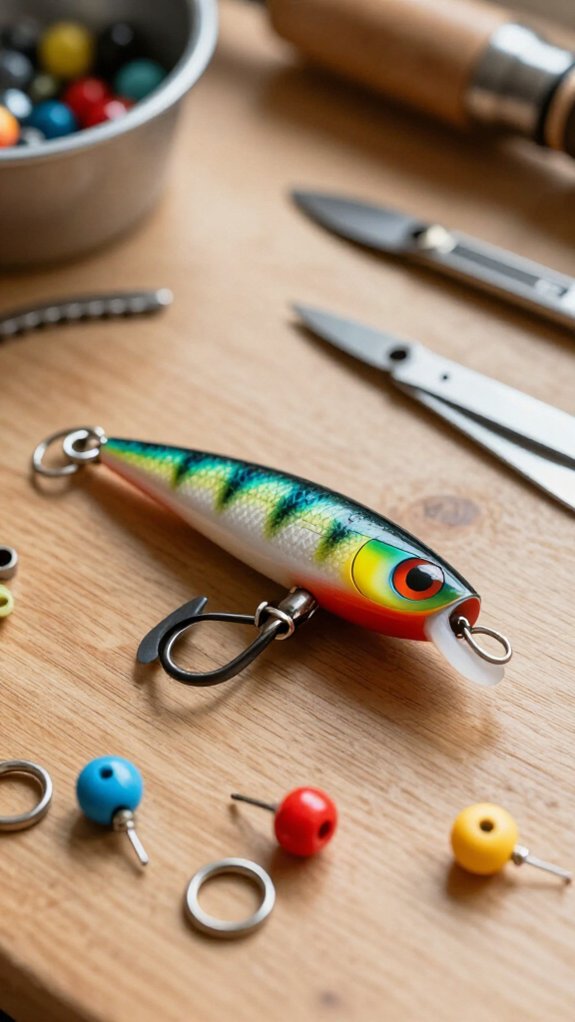
Because I’ve got all six materials laid out and ready, I’m diving straight into the build, no fancy workshop needed, just my hands, my pliers, and a few minutes of focused work.
Building Your Spinner Lure
First, I thread the clevis through the spinner blade and slide it onto the wire shaft. I give it a flick—it’s spinning freely, which means flash and vibration coming through the water column to draw strikes.
Next, I add a small bead as a buffer between the clevis and weighted body. This prevents blade-hook contact that kills action.
Then I slide the weighted body on, positioning it for optimal balance so the lure tracks true.
Finally, I attach the hook by forming a loop, wrapping securely, and trimming excess wire. I test by manually spinning the blade—smooth rotation means I’m ready to fish.
Ensure Spinner Blades Spin Freely Every Time
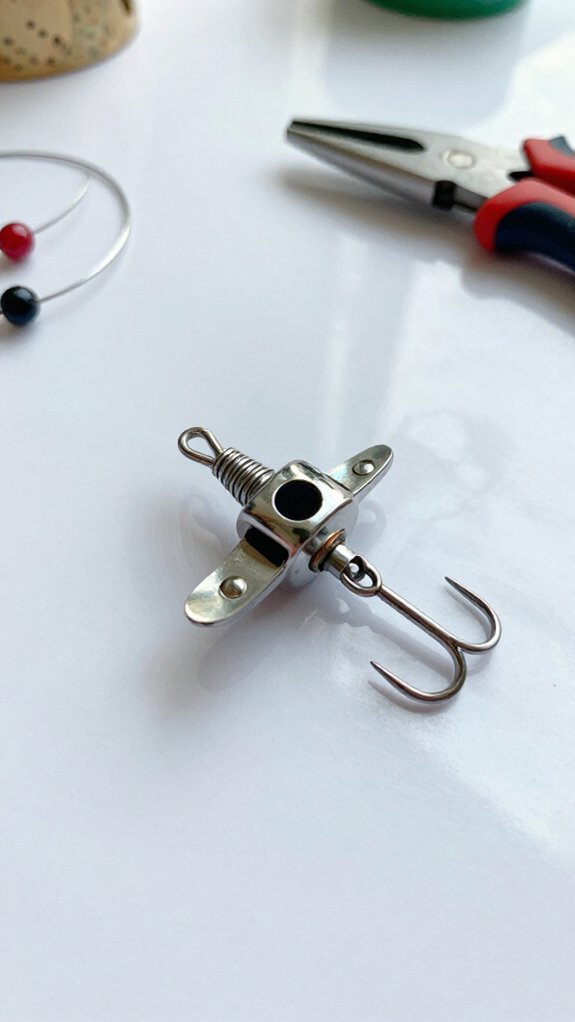
I’ve built plenty of spinners that looked great on the bench only to dead-stick through the water because the blade wouldn’t turn, and nothing’s more frustrating than dragging a dud lure past fish that should’ve bit. Here’s how I guarantee free spinning every time.
Space It Right
I always leave enough gap between my spinner blades and the hook or body. Without clearance, the blade slaps metal and kills the action.
Add Spacers
I slip small beads or spacers between components. These plastic or metal buffers prevent contact and let everything rotate smoothly.
Check Your Shaft
A bent wire shaft wrecks rotation. I eyeball mine straight before finishing assembly.
Size Your Hardware
I match my clevis or split ring to the blade so it pivots unrestricted.
Test Before You Cast
One slow retrieve confirms my blade hums perfectly, no wobble, no stick.
Fix Blade Stall and Hook Snags in 30 Seconds
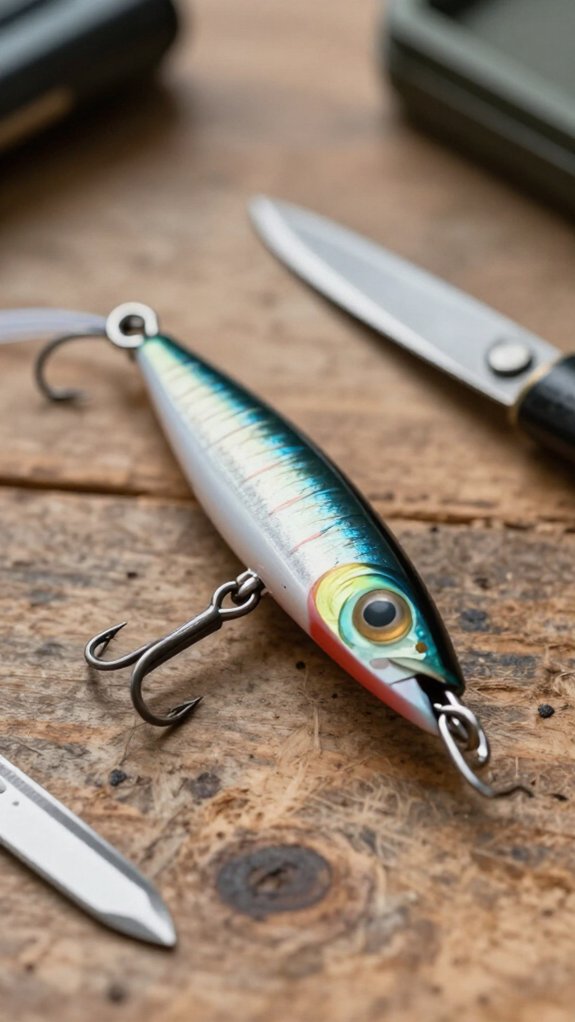
I’ve found that blade stalls and hook snags are two of the most frustrating issues you’ll run into when building spinners, but both have quick fixes that’ll get your lure back in action.
For blade spin solutions, I’ll show you how to adjust wire clearances and component alignment so that blade spins like a propeller every time.
When it comes to hook clearance fixes, a few careful tweaks with pliers can eliminate those annoying tangles that kill your retrieve.
Blade Spin Solutions
When your spinner blade suddenly dies mid-retrieve or your hook tangles against the metal, you’re not just losing fish, you’re wasting prime casts in water that was already hard to reach.
I’ve fixed hundreds of spinners streamside, and blade stall almost always traces back to poor component spacing.
Quick Fixes That Work
I slip a small bead between the spinner blade and hook to create instant clearance. No bead? Reposition your existing spacer. These quick adjustments take thirty seconds and restore that hypnotic thump fish can’t ignore.
| Problem | Cause | Fix |
|---|---|---|
| Blade stall | Insufficient clearance | Add bead/spacer |
| Hook snags blade | Poor positioning | Use split ring |
| Intermittent spin | Loose components | Tighten and test |
| Dead retrieve | Friction buildup | Reposition spacer |
Test every lure before casting. A blade that spins freely in your hand will fail in current. Water resistance changes everything.
Hook Clearance Fixes
If your blade quits spinning or your hook keeps grabbing the metal mid-retrieve, you’re usually dealing with one simple problem: the components are sitting too close together.
Fixing Blade Stall
I fix blade stall by gently bending the wire shaft slightly away from the blade. This tiny tweak creates enough space for free, flashy spinning that drives fish wild.
Clearing Snagged Hooks
For snagged hooks, I inspect the hook area with pliers and clear any debris. Sometimes I’ll loosen or replace the hook entirely if it’s catching on nearby metal.
Dialing in Hook Clearance
I adjust the bead or spacer position to boost hook clearance between blade and hook. This eliminates interference fast.
Quick Test
I finish by testing the lure in water or by hand. Confirming smooth blade spin and snag-free hook movement takes thirty seconds flat.
Use the Steady Retrieve That Catches More Fish on Spinner Lures
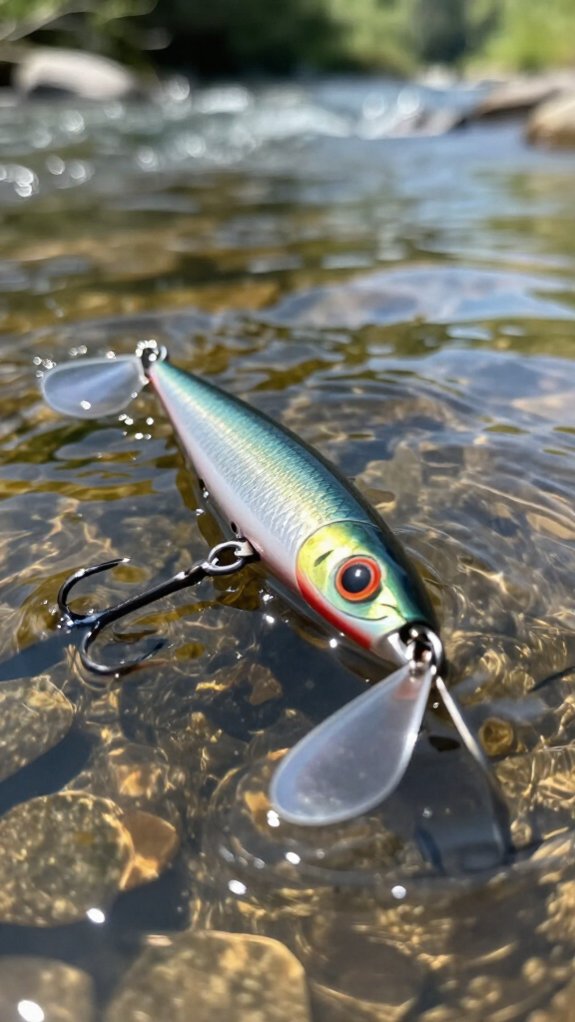
Although many retrieves work with spinner lures, I’ve found that a steady retrieve consistently outperforms erratic techniques because it keeps the blade spinning at a rhythm fish can’t ignore. When I’m catching a fish, I’m almost always using this method.
Here’s why the steady retrieve works so well:
- It maintains consistent blade rotation, producing a flash and thump that draws fish from a distance.
- A slow to moderate pace lets the spinner lure spin smoothly, enhancing strike triggers.
- Skipping sudden speed changes prevents blade stalls that kill the action.
- It mirrors natural prey movement, making strikes more instinctive.
- It performs reliably across conditions and species, from bass to trout.
I keep my rod tip low and reel at an even pace. No fancy tricks needed, just consistency. That’s the secret to turning casts into catches.
Trigger Strikes With Pauses and Twitches on Spinner Lures
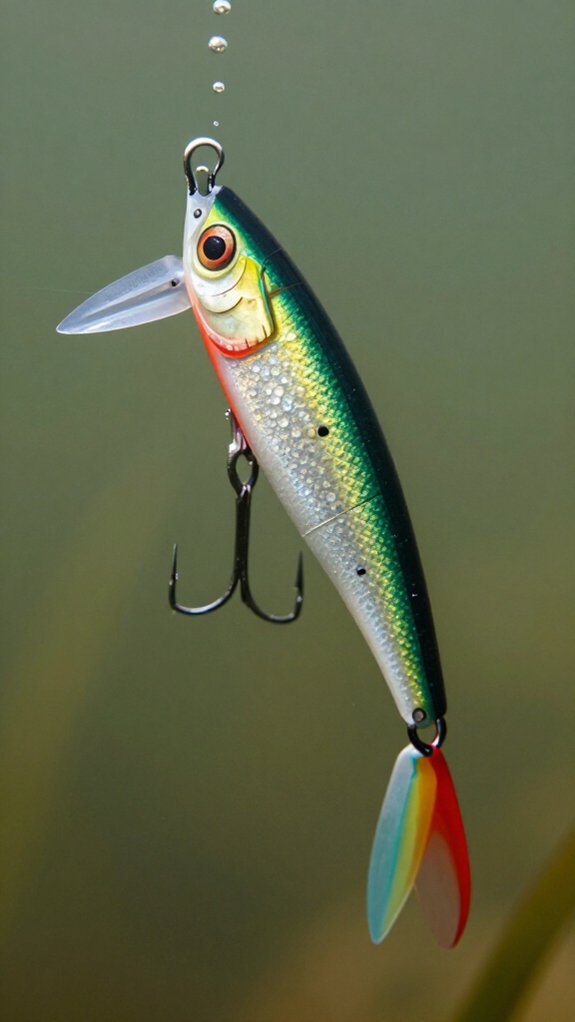
A steady retrieve puts fish in the boat, but I’ve learned that mixing in pauses and twitches turns lookers into biters when they’re playing hard to get.
Why Pauses Work
When I pause my retrieve, the spinner drops and flutters like injured prey. That dying-baitfish action is irresistible. The blade spins irregularly or stops completely, flashing and catching light, increasing attraction exactly when fish are watching.
Adding Twitches
I snap my rod tip with quick twitches between pauses. This creates erratic, unpredictable movement that triggers predatory instincts. Fish can’t stand it.
Putting It Together
Here’s my go-to pattern:
- Retrieve steadily for 3–4 cranks
- Pause and let the lure sink slightly
- Twitch twice sharply
- Repeat
Varying speed with pauses and twitches mimics natural prey behavior. Finicky fish that ignored my steady retrieve slam this presentation.
Match Your Spinner Lure to Any Fishing Condition
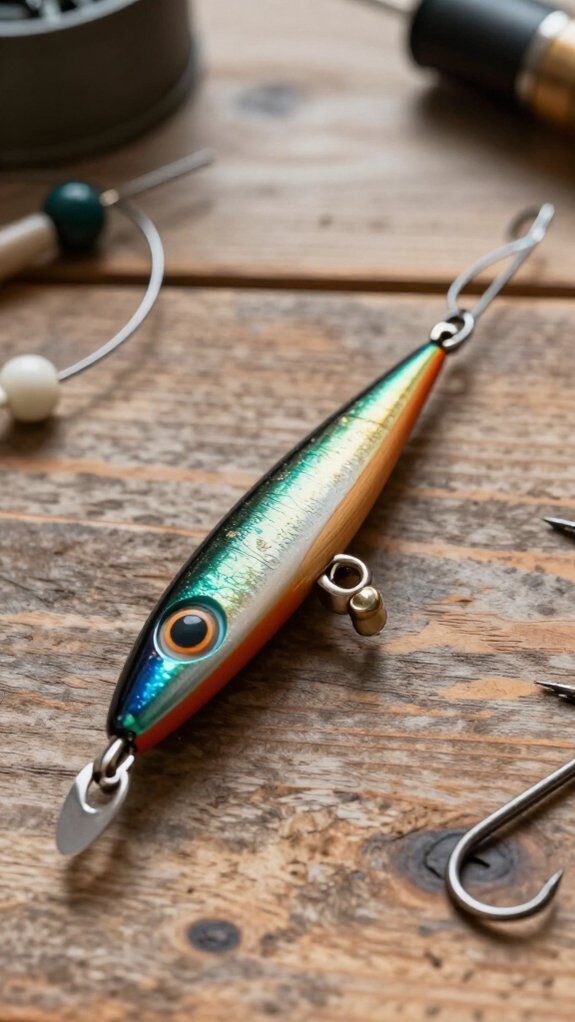
I match my spinner lure to any fishing condition by first selecting the right blade size, Colorado blades for slow water and Willow blades for fast currents. Then I adjust color to mimic local prey or match water clarity, and finally fine-tune my retrieve speed with strategic pauses and twitches based on what the fish are doing that day.
When I’m staring at stained, murky water, I’ll reach for larger, flashier blades that throw off serious thump and vibration so fish can actually find the lure. But I’ll downsize to subtler options in gin-clear streams where a heavy flash spooks wary trout.
It’s this three-step dance of blade size, color matching, and retrieve adjustment that turns a generic spinner into a precision tool for whatever the river or lake throws at me.
Blade Size Selection
When I’m picking out a spinner lure, the blade size is the first thing I check because it directly controls how much flash and vibration I’m putting into the water, and that means matching it to the conditions I’m facing that day.
Here’s how I dial in blade size for maximum results:
- I reach for smaller blades (sizes 00–2) when I’m finesse fishing in clear water where subtle flash won’t spook wary fish.
- I upsize to Colorado or Indiana blades (sizes 3–5) when the water’s murky and I need serious thump to get noticed.
- I match blade size to my target, tiny for trout and panfish, beefy for bass and saltwater bruisers.
- I read the water conditions carefully, dropping down in calm, clear flows and bulking up when currents run rough.
- I Tweak lure vibration by swapping blades until the feedback through my rod tip feels exactly right.
Color Matching Strategies
While blade size controls vibration, it’s the hue of my spinner that determines whether fish actually commit to striking, so I’ve learned to treat color selection as a direct response to what I’m seeing in the water that day.
I match my spinner blade colors directly to water clarity. In muddy conditions, I reach for chartreuse or orange, high-visibility choices that cut through the murk. When the water’s gin-clear, I switch to natural shad or minnow patterns that enhance lure realism and don’t spook wary fish.
For bright, sunny days, I love metallic blades that flash like scattered baitfish, drawing strikes from aggressive predators.
Here’s my quick-reference guide:
| Water Condition | My Go-To Blade Choice |
|---|---|
| Clear water | Natural shad, silver minnow patterns |
| Stained/muddy water | Chartreuse, orange, firetiger |
| Bright sunshine | Gold, nickel, or holographic flash |
I also study local forage when picking patterns, Matching common prey species always outperforms random guesses. Target species matter too; trout key on different colors than bass. By reading conditions and adjusting accordingly, I’ve turned slow days into memorable ones.
Retrieve Speed Adjustment
Because water conditions change constantly, I’ve learned that dialing in my retrieve speed is just as important as picking the right blade color or size.
Adapting Your Approach
I adjust my retrieve speed based on what the water tells me. Slower speeds optimize blade vibration in murky or calm conditions, letting fish home in on the lure. When I need to trigger reaction bites, I’ll burn it faster through open water or heavy current.
Here’s how I fine-tune my approach across different fishing scenarios:
- Slow and steady retrieves produce consistent flash and vibration
- Pauses and jerks imitate wounded prey for cautious fish
- Fast burns provoke aggressive strikes from active predators
- Steady crawling keeps blades thumping in cold, clear water
- Variable speeds during one cast reveal daily preferences
Experimentation catches more fish than rigid rules ever will.
Frequently Asked Questions
How to Make a Simple Spinner?
I thread a blade onto wire, add a bead behind it, attach weight for sinking and vibration, then secure a hook. I test my retrieve to ensure smooth spinning without wobbling or catching.
How to Make a Simple Fishing Lure?
I thread wire through a spinner blade, drop a bead, and lock on a hook. I bend, I twist, I test the spin. I pull, it flashes, it spins, it catches, I made that.
How Do I Make My Own Spinnerbait?
I thread a clevis and spinner blade onto a wire shaft, add a bead, attach a hook with a wrapped loop, then customize blade sizes and colors. I’ll test it with a steady retrieve, adjusting speed for conditions.
What Can I Use as a Spinner?
I reshape old spoon bowls into silver dancers, bending them into willow or Colorado shapes. I’ll punch a hole, thread a clevis onto wire, and watch them flash like mirrors underwater, seducing strikes from hungry fish.
In Conclusion
I built my first spinner from a bent paperclip and a soda can tab, and that janky lure still caught three brook trout in an hour, proof that simple beats fancy when the blade spins true.
You’ve got the know-how now, so grab your pliers and start bending. The fish don’t care what you spent; they care what flashes and vibrates in front of them. Tight lines.