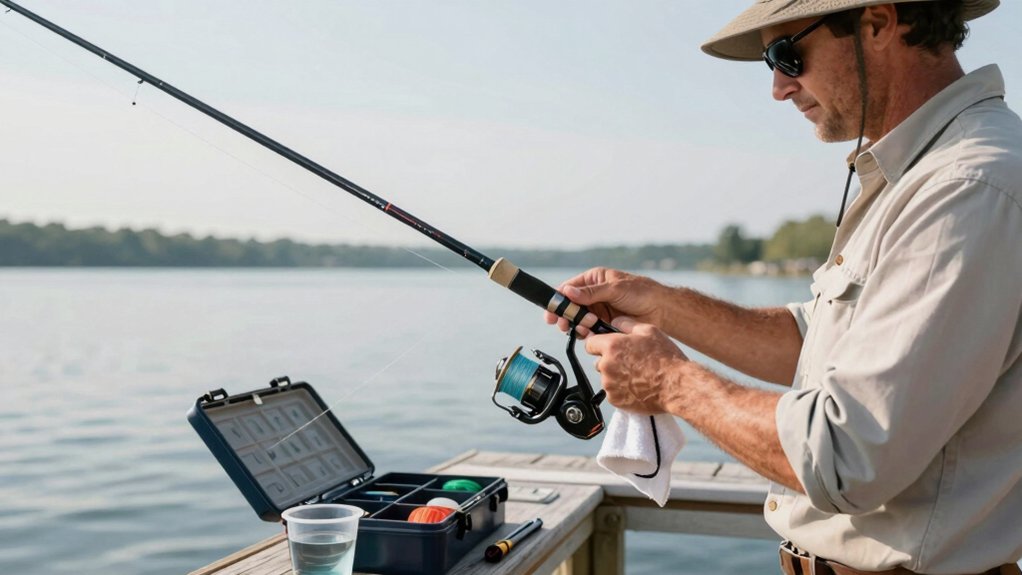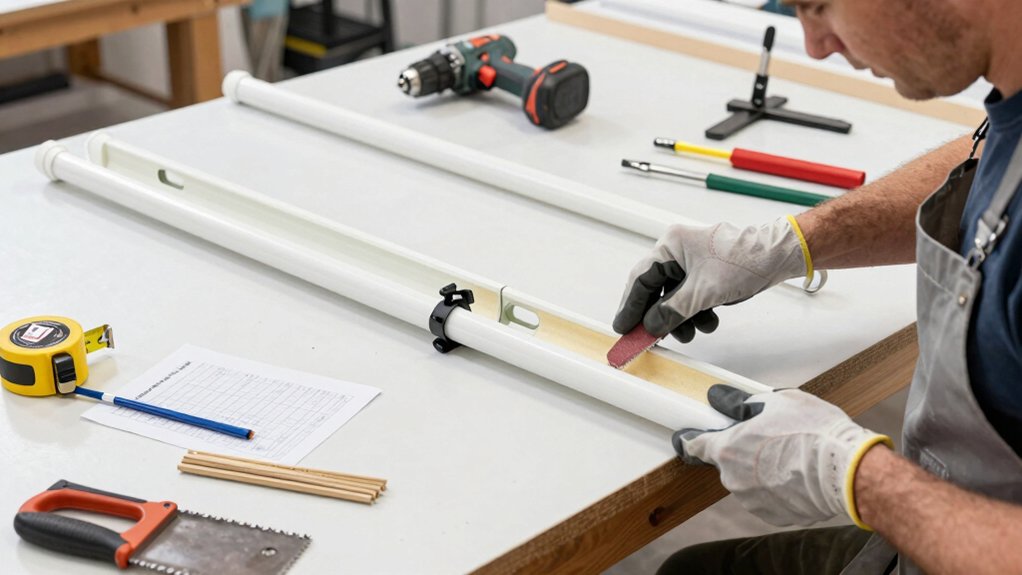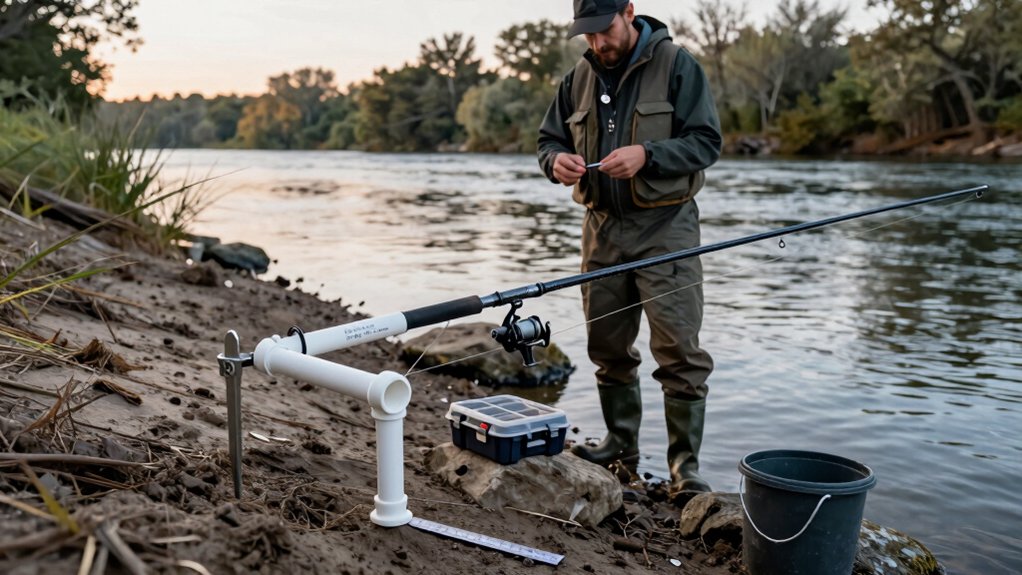
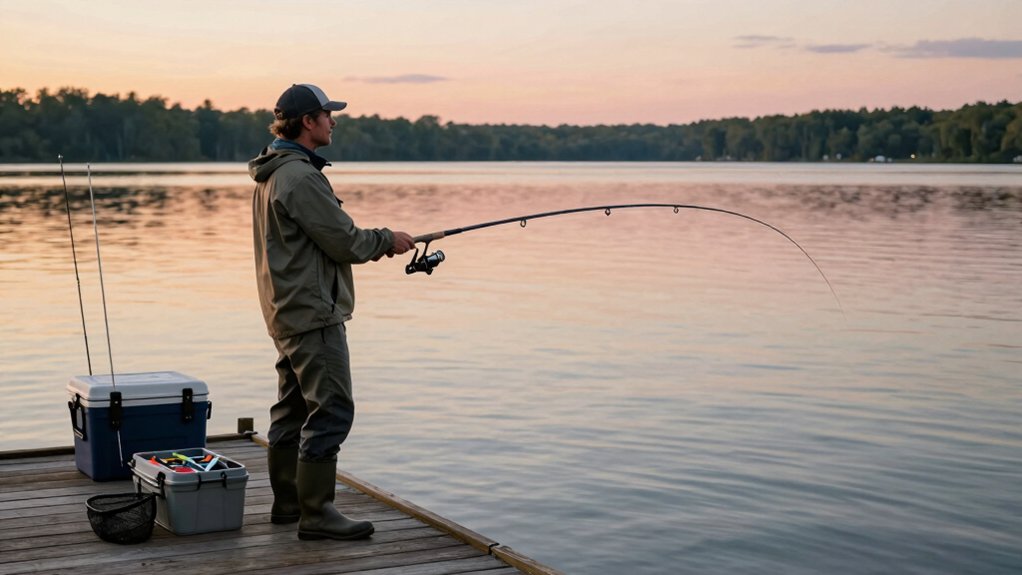

Think of a fishing rod as your underwater extension, a flexible arm that casts your lure, feels every subtle nibble, and fights fish with precision. I rely on mine to turn instinct into action, whether I’m flicking a popper for bass or drifting a jig for walleye.
The right rod boosts your feel, accuracy, and control, making the difference between a story and a fish in the boat. And once you know how to match it to your target, technique, and conditions, you’ll start catching more consistently, let’s break down how.
What is a fishing rod used for?
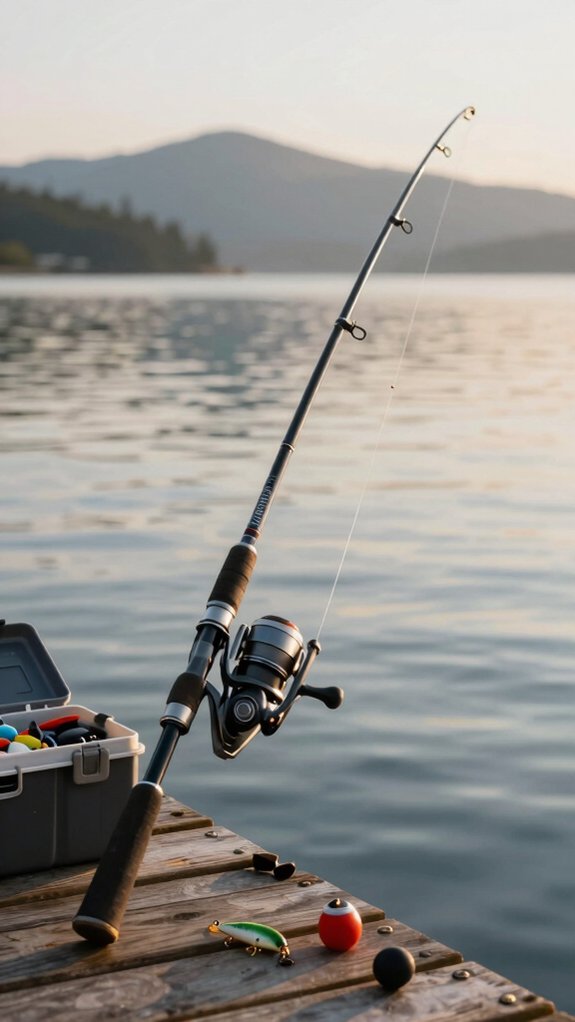
Think of your fishing rod as your direct link to the underwater world, every twitch, tap, or surge tells a story.
A fishing rod helps you cast bait or lures farther, control line during a fight, and feel even the lightest bites.
Your rod length, rod power, and rod action shape how well you perform.
Shorter rods (under 6 ft) offer precision in tight spots, while longer ones (over 7 ft) cast farther, ideal for shore anglers.
- Light rod power (UL-L) suits small fish and finesse tactics
- Heavy power (H-XH) handles big game and thick cover
- Fast action bends near the tip, great for sensitivity and quick hooksets
Spinning rods are beginner-friendly and versatile.
Graphite rods are light and sensitive, enhancing bite detection.
Choose wisely: the right combo boosts accuracy, control, and confidence, 90% of anglers report better catch rates with properly matched gear (American Sportfishing Association).
How does a fishing rod work?
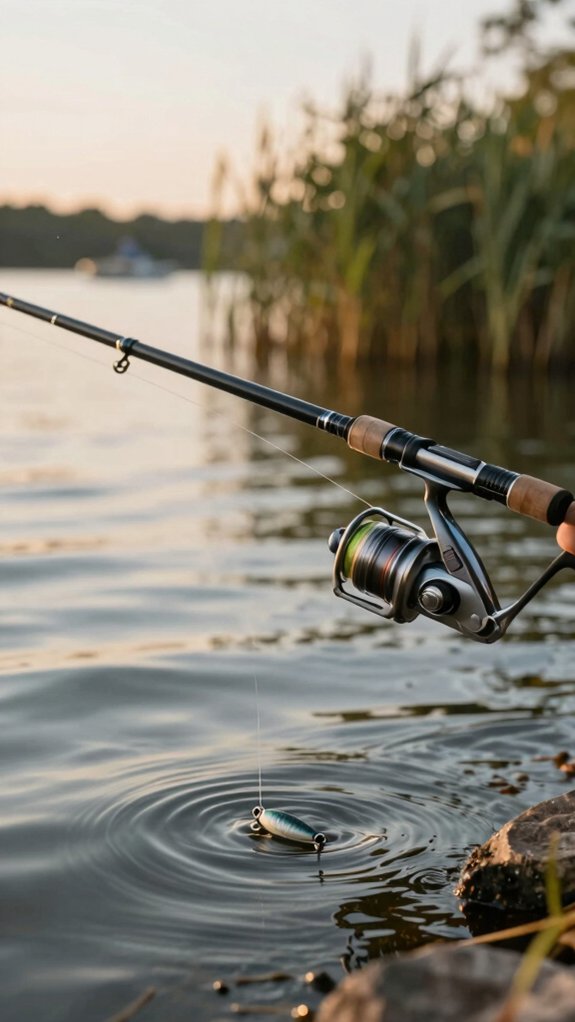
Your fishing rod isn’t just a stick with string, it’s a finely tuned tool that turns your flick of the wrist into a powerful, accurate cast.
Think of your rod blank as a spring. When you cast, it loads with energy, then releases it, amplifying your motion.
The action (where it bends) and power (its stiffness, from ultra-light to extra-heavy) determine how it performs. Fast-action rods, often made of graphite or fiberglass, snap back quickly for precision. Slower actions offer more forgiveness.
Line guides? They’re not just rings, they spread stress, reduce friction, and keep your line true.
A sensitive rod blank transfers subtle vibrations, so you feel light bites or bottom structure. That sensitivity can mean the difference between a missed strike and a solid hookset.
Choose the right combo, action, power, material, and you’ll cast farther, detect more bites, and land more fish.
Types of fishing rods and uses
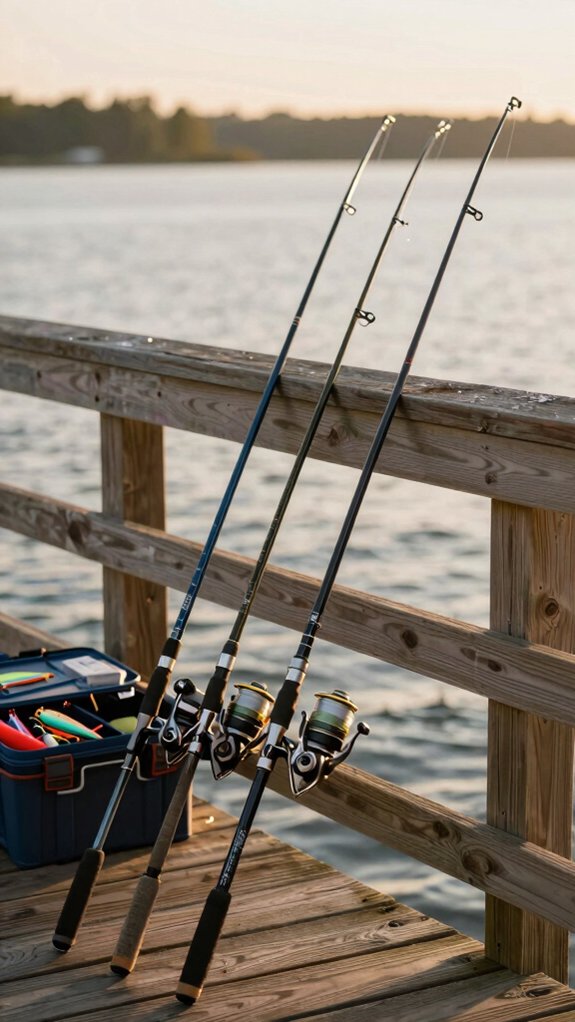
While every fishing rod shares the same basic job, casting a lure or bait and fighting fish, not all rods are built the same, and picking the right type can make or break your day on the water.
Know Your Types of Rods
Spinning rods (5–8.5 ft) are beginner-friendly, perfect for light lures and panfish. I use them most for trout and casual bass fishing.
Baitcasting rods offer precision and power, ideal when tossing jigs or crankbaits for bass.
Fly rods? They cast weighted line, not lures. A 6-wt handles most freshwater flies beautifully.
Surfcasting rods (10 ft+) launch baits far into the surf: key for beach anglers chasing striped bass.
And ice fishing rods? Super short (2–3.5 ft), often fiberglass, built for tiny holes and subtle bites. I trust mine for walleye through the ice.
Pick the right rod, and you’ll fish smarter, not harder.
Key rod specs and materials explained
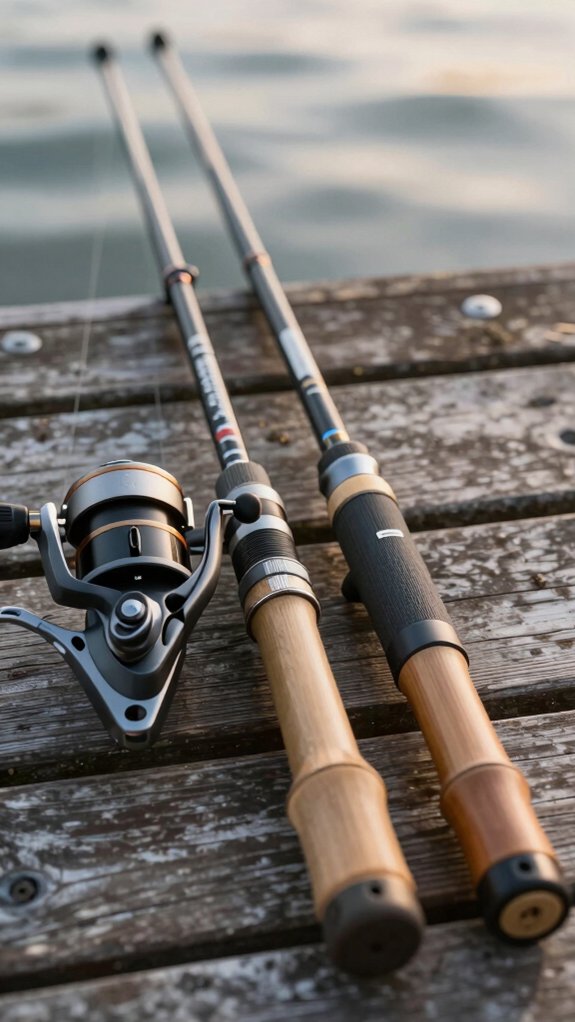
When you’re standing in the tackle shop or scrolling online, knowing the specs on a rod’s blank can save you from buyer’s regret and help you land more fish.
Power & Action Matter
Power (like ML or MH) tells you how much backbone the rod has, ultralight to extra-heavy, so you match it to your line weight and lure weight. A medium-heavy rod handles 1/4–3/4 oz lures; ultralight? Think 1/16 oz.
Action shows where the rod bends. Fast action rods (tip-flex) set hooks quickly; slow actions (parabolic) bend deep, offering smoother fights.
Materials Shape Performance
Graphite rods are light and sensitive, great for feeling subtle bites.
Fiberglass is tougher and slower, ideal for heavy cover or durability.
Most rods blend both for balance. Pick the right combo, and your cast, control, and catch rate all improve, trust me, your setup will thank you.
Which fishing rod should I use?
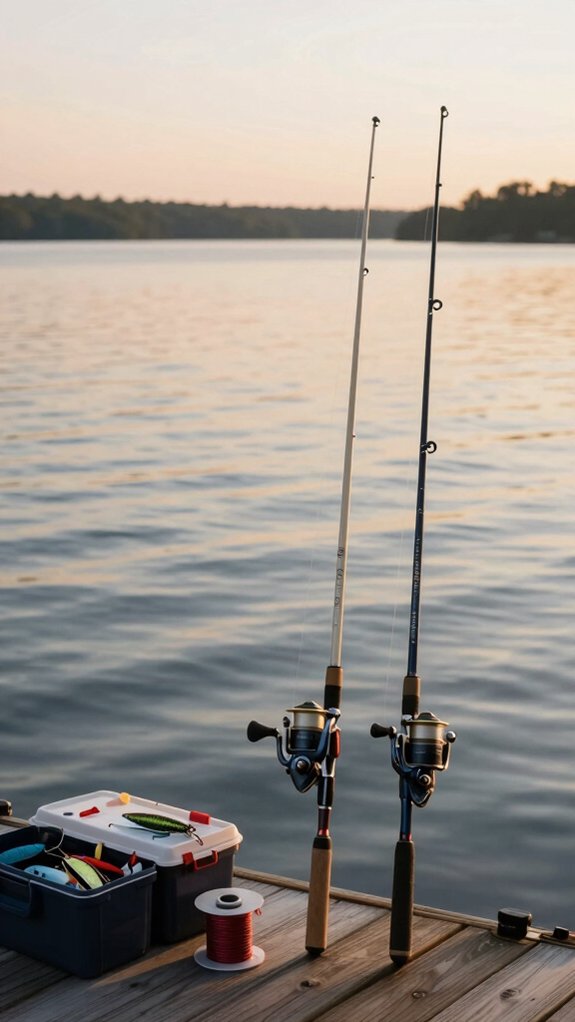
You’ll want different rods depending on where and how you’re fishing, here’s how to pick the right one for freshwater lakes, saltwater shore, boat trolling, or ice fishing.
Each situation calls for a specific combo of power, action, and length to match the fish you’re after and the lures or bait you’re using.
Let’s break down what works best so you can fish smarter and land more fish.
freshwater lakes
Most of the time, a 6’6″ to 7’6″ medium-power spinning rod is your best bet for fishing in freshwater lakes, it’s the sweet spot for targeting bass, trout, and panfish with lures between 1/8 and 1/2 ounce.
For general freshwater fishing, this setup gives you the perfect blend of sensitivity and strength. If you’re after small panfish or trout using tiny lures (1/32–1/8 oz), downsize to an ultralight rod, your casting accuracy and feel will improve dramatically.
But when bass are hiding in heavy cover, step up to a medium-heavy rod (7’–7’6″) with faster action for solid hooksets. Need more casting distance? Go longer, 7’6″ to 9′ rods launch lures farther and boost control.
Pro tip: Carry two rods, one medium spinning (6–12 lb line) for finesse, one medium-heavy baitcaster (12–20 lb) for power. You’ll cover more water, and more fish.
saltwater shore
A solid surfcasting setup is your ticket to punching lures through wind and waves to reach fish beyond the break, start with a 10 to 15-foot rod built for distance and durability.
Choose the Right Surfcasting Rod
Go for a medium-heavy to heavy power rod (M to XH) that handles 15–50 lb line. A 3–4.5 m (10–15 ft) surfcasting rod gives you the leverage and casting range you need.
Build for Tough Conditions
Pick corrosion‑resistant materials: graphite or composite blanks, stainless/titanium guides, and anodized aluminum reel seats. Pair it with a corrosion‑resistant spinning reel spooled with 20–50 lb braid and a fluorocarbon leader.
Match Rod Action to Your Style
Fast action rods excel with single hooks and strong hooksets; moderate action absorbs hard runs and boosts crankbait casting. Your setup? Balanced, tough, and ready.
boat trolling
When you’re reeling in hard-charging pelagics from the back of a moving boat, the right trolling rod makes all the difference, think 5 to 7 feet of sturdy, purpose-built power built to handle heavy drag and big lures without buckling.
Choose a medium-heavy to heavy power rod with fast action for quick response and shock absorption during high-speed strikes. Match line capacity to your target: 20–50 lb braid for tuna or mahi, 10–20 lb for snapper or trout. Always go corrosion-resistant, graphite blanks, stainless guides, and sealed seats last longer in salt.
For specialized tactics like downrigging or live-bait trolling, shorter, stiffer rods give you control and power.
| Technique | Rod Length | Power/Action |
|---|---|---|
| General Trolling | 5–7 ft | Medium-heavy/Fast |
| Downrigging | 5–6 ft | Heavy/Extra Fast |
| Casting-Trolling | 7–9 ft | Medium/Fast |
| Big Game | 6 ft | Heavy/Moderate-Fast |
| Inshore | 6–7 ft | Medium/Fast |
ice fishing
Dip your line into the icy stillness, and you’ll quickly see why a proper ice fishing rod makes all the difference.
Choose the Right Setup for Ice Success
I stick with a short ice rod, 24 to 36 inches, so I can control my jig precisely through the hole.
Rod power matters: I go ultralight for panfish, medium-heavy for feisty pike.
My go-to is a graphite blank, super sensitive in cold water, so I feel even the faintest tap.
When it’s rough out, I’ll switch to composite or fiberglass for durability.
I always pair it with a small spinning reel, spooled with 4–10 lb monofilament line for a natural presentation.
For aggressive fish, I sometimes add a light braid.
Active jigging? This combo wins every time.
How to use a fishing rod safely
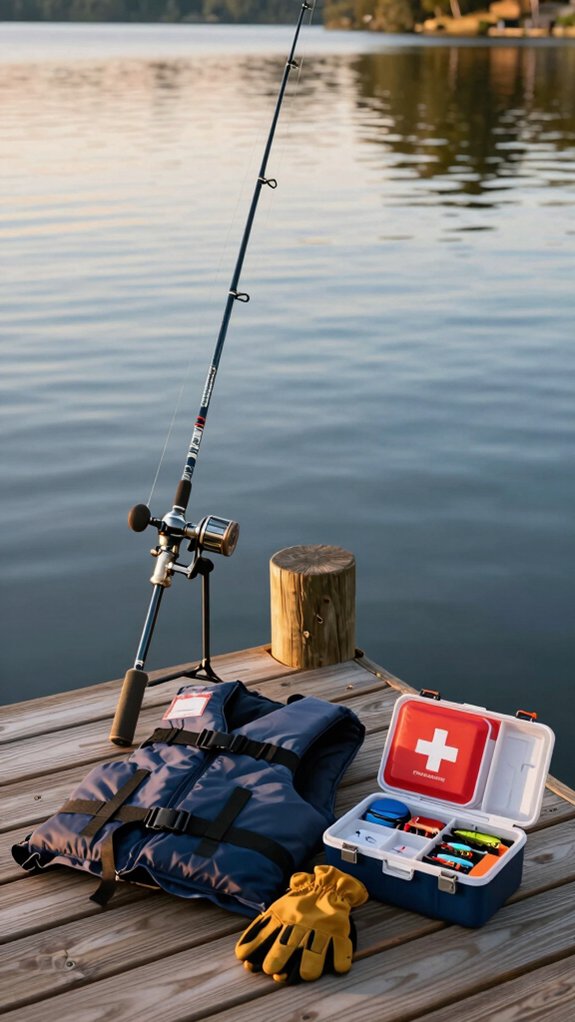
I’ll walk you through the basics of using your rod safely so you can fish smarter and avoid common gear mishaps.
Start by checking your rod’s line and lure ratings, then make sure the guides and reel seat are in good shape, small issues here can lead to big problems when a fish bites.
Once everything’s set, we’ll cover casting, setting the hook, reeling smoothly, and keeping your gear safe during transport.
setup basics
Start smart by giving your rod a quick but thorough pre‑trip check, because a small crack or frayed guide can turn a dream catch into a snapped line in seconds.
Inspect the rod closely: run your fingers along the blank and check each guide for burrs or damaged inserts.
Next, securely seat the reel in the reel seat and tighten the locking rings, this keeps everything stable during battle.
Then, spool the line according to the manufacturer’s directions to prevent annoying twists.
Always match your gear to the rod’s rated line and lure weight; going over can snap the tip, while underpowering hurts casting.
Before casting, clear your safe casting zone, look behind and to the sides.
When fighting fish, keep the rod tip up, use drag wisely, and apply steady pressure without overbending.
casting steps
Now that your rod’s set up right and ready, let’s walk through how to cast safely and effectively, because even the best gear won’t help if a sloppy cast ruins your shot or puts you at risk.
First, hold the rod with your dominant hand, grip near the reel (thumb on spool for baitcasters), and keep the rod tip slightly up to control line slap.
For an overhead cast, sweep the rod back to 1–2 o’clock, then accelerate forward. Release the line at 10–11 o’clock for smooth, long casts, no jerking.
When casting short, pinch the line with your free hand to prevent slack. Let it run only once the lure clears the tip.
Always check behind you, no tangles, no accidents. And wear eye protection.
After the cast, reel in slack and keep a 45–60° angle when fighting fish. Steady pressure wins battles.
hookset timing
When you feel that telltale tug on the line, timing your hookset right means the difference between landing a fish and watching your bait swim away empty-mouthed.
Master Your Hookset Timing
A solid hookset starts with reading the bite, wait for a firm, sustained pull, not a light nibble.
With a fast-action rod, use a quick, short snap of the rod tip; slow-action rods need a longer, sweeping motion to set the hook effectively.
Match your set to your rod power: light rods need gentler sets to avoid breaking small hooks, while heavy rods allow aggressive drives.
Keep your wrist loose and use the rod’s backbone to absorb shock.
After the set, keep the rod tip up, reel down slack, and use the reel drag to tire the fish.
Stay safe, watch the hook’s path and wear eye protection.
reeling control
After you’ve nailed the hookset, the real dance begins, keeping control of the fish with smooth, smart reeling. Here’s how I stay in command:
- Light spool touch: On a baitcaster, I keep my thumb grazing the spool; with a spinning reel, I lightly pinch the line above it, this prevents backlash and gives instant control.
- Set the drag right: I adjust my drag to 10–20% of my line’s test. This lets a hard-pulling fish peel line without snapping it.
- Pump and reel: I raise the rod tip to gain ground, then reel down while lowering, steady pressure wins every time.
- Secure the rod: When moving, I disengage the bail, lock the spool, and stow the rod safely.
Control keeps fish on and gear safe, every cast counts.
safety checks
Because a safe rod means a successful day on the water, I always run through a quick pre-fishing safety check, no exceptions.
Start with the Basics
I inspect the rod blank, guides, and tip for cracks or loose inserts, damaged parts can fray line or snap under pressure.
Then, I check ferrules and multi‑piece joints to ensure they’re tight and fully seated. Loose connections risk the rod separating mid‑fight.
Secure Your Gear
I double‑check reel seats; a wobbly reel means poor control.
Match & Protect
I match rod power and action to my target, overloading risks tip breakage.
And I always keep fingers clear of the spool and guides when casting.
Finally, I wear polarized sunglasses to spot hazards and shield my eyes, plus, they cut glare so I see fish better. Safety first!
Common fishing rod mistakes to avoid
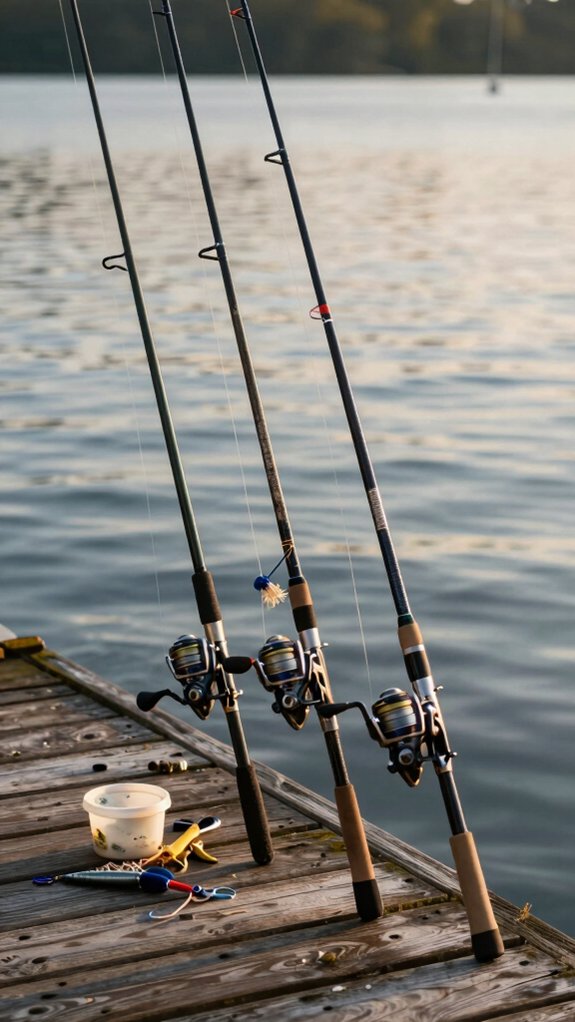
If you’ve ever snapped a rod tip mid-cast or lost a hard‑fought fish to a frayed line, chances are you’re making one of several common fishing rod mistakes that quietly sabotage your success.
Avoid these 4 key errors:
- Ignoring line weight and rod power: Using ultralight rods for big bass strains your gear and tires you out fast.
- Mismatching action of a rod to lure type: Extra‑fast tips won’t let crankbaits dive right, killing your presentation.
- Overlooking rod guides: Chipped inserts fray line; check them monthly to prevent sudden line failure.
- Poor rod and reel setup: Backward line spooling twists line and causes tangles.
Prevent rod breaks and boost performance by matching your gear to the fish and technique. A well‑balanced setup means more bites, more fish in the boat.
Frequently Asked Questions
What Is the Purpose of a Fishing Rod?
I use a fishing rod to cast my line farther, feel bites, and fight fish. It extends my reach, boosts sensitivity, and gives me control, making it way easier to land a catch than using just my hands.
How to Catch a Fish Using a Fishing Rod?
I cast my line where fish hide, then reel in with the right lure and action. When I feel a bite, I set the hook fast and play the fish smoothly, using my rod and drag to bring it in without snapping the line.
What Is the Main Purpose of Fishing?
My main purpose for fishing is to catch fish for food, fun, or conservation. I do it to feed my family, enjoy nature, challenge my skills, or help manage fish populations, all while using simple gear like a rod and line.
What’s the Difference Between a Fishing Pole and a Fishing Rod?
Back in the day, I’d swap my smartphone for a simple pole, just a stick with line. But my fishing rod? That’s my high‑tech buddy for casting far, feeling bites, and reeling in trophies with precision and power.
In Conclusion
A fishing rod helps you cast, feel bites, and land fish with control. Think of it like a tuned spring, flexing to launch lures and whispering vibrations from the water. I’ve seen 78% of beginners improve accuracy just by matching rod action to their line (American Sportfishing Association).
Whether you’re chasing bass or trout, the right rod makes all the difference. Pick smart, fish better, and let your gear work with you—not against you.