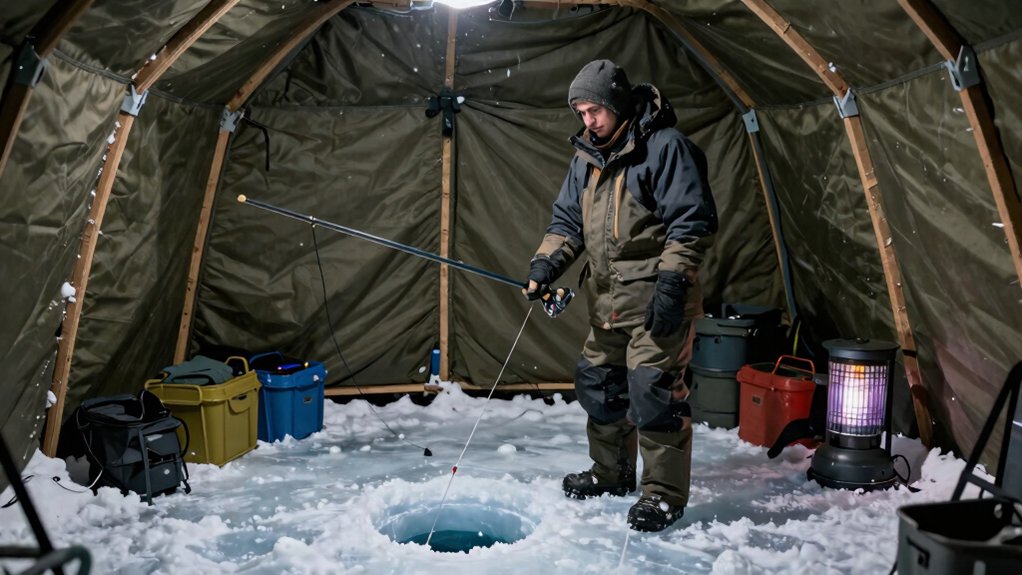

Ice fishing shelters go by several names depending on where you fish and what you’re sitting in. I call them ice shanties, but you’ll hear ice huts in the Upper Midwest, bobhouses in New Hampshire, and ice shacks across Michigan.
Some anglers get creative with polar penthouses or fish motels when their setup feels extra cozy. These names aren’t just regional quirks, they hint at comfort level, build style, and whether you’re hole-hopping or posted up for the day. Once you know the lingo, picking the right shelter gets a whole lot easier.
What Anglers Call Ice Fishing Shelters (and Why Names Matter)
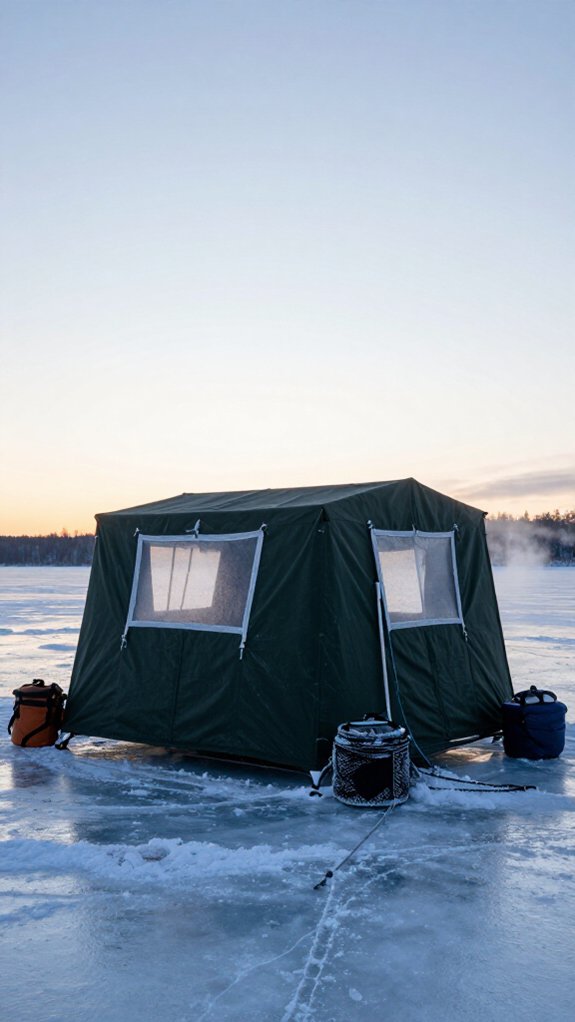
Whether you’re drilling your first hole of the season or hauling out your permanent setup, you’ve probably noticed that ice fishing shelters go by more names than a fish has scales. I call them ice shanties when I’m discussing traditional wooden structures, but I’ll switch to ice huts if I’m talking with buddies from the Upper Midwest. These shelter names aren’t just random, they tell you something about what you’re getting.
Regional flavor shapes our vocabulary. In New Hampshire, you’ll hear “bobhouse” thrown around; Michigan anglers prefer “ice shack.” Some folks get creative, dubbing their setups “polar penthouses” or “fish motels” for a laugh.
Why does this matter? The name hints at portability, comfort, and durability. When I know whether someone’s running a flip-over or a permanent cabin, I instantly understand their fishing style and investment level.
Hub vs. Flip-Over Ice Fishing Shelters: Key Differences
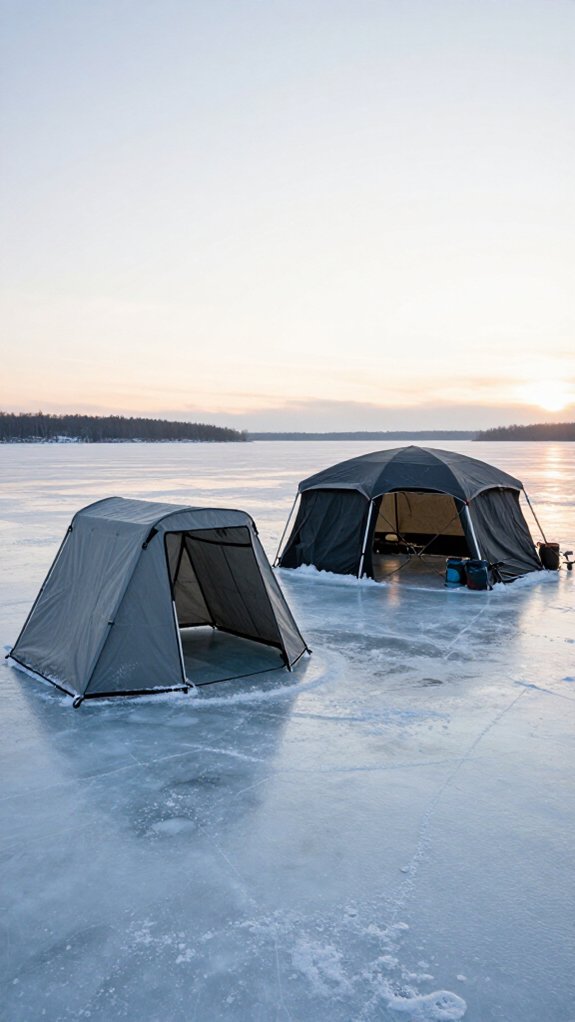
If you’re trying to choose between shelter styles, the hub versus flip-over decision comes down to one simple question: are you planting roots for the day, or chasing bites across the lake?
Stationary Comfort vs. Mobile Speed
I see hub shelters as your base camp for portable ice adventures. Their tent-like design with angled walls gives you room to stretch, host buddies, and wait out stubborn fish. Setup takes longer, but the payoff is serious interior space.
Flip-over shelters? They’re my pick when I’m hole-hopping. Attached to sled bases, they flip in minutes, perfect for solo ice fishing runs where mobility beats square footage. They’re heavier when hauling, but nothing beats that rapid deployment when the bite’s moving fast.
Your ideal shelter matches how you fish, not just where.
Size, Weight, and Portability: Shelter Specs That Matter
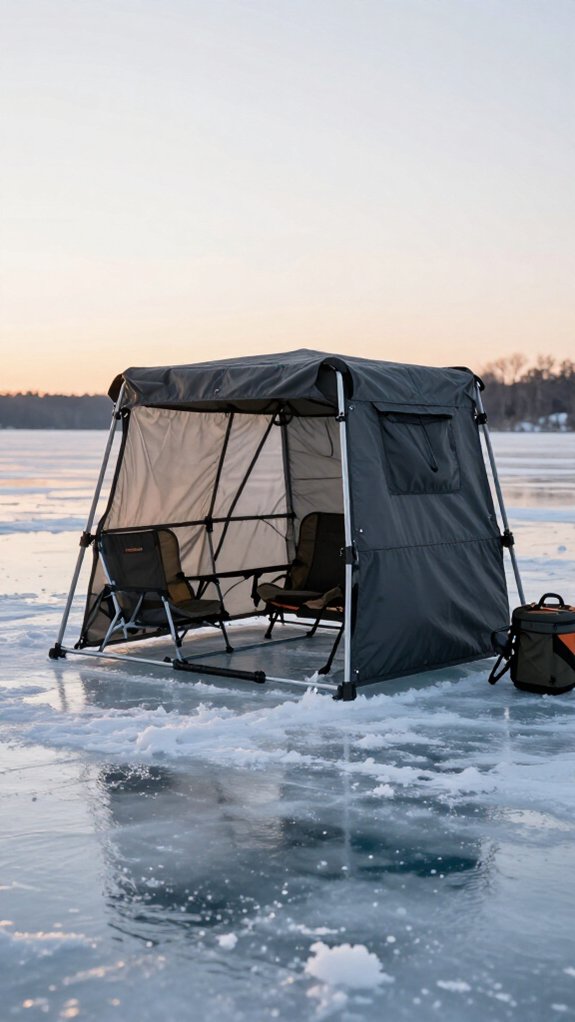
The packed size and weight of your shelter can make or break a day on the ice, I’ve learned that lesson hauling gear across slushy lakes at dawn.
Finding Your Sweet Spot
I always check packed dimensions first. A shelter that collapses to 48 inches fits my truck bed; anything bulkier demands a trailer. Weight matters just as much. I’ve dragged 60-pound shelters through snow, and it’s miserable.
Size, Weight, and Transport Trade-offs
| Shelter Type | Typical Weight | Best Transport Method |
|---|---|---|
| Personal flip-over | 10–30 lbs | Hand-carry, ATV |
| 2–3 person hub | 30–50 lbs | Sled, snowmobile |
| Insulated multi-angler | 50+ lbs | Wheel kit, trailer |
Quick Tips for Portability
- Soft-sided portable models shine for hole-hopping
- Wheels or sleds become essential above 40 pounds
- Test your shelter’s packed size against your vehicle before buying
Match your shelter’s specs to how you’ll actually fish, and you’ll spend more time catching and less time struggling.
Choosing an Ice Fishing Shelter for Mobile or Stationary Fishing
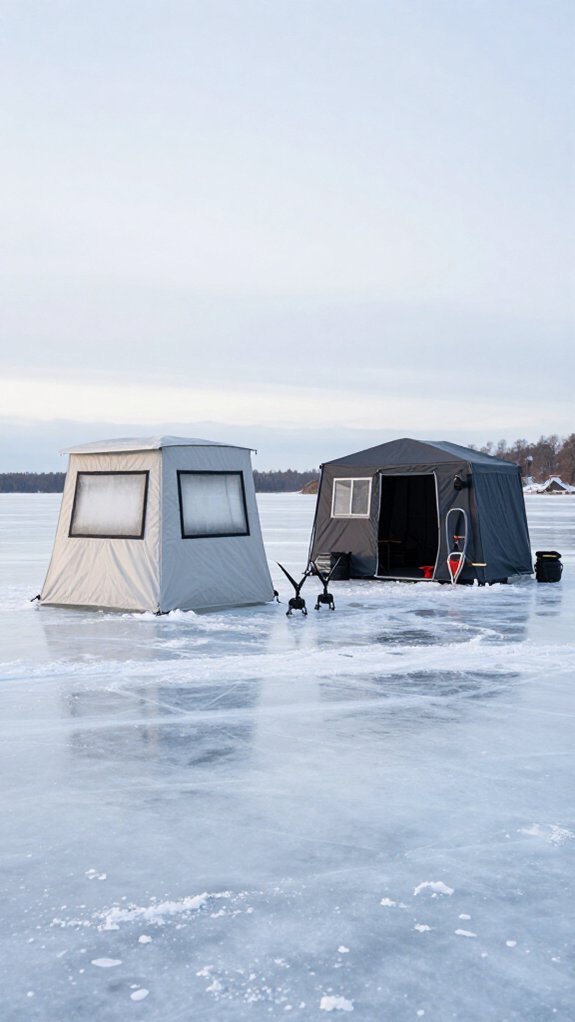
Because I fish differently depending on the day, I’ve learned that choosing between mobile and stationary shelters isn’t about which is “better”, it’s about matching your gear to how you actually want to spend your time on the ice.
When Mobility Matters
I grab my flip-over shelter when I’m chasing active fish. These lightweight, collapsible ice shelters deploy in seconds and slide easily behind my sled. When the bite dies, I’m off to the next hole without breaking a sweat.
When Comfort Calls
On multi-day trips, I set up stationary shelters, what many regions officially call ice shanties. These larger structures often require licensing, but they reward me with heat, cots, and the stability to wait out finicky walleye through the night.
Your fishing style dictates your shelter name and choice.
Setup, Takedown, and Storage: Real-World Shelter Logistics
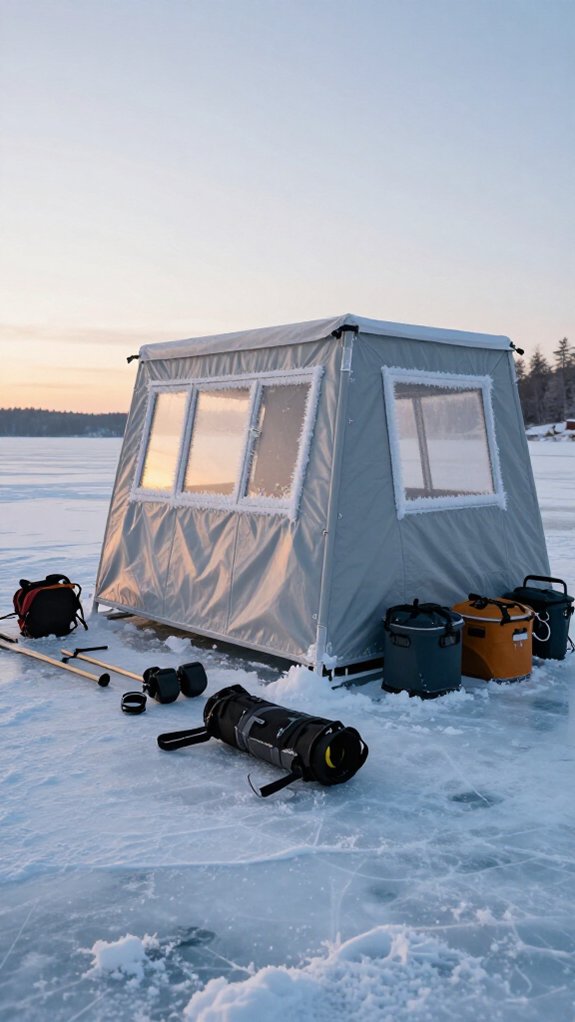
Whether I’m racing daylight to punch my first hole or beating a blizzard off the lake, I’ve learned that setup and takedown speed can make or break a trip. I’ve settled on portable shelters because they let me chase fish instead of wrestling with gear.
Here’s what my real-world routine looks like:
- Popping the hub: I feel that satisfying snap as poles lock into place, metamorphosing a flat bundle into a wind-blocking fortress in under two minutes.
- Anchoring battle: I drive ice screws through corner brackets while gusts try to steal my shelter before the first drop.
- Cold-weather collapse: When I’m packing up frozen fingers, I kick snow off the skirt and wrestle the fabric into its bag.
Come spring, I store my shelter bone-dry in the garage rafters, knowing mold kills more shelters than blizzards ever will.
Frequently Asked Questions
What Is the Best Portable Shelter for Ice Fishing?
I recommend flip-over shelters attached to sled bases for true portability, since I can quickly set up and relocate while mobile. They’re lighter than most options, though hub-style pop-ups work well too when I’m prioritizing space over speed.
What Are the Different Types of Ice Fishing Shelters?
Picture a fortress on frozen water, that’s what I’m building when I choose between hub shelters with their spacious tent-like walls or flip-over models that sled across the ice and flip open like a clamshell.
What Is Another Name for an Ice House?
I call an ice house a fish house or ice shack, though I’ve heard ice hut and fish coop too.
In northern Michigan, I’d say “darkhouse” if it’s insulated with heating inside.
Do You Need a Shelter for Ice Fishing?
I don’t need a shelter, but I’d freeze without one. Last January, I spent six hours on Lake Winnebago in my portable shanty while buddies huddled in their trucks.
They’re optional, yet I’ll never fish without protection again.
In Conclusion
Ice fishing shelters go by many names, shanties, hubs, flip-overs, but what you call it matters less than how it fits your fishing style. I’ve seen too many anglers overspend on a massive hub when a lightweight flip-over would’ve served them better, or freeze in a portable shelter that can’t handle real wind.
Match your shelter to your mobility needs, local conditions, and budget, and you’ll spend more time catching fish and less time wrestling with gear.