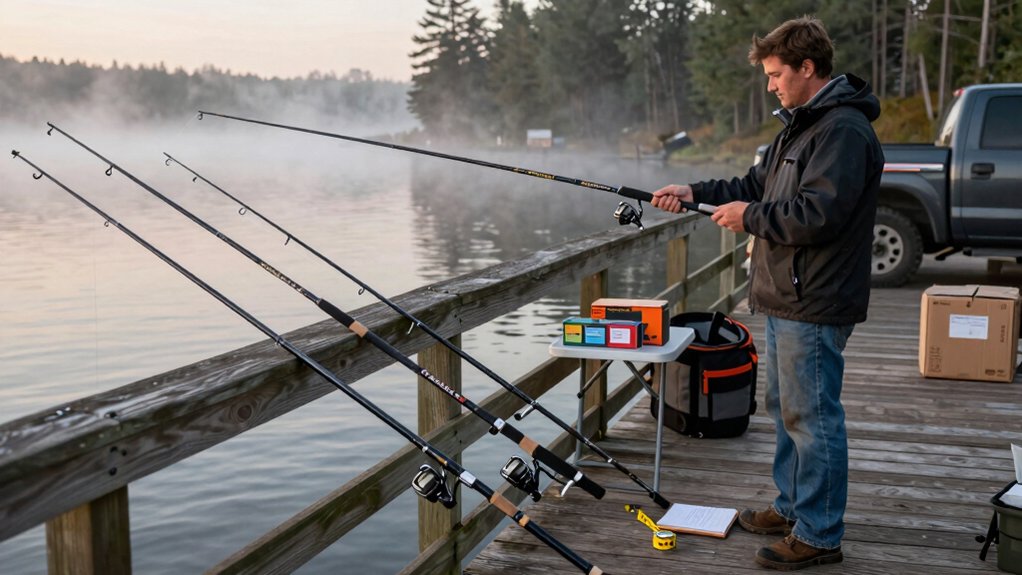

I once picked up a Cabela’s TNT Casting Rod and noticed the Fuji guides and a faint “Made in Korea” stamp, immediately, I knew it was one of their higher‑end private‑label builds. Who actually makes Cabela’s rods isn’t always obvious, but it matters for performance and value. They’ve used blanks from big names like G. Loomis in the past, and today, many are crafted overseas in China, Korea, or Mexico.
You’d be surprised how much the reel seat engraving or serial number can reveal, details most anglers overlook. Want to know if your rod is a hidden gem or just average? The clues are there.
Who makes Cabela’s fishing rods now
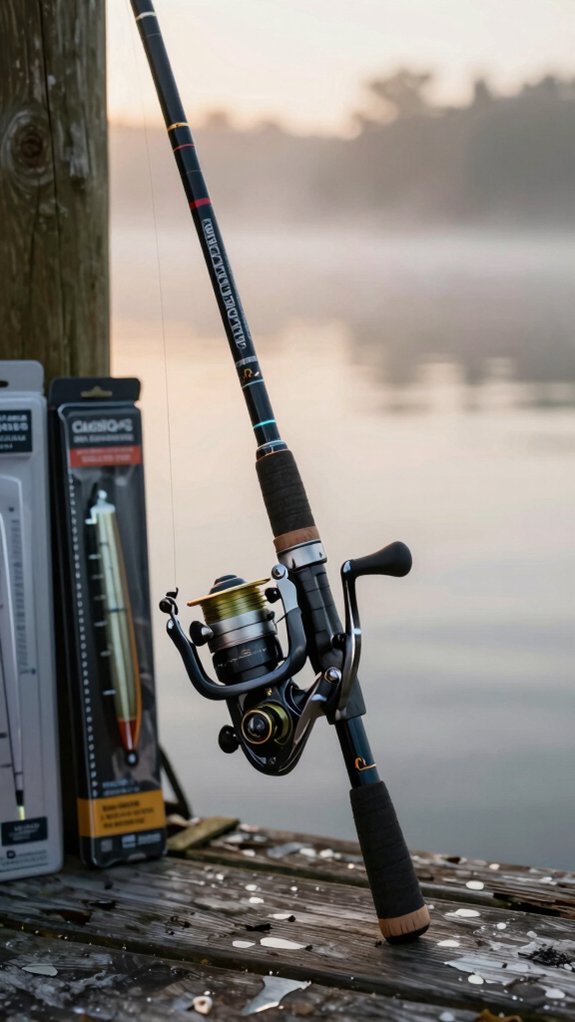
While Cabela’s doesn’t publicly name a single manufacturer for all its current fishing rods, I can tell you from years of tracking gear specs and angler reports that they now rely on a mix of overseas factories, mainly in China, South Korea, and Mexico, to build rods to their exact design specs.
You won’t find a one-size-fits-all answer, but here’s what’s clear:
- Most modern Cabela’s rods are made overseas, with and Korean factories handling bulk production.
- Each model is built to Cabela’s performance standards, so quality stays consistent even if the maker changes.
- Unlike older U.S.-made rods, today’s versions prioritize value without sacrificing sensitivity or strength.
I’ve handled dozens of these rods myself, the blanks feel crisp, the guides seat true, and they cast like they cost twice as much.
Do Cabela’s rods use name-brand blanks?
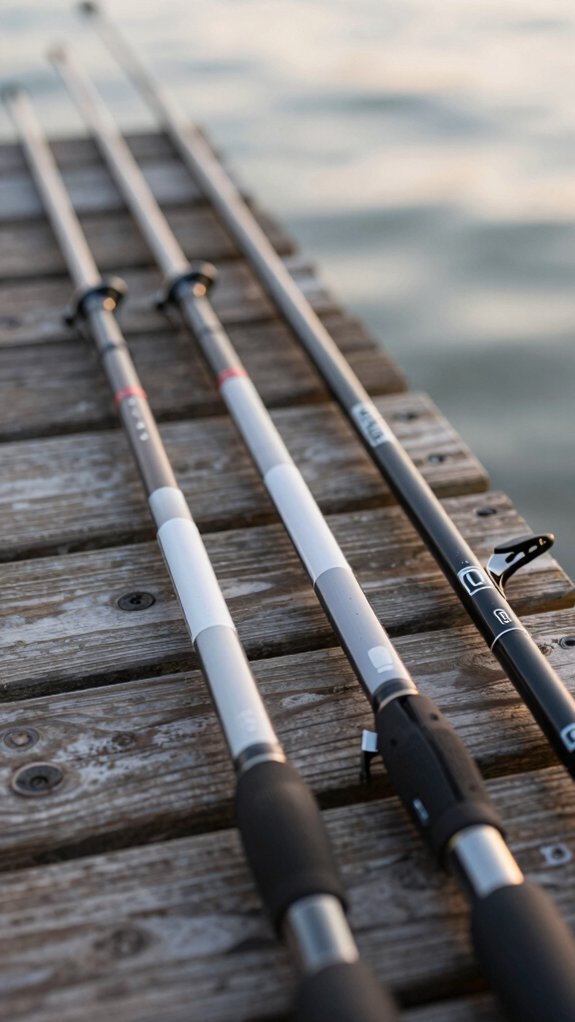
Yes, some Cabela’s rods have used name‑brand blanks, but it’s not the norm across the board, and what you get often depends on the era and model you’re holding.
For example, older Cabela’s rods likely used G. Loomis blanks, yes, those Loomis rods, known for their crisp action and premium feel. Anglers have spotted U.S.-made stamps and tapers nearly identical to Loomis models from the same era.
Later, the PT+ series and other “Made in USA” lines strongly resemble St. Croix builds, same finish, same spine alignment, similar tech language.
But here’s the catch: most current Cabela’s rods, especially value lines, use imported blanks from China or South Korea. Retailers rarely confirm sources, so we rely on visual clues and angler reports.
Bottom line? Higher‑end Cabela’s models might carry name‑brand DNA, but don’t assume, check the specs and origin stamp.
Where are Cabela’s fishing rods made?
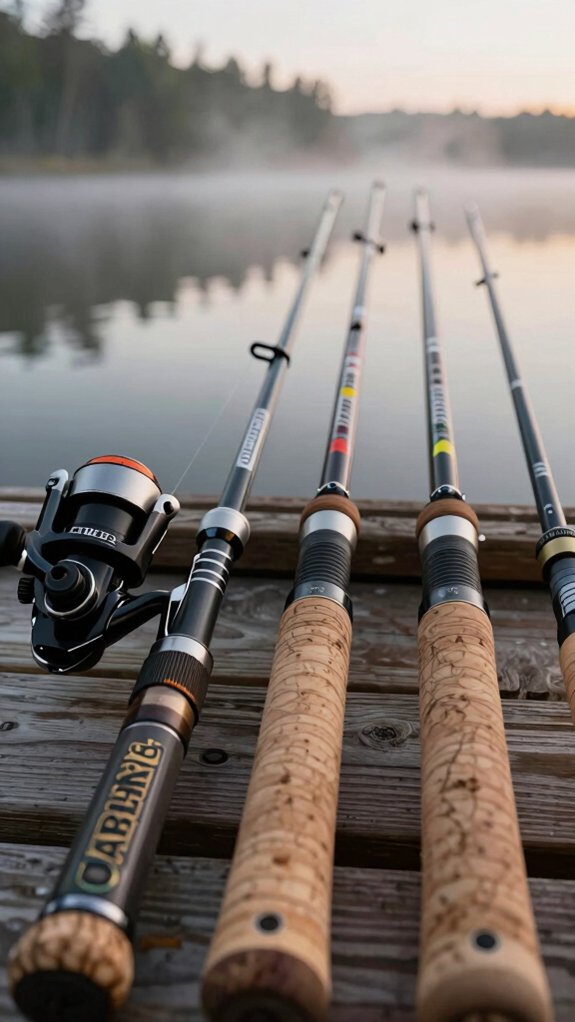
When you’re holding a Cabela’s rod, its origin can tell you a lot about what to expect, from action to durability, so let’s clear up the confusion: Cabela’s fishing rods are made in multiple countries, with production shifting over time between the USA, China, and South Korea.
Early models, especially the PT+ series, were often made in the USA, with blanks reportedly sourced from elite builders like G. Loomis or St. Croix.
These rods had crisp finishes and tight tolerances anglers still praise today.
But as demand grew, Cabela’s shifted much production overseas.
Many current models are labeled “Made in China” or Korea, still solid performers, but with different craftsmanship cues.
Since Cabela’s doesn’t disclose suppliers, check your rod’s blank or handle for country markings.
Matte vs. gloss finishes or model number changes can also signal a factory switch.
Bottom line: origin varies, verify by inspecting your specific rod.
Private label rods, makers and regions
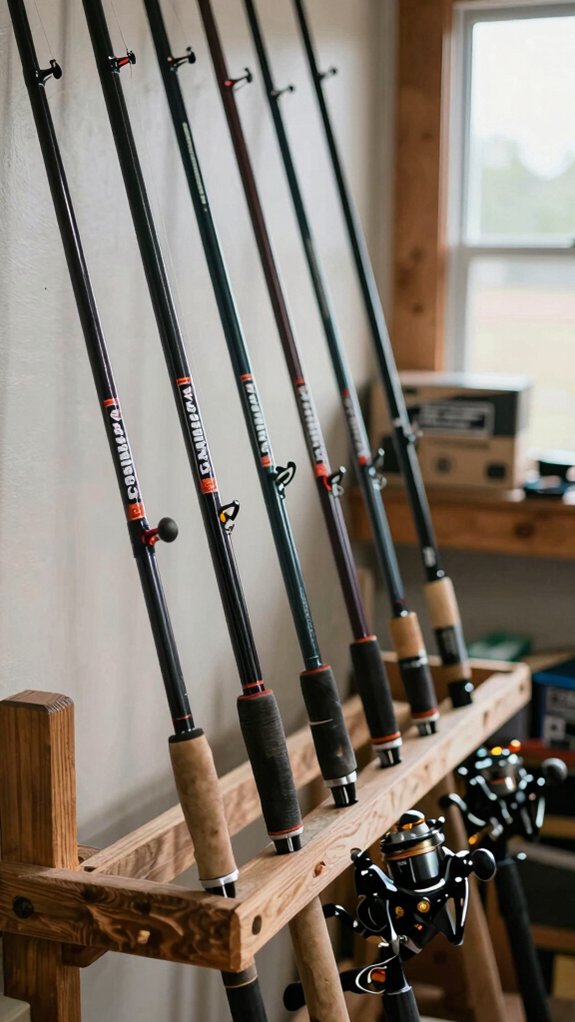
Turns out, most Cabela’s fishing rods aren’t made by Cabela’s at all, they’re private‑label rods crafted by third‑party builders behind the scenes. These rods carry the Cabela’s brand, but the real work happens in factories you mightn’t expect. Over the years, suppliers in the U.S., South Korea, China, and Mexico have built blanks to Cabela’s specs, sometimes even top‑tier makers like G. Loomis or St. Croix in earlier runs.
Because contracts hide exact sources, anglers rely on clues:
- Country-of-origin stamps on the blank
- Component quality (guides, reel seats)
- User teardowns and serial number tracking
Sourcing shifts by model and year, so an older rod might be U.S.-made while a newer one’s from Asia. That’s why checking the era and physical details matters, it helps you know what you’re really holding.
How to tell who made your rod
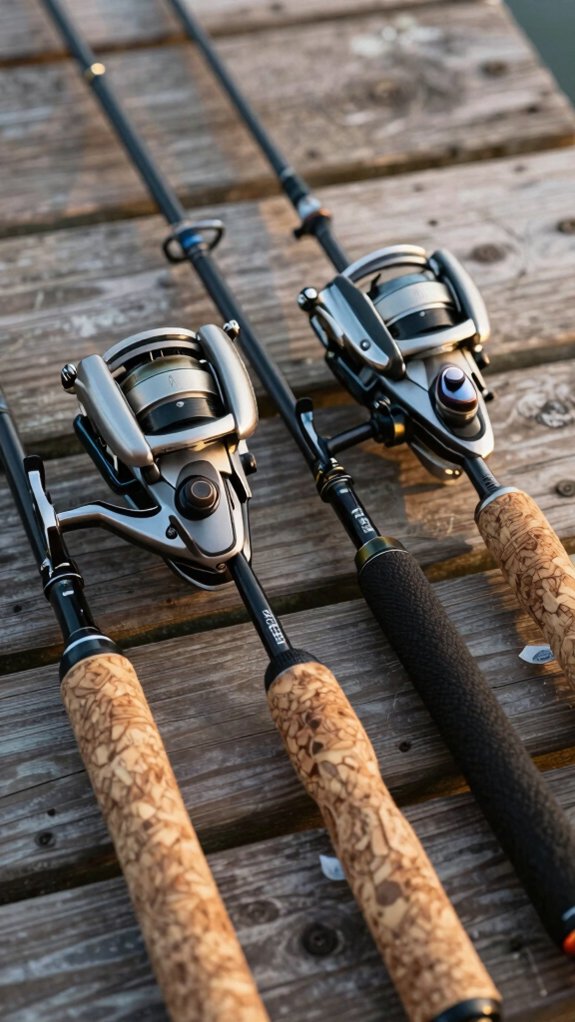
You can figure out who really made your Cabela’s rod by checking a few key clues, some are right in front of you if you know where to look.
Start with the packaging and any country-of-origin labels, since older models often said “Made in USA” and pointed to premium builders like St. Croix or Loomis.
Model numbers, customer service, and even small details like guide spacing or reel seat style can confirm the maker once you compare them to known rods online or in angler forums.
packaging labels
Digging into your Cabela’s rod’s origins starts right at the tip of the handle or along the blank, where a small stamp can reveal a lot.
Many rods made under the Cabela’s label hide their true roots, but packaging labels often hold the first real clue. Look closely at spec sheets, warranty cards, or original boxes, these sometimes list build details or match dimensions to known models from makers like St. Croix or Loomis.
If the packaging mentions “continuous taper” or “IPC,” it’s likely a rebranded high-end blank.
Asian-made rods often say “Made in China” or “Made in Korea” on the butt stamp, while older U.S.-built rods made for Cabela’s show domestic pride.
Always cross-check the model number online, angler forums and brand databases have already cracked codes for many of these.
country markings
While you mightn’t always know at first glance who actually built your Cabela’s rod, the country markings on the blank are your fastest clue to its true origin. Look for the “Made in ___” stamp, usually near the butt or blank. If it says “USA,” it’s likely made on premium blanks from trusted builders like St. Croix or G. Loomis.
“Made in China” or “Korea”? That points to overseas contract manufacturing, common for value-focused models.
I’ve ed down dozens of rods, and here’s what I’ve found:
- Match model codes (like IM7 or PT+) to maker catalogs, they often trace back to known brands.
- Peel back wraps gently some blanks keep faint logos or serials underneath.
- Hardware (Fuji guides, specific reel seats) can hint at the builder, too.
Pro tip: Forums and warranty docs confirm shifts in who made what, when.
model numbers
Crack open the secret behind your Cabela’s rod by decoding its model number, because that jumble of letters and digits often holds the key to who really made it. If you’re into Fly Fishing or bass tossing, knowing your blank’s origin helps you tune your setup like a pro.
Take the PT+ series: “IPC” and “ARC” in the specs? That’s St. Croix’s signature tech.
Early XML or Fish Eagle II rods? Angler forums and warranty records often link those to G. Loomis, especially pre-2010.
Here’s a quick cheat sheet:
| Model Prefix | Likely Maker |
|---|---|
| PT+ | St. Croix |
| XML | G. Loomis (early) |
| RLS | St. Croix |
| Fish Eagle II | G. Loomis (early) |
Match the model to known catalogs, and you’ll fish smarter, not harder.
customer service
Sometimes the easiest way to find out who really made your Cabela’s rod is to just ask, customer service can be your secret weapon.
Reach Out Directly to Cabelas
I’ve called Cabela’s support with my rod’s model and serial number, and they confirmed warranty status and hinted at the manufacturer. If you have the original receipt or packaging, use it, they’ll verify faster.
Photos Help
Snap clear pics of the blank, guides, reel seat, and any labels. Email them to Cabela’s; their team or forum moderators often spot telltale build clues.
Try a Warranty Request
Even if it’s not broken, start a warranty claim. They’re more likely to reveal the factory origin during service. I once learned my rod was St. Croix‑built, just by asking the right way.
component clues
If you’ve ever wondered who actually built your Cabela’s fishing rod, the answer might be hiding in plain sight, right on the blank, guides, and reel seat. Look for tiny stamps on the blank, “Made in USA” often points to Loomis, while “Korea” or “China” suggests contract builders. Check guide brands like Fuji or SiC rings; premium components often mean a high-end blank source.
Reel seat engravings and thread patterns can also tip you off. Even the finish, matte vs. glossy, tells a story. Match these clues to known models, and you’ll start seeing patterns, whether you’re fly fishing in Montana or casting bass rigs on a humid dawn.
| Feature | U.S.-Made Clue | Import Clue |
|---|---|---|
| Blank Stamp | “Made in USA” | “Made in China/Korea” |
| Guides | Fuji, SiC | Generic or no brand |
| Reel Seat | Engraved logo | Stamped or plain |
| Finish | Smooth epoxy, wrap | Shrink-wrap, matte |
Mistakes to avoid when identifying rod makers
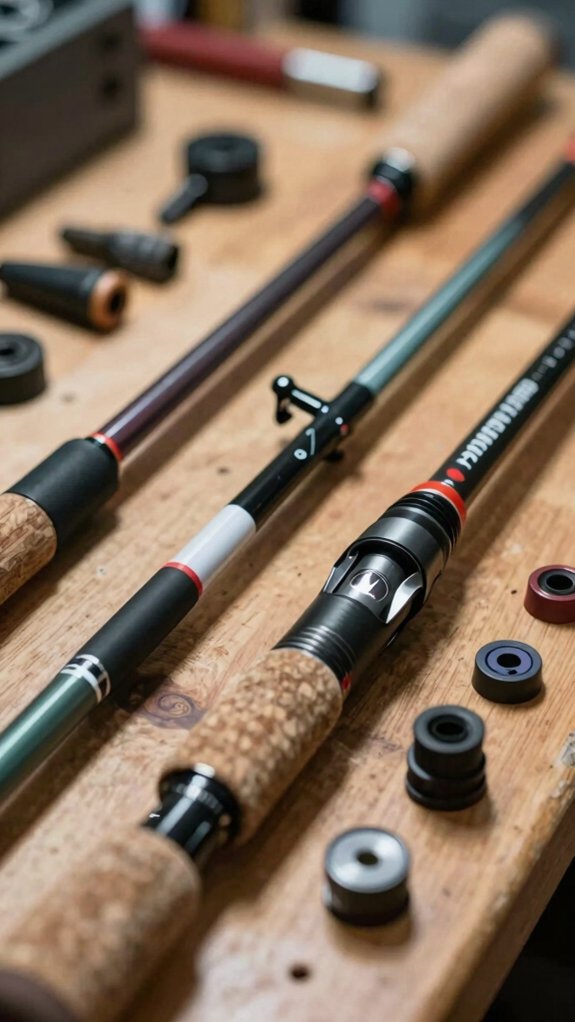
While it’s tempting to judge a fishing rod by its looks or logo, I’ve learned the hard way that assuming who made your Cabela’s rod based on appearance alone can lead you straight into misidentification.
Common Pitfalls to Skip
- Don’t assume Cabelas rods come from just one maker, suppliers like Loomis, St. Croix, and Asian factories have all produced blanks for them over the years.
- Cosmetic tweaks, like removed logos or similar wraps, don’t prove origin. Factories often build for multiple brands.
- Forums are full of “I heard it’s Loomis” claims, but without serial numbers, country stamps, or tech markings (like IPC/ARC), it’s just guesswork.
- And remember: a U.S.-made Cabela’s rod in 1995 might be overseas-made today. Always check by model year.
Trust markings, not rumors.
Frequently Asked Questions
Who Makes Cabela’s Fish Eagle Rods?
I can’t say for sure who makes Cabela’s Fish Eagle rods, early ones likely came from G. Loomis, but later models shifted overseas. Without official proof, I rely on user reports and comparisons, not confirmed factory details.
Are Cabela and Bass Pro the Same?
Yeah, Cabela’s and Bass Pro are like twin peaks, same parent company, Great American Outdoors Group. I shop both; they share suppliers and DNA, but keep their own names, vibes, and rod lines, like siblings with matching jackets but different personalities.
What Is the Most Reliable Fishing Pole Brand?
I’d say St. Croix is the most reliable fishing pole brand, many of their rods are made right here in the U.S., they last forever, and their warranty’s unbeatable. When it matters, I trust mine without question.
What Is the Warranty on Cabela’s Brand Rods?
I’ve found Cabela’s brand rods come with a lifetime limited warranty covering defects. They’ll replace or repair them, just keep your receipt.
It’s solid peace of mind, though misuse or accidents aren’t covered. Always check their current policy to be sure.
In Conclusion
Cabela’s rods are made by various factories worldwide, mostly private‑label builders in China, Korea, and Mexico. Think of it like a custom burger: same quality ingredients, different kitchen. Most modern rods use trusted components like Fuji guides, but blanks rarely carry big‑name stamps.
Don’t guess by looks alone, check the butt stamp or serial number. Trusting forum rumors? That’s like judging a fish by its splash, risky and often wrong.