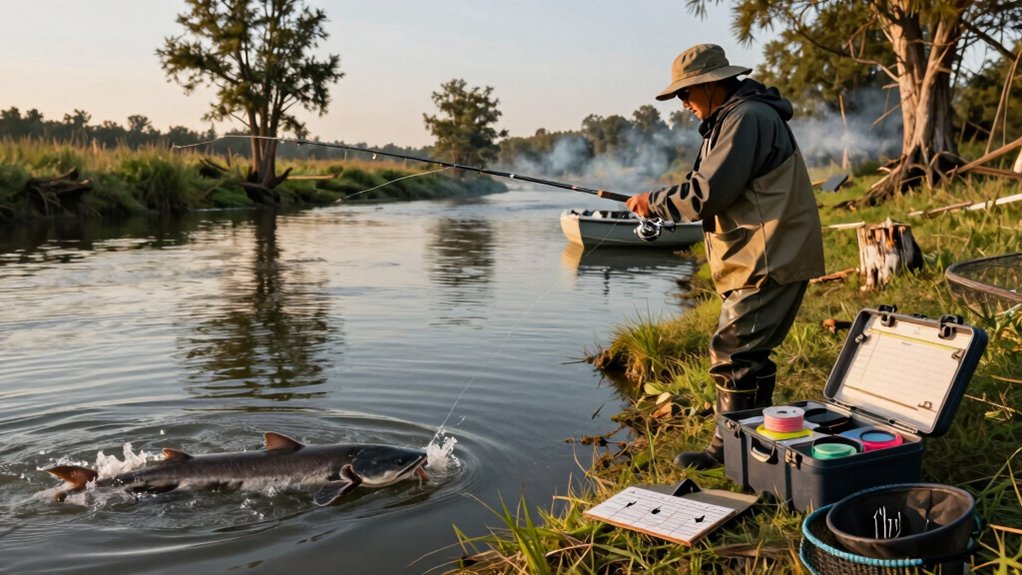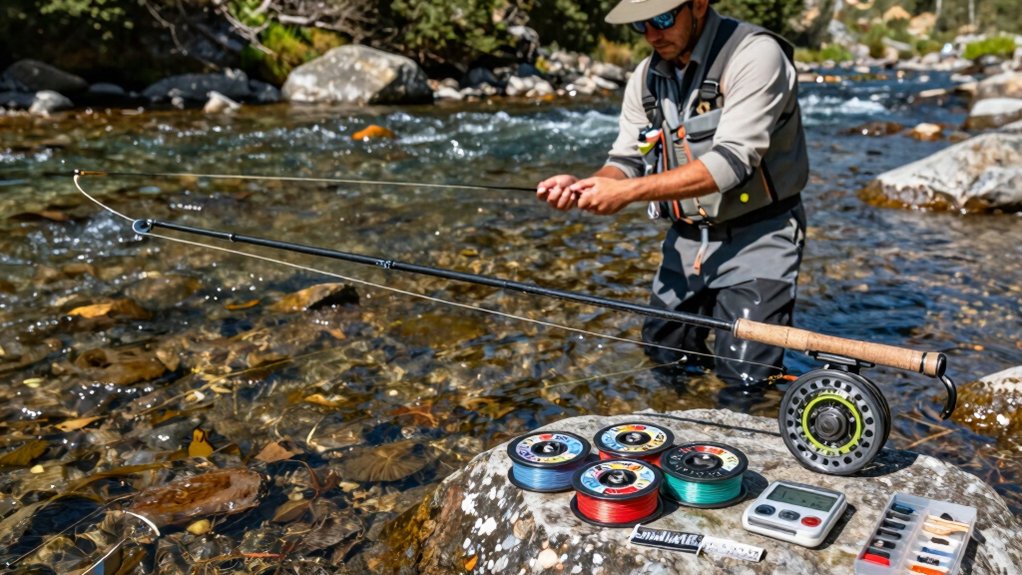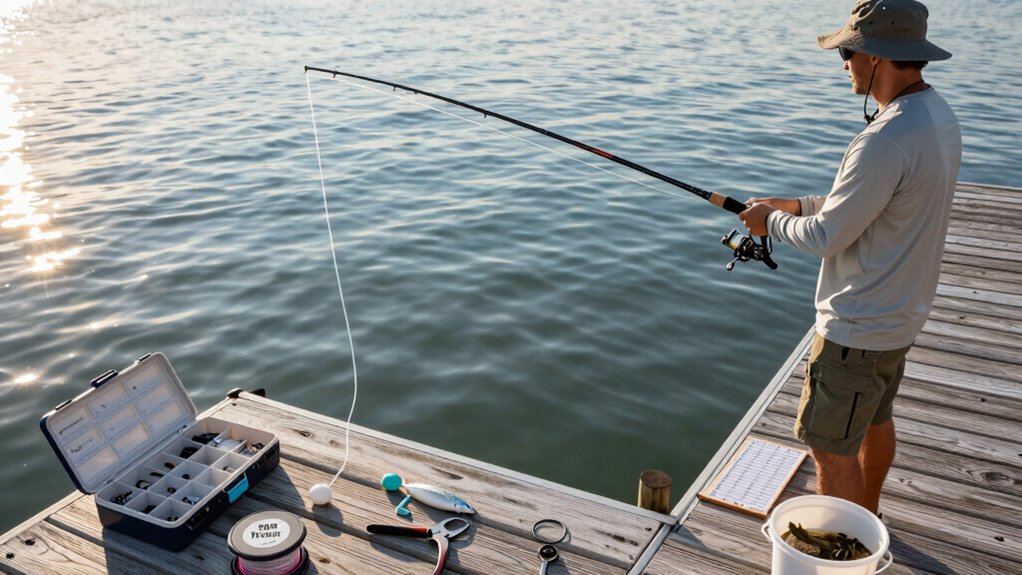
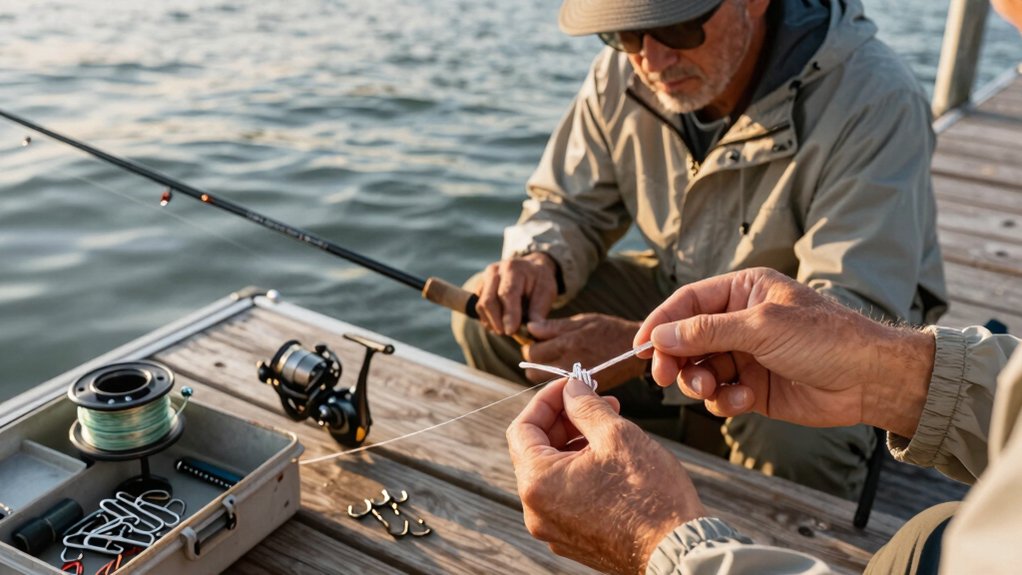

Funny thing, just last weekend, I snapped a knot while fighting a hard‑pulling bass, and it got me thinking: there’s no single “strongest” fishing knot for every situation. Your line type, knot choice, and how well you tie it decide everything. A poorly tied Palomar can fail at half its potential, while a perfect Clinch might hold strong.
Want to know which knots actually deliver the most strength when it matters most? The answer might surprise you, and save your next big catch.
What is the strongest fishing line knot?
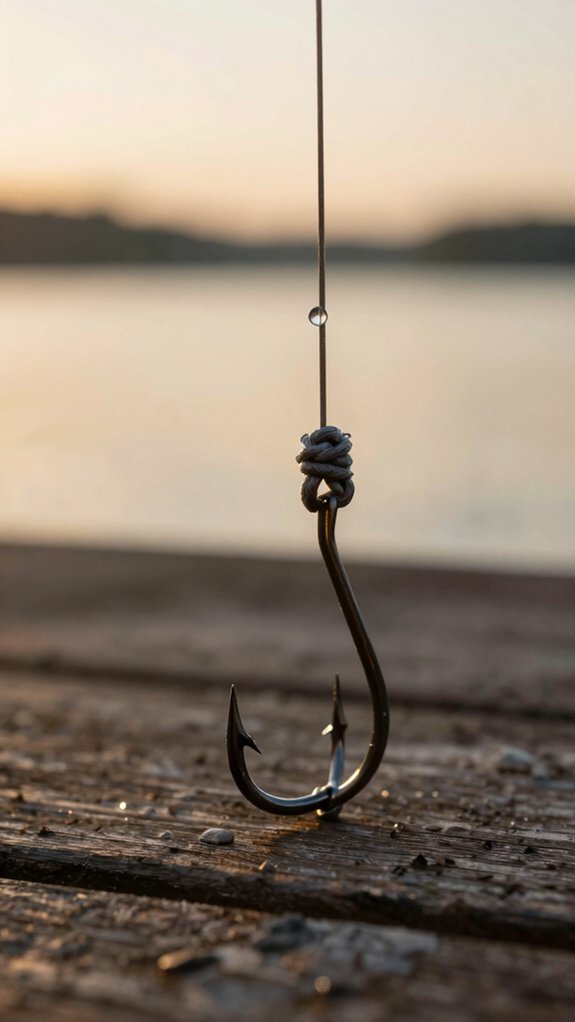
Let’s cut to the chase: there’s no one “strongest” fishing knot for every situation, your line type and how you tie it make all the difference.
For braided fishing line, a properly tied Palomar knot or a splice delivers near‑perfect strength, up to 96–100% in tests. Splices, especially Aussie plaits done right, are sleek and tough, ideal for braid‑to‑leader setups.
Tying mono to mono? The Surgeon’s Knot shines, slim, strong, and simple, it outperformed others in head‑to‑head trials, holding 13–15 lbs versus the Albright’s 6–8 lbs.
Bottom line: Match the knot to your line. Braid? Go Palomar or splice. Mono joins? Surgeon’s Knot wins.
And always, always, tie it right. A sloppy knot, no matter the type, is your weakest link.
Which knots are strongest for braided line?
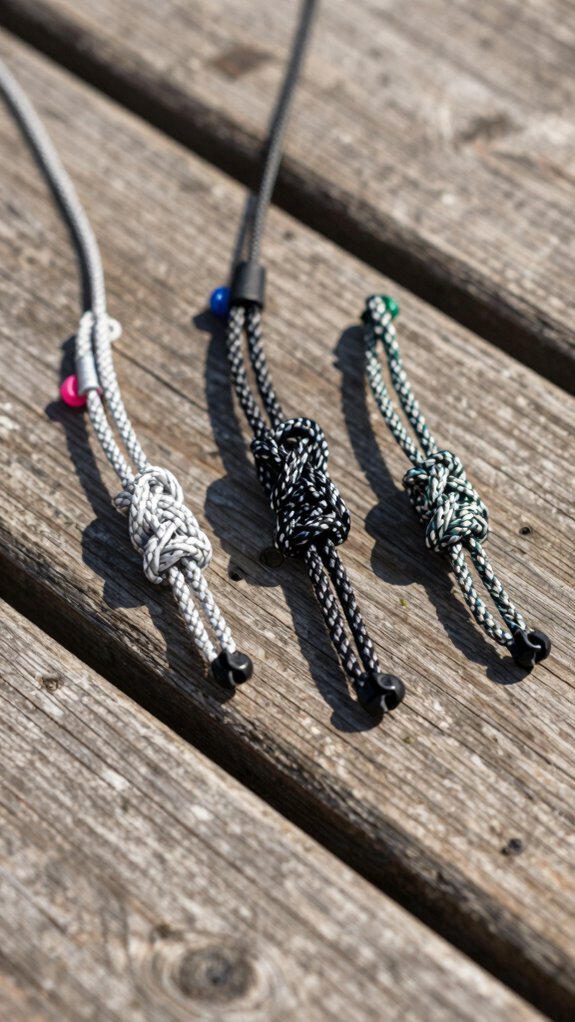
When you’re using braided line, the strongest knots depend on whether you’re tying to a lure or connecting to a leader.
For lures and hooks, I always trust the Palomar knot, it’s simple, holds up under pressure, and in tests it consistently delivers near-breaking strength with braid.
If you’re linking braid to a mono or fluorocarbon leader, go with the Double Uni or a PR-style knot, both of which I’ve relied on for years to create smooth, strong connections that slide through guides without hiccups.
leader knots
Tying a rock-solid connection between your braided main line and a fluorocarbon or monofilament leader is one of the most critical links in your fishing setup, get it wrong, and you’re risking your trophy fish on a weak knot.
When it comes to leader knots, strength and reliability are non‑negotiable. Based on field tests and lab results, here are my top three go‑tos:
- PR Knot, Delivers over 90% knot strength; sleek and perfect for braid‑to‑fluorocarbon.
- Double Uni Knot, Easy to tie, works well with different diameters, and trusted worldwide.
- Albright Knot, Best for heavy leaders; just make sure to cinch it tight and use 8‑10 wraps on slick braid.
Always wet the line before tightening, especially with thin, slick braid.
A well‑tied knot isn’t just strong; it’s confidence you can feel when that big one takes the bait.
hook and lure
Snag a trophy on braided line, and you’ll want every ounce of strength locked into your hook or lure knot, no weak links allowed.
For serious knot strength with braid, the Palomar knot is a go-to. It’s simple, reliable, and preserves up to 95% of your braided line’s rated strength, ideal for lure-to-line connections.
I also trust the Berkley-style braid knot, it outperforms standard clinch knots in tests, especially on slick, low-stretch braid. No loop-to-lure threading means less slippage and better seating.
Pro tip: Make 8–10 wraps, wet the line, then tighten. This boosts knot strength by ensuring a snug fit.
For tiny eyes or bulky lures? A well-dressed Palomar or compact improved clinch works best.
Keep it tight, keep it strong, your next big catch depends on it.
Strongest knots for mono and fluoro
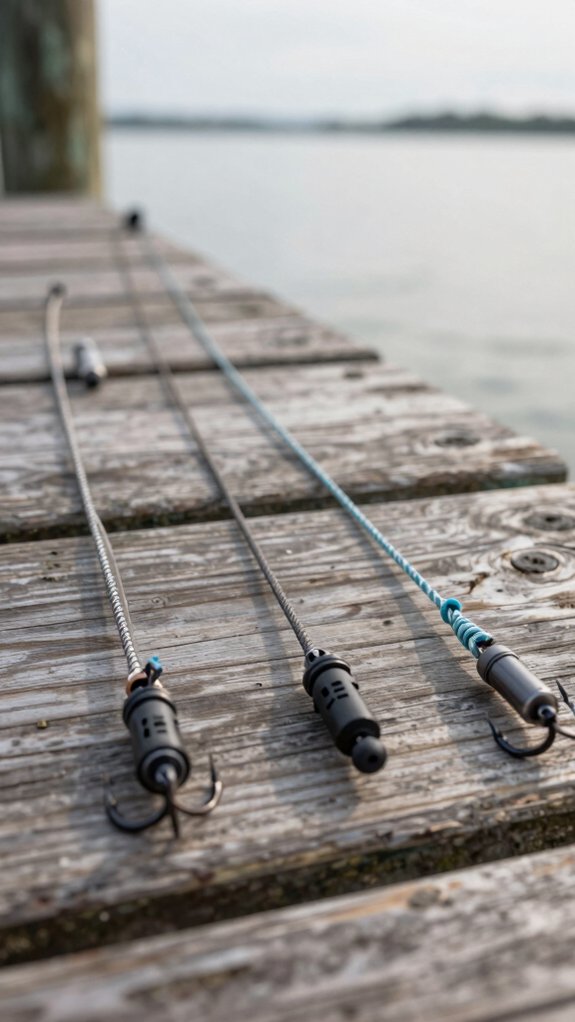
Skip the guesswork, let’s nail down the strongest knots for monofilament and fluorocarbon so you’re not losing fish to weak connections. When tying mono to mono, the Surgeons Knot shines, holding up to 15 lbs in tests.
For attaching your line to a lure or hook, the Trilene knot and improved clinch knot both deliver, tested as high as 96 % of line strength.
Fluorocarbon leader? Be careful; it’s stiffer and weaker at the knot. Stick to proven ties like the Trilene or a well‑seated improved clinch.
Top 3 knots for mono & fluoro:
- Trilene knot – Best for mono/fluoro to lures/hooks
- Surgeons Knot – Strongest mono‑to‑mono connection
- Improved Clinch Knot – Reliable, high‑strength terminal knot
Tie it neat, wet it, and pull tight, your next big catch depends on it.
Should I tie line to line?
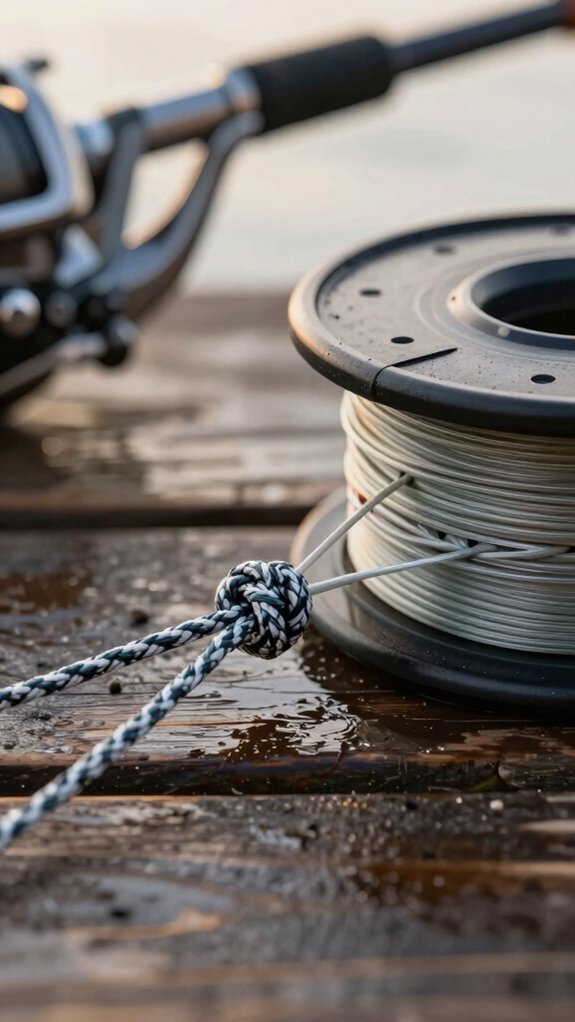
Yes, you should tie line to line, especially when pairing a braided mainline with a fluorocarbon or monofilament leader.
Why Braid-to-Leader Matters
Braid’s visibility can spook fish, and it lacks abrasion resistance. A leader fixes that, giving stealth and durability.
Best Knots for the Job
For most braid-to-leader setups, I trust the Double Uni, it’s strong and slides smoothly through guides.
But when your leader’s much thicker, go with the Albright; it handles big diameter jumps better.
If you’re linking mono to mono, the Surgeon’s Knot is a field-proven winner, testing near 15 lbs in break strength.
Pick a knot you can tie consistently, real-world strength beats lab-perfect knots you fumble at dawn.
Match the knot to your lines, and your setup stays balanced, smooth, and strong.
Palomar, Double Uni, Albright, Trilene compared
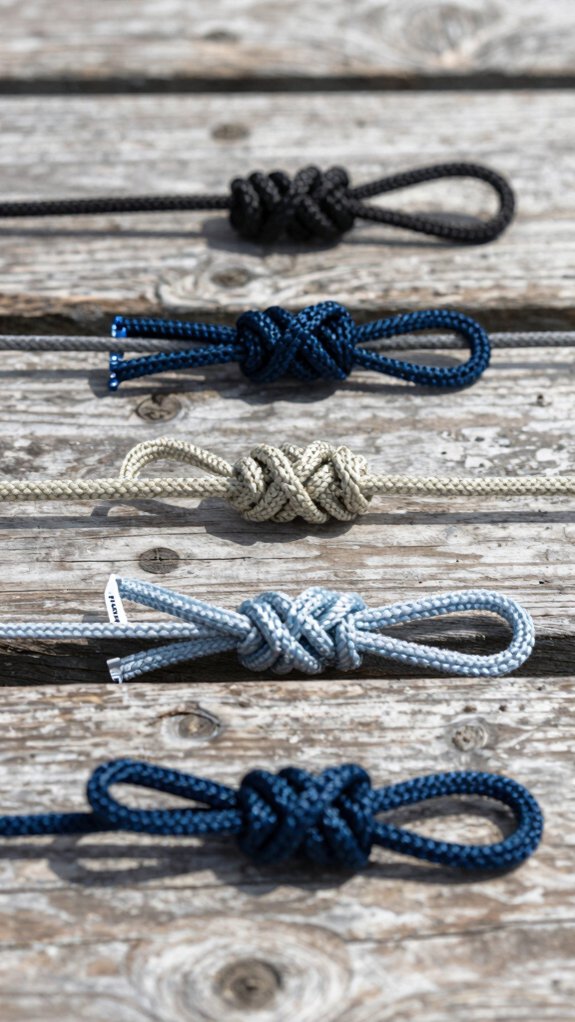
When you’re after maximum strength and reliability, the Palomar knot is my go-to for tying braid directly to a lure, simple, strong, and proven.
Here’s how these top knots stack up:
- Palomar knot: Best for braid-to-lure, routinely tests at 95%+ of line strength.
- Double Uni: Ideal for joining lines (like braid to leader), smooth, versatile, hits 80–100% strength.
- Albright knot: Great for different diameters (braid-to-mono), compact but finicky; Trilene knot excels with mono/fluoro to hooks, reaching mid-90s strength when tied right.
I use the Palomar knot most for lures, it’s bulletproof.
But when I’m linking lines, Double Uni gives me confidence.
Albright knot saves space on big reels, while Trilene knot? That’s my trusty pick for fluorocarbon rigs.
Match the knot to the job, and you’ll land more fish.
Mistakes that weaken your fishing knots
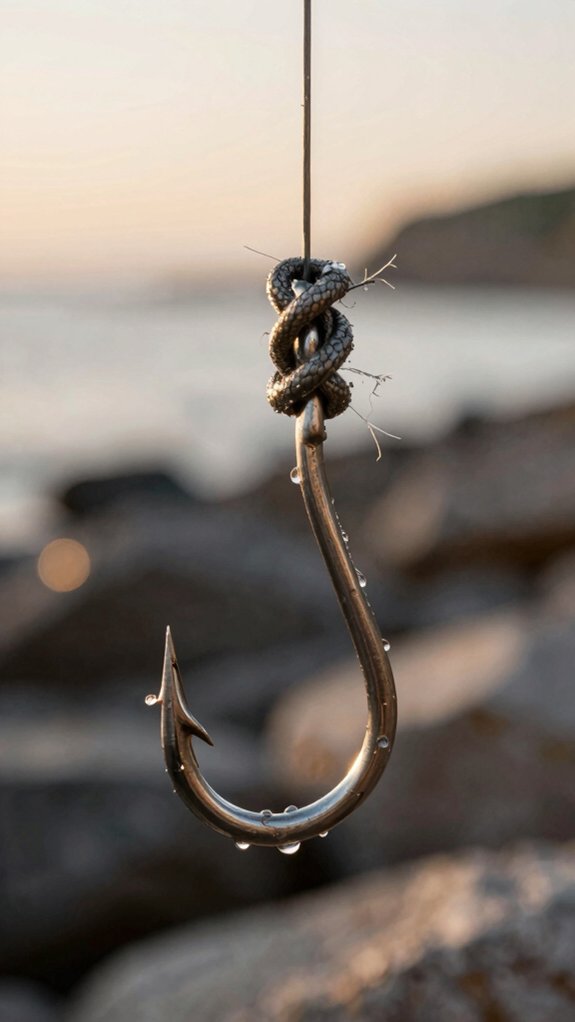
Even the strongest knot won’t save you if a simple mistake turns it into a weak link.
Small Errors, Big Consequences
I’ve learned the hard way: failing to wet the line before tightening burns fibers with friction heat, weakening knots by up to 50%.
And those wraps? Too few, like fewer than five on a Uni knot, or uneven ones cause wild strength swings. In tests, sloppy Double Uni knots broke anywhere from 7–12 lbs under stress.
Finish It Right
Always trim tag ends properly. Too short? Knots slip, Albrightes unraveled in trials. Too long? Bulky tags snag and stress the joint.
Match Matters
Using the wrong knot for the line is deadly. Albright flops on mono-to-mono.
Braid needs extra wraps. Pick the right knot, do it right, your catch depends on it.
How to tie the strongest fishing knots
If you want the strongest knot for your setup, pick one that matches your line type and connection need, because not all knots work equally well in every situation.
I’ve tested the Palomar, Double Uni, FG, Trilene, and Albright knots side by side, and the top performers consistently hold 80–100% of line strength when tied right.
Let me show you how each one shines depending on whether you’re linking braid to leader, tying on a lure, or connecting lines of different diameters.
Palomar knot
The Palomar knot works great with braided line, monofilament, and fluorocarbon, making it a go-to for most setups. Here’s why it’s so effective:
- Doubled line design reduces stress and boosts line strength.
- Simple steps: Double the line, tie an overhand knot, pass the hook through, then tighten.
- Slip‑resistant, especially on slick braided line when tied neatly.
Just make sure your lure or hook eye can fit through the doubled loop. If not, try a Trilene or loop knot instead.
Once you master the Palomar, you’ll trust it on everything from finesse rigs to hard‑charging bass lures.
Double Uni knot
Tie with confidence, when you need a strong, reliable connection between two lines, the Double Uni knot delivers. This braid-to-mono favorite reaches 80–100% knot strength with proper technique. I use it often because it’s simple and slides smoothly through rod guides, even under pressure.
Here’s my go-to wrapping technique:
- Overlap the line ends.
- Tie a Uni knot with the first line (5–8 wraps for mono, 8–10 for slick braid).
- Repeat with the second line, wrapping in the opposite direction.
- Snug both knots together, then trim the tags.
Pro tip: Wet the line before tightening, heat from friction can weaken it. In one test, the Double Uni ranked third in mono-to-mono strength, but its consistency and ease make it a top pick. For most anglers, it’s the practical sweet spot between power and reliability.
FG knot
Here’s what makes the FG knot work so well:
- Fine, even wraps of braid around the leader (10–20 turns) create a secure, slim connection.
- A locking half-hitch or light superglue seals the knot, preventing slippage.
- Proper dressing and tension ensure maximum strength, mistakes can cut performance fast.
I rely on the FG knot when targeting big fish with light lines. It takes practice, but once mastered, it’s a game-changer for strong, reliable, and sleek connections.
Trilene knot
When you need a bulletproof knot to connect monofilament, or even fluorocarbon, to your lure or hook, I reach for the Trilene knot every time.
Why the Trilene is one of the strongest choices
In tests, the Trilene knot held up to 96% of unknotted 10‑lb monofilament strength, one of the highest ratings among terminal knots.
That makes it a go‑to when you’re after raw strength and reliability.
To tie it right:
- Wet the line before cinching down.
- Neatly snug the coils so they compress evenly.
- Pull the tag end tight and trim close.
It’s especially strong with monofilament, but works well with fluorocarbon too, if you take care.
Compared to fussy alternatives, the Trilene balances ease and performance.
While some knots slide smoother through guides, for sheer strength, this one’s a winner.
Albright knot
Slide your line into position and envision this: you’re connecting a thin, supple monofilament leader to a thick, slick braid, and you need a knot that won’t bulk up at the guides or let go under pressure, enter the Albright knot. It’s a go‑to for braid‑to‑mono joins, prized for its low‑profile design that slips smoothly through rod guides.
Here’s how to nail it:
- Make 10–12 neat wraps with the leader around the main line.
- Thread the tag end back through the loop, forming a loop‑to‑loop connection.
- Moisten, then cinch slowly, tight, even tension locks it.
I’ve seen weak results (6–8 lbs in some mono‑to‑mono tests), but when tied right, the Albright knot holds strong. For max security with dissimilar lines, snug wraps are non‑negotiable.
Frequently Asked Questions
What Is the Strongest Fishing Line Knot?
The strongest fishing line knot I’ve found is a properly tapered splice, it hits 95%+ of line strength. For everyday use, I trust the Palomar or Surgeon’s Knot; they’re simple, reliable, and consistently tough when I need them most.
Which Is the Strongest Fishing Line?
I see you’re after pure strength, braided line’s my go-to, thin as a whisper but tough as steel, slicing through water and hauling in giants with barely a stretch to warn them.
Which Knot Is Stronger, Uni or Palomar?
The Palomar’s stronger than the Uni for tying line to a hook, I trust it more because it’s simple, reliable, and consistently hits 90%+ strength, especially with braid. When in doubt, I tie a Palomar.
What Is the Strongest Hook to Line Knot?
The Trilene knot is my go‑to, it’s like a titanium handshake between line and hook. When I tie it right, it’s nearly unbreakable, holding up to 96% of my line’s strength, especially with mono or fluoro.
In Conclusion
The strongest knot depends on your line and setup, but tied right, the Palomar’s hard to beat. I once landed a 40-pound king mackerel on 30lb braid using a wet, properly seated Palomar knot, zero slippage. For braid‑to‑hook, it preserves up to 95% strength.
Mono or fluoro? Try the Trilene Knot. Joining lines? Go Double Uni. Always wet the line before tightening, dress the knot neatly, and trim the tag end. Your knot’s only as strong as your tying.