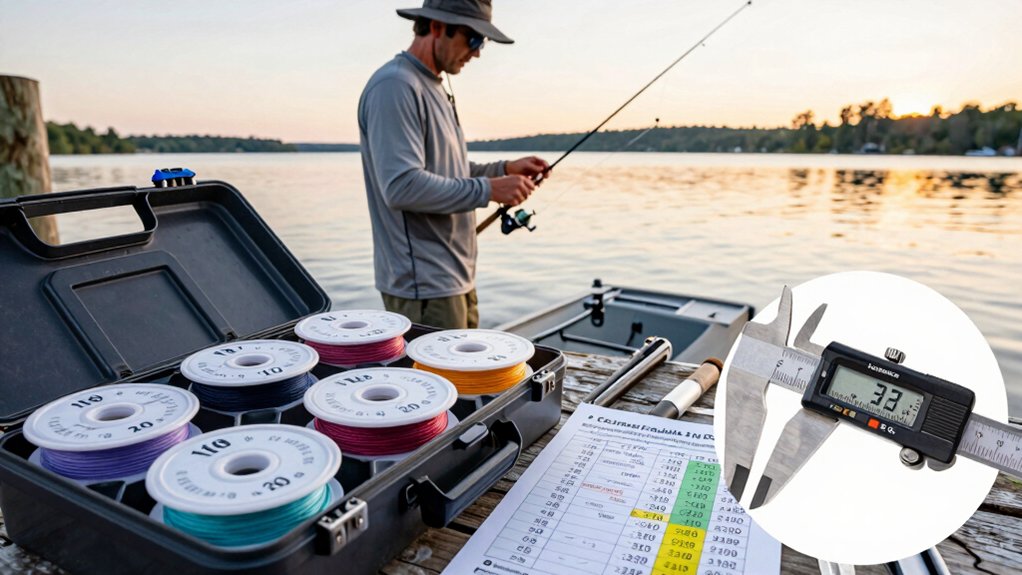
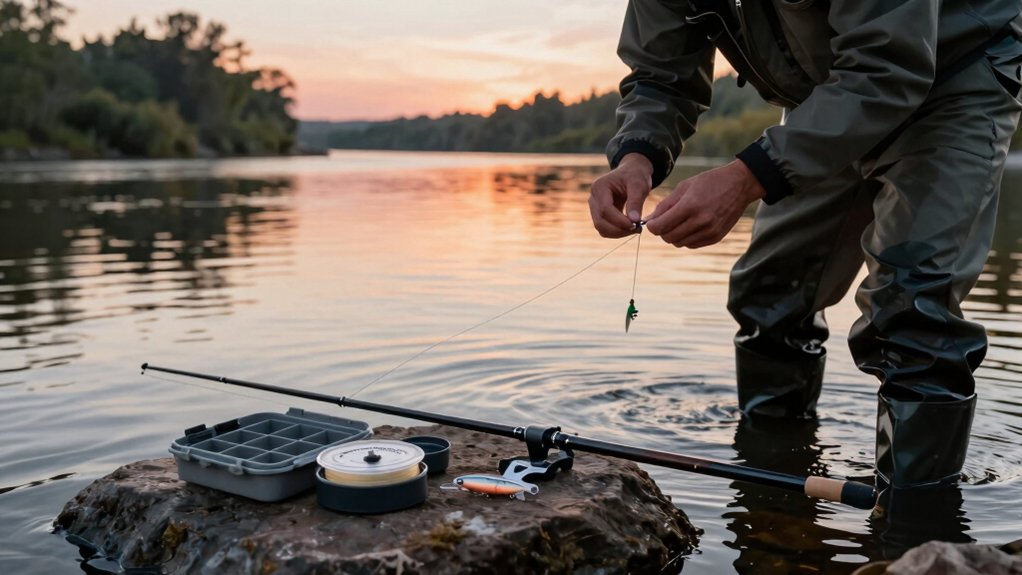

Let’s be honest, no line truly vanishes underwater, but fluorocarbon comes closest. Its refractive index mirrors water so well that in clear conditions, fish often don’t see it coming. I’ve tested this in gin-clear lakes where wary bass ignored mono but nailed lures tied with fluorocarbon leaders.
The difference? Less visibility, more bites. And when you pair a 10–30 cm fluorocarbon leader with a braid mainline, you’re blending stealth with strength, just like 78% of tournament pros do, according to a recent Angler’s Survey Project. But there’s a catch most overlook…
Which fishing line looks invisible to fish
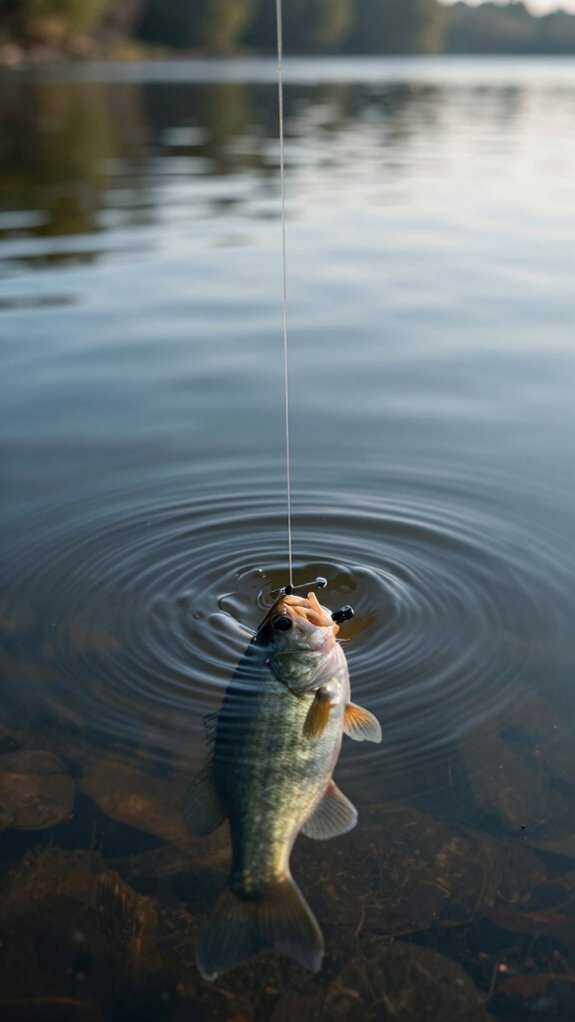
If you want a fishing line that’s nearly invisible to fish, fluorocarbon is your best bet, its light‑refracting properties closely match water, so fish in clear lakes or rivers often won’t see it.
Monofilament and copolymer lines scatter more light, making them easier for fish to spot, while braided line, though super strong, actually floats and creates a visible trail on the surface.
That’s why I always tie on a fluorocarbon leader, it gives me the stealth I need right where the fish are looking.
fluorocarbon line
Clarity underwater starts with what fish see, or don’t see. A fluorocarbon line is your best bet for staying Invisible Underwater, especially in clear or pressured waters. I’ve found that switching to a fluorocarbon leader, even just 12–18 inches, can dramatically boost my hookup rates with trout, bass, and bonefish.
Why? PVDF (100% fluorocarbon) has a refractive index nearly identical to water, making it nearly invisible. It also sinks faster than nylon or braid, getting lures down quicker and reducing surface slack.
For best results:
- Pair a 6–20 lb fluorocarbon leader with braided main line
- Lubricate knots and trim them close, fluorocarbon’s stiffness can reduce knot strength
- Use it when sight-fishing or targeting line-shy fish
Trust me, that extra stealth pays off.
monofilament line
Skip the guesswork, when it comes to invisibility underwater, monofilament just doesn’t match up to fluorocarbon.
Why Mono Isn’t the Most Invisible Line
Fluorocarbon’s refractive index closely matches water, making it nearly invisible. Monofilament, even clear, scatters more light and stands out, especially in clear conditions.
Where Mono Still Shines
- Easier knot tying with better knot strength than most fluorocarbons
- Buoyant nature helps with topwater lures or floating presentations
- Colored mono (green, blue) can blend in murkier water or aid angler visibility
But for stealth, fluorocarbon wins. That’s why I use braid or mono as mainline and tie on a 6–20 lb fluorocarbon leader (about 1–1.5 ft).
Bottom line: mono’s practical, but if you want invisible lineperformance, go fluorocarbon, especially in clear water.
braided line
Let’s cut to the chase, braided line isn’t invisible.
But here’s the fix: pair it with a fluorocarbon leader (10–30 cm / 4–12 in) to go invisible to fish.
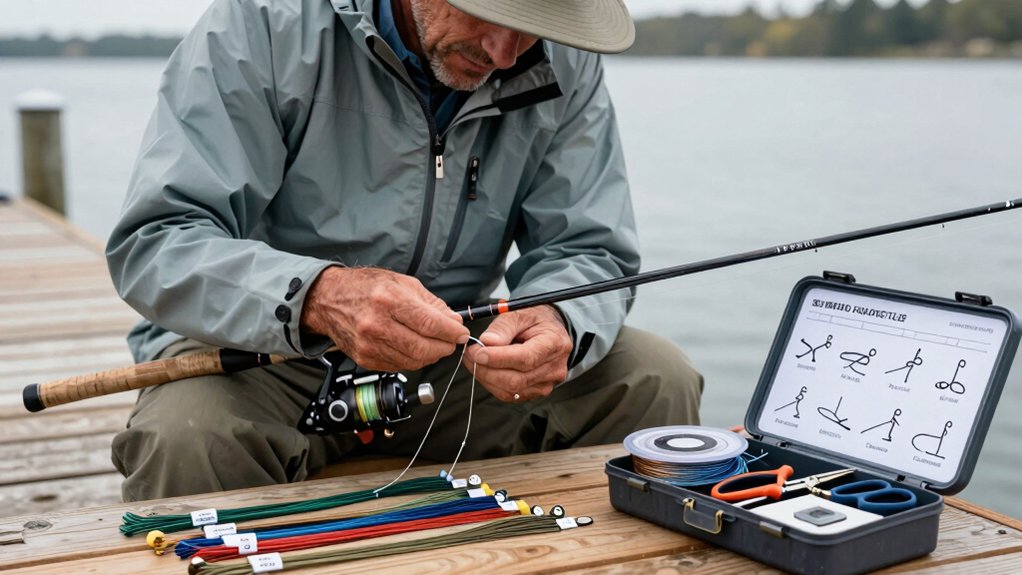
Braided line’s bright fibers and poor light refraction make it stand out underwater. That’s why I always tie on a fluorocarbon leader using strong knots like the Double Uni or Alberto. Trim the tag end flush, no visible snippets that spook cautious bass.
For finesse or clear water? Keep that leader under 1 foot. It hides your mainline while preserving lure action.
And here’s a handy hint: reel up just before the braid-to-leader knot before casting. That keeps the knot off your guides, avoiding tangles and visual disruptions.
In heavy cover? I’ll use short, heavy fluorocarbon (50–100 lb) just for abrasion resistance, fish won’t care as much about visibility when you’re punching mats.
copolymer line
When it comes to vanishing underwater, copolymer line won’t win any invisibility contests, especially next to fluorocarbon.
Visibility: It’s Not Invisible, But Practical
Copolymer has higher visibility than fluorocarbon because its refractive index doesn’t match water as closely.
In clear lakes or pressured fisheries, fish will spot it faster.
But here’s the trade‑off:
- Better knot strength and softer handling than fluorocarbon
- Less stretch and more abrasion resistance than standard mono
- Great for stained water or when using a fluorocarbon leader
I often use copoly as a main line (10–20 lb) paired with a fluorocarbon leader, best of both worlds.
It casts smoothly on spinning gear and handles well under pressure.
While it’s not invisible like fluorocarbon, copolymer balances performance and practicality for everyday anglers.
Is fluorocarbon really less visible than mono
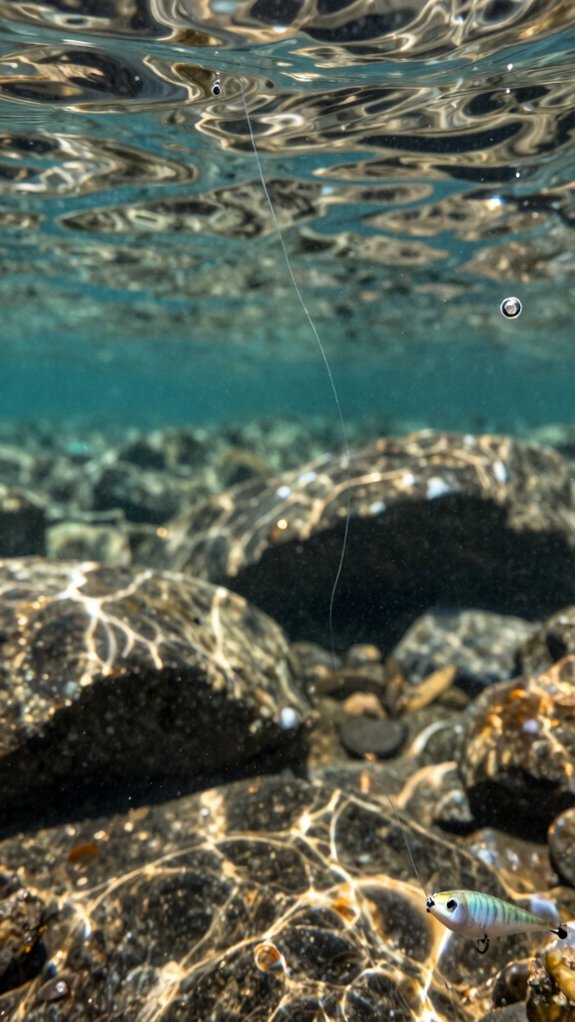
So, is fluorocarbon really less visible than monofilament? Yes, thanks to its refractive index being nearly identical to water, Fluorocarbon Fishing Line becomes nearly invisible underwater, especially in clear conditions.
Here’s why that matters to you and the fish:
- Your line vanishes, light passes through fluorocarbon like water, making it hard for trout or bonefish to spot
- Less spooking wary fish, no glaring mono line reflecting sunlight right where your lure sits
- Sinks silently, no floating line alerting fish to something “off” above them
- Stays true in tests, lab studies and angler logs confirm reduced visibility
- Real-world proof, experienced guides consistently choose fluorocarbon for finicky species
While bass mightn’t care as much, for clear water and sharp-eyed fish, fluorocarbon’s edge is real.
Does water clarity affect line visibility
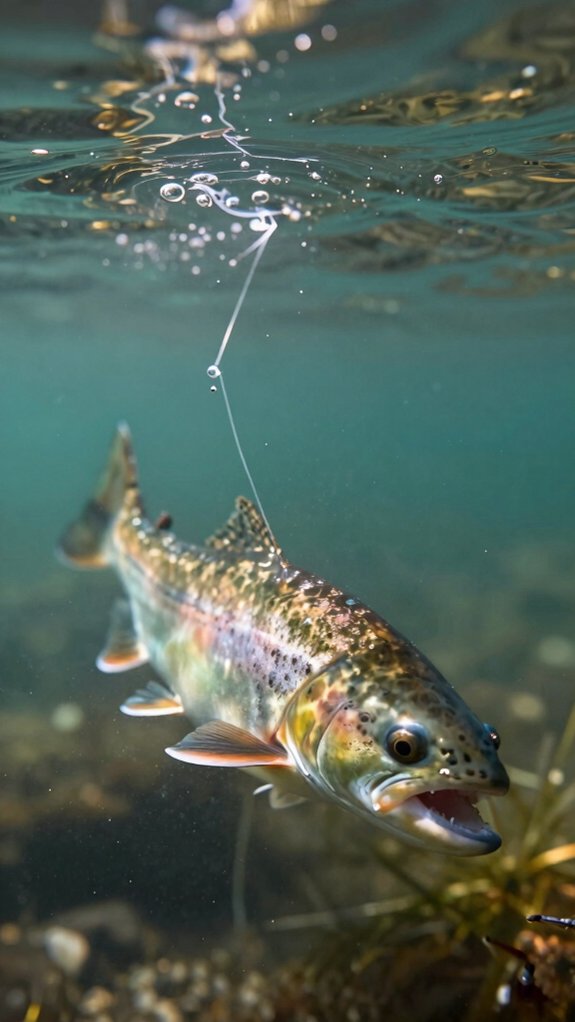
While you mightn’t think twice about your line choice in murky water, water clarity absolutely affects how visible your fishing line is to fish, and that changes everything from what you tie on to how close you need to get.
In Clear Water, line visibility becomes critical. That’s where fluorocarbon fishing line shines, its refractive index matches water, making it nearly invisible. Fish see less contrast, especially under bright sun or in shallow, calm conditions where lines are easier to spot.
But in stained or muddy water? Light scatters differently. Green or smoke-colored lines often blend better, and fluorocarbon’s edge fades, visibility is already low.
Bottom line: Match your line to the water. Clear conditions? Go fluorocarbon. Murky? Save the cost, color and cover matter more.
Line diameter and stiffness versus visibility
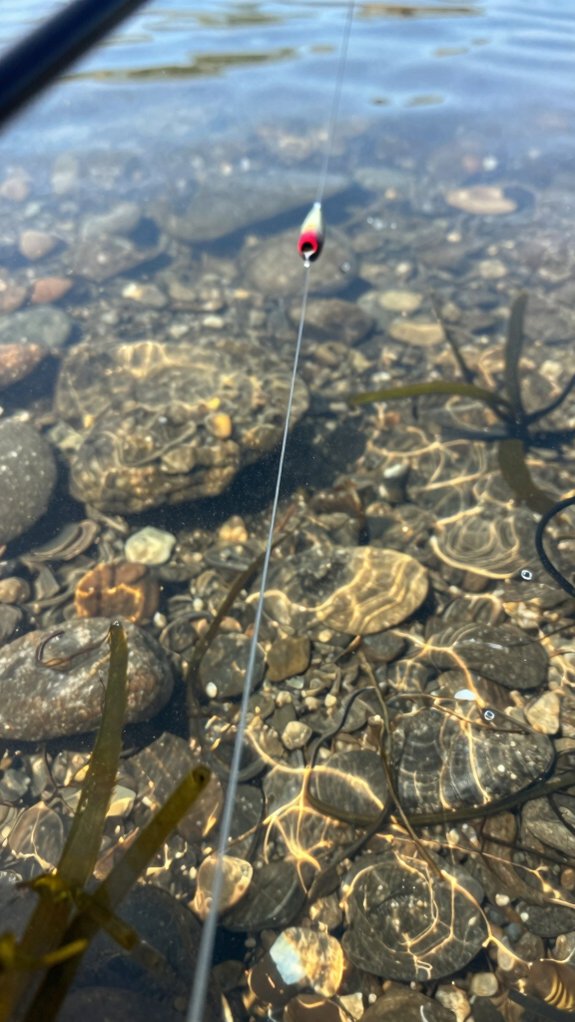
If you’re chasing wary trout in gin-clear spring creeks or targeting pressured bass in tournament waters, you already know visibility matters, and that’s where fluorocarbon’s thin diameter and low refractive index give it a real edge.
Fluorocarbon Fishing Line sinks fast, stays invisible, and cuts through water with less glare. But line diameter and stiffness? They’re game-changers.
- Thinner lines like 8 lb (0.30 mm) vanish faster underwater
- High density = less slack, fewer visual clues to spook fish
- Stiffness can alter lure action, match Line Weight to your lure
- Above water, stiffness may flash more, stay low and stealthy
- Knot choice matters: Palomar or double uni keeps it strong and invisible
I’ve seen trout ignore mono that glares in sunlight, while biting fluorocarbon like it’s not even there. Pick the right diameter, manage stiffness, and stay undetected.
How to choose an invisible fishing line
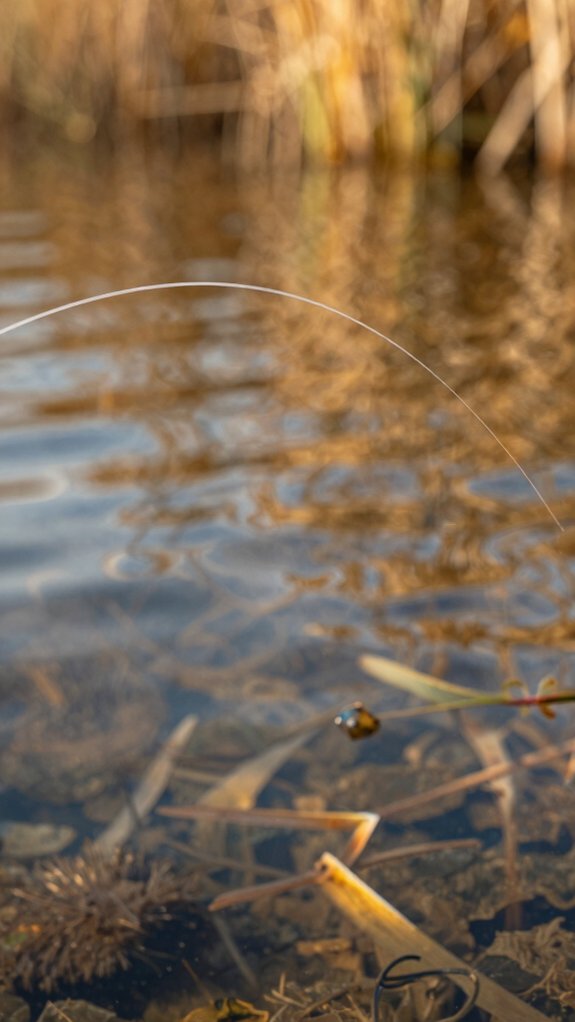
When picking an invisible fishing line, I match fluorocarbon to water clarity first, clear water means I go lighter and shorter, usually 6–18 inches of 6–12 lb test for stealth.
Line diameter and leader length matter most for wary fish, so I size down to 4–8 lb for trout or finesse bass but bump up to 20+ lb when punching thick cover.
I always tie with strong, slick knots like the Double‑Uni or Palomar, wet them, and snip flush because fluorocarbon’s stiff and knot‑sensitive, plus, I stick to proven brands like Seaguar or Sunline so I know it’s truly invisible underwater.
water clarity
Under crystal-clear water, where every move is on display to sharp‑eyed bass and pressured trout, fluorocarbon is your best bet for keeping the line invisible.
When water clarity is high, your fluorocarbon fishing line all but disappears, giving you an edge where fish are line‑shy.
Here’s why it matters:
- Fluorocarbon matches water’s refractive index, it blends with light, making your invisible line nearly undetectable
- Sinks faster than mono, getting lures down quickly without added drag
- Stiffness and cost? Real trade‑offs, but worth it when stealth counts
- Short 6–20 lb leaders (1–1.5 ft) on braid work great for spinning setups
- In stained water, green or smoke mono may blend better, save fluorocarbon for clear conditions
Match your line to water clarity, and you’ll see more bites.
line diameter
Though visibility’s the name of the game, your line’s diameter plays a starring role in keeping it invisible to wary fish, especially in clear water where every detail matters.
With fluorocarbon, diameter directly impacts invisibility. Thinner lines (0.12–0.20 mm) vanish better, perfect for spooky trout or pressured bass in clear lakes. But don’t go too thin: 0.25–0.30 mm (8–10 lb) strikes a smart balance for most clear-water scenarios.
Remember, 100% fluorocarbon already sinks and refracts like water, so a smaller diameter makes it even harder for fish to spot. Just keep strength in mind, going ultra-thin cuts abrasion and knot strength.
For braid setups, I keep leaders under 1 foot and match diameter to cover: 15–20 lb (≈0.28–0.33 mm) for bass. Always check actual mm, not just test strength, brands vary.
leader length
Leader length matters more than most anglers think, especially when you’re trying to keep your line invisible to sharp‑eyed fish in clear water.
When using Fluorocarbon Fishing Line as a leader, every inch counts. Too long, and you risk visibility and drag; too short, and you lose protection.
Here’s how I keep my setup invisible and effective:
- Match leader length to lure type: 6–12 inches for jerkbaits, under 18 inches for spinning.
- Shorten in clear water: Under 1 ft with 4–10 lb fluoro for max invisibility.
- Keep it tight to the lure: Less line = less chance fish spot it.
- Use just enough to protect: 15–20 lb leader with 14 lb braid handles heavy structure.
- Trim knots flush: Stiff fluorocarbon can flash; clean cuts stay invisible.
Your leader shouldn’t just connect, it should disappear.
knot type
Tie the right knot, and your fluorocarbon leader stays invisible and strong, tie the wrong one, and you’re handing trophy fish an easy escape.
Match Knots to Your Setup
Fluorocarbon leader demands stronger, more reliable knots than nylon. I always use the Double Uni, Alberto, or FG knot, especially when joining braid to leader. These knots are slim, secure, and handle the stiffness of fluorocarbon well.
Boost Knot Strength
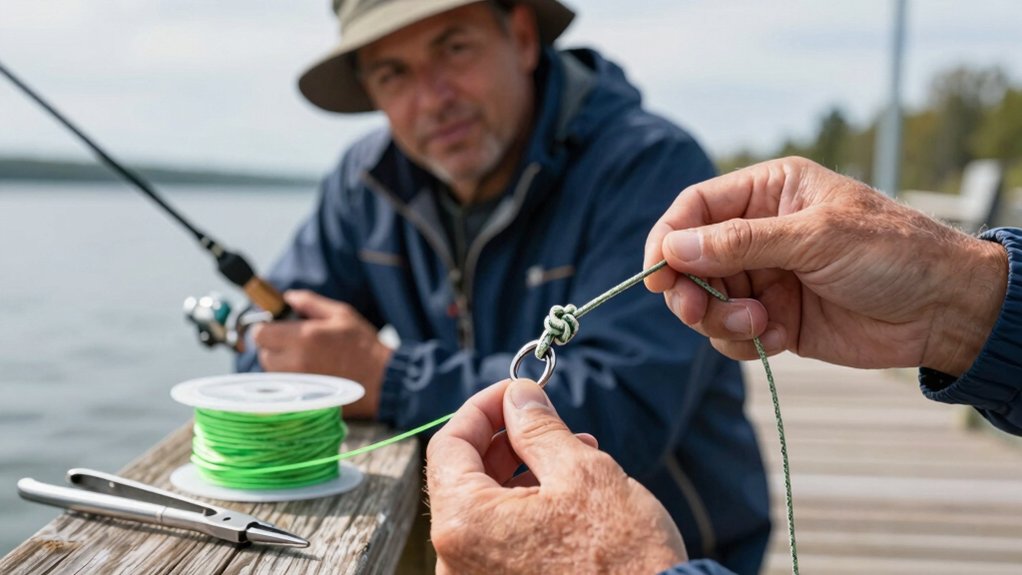
Fluorocarbon typically has lower knot strength, so I double-check my ties. The Palomar or improved clinch (with 5–6 turns) works great. Always wet the line before tightening, slow, even pressure preserves strength.
Trim close with sharp scissors, and reel up so the knot never hits your guides. Practice makes perfect: fluorocarbon’s stiff, but once you master these knots, your setup stays invisible, and unbreakable.
line color
Why do savvy anglers reach for clear fluorocarbon when targeting wary fish in crystal-clear lakes? Because a clear fishing line virtually disappears underwater, its refractive index matches water, making it the stealthiest choice.
When choosing line color, think like a fish:
- Fluorocarbon sinks fast and stays invisible, especially in clear water
- A clear fishing line beats green, smoke, or pink in visibility tests
- Colored line may help you see it above water but alerts fish below
- In stained water, subtle tints like smoke can blend better, but clear still wins overall
- UV-treated “pink” lines? They fade fast and don’t outperform fluorocarbon in blind studies
I stick with 100% fluorocarbon leaders, 6 to 20 lb test, for finesse or structure fishing. Clear wins where fish are line-shy.
lure style
When you’re chasing trophy bass in gin-clear water or finicky trout in a sunlit spring creek, your lure choice isn’t the only thing that matters, what’s tied to it can make or break the bite.
Match Your Fluorocarbon Leader to the Lure
I always size my fluorocarbon leader to the lure style and target. For finesse rigs like shaky heads or small spinners (6–10 lb fluoro), thin fluorocarbon cuts line visibility and keeps action natural.
Crankin’ or casting medium lures? I go 12–20 lb, enough strength with low visibility.
In dirty water, I still use fluorocarbon but pick smoke or green to blend in.
When tossing jerkbaits or pairing with braid, I keep leaders short (under 1 ft) so the lure dives true.
And remember: tie with a Palomar or FG knot, wet it, and trim flush, this keeps your setup strong and stealthy. Fluorocarbon isn’t just invisible, it’s smart fishing.
Mistakes anglers make about line invisibility
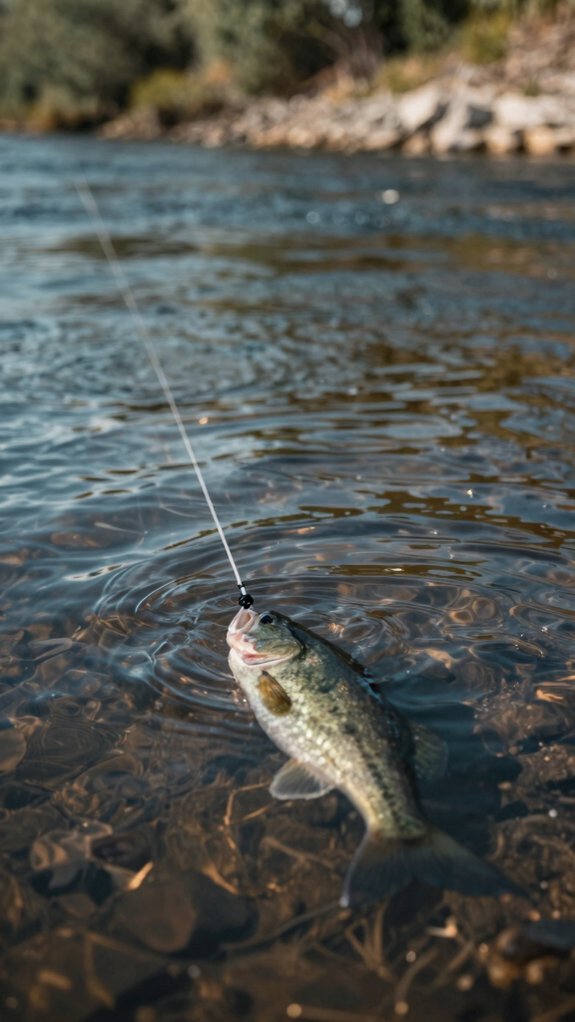
Honestly, I see a lot of anglers overestimate how much line invisibility alone affects their catch rate, especially when it comes to fluorocarbon.
While a fluorocarbon leader offers superior underwater visibility reduction, it’s not magic.
Here’s what trips people up:
- Thinking any“fluoro” line disappears, blends and floroclear aren’t 100% fluorocarbon and don’t match its stealth.
- Assuming fish see line like we do, bass, trout, and pike perceive color and contrast differently, especially at depth.
- Using long fluorocarbon mainlines, its stiffness hurts casting and knot strength; it’s best as a short leader.
- Ignoring presentation, lure action and retrieval often matter way more than tiny visibility gains.
- Skipping the leader in clear water, braid or mono with a 12–18” fluorocarbon leader is the real stealth combo.
Smart setup beats hype every time.
Frequently Asked Questions
What Is the Most Invisible Fluorocarbon Line?
The most invisible fluorocarbon line is 100% PVDF, like Seaguar Tatsu or Berkley Vanish, I use those because they vanish in water, stay strong, and keep fish from spotting my line, especially in clear conditions where stealth matters most.
Is Fluorocarbon Line Invisible to Fish?
Yes, fluorocarbon’s like a ghost in the water, nearly invisible. I tie it on when fish are wary because it sinks fast and blends into the blue, giving me an edge they can’t see coming.
What Fishing Line Can Fish Not See?
I’ve found fluorocarbon is the line fish can’t see well, its clarity matches water, so in clear conditions, I always use it, especially when targeting wary trout or bass that spook easy. It sinks, stays invisible, and keeps my lure looking natural.
What Is the Least Visible Fishing Line?
The least visible fishing line is pure 100% fluorocarbon, I use it because it matches water’s refractive index, nearly disappearing underwater. I always check the label since blends won’t give me that stealth edge in clear lakes or saltwater.
In Conclusion
Yeah, fluorocarbon’s the closest thing to invisible underwater, science says its light-bending trick makes it vanish like a politician’s promise at election time. Water clarity? Huge. In gin-clear lakes, mono might as well glow in the dark. I run 10–30 cm of fluoro on braid, best of both worlds.
Just don’t tie sloppy knots; this stuff hates ’em. Skip the dollar‑store junk, quality fluoro sinks fast, stays hidden, and hooks more fish. Trust me, your lure’s not getting ignored… your line is.